- +8618603825129
- [email protected]


Chinese forklifts and [Section 301 tariffs](https://mbmlog.com/?p=12045) come up in almost every quote request our shipping team in Zhengzhou receives. Buyers get a great factory price, then panic when the duty bill arrives. That surprise can wipe out an entire profit margin — unless you plan for it before the container leaves China.
Yes, Chinese forklifts are subject to Section 301 tariffs. Forklifts classified under HTS Code 8427 with Chinese origin face an additional 25% Section 301 duty on top of the normal MFN rate, which is free. The exact treatment depends on your 10-digit HTS classification and any active exclusion.
The short answer is yes. But the real cost depends on classification, origin, and Chapter 99 filing details. Let me walk you through each piece, based on what we see clearing US customs every month.
Last quarter, a distributor in Texas asked our team to re-check his duty math before he committed to a six-unit order. His original budget missed the Section 301 line entirely. That mistake would have cost him tens of thousands of dollars.
Section 301 tariffs add 25% of the customs value to your Chinese forklift import cost. Since the MFN import duty rate on HTS 8427 is free, the entire duty burden typically comes from Section 301. A $15,000 forklift therefore carries roughly $3,750 in additional tariff.
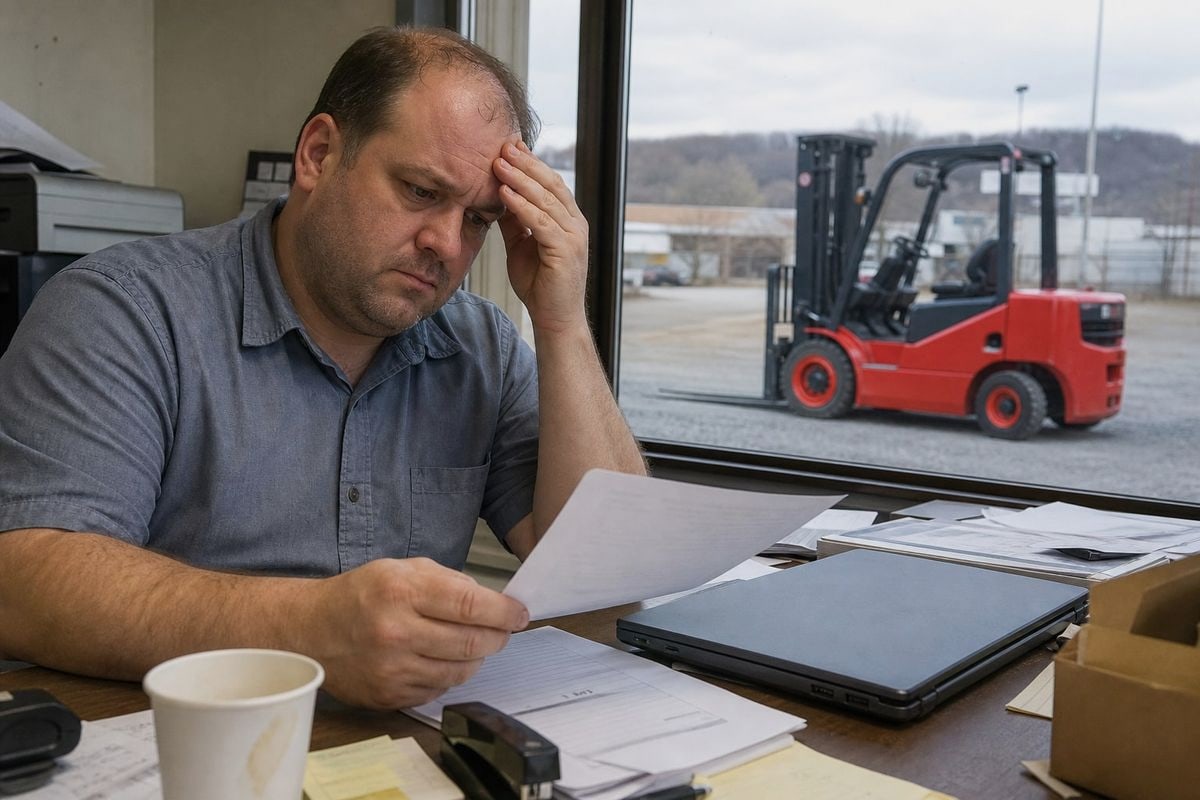
The 25% rate applies to the customs value 1 of the goods, which is normally the price you paid the factory plus certain additions. It does not apply to ocean freight or insurance under US valuation rules, which is one small piece of good news for importers.
Many importers look up HTS Code 8427 in the Harmonized Tariff Schedule 2, see "Free," and assume there is no duty. That is the single most common mistake we correct. The MFN rate is free, but Section 301 duties stack on top of it for goods of Chinese origin. Most Chinese-origin forklifts fall under List 1 or List 2 of the Section 301 actions, which carry the 25% base additional duty.
Here is what the tariff stack looks like on a typical order we handle:
| Cost Item | Taux | Example on a $15,000 Forklift |
|---|---|---|
| MFN base duty (HTS 8427) | 0% (Free) | $0 |
| Section 301 additional duty | 25% | $3,750 |
| Merchandise Processing Fee | 0.3464% | $51.96 |
| Harbor Maintenance Fee | 0.125% | $18.75 |
| Total US import charges | - | ~$3,821 |
There is another layer to watch. Electric forklifts can face a "double-hit" from overlapping trade actions. The 25% tariff on Chinese lithium-ion battery 3 components can apply to integrated power packs, and newer stacked measures — including duties tied to forced labor enforcement in some trade summaries — show that supply chain costs are not frozen. The USTR's four-year review also kept the authority to raise rates on strategic machinery, especially electric-powered models. In our experience, buyers who budget only for today's rate get caught out. Budget for the current 25%, then confirm the live rate with your broker at booking time.
Classification errors cause more customs delays than any other paperwork issue we see. Before every forklift shipment leaves a Chinese factory, our documentation team cross-checks the supplier's declared HS code against the actual machine specifications, because a wrong digit can change the entire duty outcome.
Electric forklifts fall under HTS Code 8427, with electric rider trucks commonly classified under subheading 8427.10.4000. These lines are covered by Section 301 List 1 and List 2 at 25%, and importers must also report Chapter 99 subheading 9903.88.01 on entry documents.
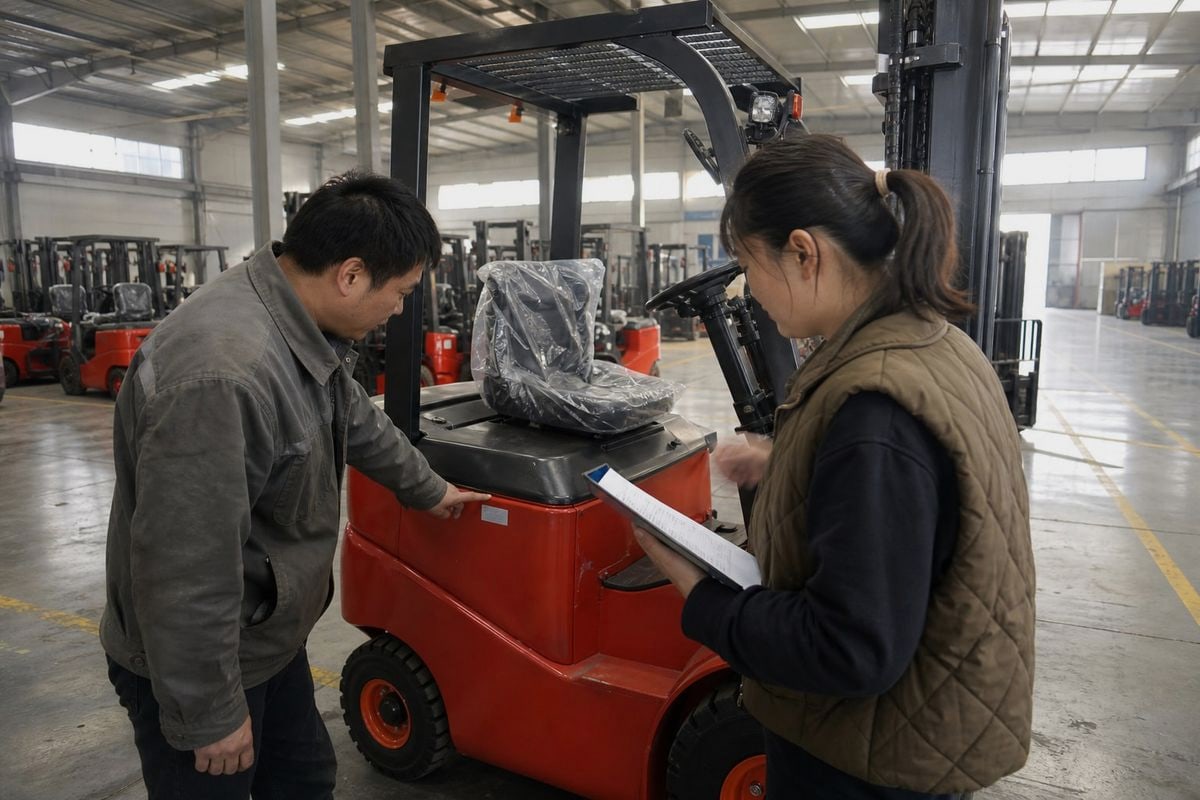
The word "forklift" is not a single tariff category. The Harmonized Tariff Schedule breaks material handling equipment into several 10-digit subheadings, and each one can sit on a different Section 301 list. Getting this right is the foundation of trade compliance for any forklift importer.
| Equipment Type | Typical HTS Heading | Section 301 Status |
|---|---|---|
| Electric rider forklift | 8427.10 (e.g., 8427.10.4000) | 25% additional duty |
| Other self-propelled forklifts (IC engine) | 8427.20 | 25% additional duty |
| Non-powered pallet trucks / works trucks | 8427.90 | Covered under 8427 actions |
| Autonomous Mobile Robots (AMRs) | Often 8479, not 8427 | Different tranche, higher high-tech scrutiny |
| Lithium-ion battery packs (shipped separately) | Chapter 85 subheadings | Subject to their own 25% China tariff |
Two points deserve extra attention. First, AMRs and some automated warehouse vehicles may classify under HTS 8479 instead of 8427. That shifts them into a different tariff tranche, and high-tech products attract closer review from Customs and Border Protection. Second, when buyers purchase forklifts from one factory and lithium-ion battery components or chargers from another — a setup we consolidate regularly — each product line carries its own classification and its own duty treatment. You cannot assume the forklift's HTS code covers the batteries.
On the entry itself, your broker must file the regular 10-digit code plus the correct Chapter 99 subheading, such as 9903.88.01, so the Section 301 duty is properly declared. Missing or wrong Chapter 99 codes trigger CBP rejections, amendments, and sometimes penalties. We ask suppliers for detailed specification sheets before departure so the broker has what he needs on day one.
A buyer once forwarded us an old news article about forklift tariff exclusions and asked why his broker still charged him 25%. It was a fair question — and the answer taught him an expensive lesson about how the exclusion system actually works.
Probably not today. USTR granted temporary Section 301 exclusions for some forklifts and machinery in past rounds, but most have expired. You can only claim a refund if a specific active exclusion covers your exact HTS line during your entry date window.
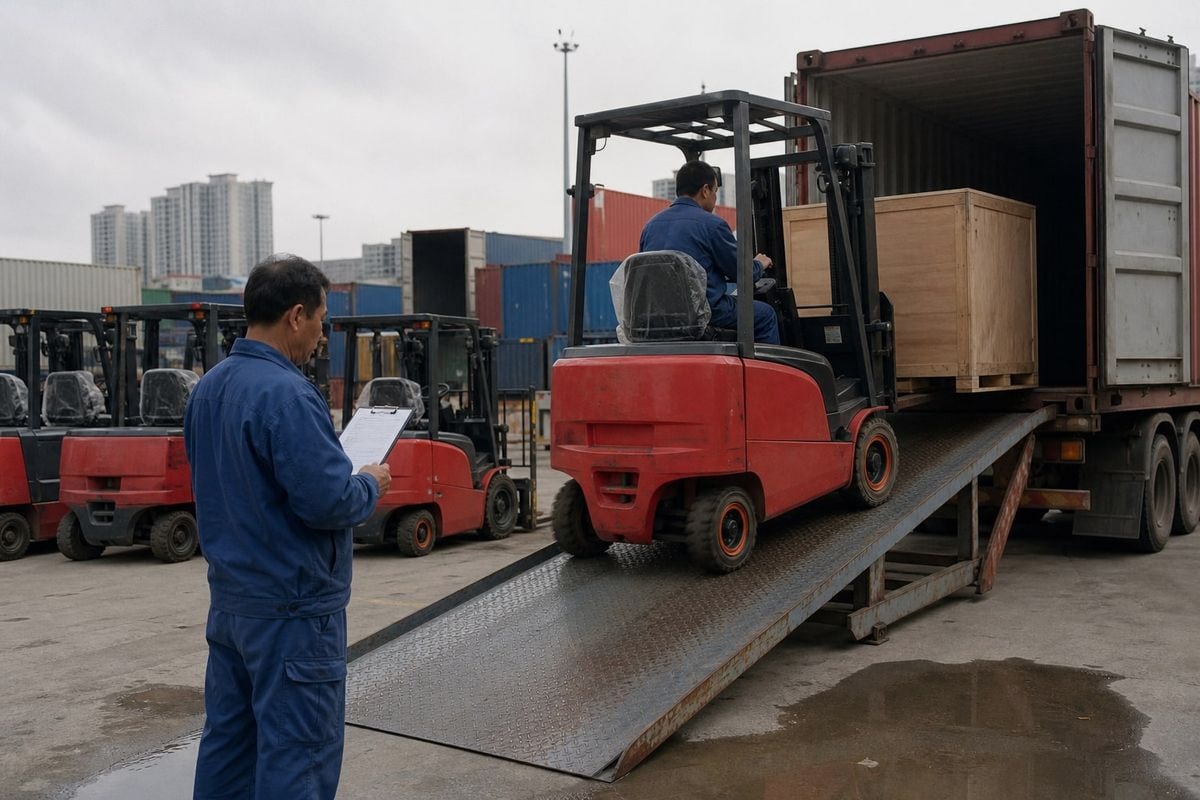
The exclusion system trips up more importers than the tariff itself. USTR has periodically opened windows where companies could file exclusion requests, and some machinery products — including certain forklift lines — did receive exclusions that reduced the Section 301 rate to 0% for qualifying products during defined periods. But those exclusions were time-limited and tied to specific HTS lines. The majority of exclusions covering material handling equipment have expired. An exclusion announced in 2019 or 2020 tells you nothing about your shipment arriving this year.
One more caution from our side of the business. Some buyers ask whether routing a Chinese forklift through a third country avoids the tariff. It does not. Section 301 duties follow pays d'origine 4, not country of export. The substantial transformation rule means simple assembly or transshipment in a third country does not change origin — the mast or chassis would need significant local manufacturing before customs treats it as non-Chinese. Attempting to disguise origin risks penalties far worse than the tariff, and can also raise exposure to anti-dumping and countervailing duties in related product categories. We always tell clients: pay the correct duty, document everything, and sleep well.
The trade-off we discuss most often with US distributors is container choice versus per-unit landed cost. Squeezing four forklifts into a 40HQ instead of shipping three in a 40FT can cut the freight share per machine significantly — but the tariff line stays the same either way, so you need the full picture.
Total landed cost equals factory price plus Section 301 duty (25% of customs value), MPF and HMF fees, ocean freight, insurance, destination handling, customs brokerage, and final trucking. On a $15,000 Chinese forklift, expect roughly $19,500–$20,500 delivered to a US warehouse.
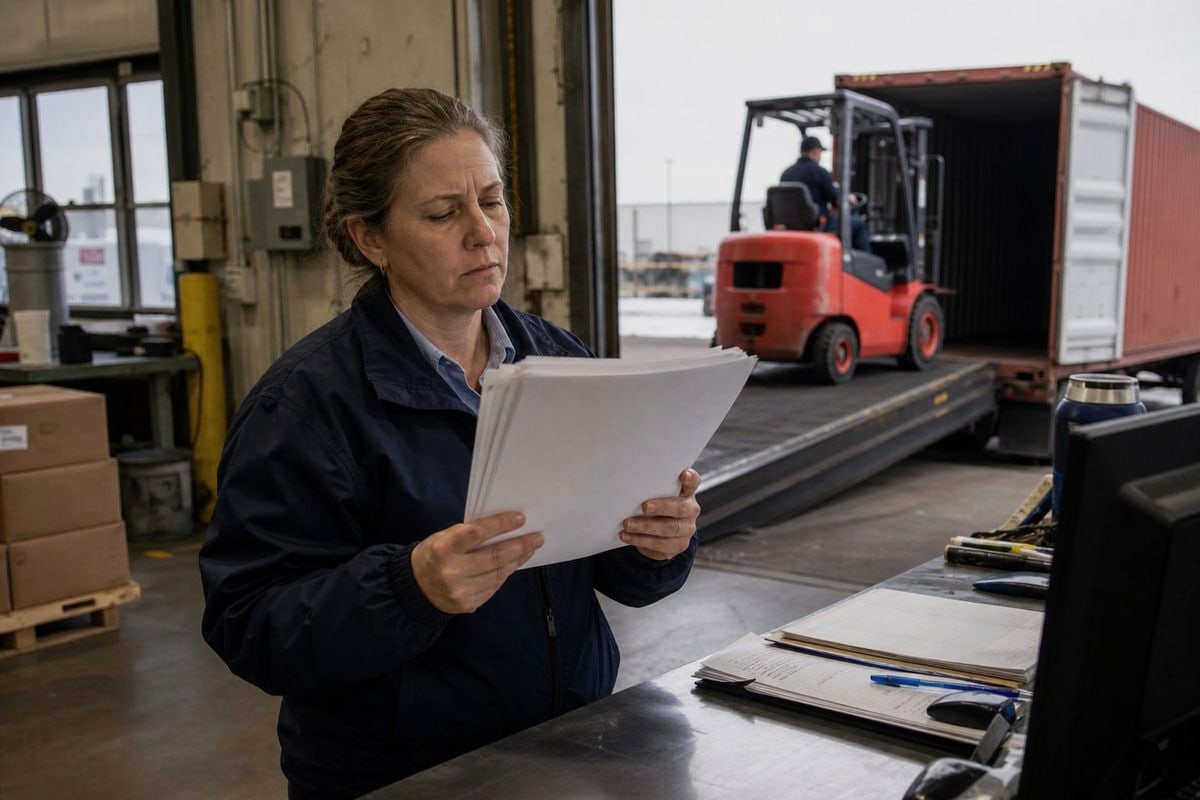
Landed cost is where the whole article comes together. Import duty rates are only one line in the equation, and buyers who focus on the factory price alone consistently underestimate their true cost per unit. Here is a realistic breakdown from the kind of door-to-door shipment we coordinate from Chinese factories to US warehouses:
| Composante de coût | Basis | Example Amount |
|---|---|---|
| Factory price (FOB) | Supplier invoice | $15,000 |
| Section 301 duty | 25% of customs value | $3,750 |
| MFN duty (HTS 8427) | 0% | $0 |
| MPF + HMF | ~0.47% combined | ~$71 |
| Ocean freight (share of 40HQ) | Per container / units loaded | $900–$1,400 |
| Assurance cargaison | ~0.3% of value | ~$50 |
| Destination handling + brokerage | Fixed fees | $350–$600 |
| Final delivery trucking | Distance-based | $300–$800 |
| Estimated landed cost | - | ~$20,400–$21,700 |
First, container utilization. Freight is one of the few controllable costs, so we evaluate forklift dimensions, mast height, and counterweight positions before recommending a 20FT, 40FT, or 40HQ. Filling unused space with chargers, spare parts, or batteries from other suppliers through consolidation spreads fixed costs across more cargo.
Second, accurate customs valuation. The 25% applies to the customs value, so make sure freight is not accidentally rolled into the declared goods value on a poorly written invoice. We review shipping documentation before departure for exactly this reason.
Third, know the used-market context. Section 301 duties have created an artificial price floor in the US secondary market, lifting resale values of domestic used forklifts. Even with the tariff, a well-planned Chinese import often still lands below comparable domestic pricing — but only if every cost line is known upfront. That is why we insist on transparent, all-in quotations before a buyer confirms his purchase order.
Chinese forklifts under HTS 8427 face a 25% Section 301 tariff. Verify classification, origin, and Chapter 99 codes early — then plan landed cost before you order.
1. Primary US agency responsible for defining and assessing customs value. ↩︎
2. Official US portal for the Harmonized Tariff Schedule codes mentioned. ↩︎
3. Technical reference for the battery technology used in electric forklifts. ↩︎
4. Official trade resource explaining the rules for determining product origin. ↩︎