- +8618603825129
- [email protected]


Every week, our logistics team in Zhengzhou fields the same question from sellers shipping to the USA: should I pay more for speed, or save money and wait longer?
Choosing between fast and slow international shipping methods depends on your product's urgency, profit margins, cargo weight, and inventory needs. Air freight delivers in 1–5 days at higher shipping costs, while sea freight takes 18–40 days but cuts expenses by 15–35%, making each method ideal for different business situations.
There is no single right answer. The best shipping speed depends on your specific situation inventory holding cost 1. Below, I break down the key factors so you can make a confident decision for every shipment.
A client once asked me to ship 500 cartons of home décor items to a U.S. warehouse. The goods were not seasonal, and the client had three months of inventory on hand capital opportunity cost 2. That conversation turned into a simple math exercise that saved the client thousands of dollars.
To calculate whether slow sea freight savings are worth it, compare the per-unit freight cost difference against your daily inventory holding cost, capital opportunity cost, and risk of stockouts. If the money saved on shipping exceeds the cost of tying up capital for the extra transit days, slow sea freight wins.
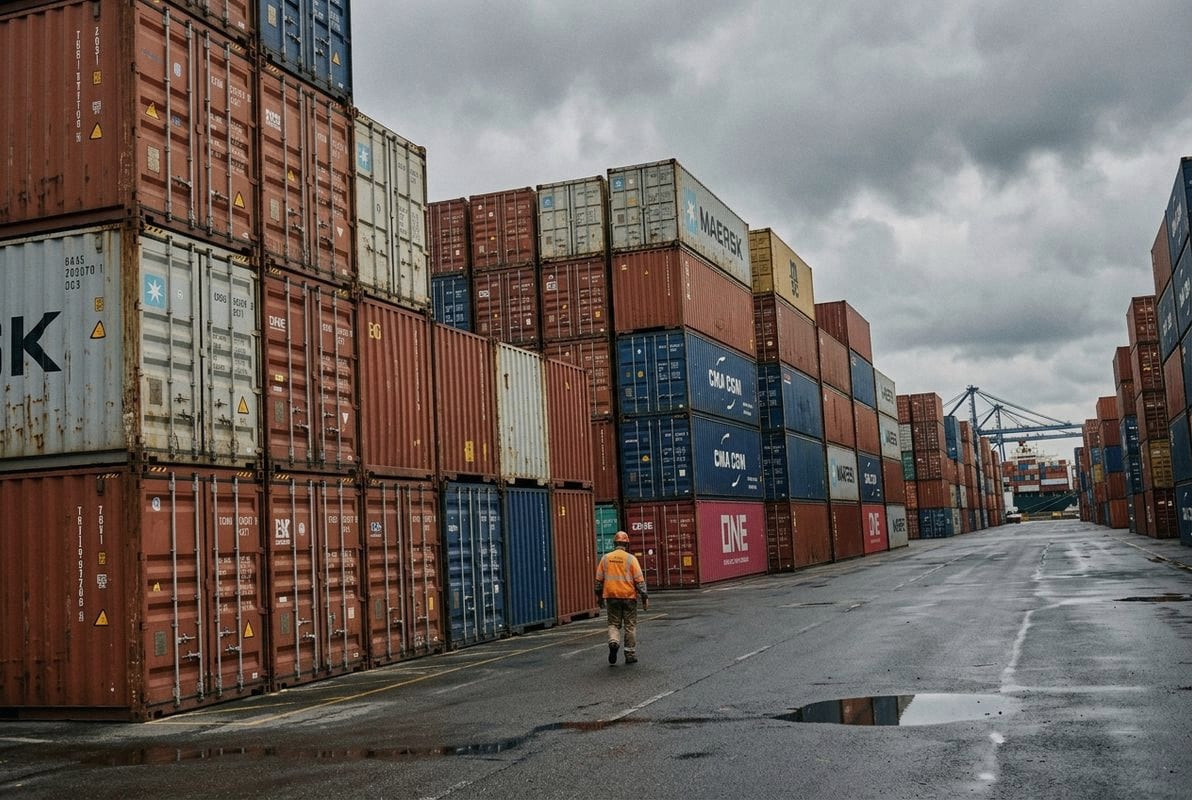
Start with raw numbers. Get quotes for both fast and slow options on the same shipment. Here is a simplified example based on a real route we handle regularly — Shenzhen to Los Angeles.
| Facteur | Fast Ship (Direct Sailing) | Slow Ship (Standard Vessel) |
|---|---|---|
| Temps de transit | 12–15 days | 25-35 jours |
| Ocean Freight Rate (per CBM) | $45–$65 | $28–$42 |
| Port Congestion Risk | Low (priority docking) | Higher (multiple port calls) |
| Schedule Reliability | High (fixed departures) | Moderate (flexible routing) |
| Typical Cost Savings | Baseline | 15%–35% cheaper |
Here is how I walk clients through the decision:
From our experience coordinating DDP shipments from China to the USA, the math flips when your product has a high sell-through rate or when you are approaching a peak sales season. If a stockout costs you $500 per day in lost Amazon sales, those 15 extra days cost $7,500 — far exceeding the $1,000 you saved on freight. I have seen sellers lose their Best Seller badge over a two-week delay. The freight savings evaporated the moment their listing went inactive.
Also consider that slow vessels make multiple port calls along the route, picking up cargo at each stop. This means the delivery time is less predictable. Port congestion at any intermediate stop can push your arrival back by a week or more. If your business cannot absorb that uncertainty, the cheap rate is not actually cheap.
Last quarter, one of our Amazon FBA clients nearly ran out of a top-selling electronics accessory. The restock order from the factory was ready, but standard ocean freight would not arrive before the existing inventory hit zero. We shifted that urgent batch to fret aérien 4 and kept the listing active — then moved the next, larger replenishment order by sea.
To keep Amazon FBA inventory stable, use a hybrid strategy: ship urgent restocks and new product launches via fast air freight for 3–5 day delivery, while routing large planned replenishments through slow ocean freight at lower shipping costs. This dual approach balances speed, cost, and continuous product availability.
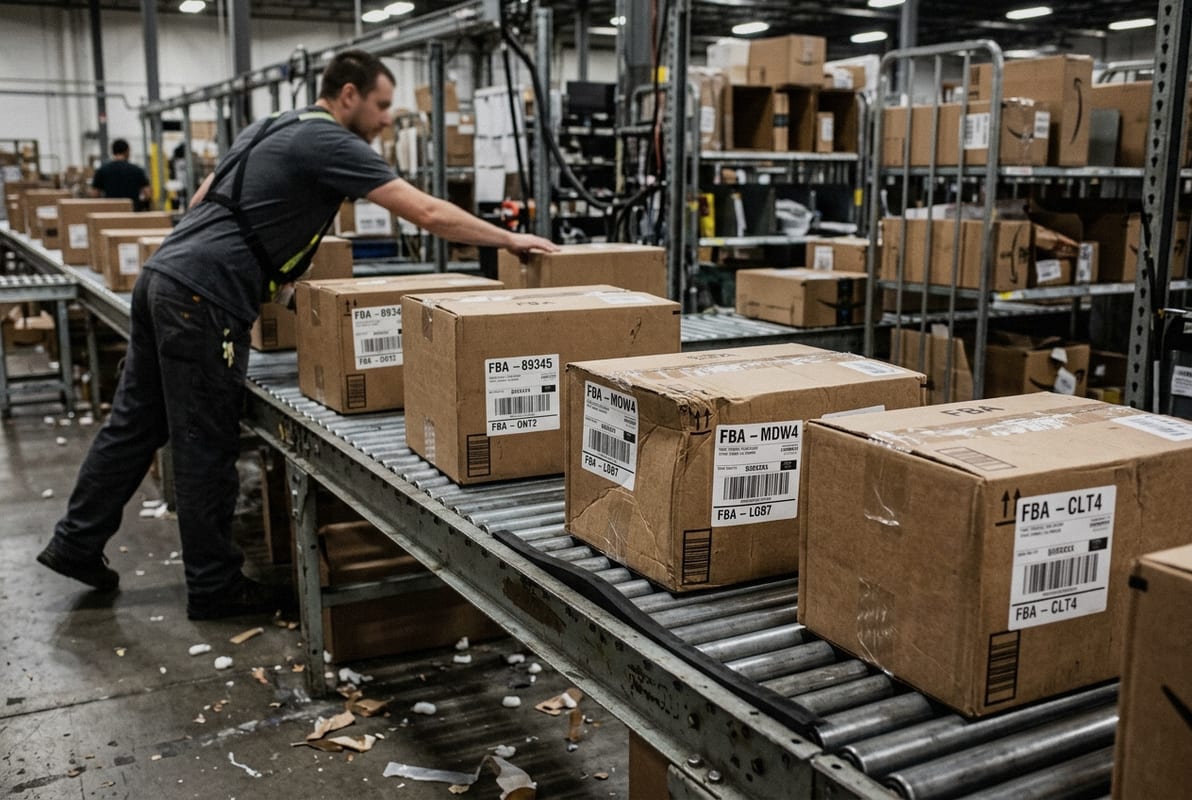
Amazon's Inventory Performance Index (IPI) 5 punishes both overstocking and stockouts. You need a method that keeps products flowing without flooding the warehouse. Here is how we advise sellers to split their shipments:
| Scénario | Recommended Method | Pourquoi |
|---|---|---|
| Initial product launch | Air freight or express shipping | Speed to market, start collecting reviews fast |
| Routine monthly restock | Ocean freight (slow ship) | Lowest cost per unit, predictable schedule |
| Emergency restock (low inventory) | Air freight or fast ocean (Matson-type) | Avoid stockout, protect listing ranking |
| Peak season prep (Q4 holiday) | Fast ocean + some air freight | Balance cost with tight delivery windows |
| Slow-moving or heavy items | Standard ocean freight | No urgency, maximize margin |
The key to making ocean freight work for FBA is ordering early. Here is a rough timeline we share with clients shipping from China to the USA:
If you plan your reorder point based on a 75-day lead time for ocean freight, you will almost never need emergency air shipments. But most sellers I work with underestimate lead times by two to three weeks. That is when they call our team asking for the fastest option available.
One of our U.S. Amazon warehouse clients had a batch of goods that needed to reach the FBA center urgently. A delay would have disrupted their sales cycle during a critical promotion. We selected the Matson express ocean service — a direct sailing line with fewer port calls, fixed schedules, and priority unloading. The cargo arrived within the client's required timeframe and was checked into the Amazon warehouse without affecting normal sales. The freight cost was higher than a standard slow vessel, but far less than full air freight. It was the right middle ground.
This is the core advantage of working with a freight forwarder who understands Amazon FBA requirements. We handle customs clearance, shipment tracking, and final delivery coordination so the seller can focus on sales, not logistics.
Air freight is not always overkill. For lightweight, high-value items — think electronics accessories, beauty products, or trending seasonal goods — the poids dimensionnel 7 is manageable, and the faster delivery time means quicker cash flow. Express shipping via DHL, FedEx, or UPS can get goods from our Zhengzhou hub to a U.S. FBA warehouse in 5–7 business days, including customs clearance. The cost per kilogram is higher, but if your product sells for $30+ with healthy margins, the math works.
I learned this lesson the hard way while helping a client ship heavy outdoor furniture from Guangzhou to the U.S. They initially wanted everything by air. When we ran the numbers, the air freight alone would have consumed 60% of the product's retail margin. We switched to ocean freight and preserved the profit.
To match shipping speed to your margins and weight, calculate freight cost as a percentage of your product's selling price. High-margin, lightweight goods (under 150 kg) justify air freight's speed. Low-margin, heavy goods benefit from slow ocean freight, where the per-kilogram rate can be 80% lower, protecting your profit.
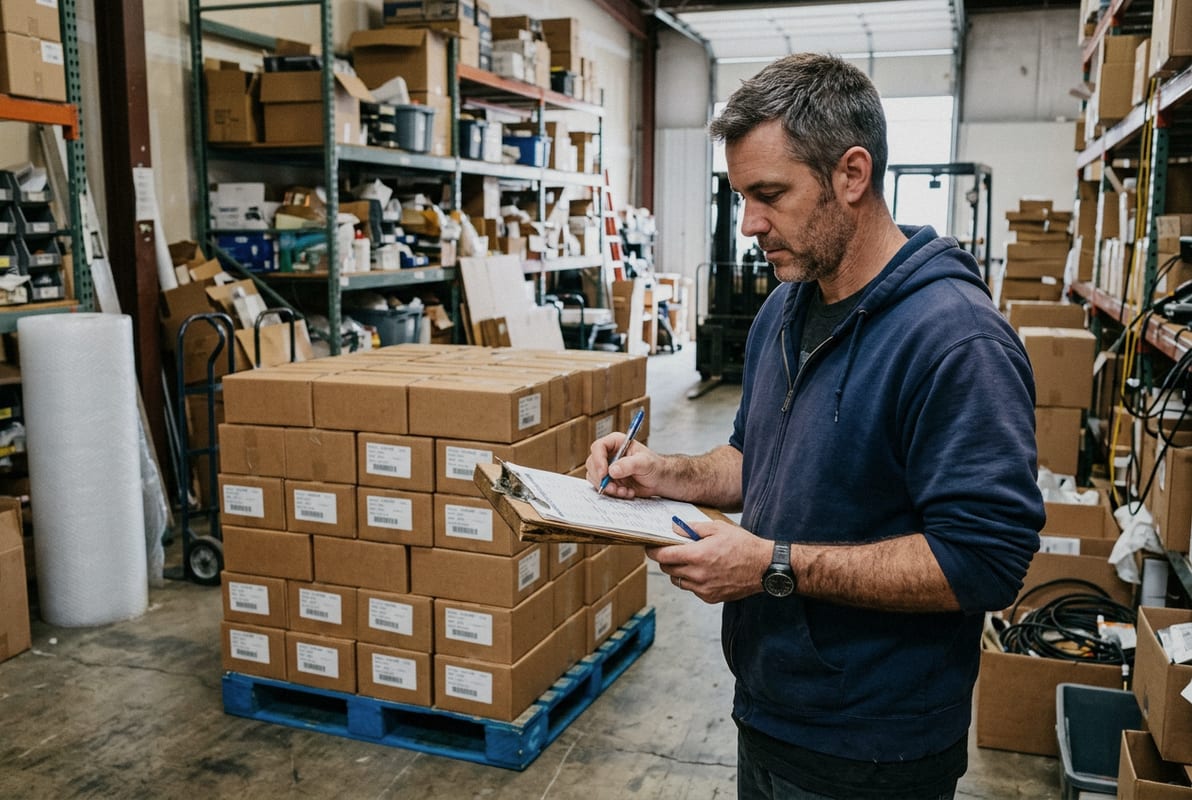
A simple rule guides our recommendations: if shipping cost exceeds 15% of your product's landed selling price, you should explore slower options. Here is a framework:
| Type de produit | Avg. Selling Price | Weight per Unit | Recommended Method | Freight as % of Price |
|---|---|---|---|---|
| Phone cases (bulk) | $12 | 0.05 kg | Economy ocean (LCL) | 3-5% |
| Bluetooth earbuds | $35 | 0.15 kg | Air freight or express | 5-8% |
| Kitchen appliances | $80 | 3 kg | Ocean freight (FCL/LCL) | 4–7% |
| Outdoor furniture set | $250 | 25 kg | Slow ocean freight | 6–10% |
| Trending toy (seasonal) | $20 | 0.3 kg | Air freight (time-sensitive) | 10-15% |
International shipping carriers charge based on the greater of actual weight and dimensional weight. Dimensional weight is calculated by multiplying length × width × height (in cm) and dividing by a factor (usually 5,000 for air freight or 6,000 for some carriers). Light, bulky products — like pillows, lampshades, or plastic storage bins — get hit hard by dimensional weight pricing on air freight.
For these cargo types, ocean freight is almost always the answer. Sea freight pricing is based on volume (CBM) rather than weight, so bulky-but-light items ship at a fraction of the air cost. Of course, choosing the right cardboard boxes for international shipping also plays a role in keeping dimensional weight under control and avoiding unnecessary costs.
On the other end, small, high-value items benefit from fast shipping. Consider a batch of 1,000 wireless earbuds worth $35,000 total. Air freight from China to the U.S. might cost $2,500. That is about 7% of the cargo value. But getting those earbuds to market two weeks earlier means two extra weeks of sales revenue. If they sell 50 units a day at $35, that is $24,500 in additional revenue during those two weeks. The air freight cost is trivially small compared to the sales gain.
This is exactly the scenario our team encounters with electronics sellers. When a product is hot and selling fast, every day matters. We coordinate express shipping with full DDP service so the seller receives goods at their door — duties, taxes, and customs clearance all handled — without any surprise costs eating into their margins.
For products with thin margins — think basic kitchenware, textiles, or building materials — ocean freight is the only sensible choice. A slow vessel charges roughly $20–$40 per CBM for basic routes, compared to $4–$7 per kg for air. When your product weighs 500 kg and sells at slim margins, the difference between air and sea can be the difference between profit and loss.
I always tell clients: know your numbers before you book. A quick spreadsheet comparing freight quotes against your landed cost will tell you exactly which speed your margins can support.
During a recent consultation, a new Amazon seller asked me why our DDP express quote was nearly double the economy option. The answer was not just about speed — it involved customs clearance priority, carrier selection, and risk tolerance. That conversation became the basis for the framework I share below.
When choosing between express and economy DDP services from China to the USA, consider delivery urgency, package weight, customs clearance speed, shipment tracking needs, carrier reliability, and total landed cost. Express DDP (5–10 days) suits urgent, high-value goods; economy DDP (20–30 days) works for planned, cost-sensitive bulk shipments.

DDP stands for Delivered Duty Paid. It means the seller or shipper handles everything: origin pickup, export customs, international freight, import customs clearance, duties, taxes, and final delivery to the buyer's door (or Amazon FBA warehouse). For U.S. importers, DDP removes the complexity of dealing with customs brokers, unexpected duty bills, and fragmented carrier handoffs.
At MBMLOG, both our express and economy DDP services 9 cover the full door-to-door chain. The difference lies in transit speed, carrier routing, and cost.
| Facteur | Express DDP | Economy DDP |
|---|---|---|
| Temps de transit typique | 5–10 business days | 20–30 business days |
| Primary Transport Mode | Air freight (DHL, FedEx, UPS) | Ocean freight + truck |
| Meilleur pour | Urgent restocks, high-value items, product launches | Bulk inventory, heavy goods, planned restocks |
| Shipment Tracking | Real-time, detailed | Available but less frequent updates |
| Dédouanement | Priority processing | Standard processing |
| Cost (per kg, approx.) | $6–$12 | $1.50–$4 |
| Weight Sweet Spot | Under 150 kg | Over 100 kg / over 1 CBM |
| Risk of Delay | Faible | Moderate (port congestion, weather) |
| Carrier Options | DHL Express, FedEx, UPS | Ocean lines + local trucking |
1. Urgency and Sales Timing
If you are racing to restock before Black Friday or your inventory will hit zero in 10 days, express DDP is the only option. Our direct airline partnerships get cargo from Zhengzhou or Shenzhen to major U.S. cities within a week. Economy DDP simply cannot meet that window.
2. Product Value and Cargo Type
High-value electronics, trending products, and goods with rapid sell-through rates justify express DDP. The faster you receive and list the product, the sooner you generate revenue. For low-value, heavy, or bulky cargo types — furniture, textiles, basic household items — economy DDP keeps your landed cost manageable.
3. Customs Clearance Complexity
Express carriers like DHL and FedEx have streamlined customs clearance processes. Packages clear U.S. customs quickly because these international shipping carriers have pre-established broker relationships and electronic filing systems. Economy DDP shipments go through standard customs queues at ports. During busy seasons, port-side clearance can add days.
4. Tracking and Visibility
Express DDP provides near-real-time shipment tracking with delivery confirmation. This matters if your customers or your Amazon account health depends on knowing exactly when goods arrive. Economy DDP offers tracking, but updates may come less frequently — especially during the ocean leg.
5. Total Landed Cost
Do not just compare freight rates. Factor in the cost of potential delays, storage fees at destination, and the opportunity cost of slower inventory turnover. Sometimes economy DDP's lower rate comes with hidden costs — like Amazon's long-term storage fees if your shipment arrives later than planned and you have already overstocked with a backup order.
New Amazon sellers launching their first product often benefit from express DDP. Speed to market is critical, and the shipment volumes are small. As the business matures and order volumes grow, shifting the bulk of replenishment to economy DDP makes financial sense. It is also important to understand the DDP e-commerce outer packaging requirements for last-mile courier delivery, as proper packaging ensures your shipments meet carrier standards and avoid rejections at the final stage. Our team helps clients transition between these modes seamlessly, adjusting the split as sales data evolves.
Choosing between fast and slow international shipping methods 10 comes down to urgency, margins, weight, and inventory strategy. Use the frameworks and tables above to run your own numbers. When you need help deciding, our team at MBMLOG is ready to find the right balance for every shipment.
1. Explains inventory holding costs, their components, and calculation. ↩︎
2. Defines opportunity cost of capital in a business and investment context. ↩︎
3. Provides a comprehensive definition and explanation of sea freight. ↩︎
4. Replaced HTTP 404 link with an authoritative Wikipedia page on air cargo, which encompasses air freight. ↩︎
5. Official Amazon explanation of the Inventory Performance Index. ↩︎
6. Explains the process and importance of customs clearance in international shipping. ↩︎
7. Explains dimensional weight and its calculation in shipping. ↩︎
8. Provides official Amazon guidance on FBA inventory management. ↩︎
9. Defines DDP shipping and its implications for sellers and buyers. ↩︎
10. Explains various international shipping methods and considerations. ↩︎