- +8618603825129
- [email protected]


Buyers often ask me the cost to ship an electric forklift from China to Saudi Arabia, then get shocked when hidden fees double their budget. Our team at MBMLOG sees this weekly.
The cost to ship an electric forklift from China to Saudi Arabia typically runs USD 2,500–8,000 for logistics alone. This covers ocean freight (USD 1,200–3,800 for a 20ft container), lithium battery surcharges (USD 200–400), port charges, customs clearance, plus 5–12% duty and 15% VAT.
That range is wide for a reason. Your final number depends on the forklift, the battery, the route, and the shipping mode. Let me break each piece down for you.
Last quarter, our Zhengzhou team quoted two nearly identical forklifts to Jeddah. One cost 40% more to ship. The difference came down to battery type and pickup distance.
Five main factors drive the cost: forklift size and weight, battery type (lithium adds compliance fees), shipping mode (FCL, LCL, or DDP), origin and destination ports, and current sea freight rates. China inland trucking (USD 200–800) and Saudi destination charges add further variation.
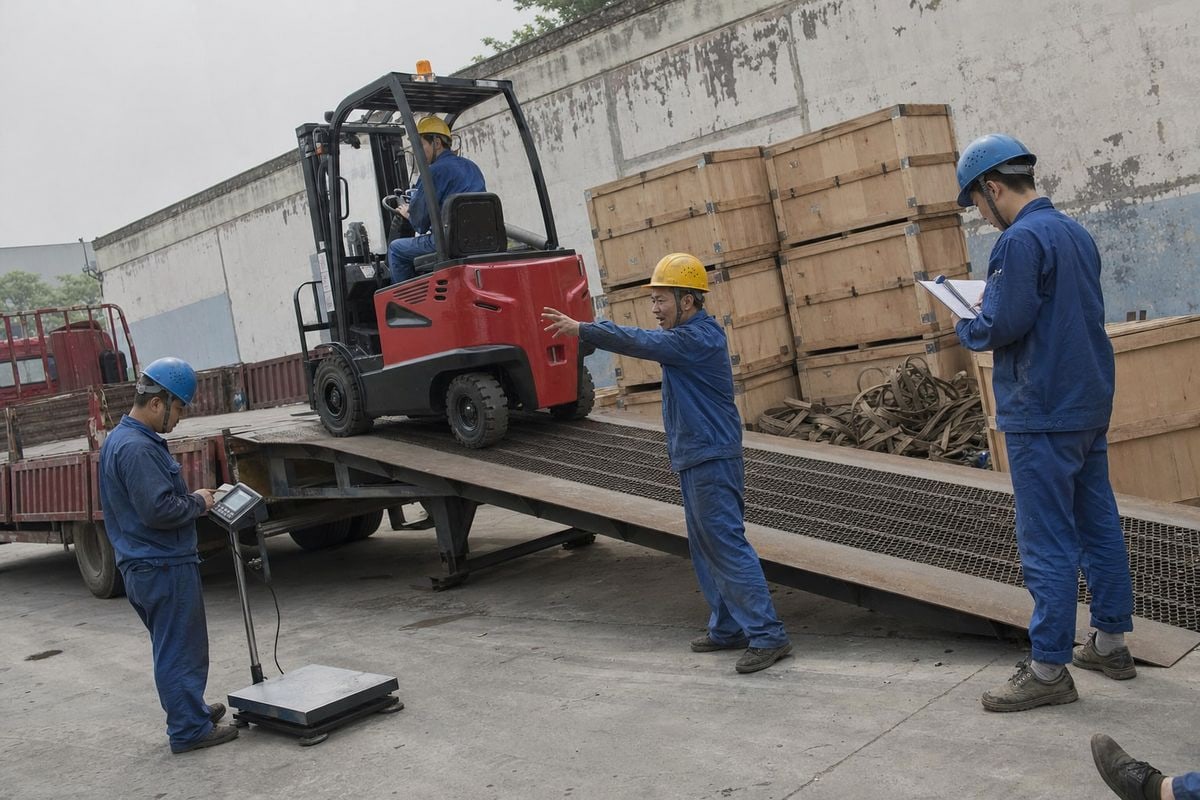
The shipping cost is not one number. It is a stack of separate charges, and each one can move up or down based on your specific shipment. When we build a quotation for a forklift importer, we price every layer from the factory floor in China to the port gate in Saudi Arabia.
Here is the typical cost stack we see for a single electric forklift moving by sea:
| Composante de coût | Typical Range (USD) | Notes |
|---|---|---|
| China inland pickup | $200–$800 | Depends on factory distance from port |
| Ocean freight (20ft) | $1,200–$3,800 | 40ft/40HQ runs $1,800–$5,800 |
| Lithium battery DG surcharge | $200–$400 | Applies to lithium-ion forklifts |
| Destination customs brokerage | $100–$300 | Customs clearance Saudi Arabia |
| Port handling and local charges | $150–$500+ | Varies by terminal |
| Assurance cargaison | ~$150 | Based on declared value |
Geopolitical disruption in the Red Sea has pushed many carriers to reroute around the Cape of Good Hope. That adds 10–14 days to transit time from China and a freight premium of USD 800–1,500 per container. Normal transit runs 20–40 days by sea, with common destinations being Jeddah Islamic Port 1, King Abdulaziz Port in Dammam, and King Abdullah Port. We always confirm the routing before quoting, because a Cape routing changes both the price and your delivery planning.
Some buyers ask us about Ro-Ro shipping. It can work for wheeled machinery, but for a single electric forklift, containerized sea freight usually offers better security and more sailing options on this lane.
A distributor once sent us a forklift for booking without any battery paperwork. The carrier rejected the cargo at the port. That single missing UN38.3 report cost him three weeks.
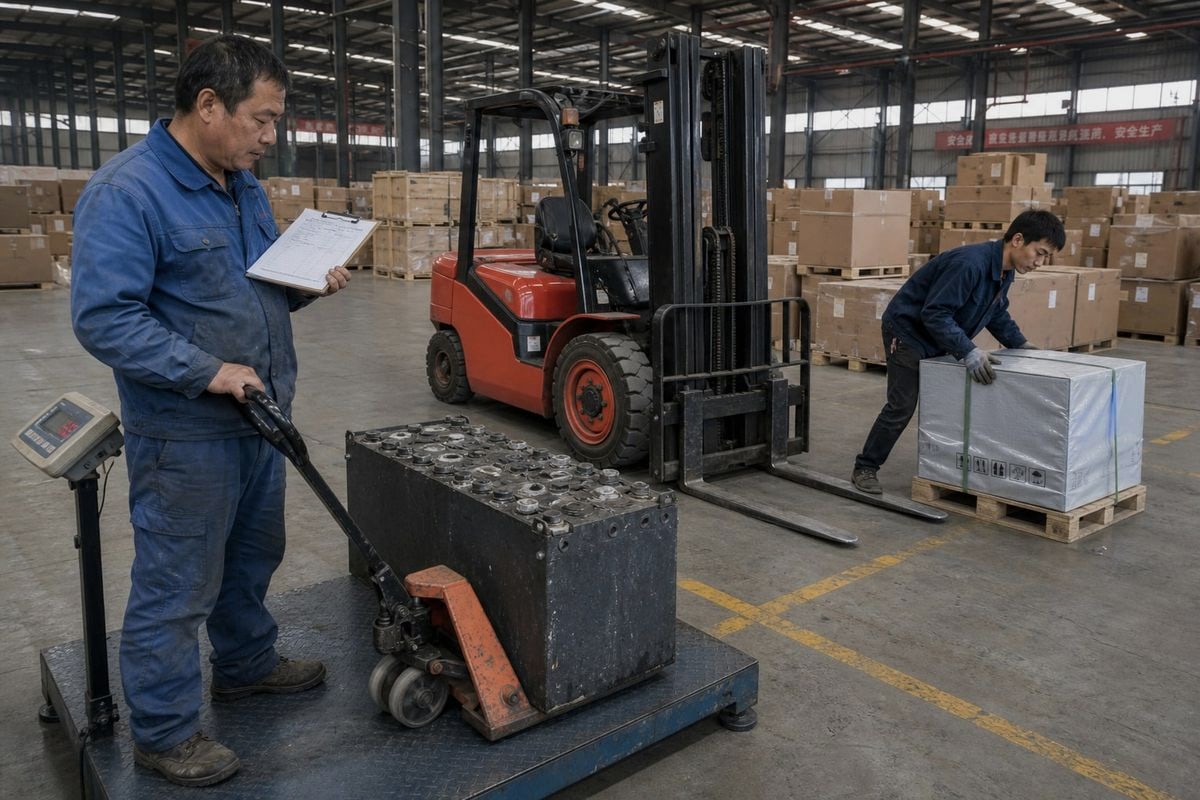
Lithium battery forklifts typically add USD 200–400 in dangerous goods surcharges, plus documentation costs for the MSDS and UN38.3 test report. Electric forklifts with lithium-ion packs are classified as Class 9 Dangerous Goods (UN3480/UN3481), which triggers extra carrier review and handling requirements.
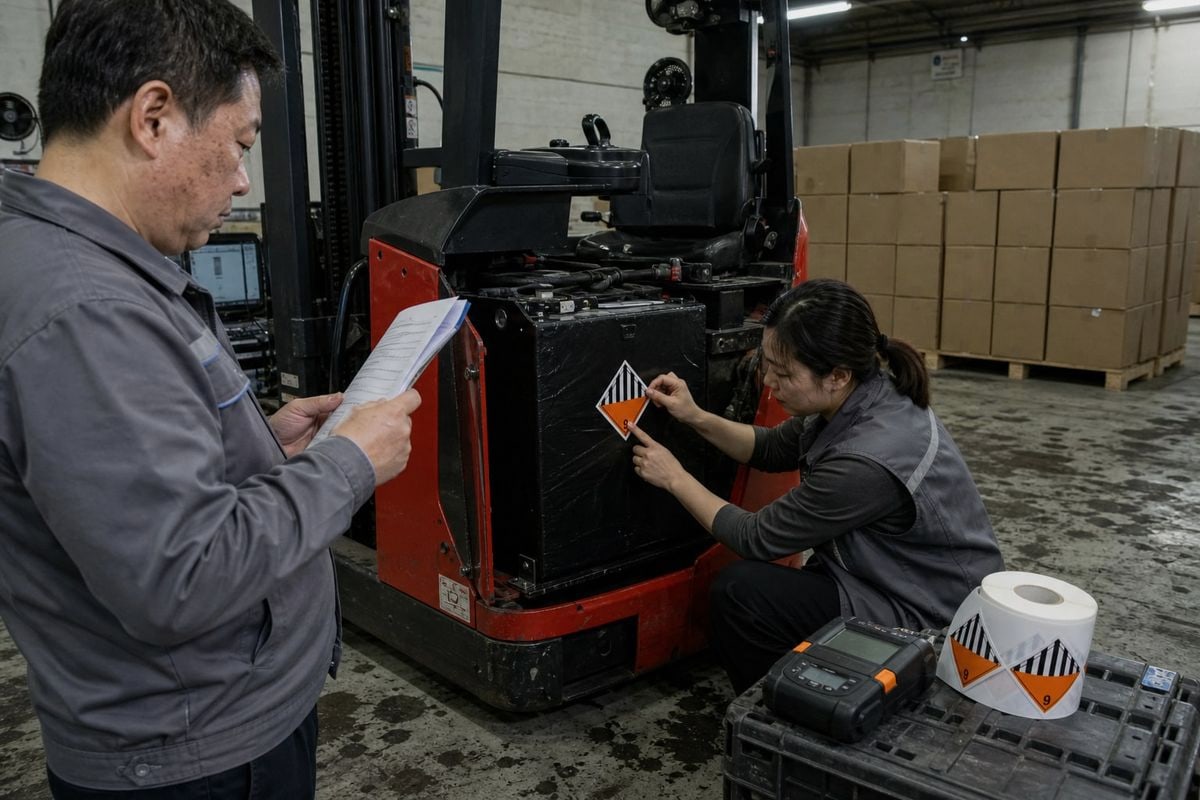
Battery compliance is now the biggest cost differentiator for electric forklift shipments. In our experience handling lithium battery cargo 2 from China, the surcharge itself is the smallest part of the risk. The real cost comes from delays when documentation is wrong or missing.
Lithium battery shipping regulations require several documents before a carrier will accept your forklift:
| Objet | Lithium-Ion Forklift | Lead-Acid Forklift |
|---|---|---|
| DG classification | Class 9 (UN3480/UN3481) | Simpler handling in most cases |
| DG surcharge | $200–$400 | Usually none |
| Required documents | MSDS + UN38.3 + DG declaration | Standard shipping docs |
| Carrier acceptance | Requires pre-approval review | Broadly accepted |
| SoC requirement | Often max 30% at loading | Non applicable |
We coordinate battery specifications with the factory before the forklift leaves the production line. Checking the paperwork early costs nothing. Fixing it at the port costs storage fees, rebooking fees, and lost time.
The trade-off we weigh on almost every quotation is simple: pay for a whole container you may not fill, or pay per cubic meter and accept extra handling of your forklift.
Choose FCL for one full-size forklift or multiple units; a 20ft container runs USD 1,200–3,800 with less handling risk. Choose LCL (USD 40–200 per CBM) only for compact pallet trucks or stackers where the volume charge clearly beats a dedicated container.
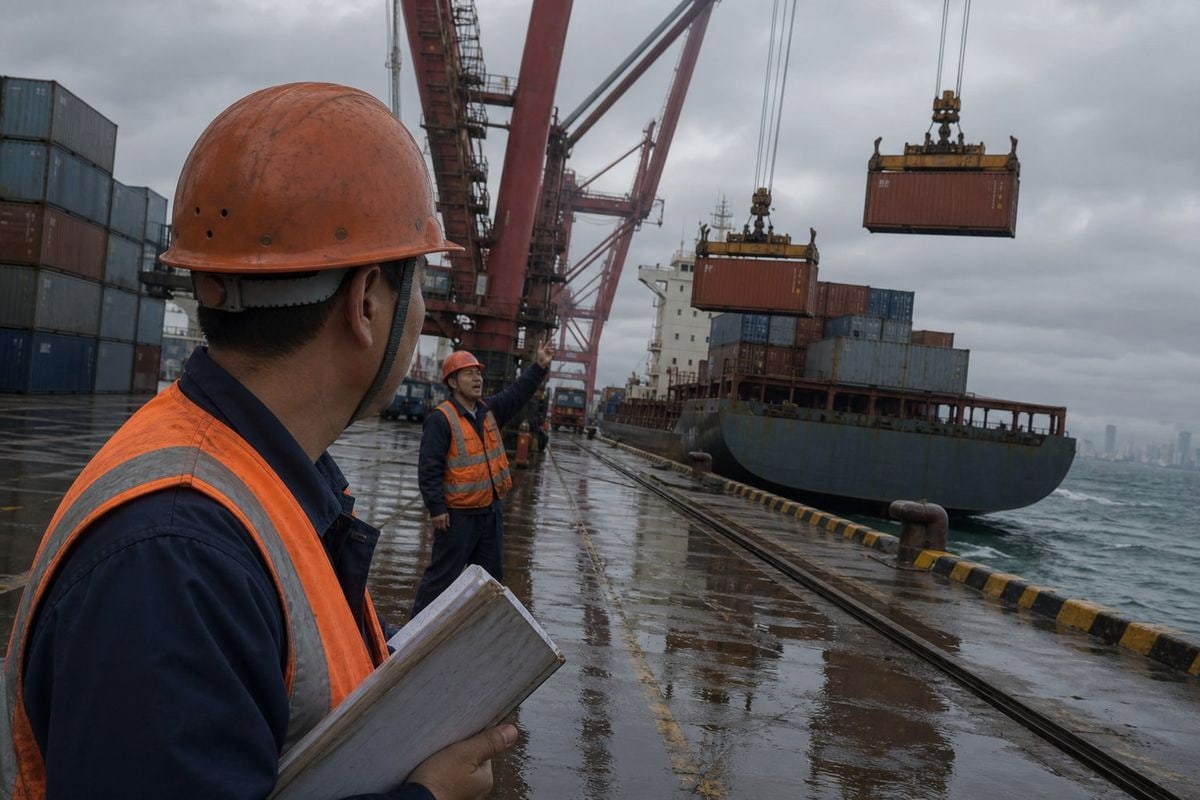
Les FCL vs LCL shipping decision matters more for forklifts than for ordinary cargo. A forklift is heavy, high-value, and sensitive to handling. Sea freight rates for FCL look higher upfront, but FCL is usually the standard for commercial forklift volumes because it minimizes per-unit cost and handling risk.
| Scénario | Best Option | Pourquoi |
|---|---|---|
| One standard counterbalance forklift | 20ft FCL | Secure loading, no shared handling |
| 2–4 forklifts or forklifts + parts | 40ft/40HQ FCL | Lower freight cost per unit |
| One compact stacker or pallet truck | LCL possible | Volume charge may beat container cost |
| Multi-supplier project shipment | 40HQ FCL consolidation | Combine forklifts, batteries, chargers, spares |
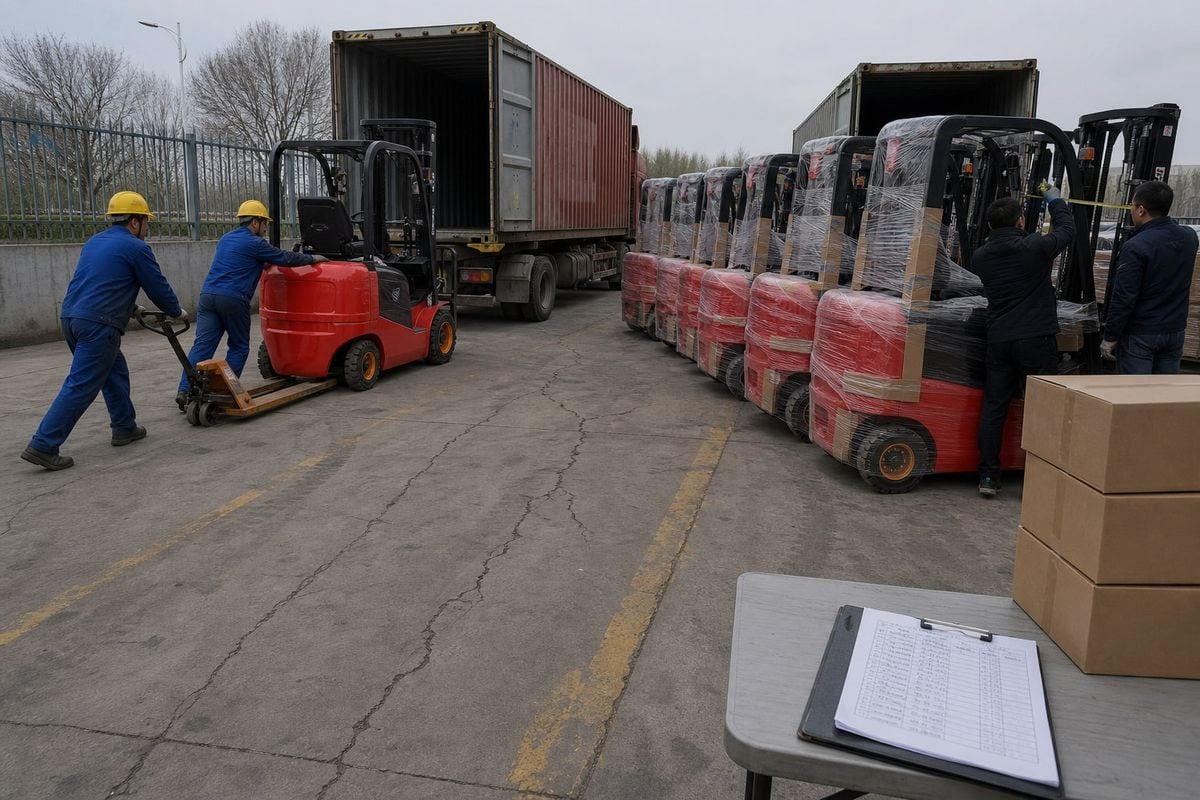
With FCL, your forklift is loaded once at origin and unloaded once at destination. We supervise the blocking, bracing, and weight distribution inside the container. With LCL, your machine shares space with other cargo and passes through consolidation warehouses. Each extra touch adds damage risk to a machine worth tens of thousands of dollars.
There is also a smart middle path. If you buy a forklift from Factory A, batteries from Factory B, and chargers from Factory C, we consolidate everything into one container at our warehouse. Spare parts fill the unused space above and around the machine. That drops your effective freight cost per item without adding risk. This is how a good freight forwarder China to KSA earns its fee: not by finding a cheaper base rate, but by using the container better.
A lesson we learned early on this lane: the cheapest headline quote almost always becomes the most expensive shipment. Low base rates often hide the charges that hit at destination.
Watch for 15% VAT, customs duty of 5–12% depending on HS code, SABER certification costs (PCoC and SCoC), port handling fees of USD 150–500+, demurrage from clearance delays, and inland trucking from port to your site. These can exceed the ocean freight itself.
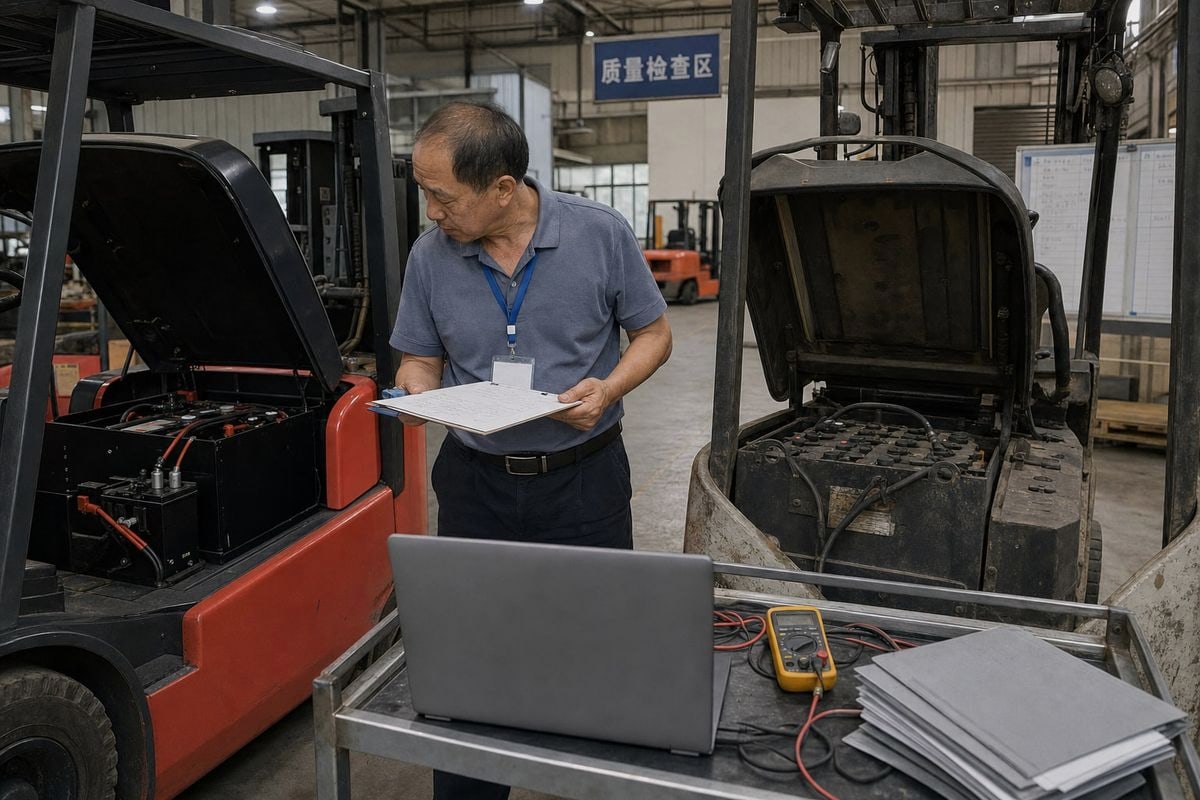
Import duties and taxes are where the landed cost really grows. On a USD 30,000 forklift, even a 5% duty adds USD 1,500, and the standard 15% TVA 3 applies on top of the customs value. If your HS code lands at the higher end of the 5–12% duty band, the gap widens further. This is why we tell buyers to budget the full landed cost, not just the freight quote.
Saudi Arabia requires product registration through the SABER platform 4 before your forklift arrives. You need two certificates: the Product Certificate of Conformity (PCoC) and the Shipment Certificate of Conformity (SCoC). Without them, your container sits at the port accumulating storage charges. The good news: SABER certification now integrates with the FASAH system, enabling automated electronic customs clearing that significantly reduces port dwell times for pre-certified equipment.
One opportunity works in your favor: under Saudi Vision 2030, importers holding a valid Industrial License may qualify for customs duty exemptions on electric machinery supporting the Kingdom's Green Logistics initiatives. We flag this to qualifying buyers before shipment, because the exemption must be arranged in advance.
Shipping an electric forklift from China to Saudi Arabia costs USD 2,500–8,000 in logistics, plus duty and VAT. Plan the full landed cost, and battery paperwork, early.
Underestimating one line item can wipe out your margin on the entire machine. Get the SABER certificates, the UN38.3 report, and a transparent all-in quote before your forklift leaves the factory. If you want a clear landed-cost breakdown for your next shipment, our team handles the entire chain from Chinese factory pickup to Saudi port clearance, so you only manage one partner instead of six.
1. Saudi Ports Authority overseeing major entry points like Jeddah Islamic Port for commercial cargo. ↩︎
2. International body regulating the maritime transport of dangerous goods, including lithium batteries. ↩︎
3. Official Saudi authority for tax and customs, confirming the 15% VAT rate for imports. ↩︎
4. Official Saudi platform for product conformity and mandatory registration for imported machinery. ↩︎