- +8618603825129
- [email protected]


Port charges when importing electric forklifts from China confuse almost every new buyer we work with. The factory quote looks great — then the invoices from the port start arriving. Suddenly the landed cost jumps, margins shrink, and nobody warned you. After coordinating hundreds of forklift containers from our base in Zhengzhou, we built a clear cost map so importers never get blindsided again.
Port charges when importing electric forklifts from China typically total $300–$1,200 per container. This includes origin handling of roughly $58–$116, destination terminal handling of $200–$600, documentation fees of $50–$150, and a $200–$450 dangerous goods surcharge if the forklift uses a lithium battery.
That answer covers the headline numbers. But port charges are a stack of separate fees, not one line item. Let me break down each layer so you can estimate your own landed cost accurately.
Last month, a Texas forklift dealer sent me a competitor's quote with one vague line: "port fees." Our team broke it into seven separate charges so he could actually compare offers.
Expect $300–$1,200 in total port charges per container. Origin port charges in China run about $58 per 20GP or $116 per 40HQ, destination terminal handling adds $200–$600, documentation fees add $50–$150, and security surcharges add $30–$100 per shipment.
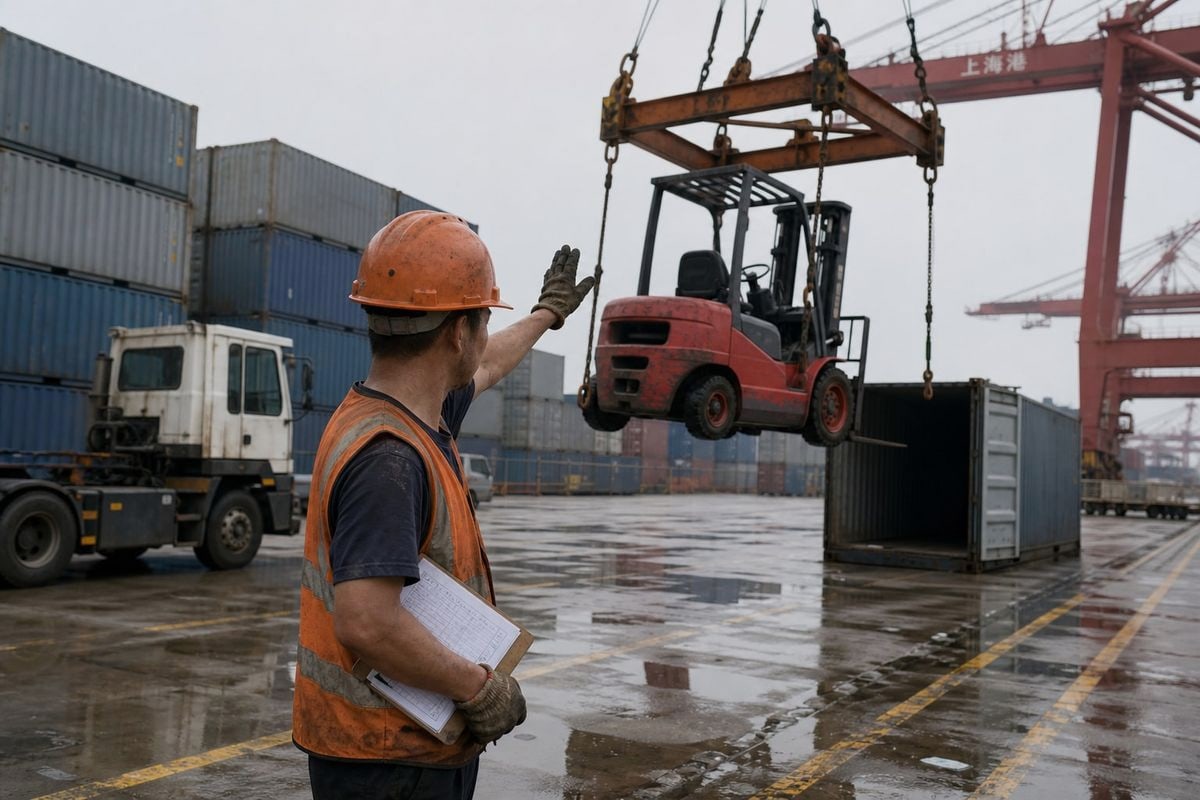
Port charges split into two buckets: what gets paid in China, and what gets paid at your arrival port. Many buyers only budget for one side. That is the most common mistake I see.
At the port of loading, the main items are terminal handling 1, export documentation, and small infrastructure fees. As a reference point, Shanghai port charges run around USD 58 for a 20GP and USD 116 for a 40GP or 40HQ. Chinese ports also apply a port construction fee of roughly RMB 100–150 depending on container size, plus minor terminal and documentation charges. Under FOB terms, your supplier usually absorbs these. Under EXW, they land on you.
Destination Terminal Handling Charges (DTHC) are the biggest single item, typically $200–$600 per container. This covers moving your forklift from the vessel to the terminal yard. Then add documentation handling — manifest entry and bill of lading processing — at $50–$150, plus port security and infrastructure surcharges of $30–$100.
| Charge Item | Typical Range | Where Paid |
|---|---|---|
| Origin terminal handling (40HQ) | ~$116 | Chine |
| Port construction fee | RMB 100–150 | Chine |
| Destination terminal handling (DTHC) | $200–$600 | Arrival port |
| Documentation / B/L processing | $50–$150 | Arrival port |
| Security & infrastructure surcharge | $30–$100 | Arrival port |
| DG surcharge (lithium battery units) | $200–$450 | Per booking |
One broader estimate from a 2026 shipping guide puts total port handling and local charges at $150–$500 or more, depending on the destination port. In our experience shipping to US ports, the higher end of that range is more realistic for the West Coast gateways.
A trade-off we weigh on almost every booking: ship one forklift now via LCL, or wait two weeks and fill a full container. The port-charge math usually decides it.
Five factors drive your port charges: the ports of loading and arrival, container type and size, FCL versus LCL shipping, the forklift's battery chemistry and dangerous goods classification, and your Incoterm, which decides whether you or the supplier pays each fee.
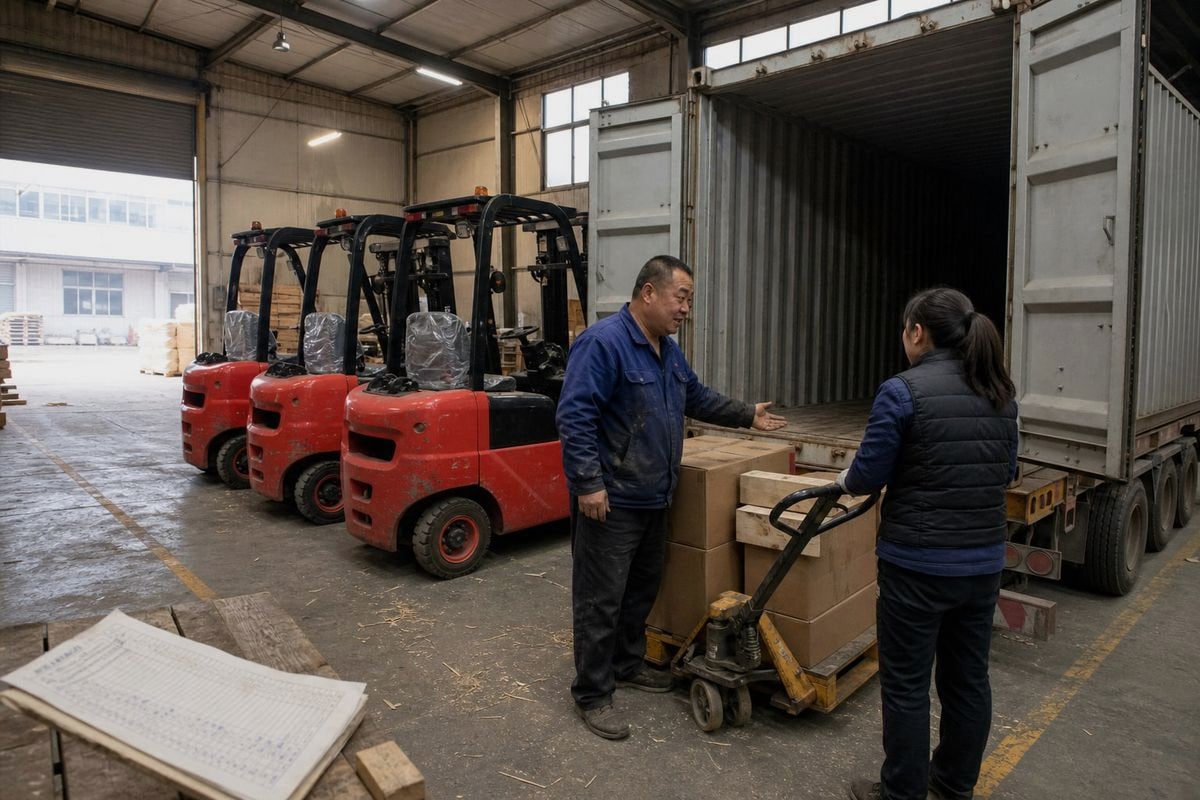
Let me walk through each factor, because the differences are not small. Two identical forklifts can carry very different port-charge bills depending on how the shipment is structured.
Full container loads spread fixed port fees across every forklift inside. LCL shipments add CFS (container freight station) charges for deconsolidation, and those fees are billed per cubic meter. One 3-ton electric forklift shipped alone via LCL often pays more in handling than three forklifts sharing a 40HQ. This is why we push clients toward consolidation — batching forklifts, chargers, and spare parts from multiple suppliers into one container cuts the per-unit port cost sharply.
Under Incoterms 2020, the fee split changes dramatically:
| Incoterm | Origin Port Charges | Fret maritime | Destination Port Charges |
|---|---|---|---|
| EXW | Buyer pays | Buyer pays | Buyer pays |
| FOB | Seller pays | Buyer pays | Buyer pays |
| CIF | Seller pays | Seller pays | Buyer pays |
| DDP | Seller pays | Seller pays | Seller pays (verify scope) |
Notice that CIF still leaves destination port charges with you. Many buyers assume CIF means "everything covered until my door." It does not. And with DDP offers, always ask for a written list of included charges — some quotes hide markups or quietly exclude terminal handling charges.
Lead-acid forklifts ship as general cargo in most cases. Lithium battery forklifts often carry a Class 9 dangerous goods 2 classification, which triggers DG booking surcharges and stricter documentation. I cover this in detail in the next section, because it deserves its own discussion.
US imports add two government fees calculated on cargo value: the Merchandise Processing Fee 3 (MPF) at about 0.3464% of declared value on formal entries, and the Harbor Maintenance Fee 4 (HMF) at 0.125% for ocean shipments. These are customs clearance fees rather than true port charges, but they arrive in the same invoice stack, so budget for them. European destinations skip MPF and HMF but apply their own terminal tariffs and import duties and taxes of 0%–10% depending on the country.
A lesson we learned the hard way: an importer once booked a lithium forklift as general cargo through another forwarder. The carrier rejected it at the terminal, and re-booking cost him three weeks.
Yes. You can reduce destination port charges by consolidating multiple units into one FCL container, classifying the lithium battery correctly before booking, clearing customs within the free time to avoid demurrage, and negotiating Incoterms so charge responsibility is clear upfront.
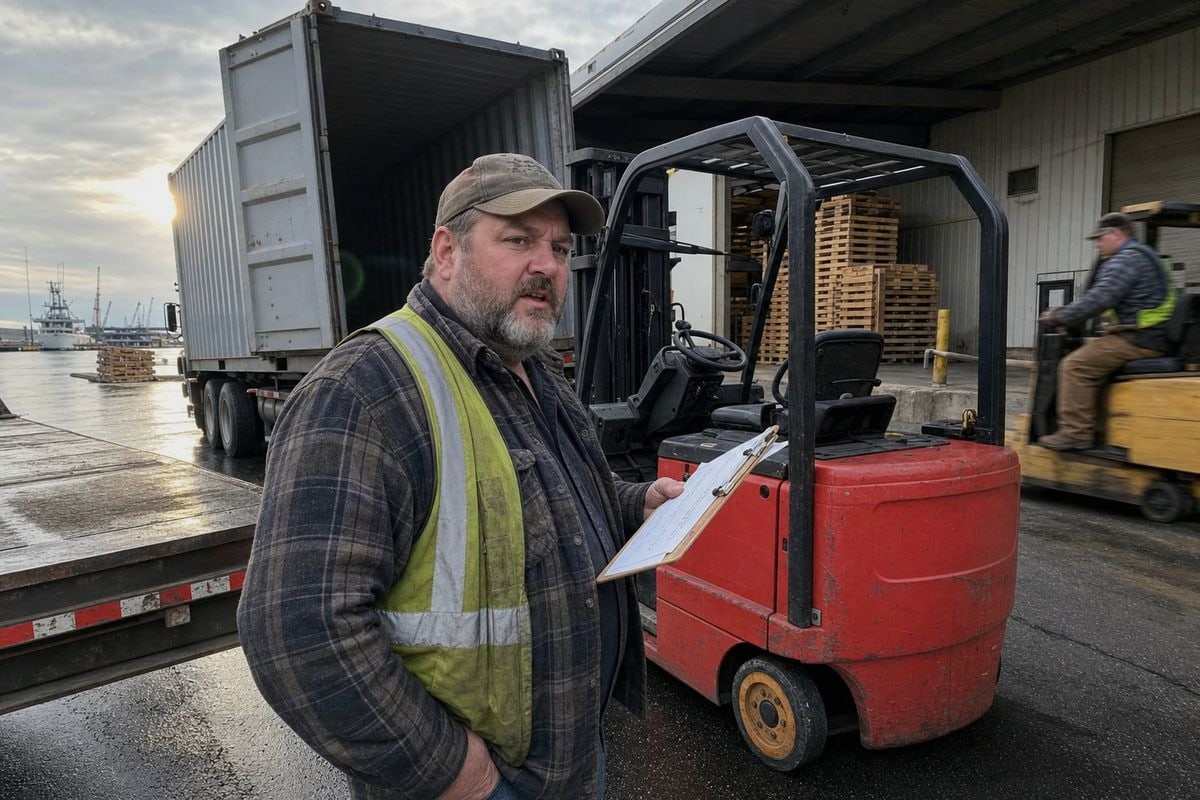
Lithium battery forklifts face a real cost premium at the port, but most of that premium is manageable if you plan before the cargo leaves the factory. Here is the playbook we use.
Lithium battery forklifts classified as Class 9 dangerous goods trigger a DG surcharge of roughly $200–$450 per booking, depending on the carrier and port of loading. You usually cannot eliminate this fee, but you can avoid paying it twice. Misdeclared cargo gets rejected, re-documented, and re-booked — each step adds cost. We verify battery specifications, UN numbers, and MSDS documents with the factory before booking, so lithium battery shipping regulations 5 are satisfied on the first attempt. Also watch battery State of Charge rules: some transshipment ports now require lithium-ion units to arrive under 30% capacity, and non-compliance can lead to expensive safety discharge service fees.
The DG surcharge applies per booking, not per forklift. One booking with three lithium forklifts pays one surcharge. Three separate LCL bookings pay three. The same logic applies to documentation fees and terminal handling. When our clients buy forklifts from Factory A, batteries from Factory B, and chargers from Factory C, we pick up from all three, consolidate at our warehouse, and load one container.
Demurrage and detention charges are the most dangerous variable cost. After a standard 3-to-5-day free time period, storage fees often exceed $150 per day. A one-week clearance delay can cost more than all your other port charges combined. Accurate HTS code classification and complete pre-departure documentation are the cheapest insurance you can buy.
A distributor in California once forwarded me an arrival invoice with eleven line items — he recognized four. Our team now sends clients a fee glossary before every vessel arrives.
Watch for demurrage exceeding $150 per day after free time, chassis and container drayage fees, wharfage fees, customs exam charges, MPF and HMF on US entries, dead-battery handling surcharges, and DDP quotes that quietly exclude destination terminal handling.

Hidden fees fall into three groups: charges that are real but rarely quoted, charges triggered by delays, and charges triggered by the forklift itself.
Wharfage fees, pier pass charges, and clean truck fees appear at many US ports but rarely show up in freight forwarder services quotations from budget providers. Container drayage — trucking the container from the terminal to your warehouse — is often quoted separately, and chassis rental fees ride along with it. On the customs side, the MPF (0.3464% of value) and HMF (0.125% of value) are frequently blended into "cost calculators" alongside true port charges, which confuses buyers comparing quotes. Ask any provider to separate freight, port charges, and customs fees into distinct columns.
Demurrage starts when your container sits at the terminal past free time. Detention starts when you hold the container too long after pickup. Both can exceed $150 per day. Common triggers include an incorrect bill of lading, HS code disputes, missing battery documentation, or a customs exam. Exam fees themselves — X-ray or full devanning — can add several hundred dollars, and you pay them even when the cargo passes.
Two newer charges catch electric forklift importers off guard. First, dead-on-arrival surcharges: if the forklift's battery is fully depleted at arrival, some ports charge premium towing and specialized lifting fees to move the unit off the quay. We ask factories to ship units with enough residual charge for terminal movement while staying under the 30% SoC ceiling. Second, emerging Battery Passport schemes are creating new compliance verification fees at some ports to validate battery safety data. On the positive side, a few Green Port initiatives are starting to offer zero-emission handling credits that can trim terminal fees for electric industrial equipment.
| Hidden Fee | Trigger | Typical Cost |
|---|---|---|
| Demurrage / detention | Clearance delay past free time | $150+/day |
| Customs exam | Random or documentation-flagged inspection | $200–$800+ |
| Chassis rental | Container drayage from terminal | $30–$60/day |
| Dead-battery handling | Depleted battery at arrival | Premium lifting fees |
| Safety discharge service | Battery SoC above port limit | Varies by port |
| Excluded DTHC on "DDP" quotes | Vague quotation scope | $200–$600 |
Port charges when importing electric forklifts from China stack up fast — but they are predictable. Know each fee, consolidate shipments, classify batteries correctly, and demand itemized quotes before booking.
1. Wikipedia entry explaining terminal handling charges and their role in shipping logistics. ↩︎
2. Wikipedia overview of dangerous goods classifications, including Class 9 for batteries. ↩︎
3. Official CBP page for the Merchandise Processing Fee (MPF) mentioned in the text. ↩︎
4. Official CBP resource explaining the Harbor Maintenance Fee (HMF) for ocean imports. ↩︎
5. Federal safety guidelines for shipping lithium batteries, relevant to DG surcharges. ↩︎