- +8618603825129
- [email protected]

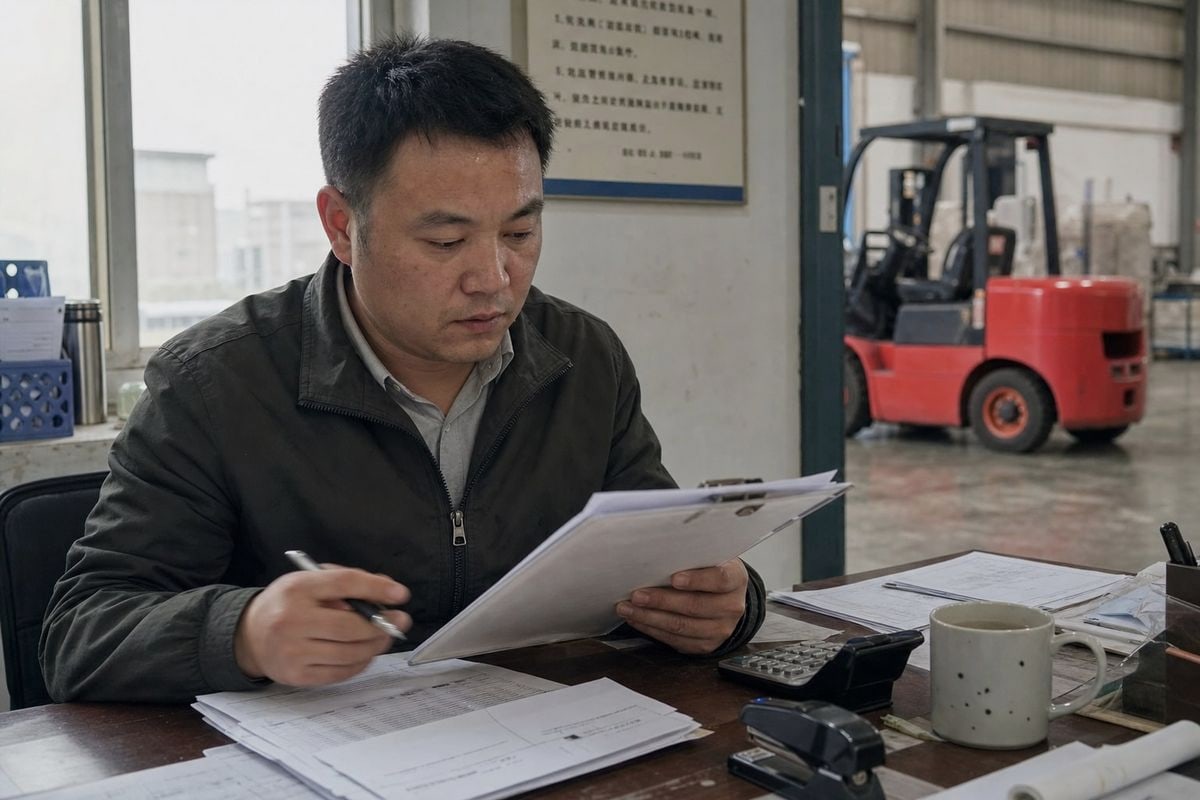
A commercial invoice for forklift shipping can make or break your customs clearance. At our Zhengzhou logistics office, I have watched one missing HS code strand a container for two costly weeks.
To prepare a commercial invoice for forklift shipping, list the full shipper and consignee details, describe each forklift with make, model, and serial number, declare the correct HS code and value, state the country of origin and Incoterms, and attach battery documentation for electric units.
That is the short answer. Below, I will walk you through every field, every code, and every common trap, based on the forklift shipments we handle from China every week.
Last month, our team reviewed an invoice from a first-time importer. It said only "machinery, 2 units." We rewrote it before the port even saw it, and clearance went smoothly.
A commercial invoice for electric forklift shipments must include the exporter and consignee details with tax IDs, invoice number and date, detailed forklift descriptions with serial numbers, quantity, unit and total value, currency, country of origin, HS code, weights, Incoterms, and battery specifications.

Think of the invoice as a customs document 1 first and an accounting document second. Customs officers do not know your forklift. They only know what your paper tells them. So every field must be complete, accurate, and consistent with your Packing List and Bill of Lading.
In our export documentation work, we group the required fields into four blocks. Here is the structure we use for every forklift shipment.
| Field Block | What to Include | Why Customs Cares |
|---|---|---|
| Parties | Full legal names, addresses, phone, and Tax IDs (EORI for the EU, EIN for the US) | Identifies who is legally responsible for the import |
| Références | Invoice number, invoice date, Bill of Lading number, PO number | Links the invoice to the shipment and the sales contract |
| Goods | Make, model, serial number, new/used status, battery type 2, quantity, HS code | Confirms what the goods actually are for classification |
| Values | Unit price, total price, currency, gross and net weight, Incoterms | Determines customs valuation 3 et droits d'importation 4 |
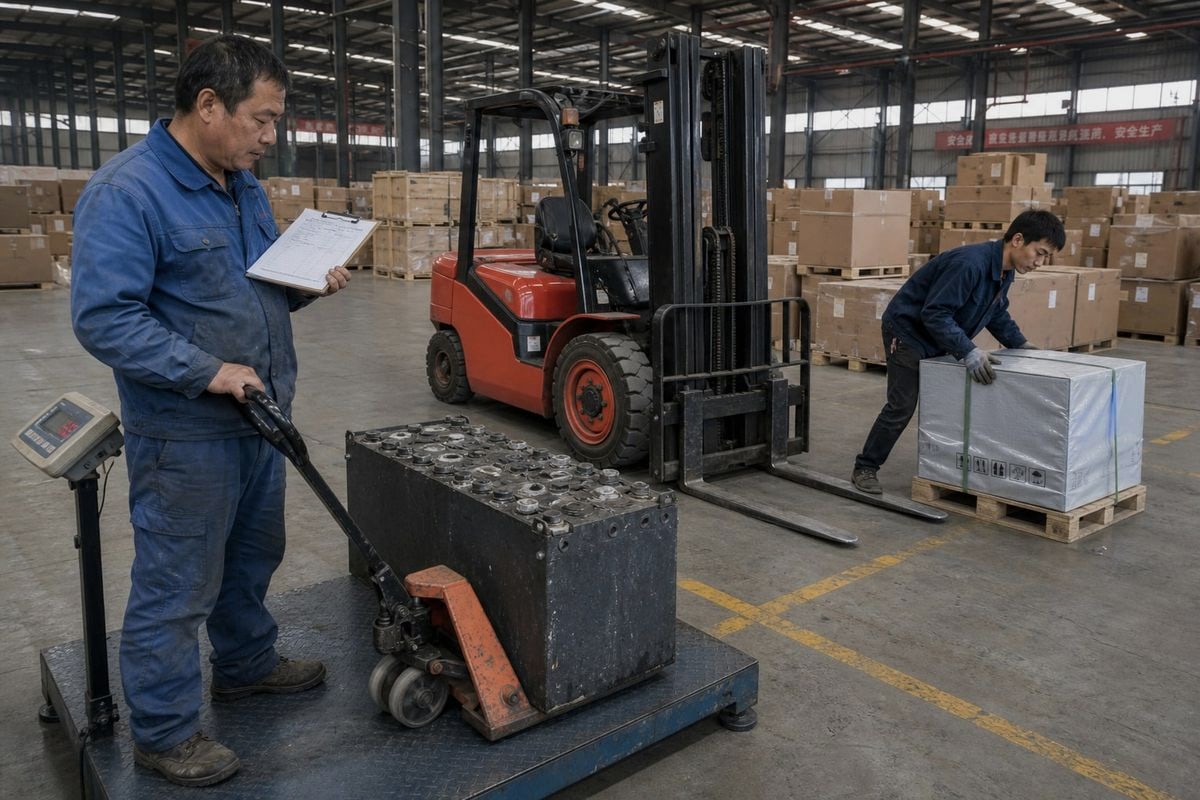
Forklifts carry heavy counterweights. A compact 2.5-ton electric model can weigh over 4,000 kg. Ports use your declared gross and net weight for handling equipment and freight calculations. If the invoice weight conflicts with the verified container weight, expect questions.
Some carriers still ask for three signed copies traveling with the cargo. Others accept Electronic Trade Documents (ETD), which we recommend. Transmitting the invoice digitally before the vessel arrives reduces the risk of lost paperwork at the destination port, which matters a lot for heavy machinery shipping.
There is a trade-off I discuss with almost every buyer: declare low and risk a valuation dispute, or declare accurately and clear fast. In my experience shipping to the US, accuracy always wins.
Declare the forklift under HS heading 8427, using 8427.10 for electric models and 8427.20 for internal combustion units, and state a value that matches your purchase order and bank transfer records, with unit price, total price, and currency clearly shown.
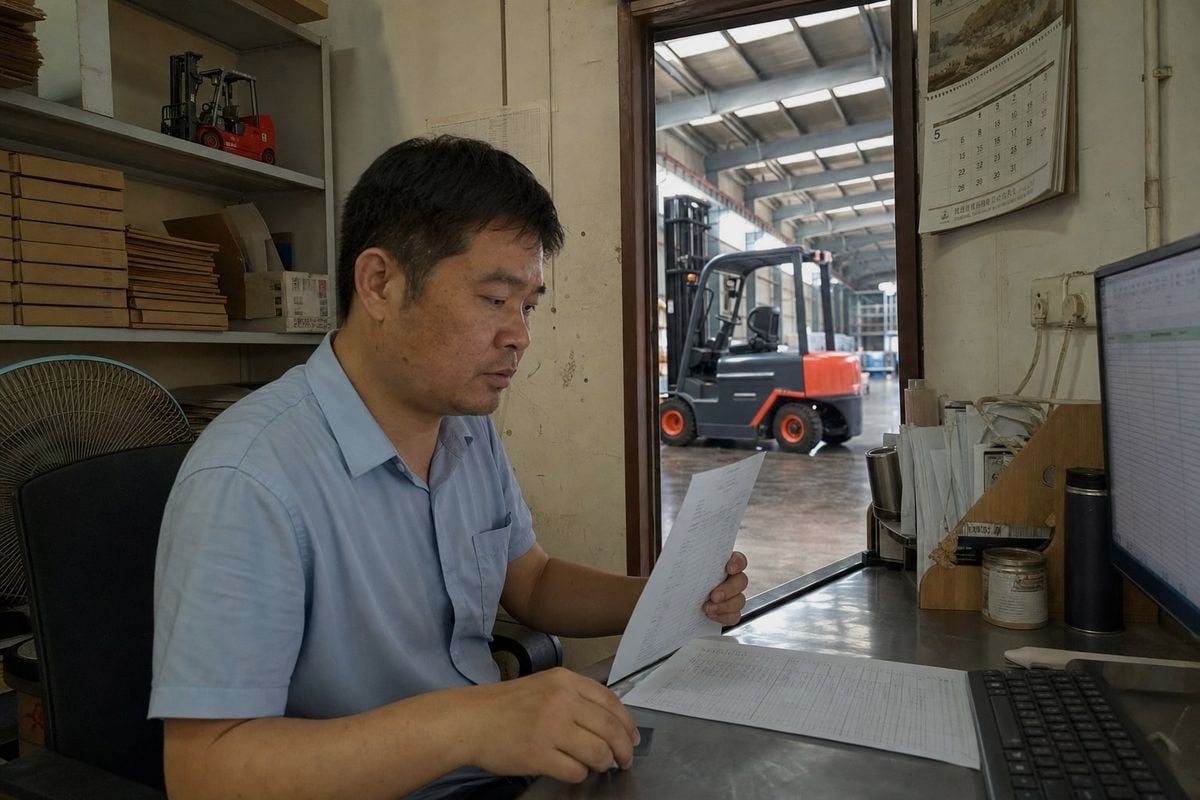
The HS Code for Forklifts is not one single number. Classification depends on the power source and configuration. Customs uses this code to set the duty rate, so a wrong digit changes your landed cost or delays the container.
| Equipment Type | Code SH | Notes |
|---|---|---|
| Electric forklift (self-propelled) | 8427.10 | Covers battery-powered rider trucks |
| Internal combustion forklift | 8427.20 | Diesel, LPG, or gasoline units |
| Other works trucks | 8427.90 | Hand pallet trucks and similar |
| Forklift attachments and parts | 8431.20 | Side-shifters, rotators, clamps, forks |
Notice line four. Itemizing specialized attachments such as side-shifters or clamps separately under 8431.20 can sometimes attract lower import duties than lumping them into the vehicle price. We flag this option for every client who buys attachments with their trucks.
Customs valuation must reflect the real transaction. Show the unit price, total price, and currency. Make sure these numbers match the purchase order and your bank transfer records, because US customs can and does request proof of payment. Also state whether freight and insurance are included, since some destinations calculate duty on CIF value and others on FOB value.
For used equipment, add a Condition Statement on the invoice or reference a pre-shipment inspection (PSI) report. This justifies a lower declared value and satisfies environmental import rules in many developing markets. We learned this lesson the hard way with an early used-equipment shipment, and we never skip it now.
A US distributor once called me in a panic. His carrier rejected the booking because nobody had mentioned lithium batteries. Our team now screens battery specs on every electric forklift before it leaves the factory.
For lithium battery forklifts, the commercial invoice must state the battery chemistry, capacity, and whether the battery is installed in the equipment, and the shipment must be supported by a UN38.3 test summary and any dangerous goods declaration the carrier requires.

Lithium batteries are classified as dangerous goods in international transport. That does not mean you cannot ship an electric forklift by sea. It means the paperwork must prove the battery is safe and properly identified. The commercial invoice is where this identification begins.
Write the battery type directly on the invoice line: lithium-ion or lead-acid. Do not leave the carrier guessing. A lead-acid forklift ships under simpler rules. A lithium-ion forklift usually needs a UN number, a dangerous goods declaration, and proof of testing. When we coordinate lithium battery cargo handling from China, we confirm chemistry, watt-hour rating, and cell manufacturer before booking.
Every lithium battery in international transport must pass the UN38.3 test series. Your Chinese forklift supplier should provide the test summary from the battery maker. Attach it to your shipping documents and reference it near the battery line on the invoice. Carriers can refuse cargo at the port without it, and by then you are already paying storage.
Follow that order and battery paperwork stops being scary. Skip a step and the port will find it for you.
Reviewing documents before departure is the least glamorous part of our job in Zhengzhou. It is also the part that saves our clients the most money on demurrage and storage.
Avoid vague descriptions, mismatched values, missing HS codes, wrong Incoterms, and combined line items; instead, describe each forklift with its serial number, match every figure to the sales contract, and have your freight forwarder audit the invoice before the container ships.
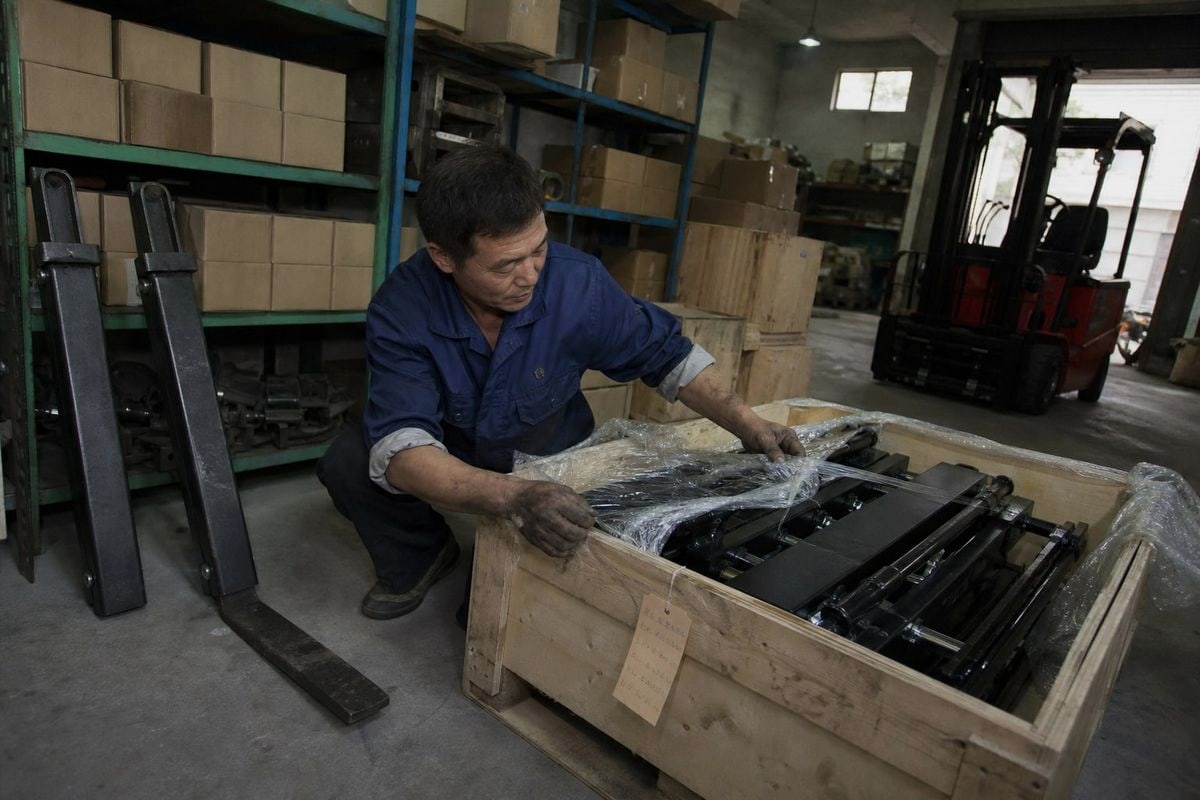
Most customs delays we see are not caused by exotic problems. They come from five repeat offenders. I keep a running log of documentation errors from our forklift shipments, and the same patterns appear again and again.
| Mistake | What Goes Wrong | The Fix |
|---|---|---|
| Vague description ("machinery") | Customs cannot classify or verify the goods | Write "1 new electric forklift, model X, 2.5T, serial no. Y" |
| Value mismatch | Invoice differs from PO or bank records | Reconcile invoice, contract, and payment before shipping |
| Missing origin or HS code | Duty rate cannot be assigned | State Country of Origin and full HS code per line |
| Wrong Incoterms | Duty basis and responsibility are disputed | Match Incoterms (FOB, CIF, DAP, DDP) to the contract |
| Combined line items | Attachments and parts hide inside one line | List forklifts, batteries, chargers, and parts separately |
Incoterms decide who pays freight, insurance, and import duties, and where risk transfers. If your contract says FOB Shanghai but the invoice says CIF, customs valuation gets confused and the buyer may pay duty on costs already covered. When we run DDP door-to-door shipments to the US, we make sure the invoice terms match the quote exactly.
Many of our clients buy forklifts from one factory, batteries from another, and attachments from a third. Multi-supplier consolidation saves container space, but each supplier's goods need clean, separate line items with their own serial numbers and codes. One sloppy line from one factory can hold the whole container for all of the material handling equipment inside.
A weak invoice risks holds, storage fees, and angry customers. Treat your commercial invoice for forklift shipping as a customs document, verify every field, and clearance becomes predictable.
1. Official guidance on essential customs documents required for international shipping and trade. ↩︎
2. IMO regulations regarding the identification of battery type for the safe transport of dangerous goods. ↩︎
3. The World Trade Organization's official guide to the Agreement on Customs Valuation. ↩︎
4. Explains how Incoterms define responsibility for import duties and taxes in global transactions. ↩︎