- +8618603825129
- [email protected]

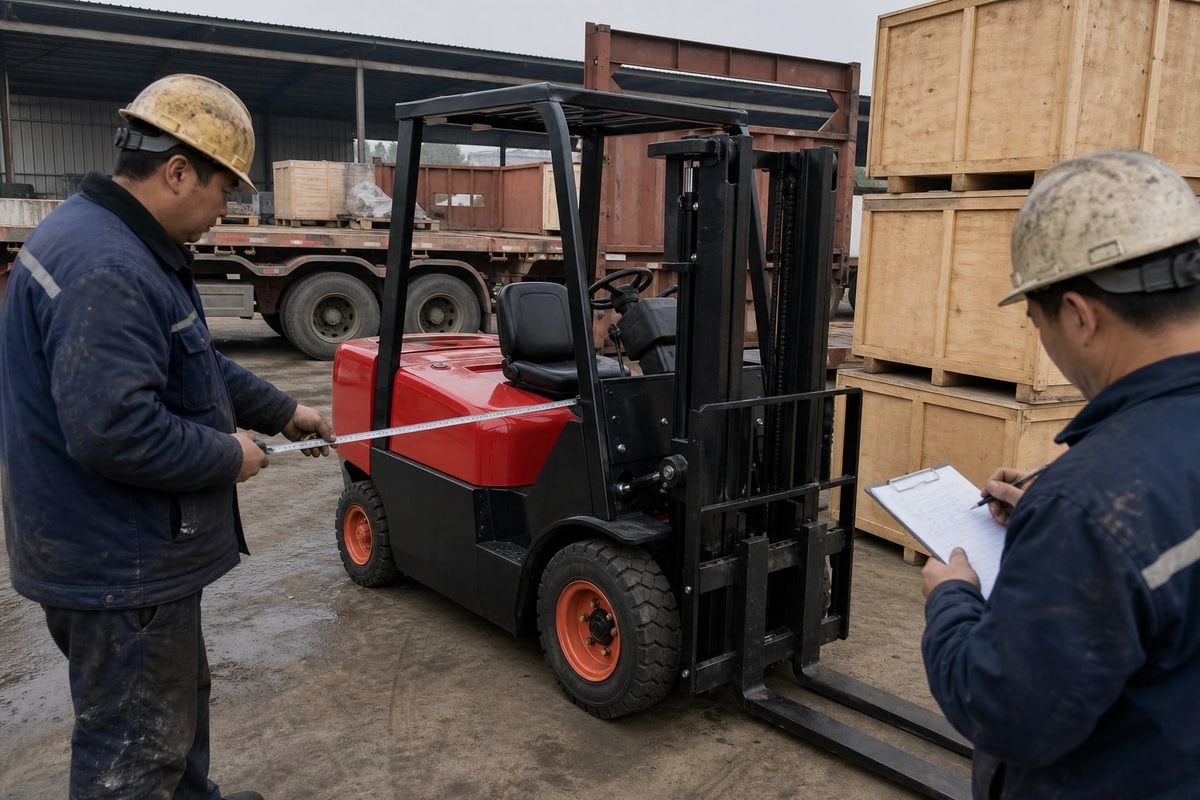
Last month, our Zhengzhou team booked space for a forklift that would not fit any standard container. To ship an oversized forklift from China, one wrong measurement can freeze everything.
To ship an oversized forklift from China, verify exact dimensions and weight, then choose flat rack, RoRo, or breakbulk shipping based on size and propulsion. Prepare customs documents, battery paperwork if electric, secure the machine with approved lashing, and pre-arrange destination unloading equipment.
That is the short answer. But each step hides details that can cost you money. Let me walk you through the documents, the shipping methods, the real costs, and the delay traps.
A buyer in Texas once sent us a booking with no battery test report attached. The carrier rejected the DG application twice before we fixed the file for him.
You need a commercial invoice, packing list, bill of lading, certificate of origin, and export declaration. For electric forklifts with lithium batteries, add UN38.3 test reports, MSDS/SDS sheets, and an IMDG dangerous goods declaration. US-bound shipments also require an ISF filing and EPA compliance.
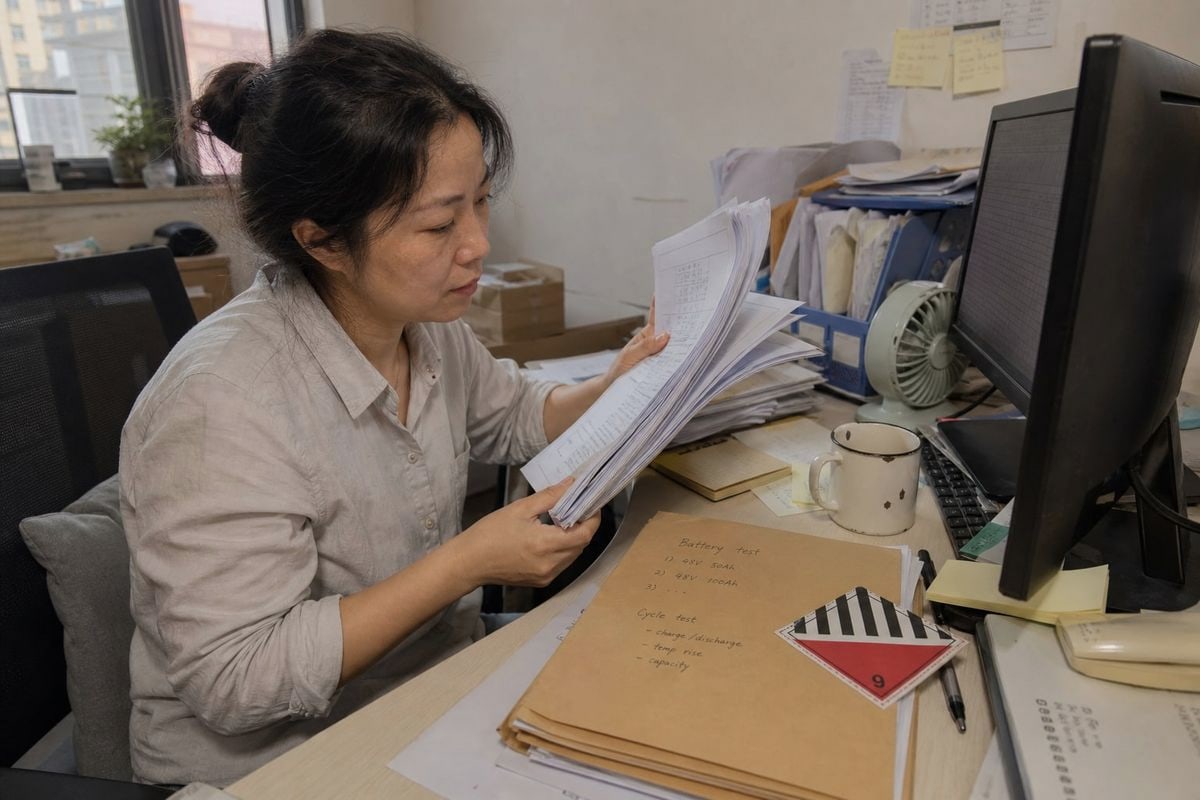
Paperwork is where most oversized forklift shipments succeed or fail. In our daily work coordinating customs clearance for machinery, we check every document before the cargo leaves the factory. A missing page found at the port of loading means the container sits and waits.
Every forklift shipment needs the same foundation. The facture commerciale 1 must match the packing list exactly. The bill of lading must describe the cargo accurately, including dimensions if the unit is out-of-gauge cargo. Customs officers compare these documents line by line. Any mismatch can trigger an inspection.
| Document | But | Who Prepares It |
|---|---|---|
| Facture commerciale | Declares value for duties | Fournisseur |
| Liste de colisage | Details dimensions and weight | Fournisseur |
| Lettre de voiture | Contract of carriage | Freight forwarder / carrier |
| Certificat d'origine | Confirms country of manufacture | Supplier / chamber of commerce |
| Export Declaration | China customs export record | Freight forwarder |
| Marine Insurance Policy | Covers transit damage | Forwarder or buyer |
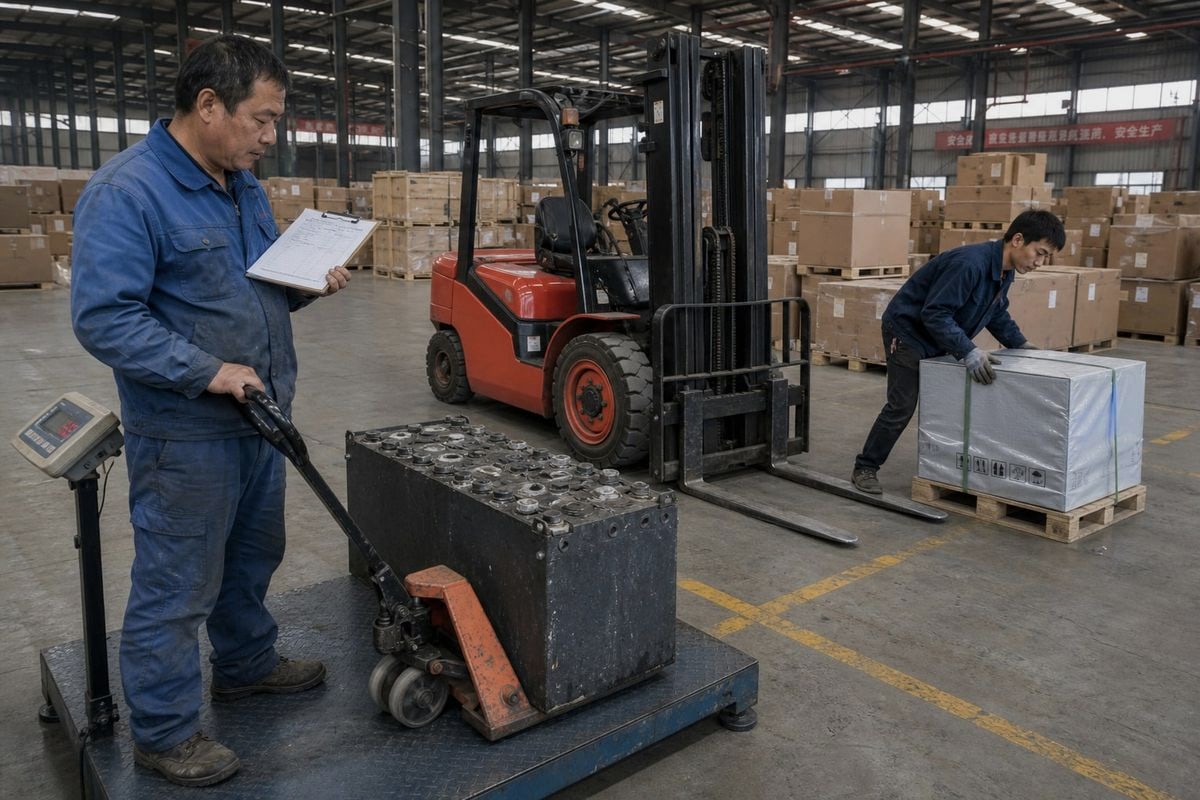
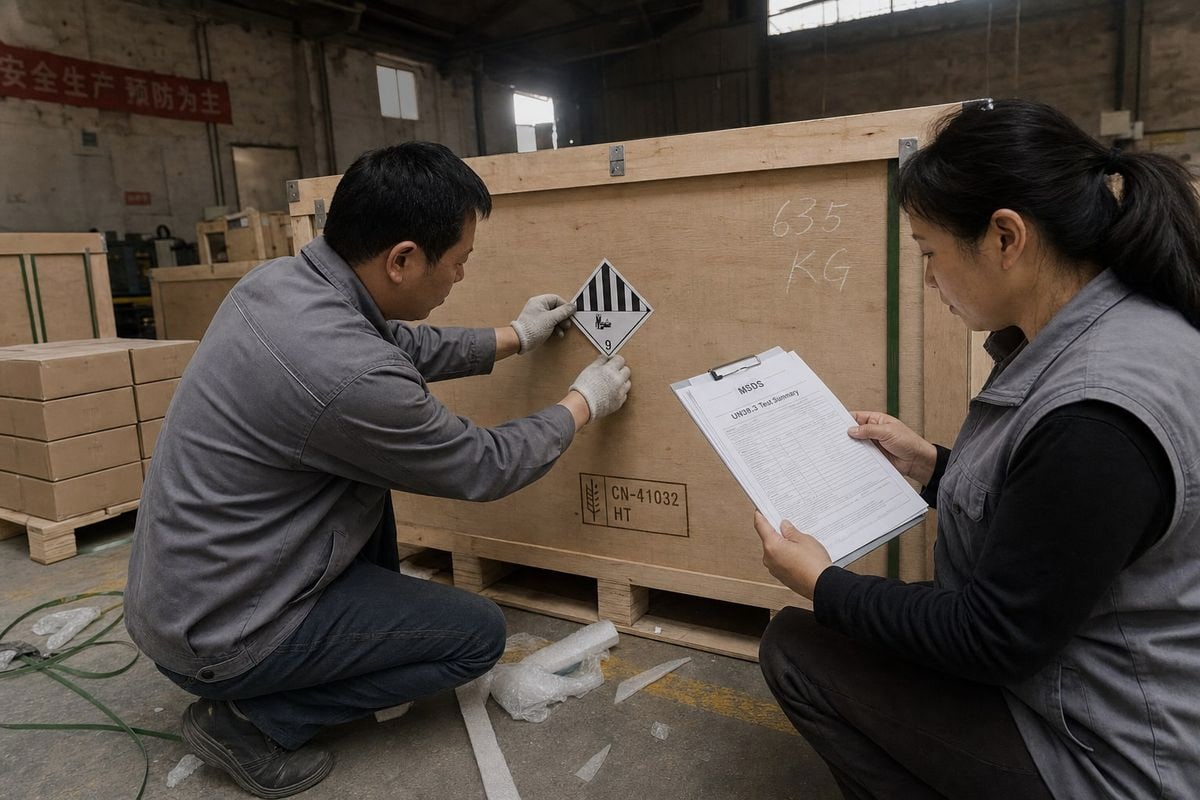
Lithium-ion battery forklifts are classified as Class 9 Dangerous Goods 2 under IMDG rules. That means the carrier must approve a DG booking before loading. You will need the UN38.3 test summary, the MSDS/SDS, and a signed DG declaration. Diesel units skip the battery paperwork, but they need proof that fuel has been drained.
For our US customers, two extra items matter. First, the Importer Security Filing 3 (ISF) must be submitted at least 24 hours before the vessel departs the Chinese port. Second, diesel forklifts must meet EPA Tier 4 engine standards, or US customs can refuse entry. Also remember ISPM-15: every wooden cradle, block, and piece of dunnage must carry the heat-treatment stamp, or the whole shipment risks rejection at the border.
When we measure a forklift at the factory, the trade-off we weigh is simple: force it into a standard box, or accept out-of-gauge handling on a flat rack.
Choose standard FCL container shipping if the forklift fits within roughly 2.35 m width and 2.39 m height, even after partial disassembly. Choose a flat rack container when the machine is overwidth, overheight, or overweight. For drivable units over about 10 tons, RoRo shipping is often better.
The decision starts with hard numbers, not preferences. Here is how the main options compare:
| Méthode | Meilleur pour | Key Limitation | Cost Level |
|---|---|---|---|
| Standard FCL | Compact forklifts under 2.35 m wide, 2.39 m high | Internal dimensions are fixed | Lowest |
| Flat Rack Container | Overwidth or overheight machines | OOG surcharges, carrier lashing approval | Medium-high |
| RoRo Shipping | Self-propelled units, often over 10 tons | Fewer routes, machine must drive on/off | Moyen |
| Breakbulk Shipping | Cargo that fits no containerized option | Longer schedules, heavy lift logistics needed | Highest |
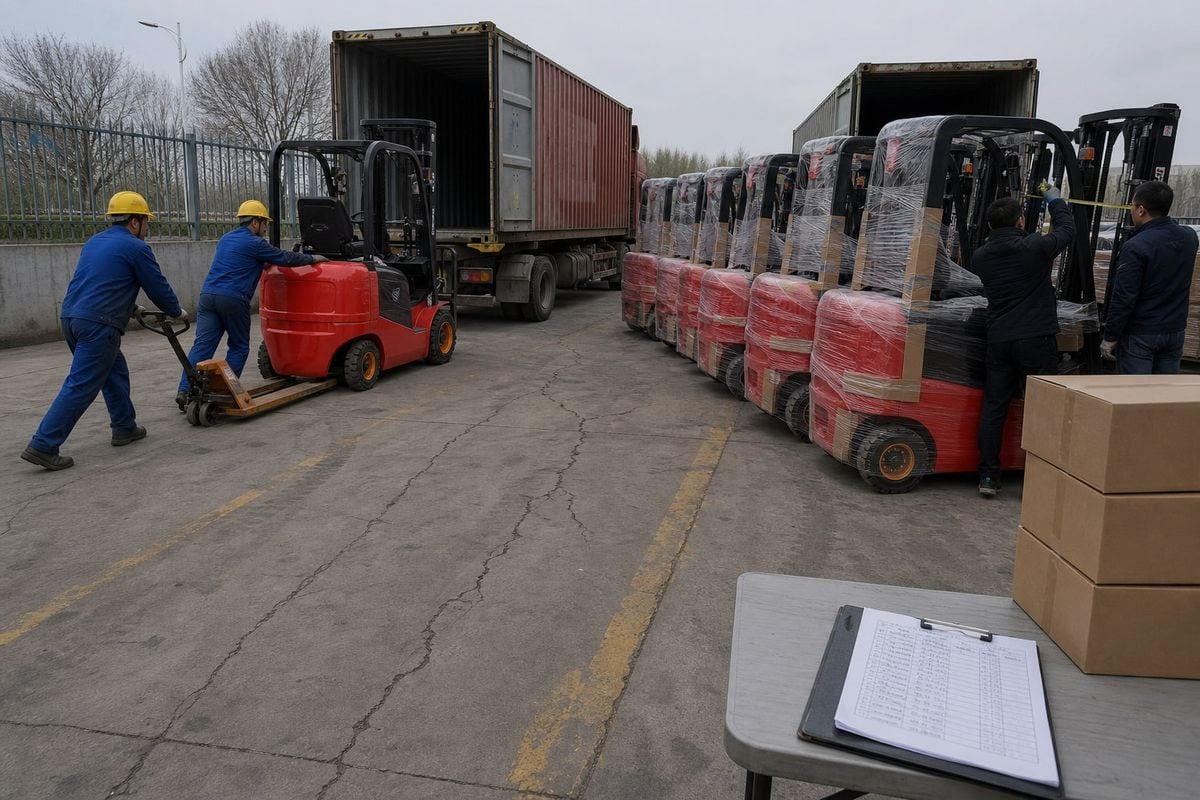
Many forklifts can shrink. We often ask the factory to lower or remove the mast, remove the overhead guard, and detach the forks and counterweight accessories. A machine that looks oversized on paper sometimes fits a 40HQ after partial disassembly. That single step can move you from expensive out-of-gauge cargo rates back to normal FCL pricing.
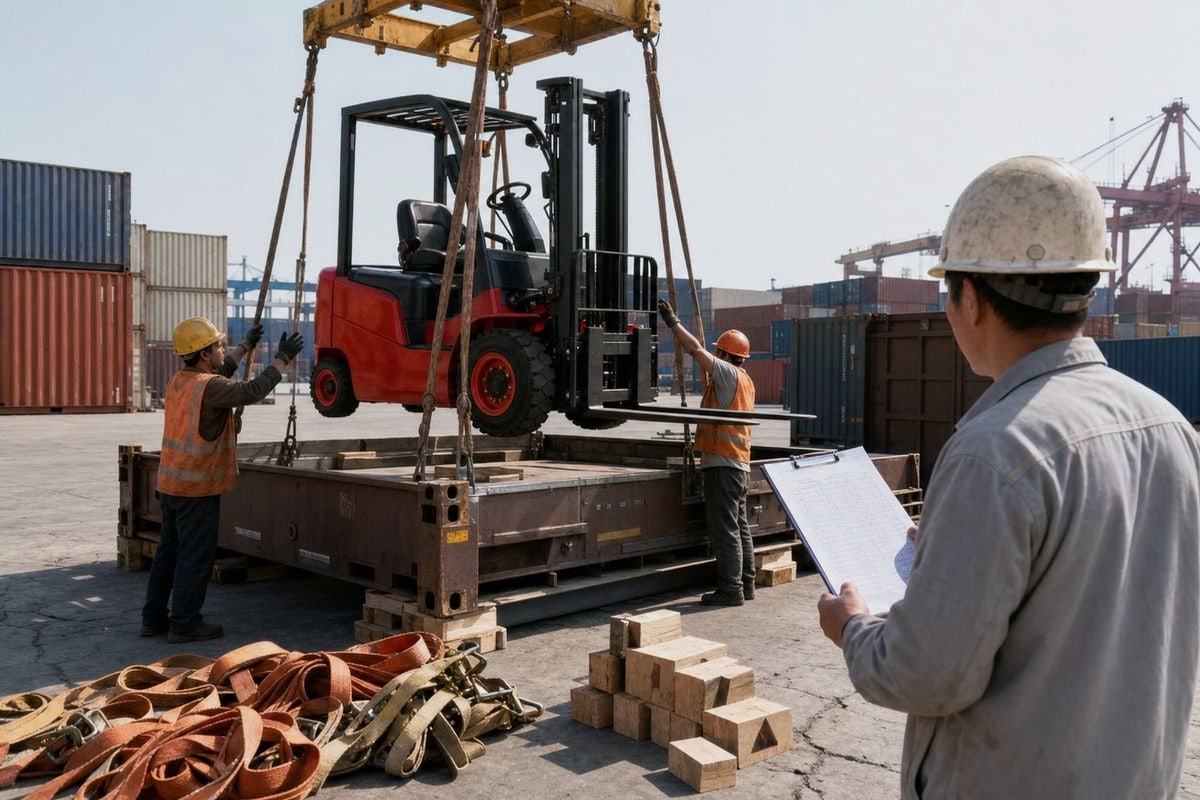
If the width or height still exceeds container limits after disassembly, a flat rack container is usually the answer. The cargo can overhang the sides, but the lashing and securing plan must be approved by the carrier. We use steel chains, blocking, bracing, and ISPM-15 treated dunnage. For heavy units, we recommend steel-frame cradles with marked crane lift points and center-of-gravity labels. Some forwarders now run 3D stowage simulations to pre-fabricate custom steel cradles, which cuts port-side lashing time and reduces dead-space surcharges.
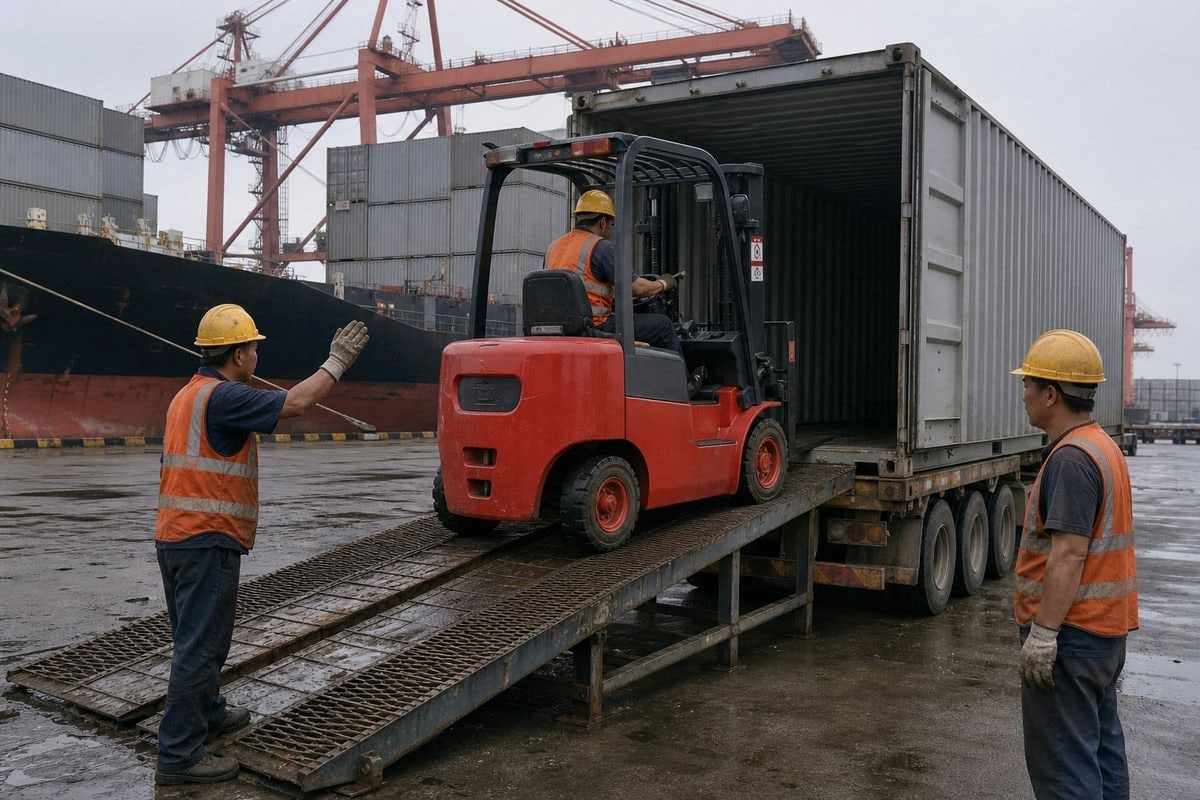
RoRo shipping suits self-propelled machines because the unit is driven on and off the vessel. Some guides push RoRo for anything over 10 tons, while others insist flat rack handles overwidth cargo better. In our experience, neither rule is universal. Treat it as a size-and-risk decision: check the route availability, the battery restrictions on RoRo decks, and the port equipment on both ends. Breakbulk shipping is the fallback when nothing else can safely carry the load.
A distributor once told me his freight quote doubled after the carrier re-measured his machine at the port. That painful call taught him what accurate specs are worth.
Shipping an oversized forklift from China typically costs more than standard machinery freight due to OOG surcharges, extra lashing, and heavy lift handling. Total landed cost includes ocean freight, port fees, customs clearance, import duties, marine insurance, inland trucking, and destination unloading, driven mainly by dimensions and weight.
Cost questions deserve honest structure, not a single magic number. When we quote heavy equipment shipping, we break the total landed cost into layers so the buyer sees where money actually goes.
| Cost Layer | What Drives It | Common Surprise |
|---|---|---|
| Factory pickup & China trucking | Distance, oversize permits | Escort vehicles for wide loads |
| Port of loading handling | Crane lifts, lashing labor | OOG handling fees |
| fret maritime | Method, route, dimensions | Out-of-gauge surcharges |
| Marine insurance | Cargo value, method | Lifting damage exclusions |
| Destination port charges | Terminal handling, storage | Demurrage from slow clearance |
| Customs, import duties & taxes | HS code, declared value, origin | Misclassification penalties |
| Inland delivery | Trailer type, permits | Low-loader and oversized-load permit costs |
A low ocean rate on the wrong mode can create rehandling, storage, and delay charges that erase the savings. For example, forcing a machine into a container it barely fits can damage the mast or block safe unloading. Then you pay for repairs, port storage, and a second trucking attempt. We always evaluate total landed cost, not just the freight line.
Incoterms allocate these costs between you and the seller. Under FOB, the supplier covers costs to the port of loading, and you control the ocean leg through your own freight forwarder services. Under CIF, the seller books freight and basic insurance, but you still absorb destination-side oversized handling fees. Some guides push FOB for experienced importers and DDP for beginners. I lean toward this: if you cannot personally verify destination charges, DDP or DAP through one accountable forwarder protects you better than a cheap CIF offer with hidden fees. Either way, oversized cargo needs an experienced heavy lift logistics partner regardless of the term.
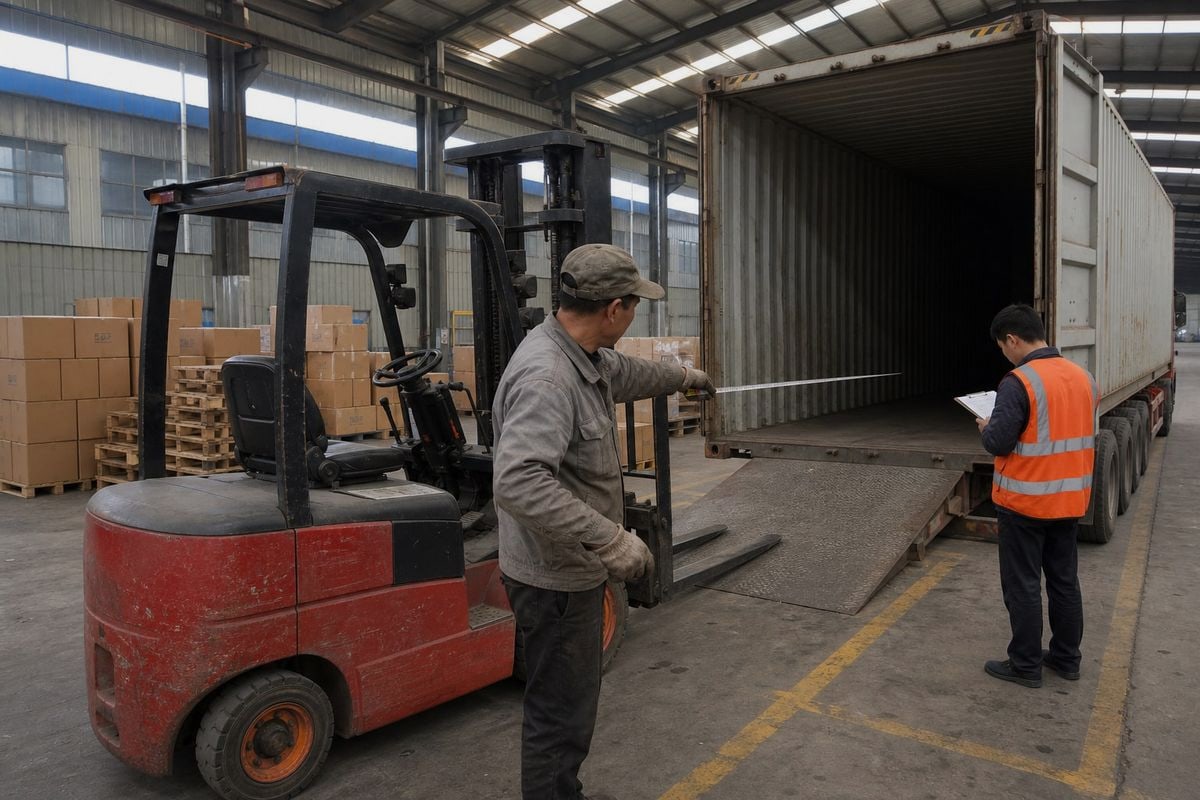
Accurate dimensions and weight, confirmed before quoting, remain the single biggest cost control you have. Send photos from multiple angles too. Carriers re-measure everything.
The costliest delays we have untangled almost never happened at sea. They happened at the factory gate, the DG desk, or the buyer's own loading dock.
Avoid delays by confirming exact dimensions before quoting, securing DG carrier approval early for lithium batteries, using ISPM-15 stamped packaging, filing ISF 24 hours before departure, pre-booking oversized-load permits and low-loader trailers, and arranging destination cranes or ramps before the vessel arrives.

Delay prevention is a checklist discipline. Here is the sequence we follow on every oversized forklift shipment, and why each step matters.
First, measure the machine physically. Do not trust brochure specs. Factories modify masts, tires, and guards, and a few centimeters change your shipping method. Second, lock in carrier acceptance. For electric units, submit the DG booking with UN38.3 and MSDS documents early, because approval can take days. Third, verify the packing. Non-stamped wood triggers rejection, and a weak cradle can shift during heavy seas and fail the lashing survey.
Oversized shipments often fail at delivery because buyers underestimate unloading needs. A forklift with a high center of gravity and concentrated axle weight needs a low-loader trailer, and inland routes may require oversized-load permits arranged weeks ahead. Confirm your dock height, crane or ramp availability, and yard space before the container ships, not after it lands. We brief every customer on this during booking, because a machine stuck on a trailer generates charges by the hour.
One more emerging point: some importers now request Green Corridor routes on LNG or methanol-powered vessels to meet Scope 3 carbon reporting goals. Planning this early avoids last-minute rebooking delays.
Shipping an oversized forklift from China is a planning project, not a booking task. Measure precisely, pick the right mode, prepare documents early, and plan delivery. We handle the rest.
1. U.S. Department of Commerce guide on the commercial invoice requirements for international trade transactions. ↩︎
2. Official IMO page explaining the IMDG Code and classification of dangerous goods for maritime transport. ↩︎
3. Official CBP guidance on mandatory Importer Security Filing requirements for US-bound ocean cargo. ↩︎