- +8618603825129
- [email protected]

China forklift export logistics looks simple on paper until your first container gets stuck. I have watched buyers lose weeks because one battery document was missing at our loading warehouse. The forklift price was great. The landed cost was not. After years coordinating forklift shipments from our Zhengzhou base, I can tell you the process is manageable—once you see the whole chain.
China forklift export logistics works as a coordinated sequence: confirm forklift specs and compliance, choose Incoterms, arrange factory pickup and packing, file the China export declaration, book ocean freight, ship by container or RoRo, clear destination customs, then deliver and unload at the buyer's site.
That is the short version. Below, I walk through each stage in order, from the factory gate in China to your warehouse floor. Let's start with the physical journey.
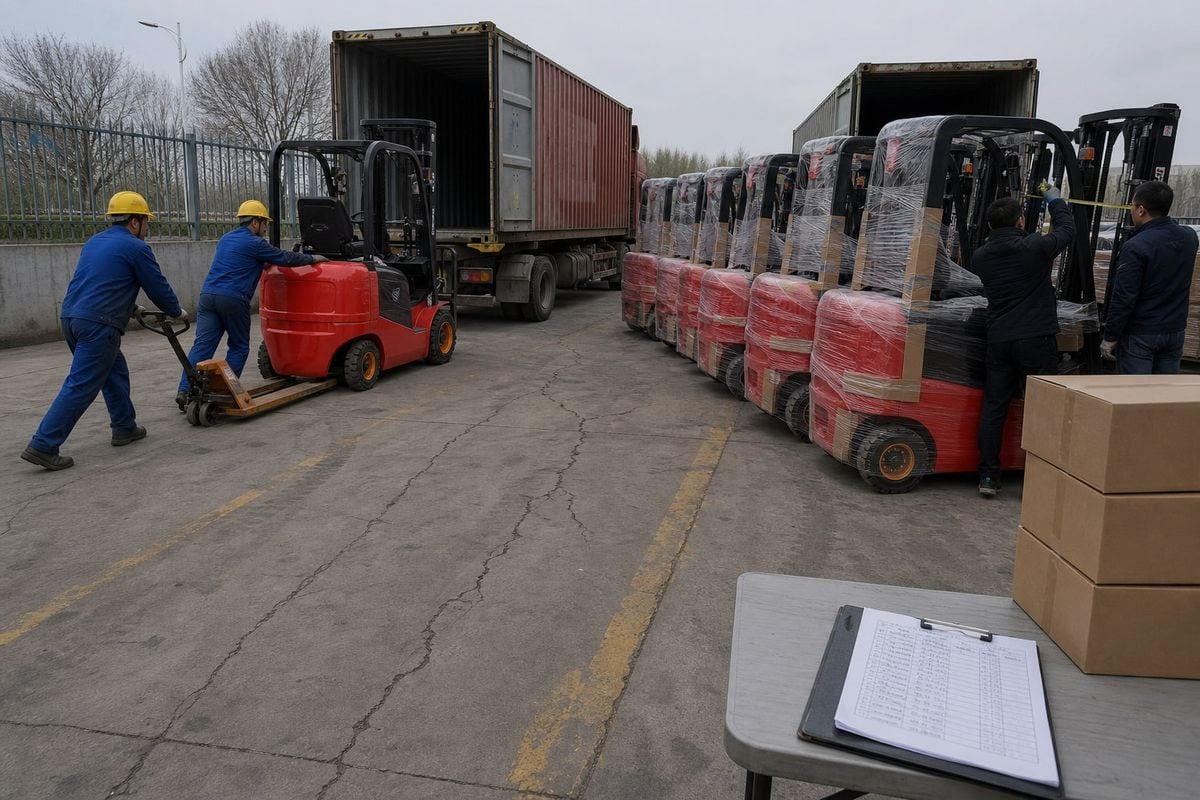
Last spring, our team picked up six red electric forklifts from a factory in Zhejiang. The trucking took one day. The preparation took two weeks. That ratio surprises most first-time importers.
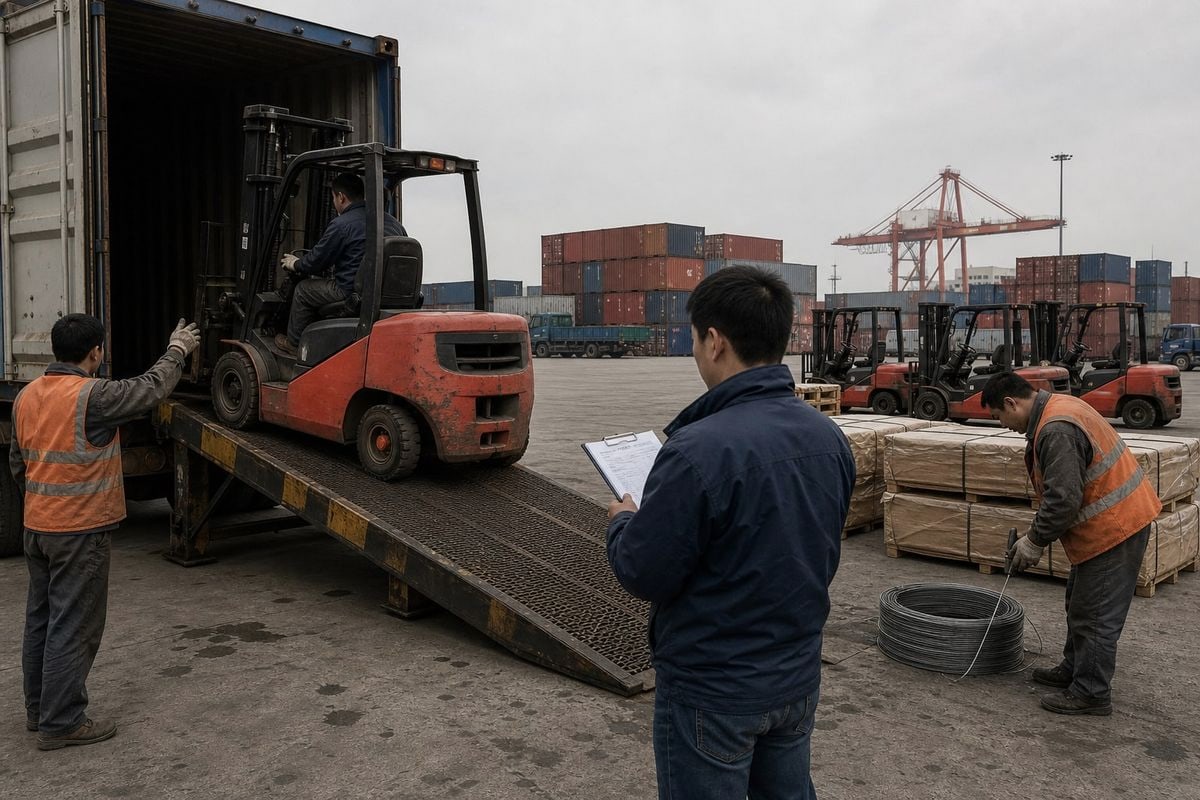
From factory to port, the process involves confirming specifications, partial disassembly and packing, inland trucking from manufacturing hubs like Anhui or Zhejiang to ports such as Shanghai, Ningbo, or Qingdao, container loading with lashing and bracing, export declaration filing, and vessel loading.

The factory-to-port stage is where most physical risk lives. A forklift is heavy, top-loaded with a tall mast, and full of hydraulic components. If it shifts inside a container on rough seas, you receive damaged goods and a repair bill. So we treat this stage as three linked jobs: prepare, move, and secure.
Before we book anything, we confirm the model, lifting capacity, battery type, battery capacity, charger voltage, and exact dimensions with the factory. Why dimensions? Because a mast that is 10 cm too tall changes the entire routing plan. Compact units fit a 20GP or 40HQ container. Oversize or overweight machines need a flat rack container or out-of-gauge handling. Machines over roughly 10 tons often move by Ro-Ro shipping instead.
Most forklift factories sit in inland provinces. Cargo moves by truck to major departure ports, usually Shanghai, Ningbo, or Qingdao. When a buyer purchases forklifts from one factory and chargers or spare parts from another, we consolidate everything at a warehouse near the port first. One container, one set of documents, one lower cost per unit.
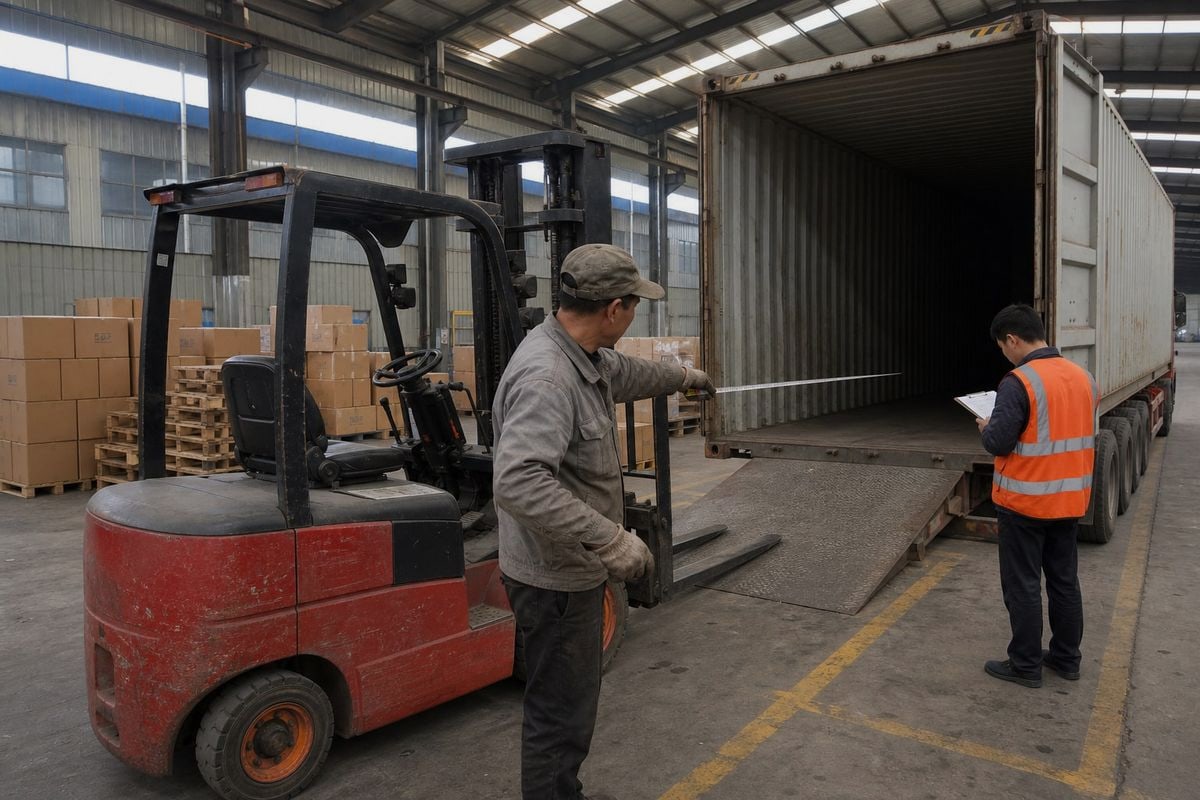
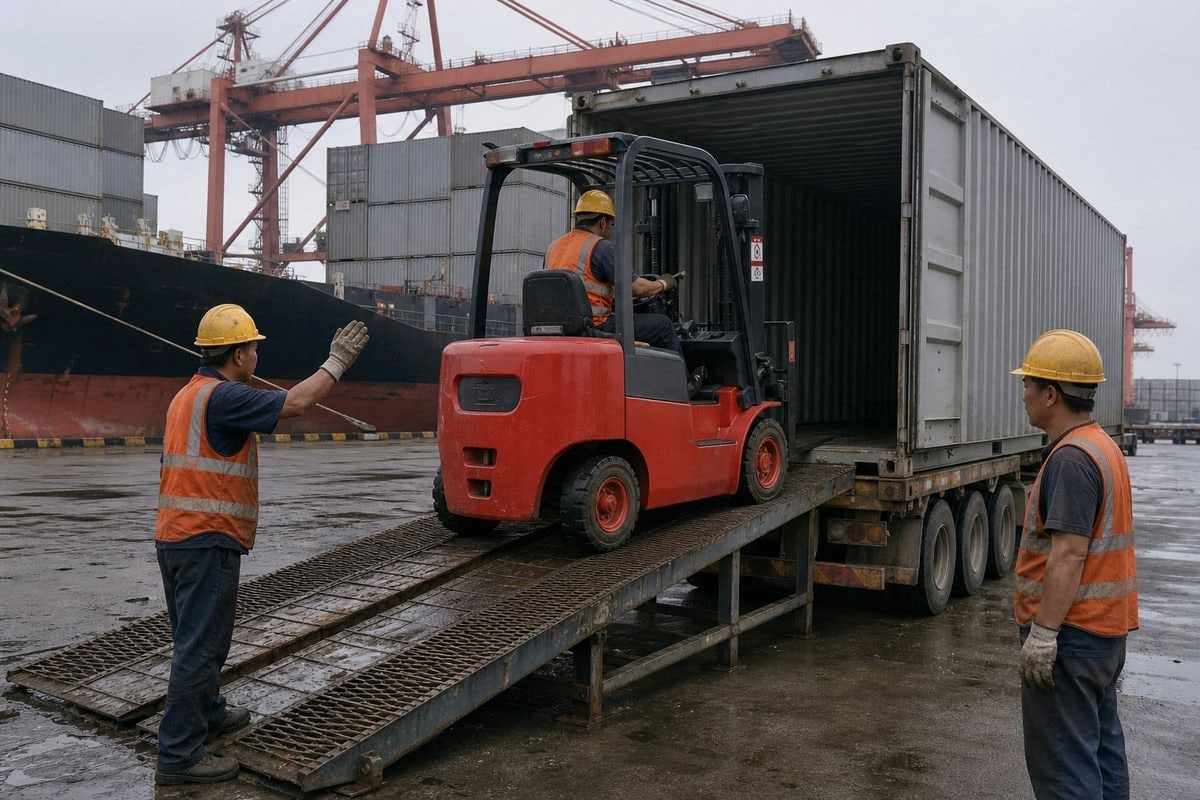
Proper container loading supervision matters more than most buyers realize. Standard practice includes lowering or removing the mast where needed, blocking the wheels with wooden chocks, and lashing the chassis with heavy-duty steel wires to fixed points in the container. The goal is zero movement for 3–6 weeks at sea. We photograph every loading so the buyer sees exactly how the machine was secured before the doors close.
| Stage | Typical Duration | Key Risk |
|---|---|---|
| Spec confirmation | 2–5 days | Wrong dimensions change routing |
| Production (new order) | 2–4 months | Delays push vessel bookings |
| Pickup and consolidation | 1–2 weeks | Multi-supplier timing mismatch |
| Container loading | 1 day | Poor lashing causes transit damage |
| Export clearance | 2–5 days | Document mismatch |
A buyer in Texas once sent me an invoice where the forklift model number did not match the packing list. We caught it before filing. That one typo would have cost him a week at the port.
Handle forklift customs clearance by preparing a matched document set—commercial invoice, packing list, bill of lading, certificate of origin, and export declaration—verifying the correct HS code for forklifts, then paying import duties and taxes at the destination before release.
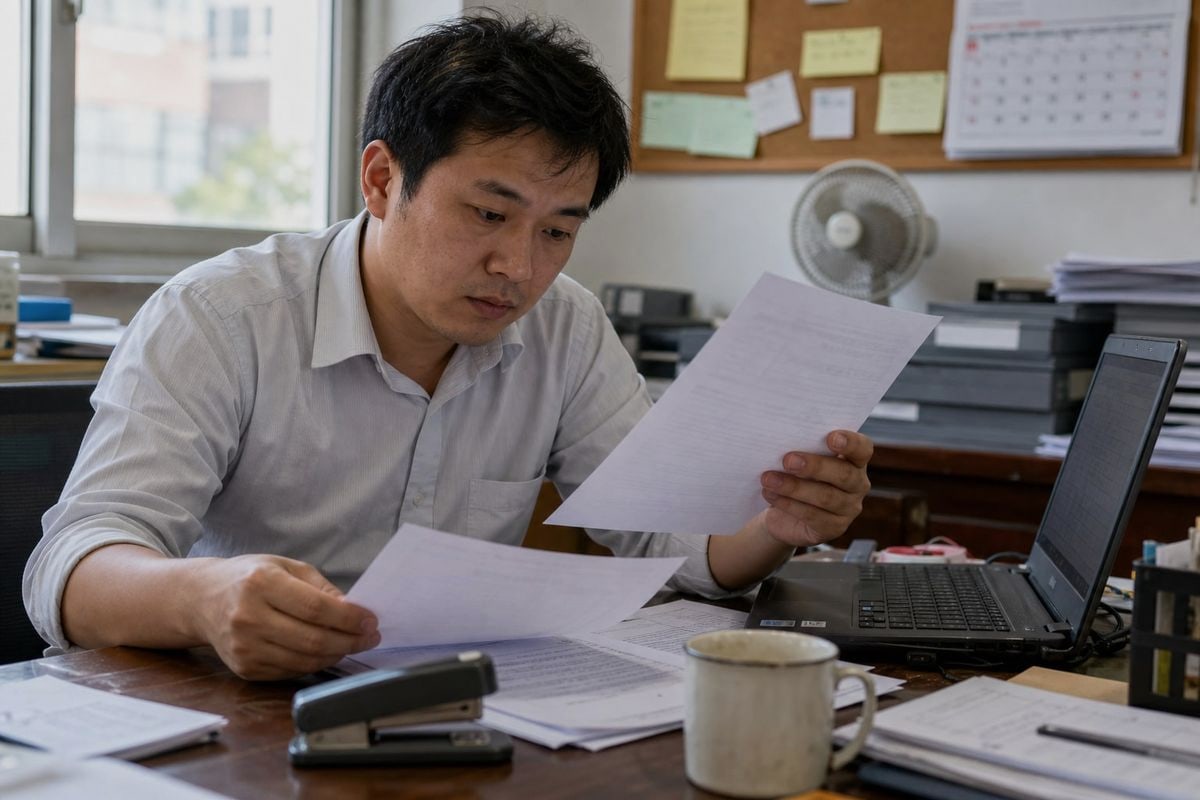
Customs clearance happens twice: once when leaving China, and once when entering your country. Both sides check the same core documents, so consistency across them is everything. Customs clearance procedures fail most often not because of missing papers, but because of papers that disagree with each other.
Each document does a specific job. The commercial invoice establishes the customs value—it should list the machine model, serial number, unit price, and total value, which also matters for insurance claims. The packing list describes the physical cargo so inspectors can verify it. The bill of lading is the transport contract and title document; you cannot release cargo without it. The certificate of origin can reduce your duty rate under trade agreements. The export declaration is the mandatory filing with China Customs.
| Document | Purpose | Common Error |
|---|---|---|
| Commercial invoice | Declares customs value | Model or price mismatch |
| Packing list | Describes physical cargo | Wrong weights or dimensions |
| Bill of lading | Transport contract and title | Consignee details incorrect |
| Certificate of origin | Duty preference eligibility | Not requested before departure |
| Export declaration | China Customs filing | Wrong 10-digit HS code |
| CE / UL / EPA certificates | Destination market compliance | Missing for the target market |
On the China side, we verify the correct 10-digit China export HS code 1 and confirm it matches the commercial invoice exactly. The filing goes through the China Single Window system, followed by document review, possible physical inspection, and release for loading. On the destination side, your broker uses the corresponding import code to calculate import duties and taxes. Market-specific certificates matter here too: CE for Europe, EPA-related requirements for combustion units entering the US. Missing compliance certificates are a leading cause of destination clearance delays, and they generate storage and demurrage charges daily while you wait.
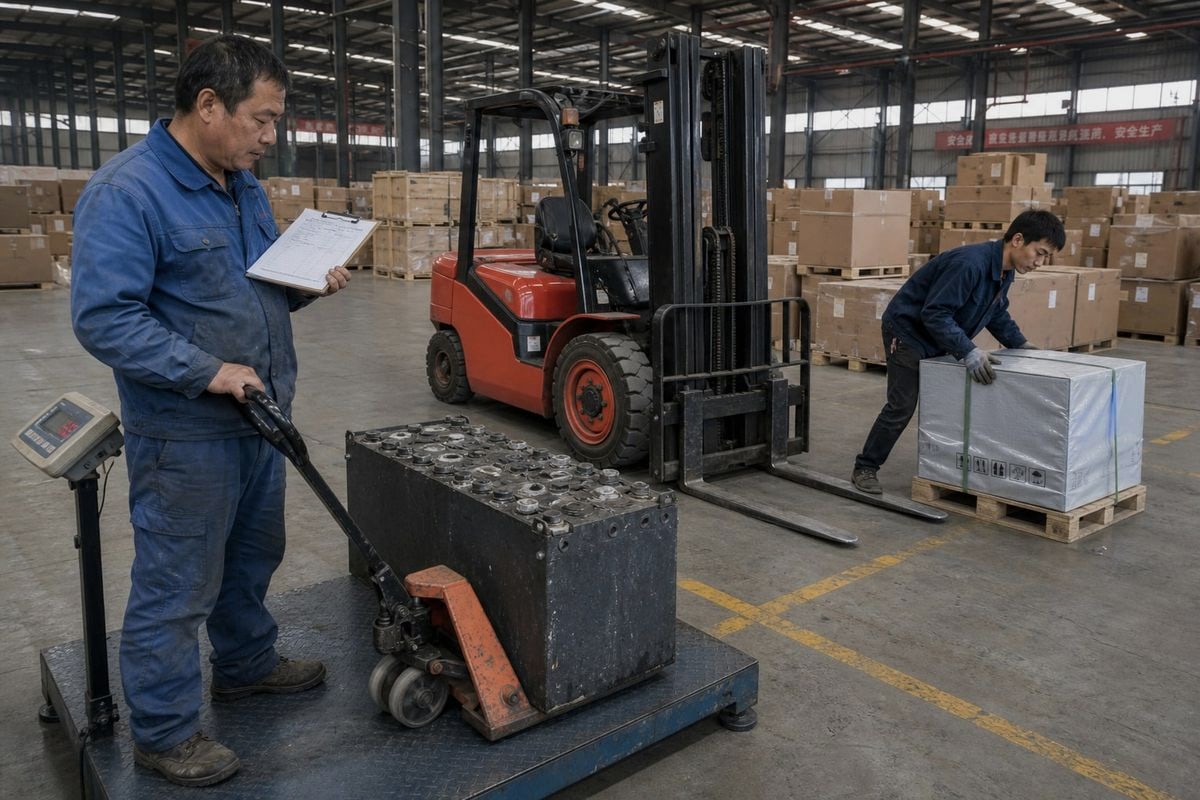
The trade-off we discuss most with buyers is this: lithium forklifts are better products, but they are harder cargo. In our lithium battery cargo handling work, the battery paperwork often takes longer than the freight booking itself.
Lithium battery forklifts ship as Class 9 Dangerous Goods, requiring UN38.3 battery test certification, an MSDS/SDS, an IMDG dangerous goods declaration, compliant packaging, and explicit carrier acceptance of the DG booking before the cargo can move.

Here is the hard truth: with electric forklifts, the battery—not the machine—is usually the logistics bottleneck. A diesel forklift is straightforward cargo. A lithium-ion forklift is regulated cargo, and every party in the chain treats it differently.
Lithium-ion batteries are classified as Class 9 Dangerous Goods 2 under maritime rules. That triggers three requirements that traditional internal combustion forklifts never face. First, documentation: the UN38.3 test report proves the battery passed transport safety testing, and the MSDS/SDS describes its chemical properties and emergency handling. Second, packaging: DG rules govern how the battery is packed, labeled, and placarded, and some shipments use specialized fire-suppressant packaging. Third, carrier acceptance: not every shipping line accepts DG battery cargo on every vessel or route. We always secure the DG booking acceptance before cargo leaves the factory, because a rejected booking after trucking means the forklift sits in a warehouse burning money.
One 2026 report indicates China Customs introduced a pre-departure requirement for encrypted battery telemetry logs on exported lithium-ion forklifts, integrated into the Single Window system. This is reported by a single source, so I present it carefully: confirm the latest requirements with your forwarder or customs broker before each shipment. Battery rules evolve fast, and last year's checklist may not clear this year's filing.
Ask your supplier for the UN38.3 report and MSDS before paying a deposit, not after production. Confirm the charger voltage matches your country's grid. And verify whether the battery ships installed or separately—each option carries different documentation paths.
A US distributor recently asked me whether two compact stackers justified a full container. We ran the numbers together—LCL won by a wide margin. The right answer always depends on volume, urgency, and how much coordination you want to own.
Choose FCL when you have enough forklifts to fill a 20FT, 40FT, or 40HQ container; choose LCL for one or two smaller units; choose door-to-door DDP or DAP when you want one provider managing everything from the Chinese factory to your warehouse.
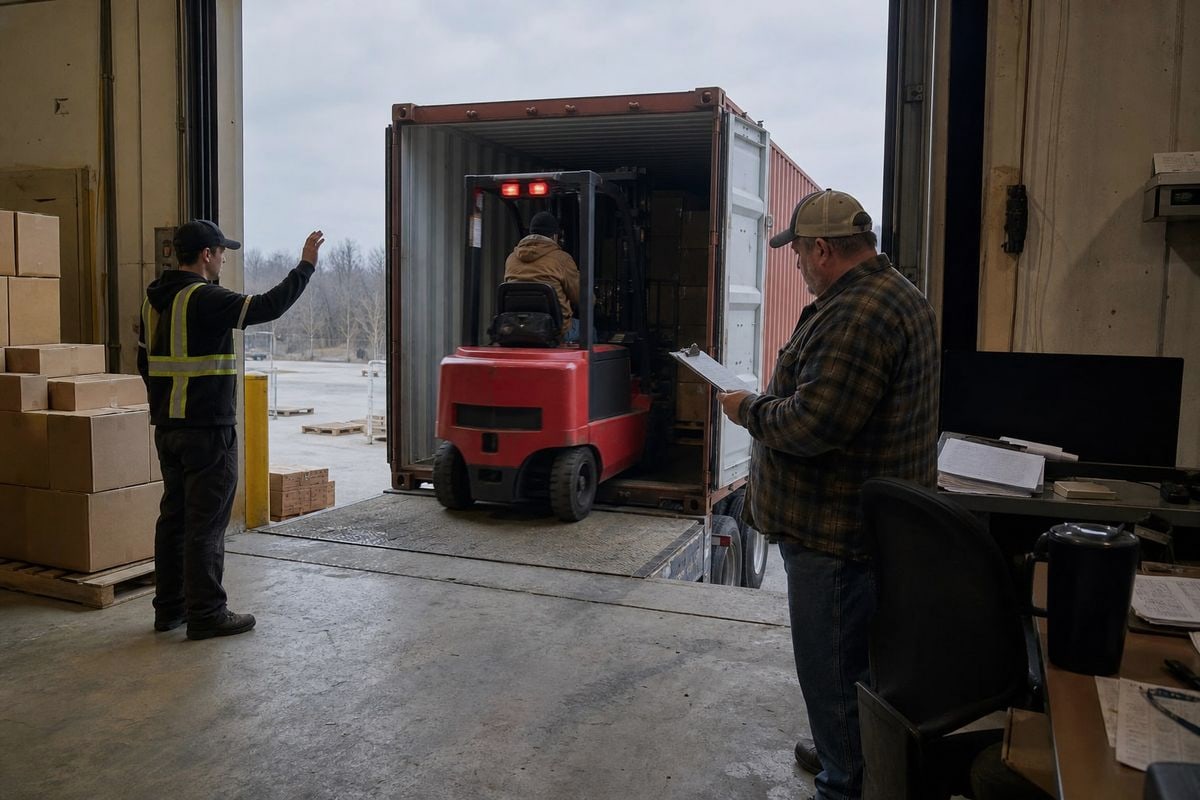
This decision has two layers: the shipping method and the service scope. Let's take them in order.
| Option | Best For | Trade-Off |
|---|---|---|
| FCL (20GP/40HQ) | Multiple compact forklifts, full loads | Lowest cost per unit, but requires volume |
| LCL consolidation | 1–2 small units, pallet trucks, stackers | Flexible, but per-CBM cost is higher |
| Flat rack container | Overwidth or overheight machines | Handles oversize cargo, less weather protection |
| Ro-Ro shipping | Very large forklifts, often over 10 tons | Simple drive-on handling, fewer route options |
Container shipping generally offers better protection and simpler handling. Flat rack and RoRo exist for when dimensions or weight make normal containerization impractical. For landlocked Eurasian destinations, the China-Europe Railway Express via the Middle Corridor is an emerging faster alternative to sea freight, though it costs more.
Under Incoterms 2020 3, FOB and EXW put the buyer in control of freight forwarding services, carrier choice, and destination handling. CIF means the seller books ocean freight and insurance, but you still handle import clearance and delivery. DDP shifts nearly everything—including import duties and taxes—to the seller or forwarder. Decide this early, because it determines who books pickup, who files export clearance, and who answers when something goes wrong.
Two optimization moves pay off consistently. First, fill unused container space with chargers, batteries, attachments, and spare parts—some advanced exporters even pre-position spare parts kits within the forklift chassis to avoid costly air freight for the first maintenance cycle. Second, for high-value electric units, smart container IoT sensors can monitor humidity and G-force impacts in transit, protecting sensitive electronic controllers from salt-air corrosion and mechanical shock. Both moves lower your real cost per forklift landed.
Forklift export logistics is a multi-party coordination problem, not a single booking. Align specs, documents, Incoterms, and delivery early—with one experienced partner—and your forklifts arrive safely, predictably, and on budget.
1. The World Customs Organization manages the Harmonized System used for global product classification and HS codes. ↩︎
2. The IMO sets global standards for the maritime transport of hazardous materials like lithium batteries. ↩︎
3. Official source for international trade terms defining buyer and seller responsibilities in shipping. ↩︎