- +8618603825129
- [email protected]


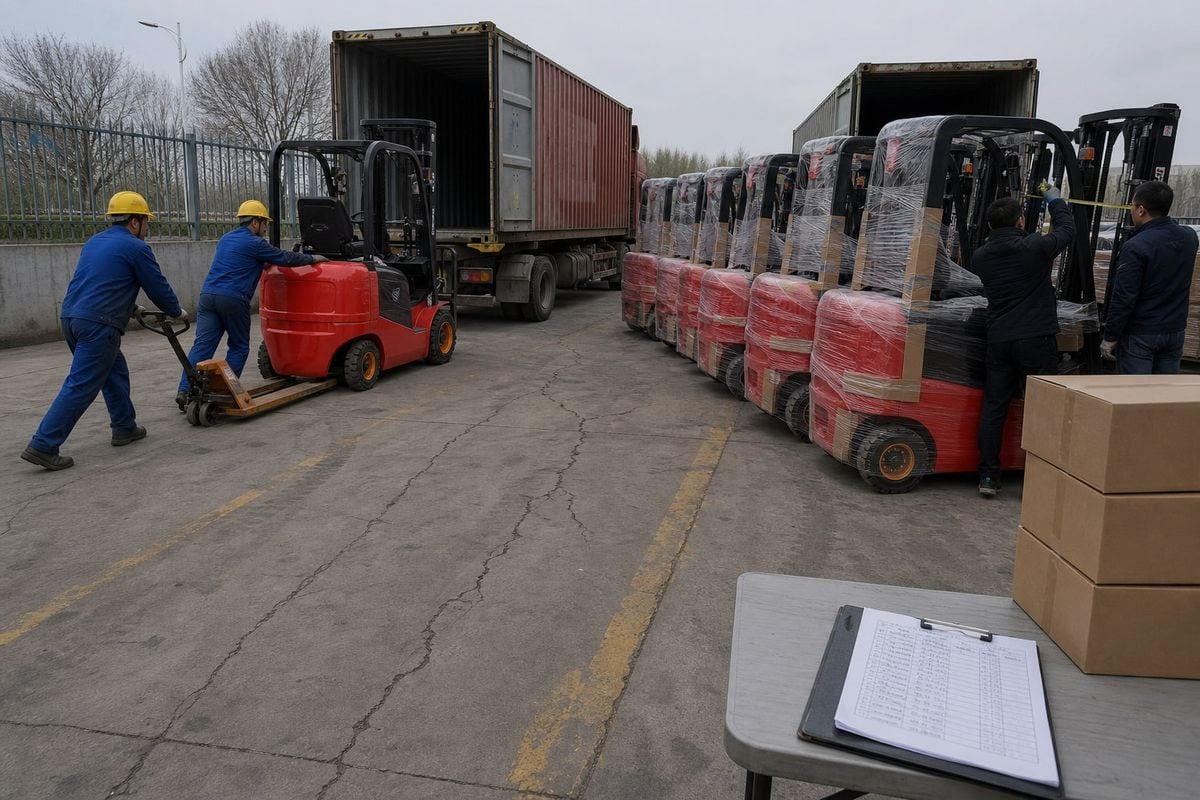
A container of forklifts stuck at port taught me this: choosing a freight forwarder for electric forklifts from China is a compliance decision, not a rate-shopping game.
Choose a freight forwarder for electric forklifts from China by verifying Class 9 dangerous goods experience, lithium battery documentation capability, NVOCC licensing, transparent itemized pricing, proven container loading skills, and full door-to-door service with customs clearance. Cargo-specific experience matters far more than the lowest headline ocean rate.
Electric forklifts combine heavy dimensions, lithium batteries, and strict carrier rules. A generic forwarder can get this wrong in expensive ways. Below, I break down the four questions that separate qualified partners from risky ones.
Every dangerous goods booking forces a trade-off: confirm battery documents upfront and lose a few days, or rush the cargo and gamble on carrier acceptance. Our team always chooses the first.
Your freight forwarder should have documented experience shipping Class 9 hazardous materials, verifying lithium battery types, collecting UN38.3 certification and MSDS documentation, securing carrier-specific dangerous goods approvals, and confirming booking acceptance before cargo leaves the factory. Generic forwarders without this background risk port rejections and costly delays.
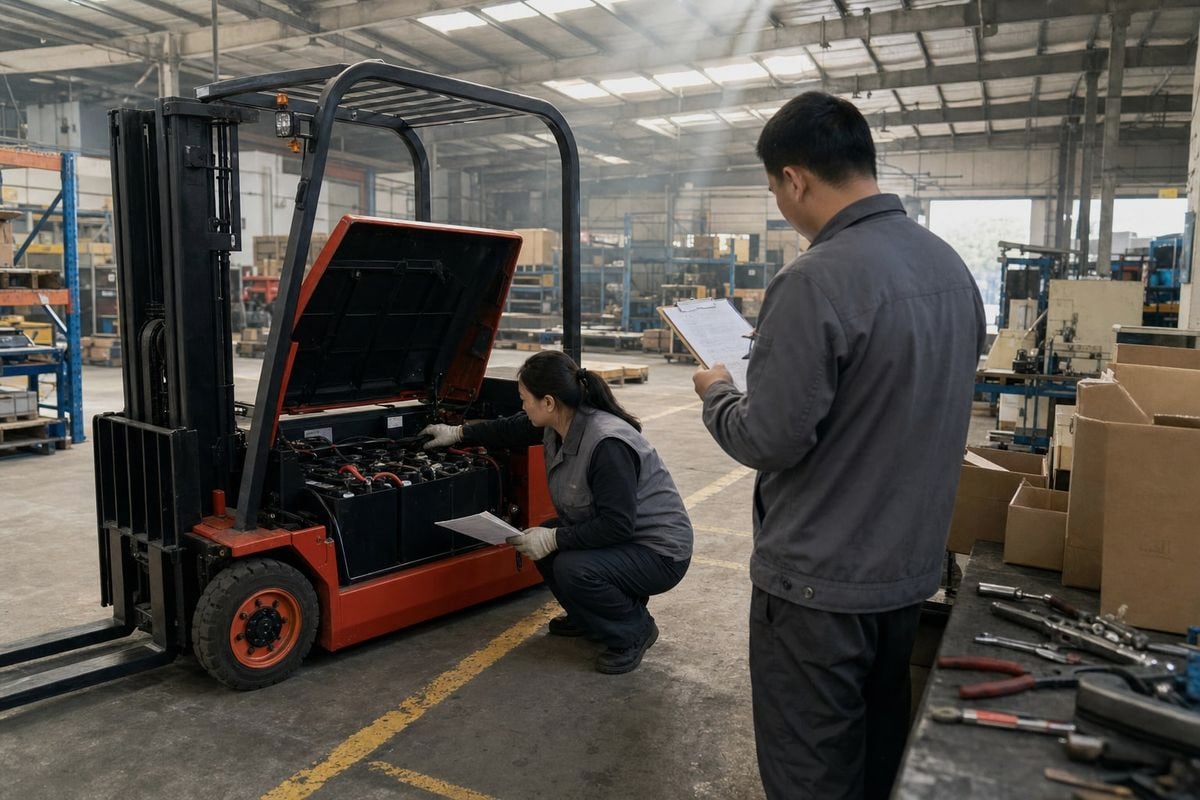
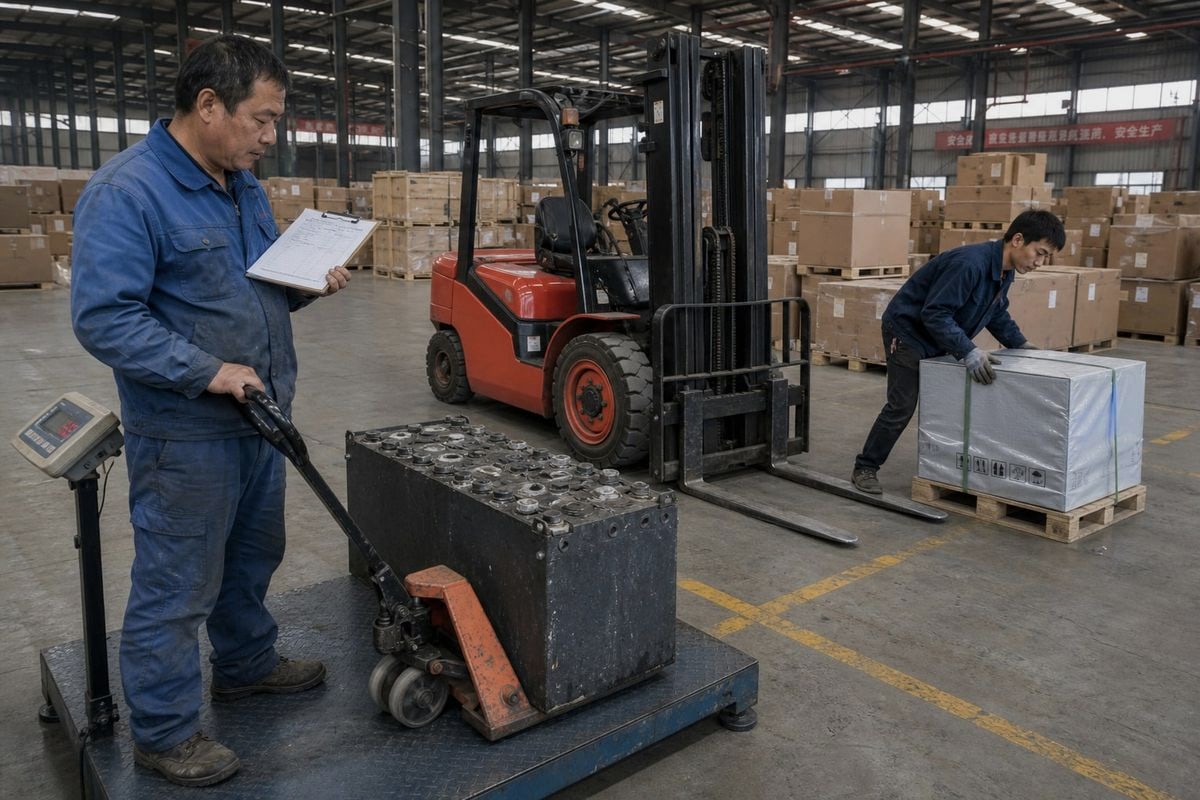
Not all electric forklifts ship the same way. A lead-acid model is treated very differently from a lithium-ion model under lithium-ion battery shipping regulations. The first thing we do on every new booking is confirm the exact battery type with the factory. Many buyers assume the supplier has already handled this. In my experience, factories often provide incomplete or outdated battery paperwork, and the problem only surfaces when a carrier rejects the booking.
A qualified forwarder will run a document check before pickup, not after the cargo reaches the port. That single habit prevents most of the ugly surprises in this trade.
| Document | What It Proves | Who Provides It |
|---|---|---|
| UN38.3 test summary 1 | The lithium battery passed transport safety testing | Battery manufacturer |
| MSDS/SDS | Chemical composition and handling instructions | Battery or forklift factory |
| Dangerous Goods Declaration 2 | Correct Class 9 classification for the carrier | Forwarder, based on factory data |
| Battery specification sheet | Voltage, capacity, and installation status | Forklift factory |
| Carrier DG approval | The shipping line has accepted the cargo | Forwarder, before loading |
One detail most forwarders never mention: the battery management system. We ask factories to place the BMS into deep sleep mode before packing. This prevents parasitic drain and cell degradation during a four-to-six-week ocean transit. A forklift that arrives with a damaged battery pack is a warranty nightmare for a dealer. Ask any forwarder you interview whether they know what deep sleep verification is. Their answer tells you a lot.
Finally, ask about booking acceptance timing. If a forwarder cannot confirm the carrier has accepted the dangerous goods booking before the forklift is picked up, walk away. That is the single biggest red flag in this niche.
Last month a US forklift dealer sent me three competing quotes and asked why ours looked higher. It was not. The other two simply hid their destination charges.
Verify pricing by requesting a fully itemized quote covering origin charges, ocean freight, destination handling, customs fees, duties, and final delivery. Collect three to five quotes, compare them line by line, and judge by total landed cost rather than the headline ocean rate alone.
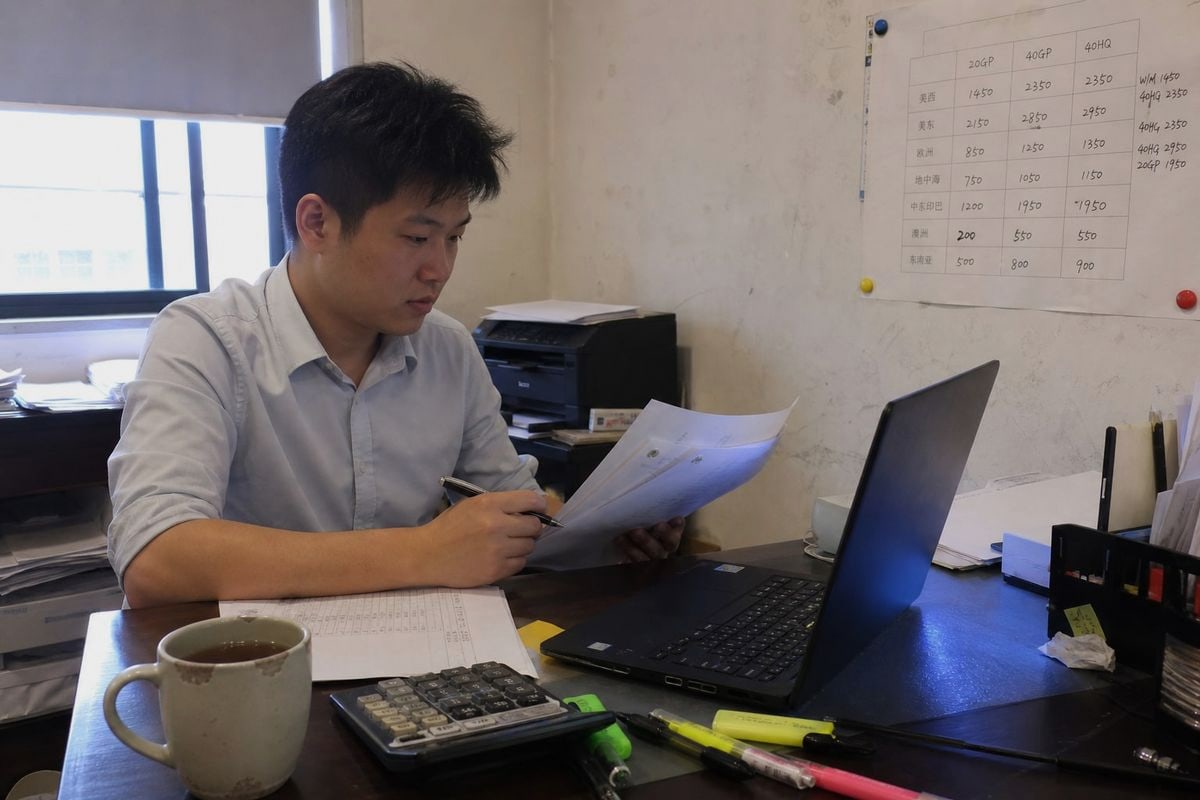
The cheapest quote is often the most expensive shipment. I have reviewed many quotes where a low base rate concealed documentation fees, fuel surcharges, dangerous goods surcharges, chassis fees, and destination handling. The buyer only discovers these charges when the container arrives and the invoice lands. By then, there is no negotiating power left.
Heavy equipment logistics makes this worse. Forklifts are dense, high-value cargo. DG handling and special securing add real costs, and an honest forwarder will show them upfront. A dishonest one will bury them at destination.
Here is how I tell clients to structure their comparison:
| Cost Category | What to Look For | Common Hiding Spot? |
|---|---|---|
| Origin charges | Factory pickup, export declaration, port handling | Sometimes excluded as "local charges" |
| Ocean freight | Base rate plus fuel and DG surcharges | Surcharges quoted separately |
| Destination charges | Terminal handling, documentation, chassis | The most common hidden fee zone |
| Customs and duties | Clearance fees, import duty, taxes | Often marked "at cost" with no estimate |
| Final delivery | Trucking, unloading, appointment fees | Excluded from "port-to-port" quotes |
| Insurance | Marine cargo insurance 3 premium | Frequently omitted entirely |
Watch for quotes with fewer than five line items, vague terms like "destination charges apply," or no mention of DG surcharges for a lithium forklift. When we quote a shipment from Zhengzhou to a US warehouse, we itemize every stage from factory pickup to door delivery. If a competitor's quote is dramatically cheaper, something is missing. Ask them to match our line items, and the gap usually disappears. Request three to five quotes, put them in one spreadsheet, and compare category by category. That thirty-minute exercise protects your entire margin on the deal.
We once re-planned a load for a client who assumed only two forklifts fit in a 40HQ. By lowering masts and staging spare parts, we fit four plus chargers.
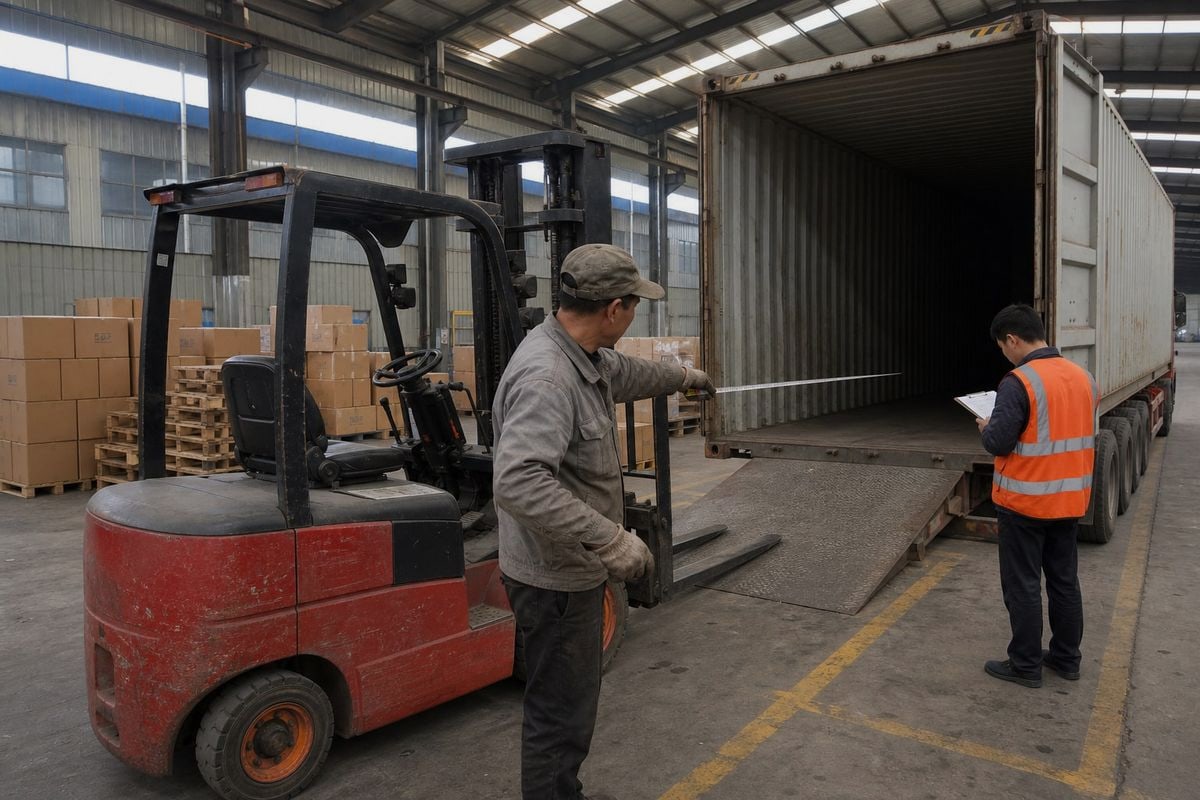
Look for a forwarder offering FCL container shipping, LCL consolidation, flat rack for oversized units, and multi-supplier consolidation. They must plan blocking and bracing for rear-heavy counterbalanced forklifts, maximize container utilization, and coordinate loading directly with Chinese factories.
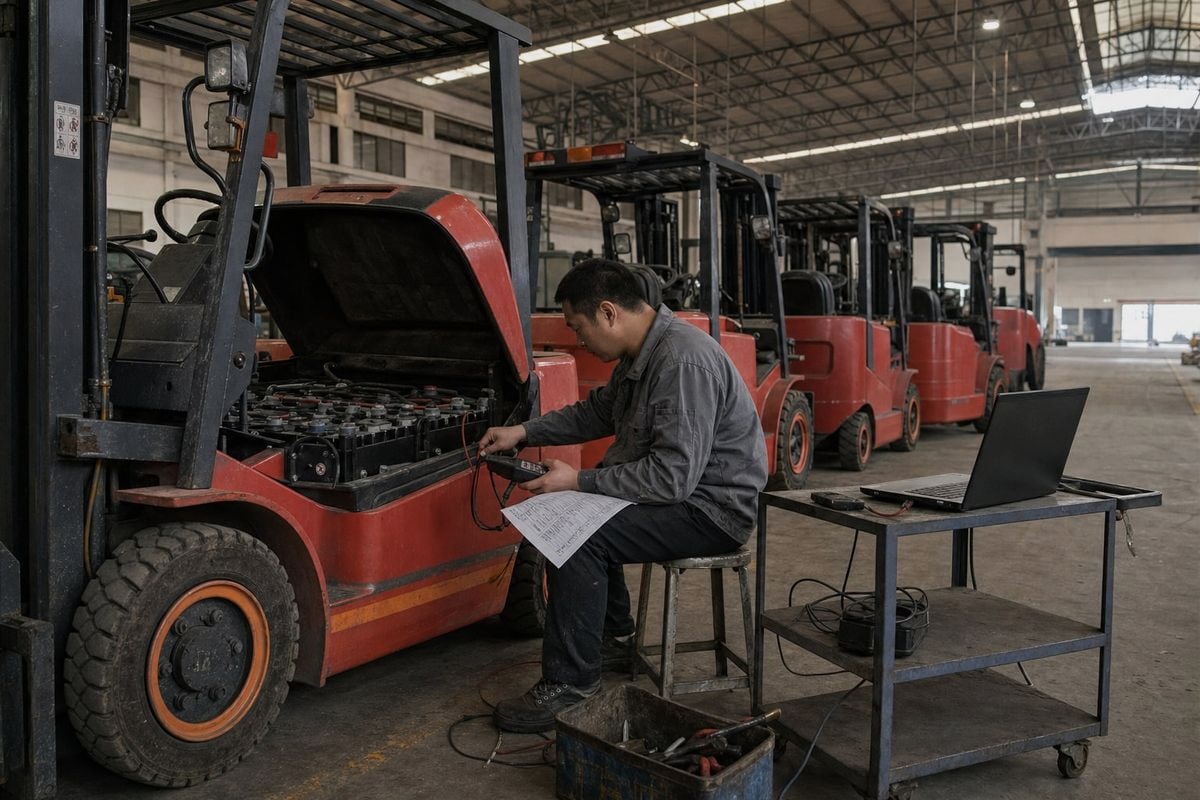
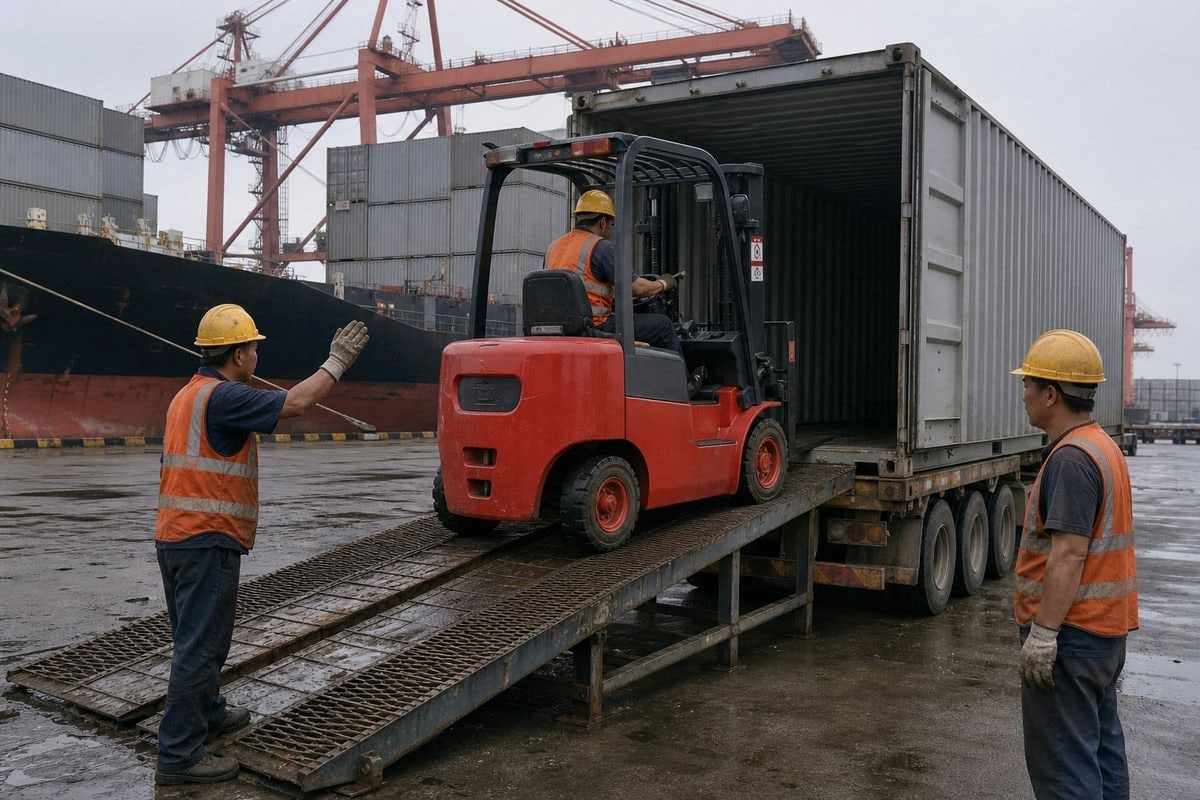
Container loading is where forklift shipments are won or lost. A counterbalanced electric forklift is rear-heavy by design. That counterweight sits over the back axle, so the machine's center of gravity is nothing like a pallet of boxes. Improper blocking and bracing lets the unit shift during ocean transit, damaging the mast, the container walls, or both. Our loading teams chock the wheels, brace the counterweight, and lash to rated anchor points every time. Ask any candidate forwarder to describe their securing method in detail. Vague answers mean inexperience.
| Method | Best For | Key Consideration |
|---|---|---|
| 20FT container | One or two compact forklifts | Watch payload limits with heavy counterweights |
| 40FT / 40HQ FCL | Three to four units plus parts | Best cost per unit when fully utilized |
| Flat rack | Oversized or tall-mast units | Higher cost, requires expert lashing |
| Ro-Ro shipping | Drivable units on select routes | Limited routes, batteries need special review |
| LCL consolidation | Spare parts, chargers, single small units | Slower, more handling touchpoints |
Many of our clients buy forklifts from one factory, batteries from another, and chargers from a third. A strong forwarder consolidates all of it at a China warehouse into one container, filling dead space with spare parts to cut the cost per forklift. Also ask about semi-knocked-down configurations. Shipping units SKD, with masts removed, can improve container utilization and may help mitigate the higher import tariffs some markets apply to fully assembled electric vehicles. A forwarder should review dimensions, weight, and quantity with you before recommending any method.
A shipment held at customs over one wrong HS code taught our team to audit every document before the vessel sails. That habit has saved clients serious demurrage money.
Confirm the forwarder offers customs clearance brokerage, manages duties and taxes under DDP shipping terms, arranges final-mile trucking, and provides marine cargo insurance. Ask for references from completed door-to-door forklift shipments and a written process for handling delays, holds, or damage claims.