- +8618603825129
- [email protected]


[Clearing electric forklifts through EU customs](https://mbmlog.com/?p=11529) looks simple until a container sits at Rotterdam gathering storage fees. Our team in Zhengzhou has watched importers lose weeks over one missing document. It does not have to happen to you.
To clear electric forklifts through EU customs, classify the machine under HS code 8427.10, file an Entry Summary Declaration before arrival, submit the import declaration with a commercial invoice and packing list, pay import duty plus VAT, and present CE and lithium battery documentation on request.
That is the short version. The full picture involves two layers: standard customs formalities and product-specific compliance for the battery and the machine itself. Let me walk you through both, step by step.
A dealer in Germany once asked us to rescue a shipment his previous forwarder had booked. The forklifts arrived fine. The paperwork did not. That file taught us what "complete" really means.
You need a commercial invoice, packing list, bill of lading, an EORI number, and an import declaration filed on the Single Administrative Document. Depending on origin and battery type, you may also need a Certificate of Origin, CE Declaration of Conformity, and UN38.3 test summary.
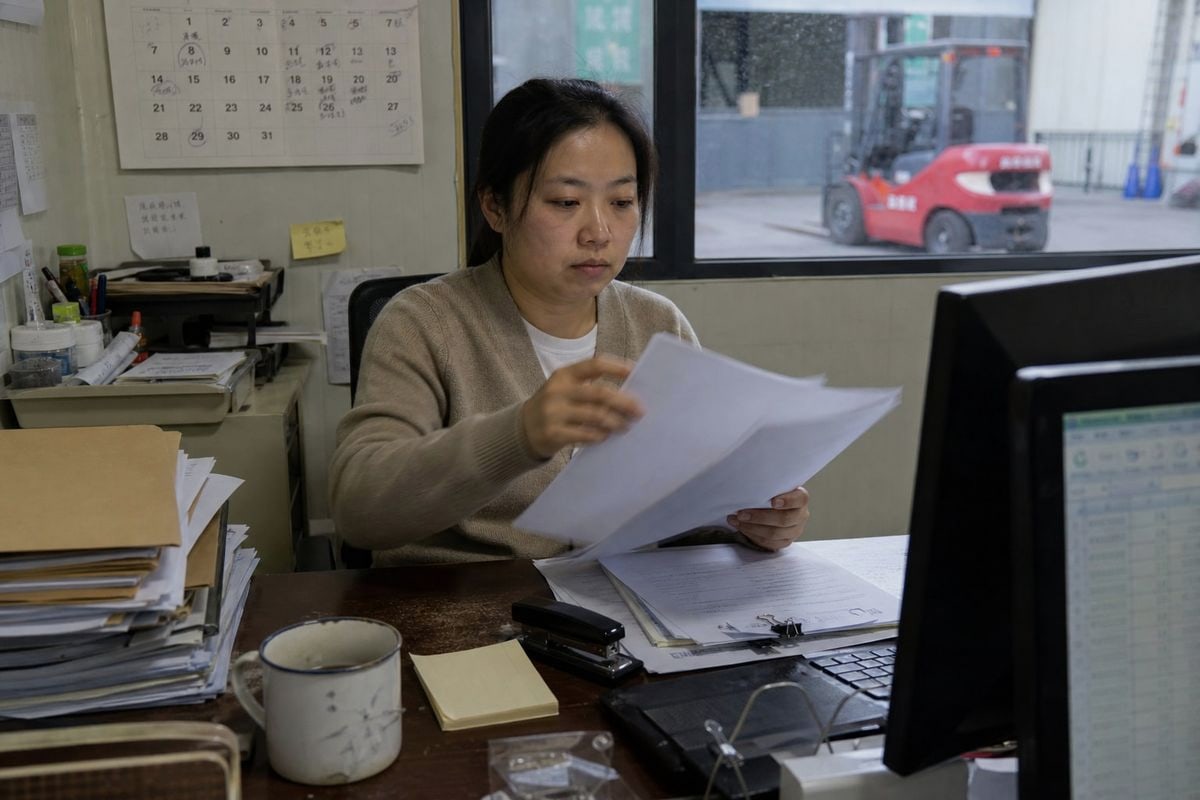
EU customs clearance is not one single form. It is a sequence. First comes the Entry Summary Declaration (ENS), a safety and security filing that must be lodged before the vessel arrives at the first EU port. Then comes the import declaration itself, filed on the Single Administrative Document (SAD), which is the common import form across all EU member states. Only after duties and VAT are addressed is the forklift released for free circulation.
Before any of that, you need EORI number registration. The EORI is your Economic Operators Registration and Identification number 1, and no import declaration can be filed without one. Apply in the member state where you are established, and do it before the shipment leaves China, not after it arrives.
Not every document carries the same legal weight. Here is how we separate them when we prepare a file for our clients:
| Document | Status | Purpose |
|---|---|---|
| Commercial invoice | Always | Customs valuation and duty calculation |
| Packing list | Always | Verifies cargo contents and weights |
| Bill of lading | Always | Proof of transport and cargo control |
| ENS filing | Always | Pre-arrival security declaration |
| SAD import declaration | Always | The formal customs entry |
| EORI number | Always | Identifies the importer to customs |
| Certificate of Origin | Sometimes | Confirms origin; needed for preferential claims |
| CE Declaration of Conformity | On request | Proves EU market compliance |
| UN38.3 test summary | Battery shipments | Lithium battery transport safety |
| Technical file / test reports | On request | Supports classification or compliance checks |
One nuance worth understanding: customs may not demand the CE or battery paperwork for every shipment. But carriers, brokers, and market-surveillance authorities can. In our experience shipping forklifts to Europe, a file that satisfies all three parties moves fastest.
When we quote DDP shipments to Europe, the duty and tax line often surprises buyers more than the freight itself. The forklift price is only part of the landed cost story.
Electric forklifts under HS code 8427.10 typically face an EU MFN import duty of around 1.7%, plus import VAT at the destination country's rate, usually 19% to 27%. Anti-dumping duties on certain Chinese manufacturers can exceed 60%, so verify origin and rates in the TARIC database first.
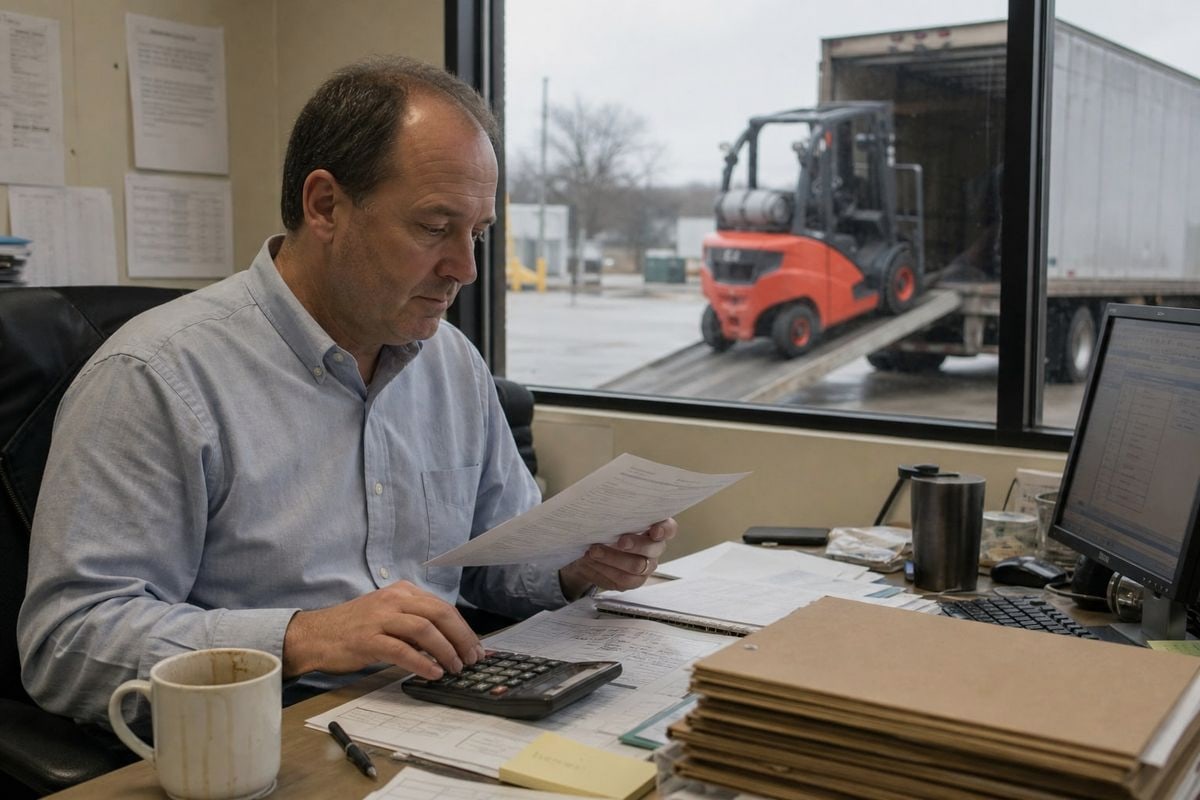
Accurate HS Code classification is the single most important step here. Forklifts fall under heading 8427. Electric self-propelled forklift trucks are commonly classified under 8427.10, while non-electric self-propelled units fall under 8427.20. Your broker may still need technical details, such as whether the truck is battery-powered, self-propelled, or shipped with attachments, because those details decide the final ten-digit code.
Never assume the duty rate. Always run a TARIC database lookup 2 before filing, because the exact treatment depends on both the code and the country of origin. This matters enormously right now: certain origins and manufacturers face anti-dumping or countervailing duties that can exceed 60%. Getting the origin declaration wrong is not a rounding error. It can multiply your landed cost.
Import VAT calculation uses the customs value plus duty plus, in most member states, freight and insurance to the EU border. Here is a simplified example for one forklift entering Germany:
| Cost Element | Amount (EUR) |
|---|---|
| Forklift CIF value | 15,000 |
| Import duty at 1.7% | 255 |
| VAT base (value + duty) | 15,255 |
| German import VAT at 19% | 2,898 |
| Total duties and taxes | 3,153 |
VAT rates differ across the EU, from 19% in Germany to 27% in Hungary. VAT-registered importers can usually reclaim import VAT, so for most of our dealer clients the real cash cost is the duty plus the cash-flow timing of the VAT.
One more emerging cost to watch: Carbon Border Adjustment Mechanism (CBAM) reporting on the embedded emissions of steel and aluminum components. It is a reporting obligation today, but importers of machinery should track how it develops.
Battery paperwork is where we spend the most pre-shipment time in our Zhengzhou office. A lithium forklift with a clean customs file can still be refused by the carrier at origin.
Lithium-ion forklift batteries require a UN38.3 test summary, an MSDS/SDS, and Class 9 dangerous goods handling for ocean freight. In the EU market, Battery Regulation 2023/1542 adds obligations including the Battery Passport, plus producer registration for battery and WEEE recycling schemes.
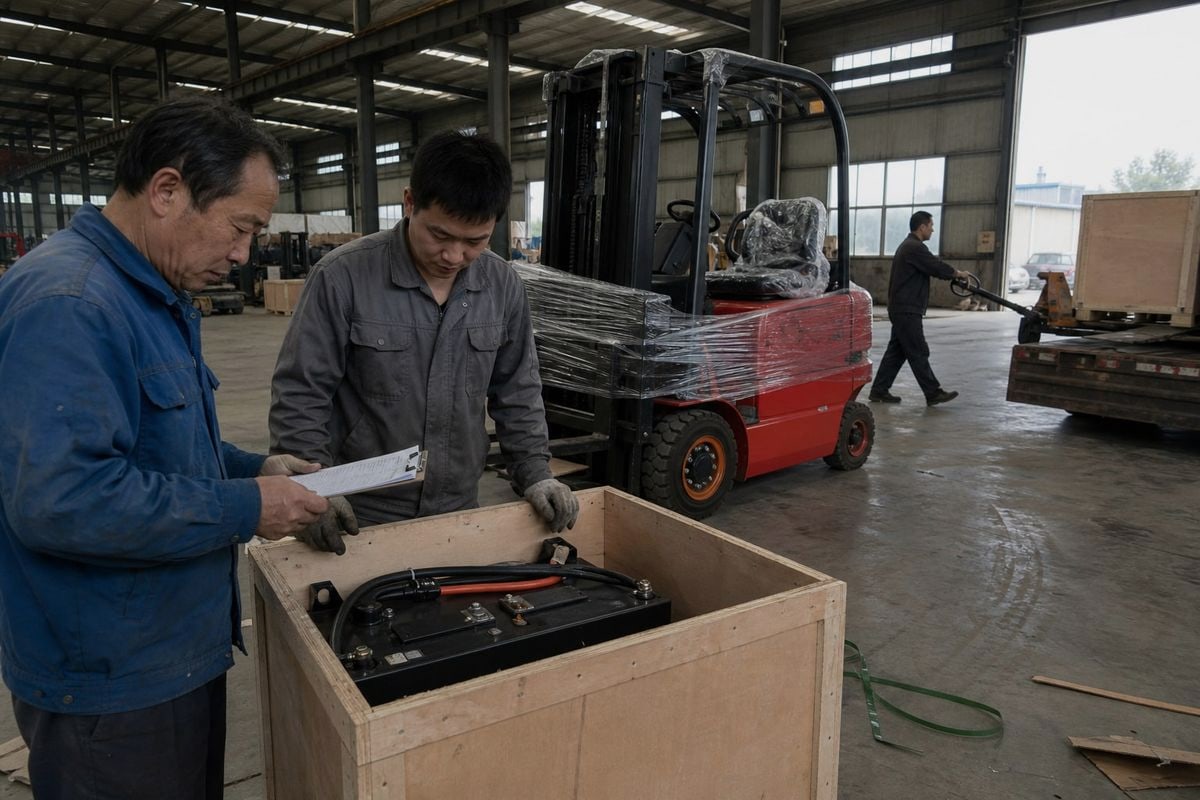
Here is a distinction that saves importers real confusion. Battery documentation mostly governs transportation and market compliance, while customs clearance itself focuses on classification, valuation, and origin. Both must be in order, but they answer to different rules and different parties.
Lithium-ion batteries are regulated as Class 9 dangerous goods for sea freight when shipped under the relevant provisions. Before booking, the carrier will want the UN38.3 test summary proving the battery passed lithium-ion battery safety standards testing, plus the safety data sheet and a dangerous goods declaration where applicable. We collect these from the factory before the forklift ever leaves the production line, because chasing a test summary while a container waits at the port is a losing game.
Once the forklift is inside the EU, a second layer applies:
Our practical advice: treat the battery as a product in its own right, with its own compliance file, sitting alongside the forklift's file. When both are complete before departure, carrier acceptance, customs, and market entry all go smoothly.
The most expensive lesson we ever helped a client absorb involved a mismatch between the CE Declaration of Conformity and the actual model number on the arriving machines. Ten days of storage fees followed.
Avoid delays by verifying the HS code and duty rate before shipment, registering your EORI early, collecting battery and CE documents at the factory, matching every document to the actual machine, and giving your customs broker the complete file before the vessel arrives.
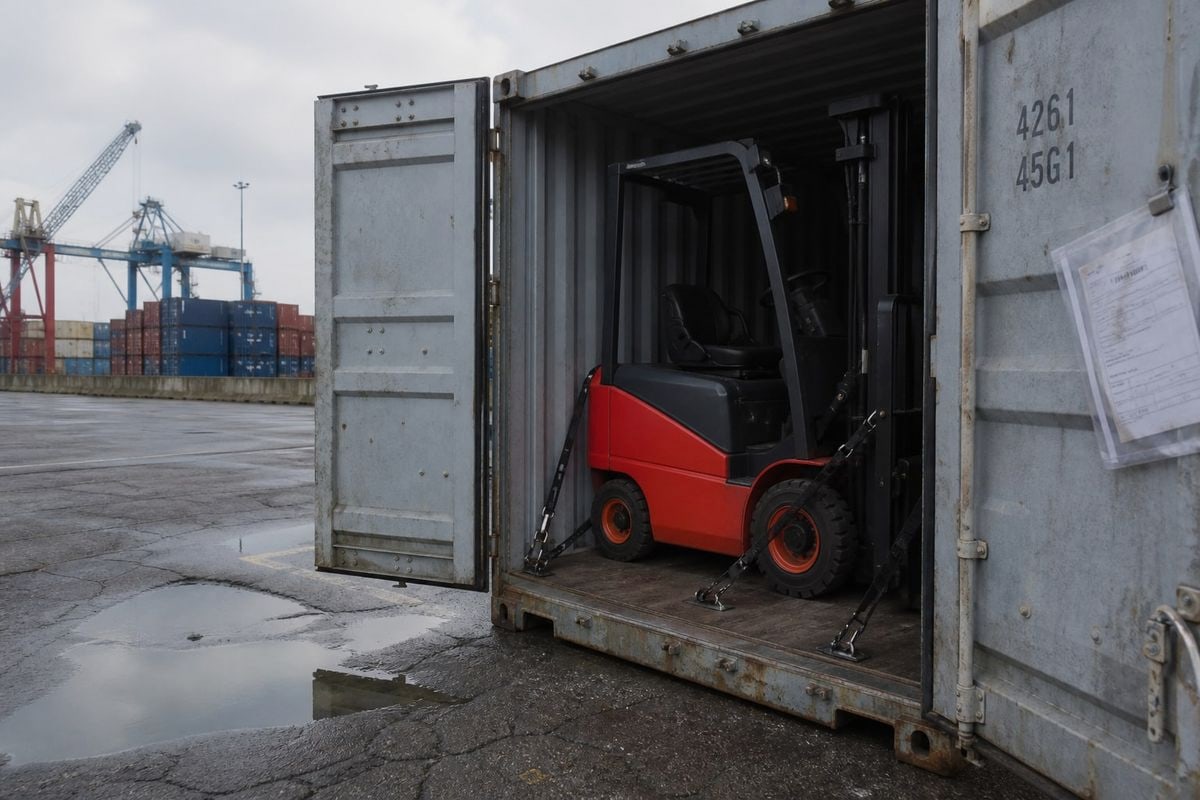
Customs clearance starts before shipment, not after arrival. Your trade contract and chosen Incoterm decide who files what. Under EXW or FOB, you own the import formalities. Under DDP, your forwarder does. Either way, someone must hold the complete technical file before the vessel docks, because late document collection is the single most common cause of port storage charges.
Compliance also matters at the machine level. The forklift must carry the CE mark, and CE marking certification must be backed by a signed EU Declaration of Conformity referencing the EU Machinery Directive 3, along with EMC and Low Voltage requirements where they apply. Customs can request the technical file, including risk assessments and test reports from accredited laboratories. If the paperwork describes a different model, voltage, or capacity than what is in the container, expect an inspection.
| Delay Trigger | Consequence | Prevention |
|---|---|---|
| Wrong HS code or vague description | Reassessment, penalties, held cargo | Verify 8427.10 classification in TARIC before filing |
| Missing or late ENS filing | Cargo refused unloading or held | Confirm the carrier or forwarder files ENS pre-arrival |
| Invoice and packing list mismatch | Document queries, inspection | Cross-check values, weights, and serial numbers |
| No origin evidence for a preference claim | Full duty charged, possible audit | Secure the Certificate of Origin before departure |
| Battery documents unavailable | Carrier refusal or DG inspection hold | Collect UN38.3 and SDS at factory pickup |
| CE file does not match the model | Market-surveillance hold, storage fees | Align the Declaration of Conformity with actual specs |
One newer item worth auditing: if your forklifts include telematics or connectivity features, check them against the Cyber Resilience Act, because smart-enabled machinery is coming under that framework. Fleet buyers electrifying entire warehouses are now importing multiple units at once, so a single documentation error scales into a multi-container problem. Our approach is simple: we review the full file with the factory before loading, so nothing surprises anyone at the destination port.
Clear electric forklifts through EU customs by proving four things: what the machine is, where it came from, how it is powered, and that it complies. Prepare early, and clearance stays routine.
1. Official EU guide to the mandatory identification number required for all customs-related activities within the European Union. ↩︎
2. Access to the multilingual database covering all measures relating to tariff, commercial, and agricultural legislation. ↩︎
3. Official European Commission page detailing safety requirements and regulatory frameworks for machinery products in the EU. ↩︎