- +8618603825129
- [email protected]

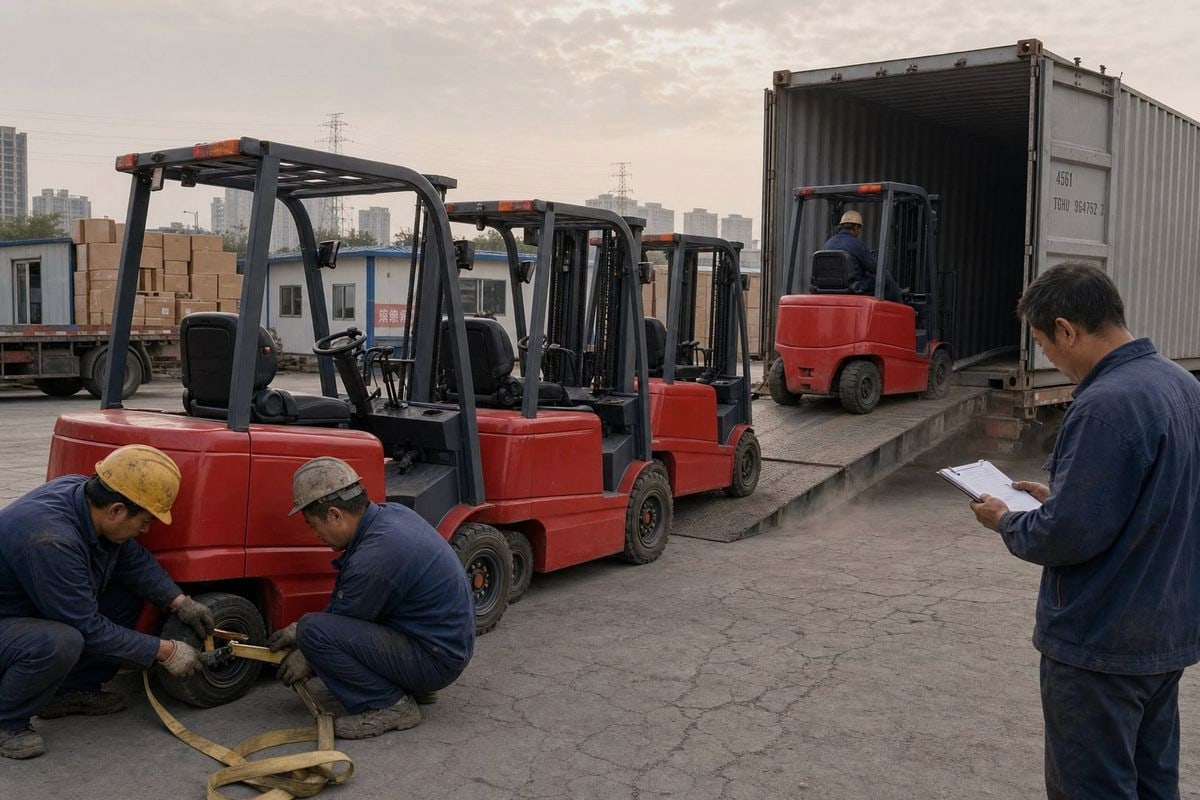
Shipping forklifts in bulk looks simple until the invoices arrive. At our Zhengzhou logistics office, I regularly meet dealers who saved on the factory price but lost it all on freight.
Dealers should ship forklifts in bulk by consolidating units from suppliers into full containers, choosing 40HQ containers or RoRo based on mast height and quantity, securing each unit at four structural tie-down points, and preparing lithium battery documentation and customs paperwork before the cargo reaches port.
That is the short answer. Below, I break down each decision step by step, using real shipments we handle from Chinese forklift factories to dealers in the US and Europe.
Last quarter, a US distributor asked our team to collect forklifts from one factory, batteries from another, and chargers from a third. Coordinating that is exactly what our consolidation warehouse exists for.
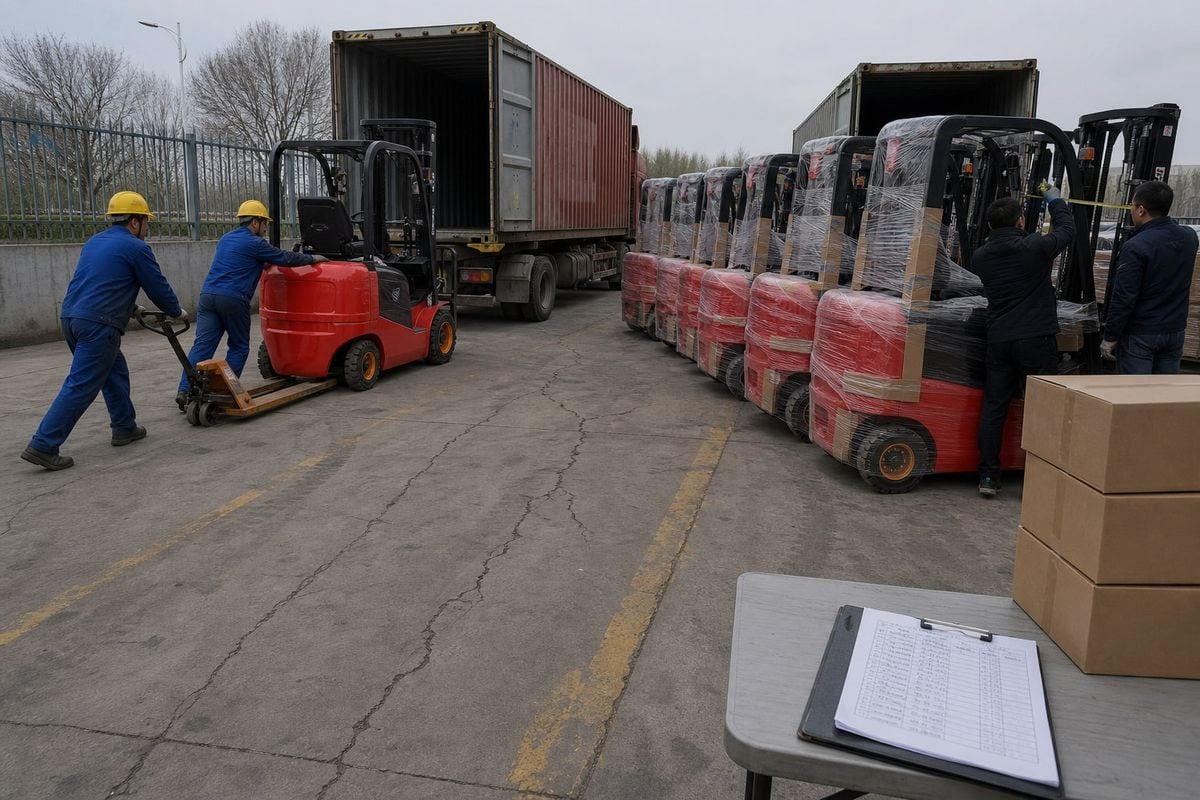
To consolidate forklifts from multiple Chinese suppliers, appoint one freight forwarder to arrange factory pickups, gather all cargo at a bonded consolidation warehouse near the port, verify dimensions and battery specs on arrival, then load everything into a single container under one Bill of Lading.
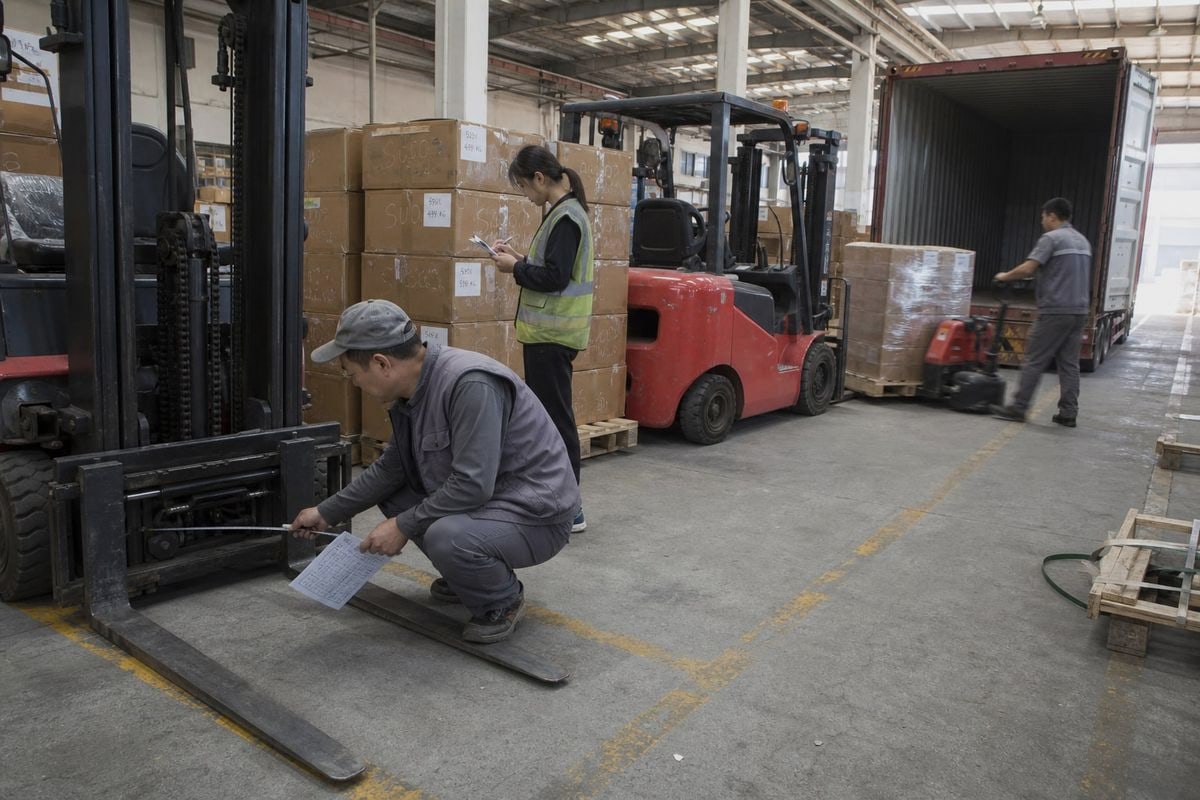
Multi-supplier consolidation is the single biggest lever most dealers ignore. When you buy forklifts from Factory A, lithium batteries 1 from Factory B, and spare parts from Factory C, shipping each order separately means three pickups, three sets of export declarations, and three destination charges. Consolidating turns that into one planned move.
Here is the sequence our freight forwarding services follow for a typical multi-supplier order:
One caution I always give buyers: consolidation only works if suppliers hit their production dates. If Factory B is three weeks late, your forklifts sit waiting. We manage this by confirming realistic ready dates before booking the vessel, and by holding early-arriving cargo in our warehouse at low cost rather than paying port storage.
Some dealers worry that consolidation adds handling risk. In our experience, the opposite is true. A single supervised loading at one warehouse, with heavy equipment rigging done by trained staff, is safer than three separate loadings you never see.
The trade-off I weigh on almost every quote is this: a 20FT container is cheaper per box, but a 40HQ is almost always cheaper per forklift. The math depends on your exact models.
Choose a 40HQ container for most bulk electric forklift shipments, since it fits four to six compact units plus accessories. Use a 20FT for one to two heavy counterbalance trucks, and consider RoRo shipping or flat rack when mast height exceeds container door clearance.

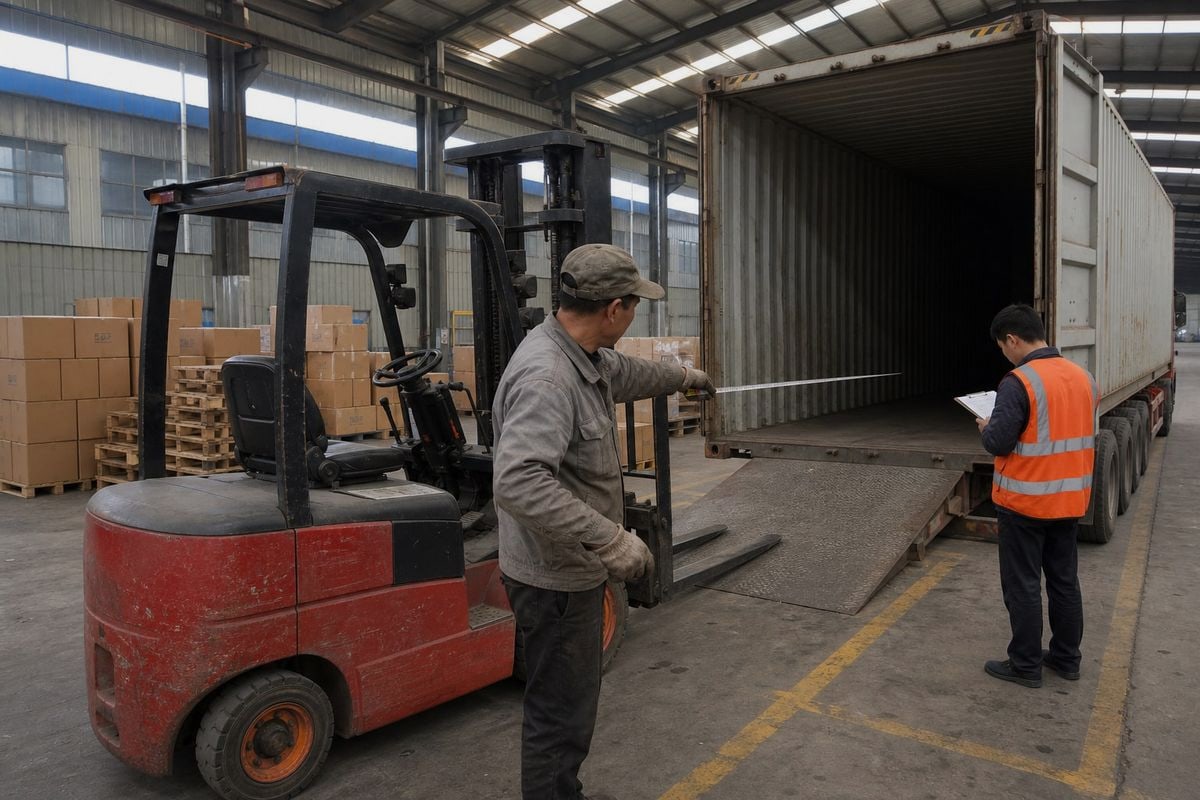
Container choice starts with three numbers: your forklift's collapsed mast height, its overall length with forks, and its service weight. A standard container door opening is roughly 2.28 meters high, and a 40HQ gives about 2.58 meters of internal height. Many electric counterbalance forklifts clear this only when the mast is fully lowered, so we always confirm the lowered mast height with the factory before booking.
| Option | Best For | Typical Capacity | Key Limitation |
|---|---|---|---|
| 20FT container | 1–2 heavy counterbalance units | Up to ~28,000 kg payload | Limited floor space for accessories |
| 40FT container | 3–4 mid-size forklifts | Longer floor, same height as 20FT | Height cap on tall masts |
| 40HQ container | 4–6 compact electric units + parts | Extra ~30 cm of height | Door clearance still applies |
| Flat rack | Oversize or tall-mast units | Overheight cargo allowed | Higher cost, weather exposure |
| RoRo shipping 2 | Drive-on units, no crane needed | Very large or awkward units | Fewer routes, less theft protection |
Load geometry matters as much as container size. A staggered-facing configuration, where units alternate direction so masts and counterweights interlock, can fit up to 20% more forklifts on the same deck space. We also use 3D load-optimization software before loading to simulate placement, balance the center of gravity 3, and confirm floor point loads. Electric pallet trucks and stackers can often nest between larger units.
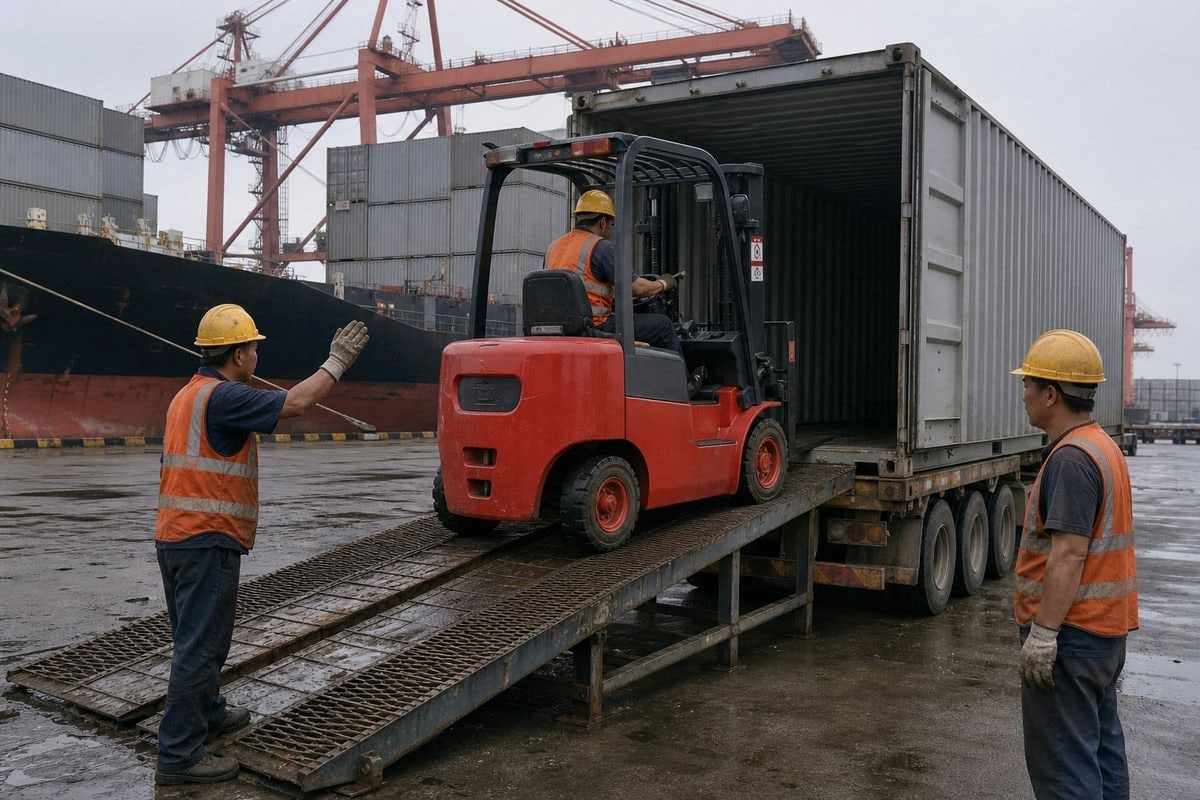
A dealer once asked me why we did not simply use RoRo shipping for everything since it avoids loading labor. The honest answer: RoRo works well for oversize units, but containerized cargo gives better protection from weather and handling, more route options, and easier intermodal logistics on the US side, where the container moves straight onto a rail or chassis for door delivery.
A lesson I learned early in this business: the cheapest ocean rate rarely produces the cheapest landed cost. One damaged mast or one week of demurrage erases months of rate savings.
Reduce per-unit freight cost by maximizing container utilization with optimized load plans, consolidating forklifts, batteries, and parts into shared containers, booking FCL instead of repeated LCL shipments, comparing DDP quotes on total landed cost, and preventing costly damage with proper securement and cargo insurance coverage.
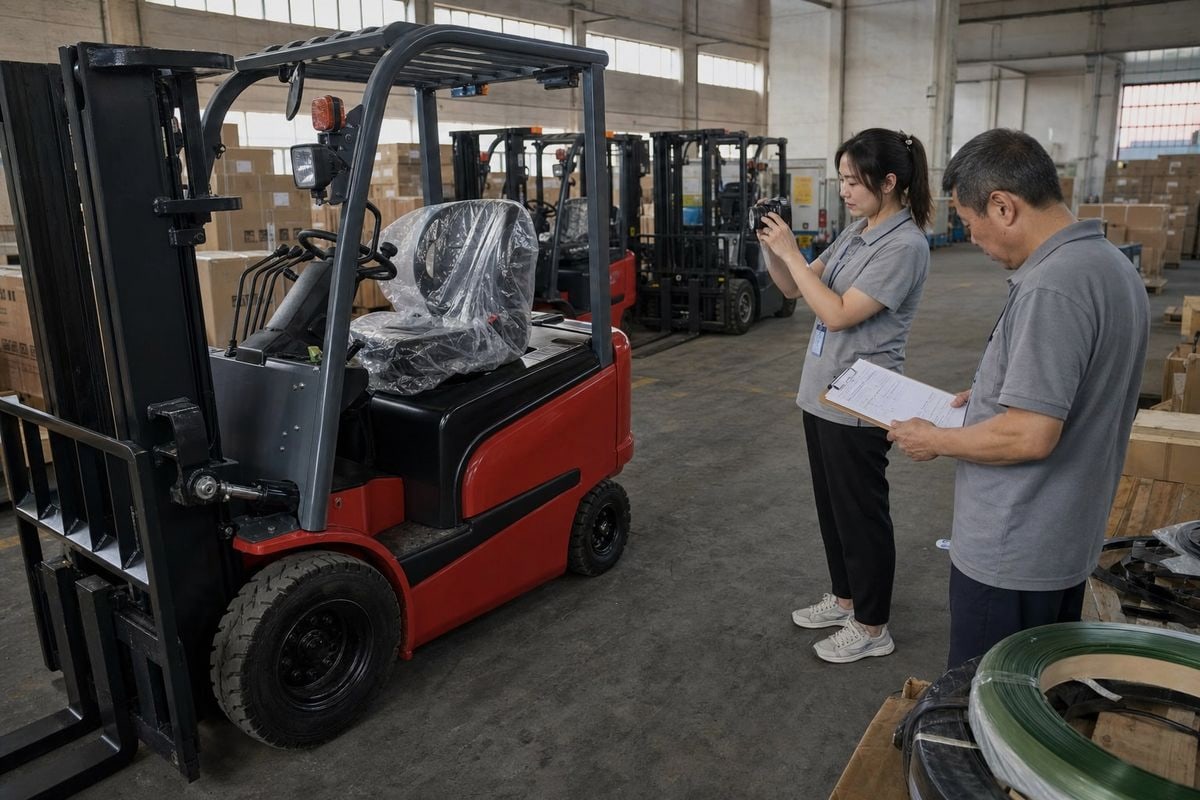
Per-unit cost is a fraction: total logistics spend divided by units shipped. You can attack both sides of that fraction, and the smartest dealers attack both at once.
| Cost Lever | How It Works | Typical Impact |
|---|---|---|
| Fill unused space | Load chargers, batteries, spare parts into gaps | Parts ship nearly free |
| Batch orders into FCL | One 40HQ beats four LCL consolidation shipments | Lower per-unit ocean cost |
| Optimized load plans | 3D software plus staggered facing fits more units | Up to 20% more units per box |
| One customs entry | Consolidated shipments clear once | Fewer brokerage and entry fees |
| Damage prevention | Four-point tie-downs, mast lowered, wheels chocked | Avoids repair and claim costs |
| Transparent DDP quotes | All destination charges known upfront | No surprise fees at delivery |
Some dealers push for shared or partial-load arrangements to squeeze out every dollar. That can work for smaller pallet trucks and stackers moving in small batches through LCL consolidation. But I raise this objection directly with buyers: shared freight means more handoffs, and each handoff is a damage opportunity on equipment worth thousands of dollars per unit. For full forklifts, a dedicated FCL container that you control usually wins on total cost once risk is priced in. We resolve the tension case by case, using LCL for parts and accessories and FCL for the machines themselves.
Two more points dealers overlook. First, cargo insurance coverage on heavy equipment is cheap relative to unit value, so skipping it is false economy. Second, document accuracy is a cost tool. Correct HS codes and complete battery paperwork prevent demurrage, storage, and exam fees that quietly inflate your per-unit cost after arrival.
A buyer in Texas once forwarded me a battery test report from his supplier one day before the vessel cutoff. The document was incomplete. We caught it, fixed it, and the container sailed on schedule. That near miss shaped how we now check every file before departure.
Prepare a commercial invoice, packing list, Bill of Lading, and certificate of origin for every bulk forklift shipment. For electric units, add lithium battery test reports and dangerous goods declarations where required, verify HS codes, and confirm destination-country duty and compliance rules before sailing.
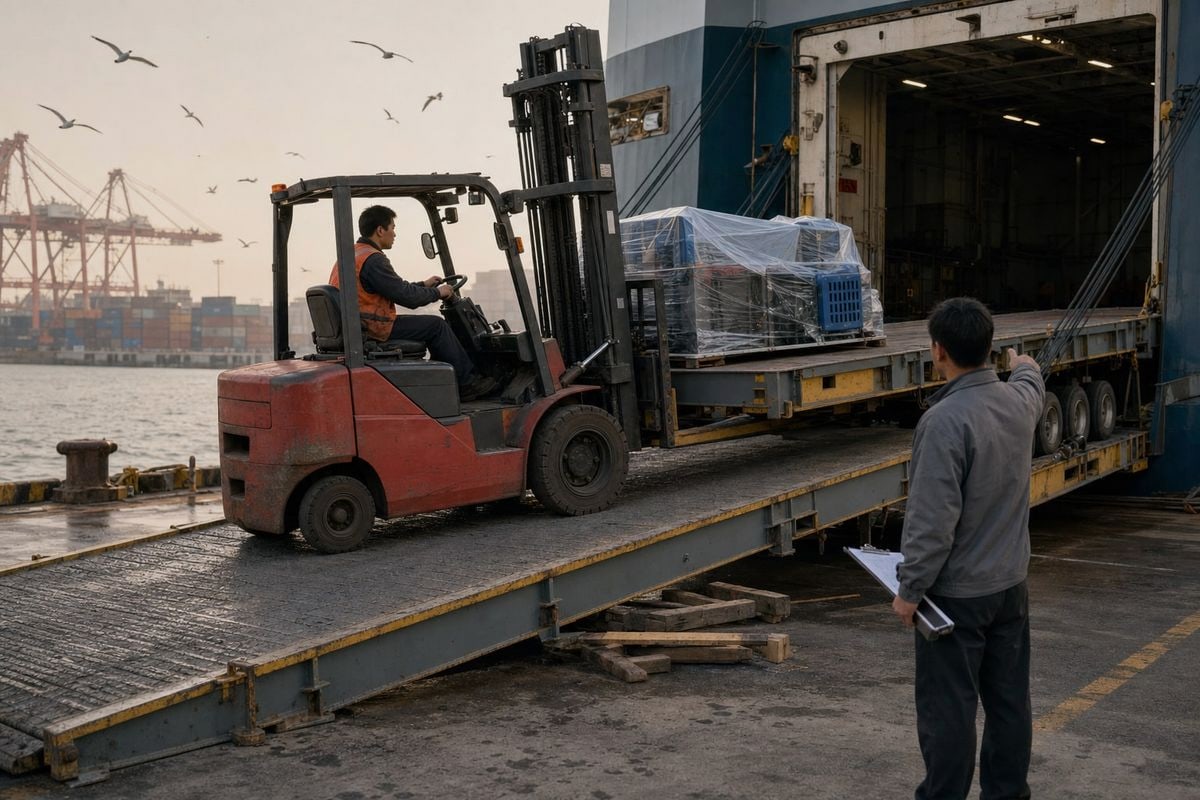
Documentation problems cause more bulk-shipment delays than weather, port congestion, or anything else we see. The frustrating part is that almost all of them are preventable before the container leaves China.
| Document | Purpose | Common Error We Catch |
|---|---|---|
| Commercial invoice | Declares value for duties | Values inconsistent with packing list |
| Packing list | Details units, weights, dimensions | Catalog weights instead of actual weights |
| Bill of Lading | Contract of carriage and title | Consignee details mismatched with entry |
| Certificate of origin | Supports tariff treatment | Missing for consolidated multi-supplier cargo |
| Battery test report / DG declaration | Lithium battery carrier acceptance | Wrong battery model referenced |
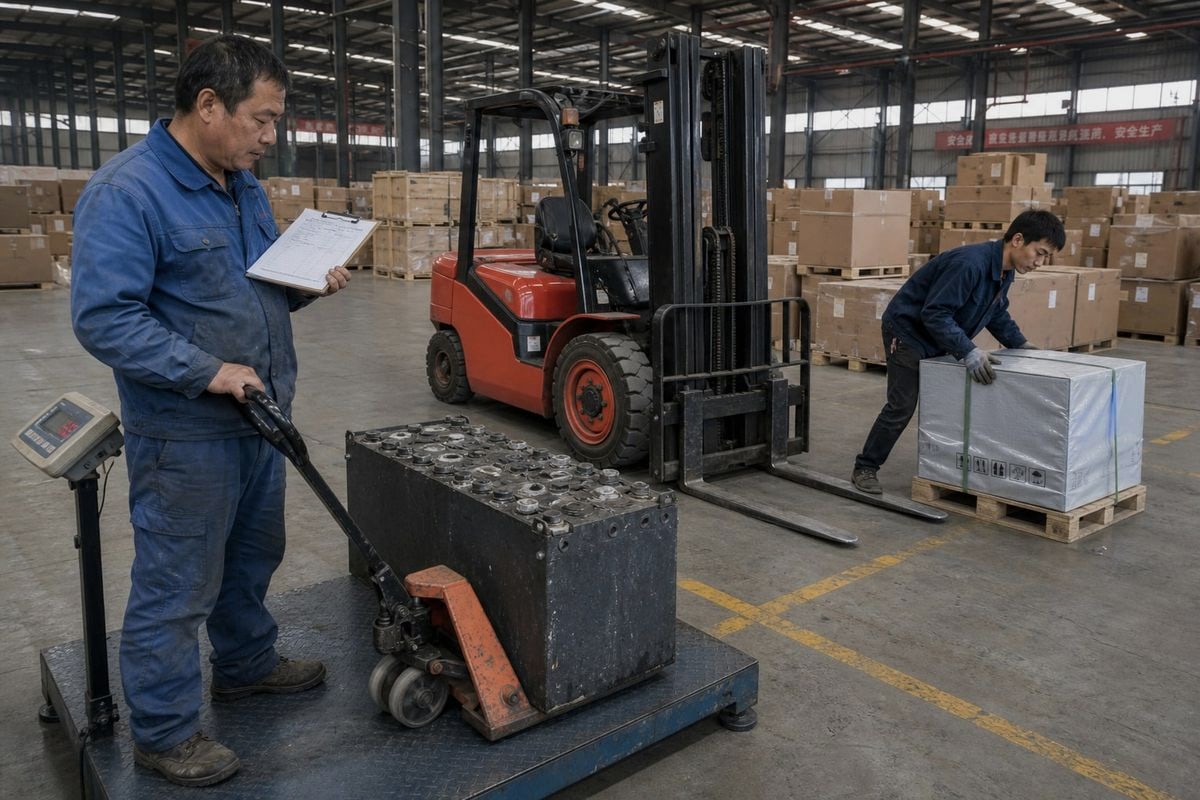
Electric forklifts with lithium batteries need special attention. Carriers can reject a booking if battery documentation is incomplete, and a rejection after cargo reaches port means rebooking fees and storage charges. Our team collects battery specifications from the factory at the quotation stage, not the booking stage, so any classification issue surfaces weeks early. Preparation on the physical side matters too: batteries disconnected or secured, and for any propane or diesel units in a mixed order, tanks removed or fuel drained to no more than 25% capacity.
Customs is not the last hurdle. Once your container clears, the final trucking leg must comply too. Very heavy counterbalance units moving inland by flatbed trailer transport may trigger oversize load permits or bridge weight checks under FMCSA and state rules 4, and tall units sometimes need step-deck trailers to stay within legal height. Standard tie-down requirements apply at delivery just as they did at origin: chains or straps at four weight-rated structural points on the frame or axles, never on the mast or hydraulic lines. With DDP shipping, we plan this final leg before the vessel even departs, so the delivery truck matches the cargo.
Bulk forklift shipping rewards planning: consolidate suppliers, match the container to your fleet, optimize loading, and lock down documents early. Get those four right, and per-unit costs fall predictably.
Every week I watch dealers overpay because each forklift shipped as a one-off move. The fix is not a cheaper rate; it is a smarter shipment structure. If you are importing electric forklifts from China, our team at MBMLOG can review your supplier list, model your container plan, and quote the full door-to-door cost before you commit. Reach out, and let us turn your next bulk order into one clean, predictable shipment.
1. US government agency providing safety regulations and guidance for the transport of hazardous materials, including lithium batteries. ↩︎
2. Official UN agency establishing global standards for maritime safety and the regulation of international shipping. ↩︎
3. Scientific concept defining the point where the weight of an object is concentrated for balance and stability. ↩︎
4. Federal agency responsible for regulating and providing safety oversight for commercial motor vehicles in the United States. ↩︎