- +8618603825129
- [email protected]


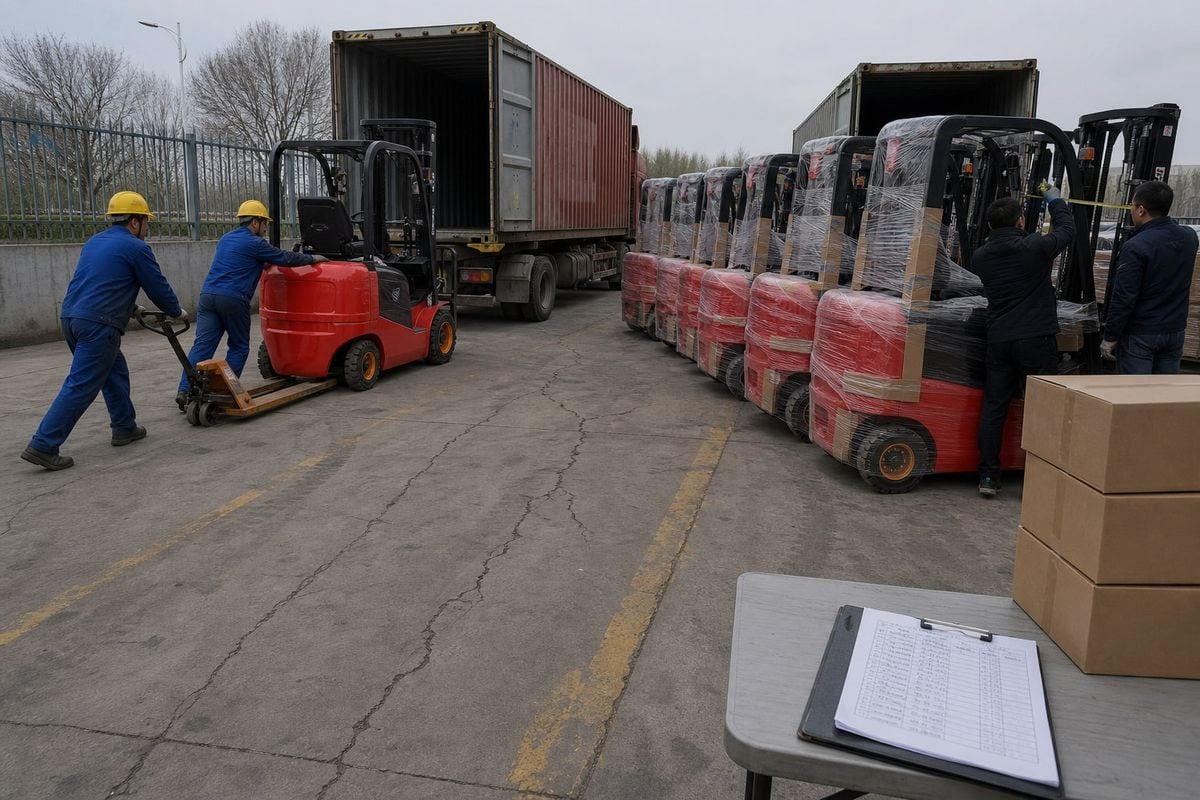
Forklift shipping costs from China can quietly eat your resale margin. I see it weekly at our loading warehouse in China: distributors win a great factory price, then lose it all to freight, destination fees, and surprise charges. One bad container plan can wipe out thousands of dollars per shipment.
Forklift distributors reduce shipping costs from China by maximizing container utilization, choosing FCL over LCL at commercial volumes, consolidating cargo from multiple suppliers into one container, and controlling hidden fees like Terminal Handling Charges, dangerous goods surcharges, and destination costs through complete landed-cost quotations.
Each of these levers is controllable. Below, I break down exactly how to pull them, based on the containers we load and ship for forklift importers every month.
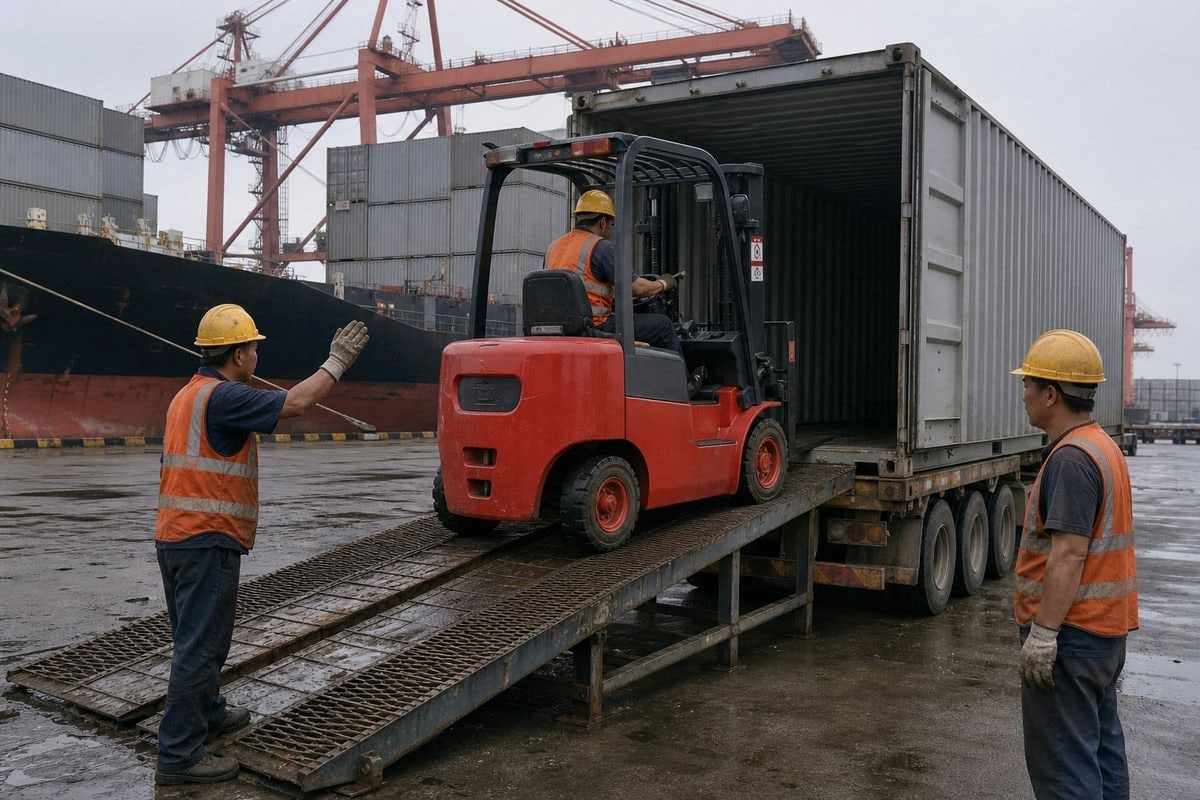
Last month our loading team fit five compact electric forklifts into a 40HQ container that a distributor assumed would hold only three. The difference cut his freight cost per unit by roughly 40 percent.
Maximize container utilization by partially disassembling masts, wheels, and counterweights, using 3D load-planning to eliminate dead space, filling gaps with spare parts and chargers, and matching forklift dimensions to the right container size before booking your ocean freight.
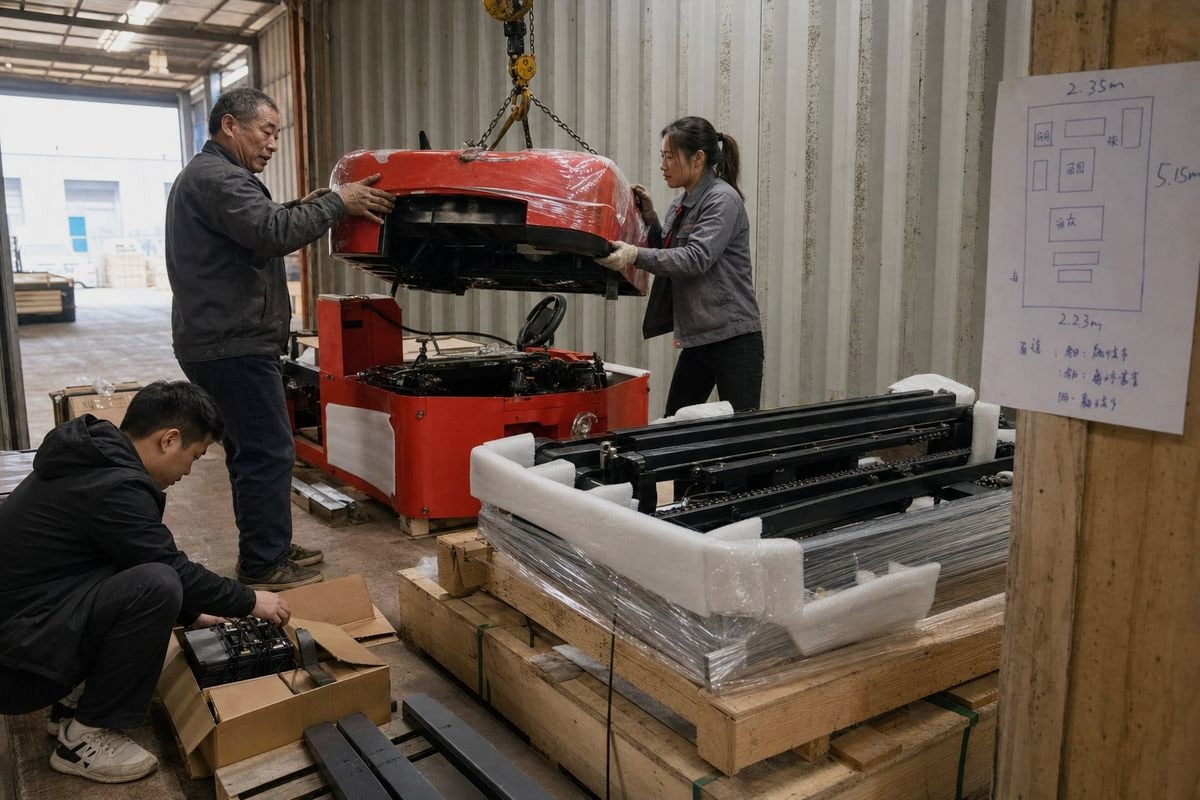
Most container charges are billed per container, not per machine. So every extra forklift you fit into the same box lowers your average shipping cost per unit. This is why container loading optimization usually saves more money than negotiating a slightly lower ocean freight rate.
A forklift with its mast raised wastes vertical space. When we coordinate with factories, we ask whether the mast, overhead guard, or counterweight can ship detached and crated. Partially disassembled units stack tighter, and a Completely Knocked Down (CKD) strategy can increase container density even further. In some markets, CKD shipments may also qualify for lower "parts" duty classifications, though you must confirm this with a customs broker 1 before relying on it.
Here is a general guide we use when planning loads. Actual numbers depend on forklift model, mast height, and weight limits.
| Container Type | Typical Compact Forklift Capacity | Best Use Case |
|---|---|---|
| 20FT | 2–3 units | Small orders, heavy counterbalance models |
| 40FT | 4–5 units | Mid-size orders with accessories |
| 40HQ | 5–6 units plus parts | Best per-unit cost for distributors |
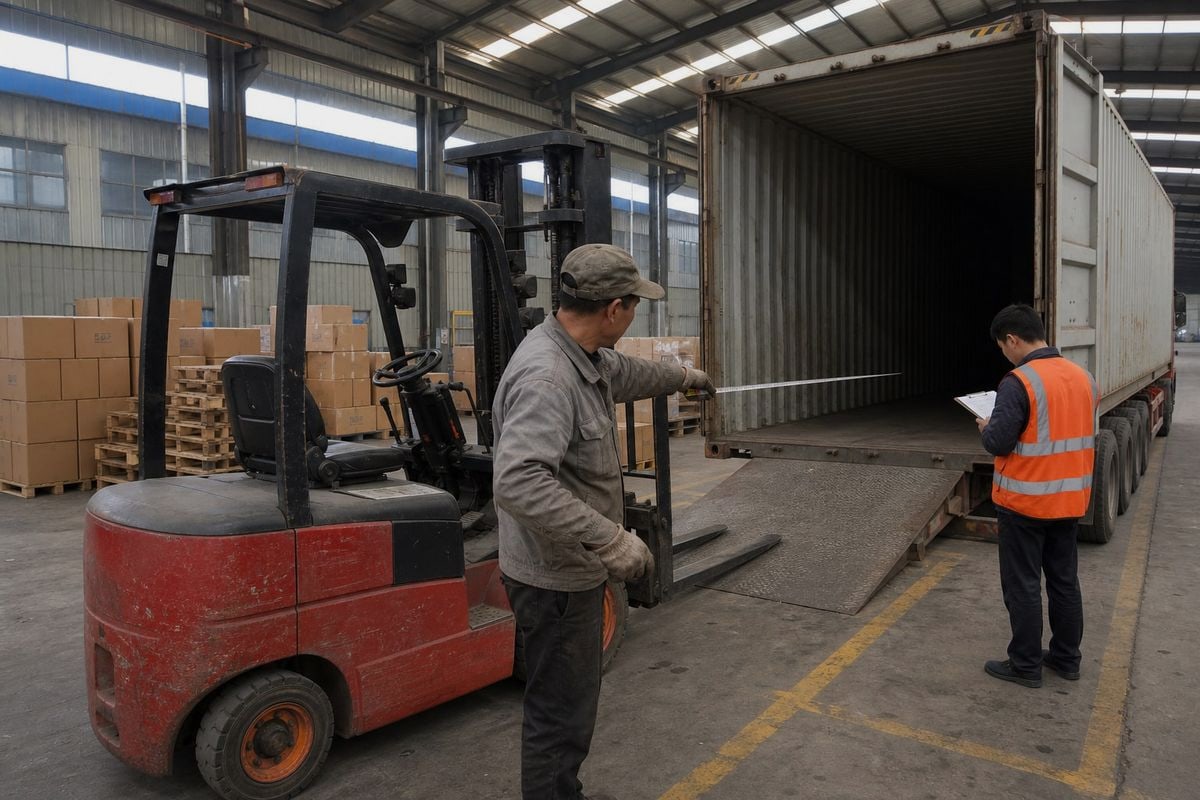
Empty gaps are money you already paid for. We routinely load forklift batteries, chargers, tines, and spare parts into the voids around machines. Before loading, we run 3D volumetric load-planning simulations on irregular forklift frames to test placements. One caution: buying an extra forklift just to fill a container only makes sense if you can sell it. Weigh the freight savings against inventory carrying cost and demand risk before adding units.
A US dealer once asked me to quote LCL for four counterbalance forklifts because he assumed "less than container" always meant "less cost." His LCL quote came back higher than a full 40FT container.
Choose FCL once your cargo volume passes roughly 15 cubic meters, the typical break-even point where per-CBM LCL handling fees exceed a full container rate. Use LCL only for single compact units or samples, and reserve air freight for urgent lightweight parts.
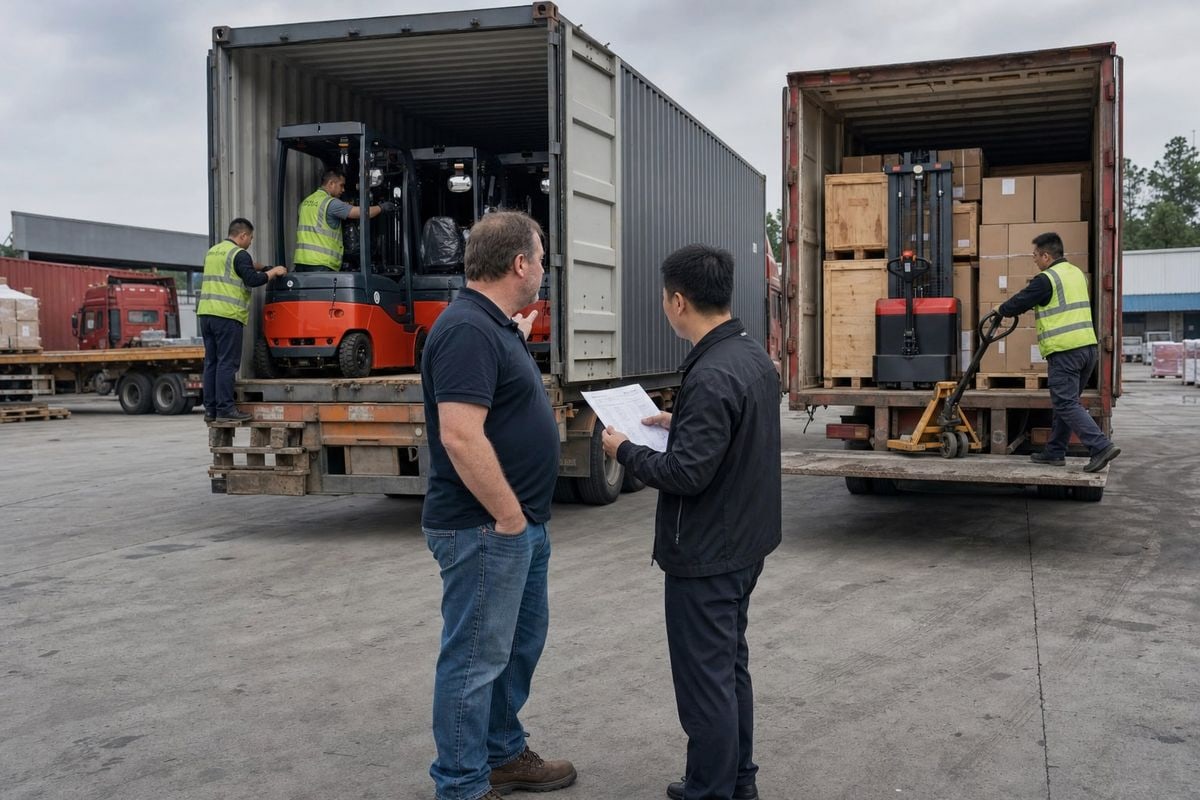
For most distributors, the FCL vs LCL shipping decision is simple math. Here is how the modes compare for forklift cargo:
| Shipping Mode | Typical Cost Signal | Best For | Watch Out For |
|---|---|---|---|
| FCL (40FT/40HQ) | Roughly $2,100–$2,805 China to US West Coast in recent spot conditions; some guides cite $2,500–$4,000, with East Coast higher | Standard distributor orders of 3+ units | Rates swing with the spot market and season |
| LCL | Charged per CBM plus handling | Single compact stacker or sample unit | High per-CBM fees, extra handling, damage risk |
| Air freight | Roughly $5–$10 per kg | Urgent chargers, controllers, small pallet jacks | Never economical for full-size forklifts |
| Ro-Ro shipping | Per-unit driven cargo rates | Very large fleets on limited routes | Fewer sailings, exposed cargo, limited availability |
One or two forklifts already consume serious cubic meters. Past the 15 CBM break-even point, LCL consolidation fees, warehouse handling, and destination deconsolidation charges stack up fast. FCL also means your machines are loaded once, secured once, and untouched until arrival. That matters for heavy, high-value equipment.
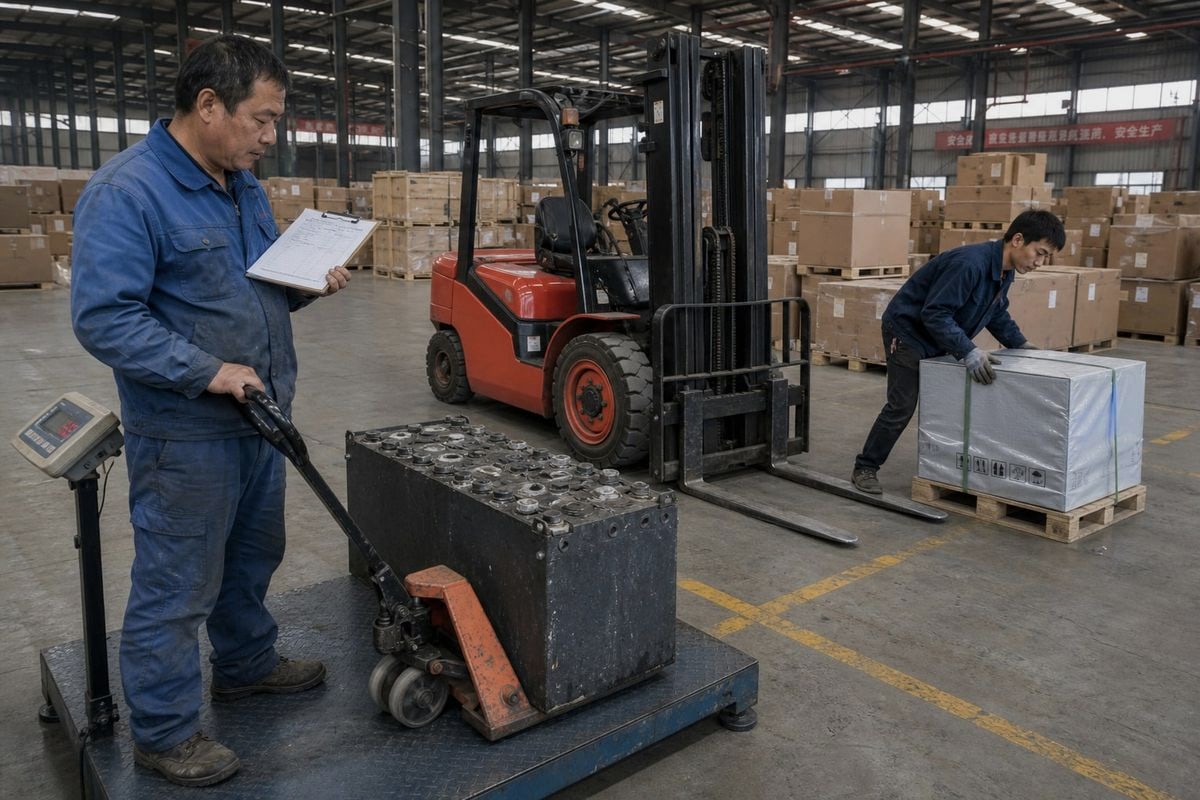
If your forklifts run on lithium batteries 2, mode selection gets stricter. Lithium-powered units may require Class 9 dangerous goods handling, and carriers commonly apply a DG surcharge of $200–$400 per booking depending on carrier and port. We always verify battery specifications with the factory before booking, because carrier acceptance rules differ. Partner with a forwarder certified and experienced in Class 9 dangerous goods, or a cheap quote can become an expensive rejected shipment.
For distributors shipping to Europe, the China-Europe Railway Express is worth a look as a mid-tier option, faster than ocean and far cheaper than air.
The trade-off we weigh most often for clients is this: wait a week to combine cargo from three factories into one container, or ship each order separately and pay three sets of booking fees. Consolidation almost always wins.
Consolidate by routing forklifts, batteries, chargers, and spare parts from different Chinese factories to one export warehouse, then loading everything into a single FCL container. This eliminates duplicate booking fees, handling charges, and customs entries across multiple partial shipments.
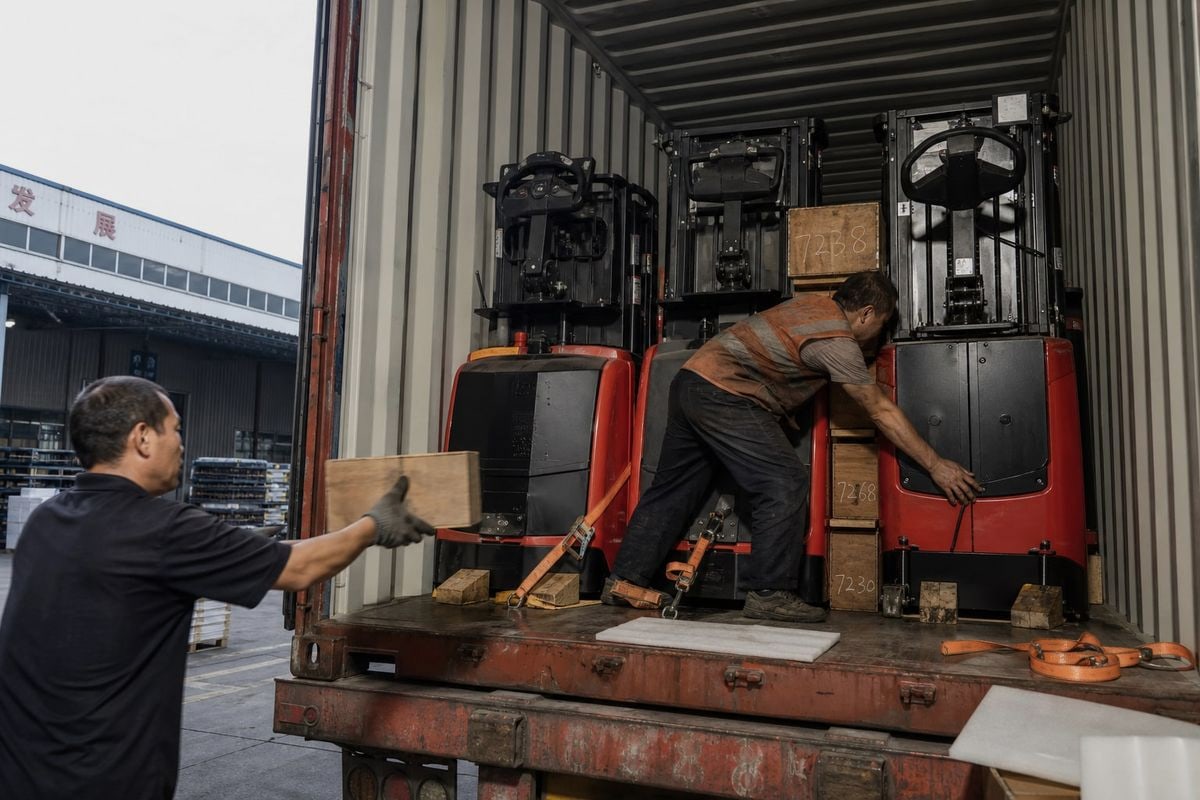
Many distributors buy forklifts from Factory A, batteries from Factory B, chargers from Factory C, and attachments from Factory D. Shipping each order alone means paying documentation fees, Terminal Handling Charges, customs clearance 3, and destination trucking four separate times. Multi-supplier consolidation collapses those costs into one shipment.
Here is the process we run for forklift importers, step by step:
Consolidation also improves supply chain visibility. Instead of tracking four shipments across four forwarders and time zones, you track one container with one point of contact. Larger consolidated volumes can also unlock bulk shipping discounts from carriers over time. The main objection I hear is timing: what if one factory is late? Our answer is honest scheduling. We set a warehouse cut-off date, and any supplier who misses it ships in the next consolidation, so one slow factory never strands your whole order at port.
The hardest lesson I have watched importers learn is that the lowest freight quote is often the most expensive shipment. A distributor once showed me a rival quote several hundred dollars below ours. It excluded destination handling, customs brokerage, and delivery. His "savings" evaporated at the US port.
Watch for Terminal Handling Charges, destination port fees, customs brokerage, dangerous goods surcharges, demurrage, inland trucking, and duties calculated on an incorrect HS code. Always demand a full landed-cost quotation that itemizes every charge from factory to your warehouse door.
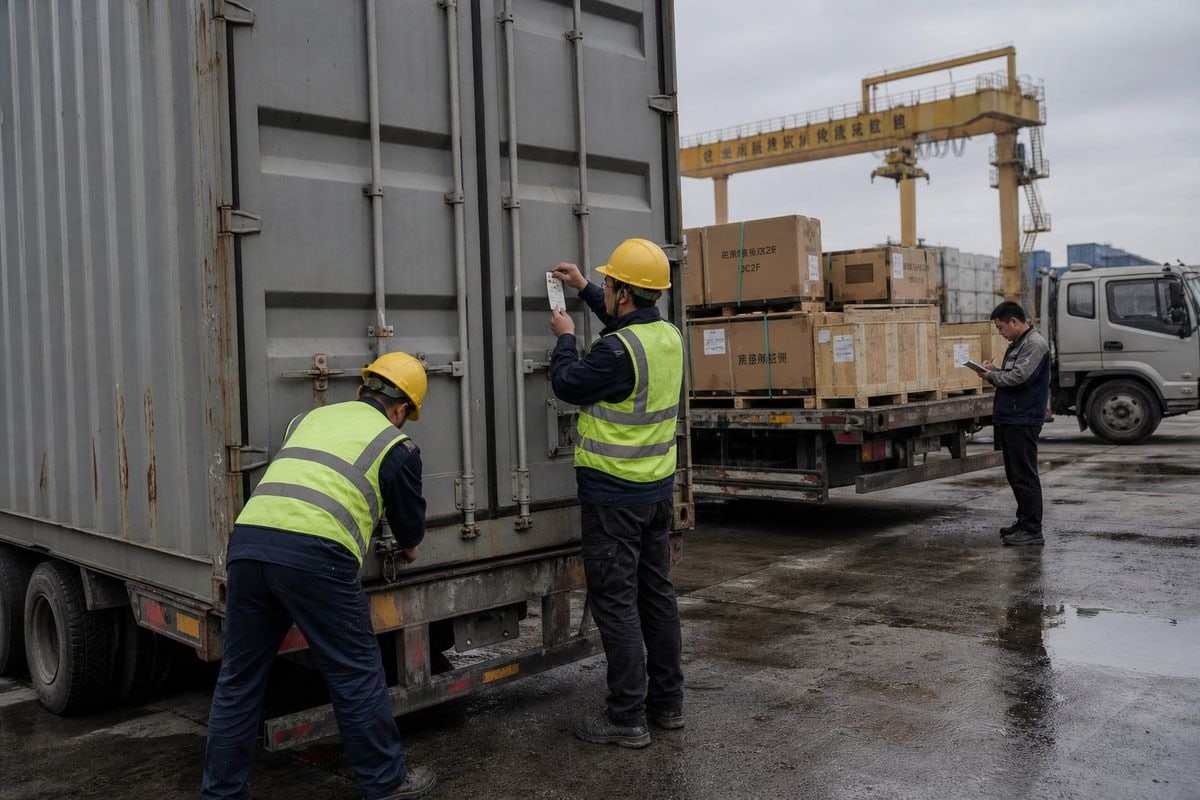
Your true cost is the landed cost: goods value, freight, insurance, import duties and taxes, customs fees, and final delivery. A quote that only shows ocean freight rates hides most of that picture.
| Hidden Cost | When It Hits | How to Control It |
|---|---|---|
| Terminal Handling Charges | Origin and destination ports | Confirm both ends are included in the quote |
| DG surcharge ($200–$400 per booking) | Lithium battery forklifts | Verify battery type before booking; use a Class 9 experienced forwarder |
| Customs brokerage and entry fees | Destination clearance | Bundle customs clearance procedures into a DDP or DAP quote |
| Demurrage and detention | Documentation delays at port | Pre-check documents before vessel departure |
| Inland trucking and unloading | Final delivery | Get door-to-door pricing upfront |
| Peak season surcharges | Q4 and pre-Chinese New Year | Ship during shoulder seasons, typically March through July |
Under Incoterms 2020 4, buying CIF means your supplier controls carrier selection and can bury a markup in the freight. Buying FOB or EXW lets you choose your own freight forwarding services and see real market pricing. We recommend distributors compare at least three forwarders using identical dimensions and Incoterms so quotes are apples-to-apples.
Do not accept the supplier's default HS code classification. Duty rates vary by code, and duties, VAT, and fees are often calculated on a base that includes goods, freight, and insurance, so one wrong input distorts everything. Run regular HTS code audits. And if you re-export units to secondary markets, a Duty Drawback program can recover up to 99% of the import duties you paid on those machines.
Forklift shipping costs from China are controllable when you manage the whole system, not just the rate. Wasted container space, wrong shipping modes, scattered suppliers, and hidden fees all drain margin silently. Pack containers fully, default to FCL at volume, consolidate suppliers into one shipment, and demand itemized landed-cost quotes. Our team at MBMLOG coordinates exactly this, from factory pickup in China to your warehouse door, because the cheapest quote is rarely the cheapest shipment. Plan the container, and the savings follow.
1. Official U.S. Customs and Border Protection page explaining the role and regulation of licensed customs brokers. ↩︎
2. U.S. Department of Transportation guide for the safe transport of lithium batteries and related hazardous materials. ↩︎
3. European Commission portal for official customs procedures, import regulations, and trade compliance within the EU. ↩︎
4. Official ICC resource defining global trade terms for buyer and seller responsibilities. ↩︎