- +8618603825129
- [email protected]

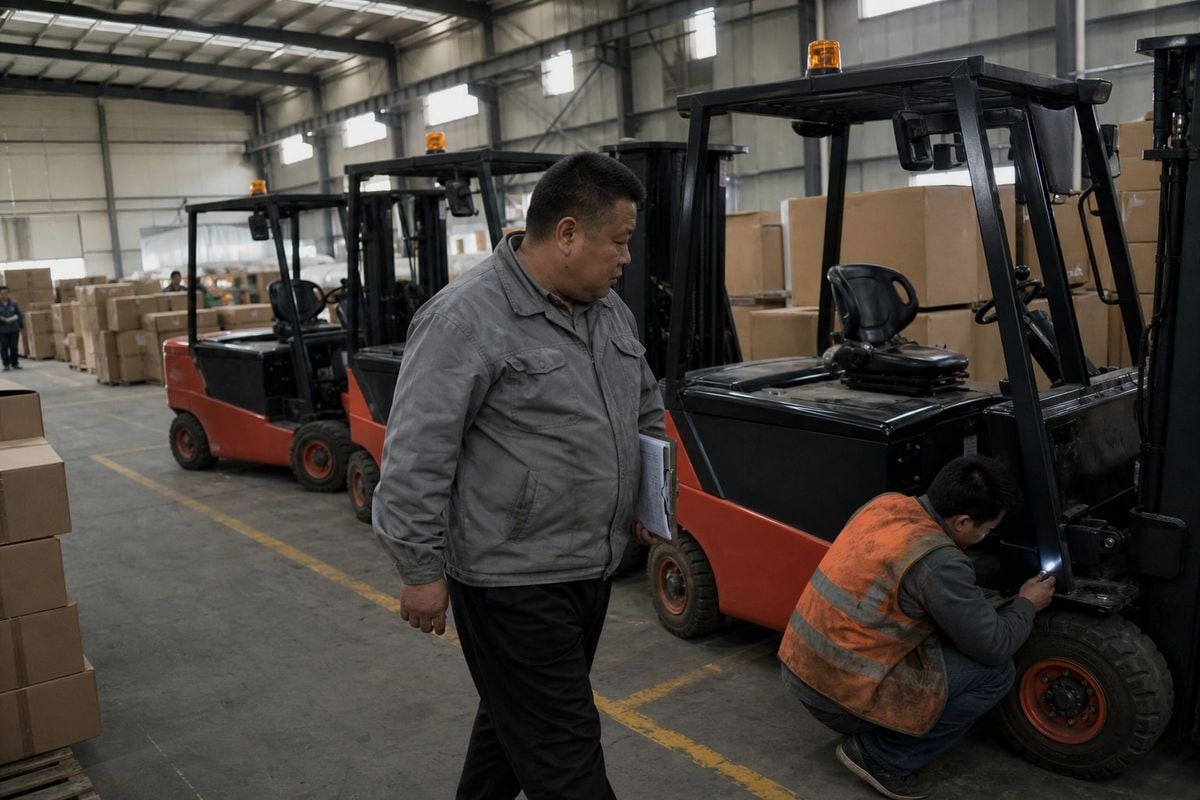
Importing [electric forklifts from China](https://mbmlog.com/how-ship-electric-forklifts-china-2026-guide-to/) looks simple until the battery paperwork fails at the port. I have watched containers sit for weeks over one missing document. Our logistics team in Zhengzhou fixes that gap before cargo ever leaves the factory.
To import electric forklifts from China, verify the supplier, confirm battery compliance documents like UN38.3, classify the machine under the correct HS code, choose your Incoterm and container type, book DG-approved ocean freight, and prepare full customs paperwork before production starts.
That is the short version. Now let me walk you through each stage in detail, because the order in which you do these steps matters more than most buyers realize.
Last spring, a US dealer asked us to rescue an order he had already paid for. The factory had no export records. We now tell every buyer: vet first, pay second.
Follow seven steps: vet the factory and its export history, confirm specs and destination certifications, agree on Incoterms 2020, verify lithium battery documents, book FCL or LCL freight, prepare the customs document set, and arrange destination clearance and final delivery.
The process is not complicated, but it punishes buyers who skip steps or do them out of order. I break it into three phases below.
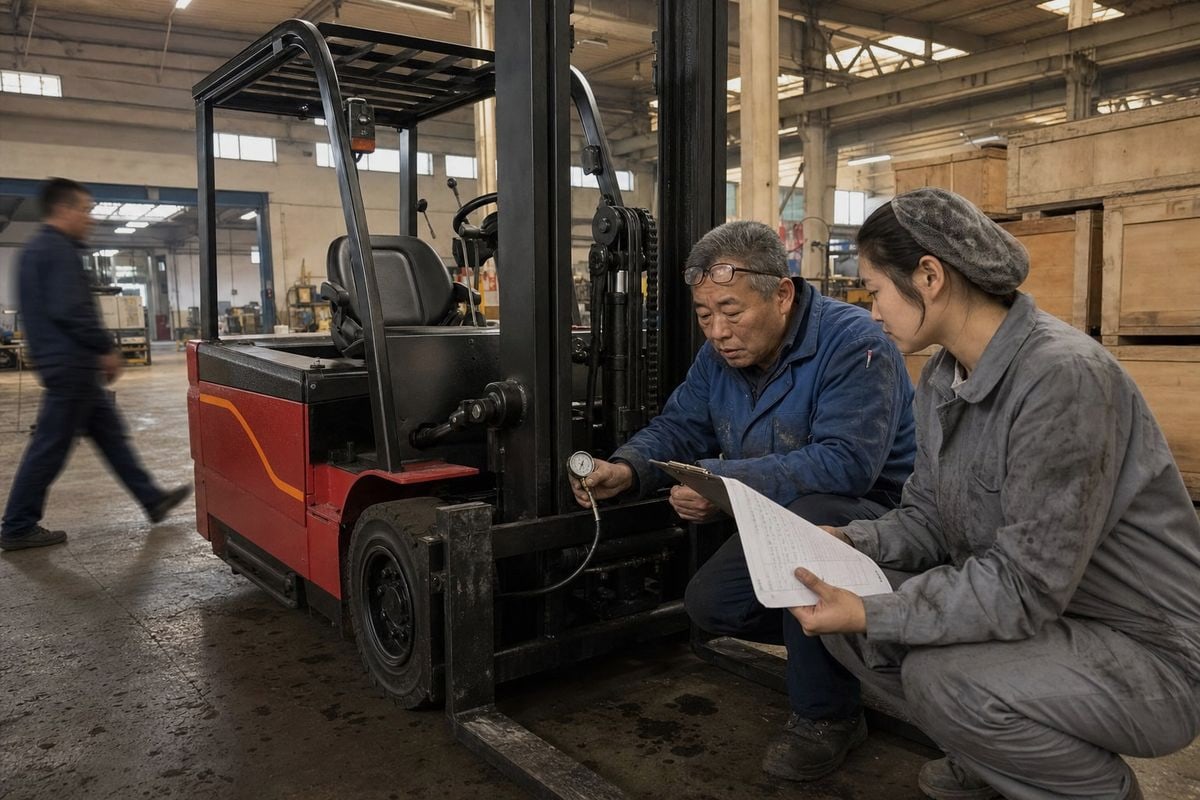
Verify the supplier before money moves. Ask for a verifiable factory address, real certificate numbers, and export records. Logos on a website prove nothing. A supplier who has shipped material handling equipment overseas before will produce a bill of lading history without hesitation. We also recommend a third-party pre-shipment inspection by firms such as SGS or Bureau Veritas to check hydraulic and electrical integrity before the cargo leaves the factory.
Confirm compliance at the same time. EU-bound units need CE certification with a proper Declaration of Conformity. US-bound units need a UL-certified charger, and the charger voltage must match your grid. Chinese GB/T charging standards do not automatically match local infrastructure, so check the charging protocol early.
Choose your Incoterm, confirm the battery documents, and let your freight forwarder review everything before production finishes. We book DG acceptance with the carrier at this stage, not after the forklift arrives at port.
| Step | Who Handles It | Key Risk |
|---|---|---|
| Factory pickup and loading | Forwarder + factory | Poor securing, damage |
| Export declaration | China-side forwarder | Document mismatch |
| Ocean freight | Carrier | DG rejection, delays |
| Import clearance | Broker or DDP forwarder | Wrong HS code, missing papers |
| Final trucking | Local carrier | Unloading equipment gaps |
One buyer objection I hear often: supplier-side guides make this sound effortless with any forwarder. In practice, a general-cargo forwarder can complete steps one through three and still fail at the battery stage. Choose logistics partners who handle battery-powered equipment routinely.
The trade-off we weigh on every booking is speed versus carrier acceptance. Some carriers accept lithium cargo faster, others charge less. Getting this wrong strands the forklift at the origin port.
Ship lithium battery forklifts as Class 9 dangerous goods under UN3481 rules. You need a UN38.3 test report from the battery manufacturer, an MSDS/SDS, an IMDG dangerous goods declaration, carrier DG acceptance, and a battery state of charge at or below 30% at loading.
This is the section where most delays and extra costs arise, so read it carefully. Lithium-ion battery shipping regulations treat your forklift differently from ordinary machinery the moment a lithium pack is installed.
First, the UN38.3 certificate. This report must come from the battery manufacturer 1, not the forklift assembler. Assemblers sometimes hand over a generic report that does not match the installed pack. Carriers and customs check the model numbers, so a mismatch triggers rejection.
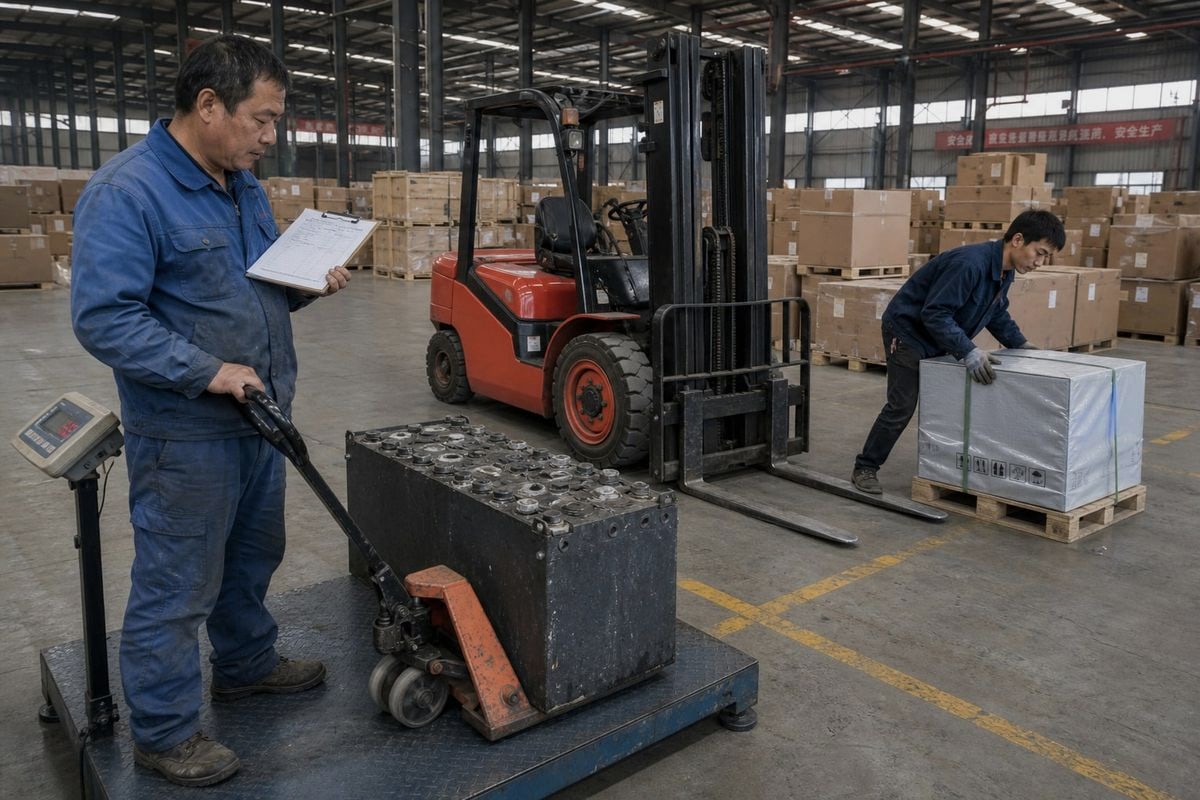
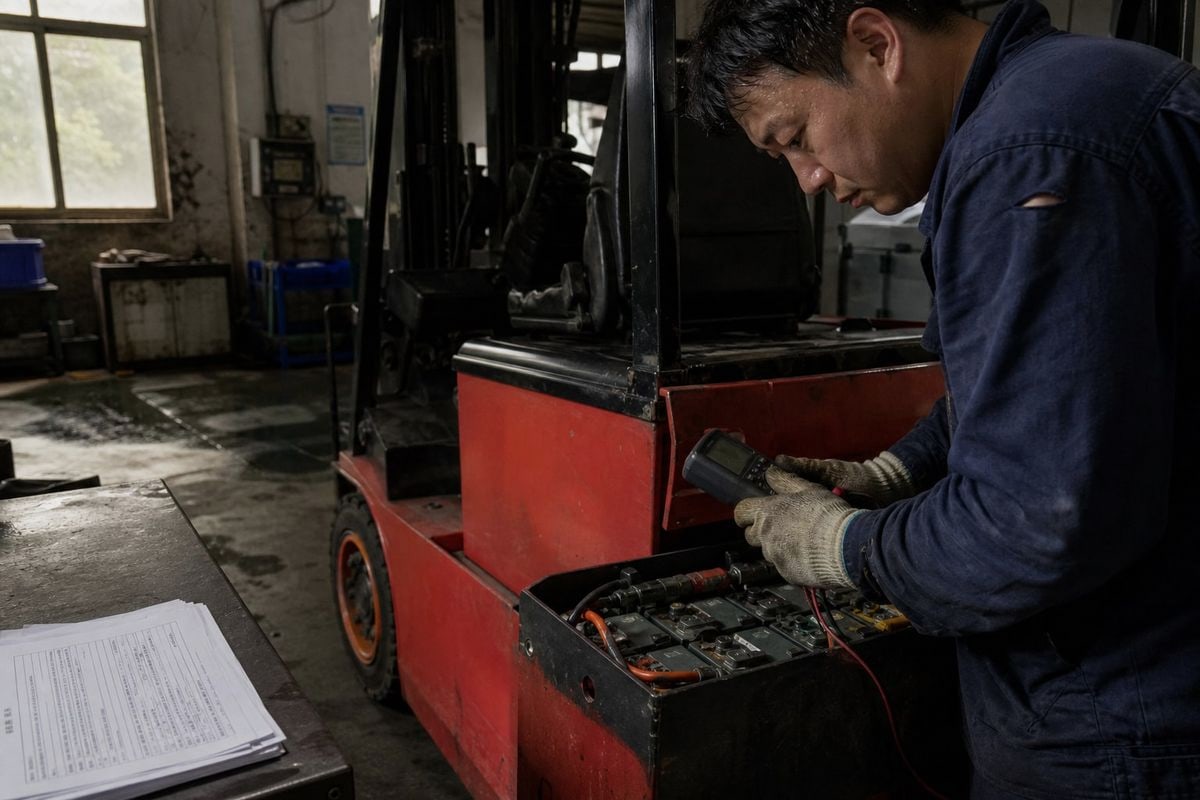
Second, the MSDS/SDS for the battery. Third, the IMDG-compliant dangerous goods declaration 2 for ocean freight, filed under UN3481 as Class 9 cargo. Fourth, the state of charge. The battery must sit at or below 30% SoC when loaded. Factories charge batteries fully for testing, so someone must confirm the discharge before pickup. We coordinate this with factories directly because buyers overseas cannot verify it themselves.
Not every vessel or carrier accepts Class 9 cargo on every route. We confirm DG acceptance before the factory finishes production. If you book freight first and sort documents later, you risk missing the vessel and paying storage.
Buyers shipping to Europe should also watch the EU Battery Regulation 2023/1542 3, which introduces Digital Battery Passport requirements for lifecycle traceability. This is becoming part of procurement conversations, not just customs ones.
Some suppliers will tell you lead-acid units avoid all of this. That is partly true, but lead-acid batteries carry their own handling rules, and switching battery chemistry to dodge paperwork usually costs you performance your end customers expect.
A distributor once told me his forklift price was unbeatable, then destination charges erased his margin. We now build a full landed-cost sheet with buyers before they confirm any order.
Expect landed cost to include the factory price, ocean freight of roughly $1,500–$4,000 for a 40HQ container, DG surcharges, customs duty of 0%–10% depending on country, VAT or GST, insurance near 0.3% of cargo value, and $300–$800 in port handling and trucking.

Landed cost is not one number. It is a stack of cost buckets, and low quotes usually hide one or two of them. Here is how I break it down for buyers.
| Cost Component | Indicative Range | Notes |
|---|---|---|
| FOB factory price | $8,000–$15,000 per unit | Varies by capacity and battery type |
| Ocean freight (40HQ) | $1,500–$4,000 | Route and season dependent |
| DG surcharge | Carrier-specific | Applies to lithium battery cargo |
| Customs duty | 0%–10% | Country and HS code dependent |
| VAT/GST | By destination | Often calculated on CIF value plus duty |
| Cargo insurance | ~0.3% of value | Cheap protection for expensive cargo |
| Port handling + trucking | $300–$800 | Excludes storage or demurrage |
Treat these figures as estimates, not universal rates. Freight moves with the market.
Classification matters. Electric forklifts commonly fall under HS Code 842710 for self-propelled electric units, while 8427.20 covers other self-propelled trucks. The distinction changes your duty rate, and US buyers must also account for Section 301 tariffs on Chinese-origin machinery. Codes vary by jurisdiction and configuration, so confirm with a customs broker rather than trusting a blog table. Import duties and taxes are the buyer's legal responsibility under most Incoterms, even when a forwarder files the entry.
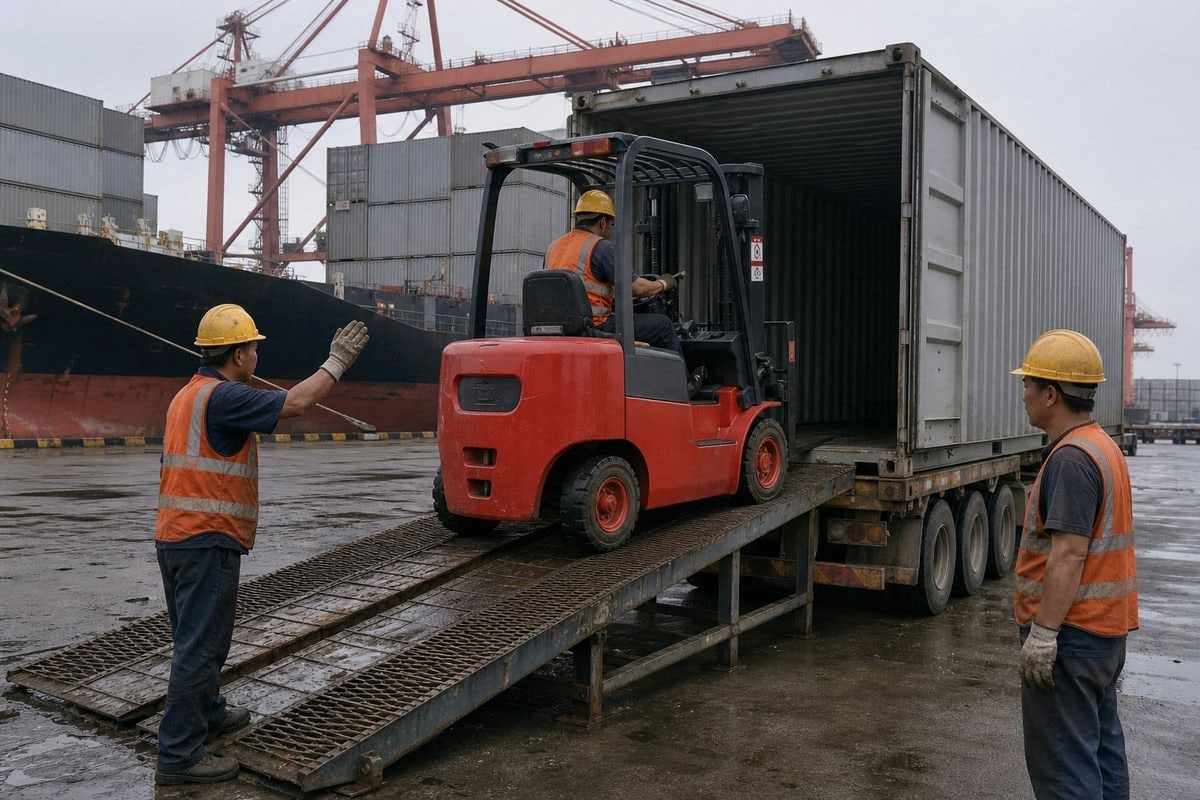
FCL is typically the best value for one to four forklifts, and a 20-foot container fits one 3-ton unit. Filling unused space with chargers, batteries, and spare parts spreads freight across more revenue. Some buyers explore Semi-Knocked Down (SKD) configurations to improve container density, though assembly capability at destination becomes your problem. Oversized units may need flat rack containers with out-of-gauge surcharges, and Ro-Ro shipping is an option for self-propelled machines on certain routes, though it exposes cargo to more handling.
Every document check we run before departure exists because of a past failure. One inconsistent weight figure between the invoice and packing list once cost a client twelve days at a US port.
Prevent delays by matching every document exactly — invoice, packing list, bill of lading, certificate of origin, UN38.3 report, SDS, and DG declaration — confirming the HS code with a broker, and securing forklifts with proper blocking, bracing, and weight distribution inside the container.
Delays and damage come from two separate failure modes: paperwork and physics. You need to manage both, and neither fixes itself.
Customs officers compare documents line by line. Your commercial invoice should clearly state the delivery address, manufacturer name and address, consignee name and address, country of origin, value, and a detailed product description. The customs clearance process stalls when the invoice says one battery model and the UN38.3 report says another, or when the declared weight differs from the packing list.
Here is the document set we verify before any electric forklift shipment departs:
| Document | Purpose | Common Error |
|---|---|---|
| Commercial invoice | Value and duty basis | Vague description, missing consignee |
| Packing list | Weights and dimensions | Mismatch with invoice |
| Bill of lading | Carriage contract | Wrong consignee details |
| Certificate of origin | Duty treatment | Missing for preferential rates |
| UN38.3 report | Battery transport compliance | Issued by assembler, not battery maker |
| MSDS/SDS | Hazard communication | Outdated version |
| DG declaration | IMDG compliance | Filed late or not at all |
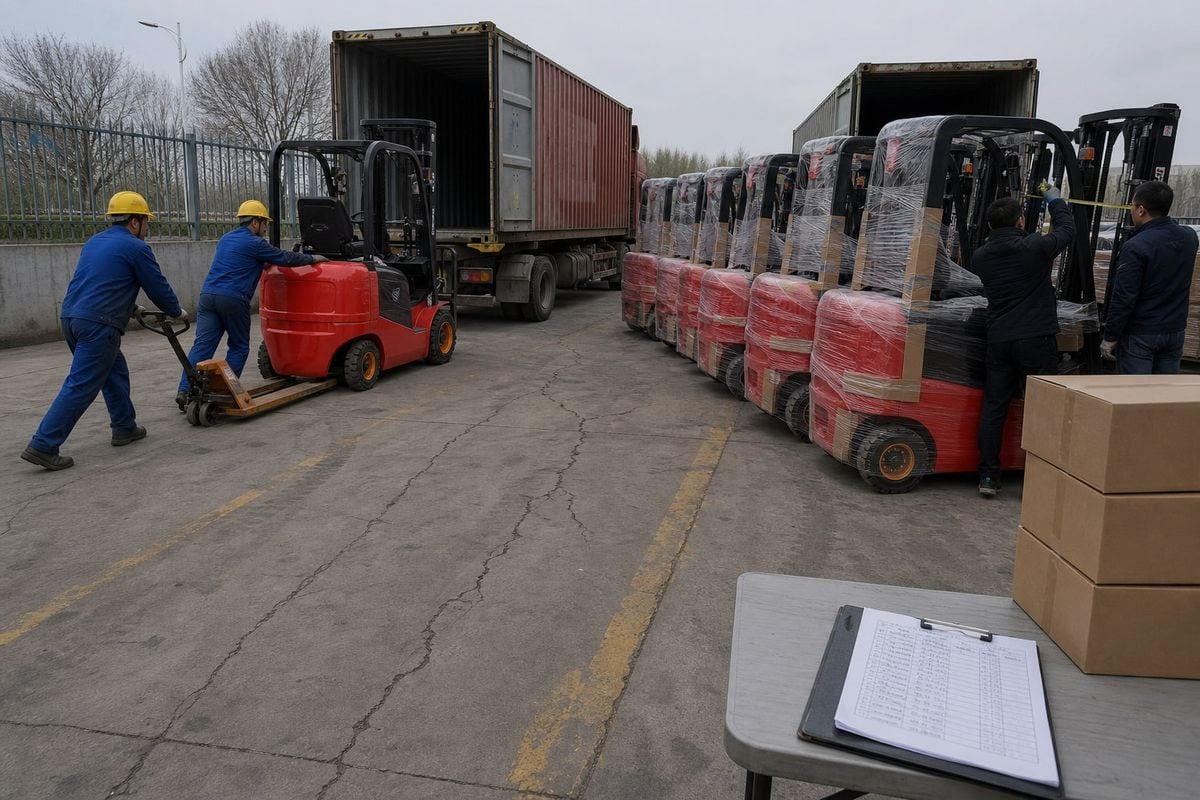
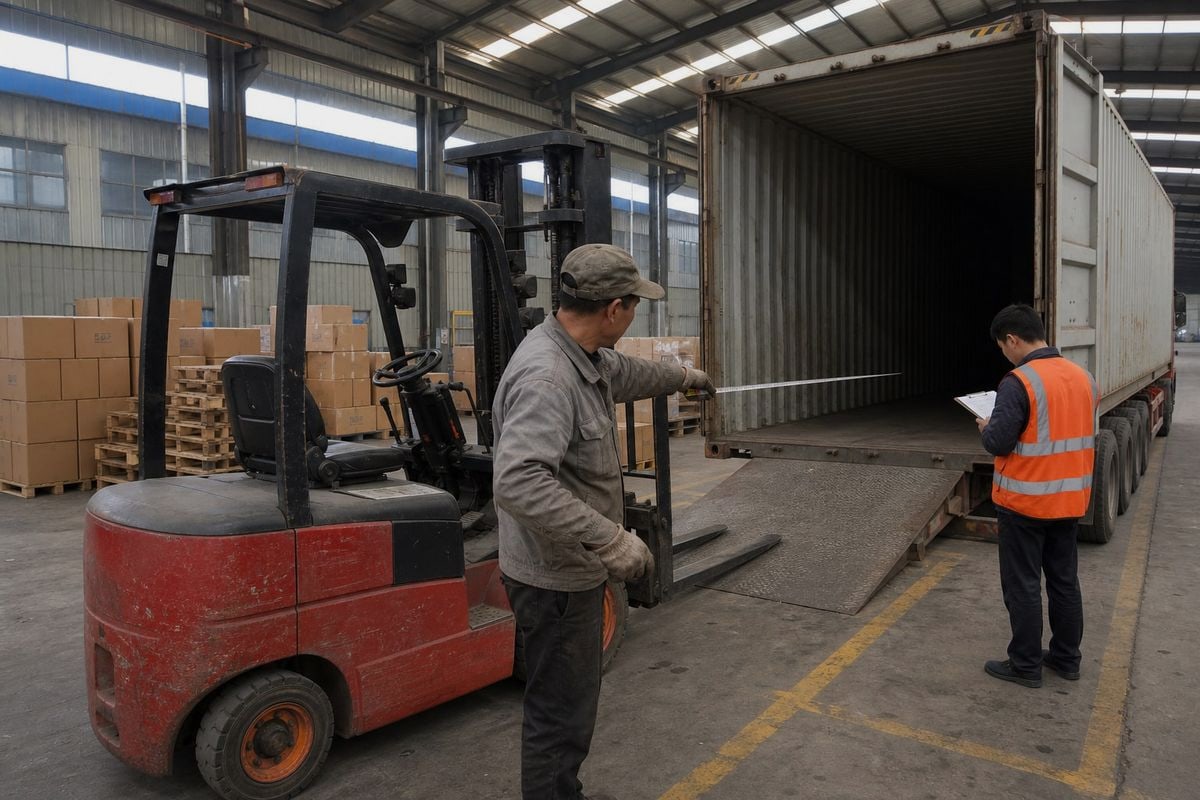
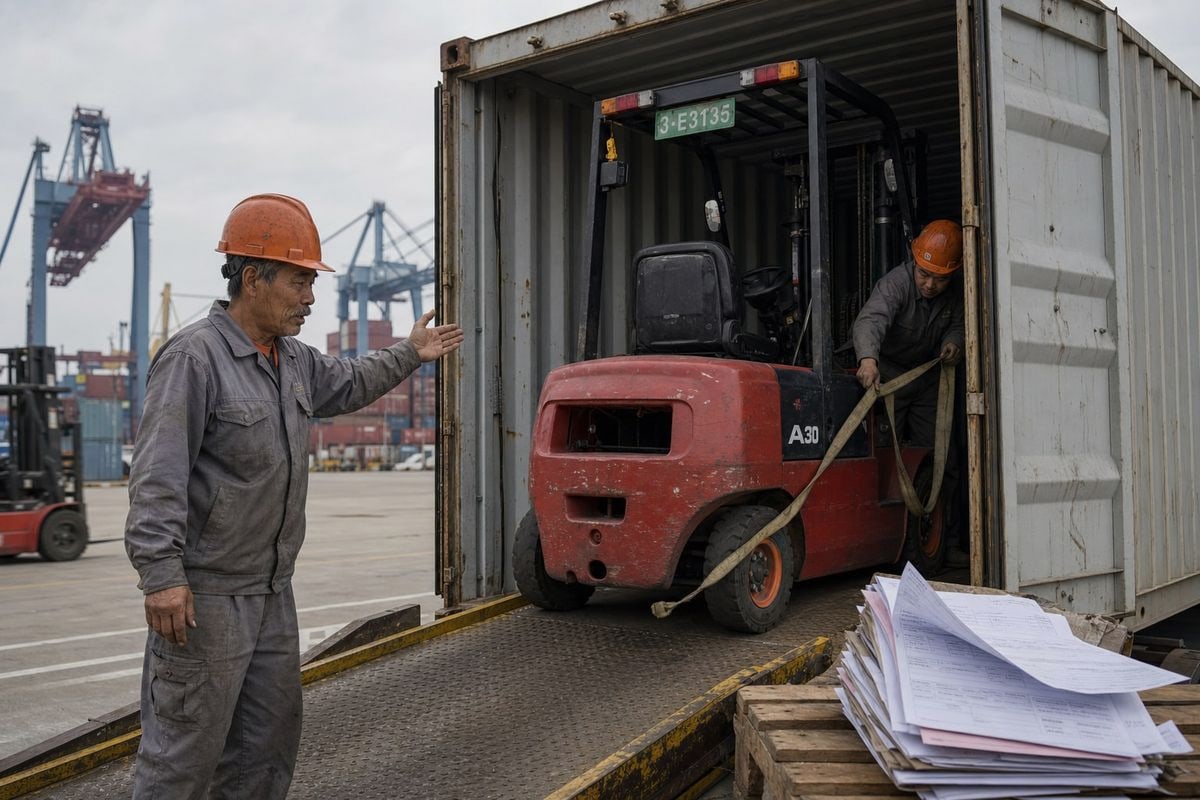
Forklifts are heavy, top-loaded machines. Inside a container they must be blocked, braced, and lashed, with weight distributed across the floor. Masts are sometimes lowered or detached for clearance. We coordinate loading with factories directly because a rushed factory crew will roll a forklift in, chock two wheels, and call it done. Add cargo insurance at roughly 0.3% of cargo value — it is the cheapest line item on the whole shipment.
Some guides suggest DDP shipping removes all this risk for first-time buyers. DDP does simplify your side, but it does not remove the need for correct documents; it just changes who chases them. Choose FOB and a forwarder you trust if you want visibility, or DDP if you want one party accountable door to door. Either way, someone competent must own the paperwork.
Importing electric forklifts from China works when compliance comes first. Verify the battery documents, confirm the HS code, plan the container, and involve your freight forwarder before production starts.
1. Official IATA resource for shipping lithium batteries, which require UN38.3 certification from the original manufacturer. ↩︎
2. International Maritime Organization page regarding the IMDG Code and requirements for transporting dangerous goods by sea. ↩︎
3. Official legal text of the EU Battery Regulation 2023/1542 from the EUR-Lex database. ↩︎