- +8618603825129
- [email protected]


[Electric forklift shipping from China](https://mbmlog.com/how-ship-electric-forklifts-china-2026-guide-to/) looks simple until the invoices arrive. At our Zhengzhou logistics office, I see buyers shocked weekly when battery surcharges and port fees double their expected freight bill.
Electric forklift shipping from China typically costs USD 1,200–3,800 for a 20ft container and USD 1,800–5,800 for a 40ft/40HQ by sea. Add lithium battery surcharges (USD 200–500), customs, port handling, and delivery, and total logistics costs often reach USD 2,500–8,000 per shipment.
That range is wide for a reason. The final number depends on your forklift, your battery, your route, and your delivery address. Let me break each piece down so you can budget accurately before you order.
Last month, a US dealer sent me two quotes for identical 3-ton forklifts. One shipment cost 40% more. The difference was not the freight rate. It was everything around it.
Six main factors drive electric forklift shipping cost: forklift size and weight, battery type (lithium units face dangerous goods surcharges), container choice, the ocean route, inland pickup distance in China, and destination charges including customs clearance fees, port handling, and final trucking.
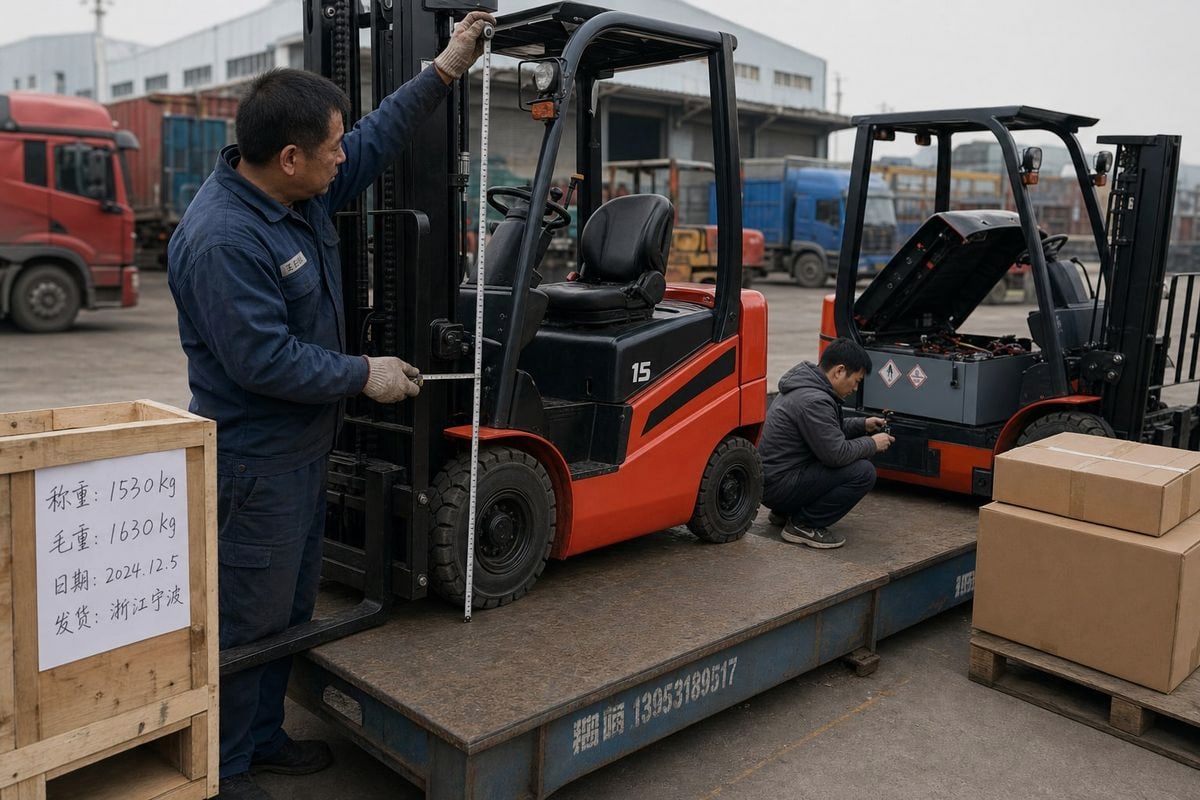
When I quote a forklift shipment, I never start with the ocean freight rates. I start with the cargo itself. A compact electric pallet truck and a 3-ton counterbalance forklift are completely different shipping problems, even though both are "electric forklifts" on paper.
Here is how the typical line items stack up, based on the shipments we handle from Chinese factories to overseas ports:
| Cost Item | Typical Range (USD) | Notes |
|---|---|---|
| China inland pickup | 200–800 | Depends on factory-to-port distance |
| Ocean freight, 20ft container | 1,200–3,800 | Fits one 3-ton unit |
| Ocean freight, 40ft/40HQ | 1,800–5,800 | Up to four units with planning |
| DG surcharge (lithium battery) | 200–500 | Per booking |
| China export customs | 80–200 | Export declaration |
| Destination customs brokerage | 100–300 | Entry filing |
| Port handling and local charges | 150–500+ | Often quoted late |
| Marine cargo insurance | 0.2%–0.5% of cargo value | Strongly recommended |
Lithium battery forklifts change the cost picture. Carriers treat them as Class 9 dangerous goods 1, which means DG booking, certified documentation, and fewer carriers willing to accept the cargo. Lead-acid units usually ship without this surcharge. When we coordinate with factories, we always confirm the exact battery specification before booking, because a wrong classification discovered at the port creates delays that cost far more than the surcharge itself.
Ocean freight rates move with the market. Peak season, fuel surcharges, and carrier capacity can swing a quote by hundreds of dollars. That is why I always tell buyers the ranges above are indicative, not guaranteed. A firm quote needs your exact port pair and shipping date.
A purchasing manager in Texas once asked me why his "cheap" forklift ended up costing thousands more at his warehouse door. His supplier quoted FOB. Nobody explained what came after.
Shipping one lithium battery forklift from China to the USA typically costs USD 3,000–7,000 all-in: ocean freight of USD 1,800–4,500, a DG surcharge of USD 200–500, customs duties including Section 301 tariffs (often 25% extra), brokerage, port fees, and inland trucking.

The USA is our primary market at MBMLOG, so I will walk through a realistic example. Say you buy one 3-ton lithium forklift, and the factory quotes USD 12,000 FOB Shanghai. Here is what the full landed logistics picture looks like.
| Line Item | Estimated Cost (USD) |
|---|---|
| Forklift (FOB Shanghai) | 12,000 |
| Ocean freight, 20ft to US West Coast | 2,200 |
| Lithium battery DG surcharge | 350 |
| Marine insurance (0.3% of value) | 36 |
| US customs brokerage | 250 |
| Import duties and Section 301 tariff 2 | 3,000–3,500 |
| Port handling and CFS charges | 400 |
| Inland trucking to warehouse | 500–900 |
| Estimated total landed cost | 18,700–19,600 |
Notice how the freight itself is a small slice. Customs duties and taxes, especially the Section 301 tariff that adds roughly 25% ad valorem on Chinese-made industrial machinery, often exceed the ocean freight cost entirely. Getting the HS code 3 for forklifts correct on your documentation matters here, because a wrong code can trigger delays, penalties, or overpaid import tariffs.
Plan on 15–20 days on the water to the US West Coast and 35–45 days to the East Coast. Then add 7–10 days for customs clearance and inland delivery. When we manage door to door delivery, we track each stage and update the buyer proactively, because a forklift dealer usually has customers waiting on that machine.
One cost trap I flag early: standard Chinese chargers are often 220V. If your facility runs 110V or 480V industrial power, request the correct charger from the factory before shipment. A factory swap is cheap. A local transformer retrofit after arrival is not.
I weigh this trade-off almost daily when planning shipments: pay for a whole container you may not fill, or share space and accept the complications that come with consolidation.
FCL is cheaper per unit for full-size forklifts and multi-unit orders; a 20ft container fits one 3-ton unit and a 40HQ fits up to four. LCL, at roughly USD 100–180 per CBM, only wins for single compact pallet trucks or stackers.
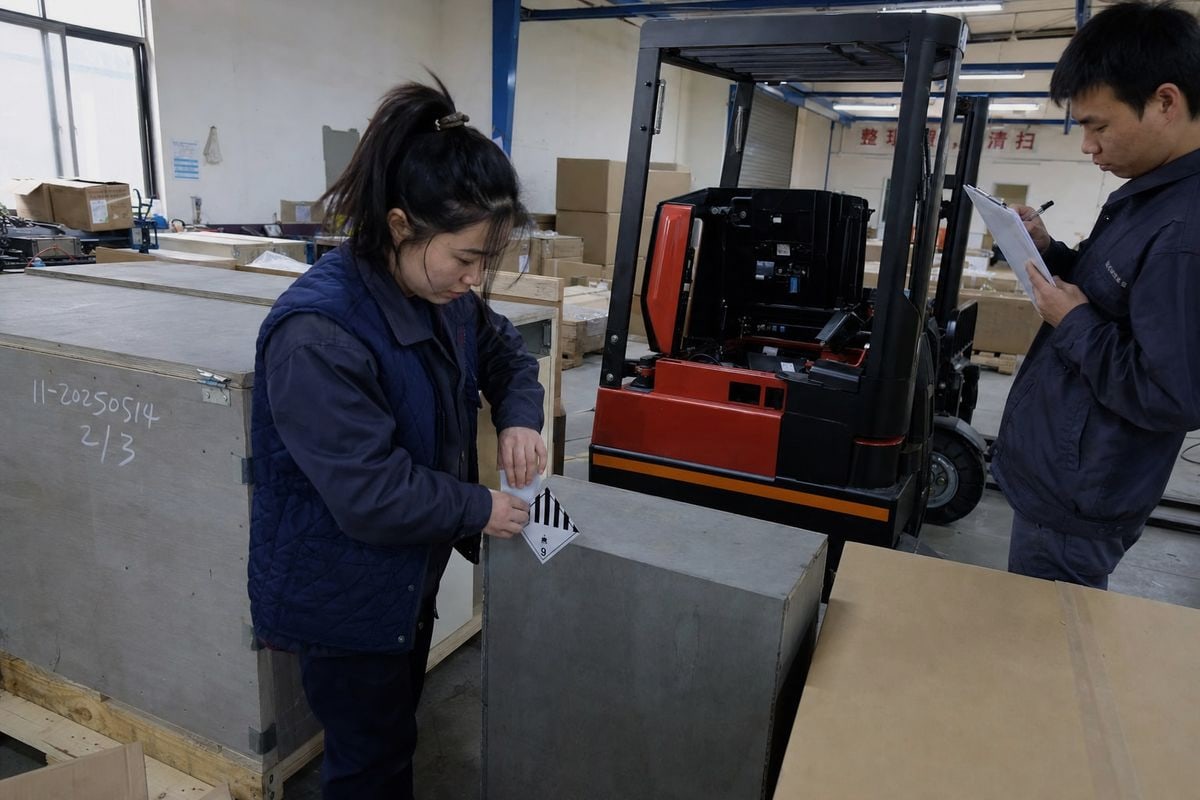
The LCL vs FCL shipping decision is really a decision about your cargo size and battery type. Here is the quick comparison I share with buyers:
| Factor | FCL | LCL | Air Freight |
|---|---|---|---|
| Best for | 1–4 full-size forklifts | Single compact units, stackers | Parts, pallet jacks under 500kg |
| Typical cost | USD 1,200–5,800 per container | USD 100–180 per CBM | USD 5–10 per kg |
| Lithium battery acceptance | Widely accepted with DG booking | Varies; many consolidators refuse Class 9 | Heavily restricted |
| Cargo handling risk | Low (sealed container) | Higher (multiple touches at CFS) | Low but costly |
| Speed | 15–45 days by sea | Slightly slower (consolidation waits) | 3–7 days |
Forklifts are dense, heavy cargo. A 3-ton counterbalance unit fills most of a 20ft container by weight and awkward geometry. Once you ship two or more units, the per-unit math strongly favors FCL. In our loading operations, we also secure forklifts with lashing, blocking, and proper weight distribution, which is far easier to control in your own container than in a shared one.
LCL works for a sample electric stacker or a compact pallet truck. But there is a catch buyers often miss: many LCL consolidators will not accept Class 9 lithium battery cargo at all. I have seen buyers book LCL space, only to have the consolidator reject the cargo at the warehouse. Confirm dangerous goods acceptance in writing before committing.
For dealers ordering multiple units, ask the factory about Semi-Knocked Down shipping. Removing masts and counterweights and shipping them alongside the chassis can increase container density by around 40%. On a four-unit 40HQ order, that materially cuts the freight cost per forklift. We coordinate this loading plan with the factory before pickup so nothing gets improvised at the port.
The hardest lesson I learned early in this business: the cheapest freight quote almost never produces the cheapest landed cost. Excluded charges always surface somewhere.
Reduce landed cost by consolidating multi-supplier cargo into one container, using SKD loading for fleet orders, confirming battery classification early, comparing FOB vs CIF vs DDP terms carefully, verifying the correct HS code, and demanding all-inclusive quotes that list destination charges upfront.
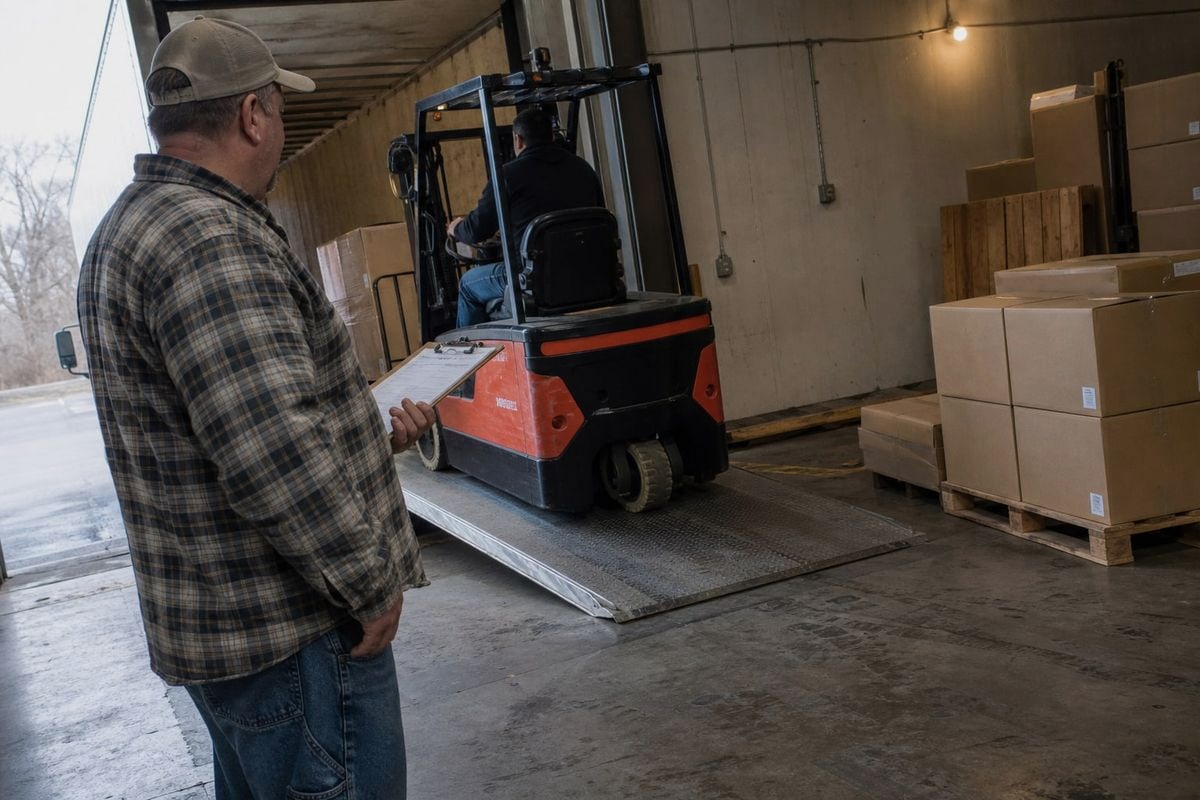
Controlling landed cost is not one big decision. It is a series of small ones made before the forklift leaves the factory. Here is the sequence I recommend to importers.
Before we quote any shipment, we collect the forklift's dimensions, gross weight, battery type, port of loading, and destination address. Ask your forwarder for the same discipline. European buyers should also ask about CBAM carbon reporting, which now adds a compliance step for steel-heavy machinery entering the EU.
Electric forklift shipping from China runs USD 1,200–5,800 in ocean freight, but real landed cost includes battery surcharges, duties, and delivery. Plan the full picture, and I am here to help.
1. Official IMO page defining the safety standards and classification for transporting dangerous goods by sea. ↩︎
2. Official CBP resource providing comprehensive information on Section 301 tariffs and trade remedies for importers. ↩︎
3. The World Customs Organization's official overview of the Harmonized System for global product classification. ↩︎
4. Official International Chamber of Commerce page defining standardized Incoterms used in international shipping contracts. ↩︎