- +8618603825129
- [email protected]


Planning a forklift shipment from China looks simple until the invoice arrives. Our team in Zhengzhou sees buyers shocked by hidden charges, battery paperwork, and stuck containers every month.
To plan a forklift shipment from China, confirm the forklift's dimensions, weight, and battery type first, then choose an Incoterm, select FCL or LCL container shipping, prepare lithium battery and customs documents, buy marine insurance, and arrange customs clearance and final delivery before the vessel departs.
That is the short version. Below, I will walk through cost, container choice, battery documents, and multi-supplier consolidation step by step, based on the shipments we handle every week.
Last month, a Texas dealer sent me a factory quote and asked, "Is this the final price?" It was not. Our cost breakdown showed him why, line by line.
Shipping a forklift from China to the USA typically adds 20–40% on top of the factory quote. The total landed cost includes ocean freight, marine insurance, export handling, destination port charges, customs clearance, import duties under HS Code 8427, and inland trucking to your warehouse.
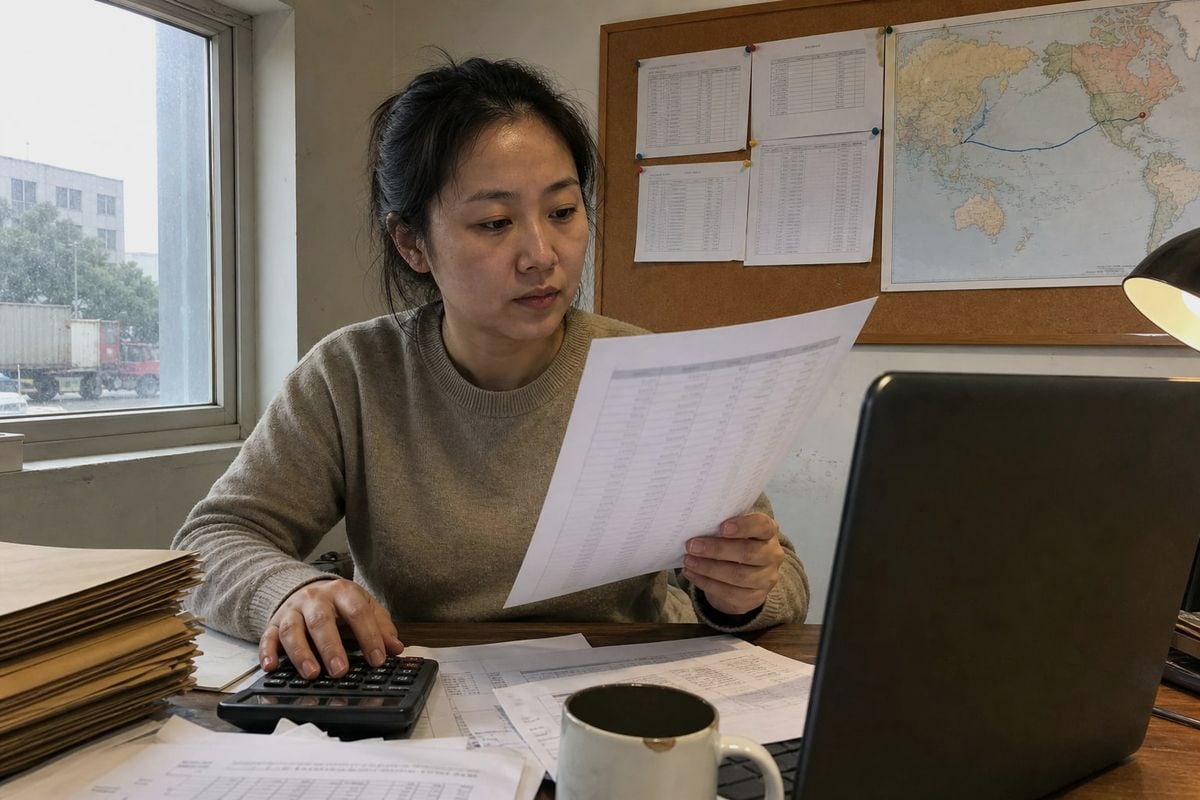
The cheapest forklift quote is rarely the cheapest landed cost. That is the single most important lesson I share with first-time importers. A supplier's EXW or FOB price covers the machine. It does not cover the journey. When we prepare quotations at MBMLOG, we split every charge into a clear line so buyers can calculate landed cost before they place the order, not after the container lands.
Here is how a typical single-forklift shipment from China to a US port breaks down:
| Cost Item | Who Usually Pays (FOB Terms) | Notes |
|---|---|---|
| Factory price | Buyer | The quote you negotiated |
| China inland pickup | Seller (FOB) / Buyer (EXW) | Factory to port trucking |
| Export declaration & handling | Seller (FOB) | Included in FOB price |
| Container loading & securing | Varies | Blocking, bracing, lashing |
| Ocean freight | Buyer | Varies by port pair and season |
| Marine insurance | Buyer | Strongly recommended for high-value machinery |
| Destination port charges | Buyer | Often undercounted |
| Customs clearance & broker fees | Buyer | Broker handling at US port |
| Import duties & taxes | Buyer | Classified under HS Code 8427 |
| Inland delivery & unloading | Buyer | May need a crane or dock access |
Incoterms decide who controls each stage. In our experience shipping to the US, FOB usually beats CIF for machinery imports. With FOB, you choose your own freight forwarder 1 and avoid inflated destination handling fees that CIF sellers sometimes pass along through their nominated carrier. DDP works well for first-time importers who want one price to their door, but experienced buyers often prefer the control FOB gives them. Whichever term you choose, ask for a full cost breakdown before the ship departs. Destination-side charges are where most surprises hide.
The trade-off I weigh most often for clients is simple: pay for a full container you may not fill, or share space and accept extra handling. The right answer depends on your cargo.
Choose FCL if you are shipping one or more full-size forklifts, because a dedicated container reduces handling damage and simplifies loading. Choose LCL only for smaller equipment like pallet trucks, stackers, chargers, or spare parts that cannot justify a full container.
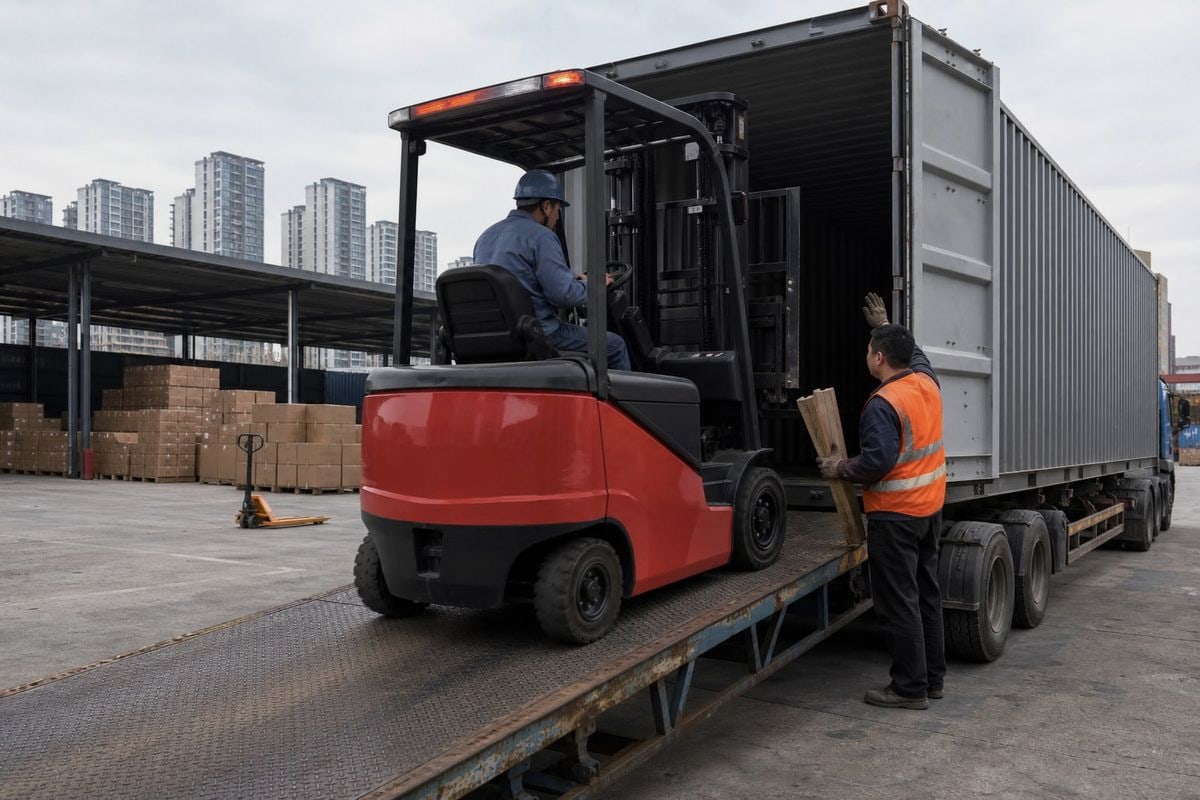
For the FCL vs LCL decision, start with this quick comparison:
| Factor | FCL (Full Container Load) | LCL (Less than Container Load) |
|---|---|---|
| Best for | One or more forklifts | Pallet trucks, stackers, parts, chargers |
| Handling risk | Low — cargo loaded once, sealed | Higher — shared loads, multiple touches |
| Cost logic | Flat rate per container | Charged by volume/weight |
| Loading control | Full control of securing and bracing | Limited control at consolidation warehouse |
| Transit predictability | More predictable | Extra consolidation and deconsolidation time |
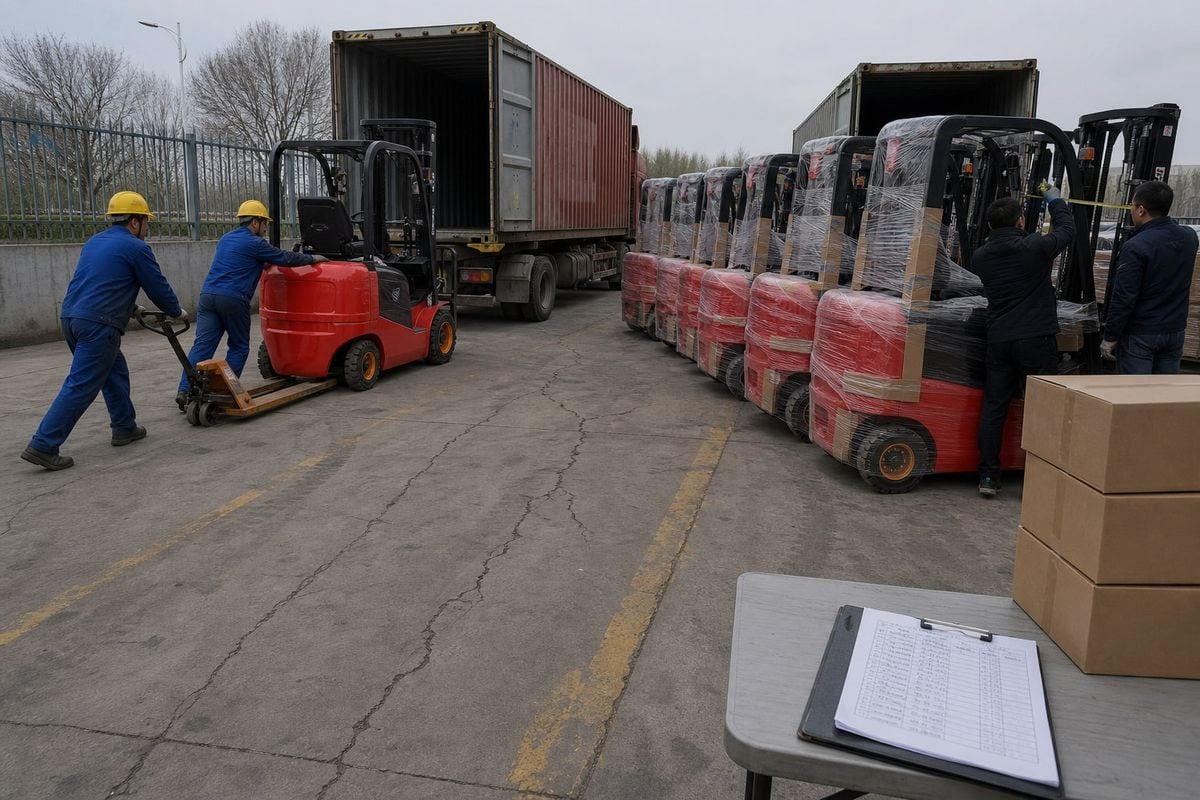
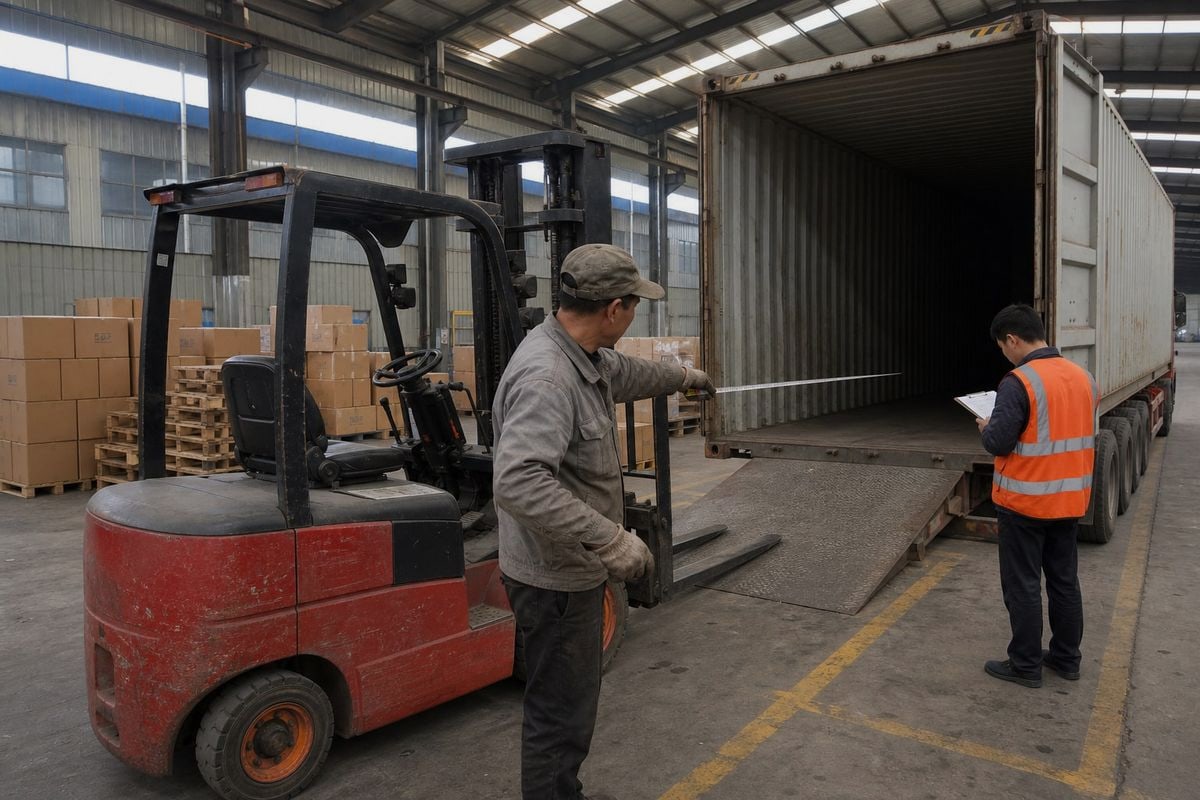
FCL is the industry standard for forklift shipments for a good reason. A dedicated container gives the machine a secure, sealed environment and minimizes transit damage compared to shared loads. A counterbalance forklift is heavy, has a high center of gravity, and does not tolerate neighbors shifting against it. When we load containers for clients, our team coordinates blocking, bracing, and lashing with the factory so the machine cannot move an inch during three weeks at sea.
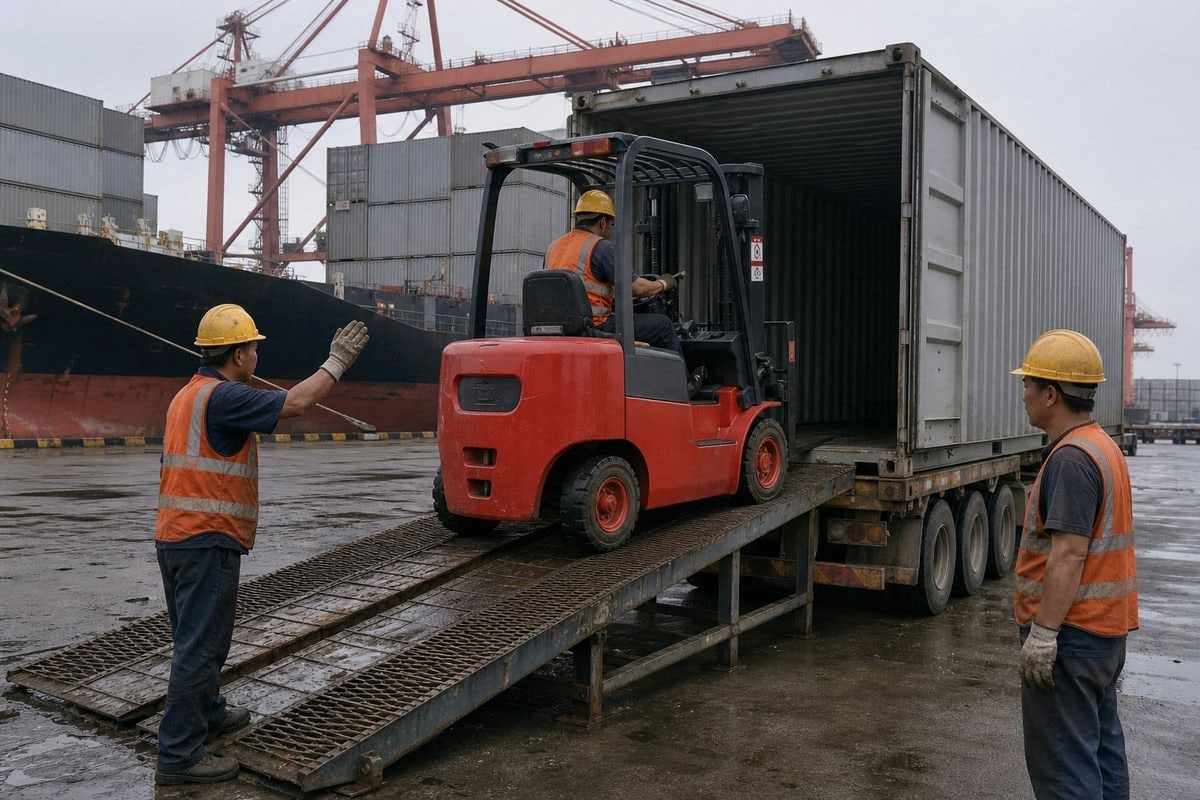
Mast height is the usual obstacle. Many forklifts fit a 40HC container 2 once the mast is lowered or partially disassembled. For heavy-duty units that exceed container weight or height limits, one practical trick we use is removing the counterweight and shipping it as a separate dense load inside the same container. This lets the chassis fit a standard 40HC and bypasses expensive Out-of-Gauge rates on a flat rack container. Ro-Ro shipping is another option for oversized units, but container shipping usually wins on cost and cargo protection for standard electric forklifts. We also recommend hydraulic pressure-relief plugs on hydraulic lines, because pressure and temperature swings at sea can cause seal failure and fluid leaks.
A lesson we learned early in our lithium battery cargo work: paperwork problems never show up until the worst moment. One missing UN38.3 report can strand a container at the port.
A lithium battery forklift requires the commercial invoice, packing list, bill of lading, and certificate of origin, plus battery-specific documents: the UN38.3 test report, MSDS/SDS, Dangerous Goods declaration under IMDG rules, and destination certifications such as UL for the US or CE for Europe.
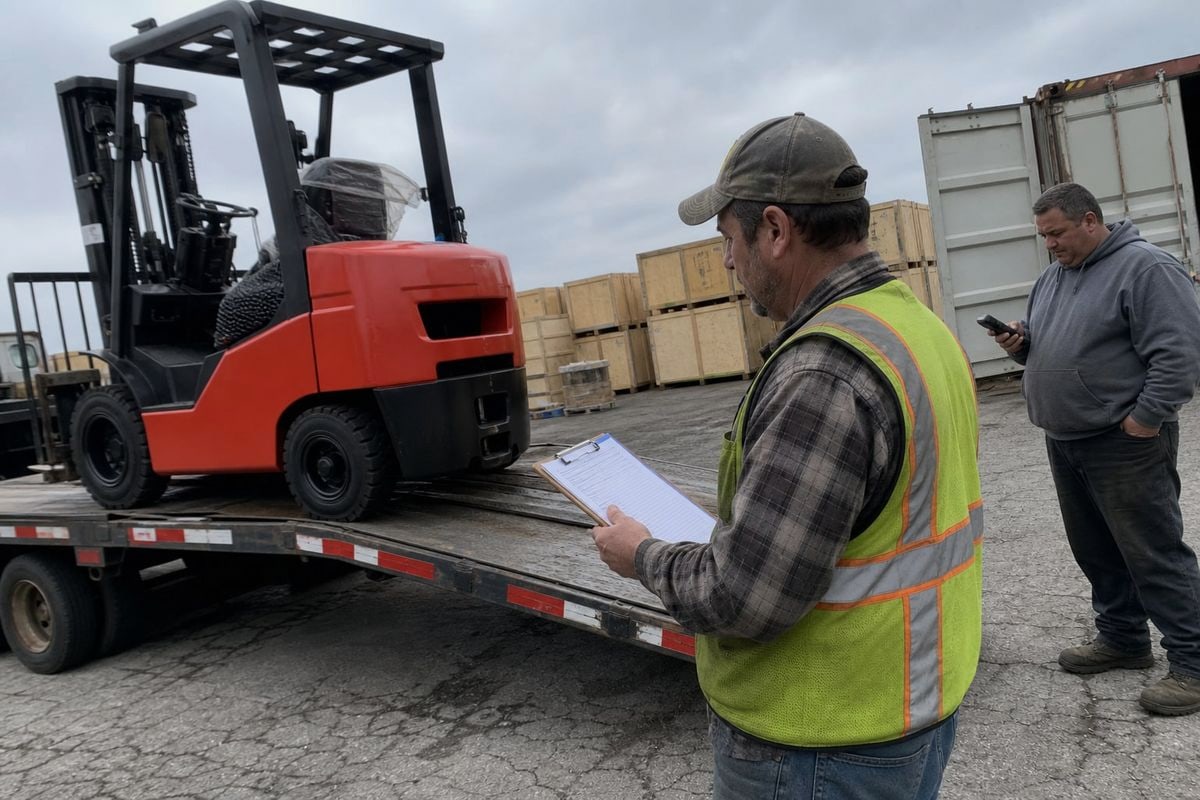
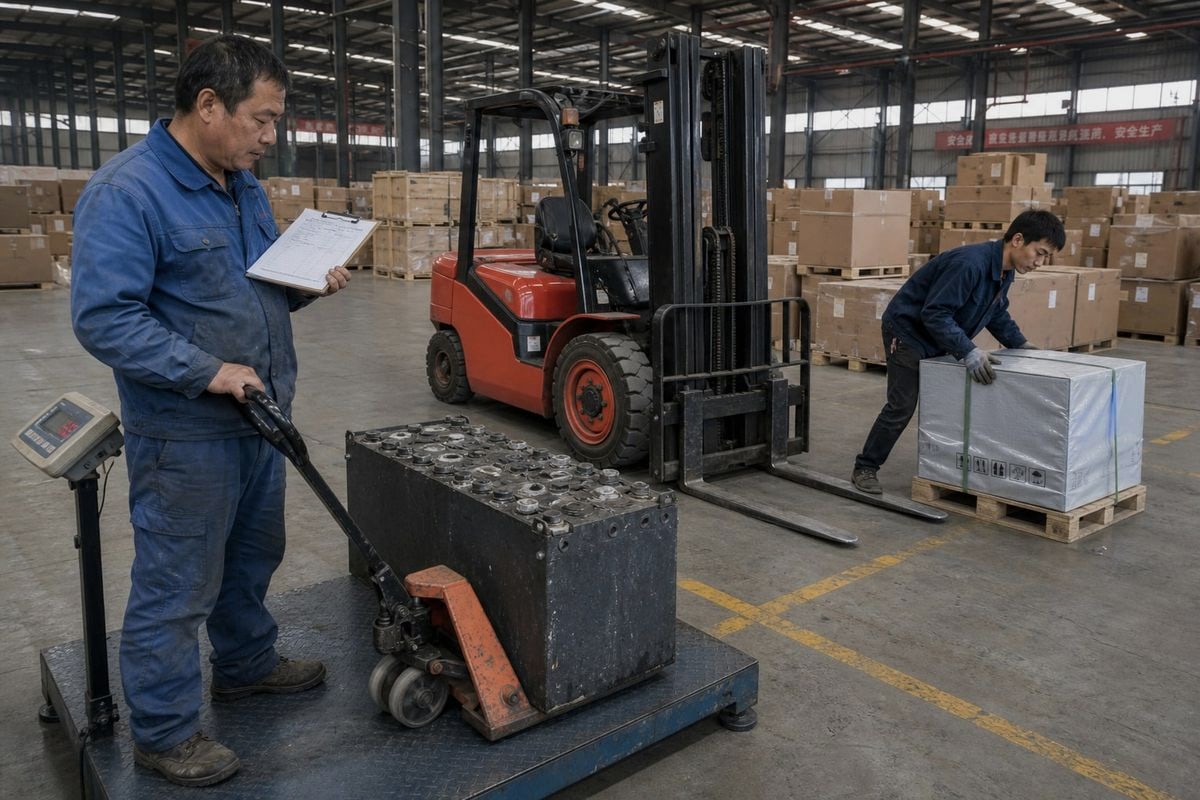
Electric forklifts with lithium-ion batteries are regulated as Class 9 Dangerous Goods under IMDG rules. This changes the booking process, not just the paperwork. The shipping line must pre-approve the DG cargo before you book, and carriers can refuse acceptance if the battery documentation is incomplete. That is why we collect and verify the battery documents from the factory before the forklift ever leaves the production floor.
| Document | Purpose | Who Provides It |
|---|---|---|
| Commercial invoice | Customs value declaration | Supplier |
| Packing list | Cargo details and weights | Supplier |
| Bill of lading | Ownership and shipping contract | Carrier via forwarder |
| Certificate of origin | Duty treatment at destination | Supplier / chamber of commerce |
| UN38.3 test report | Proves battery passed transport safety tests | Battery manufacturer |
| MSDS/SDS | Battery chemical safety data | Battery manufacturer |
| DG declaration | IMDG Class 9 shipping compliance | Shipper / forwarder |
| UL charger certification | US market compliance | Supplier |
| CE Declaration of Conformity | EU market compliance | Supplier |
Destination-specific certifications are not optional. US customs can hold or seize units that lack required compliance documents 3, and EU-bound machines need CE conformity. Lithium battery regulations also evolve, so we re-check carrier requirements on every booking rather than assuming last year's rules still apply. Finally, send the complete set of original documents before the vessel arrives. Late paperwork means the container sits at the port collecting demurrage fees while you scramble. We verify every document against the battery specification sheet before departure, because a mismatch between the MSDS and the actual battery model is one of the most common causes of customs clearance delays.
A distributor once told me he was managing five factories, three truckers, and two forwarders for one order. Our consolidation warehouse turned that chaos into a single container plan.
Consolidate multi-supplier forklift cargo by appointing one freight forwarder in China to collect goods from each factory, gather them at a consolidation warehouse, verify documents and battery compliance for every item, then load everything into one optimized container for a single export declaration and delivery.
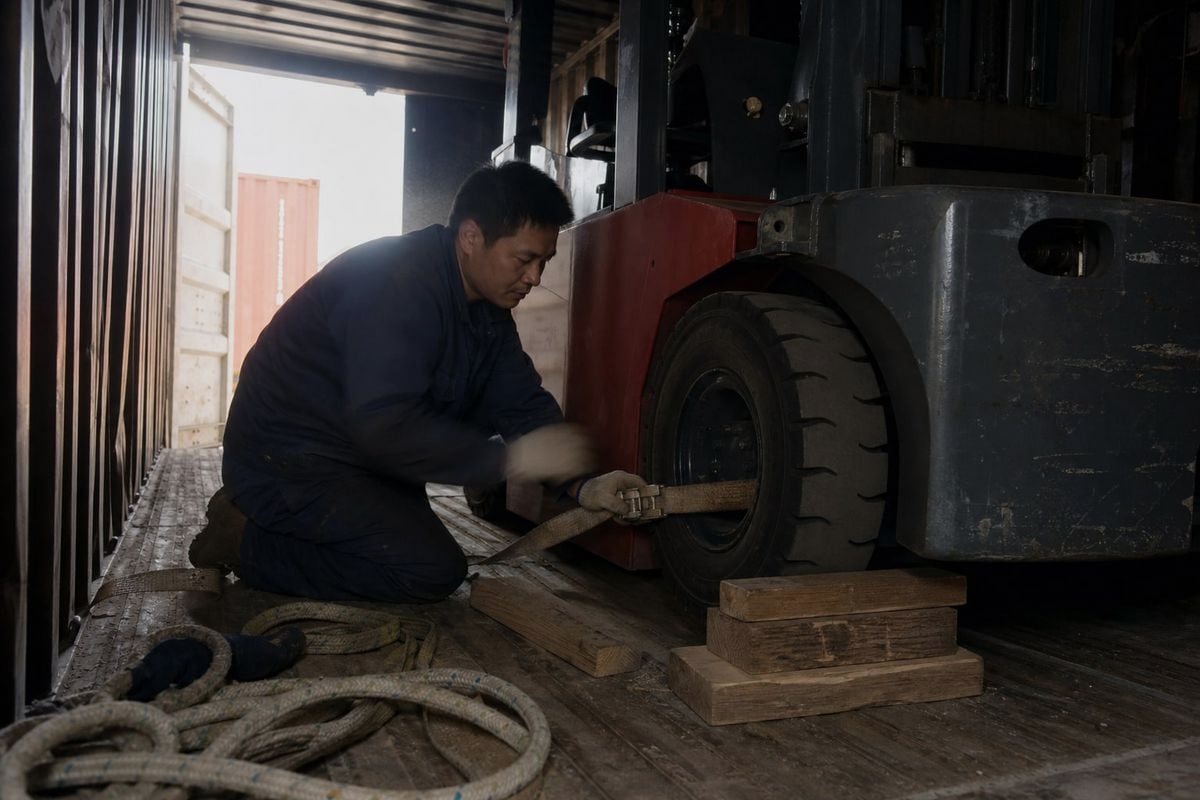
Many of our clients buy forklifts from Factory A, batteries from Factory B, chargers from Factory C, and spare parts from Factory D. Shipping each purchase separately multiplies freight cost 4, paperwork, and delay risk. Consolidation solves this, but it only works if one party coordinates the whole chain. Here is the process we run from our base in Zhengzhou:
The main constraint is timing. If one supplier runs late, the whole container waits. We manage this by building buffer days into the schedule and pushing suppliers for realistic readiness dates, so the container ships when planned.
A successful forklift shipment from China aligns four things: the machine's specs, the right container strategy, complete battery documentation, and a coordinated plan from factory to warehouse.
1. The Federal Maritime Commission regulates ocean transportation intermediaries and freight forwarders in US international trade. ↩︎
2. The Bureau International des Containers is the global authority for container standards and identification codes. ↩︎
3. Official U.S. Customs and Border Protection guidance on the documentation and requirements for importing goods. ↩︎
4. World Bank analysis of global transport and logistics costs and their impact on international trade. ↩︎