- +8618603825129
- [email protected]


Shipping forklifts from China looks simple until the first quote arrives. Hidden charges, battery rules, and damage risk can quietly destroy your margin. Our team in Zhengzhou sees it weekly.
To ship forklifts from China overseas, ocean freight in a full container (FCL) is usually the best method. Use RoRo for large drivable units, flat rack containers for oversized machines, and air freight only for urgent spare parts. Electric forklifts also need lithium battery compliance documents.
Let me walk you through the real decisions. Cost, container choice, battery paperwork, and multi-supplier consolidation. These four questions decide whether your import goes smoothly or gets stuck at port.
A forklift dealer in Texas once told me his "cheap" freight quote grew 60% by delivery day. At our Zhengzhou office, we hear this story constantly, so let's fix it.
Shipping a forklift from China typically costs $1,500–$4,000 for a 40HQ container, and $2,000–$5,500 for FCL heavy machinery, depending on route and season. Your true cost is the landed cost: ocean freight plus duties, destination charges, insurance, and inland trucking.
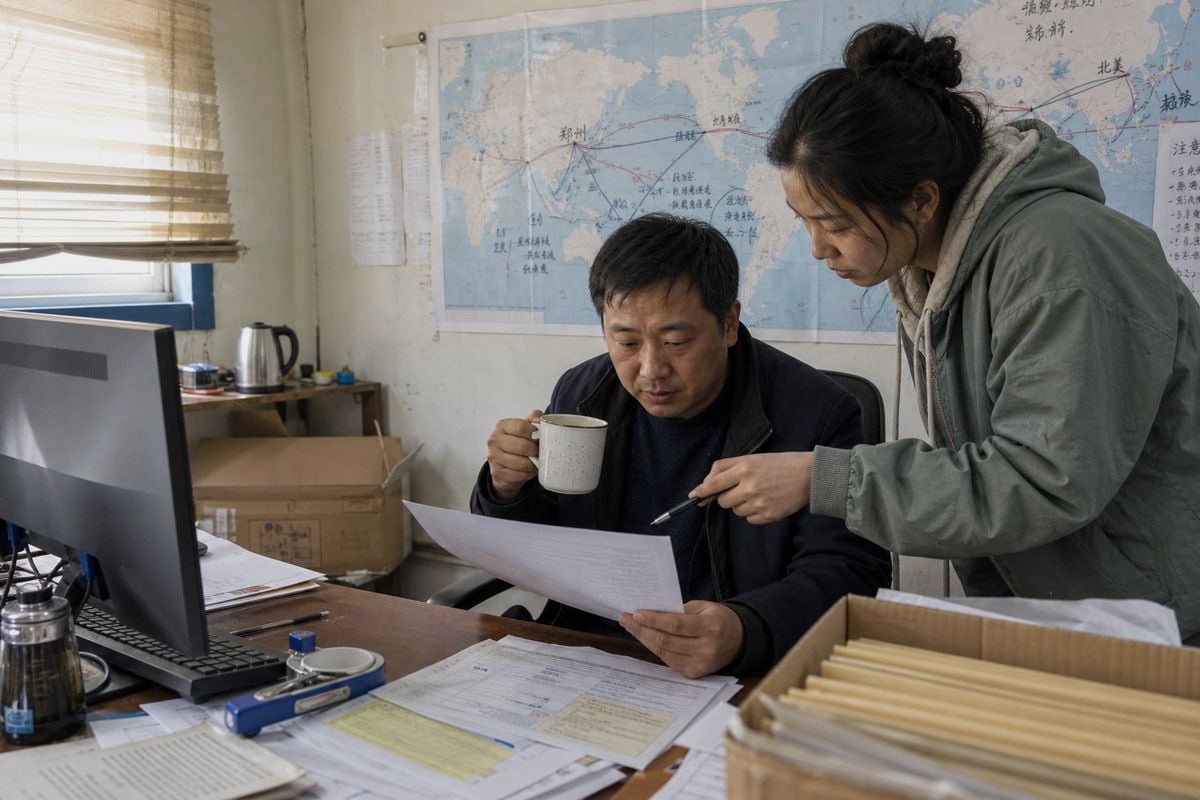
The ocean freight rate is only the visible part of the bill. When we prepare quotations for our forklift importers, we break the total into layers so nothing surprises them later.
Here is how the landed cost of a forklift shipment usually stacks up:
| Cost Layer | What It Covers | Typical Range |
|---|---|---|
| China-side charges | Factory pickup, export declaration, port handling | Low, but often forgotten |
| Ocean freight | Port-to-port container rate | $1,500–$4,000 for a 40HQ |
| Destination charges | Terminal handling, documentation, delivery order fees | Varies by port |
| Import duties and taxes | Based on HS Code and origin | Country-specific |
| Customs clearance | Broker fees, inspection charges if selected | Modest but real |
| Final delivery | Trucking, possibly a truck with unloading capability | Distance-based |
| Shipping insurance 1 | Cargo coverage against loss or damage | Small % of cargo value |
Duties deserve special attention. The HS Code for forklifts 2 matters: electric units generally fall under 8427.10 and internal combustion units under 8427.20. For US-bound cargo, Section 301 tariffs on Chinese goods can add significantly to the duty bill, so we always confirm classification with a customs broker before booking. For shipments to Australia and Southeast Asia, the RCEP agreement can unlock preferential duty rates, which changes the landed-cost math completely.
Incoterms also shape your cost picture. Experienced importers often prefer FOB because it gives them control over freight and shipping insurance from the port of loading. First-time importers often prefer DDP, where we manage export clearance, ocean freight, destination customs clearance, and delivery in one price. There is no single right answer between FOB vs CIF terms or DDP — it depends on how much of the chain you want to control yourself.
The trade-off I weigh most often for clients is simple: pay for a whole container, or share space and share risk. The right answer depends on your cargo volume.
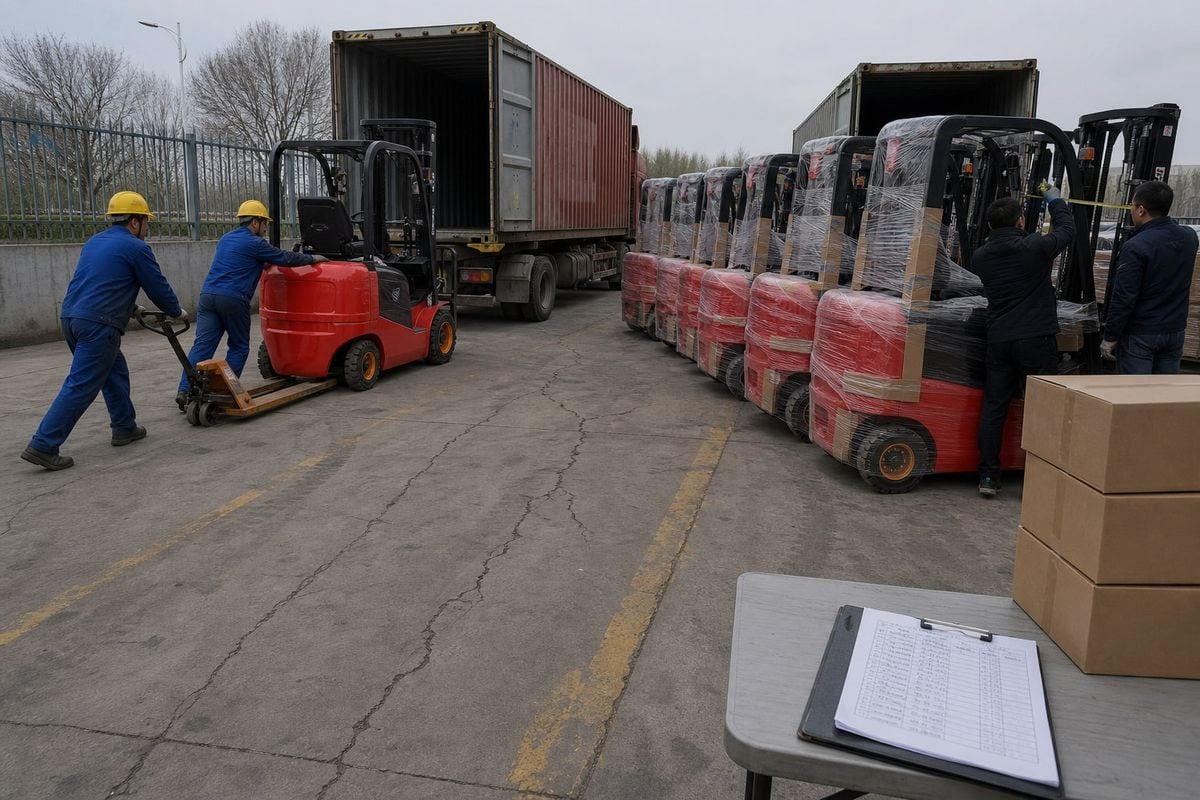
Choose FCL if you are shipping one or more full-size forklifts; it offers better protection, simpler handling, and lower cost per unit. Choose LCL only for small equipment like pallet trucks or spare parts, since forklifts are heavy and awkward for shared containers.
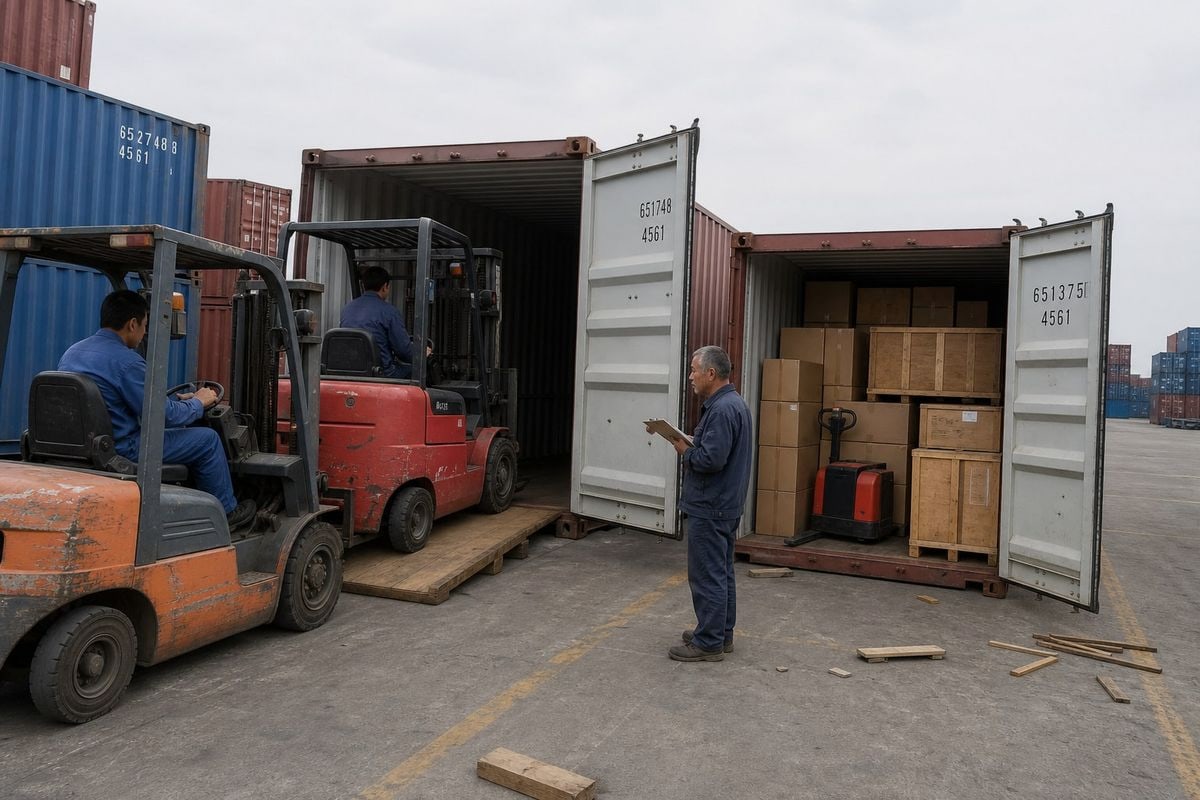
For most commercial forklift imports, the real question is not whether to ship by sea. It is which ocean method minimizes total landed cost and damage risk. Here is how I frame it for buyers.
| Factor | FCL (Full Container Load) | LCL (Less than Container Load) |
|---|---|---|
| Best for | 1+ forklifts, or forklifts plus parts | Pallet trucks, stackers, spare parts |
| Protection | Sealed container, no co-loaded cargo | Shared space, more handling touches |
| Cost logic | Flat container rate, cheaper per unit at volume | Charged by volume, cheaper for small loads |
| Damage risk | Lower, with proper container loading and lashing | Higher, due to extra handling |
| Speed | Direct routing | Extra consolidation and deconsolidation time |
A 20FT container can typically carry one 3-ton forklift. A 40FT or 40HQ can carry two or more compact units, plus batteries, chargers, and spare parts in the remaining space. That is why container loading optimization matters so much: filling unused space cuts your logistics cost per forklift dramatically.
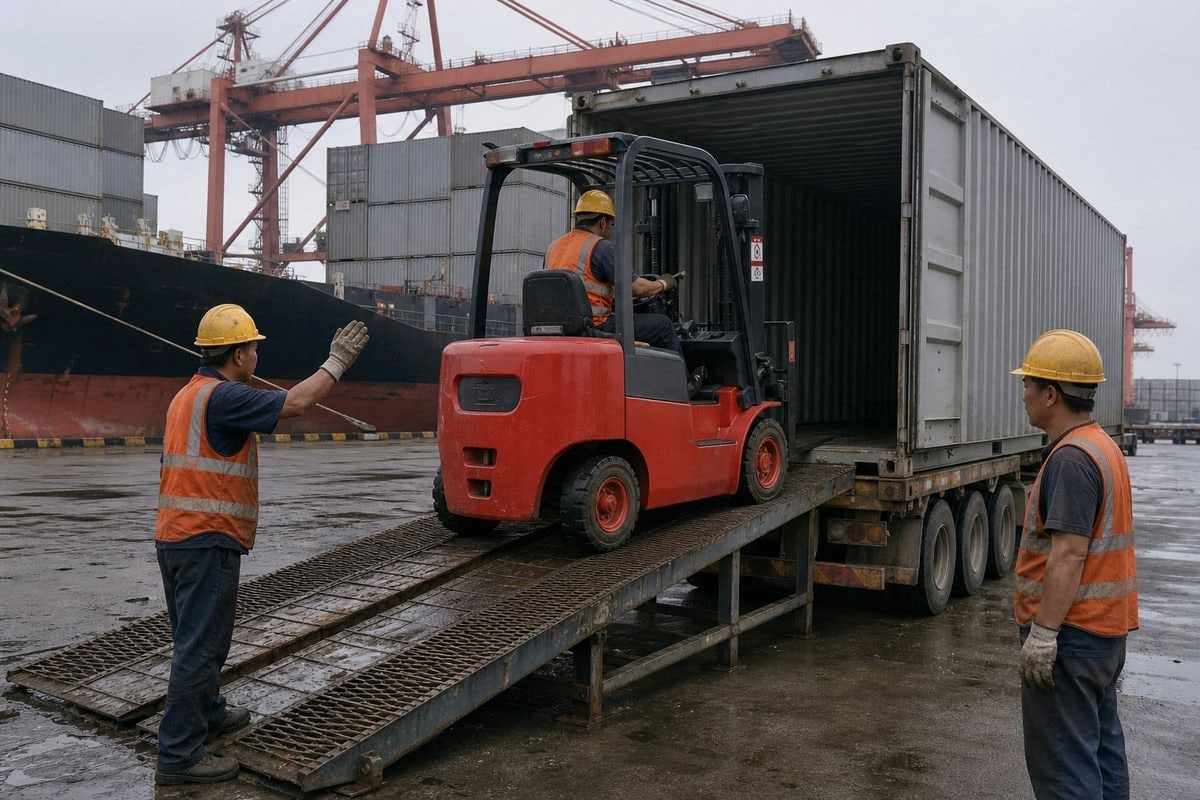
Some importers ask me whether Ro-Ro shipping is cheaper since the forklift just drives on board. RoRo is genuinely efficient for operable, self-propelled machines because it eliminates crane handling fees and reduces structural damage risk. But route availability is limited, and the machine travels exposed on a vehicle deck. For oversized units that exceed standard container width or height, a flat rack container is the fallback: the forklift is secured to a reinforced platform as out-of-gauge cargo, which costs more due to special handling. True breakbulk cargo handling is reserved for the largest heavy-duty machines. My honest rule: FCL first, RoRo for big drivable units, flat rack only when FCL is impossible.
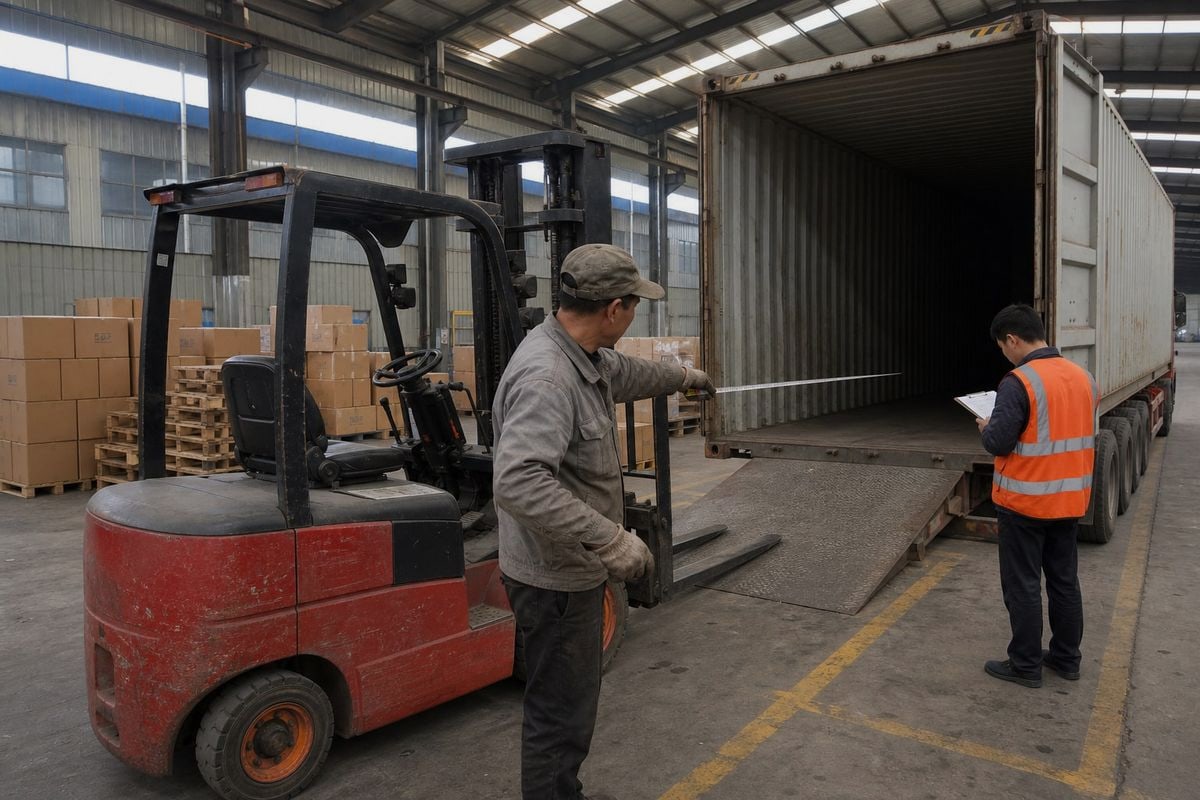
One practical FCL note: standard container height 3 is limited, so we sometimes coordinate mast lowering or overhead guard removal with the factory before loading. We also recommend VCI shrink-wrap on hydraulic cylinders and control units, because high-humidity sea air can cause micro-pitting during a 25–40 day voyage.
A shipment we handled last year taught us a hard lesson: one missing battery test report can hold a container at origin for two weeks. Paperwork is not optional here.
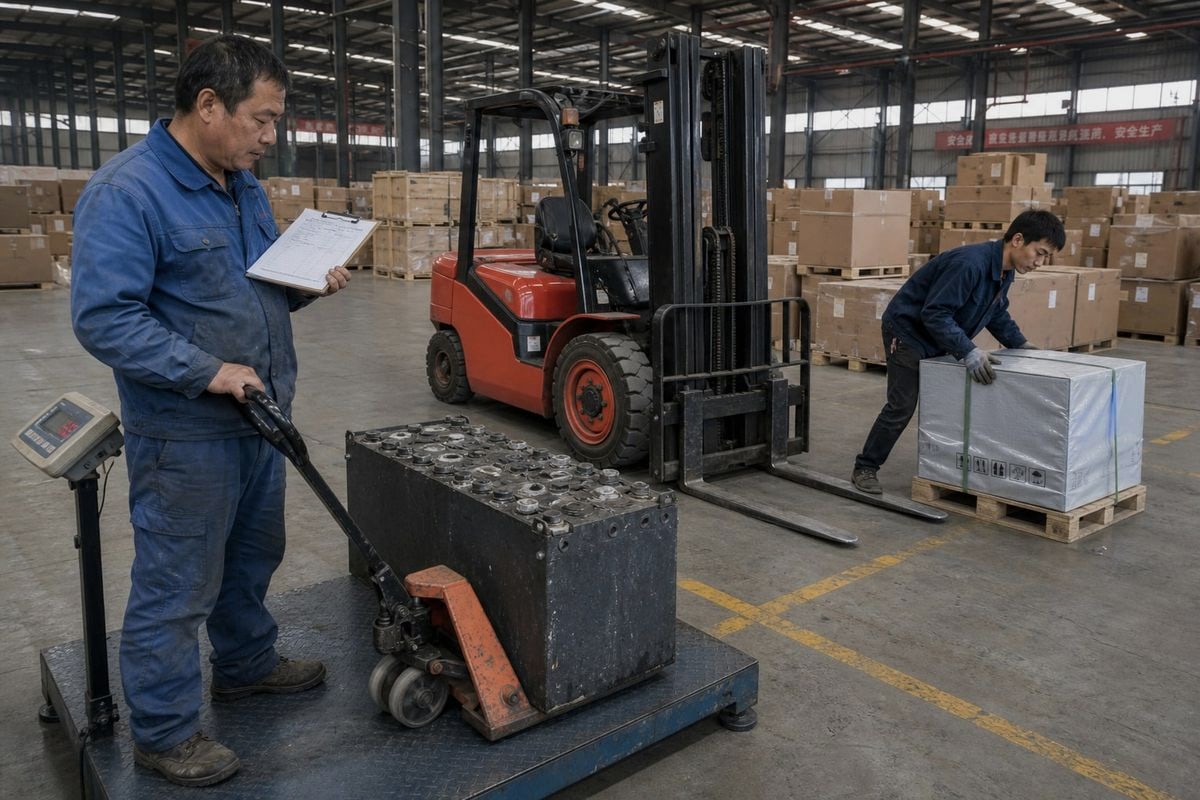
Electric forklifts with lithium-ion batteries are classified as Class 9 Dangerous Goods. You need a UN38.3 test report, an SDS/MSDS, a DG booking with the carrier, and compliant packaging. Standard documents — commercial invoice, packing list, and Bill of Lading — are also required for customs clearance.
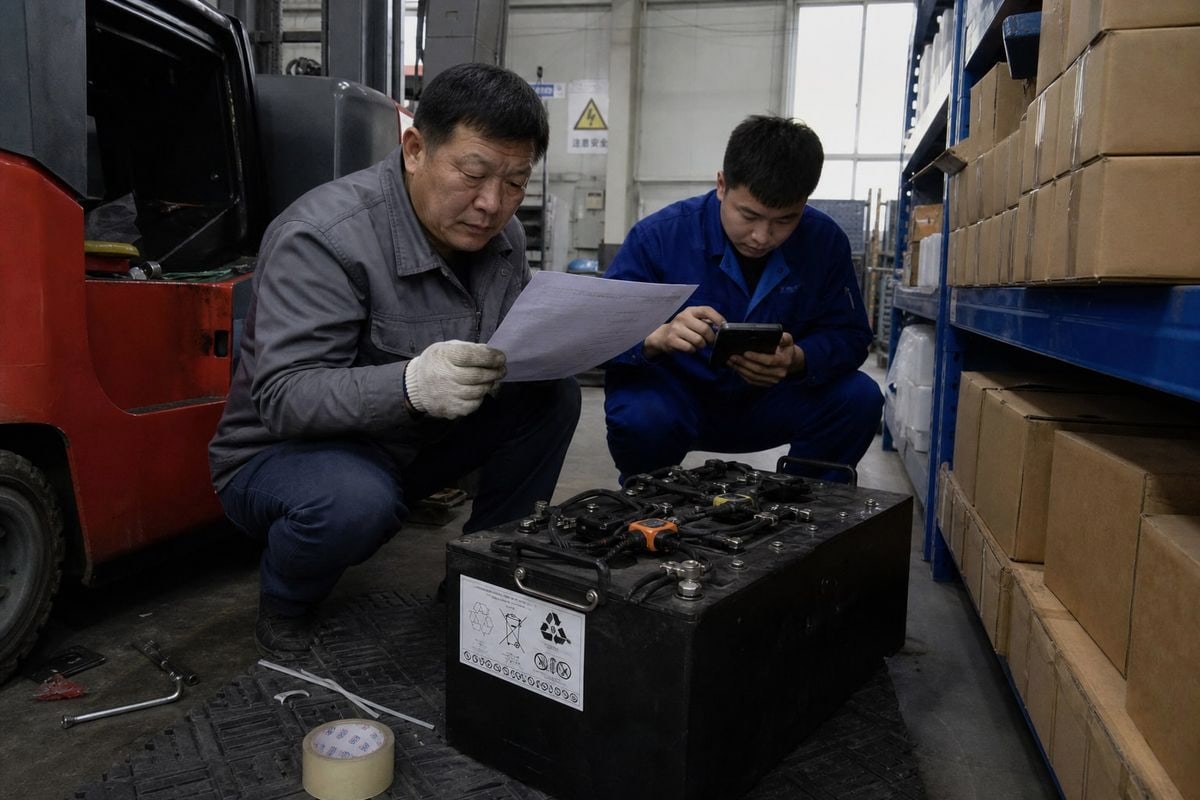
Electric forklifts are a different category from diesel units. The battery changes the shipping plan, the carrier booking, and the customs file. When we coordinate battery-powered material handling equipment out of China, we verify the documents before the cargo ever leaves the factory. Fixing paperwork at the port is expensive; fixing it at the factory is free.
| Document | Purpose | Who Provides It |
|---|---|---|
| UN38.3 test report 4 | Proves the lithium battery passed transport safety tests | Battery manufacturer |
| SDS/MSDS | Safety data sheet for the battery chemistry | Battery manufacturer |
| DG declaration | Supports the Class 9 dangerous goods booking | Shipper / forwarder |
| Commercial invoice | Customs valuation | Supplier |
| Packing list | Cargo details for customs and loading | Supplier |
| Bill of Lading | Contract of carriage and title document | Carrier via forwarder |
| Certificate of origin | Duty treatment, including RCEP preferences | Chinese authorities |
| CE / UL or local certification | Destination market compliance where required | Manufacturer |
Skip any of these steps and you risk carrier rejection, port storage fees, or a customs hold at destination.
A US distributor recently asked us to combine forklifts from Hebei, chargers from Guangdong, and spare parts from Zhejiang. One container, one Bill of Lading, one delivery. We do this often.
Yes. A freight forwarder in China can pick up cargo from multiple factories, consolidate it at one warehouse, and load everything into a single container. This cuts freight cost per unit, simplifies customs clearance, and fills unused container space with batteries, chargers, and spare parts.
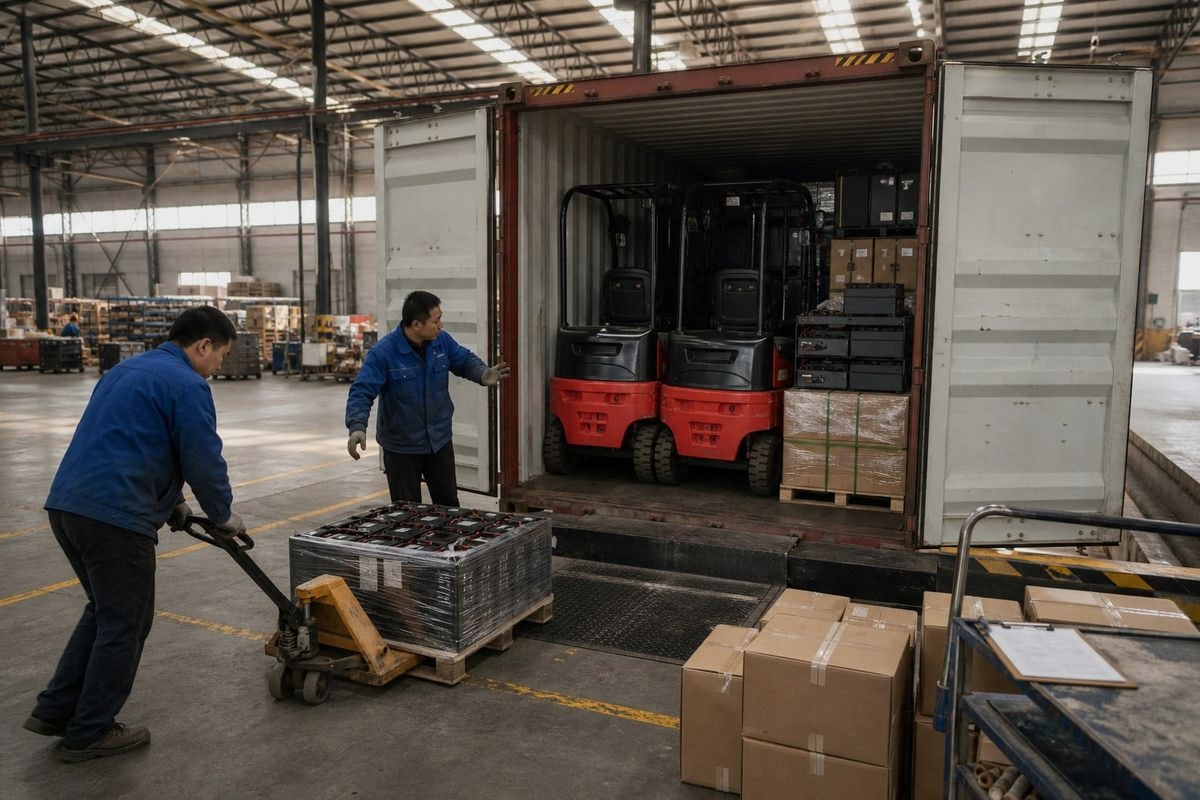
Buying from one supplier is rare in this industry. Dealers often source forklifts from Factory A, batteries from Factory B, chargers from Factory C, and attachments from Factory D. Shipping each purchase separately multiplies pickup fees, documentation work, and destination charges. Consolidation solves this, but it needs China-side coordination that most overseas buyers cannot do alone across time zones.
Cargo securing is critical here. A forklift that shifts in transit can crush cartons of spare parts and damage itself. We block and brace the machines, and for high-value shipments some importers now add IoT-enabled smart lashing sensors that record G-force impacts and tilt angles during the voyage — instant digital evidence for a shipping insurance claim if mishandling occurs.
One caution: the battery cargo still carries its Class 9 status inside a consolidated container. The whole container books as DG, so every supplier's paperwork must be complete before loading. Plan for a typical 15–40 day ocean transit depending on your route, and keep urgent items — like a single replacement controller — on air freight instead.
Shipping forklifts from China rewards preparation. Confirm dimensions, battery documents, HS codes, and Incoterms first — then choose FCL, RoRo, or flat rack, and get accurate quotes.
1. The institutional source for Incoterms and international commercial rules governing shipping and insurance responsibilities. ↩︎
2. Official global organization responsible for the Harmonized System (HS) codes used in customs classification. ↩︎
3. The international standards body that defines dimensions and specifications for freight containers. ↩︎
4. The UN agency responsible for maritime safety and regulations concerning the transport of dangerous goods. ↩︎