- +8618603825129
- [email protected]

Every week at our Zhengzhou loading warehouse, importers ask me whether to ship forklifts assembled or disassembled. Choose wrong, and you pay for wasted container space—or costly reassembly headaches.
Ship forklifts assembled for domestic moves and when the lowered mast fits your container or trailer, because it avoids reassembly labor and errors. Ship them partially disassembled when height limits, container dimensions, or ocean freight costs make the intact unit too expensive or impossible to move.
That answer sounds simple, but the right call depends on your forklift's exact dimensions, the transport mode, and your destination. Let me walk you through how I help buyers decide.
A dealer in Texas once sent me a spec sheet before ordering ten units. That one email saved him a full extra container. Measurement always comes first in our planning process.
Decide by measuring the forklift's lowered mast height, width, and weight, then comparing those numbers against your container or trailer dimensions. If the unit fits assembled with safe clearance, keep it intact. If not, remove the mast, forks, or battery to meet the size limits.
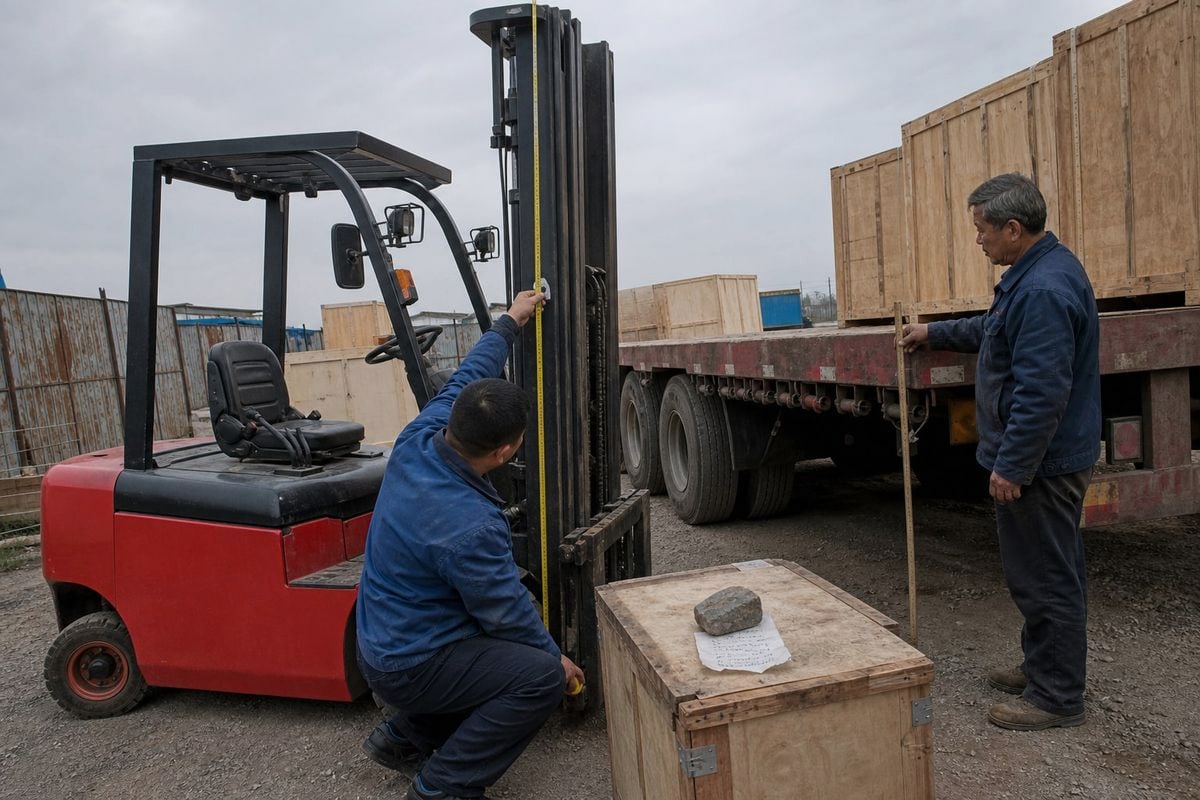
The decision is not really "assembled vs. disassembled" as a binary choice. The real question is: which shipping configuration is safest, cheapest, and least error-prone for this specific forklift and this specific route? I always start with three data points from the factory: lowered mast height, overall width, and gross weight. Those numbers drive everything else.
Mast height clearance is usually the deciding factor. For road transport, if the lowered mast exceeds 8.5 to 9 feet, a standard flatbed becomes a problem. You then need a step-deck or lowboy trailer, or you risk paying for oversized load permits and escort vehicles. For containerized shipping, the internal door height of a 40HQ container 1 is the hard limit. Many compact electric forklifts clear it with the mast lowered. Larger reach trucks and high-mast units often do not.
| Tényező | Ship Assembled | Ship Disassembled |
|---|---|---|
| Lowered mast fits container/trailer | Yes — keep intact | Not required |
| Mast exceeds door or legal height | Not possible without permits | Remove mast and carriage |
| Turnaround speed at destination | Fast — drive off and work | Slower — reassembly needed |
| Labor available at destination | Minimal needed | Skilled technicians required |
| Freight cost per unit | Higher if space is wasted | Lower with tight cube utilization |
| Damage risk profile | Fewer touchpoints | More handling steps |
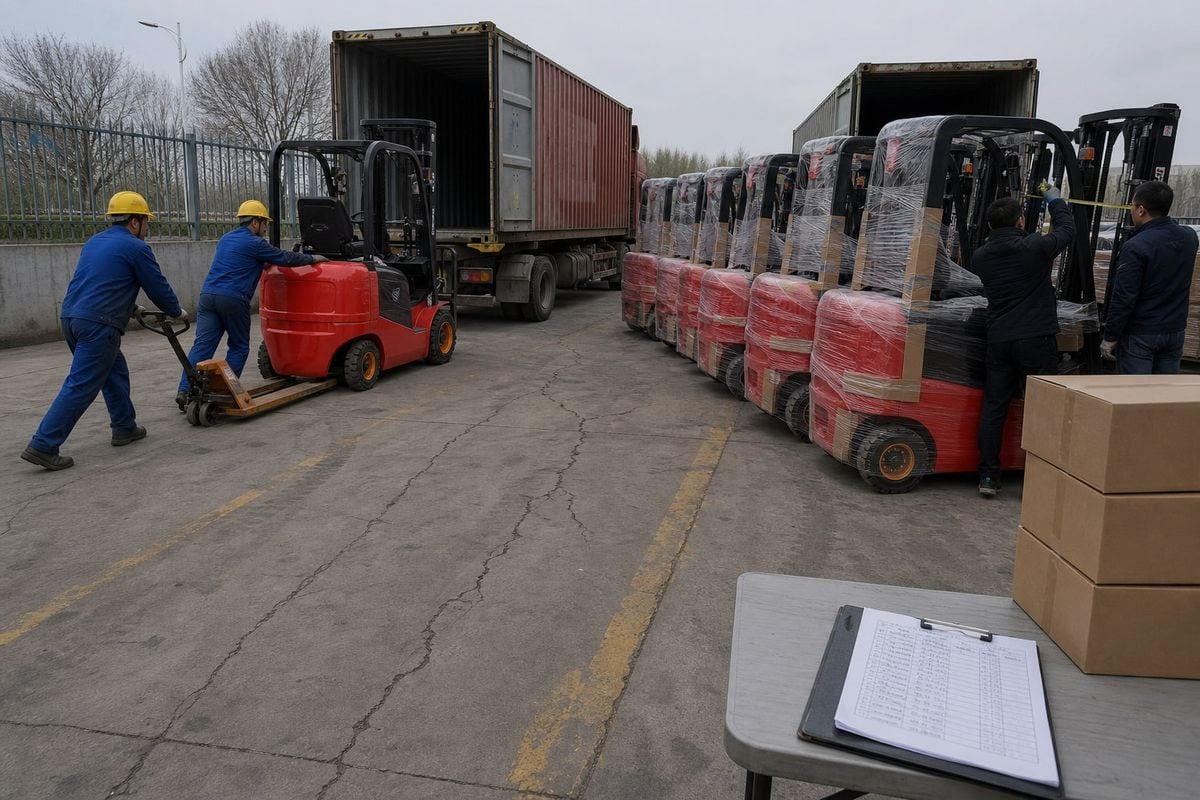
In our experience shipping electric forklifts 2 from Chinese factories to the US, most compact warehouse units travel assembled inside containers. Larger units, or high-volume orders where cube utilization matters, often justify partial disassembly. Route restrictions, destination labor, and documentation capacity all feed the final call. I never let a customer decide from a photo alone—exact dimensions and weight come first, every time.
There is a real trade-off I weigh on almost every quotation: tighter cube utilization on the ocean leg versus higher labor and packing costs on both ends. Neither side always wins.
Disassembling a forklift can cut ocean freight costs by allowing more units per 20-foot or 40-foot container, but it adds labor, crating, labeling, and reassembly expenses. Total savings appear mainly on high-volume or oversize shipments, not on single-unit orders that already fit assembled.
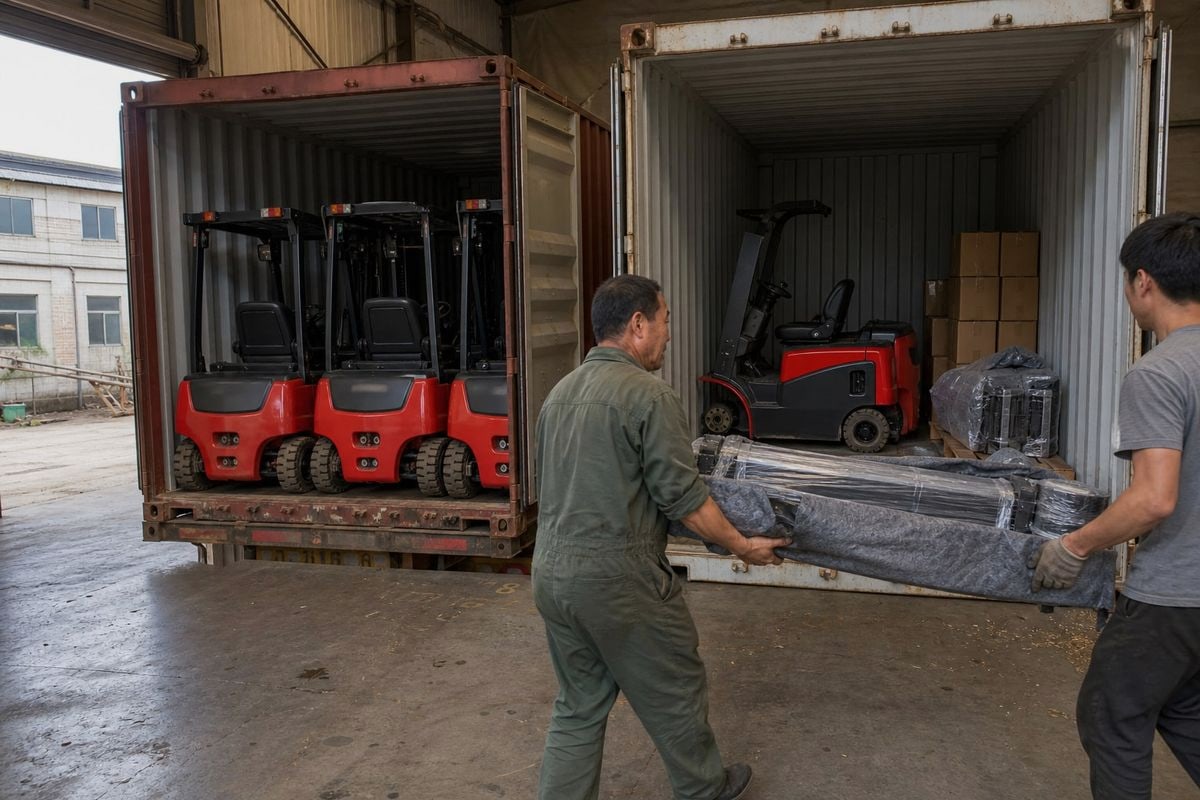
The honest answer is that disassembly lowers the line-haul cost but can raise the total project cost. I have seen buyers celebrate a cheaper freight quote, then lose that entire saving to reassembly labor costs at their US warehouse. So let us break the numbers down the way I do for my customers.
Removing the mast and carriage is standard practice for international ocean freight 3 when the unit will not otherwise fit a standard container. It also helps when we can nest more units per box. If disassembly turns two containers into one, the saving is obvious and large. If it only frees up a corner of space, the saving is small—unless we fill that space with chargers, batteries, or spare parts from your other suppliers, which is exactly what our multi-supplier consolidation service does.
| Cost Item | Assembled Shipping | Partial Disassembly |
|---|---|---|
| Factory disassembly labor | None | Moderate |
| Crating and packing of components | Minimal | Significant |
| Match-marking and documentation | Not needed | Required |
| Reassembly labor at destination | None | Technician time, tools, possibly a crane |
| Risk of lost or damaged parts | Alacsony | Higher without strict labeling |
| Freight per unit | Higher on large units | Lower with tight cube utilization |
There is one more angle worth mentioning. Some of our corporate clients now treat strategic disassembly as a green logistics tactic. Maximizing container cube utilization lowers the carbon footprint per unit moved, and that number feeds directly into their ESG reporting. For a distributor importing dozens of units per year, that benefit stacks on top of the freight savings.
My rule of thumb: one or two compact forklifts that fit assembled should stay assembled. High-mast units, or volume orders of five-plus machines, deserve a disassembly cost comparison before booking.
Lithium battery cargo is where I spend the most pre-shipment coordination time. A buyer once nearly booked his forklifts before anyone had confirmed whether the batteries had proper UN38.3 test documentation from the factory.
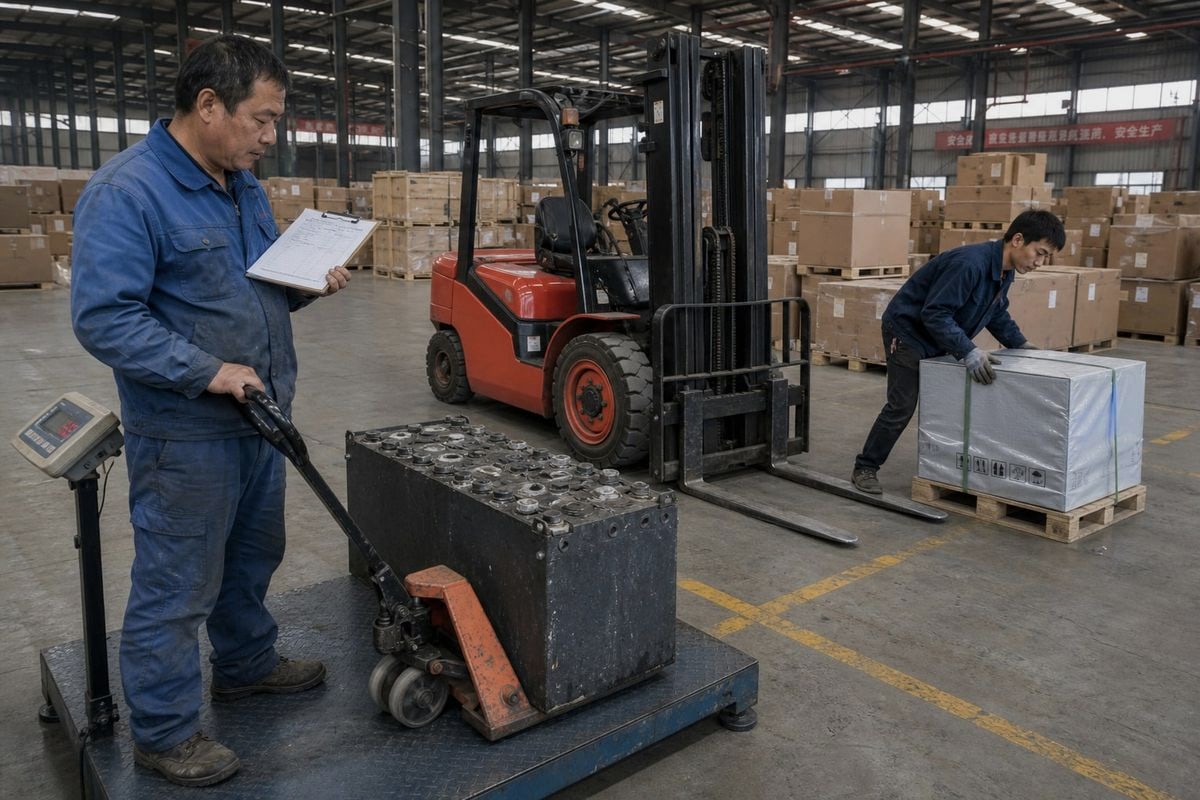
Disassembly itself does not void most warranties, but improper battery removal or reinstallation by unauthorized technicians can. Lithium batteries must be disconnected, documented, and handled per manufacturer instructions and dangerous goods rules, whether they travel installed in the forklift or packed separately.
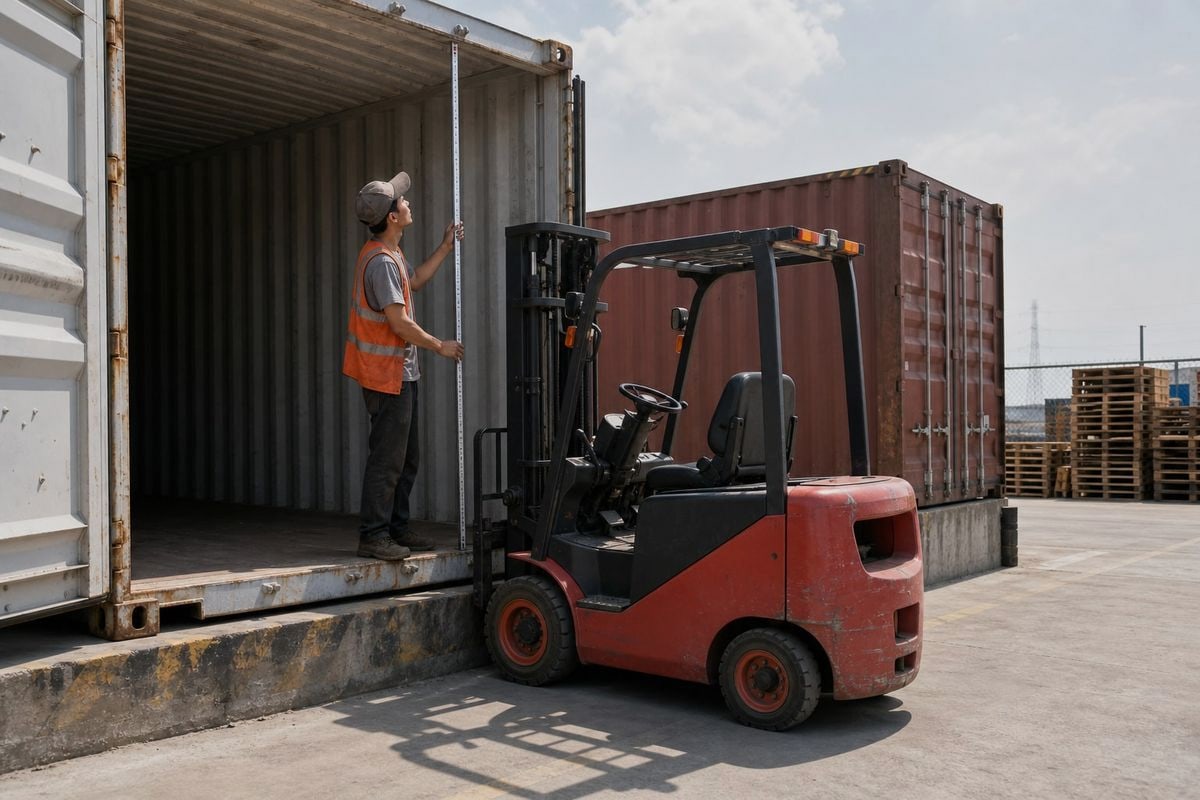
Electric forklifts change the disassembly calculation in ways that diesel and propane units do not. The battery is the heaviest, most expensive, and most regulated single component on the machine. So the question is never just "should the mast come off?" It is also "how does the battery travel, and who touches it?"
Before any cargo reaches the port, we confirm battery chemistry 4, watt-hour ratings, and test documentation directly with the Chinese factory. Carriers can reject non-compliant lithium cargo at the terminal, and by then the delay is expensive.
Whenever components are removed, I insist on three protections. First, factory technicians—not general laborers—perform the disassembly, so the manufacturer cannot later blame third-party work. Second, every removed part gets match-marked, photographed, and listed on a packing document. Third, exposed hydraulic ports and electronic connectors get Vapor Corrosion Inhibitor caps and wraps, because salt-laden sea air causes micro-corrosion during a three-to-five week ocean transit. For high-value lithium units, some of our clients also add IoT telematics sensors that monitor G-force impact and tilt in transit, since a hard shock can damage internal battery cells without leaving any visible mark.
A lesson I learned early in this business: an assembled forklift is safest in transit only if it was loaded correctly. One badly secured unit can shift, and a shifted three-ton machine punishes everything around it.
The main risks are load shifting from poor securement, mast or overhead guard damage at the container door, hydraulic stress from tie-downs attached to the wrong points, and loading accidents caused by the forklift's very low ground clearance. Proper securement and professional loading control all four.
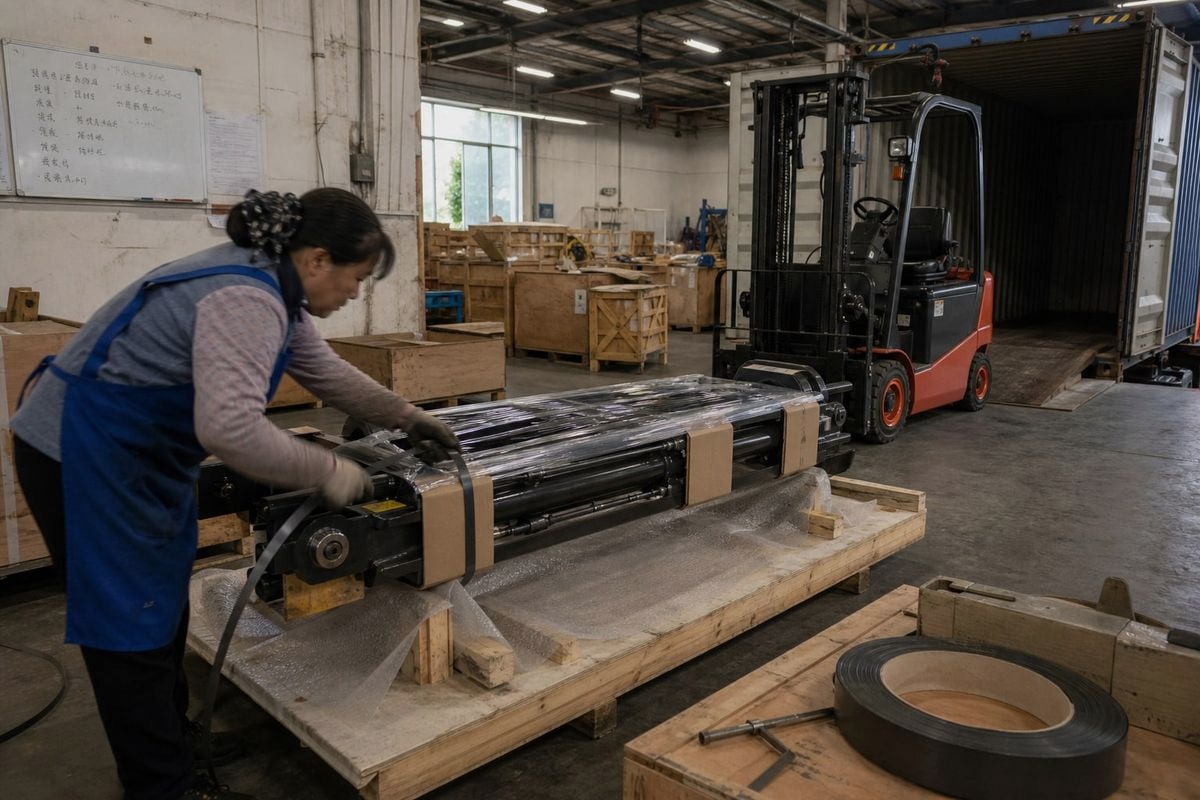
Assembled shipping has fewer touchpoints than disassembly, which is exactly why I recommend it when the unit fits. But "fewer risks" does not mean "no risks." Here is what our container loading team in China watches for on every shipment.
Securement failure. Load securement standards require chains or heavy-duty straps attached strictly to the chassis or designated tie-down points. I have seen loaders lash straps around the mast or forks because it looks convenient. That routes transit forces through hydraulic components and can cause hydraulic or structural failure at sea. We block and chock the wheels, engage the parking brake, and anchor to the frame only.
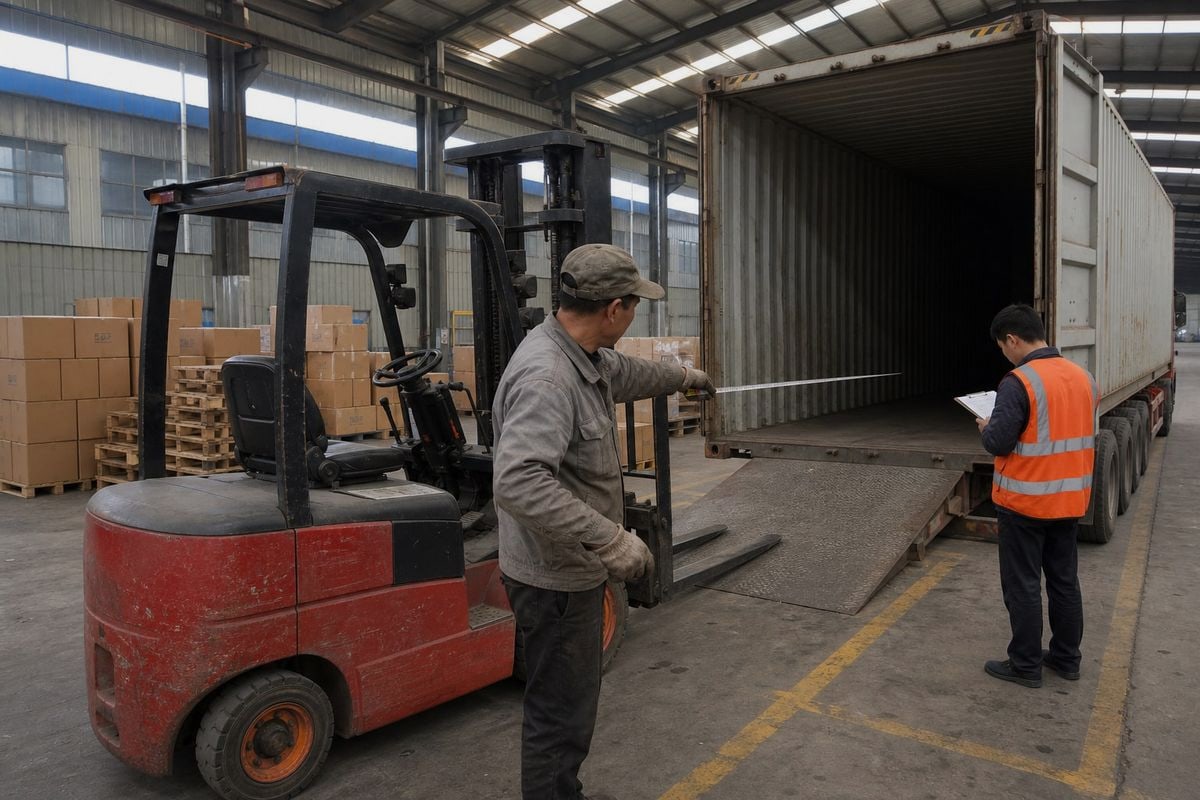
Clearance damage. A mast that clears the container door by two inches on paper can still get scraped if the ramp angle lifts the rear of the machine during loading. We measure at the loading dock, not just on the spec sheet.
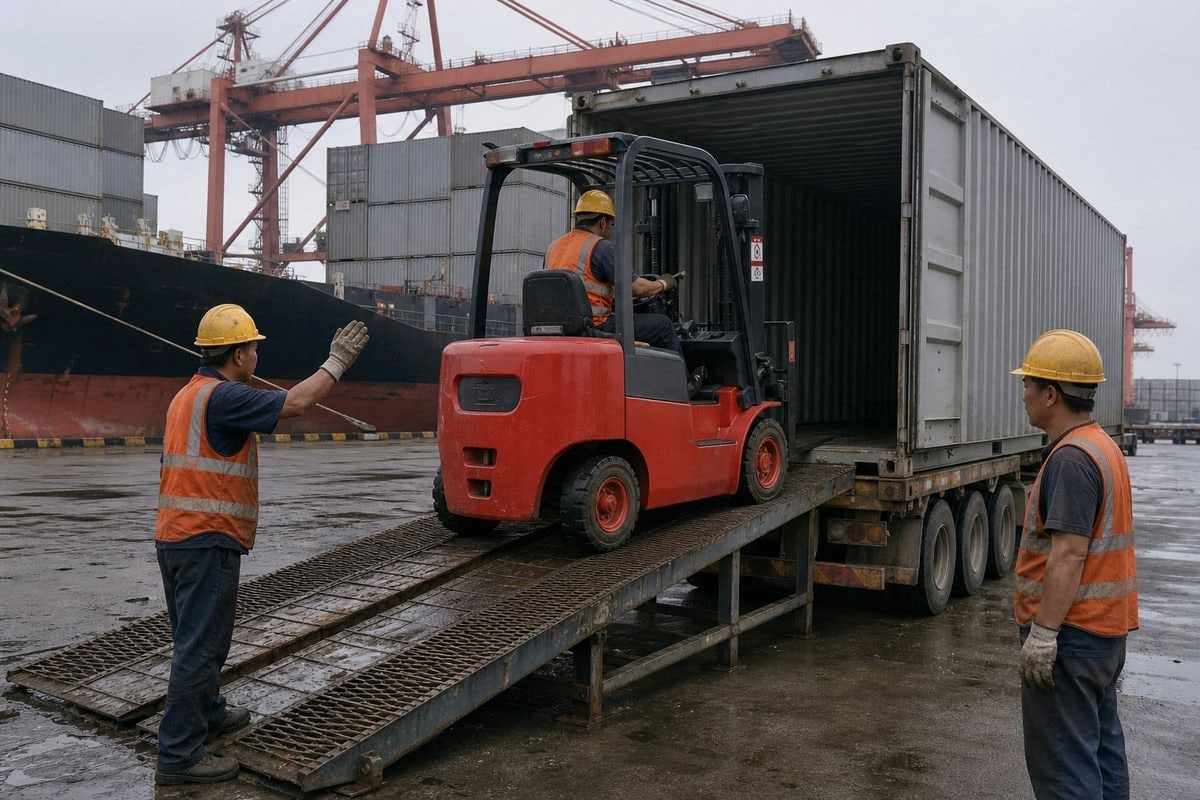
Loading accidents. Forklifts have extremely low ground clearance. Driving one up a steep ramp can ground the chassis. For road legs, this is why heavy haul trucking providers choose carefully in the flatbed vs RGN trailer decision—a removable gooseneck trailer gives a gentle approach angle that a standard flatbed cannot. For containers, a proper dock or tilt-tray loading setup does the same job. Professional rigging and hauling services exist for exactly these moments.
Fuel and power hazards. Even assembled units need transport prep: fuel reduced to one-quarter tank on IC models, batteries disconnected on electric ones, and propane tanks removed or secured with valves closed.
Finally, I always recommend transit insurance coverage on forklift shipments. These are high-value machines, and insurance is cheap compared to a repair dispute after arrival.
Measure first, then decide. Ship assembled when the forklift fits; disassemble when size or volume demands it. Either way, professional loading, documentation, and securement protect your investment from factory to warehouse.
1. ISO establishes the international standards for freight container sizes and door height specifications. ↩︎
2. Wikipedia provides a technical overview of electric forklifts and their primary industrial applications. ↩︎
3. The ICC provides the regulatory framework and standard terms used in international ocean freight logistics. ↩︎
4. PHMSA oversees the safety requirements and test documentation needed for transporting lithium batteries and hazardous goods. ↩︎