- +8618603825129
- [email protected]


Whether to disconnect the forklift battery before shipping seems like a small detail. But at our loading warehouse in Zhengzhou, I have seen this small detail decide whether a container sails on time or sits at the port. A connected battery can drain, short, or even trigger a carrier rejection. One overlooked cable can cost you weeks and thousands of dollars. The good news? The fix takes minutes, and I will walk you through exactly how we handle it for every forklift we export.
Yes, you should disconnect the forklift battery before shipping in almost all cases. Disconnecting prevents short circuits, accidental activation, and parasitic battery drain during transit. Always follow the manufacturer's manual first, because some lithium-ion systems require the BMS to stay connected while the isolator is disconnected.
That is the short answer. But the details matter. Battery chemistry, shipping method, and carrier rules all change what "disconnect" means in practice. Let me break each part down.
Before every container loading, our team runs the same pre-shipment checklist with the factory. Step one is always battery isolation, and the sequence matters more than most buyers realize.
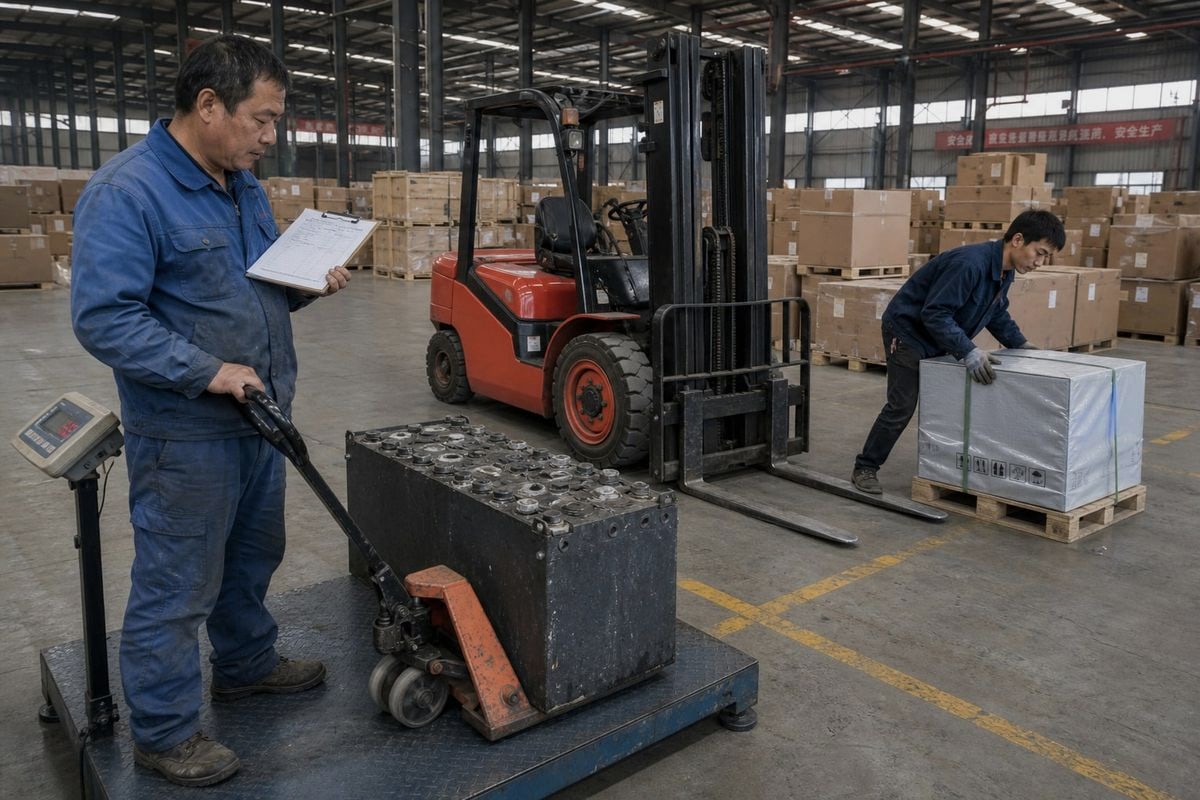
To safely disconnect a forklift battery, power off the truck, follow the OEM sequence, use insulated tools, disconnect the negative terminal first on lead-acid systems, cap and insulate all terminals, and secure loose cables. For lithium-ion forklifts, disconnect the isolator and CAN connector but keep the BMS connected.

I want to be precise here, because "disconnect" does not mean the same thing for every forklift. On most units we ship, disconnecting means electrically isolating the battery from the machine. It does not always mean removing the battery from the truck. Toyota's own guidance says to disconnect the battery connector before non-use or transport unless the instruction handbook prohibits it. For lithium-ion trucks 1, Toyota tells you to disconnect the battery isolator and the CAN communication connector, but not the battery management system. If you unplug the BMS on some lithium models, you can lose cell balancing data and create warranty problems on arrival.
| Step | Lead-Acid Battery | Lithium-Ion Battery |
|---|---|---|
| Isolation method | Unplug battery connector or terminals | Disconnect isolator switch and CAN connector |
| Terminal order | Negative first, then positive | Follow OEM isolator sequence |
| BMS | Non applicabile | Keep BMS connected |
| Charge level before shipping | Fully charged, electrolyte topped off | 30% state of charge or less for ocean/air transport |
| Orientation | Must stay upright to avoid electrolyte leakage | Orientation flexible, but secure mounting required |
One more point from our loading floor: never disconnect a battery while the charger is running. Charger off, then disconnect. That order is a basic rule in every battery safety guideline we follow, and skipping it is how arcing accidents happen.
A few years back, a client's forklift arrived in Los Angeles with a completely dead lead-acid pack. The truck sat connected for six weeks of transit and port storage. The lesson stuck with me.
Shipping a forklift with the battery connected risks parasitic drain, deep discharge, plate sulfation, short circuits from vibration, accidental activation during handling, and potential carrier rejection. In the worst case, a short can cause arcing or fire inside a sealed, unventilated container.
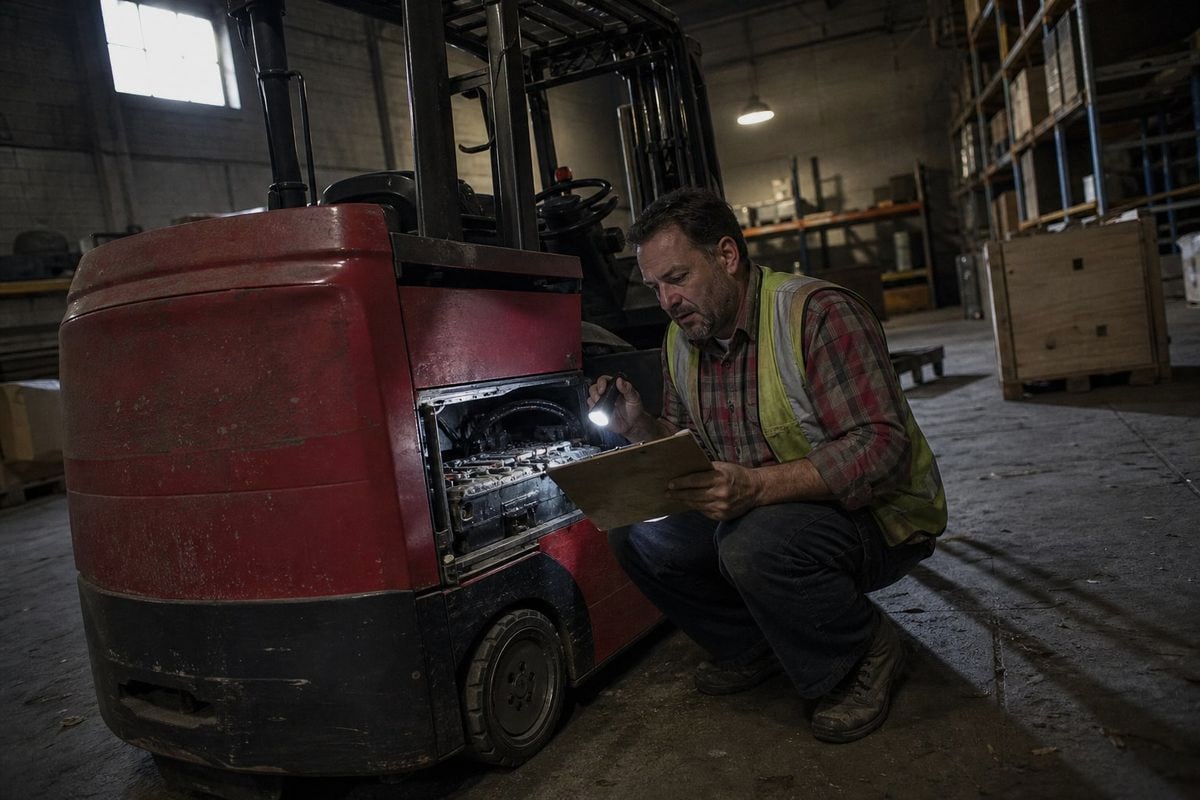
Let me separate the risks into three categories, because they hit you in different ways.
Even when a forklift is switched off, small electrical loads keep drawing current. Displays, controllers, and telematics units all pull power. Over a four-to-eight week ocean voyage plus port storage, this parasitic load can pull a battery down to zero. For lead-acid batteries 2, deep discharge prevention matters enormously. A fully drained lead-acid pack develops plate sulfation, and extended sulfation is irreversible. That is why the standard advice is to ship lead-acid batteries fully charged with electrolyte levels topped off, then disconnect them. For older lithium cells, there is a second, less obvious problem: prolonged mechanical vibration during long-haul shipping can accelerate internal dendrite growth. That is why we recommend a state-of-health audit before shipping used lithium forklifts.
A container at sea vibrates constantly. Cables rub. Terminals shift. A connected battery gives every one of those movements a live circuit to work with. A short circuit inside a sealed container has no one nearby to respond. Advanced fleets now use IoT-enabled thermal monitoring that tracks internal battery temperature and shock levels via the cloud, partly to protect warranty validity on arrival. That technology exists because this risk is real.
| Consequence | Typical Impact |
|---|---|
| Dead battery on arrival | Recharging delays, possible battery replacement cost |
| Accidental activation during loading | Injury risk, cargo damage, liability disputes |
| Carrier or surveyor rejection | Rebooking fees, storage charges, missed delivery dates |
| Fire incident in transit | Cargo loss, insurance complications, regulatory investigation |
| Warranty dispute | OEM may reject claims if transport prep was not followed |
None of these outcomes is worth the two minutes it takes to unplug a connector.
Handling lithium battery cargo is one of the trickiest parts of our forklift shipping work from China. The rules are stricter than most first-time importers expect, and carriers enforce them hard.
Yes. HazMat shipping regulations treat lithium-ion forklift batteries as Class 9 dangerous goods under UN 3480 when shipped separately, generally requiring 30% state of charge or less, insulated terminals, UN-certified packaging, and a dangerous goods declaration. Disconnection and terminal protection are baseline compliance requirements.

Here is how the regulatory picture breaks down, based on the shipments we coordinate every month.
| Battery Type | Hazard Class | UN Number | Key Transport Requirements |
|---|---|---|---|
| Wet lead-acid (in equipment or separate) | Class 8 (Corrosive) | UN 2794 | Ship upright, leak-proof vent caps, prevent electrolyte leakage |
| Lithium-ion (shipped separately) | Class 9 (Miscellaneous) | UN 3480 | 30% SOC or less, UN-certified packaging, terminal insulation |
| Lithium-ion (installed in equipment) | Class 9 (Miscellaneous) | UN 3481 variant rules | Secure installation, isolation per OEM, DG declaration |
Lithium-ion battery safety rules under IMDG for sea freight, and DOT shipping standards for the US domestic leg, both start from the same premise: an unprotected, connected battery is an uncontrolled hazard. Disconnection, terminal insulation, and secure mounting are the minimum. If a lithium battery ships separately from the truck, it must be strapped to heavy-duty pallets or housed in UN-certified packaging, and the shipping documentation must include a hazardous materials declaration 3, the correct UN number, and a 24-hour emergency response number. Miss any of those, and the carrier can refuse the cargo at origin.
Two developments are worth watching. First, international standards are moving toward a digital Battery Passport, giving customs instant access to a battery's chemical history and recycling data. Second, for routes through extreme climates, some shippers now use phase-change material packaging that buffers temperature and keeps lithium cells away from thermal runaway thresholds inside unventilated containers. We flag both trends to clients shipping large lithium fleets, because compliance requirements only move in one direction: stricter.
One caution I always give buyers: do not assume disconnection alone satisfies the regulations. It is one requirement among several. Documentation, packaging, state of charge, and labeling all have to line up before the vessel cutoff.
A US distributor once asked me why his competitor's forklifts cleared customs faster than his. The answer was not luck. It was pre-shipment preparation, and battery handling sat at the center of it.
Yes. Proper battery disconnection, terminal insulation, and matching documentation reduce the risk of carrier rejection, port inspections, customs holds, demurrage fees, and re-handling charges. Clean battery compliance signals a low-risk shipment, which speeds clearance and protects your landed cost.
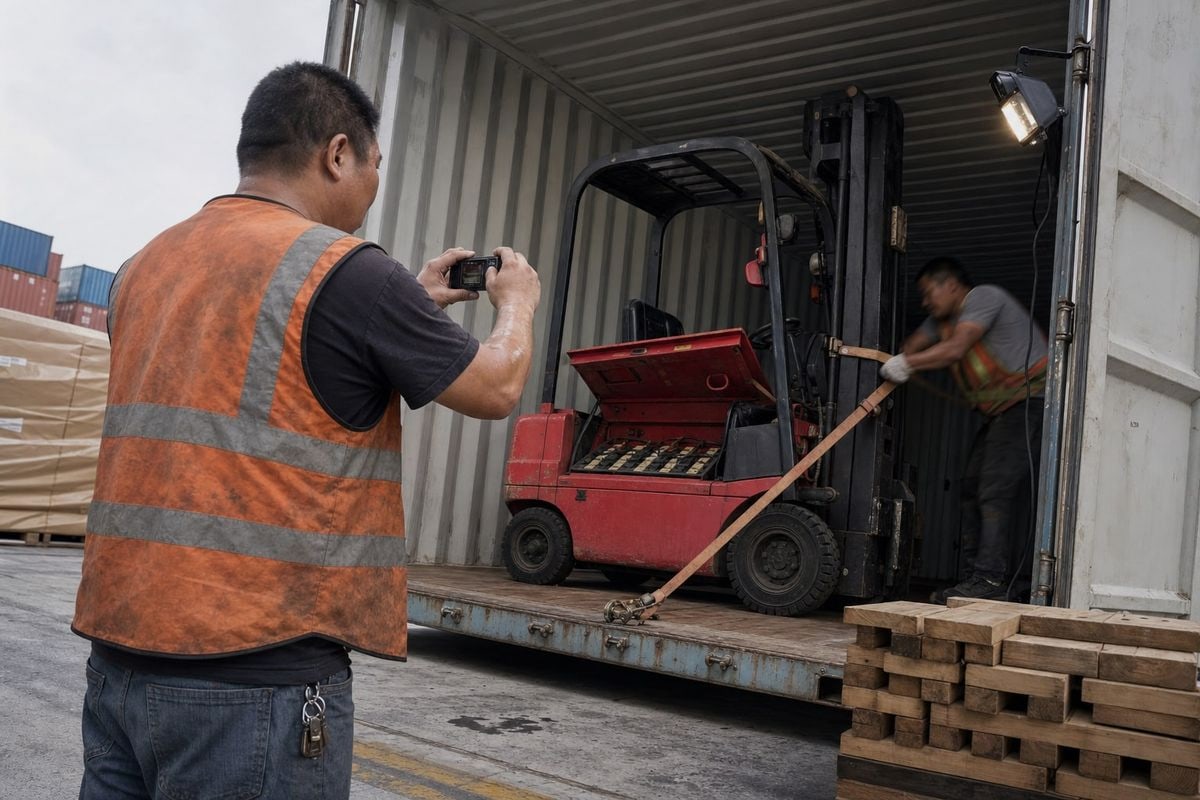
Let me explain the cost mechanics, because this is where preparation turns into money.
Customs and carriers do not charge you for having a battery. They charge you for problems. When a dangerous goods surveyor opens a container and finds a connected lithium battery with exposed terminals and paperwork that does not match the cargo, several things can happen. The container gets pulled for inspection. Inspection triggers storage and demurrage charges 4 that accumulate daily. If the cargo must be re-worked, you pay for unloading, corrective handling, and reloading. In the worst case, the shipment gets rejected and rebooked, and your delivery schedule collapses.
A disconnected battery with capped terminals, correct battery tie-down procedures, and a dangerous goods declaration that matches the physical cargo removes almost every trigger on that list. In our door-to-door DDP shipments to the United States, we verify the battery disconnection status and photograph it during container loading, precisely so the paperwork and the physical cargo tell the same story at destination.
This applies whether you ship FCL, LCL, or even LTL freight shipping for a single unit or spare batteries on the US domestic leg. The principle is the same everywhere: prepared cargo moves; unprepared cargo waits.
Disconnect the forklift battery before shipping, follow the OEM manual, insulate the terminals, and match your documentation. Small preparation steps protect your battery, your schedule, and your landed cost.
1. Authoritative overview of lithium-ion battery technology and safety standards. ↩︎
2. Detailed reference for lead-acid battery chemistry and industrial maintenance. ↩︎
3. International Maritime Organization standards for the safe transport of dangerous goods by sea. ↩︎
4. Official Federal Maritime Commission page defining and regulating demurrage and detention charges in maritime trade. ↩︎