- +8618603825129
- [email protected]


Removing forklift forks before container shipping sounds like a small detail. Our loading teams in China have watched that small detail decide whether a shipment arrives clean or damaged.
Yes, in most cases forklift forks should be removed before container shipping. Detached forks shorten the machine, lower its center of gravity, protect the container walls, and allow tighter lashing. If removal is impractical, forks must be fully lowered, blocked, and secured to the floor.
That is the short answer. But the right choice depends on your container size, your forklift model, and your carrier's rules. Let me walk you through each factor below.
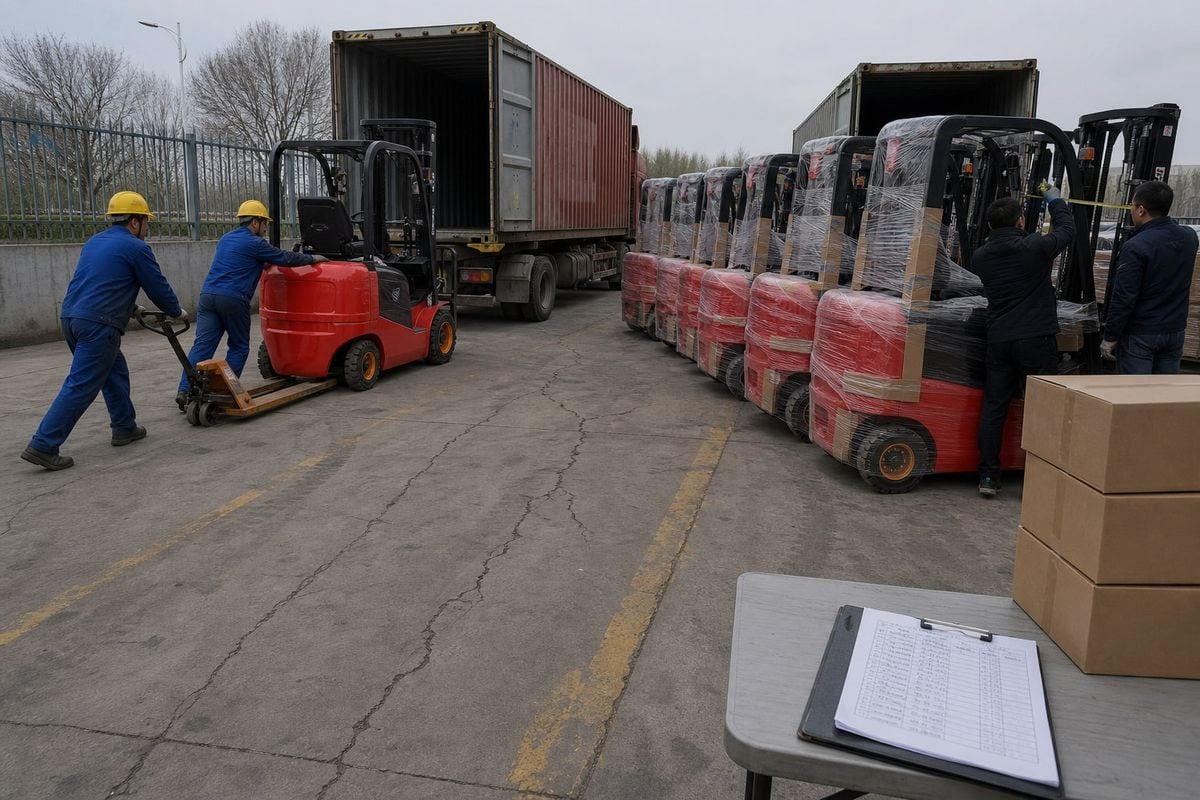
A buyer in Texas once asked me why we photograph every fork before loading in Zhengzhou. The answer is simple: preparation is where most fork damage is either prevented or guaranteed.
To prepare forklift forks safely, detach them from the carriage, coat the hooks with corrosion inhibitor, wrap the tips, and lash them flat to the container floor on wood dunnage. Then lower the mast fully and strap the forklift chassis independently to the D-rings.

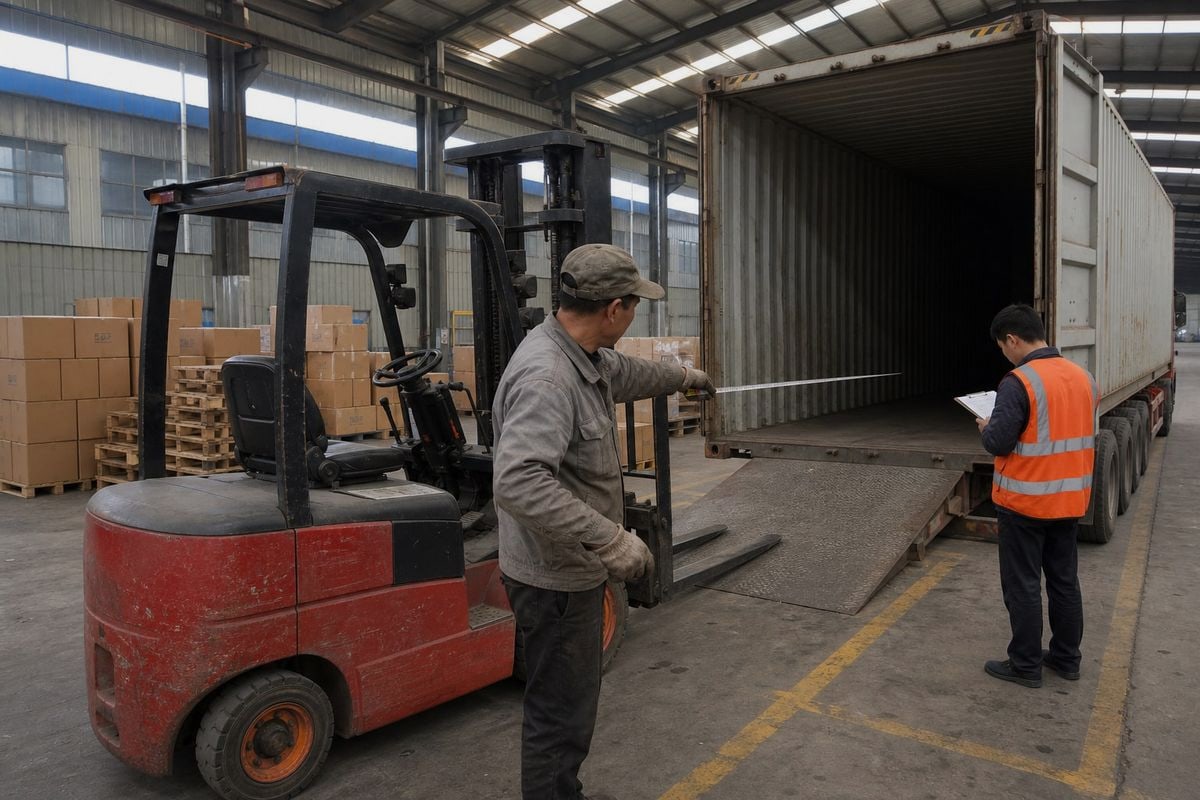
When we load electric forklifts at our consolidation warehouse, fork preparation follows a fixed sequence. Skipping any step creates a weak point that a three-week ocean voyage will find.
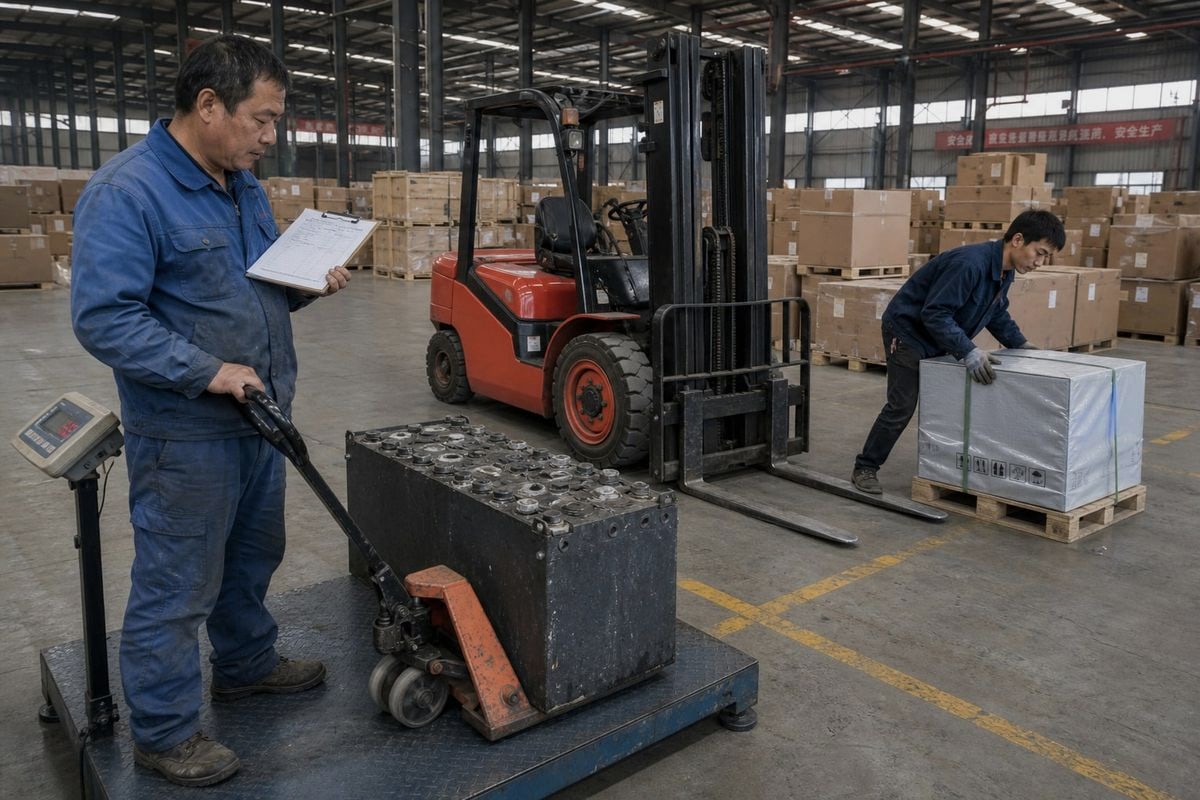
Fork removal is only one part of export prep. For lithium battery forklifts, we also verify battery documentation before the cargo reaches port, because carrier acceptance of battery cargo is checked at booking, not at loading. Some destination rules also require fluid reduction or hydraulic hose disconnection on certain machines, so we confirm freight forwarding requirements with the carrier in advance.
Here is a trade-off I weigh on almost every forklift quotation: thirty minutes of fork removal at the factory versus hundreds of dollars in container space at sea.
Yes, removing the forks often reduces shipping costs. Detaching forks can shorten a forklift by over one meter, which frequently makes the difference between fitting a 20-foot container and paying for a 40-foot unit, or between loading two machines instead of one.
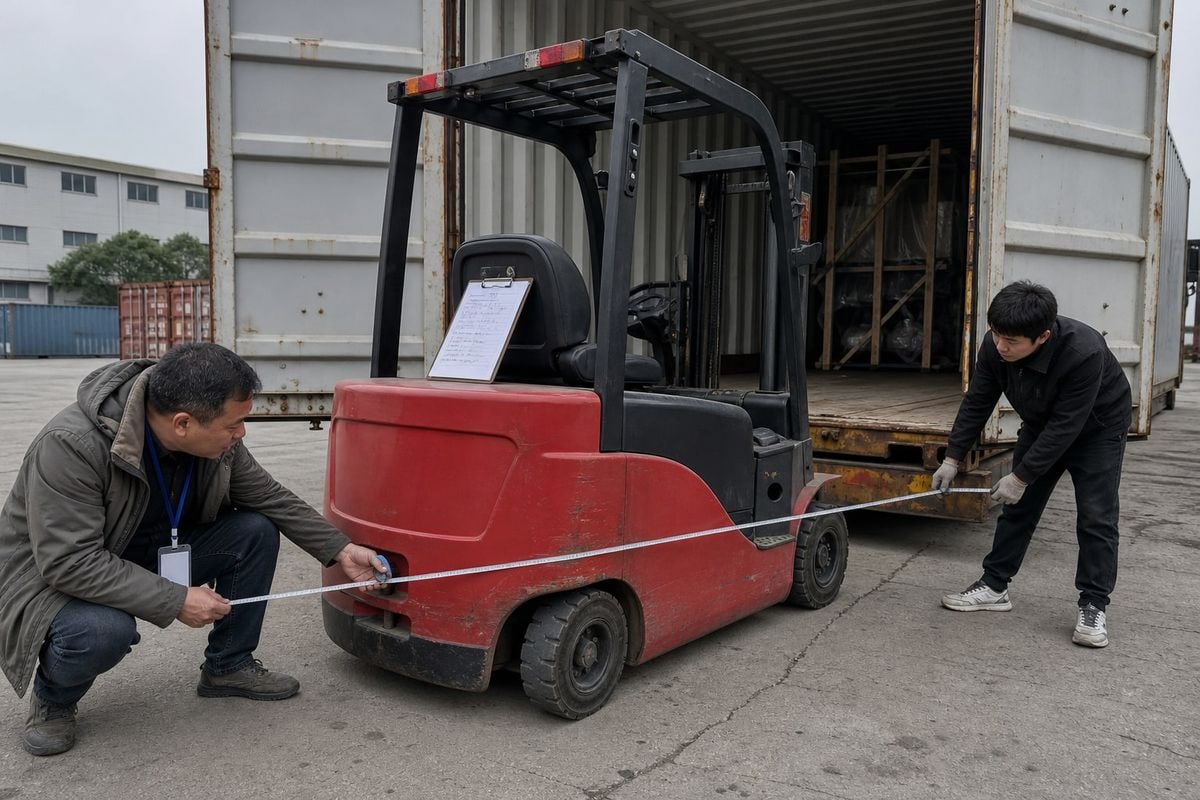
The cost logic comes down to shipping container dimensions 2. A standard fork is 1,070 to 1,220 mm long. That length sticks straight out in front of the machine. Remove the forks, and the loadable length of the forklift drops sharply.
| Configuration | Typical 2.5T Forklift Length | Fits 20FT (5.9 m internal)? | Units per 40FT |
|---|---|---|---|
| Forks attached, mast up | ~3.5–3.8 m | Tight or no | 2 (risky) |
| Forks attached, mast lowered | ~3.5 m | Yes, 1 unit | 2 |
| Forks removed, mast lowered | ~2.4–2.7 m | Yes, with spare space | 2–3 possible |
When we plan container loading for US-bound distributors, fork removal often unlocks a second or third machine per container. Splitting one ocean freight cost across three forklifts instead of two cuts the per-unit logistics cost dramatically. That saved floor space can also hold chargers, batteries, and spare parts from other suppliers, which is exactly how our multi-supplier consolidation service works.
Cost is not only about space. Fork removal also affects:
There is a counterargument worth addressing. Some buyers say removal adds labor cost and reassembly time at destination. That is true, but reinstalling forks takes one technician about fifteen minutes with a pallet jack. Against a potential upgrade from a 20FT to a 40FT container, or a damage claim, the labor cost is trivial.
Early in my export career, a container arrived in Los Angeles with two clean puncture holes in the door panel. The forks had been left on and poorly lashed. I never forgot that inspection photo.
Shipping with forks attached risks punctured container walls and doors, higher center of gravity and tipping loads during crane lifts, seal damage from constant hydraulic pressure, blocked lashing angles, and rejection by carriers whose sea freight regulations require detachable attachments to be removed or double-secured.
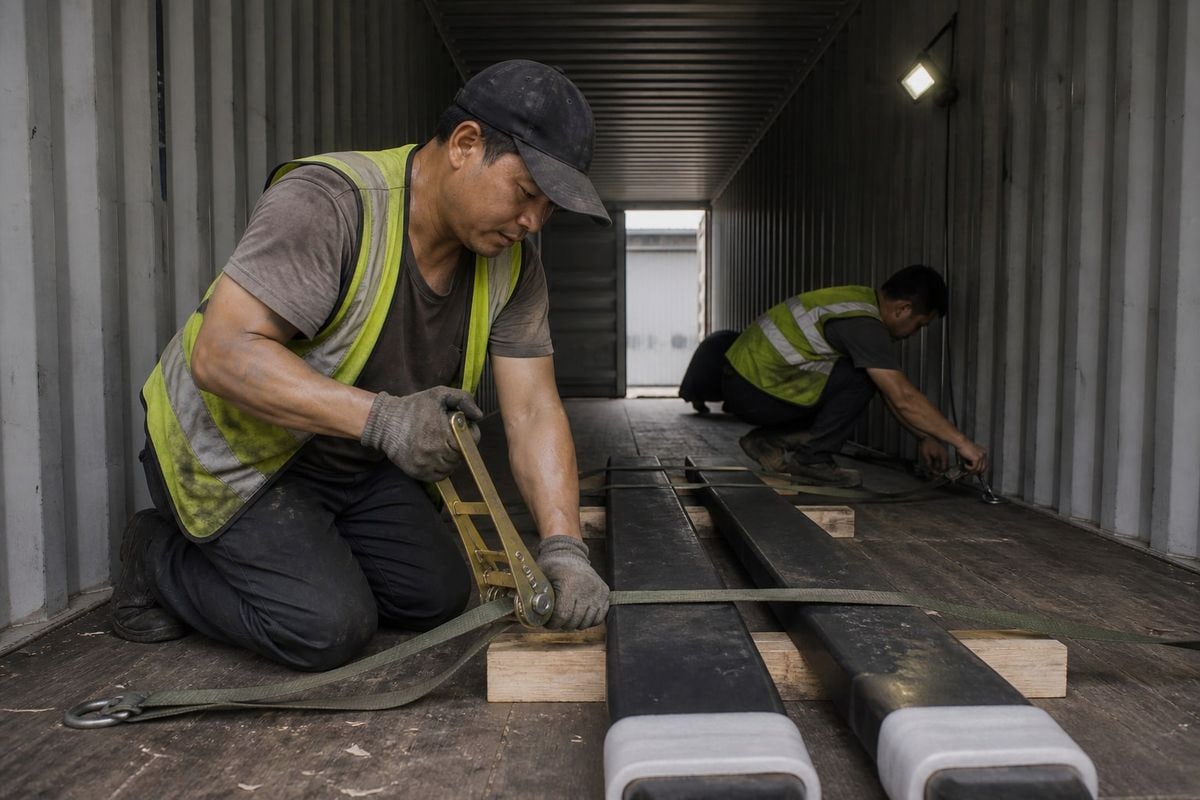
Ocean transit is violent in slow motion. A vessel rolls, pitches, and vibrates for two to five weeks. Attached forks turn that motion into concentrated force at two sharp steel points.
| Il rischio | What Happens | Who Pays |
|---|---|---|
| Puncture damage | Fork tips gouge container walls or doors during shifting | Shipper, via container damage claims |
| Stability loss | Higher center of gravity makes the container list during crane lifts | Everyone — this is a safety event |
| Hydraulic creep | Cantilevered fork weight loads the lift cylinders for weeks, causing seal set and slow leaks | Buyer, via repairs after arrival |
| Lashing interference | Forks block strap paths to the D-rings, weakening the whole securing plan | Buyer, via transit damage |
| Compliance rejection | Many maritime carriers treat attached forks as loose cargo unless double-secured | Shipper, via delays and rework |
Two risks surprise most first-time importers. First, hydraulic creep. Forks left hanging on the carriage keep constant cantilevered pressure on the lift cylinders and seals. Over a long-duration voyage, this can cause seal set, and the buyer discovers a drifting mast months later. Second, sensor damage on modern machines. Smart forklifts carry telematics and impact sensors on the carriage. High-frequency ocean vibration transmitted through attached forks can log false-positive impacts or damage the sensors outright. Removing the forks isolates the carriage from much of that vibration path.
One nuance is fair to state: leaving forks on is acceptable when the machine fits safely, the forks are fully lowered onto dunnage, and nothing interferes with the lashing plan. The risk is not the forks themselves. The risk is forks that are raised, loose, or improvised.
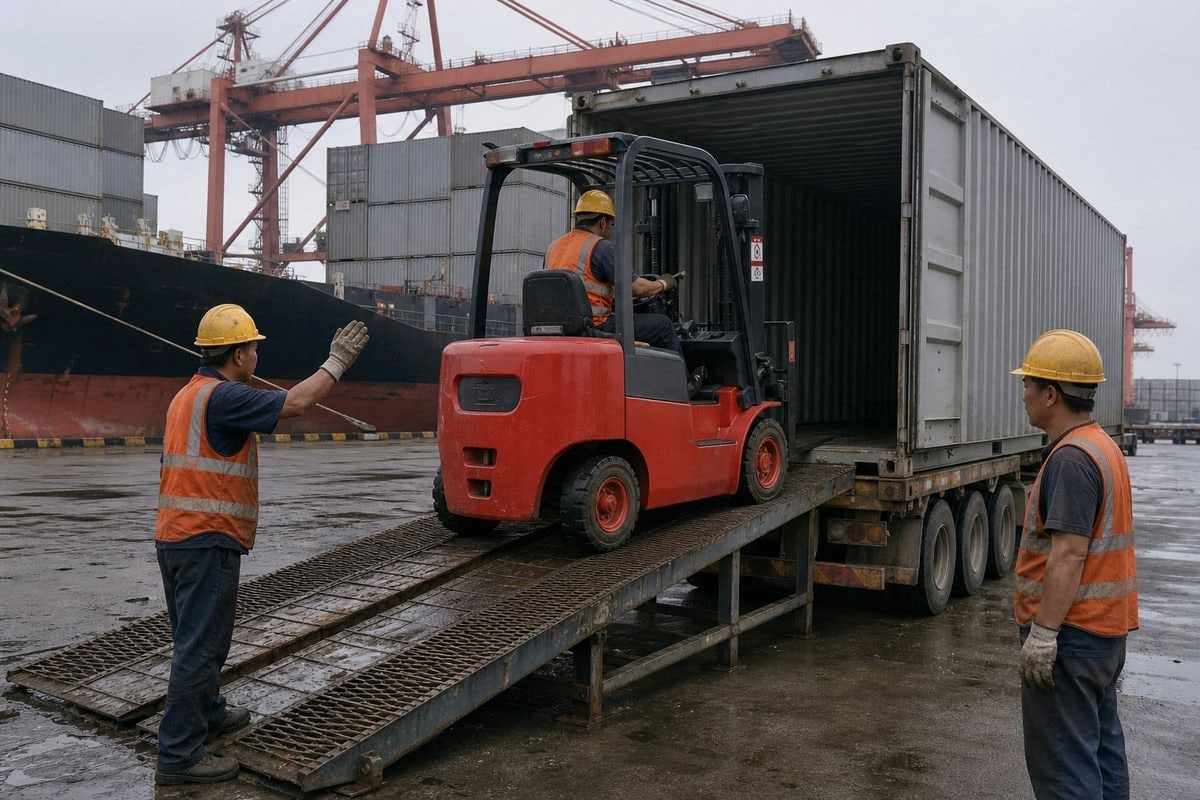
Not every shipment allows fork removal. Some buyers need the machine ready to drive off the container loading ramp on arrival. Our loading supervisors handle these cases with a stricter securing protocol.
Lower the forks fully onto hardwood dunnage, tilt the mast back, chock and block the wheels, then lash the chassis to the container D-rings at opposing angles. Strap the forks themselves to the floor lashing points so they cannot bounce or slide sideways.
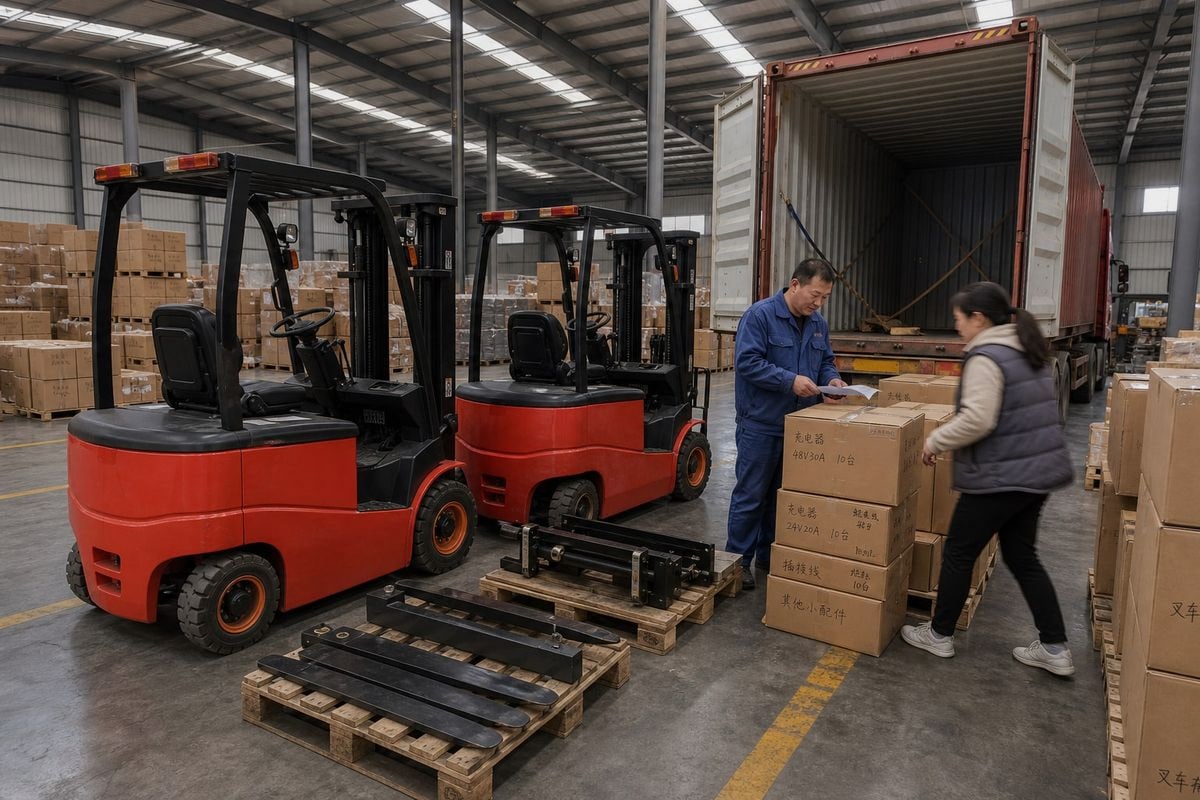
If the forks stay on, your securing plan has to treat them as a second cargo item that happens to be bolted to the first. Standard cargo securing guidelines still apply, but with extra steps.
One related rule matters here. If your container ever needs forklift handling at a yard, it may only be lifted through its designated forklift pockets 4. ISO 3874 requires the forks to extend deep into those pockets — no less than 1,825 mm — and it explicitly forbids lifting a container with forks under the base. Never let a yard improvise a lift on a loaded machinery container.
For high-value machines, some of our clients also add export crating around the mast area. It costs more, but it eliminates contact risk entirely for mixed-cargo consolidations.
Remove forklift forks before container shipping whenever practical. It saves space, prevents damage, and speeds customs. If forks stay on, lower, block, and lash everything properly.
Here is the decision framework in one table:
| Situation | Recommended Action |
|---|---|
| Forks detachable, space is tight | Remove, VCI-coat, lash flat on dunnage |
| Machine must roll off ready to work | Leave on, fully lower, chock, and lash separately |
| Carrier requires attachment removal | Remove — carrier rules override preference |
| Container needs forklift handling | Use forklift pockets only, forks inserted ≥1,825 mm |
Our team at MBMLOG coordinates this entire process — factory pickup, fork prep, container loading, lashing, export documents, and door delivery — so importers never have to gamble on how a factory loads a machine. If you are planning to ship electric forklifts from China, reach out before the container is booked. The cheapest damage claim is the one you never file.
1. The IMO's global standard for the safe packing and securing of cargo in containers. ↩︎
2. Provides standardized measurements for shipping containers, explaining why fork removal impacts space efficiency. ↩︎
3. Official US Customs site detailing trade enforcement and inspection processes for imported machinery. ↩︎
4. ISO standard defining the structural requirements and safe use of forklift pockets on shipping containers. ↩︎