- +8618603825129
- [email protected]

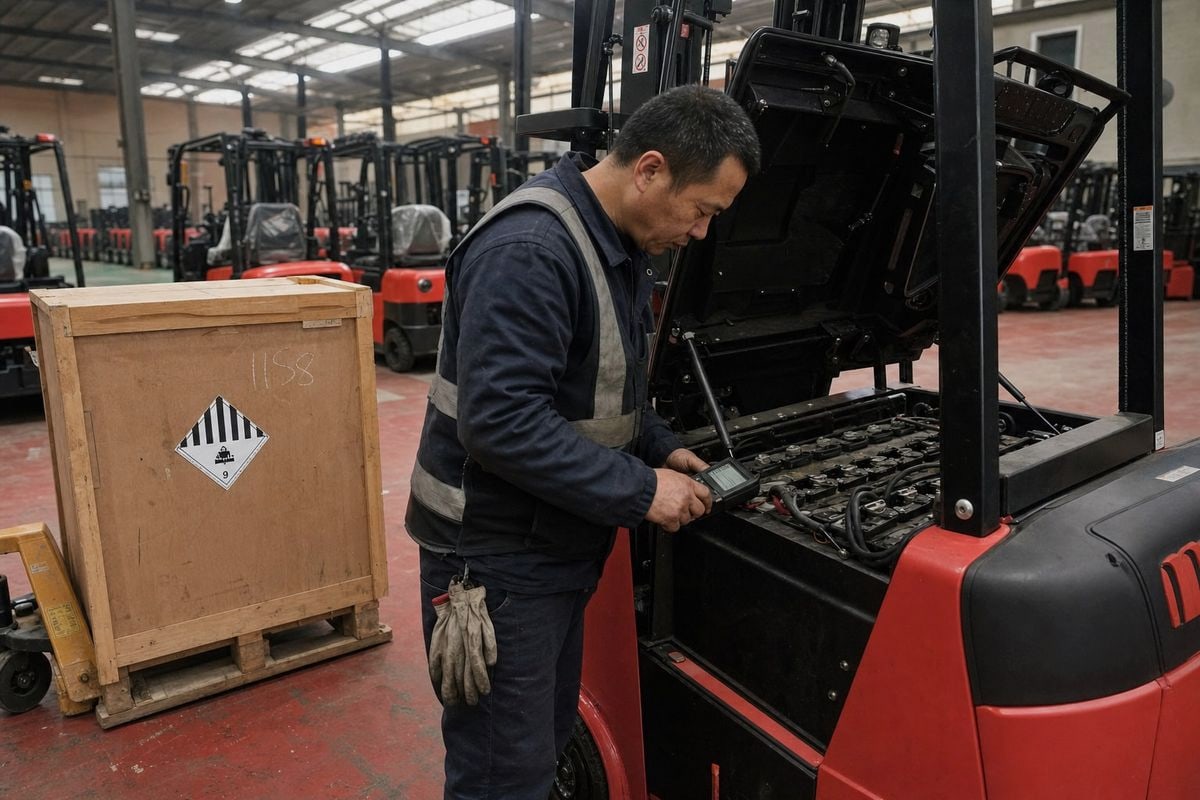
State of charge rules when shipping lithium battery forklifts trip up more importers than any packaging issue. At our Zhengzhou export warehouse, we see carriers reject non-compliant batteries before loading even begins.
Lithium battery forklifts shipped by air must have batteries at or below 30% state of charge under IATA rules. From January 1, 2026, this applies to batteries packed with equipment too. Ocean shipping under the IMDG code has no SoC limit, making sea freight the simpler option.
The rule sounds simple. In practice, it depends on your transport mode, your battery's UN number 1, and how the battery is packed. Let me walk you through each part.
Last quarter, our team coordinated a shipment where the factory charged the batteries to 80% "as a courtesy." That courtesy nearly cost the client an air freight booking.
For air transport, standalone lithium-ion forklift batteries (UN 3480) must be at 30% state of charge or below. Effective January 1, 2026, the same 30% SoC limit applies to batteries packed with equipment (UN 3481) and lithium-powered vehicles (UN 3556). Sea freight has no SoC cap.
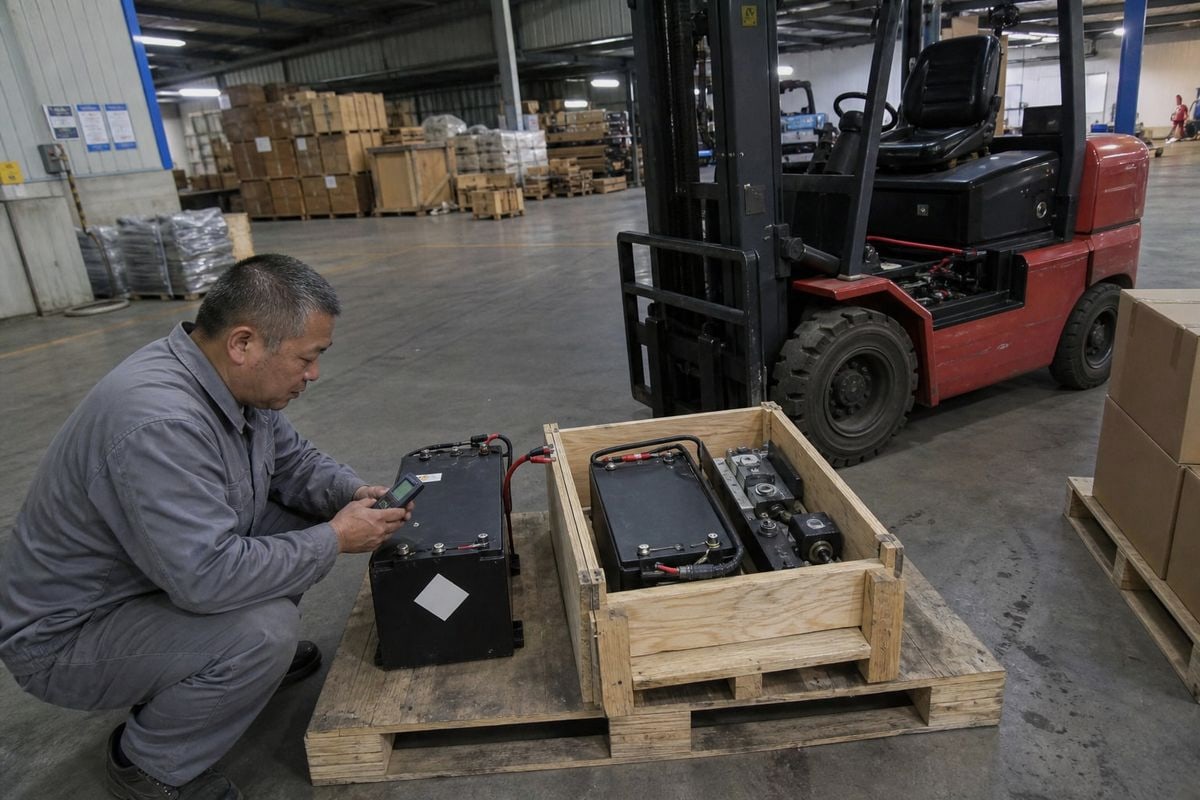
Il 30% SoC limit 2 exists for one reason: thermal runaway prevention. A battery holding less energy releases less heat if it is damaged, short-circuited, or stressed during flight. This is a safety control, not a performance preference, and both IATA and PHMSA enforce it for cargo aircraft.
Not every forklift battery shipment is treated the same. The classification depends on how the battery travels. Here is how the three configurations compare for air freight:
| Configuration | UN Number | 30% SoC Required (Air)? |
|---|---|---|
| Battery shipped by itself | UN 3480 | Yes, always |
| Battery packed with equipment | UN 3481 | Yes, from January 1, 2026 |
| Battery installed in the forklift (vehicle) | UN 3556 | Yes, from January 1, 2026 |
Some older guides claim installed batteries 3 are exempt. That advice is now outdated. The IATA dangerous goods regulations expanded the requirement, and DHL and other carriers have already updated their acceptance procedures to match.
Many forklift importers built their procedures years ago. If your checklist says "SoC only matters for loose batteries," you are working from an obsolete rulebook. In our experience shipping forklifts from Chinese factories, most suppliers still hand over batteries at 50–80% charge unless someone tells them otherwise. We now confirm the target SoC with the factory in writing before pickup, because fixing it at the airport is far more expensive than fixing it at the factory.
A US distributor once asked me why his airline wanted "proof" when the factory had verbally confirmed 28% charge. Verbal confirmations carry zero weight at cargo acceptance.
Prove compliance with a calibrated battery tester reading or BMS log showing SoC at or below 30%, a UN 38.3 test summary, and a signed dangerous goods declaration. The shipper is legally responsible for verifying SoC before tendering the cargo, not the forwarder or carrier.

Documentation is where most shipments succeed or fail. Carriers do not open your battery and measure it themselves. They check your paperwork, and they hold you accountable if it is wrong.
Before any lithium battery forklift leaves the factory, we help clients assemble one file containing:
Here is a detail many shippers miss. Most lithium forklift batteries use LiFePO4 chemistry, which has an extremely flat discharge curve. A voltage reading can look nearly identical at 30% and at 60% charge. For an accurate audit trail, pull Coulomb counting data from the BMS history log instead of relying on a simple voltmeter. We ask factories to export this BMS data and include a screenshot or printout in the shipping file.
One more practical point: responsibility sits with you as the shipper. Freight forwarders like us coordinate and check, but regulations place the verification duty on the party offering the goods for transport. Assuming someone else will handle it is the most common cause of rejected cargo.
Buyers sometimes assume that paying premium air freight rates buys flexibility on charge levels. The trade-off actually works the other way, and it shapes how we plan every battery shipment.
No. Air freight is the strictest mode, capping lithium-ion batteries at 30% SoC. Shipping above 30% by air requires an exceptional Special Provision A331 approval from both the State of Origin authority and the airline operator. Ocean freight under the IMDG code imposes no SoC limit.
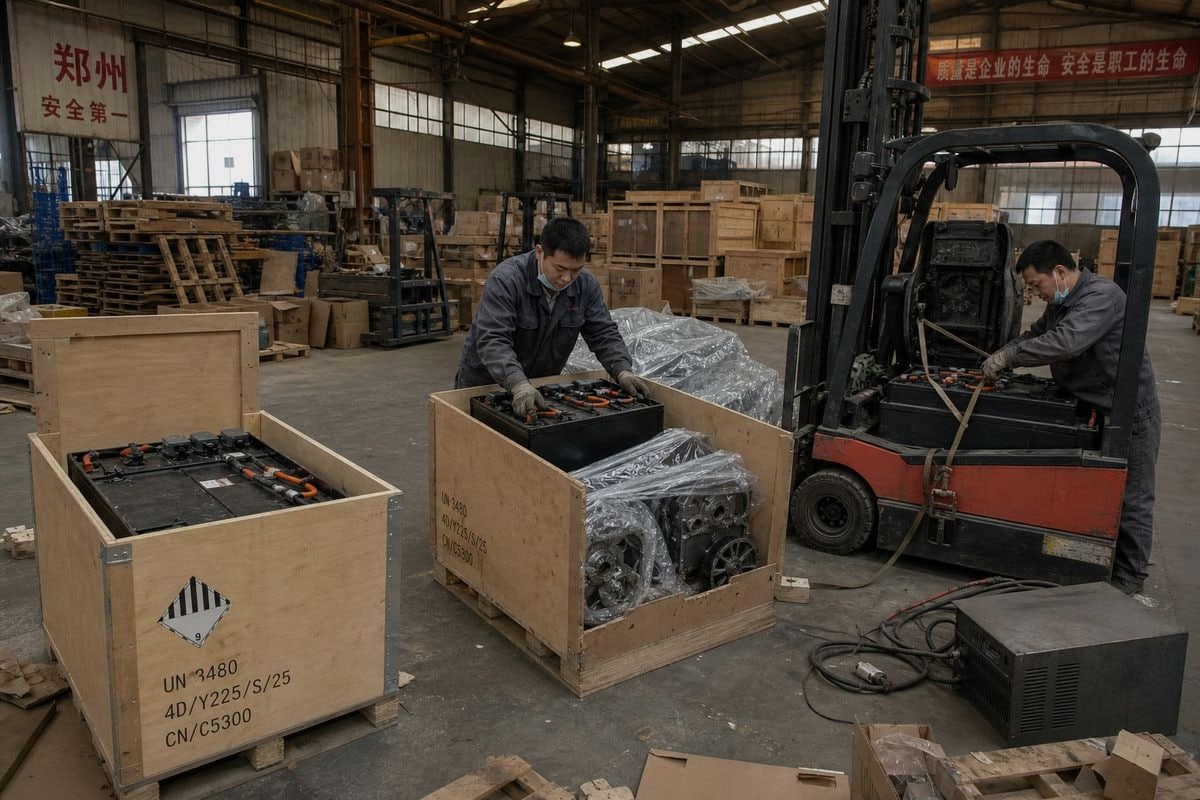
This is the modal comparison every forklift importer should see before booking:
| Requisiti | Air Freight (IATA) | Ocean Freight (IMDG Code) |
|---|---|---|
| SoC limit | 30% maximum | No SoC requirement |
| UN 38.3 test summary | Required | Required |
| Class 9 hazard label | Required | Required |
| Dangerous goods declaration | Required | Required |
| Typical cost for a forklift | Very high | Moderato |
| Practical for full forklifts | Rarely | Yes, standard practice |
Special Provision A331 does allow shipment above 30% SoC by air, but only with formal written approval from the national authority of the State of Origin and from the State of the Operator. These approvals are exceptional, slow, and condition-heavy. In years of handling lithium battery cargo from China, we treat A331 as a last resort, not a planning tool.
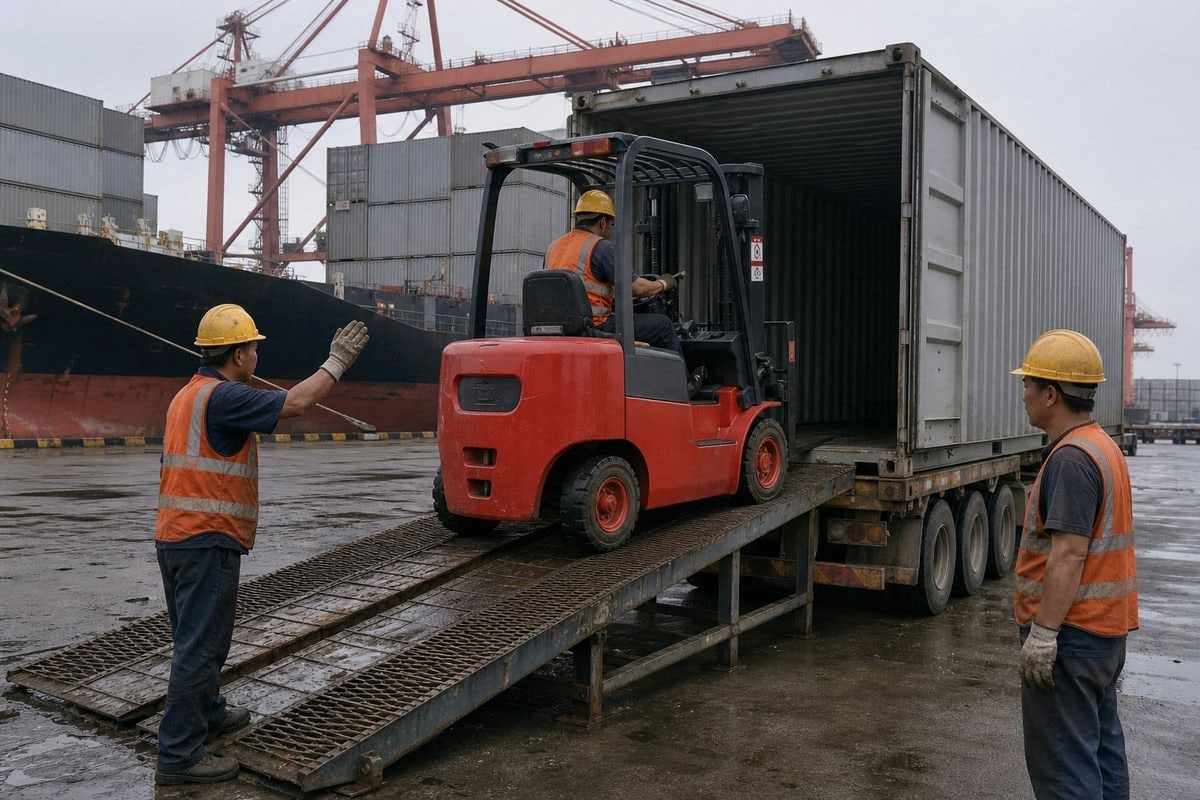
For complete lithium battery forklifts, sea freight is almost always the right answer. The IMDG code focuses on packaging durability 4, terminal protection, and short-circuit prevention rather than charge level. That means your batteries can travel at their normal working charge, arrive ready for commissioning, and cost a fraction of air rates. We typically reserve air freight for urgent spare parts and small accessories, then move the forklifts and battery packs by FCL or LCL ocean container. One caution: "no SoC rule" does not mean "no rules." Ocean shipments still require full dangerous goods classification, labeling, and declaration.
The costliest lesson I have watched an importer learn involved a pallet of forklift batteries sitting at a Chinese airport for eleven days because the SoC paperwork failed acceptance checks.
Non-compliant batteries face rejection at cargo acceptance, shipment delays, storage charges, re-export back to the factory for discharge, and potential regulatory penalties. Carriers will not fix the problem for you; the cargo must be corrected at the shipper's cost before rebooking.
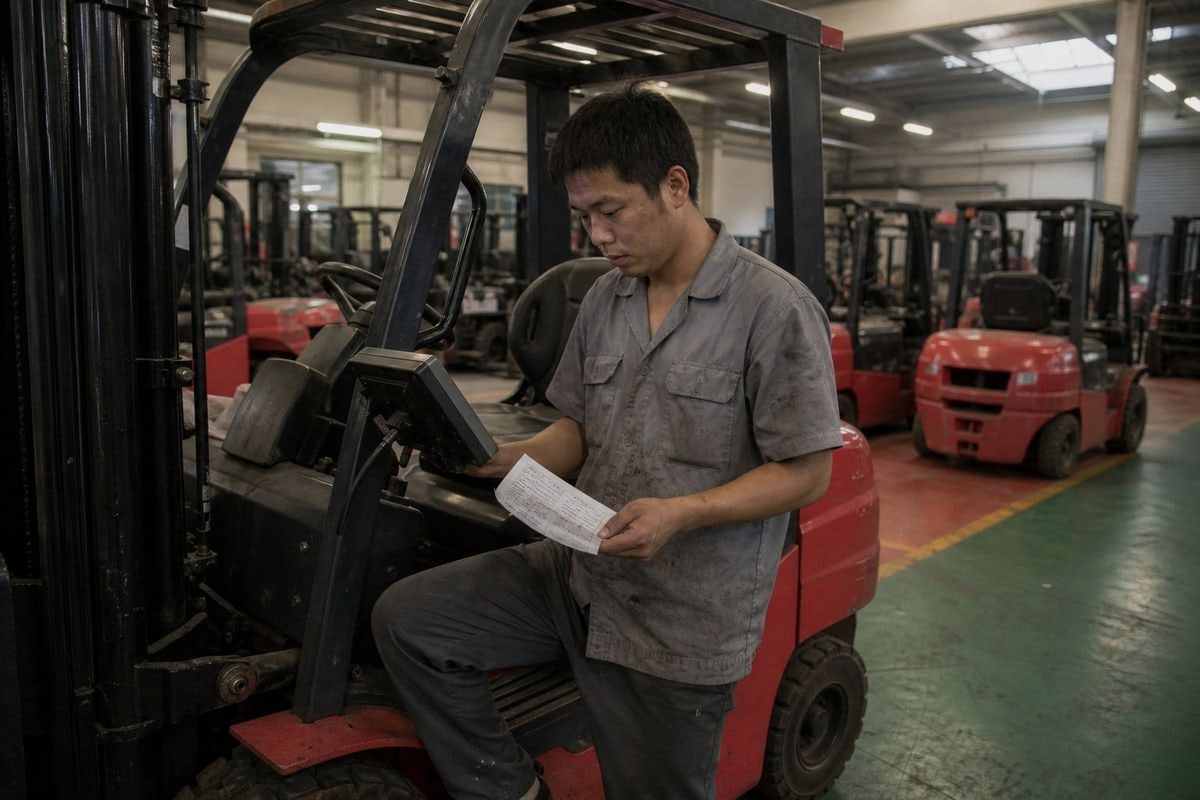
Rejection is not the end of the process. It is the start of an expensive detour. Here is the typical chain of consequences we see:
| Failure Point | Consequence | Typical Cost Impact |
|---|---|---|
| SoC above 30% at air cargo acceptance | Shipment refused, rebooking needed | Storage fees plus new booking |
| Missing SoC verification record | Held pending documentation | Days of delay, demurrage risk |
| Wrong UN number on declaration | Declaration rejected, re-filing | Delay plus amendment charges |
| Repeated or willful violations | Regulatory penalties, carrier blacklisting | Severe, long-term |
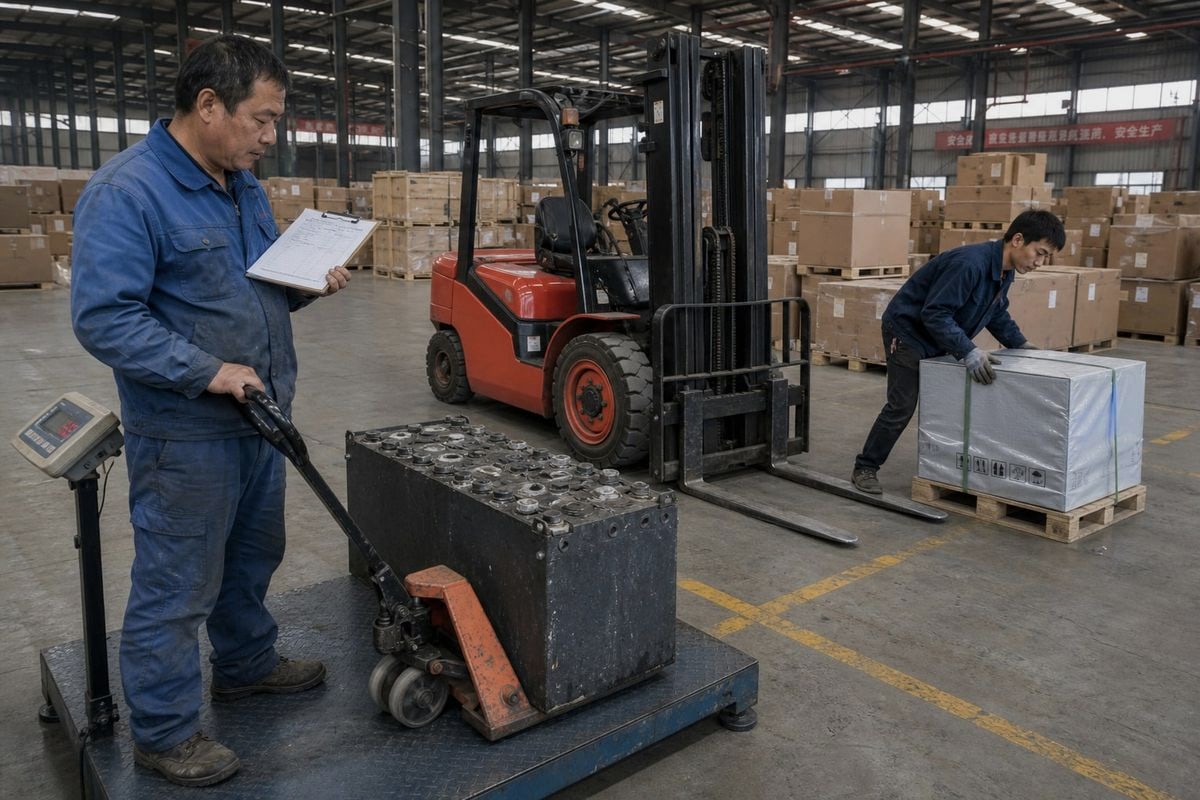
Discharging a high-capacity forklift pack is not trivial. We advise factories to discharge using external resistive load banks rather than running the forklift's own hydraulic motors. Load banks give a uniform chemical state across cells and avoid localized overheating. Running the truck to drain the battery produces uneven cell states that the BMS log will expose.
Two operational details prevent problems on both ends. First, activate the BMS-level "shipping mode" before handover. This electronically isolates the cells and stops parasitic drain from onboard telematics, which can otherwise brick a battery on a long ocean voyage. Second, tell your receiving warehouse to use a soft-start charging protocol on arrival. Batteries landing at 30% SoC after weeks in transit may have a BMS in a high-resistance sleep state, and a high-current inrush can damage contactors. We include both steps in the handover notes for every lithium battery forklift shipment we coordinate.
State of charge rules hinge on one number and one date: 30% SoC for air, expanding in 2026. Verify, document, and choose ocean freight when it fits.
1. UNECE provides the international standards and UN numbers for the classification of dangerous goods. ↩︎
2. US Department of Transportation's PHMSA page outlining safety regulations for shipping lithium batteries. ↩︎
3. Official IATA resource providing guidance and regulations for the safe air transport of lithium batteries. ↩︎
4. The International Maritime Organization's page for regulations governing the safe transportation of dangerous goods by sea. ↩︎