- +8618603825129
- [email protected]

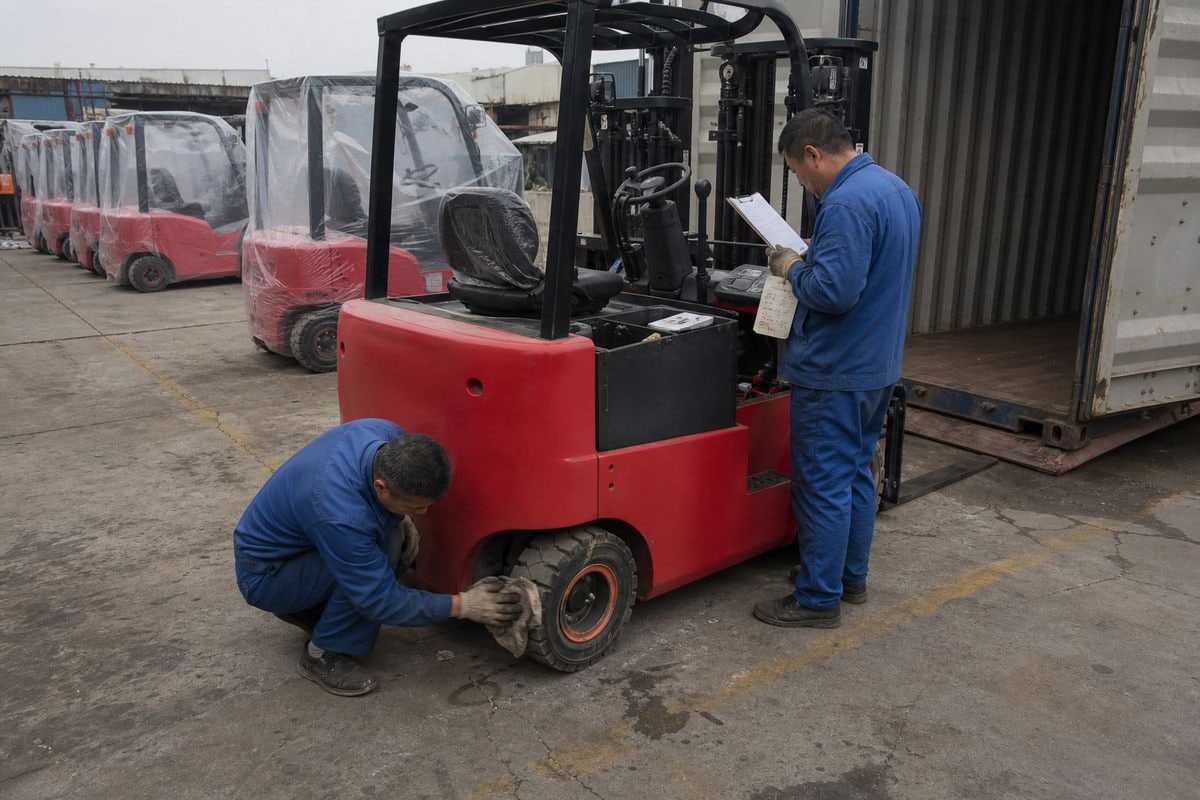
Many buyers who [import electric forklifts into Australia](https://mbmlog.com/?p=11817) only discover the compliance traps after the container ships. At our Zhengzhou logistics base, we see this mistake weekly. One missed battery document, one dirty tyre, and your forklift sits at the port collecting storage fees while your customers wait. The fix is treating the import as a compliance project, not just a shipping job — and that is exactly what this guide walks you through.
To import electric forklifts into Australia, classify the unit under HS code 8427, budget for 10% GST and possible 5% duty, prepare UN38.3 battery certification and dangerous goods paperwork, clean the machine free of soil for biosecurity, and confirm AS 2359 safety compliance before shipping.
That is the short answer. Now let me break down each part — costs, documents, batteries, and shipping methods — so you can plan your import with confidence.
A distributor once told me his forklift quote looked great until the invoice for destination charges arrived. In our experience arranging freight from Chinese factories, the purchase price is only the starting point.
Importing an electric forklift into Australia typically costs the machine price plus ocean freight, 10% GST, up to 5% duty (often reduced to 0% via Tariff Concession Orders), biosecurity inspection fees, customs brokerage, port charges, and local delivery — commonly adding 15–30% to the factory price.
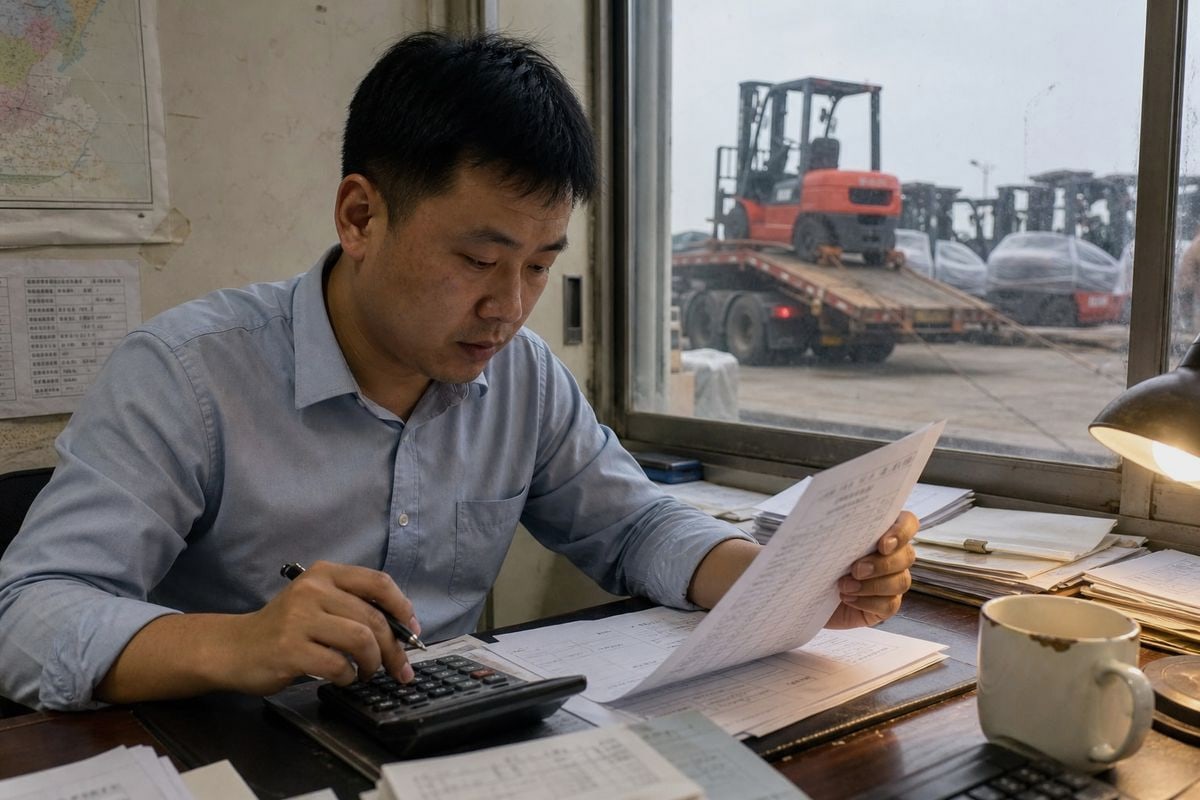
Let me unpack the real landed cost, because this is where most first-time importers get surprised.
Electric forklifts generally fall under tariff classification codes 8427.10 (self-propelled, electric motor) or 8427.20. The standard duty rate can be 5%, but many electric forklift configurations qualify for existing Tariff Concession Orders, which bring duty down to 0%. You should verify the exact code with the Australian Border Force 1 tariff tools before you order, because import duty and GST outcomes change with product details and country of origin. Even at zero duty, the 10% GST still applies on the customs value plus freight and insurance.
| Cost Item | Typical Range | Note |
|---|---|---|
| Ocean freight (China–Australia) | $1,500–$4,000+ per container | Varies by port and season |
| Dazi all'importazione | 0%–5% | Check TCO eligibility |
| GST | 10% | On customs value + freight + insurance |
| Customs clearance & brokerage | $200–$600 | Per declaration |
| Biosecurity inspection/treatment | $150–$1,000+ | Higher for used units |
| Port and terminal charges | $300–$800 | Destination handling |
| Local delivery | $300–$1,500 | Depends on distance and unloading |
Used forklifts look cheaper upfront. But once you add intensive cleaning, Department of Agriculture 2 inspections, possible treatment, rework, and downtime, the total can exceed a new unit. We generally advise buyers to price both scenarios fully before deciding. Also budget for local compatibility: 3-phase chargers must match Australian AS/NZS 3123 industrial plug configurations and the 50Hz frequency, or you face expensive transformer retrofitting after arrival.
Last year our team caught a mismatched serial number between an invoice and a packing declaration two days before a vessel cut-off. That small check saved the buyer weeks of port delay.
Customs clearance Australia requires a commercial invoice, packing list, bill of lading, import declaration, packing declaration, and certificate of origin if claiming trade agreement rates. Electric forklifts also need a UN38.3 battery test report, MSDS, dangerous goods declaration, and cleaning evidence for used units.
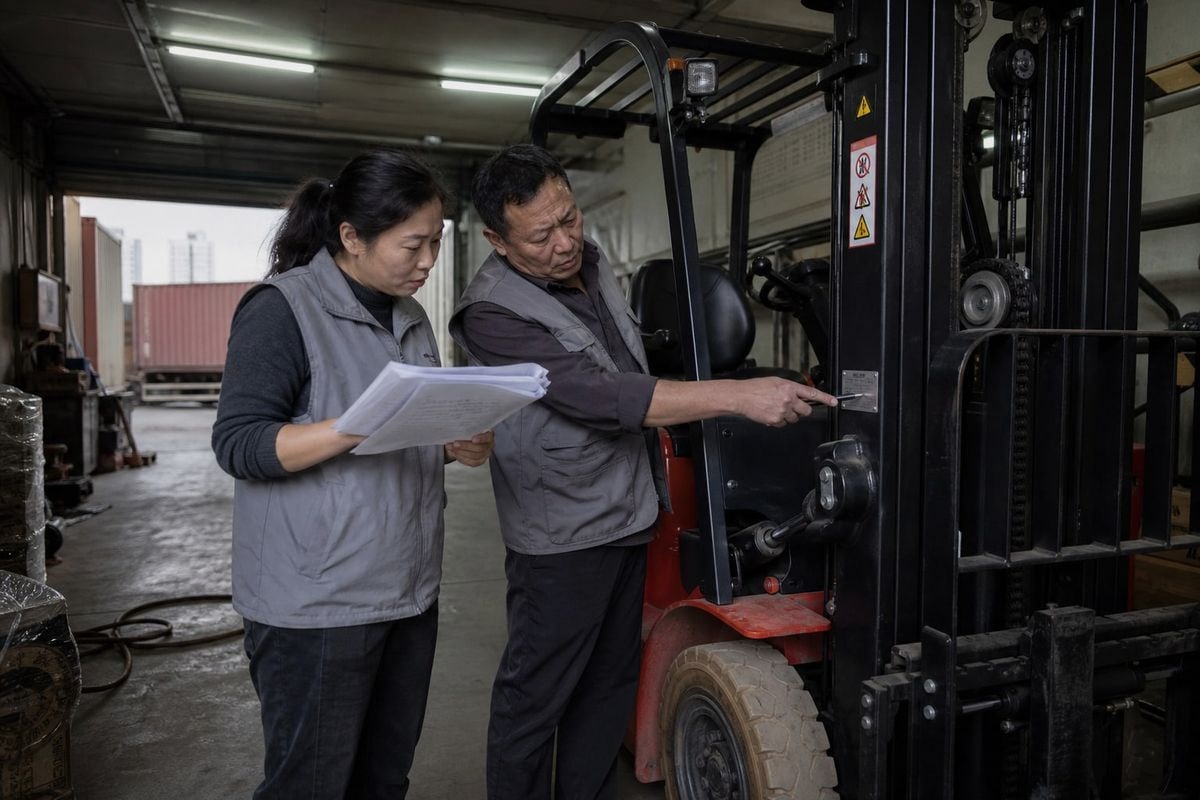
Paperwork is where forklift imports succeed or fail. I will split the documents into three groups so you can see why each one exists.
Australia effectively runs three separate compliance tracks at once: customs, biosecurity risk assessment, and battery dangerous goods. Each track has its own paperwork, and each can stop your cargo independently.
| Track | Key Documents | Who Checks Them |
|---|---|---|
| Dogana | Commercial invoice, packing list, bill of lading, import declaration, certificate of origin | Australian Border Force |
| Biosecurity | Packing declaration, cleaning/decontamination evidence, treatment certificates | Department of Agriculture (DAFF) |
| Battery/DG | UN38.3 test report, MSDS, IMDG dangerous goods declaration 3 | Carrier and port authorities |
Passing customs does not make the forklift legal to operate. Safe Work Australia 4 guidance and industry grey-import warnings stress that imported plant should meet the Australian Standards AS 2359 series, come with English-language manuals and safety decals, and have parts and warranty support. Some importers must also register the forklift design with state-based regulators such as SafeWork and keep a competent person record for any local modifications. WorkSafe Australia compliance is your responsibility as the importer, not the factory's.
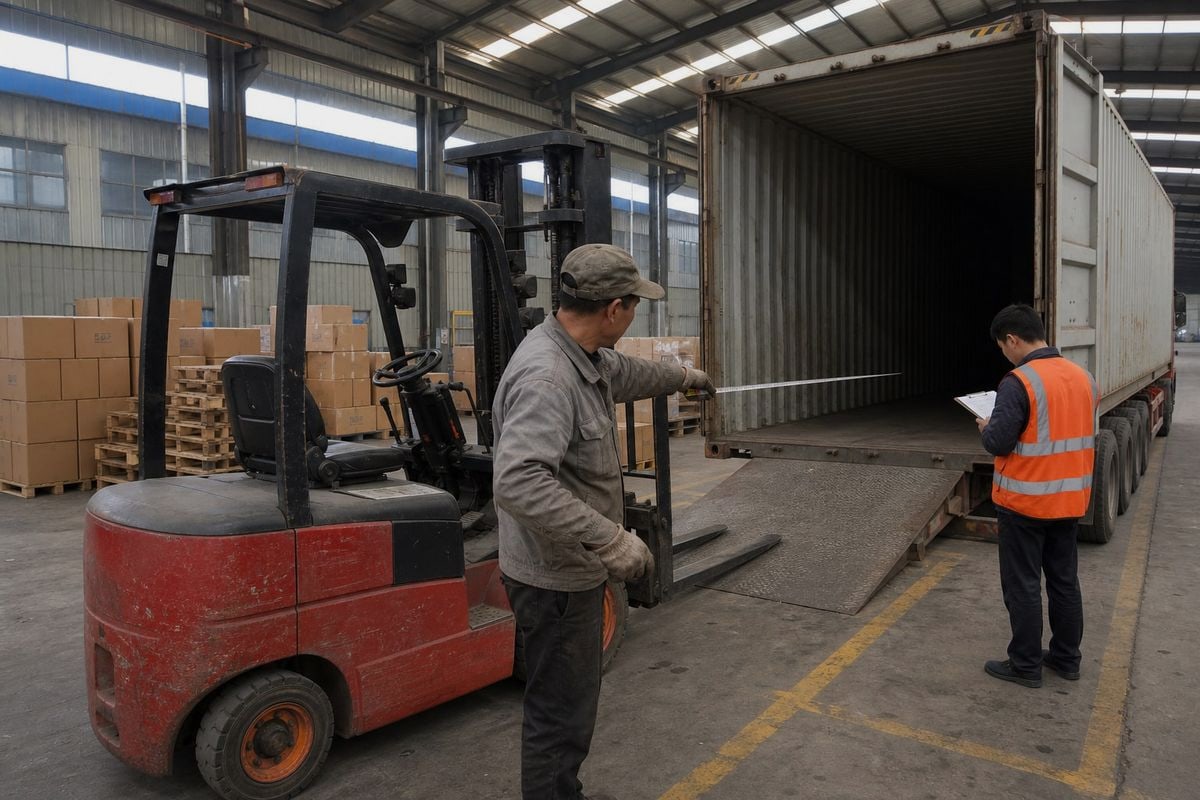
The most common failures we see are inconsistent weights between the invoice and packing list, missing battery paperwork, and no cleaning evidence for used machines. Before every departure, we cross-check documents against the physical cargo. It is boring work, and it prevents nearly every clearance delay.
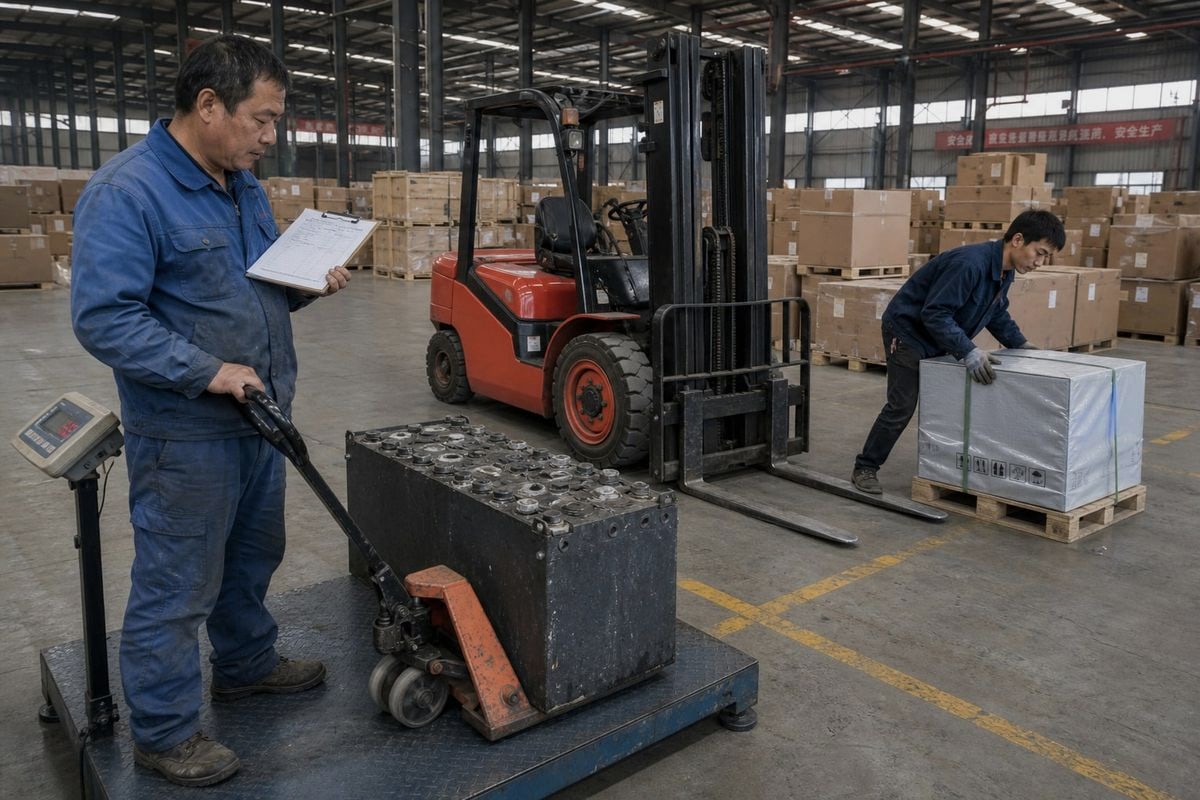
Before we book any electric forklift, our team asks the factory one question first: what exactly is the battery? Chemistry, capacity, and state of charge decide everything downstream.
Lithium battery forklifts shipped to Australia require a UN38.3 test certification, an MSDS, and an IMDG dangerous goods declaration. The battery state of charge must be 30% or below at container loading, and the shipment must be booked with a carrier that accepts DG cargo.
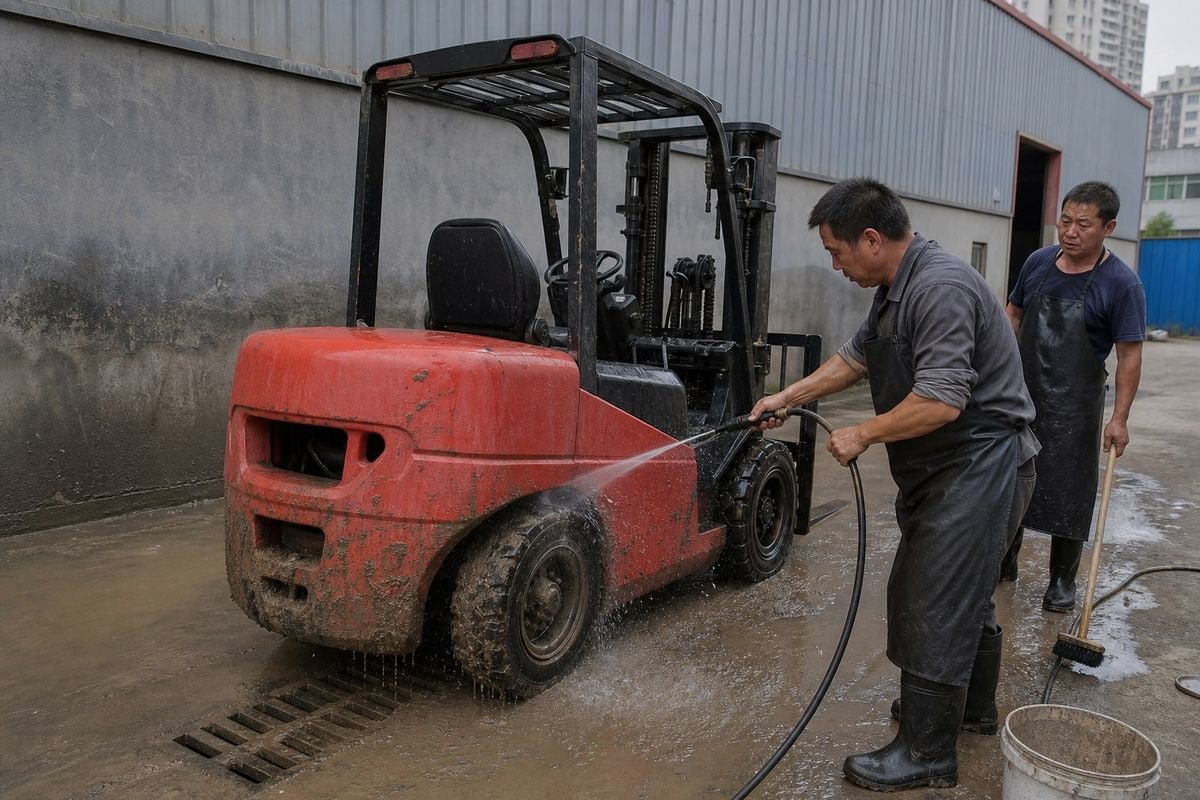
This is the biggest practical difference between electric forklifts and diesel or LPG units. The machine itself is ordinary cargo. The battery is not.
Under lithium-ion battery transport regulations, a forklift with an installed lithium battery is typically handled as a dangerous goods shipment for sea freight. That means carrier pre-approval, DG documentation, correct labelling, and specific container packing rules. Many general freight forwarding services do not handle this well, and a rejected booking at the port is expensive. In our lithium battery cargo handling work, we collect and verify the battery paperwork before the forklift ever leaves the factory.
Importers of lithium-ion forklifts should also plan for end-of-life battery liability. Australia's B-cycle battery stewardship scheme is becoming a standard ESG expectation for industrial batteries, so factor recycling responsibility into your long-term fleet plan. If your forklift carries telematics that sends operator or location data to overseas servers, check it against the Australian Privacy Act 1988 as well.
One dealer we work with started with a single forklift in LCL, then moved to 40HQ containers once his order volume grew. The right method changes with quantity, dimensions, and timing.
For one or two electric forklifts, LCL consolidation or a 20FT container works best. For three or more units, FCL in a 40FT or 40HQ container lowers the cost per forklift. Sea freight is standard; air freight suits only spare parts and chargers.
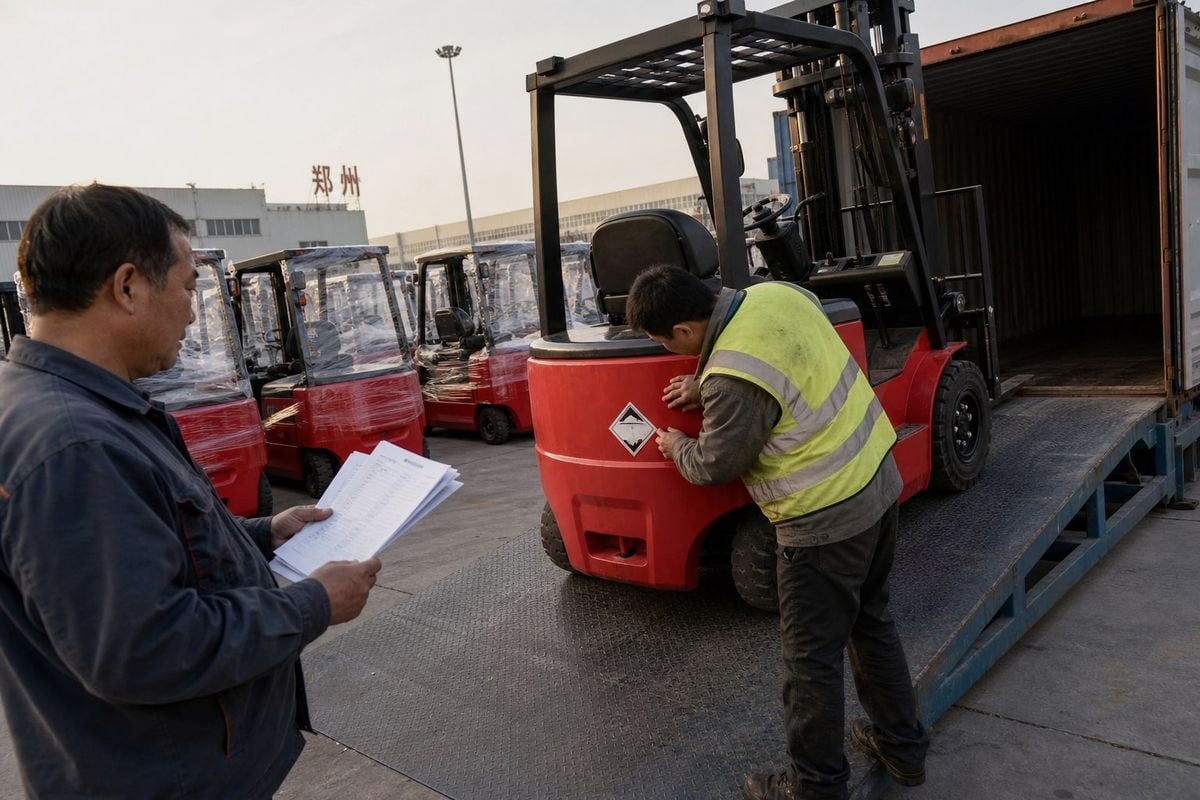
Choosing a shipping method is really a container utilization exercise. Heavy material handling equipment eats floor space fast, so the math matters.
| Metodo | Il migliore per | Typical Fit | Trade-Off |
|---|---|---|---|
| LCL consolidation | 1 forklift or partial loads | Shared container space | Higher rate per CBM, more handling |
| 20FT FCL | 1–2 compact forklifts | ~2 counterbalance units | Simple, but limited space |
| 40FT / 40HQ FCL | 3–5 forklifts plus accessories | Multiple units + parts | Lowest cost per unit at volume |
| Trasporto aereo | Chargers, spare parts only | Small urgent items | Too costly for whole machines; battery limits |
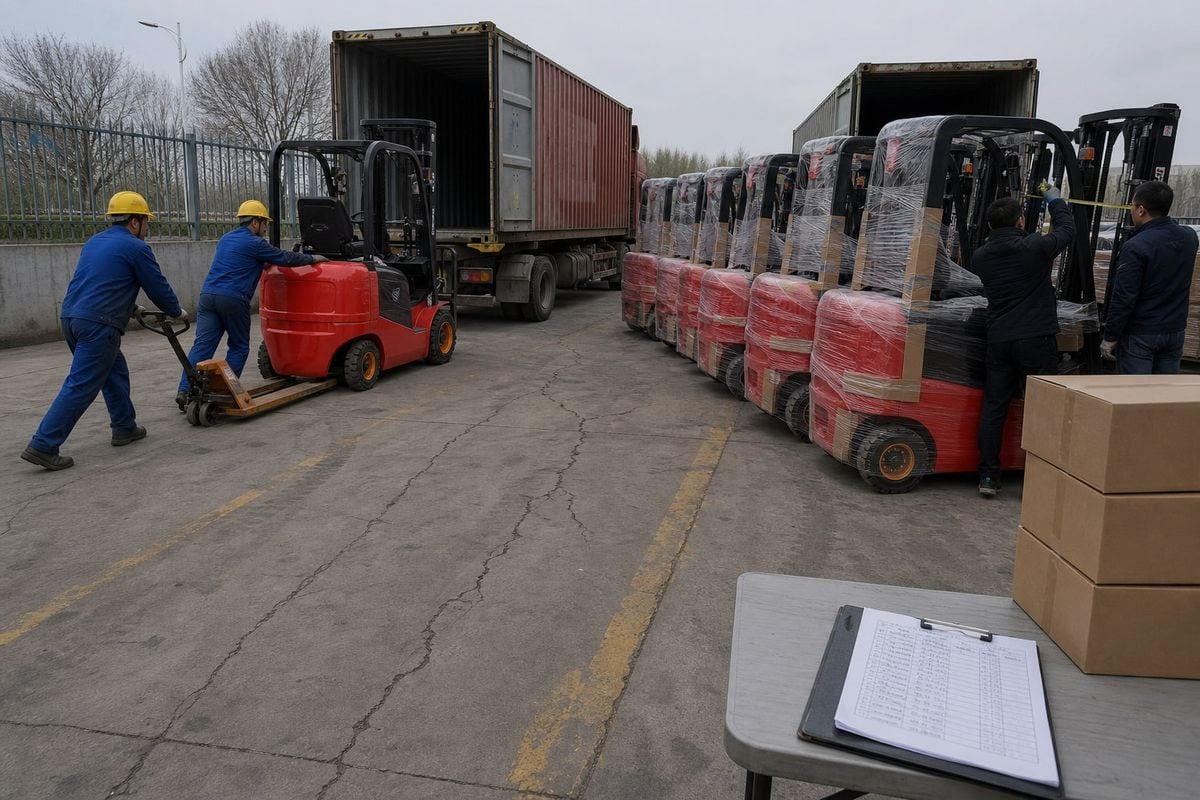
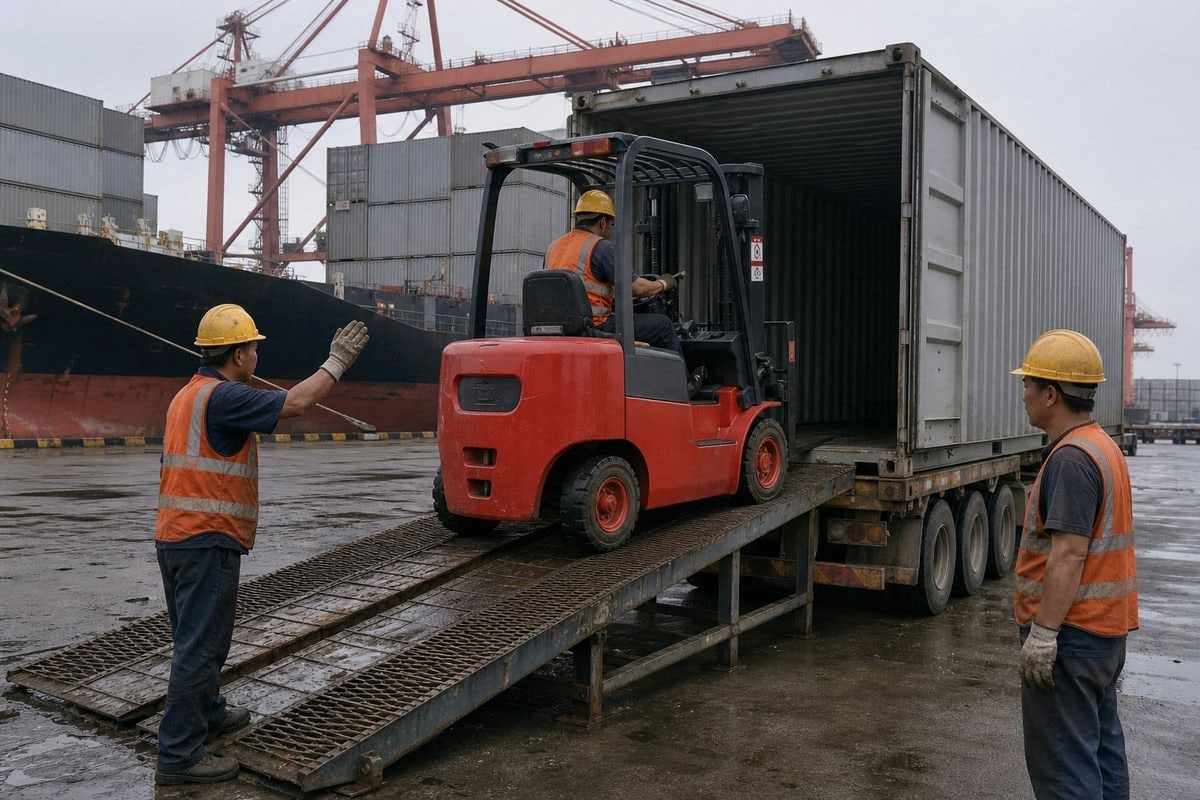
Unused container space is wasted money. We regularly consolidate forklifts from one factory with batteries, chargers, attachments, and spare parts from other suppliers into the same container. Multi-supplier consolidation cuts the average logistics cost per forklift and reduces the number of shipments you manage. Proper container loading matters too: forklifts must be blocked, braced, and lashed with correct weight distribution, or you risk damage claims on expensive equipment.
Watch the calendar. Shipments from BMSB target risk countries arriving between September and April may need mandatory heat or fumigation treatment under Australia's Brown Marmorated Stink Bug seasonal measures. Every unit, especially used ones, must arrive 100% free of soil and plant material — DAFF can order immediate re-export at the importer's expense if contamination is found during inspection. Booking a forwarder who checks cleanliness at origin is far cheaper than fixing it at the destination port. Finally, decide between DDP and DAP terms: door-to-door DDP suits buyers without their own customs broker, while DAP suits importers who already have local clearance arrangements.
Importing electric forklifts into Australia is straightforward when you manage costs, documents, battery rules, and biosecurity together as one project. Get the compliance right at origin, and delivery follows smoothly.
1. Official Australian authority for customs clearance, duty rates, and tariff classifications. ↩︎
2. Australian government department managing biosecurity risks and machinery import inspections. ↩︎
3. International organization governing the IMDG Code for shipping hazardous materials by sea. ↩︎
4. National agency responsible for workplace safety standards and industrial plant regulations. ↩︎