- +8618603825129
- [email protected]


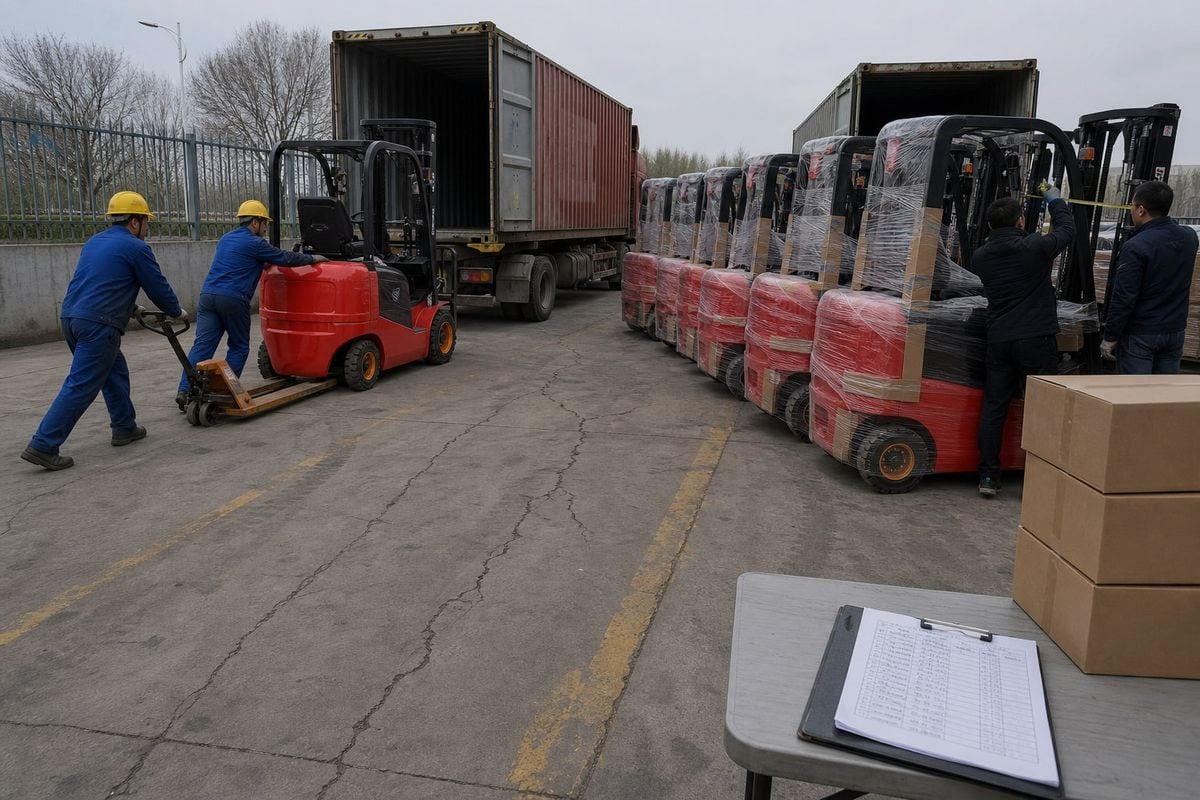
Every month at our Zhengzhou loading warehouse, I watch buyers underestimate how hard it is to load an electric forklift into a shipping container safely. One wrong move costs thousands.
To load an electric forklift into a shipping container, verify dimensions against the container opening, lower the mast fully, set the lithium battery to 20–30% charge, drive in slowly over a rated ramp, then secure the unit with four 5,000 lb ratchet straps, chocks, and blocking.
That is the short answer. But the details decide whether your forklift arrives ready to sell or arrives damaged. Let me walk you through each step, based on the containers we load every week.
A US dealer once asked me to fit four 3-ton forklifts into a 20FT box. We ran the numbers together and saved him from a costly surprise at the port.
A 20FT container typically fits one to two compact electric forklifts, while a 40FT or 40HQ container fits two to four units, depending on forklift length, mast height, and weight. Always compare exact machine dimensions against interior container space before booking.
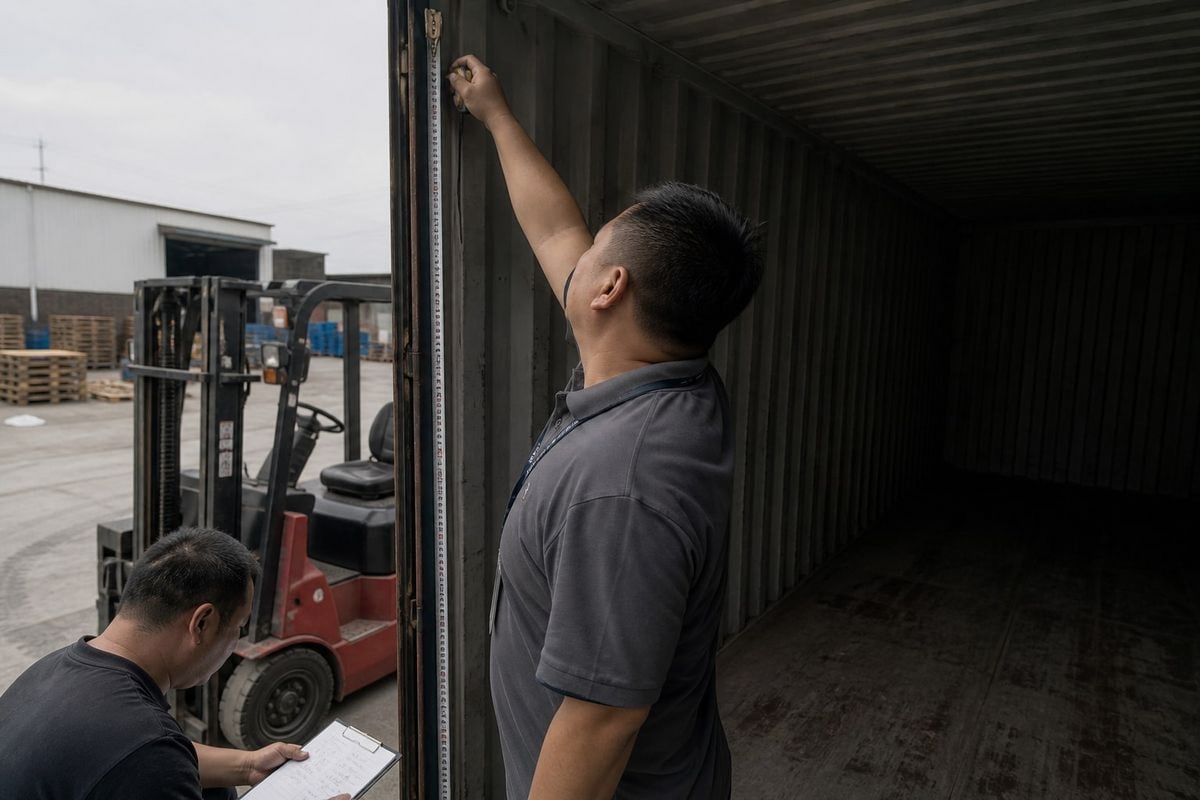
The honest answer is that capacity depends on three things: dimensions, weight, and mast configuration. I always ask suppliers for the exact spec sheet before we quote, because two "3-ton forklifts" from different factories can differ by 40 centimeters in length.
Here is the baseline comparison we use when planning a load:
| Tipo di contenitore | Interior Length | Interior Width | Interior Height | Door Opening Height | Typical Forklift Capacity |
|---|---|---|---|---|---|
| 20FT | 5.9 m | 2.35 m | 2.39 m | 2.28 m | 1–2 compact units |
| 40FT | 12.03 m | 2.35 m | 2.39 m | 2.28 m | 2–4 units |
| 40HQ | 12.03 m | 2.35 m | 2.69 m | 2.58 m | 2–4 units, taller masts allowed |
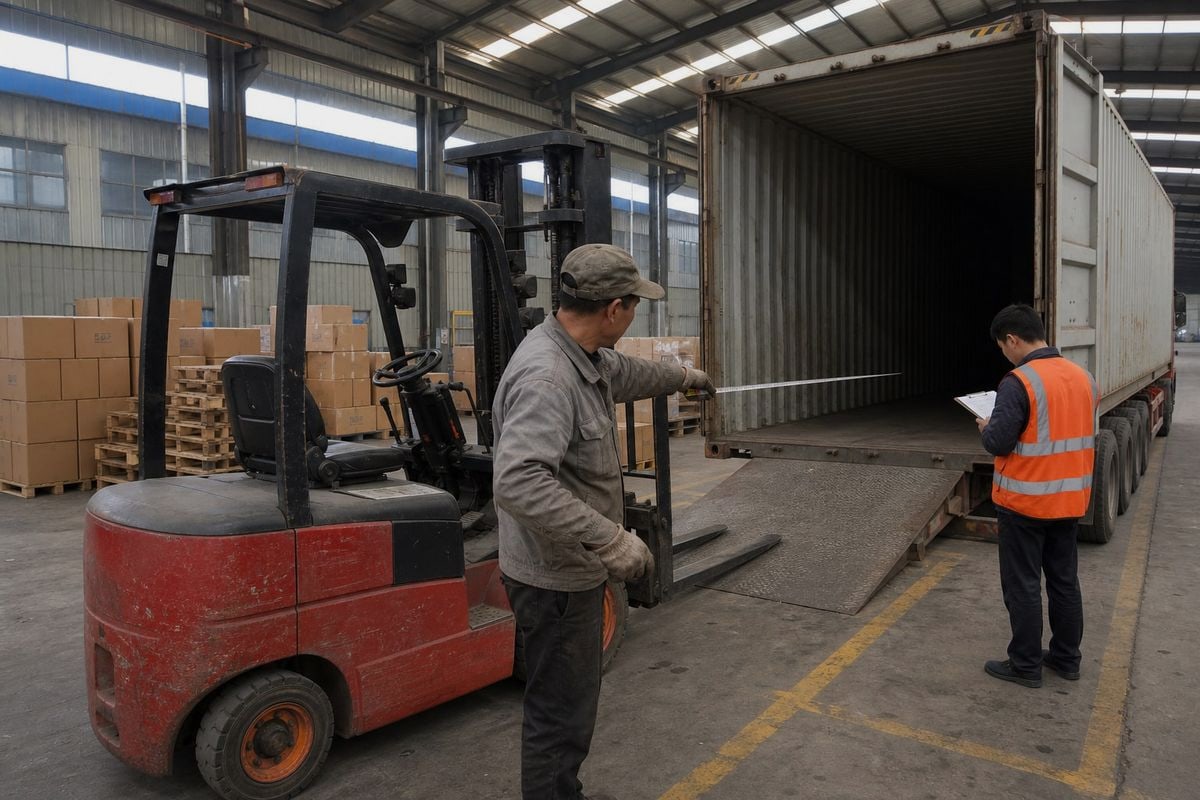
The door opening is the real constraint. The container interior may be 2.39 m high, but the doorway is shorter. So forklift mast height in the fully lowered position must clear the door opening, not just the ceiling. We measure clearance height twice: once at the door, once inside.
Electric forklifts are heavier than diesel equivalents because of the battery pack. You must check the container floor capacity 1 against the combined weight of all units. Industry guidance references ISO 1496-1 2 for container floor load ratings, and we verify the Gross Vehicle Weight of each forklift against those limits. Some guides note that forklifts from 2.5 tons up to 16 tons can ship in containers, but the heavy end of that range needs careful weight distribution planning and sometimes a flat rack instead.
When a buyer wants three or four units in one 40HQ, we also plan the loading sequence 3 so weight sits evenly along the container length, not clustered at one end. Uneven loads create handling problems at the terminal and stress on the chassis during trucking.
Years of coordinating container loading in China taught me one hard lesson: straps alone are never enough. The Pacific crossing punishes every shortcut made at origin.
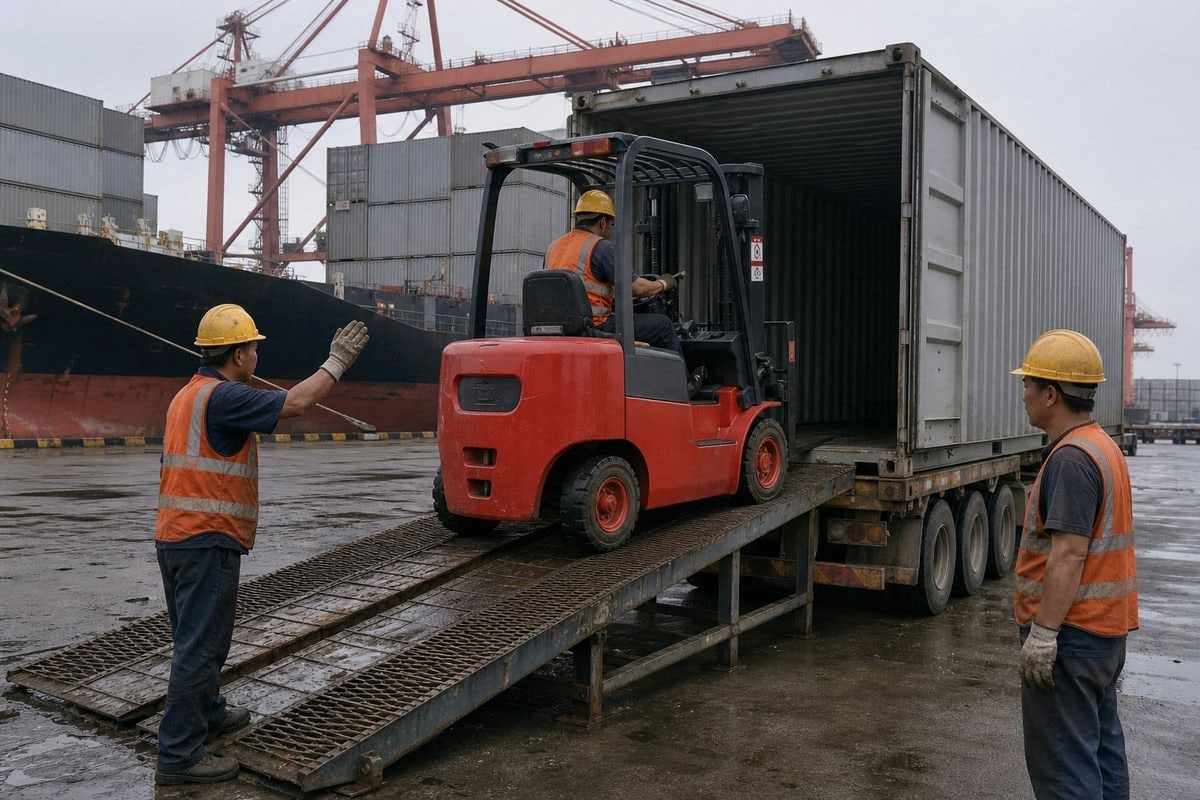
Drive the forklift in slowly over a loading ramp rated above its full weight, center it for even weight distribution, then combine wheel chocks, wooden blocking and bracing, and at least four 5,000 lb ratchet straps fixed to container lashing points at 45-degree angles.
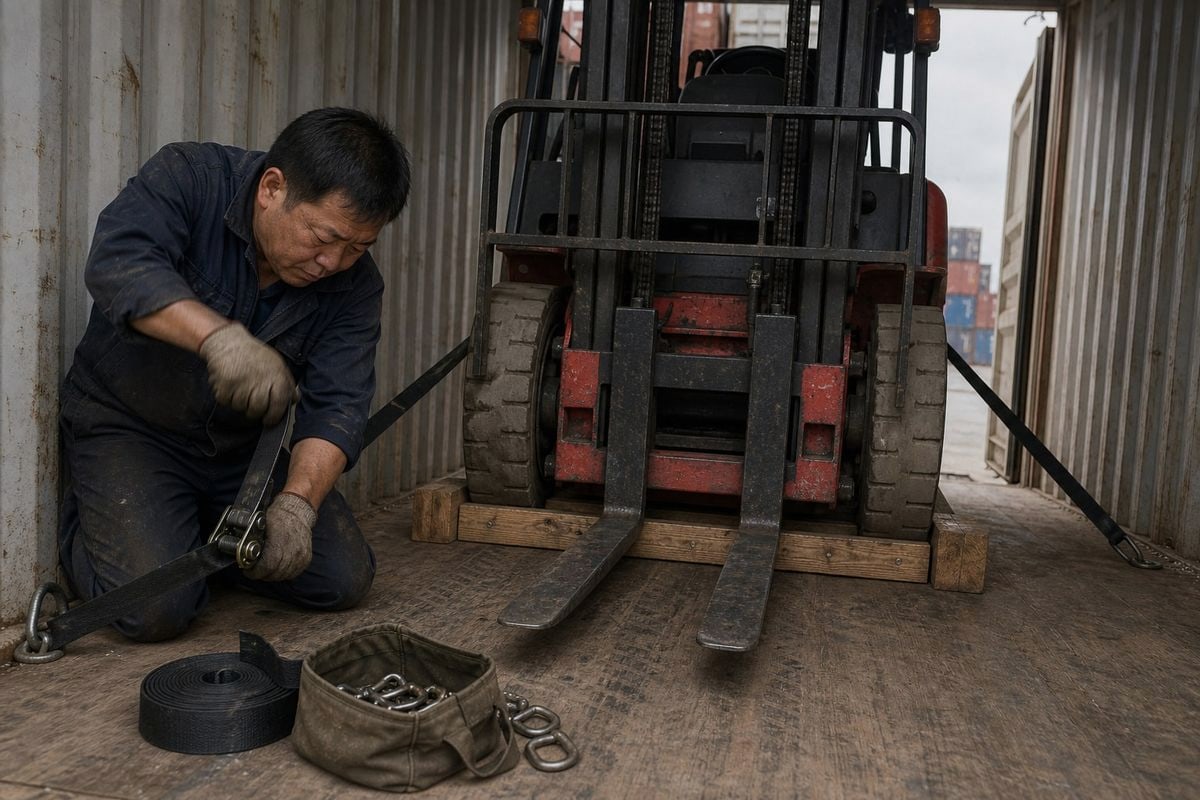
Ocean transport creates forces in every direction. A vessel rolls, pitches, and slams into swells for two to four weeks. Your securing plan must stop forward, sideways, and vertical movement at the same time. That is why we never rely on one method.
| Metodo | Stops | Weakness if used alone |
|---|---|---|
| Wheel chocks | Rolling | Cannot resist sideways sliding |
| Wooden blocking and bracing | Sliding in all directions | Cannot resist vertical bounce |
| Ratchet straps (4× 5,000 lb minimum) | Bounce and shift | Can loosen without blocking underneath |
| Chains with binders | Heavy units, all directions | Overkill for compact units, needs rated anchor points |
Two extra steps we recommend for electric models: place quarter-inch steel plates over the floor if the forklift runs small-diameter polyurethane tires, because their point-load can exceed the puncture strength of marine plywood flooring. And apply a Vapor Corrosion Inhibitor film over the control console to protect the electronic controllers from salt air. For high-value shipments, some of our clients also add a GPS-enabled impact logger to record G-forces during transit.
Last year, a client's shipment nearly missed its vessel because the factory could not produce a battery test report. Since then, we check battery paperwork before cargo even leaves the factory.
Yes. Lithium battery forklifts require dangerous goods classification, a UN38.3 test summary, correct declaration to the carrier, and a battery state of charge kept between 20% and 30% to comply with international shipping regulations and reduce thermal runaway risk.
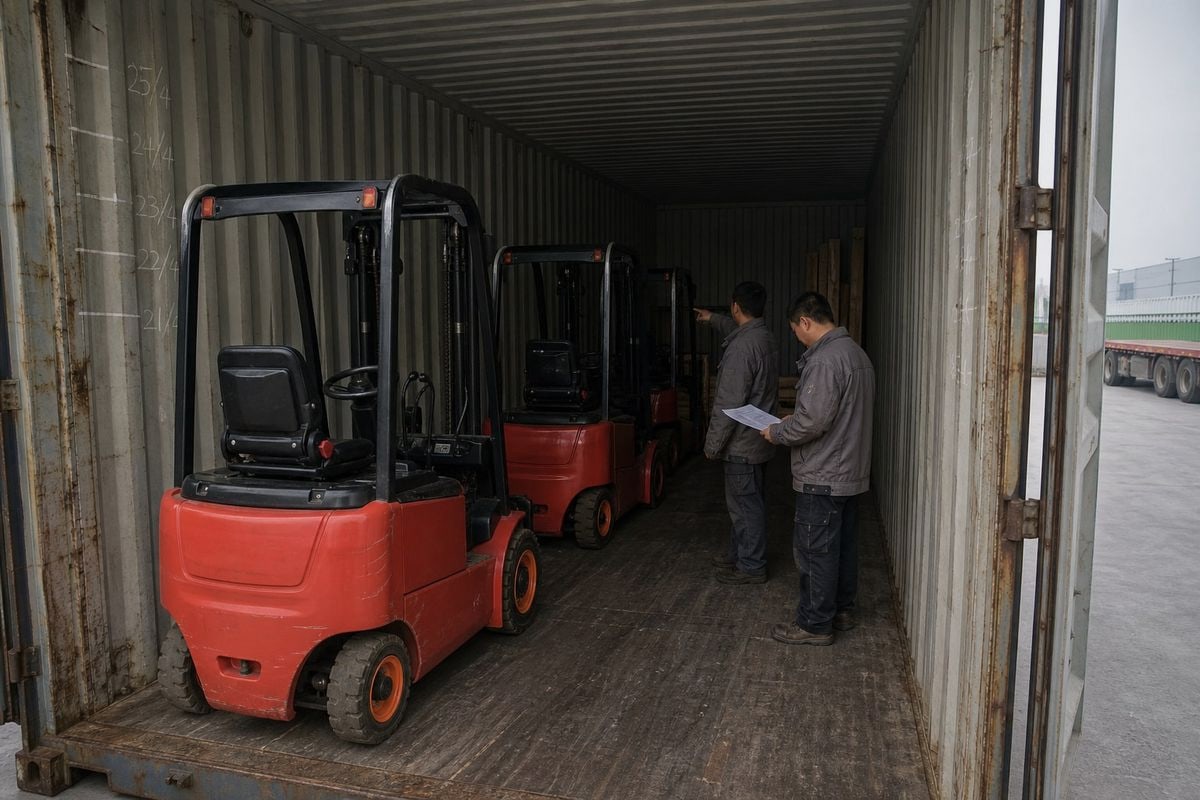
This is where electric forklift shipping differs most from ordinary machinery shipping. Lead-acid battery forklifts are simpler: you disconnect the battery, secure the cables, and protect the terminals. Lithium battery forklifts 4 trigger additional carrier requirements, and each shipping line applies its own acceptance rules.
When we book lithium battery forklifts out of Chinese ports, carriers commonly request documentation before accepting the cargo. Missing any of these items can mean a rolled booking:
| Articolo | Scopo |
|---|---|
| UN38.3 test summary | Proves the battery passed transport safety testing |
| MSDS / SDS | Describes battery chemistry and hazards |
| Dangerous goods declaration | Formally declares the cargo class to the carrier |
| Battery specification sheet | Confirms voltage, capacity, and installation status |
| State of charge confirmation | Verifies SoC sits in the 20–30% window |
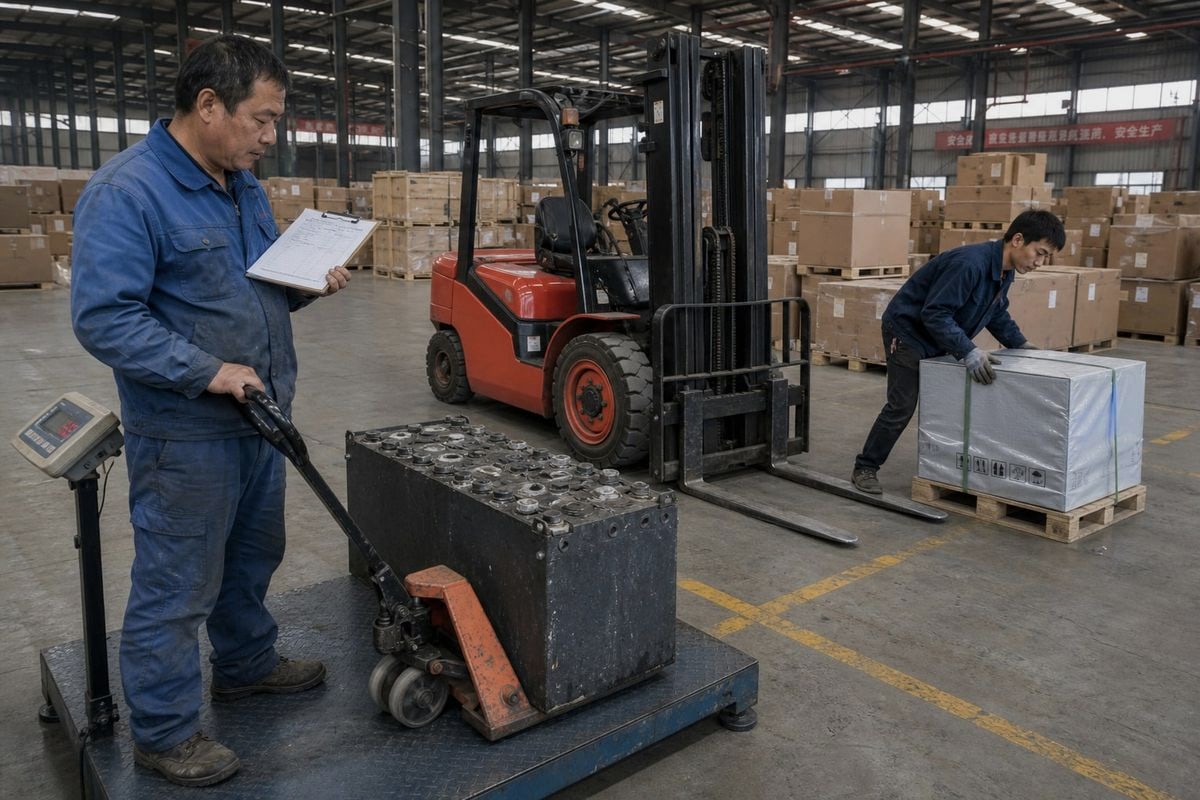
Paperwork is only half the job. Our battery safety protocols on the loading side include disconnecting the battery or isolating it per the manufacturer's guidance, securing loose cables to prevent electrical shorts or parasitic drain, and taping or capping exposed terminals. We also confirm the battery is firmly locked in its compartment so vessel motion cannot shift it.
One nuance worth raising: some buyers assume a battery installed inside the forklift avoids dangerous goods rules entirely. That is not reliable. Classification depends on the battery chemistry, capacity, and how it is presented, and the carrier makes the final acceptance decision. We always confirm carrier requirements at booking rather than discovering a problem at the port. Sorting this out before the container is sealed is far cheaper than dealing with a rejected shipment afterward.
The trade-off I weigh most often for buyers is this: consolidation cuts the freight cost per unit, but every extra item added to the container needs its own securing plan.
Yes, you can consolidate forklifts with spare batteries, chargers, and parts in one container, provided each item is separately packed, secured, and correctly declared. Spare lithium batteries carry stricter rules than installed ones, so documentation must cover every piece of cargo.
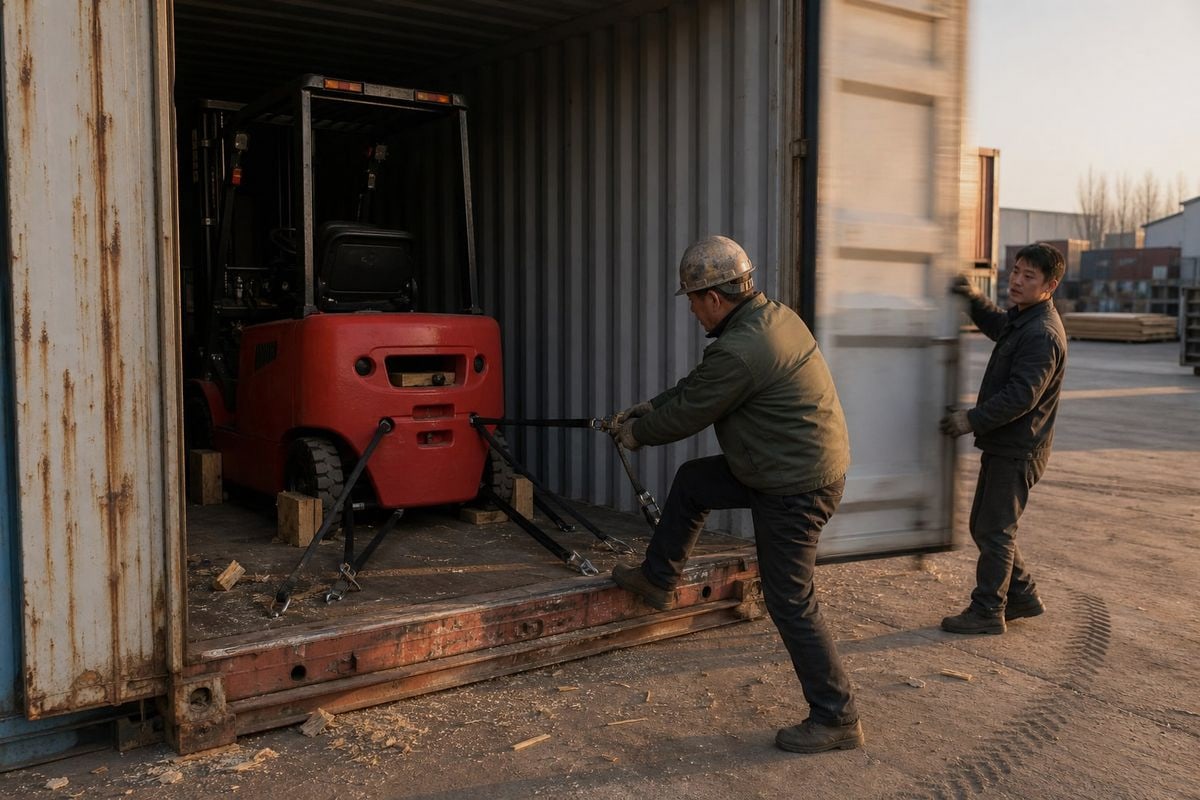
Consolidation is one of the biggest cost levers in forklift importing. A 40HQ container with two forklifts often has meters of unused floor and overhead space. Filling that space with chargers, attachments, and spare parts spreads the ocean freight across more sellable inventory.
Many of our clients buy forklifts from Factory A, batteries from Factory B, and chargers from Factory C. We arrange factory pickup from each supplier, bring everything to our consolidation warehouse, and load the container in one controlled session. That gives us full control over weight distribution and securing, instead of relying on three factories to coordinate with each other.
The loading order matters. Heavy items like spare batteries go on the floor, positioned to balance the forklifts. Chargers and electronics get palletized, wrapped, and strapped against the container walls. Small spare parts go in cartons, blocked so they cannot shift into the forklift during transit. Nothing loose is allowed anywhere near the mast or the operator compartment.
Done properly, consolidation lowers your landed cost per forklift without adding damage risk. Done casually, it turns one shipment's problem into everyone's problem.
Loading an electric forklift into a shipping container demands exact measurements, battery compliance, a rated loading ramp, and layered securing. Plan every step before the container arrives, or partner with a team that does this daily.
1. WCO is the global authority on customs procedures and container standards for international trade. ↩︎
2. ISO is the international standard-setting body that defines container floor load ratings like ISO 1496-1. ↩︎
3. Trade.gov provides authoritative guidance on international logistics, shipping practices, and export compliance. ↩︎
4. UNECE manages the international regulations and testing standards for transporting lithium batteries safely. ↩︎