- +8618603825129
- [email protected]

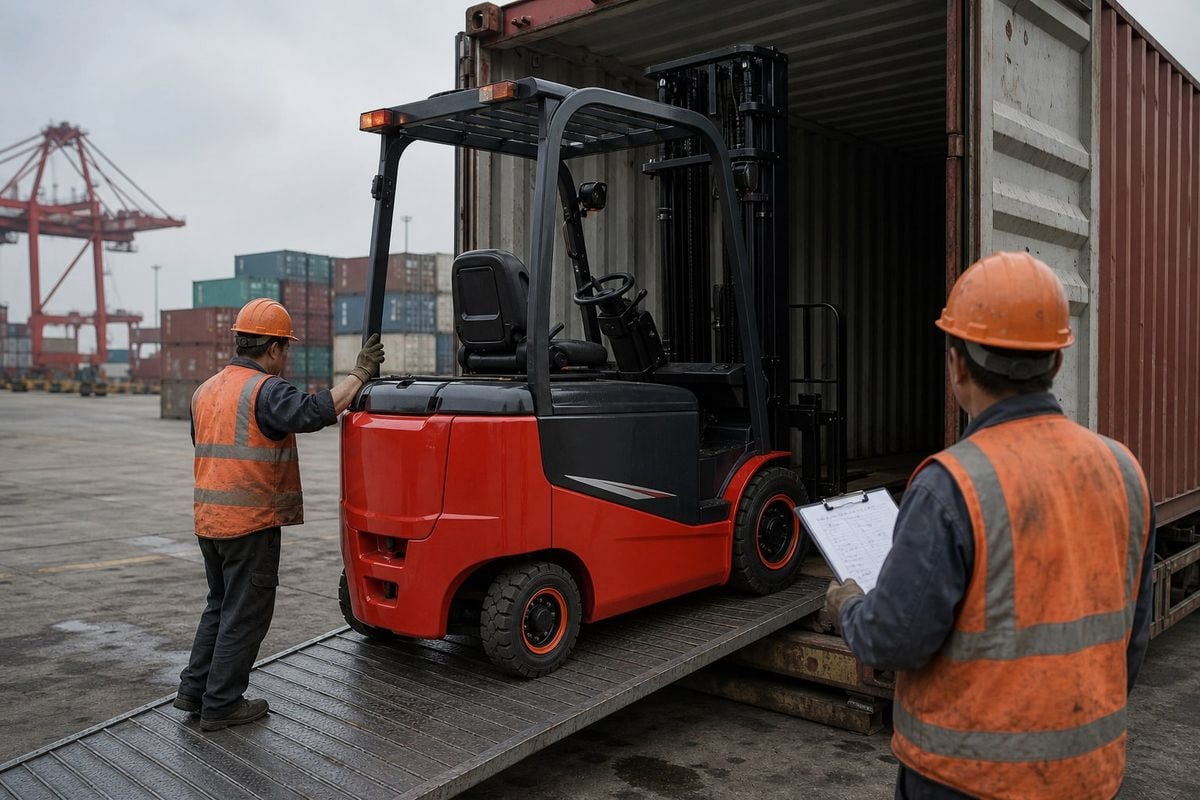
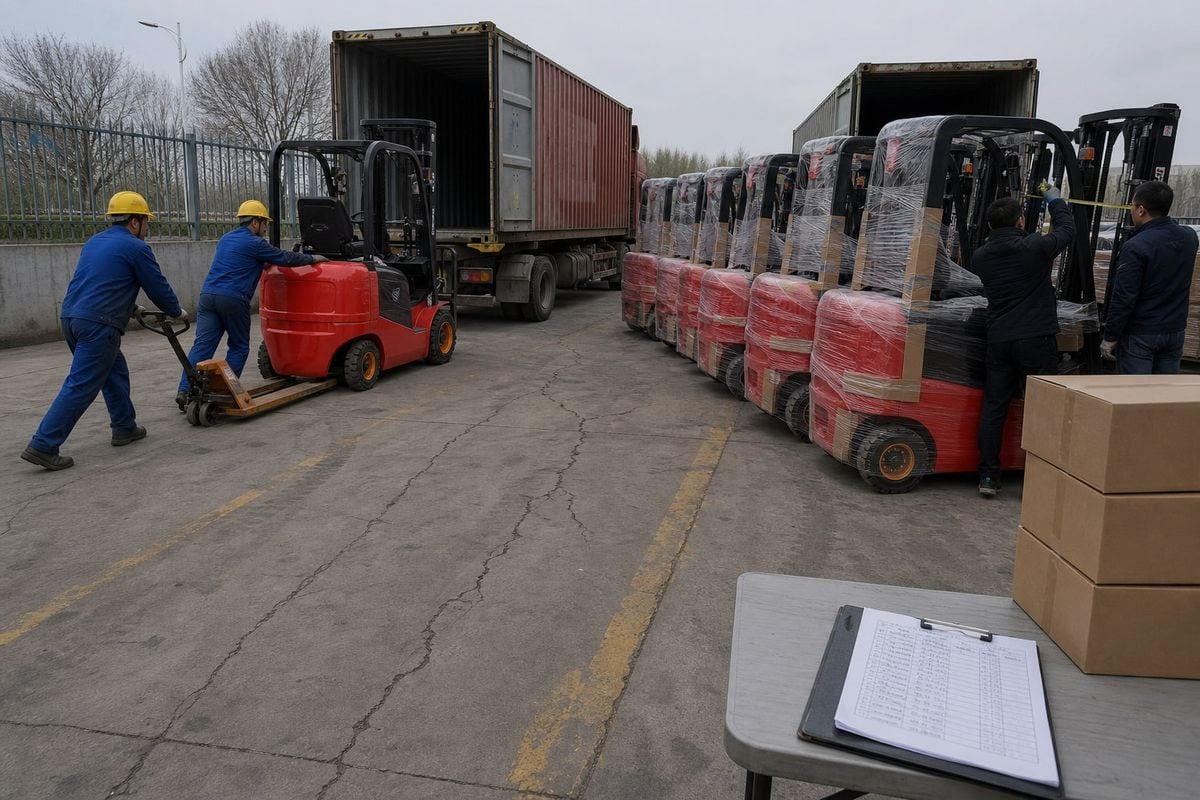
The cost to ship an electric forklift from China to Australia confuses many buyers I talk to. Our team in Zhengzhou books these containers weekly, and quotes vary wildly. Why? One importer receives a $1,500 quote. Another pays $5,000 for a similar unit. Without a clear breakdown, you cannot calculate your true costo sbarcato 1, and that gap can erase your resale margin entirely. Below, I break down the real numbers so you can budget with confidence.
Shipping an electric forklift from China to Australia typically costs US$1,200–US$3,800 for a 20ft container and US$1,800–US$5,800 for a 40ft container by sea. Lithium battery forklifts add US$200–US$400 in dangerous goods surcharges, plus customs, GST, and port handling costs.
Those ranges are wide for a reason. Your final price depends on the container size, the battery type, the route, and the services included. Let me walk you through each factor.
Last quarter, our team quoted two nearly identical forklift shipments to Melbourne. One came in almost double the other. The difference was not the forklift. It was everything around it.
The main cost factors are container size (20ft vs 40ft), FCL vs LCL shipping mode, battery type, origin and destination ports, seasonal sea freight rates, dangerous goods surcharges, inland trucking in China, Australian port handling costs, customs clearance fees, and biosecurity inspection charges.
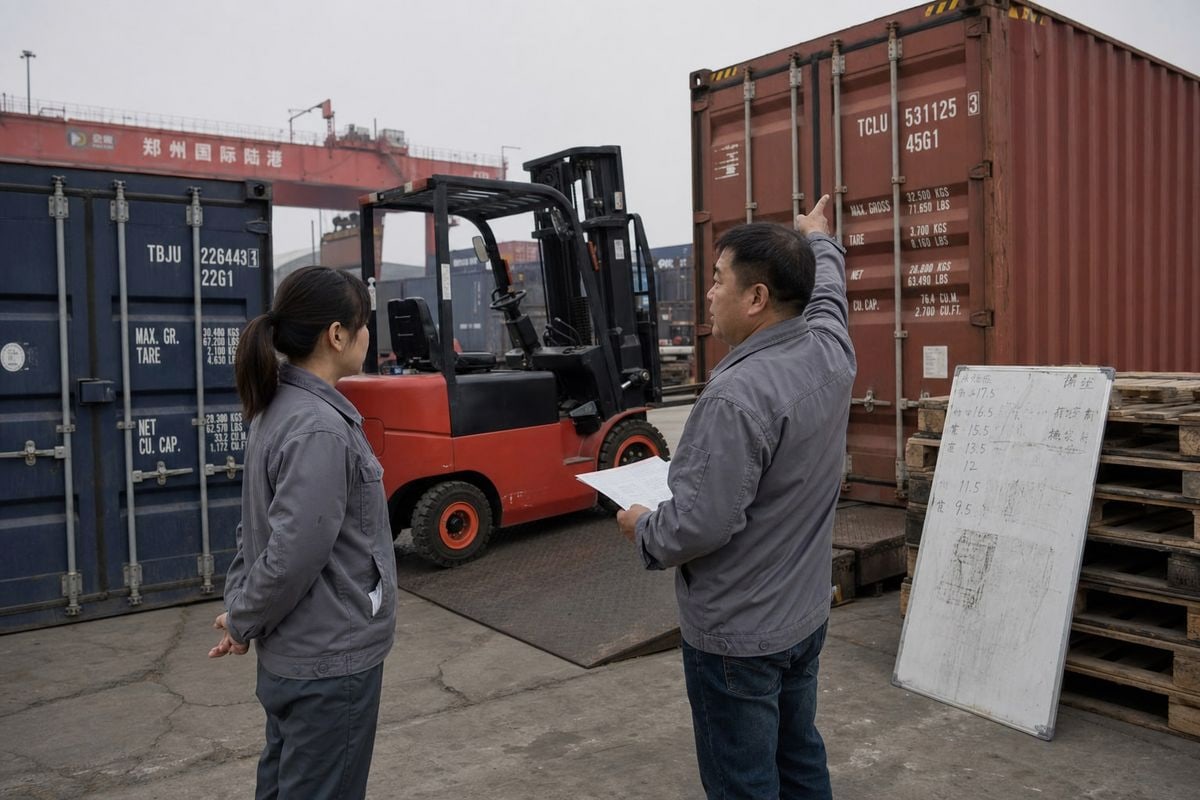
Let me break this down the way I explain it to our clients. A shipping quote is not one number. It is a stack of separate charges, and each one can move.
Almost every forklift shipment we handle includes these components:
| Componente di costo | Typical Range (USD) | Note |
|---|---|---|
| China inland pickup | $200–$800 | Depends on factory distance from port |
| Origin terminal handling | $150–$500 | Port and carrier dependent |
| Ocean freight, 20ft container | $1,200–$3,800 | Varies by month and lane |
| Ocean freight, 40ft/40HQ | $1,800–$5,800 | Better per-unit economics |
| Lithium battery DG surcharge | $200–$400 | Only for lithium-powered units |
| Australia port handling costs | $150–$500+ | Plus possible biosecurity fees |
| Customs clearance/brokerage | Varies | Broker fees plus any duty and GST |
You may see older freight guides quoting $1,000–$1,850 for a container, while newer 2026 guides list up to $5,800 for a 40ft box. Both can be correct. Sea freight rates change month to month based on carrier capacity, fuel surcharges, and the specific port pair. A Shanghai-to-Sydney rate in slack season looks nothing like a Shenzhen-to-Brisbane rate during peak season. In our experience booking these lanes, the biggest quote gaps come from what is included. A "cheap" quote often excludes origin fees, destination fees, or both.
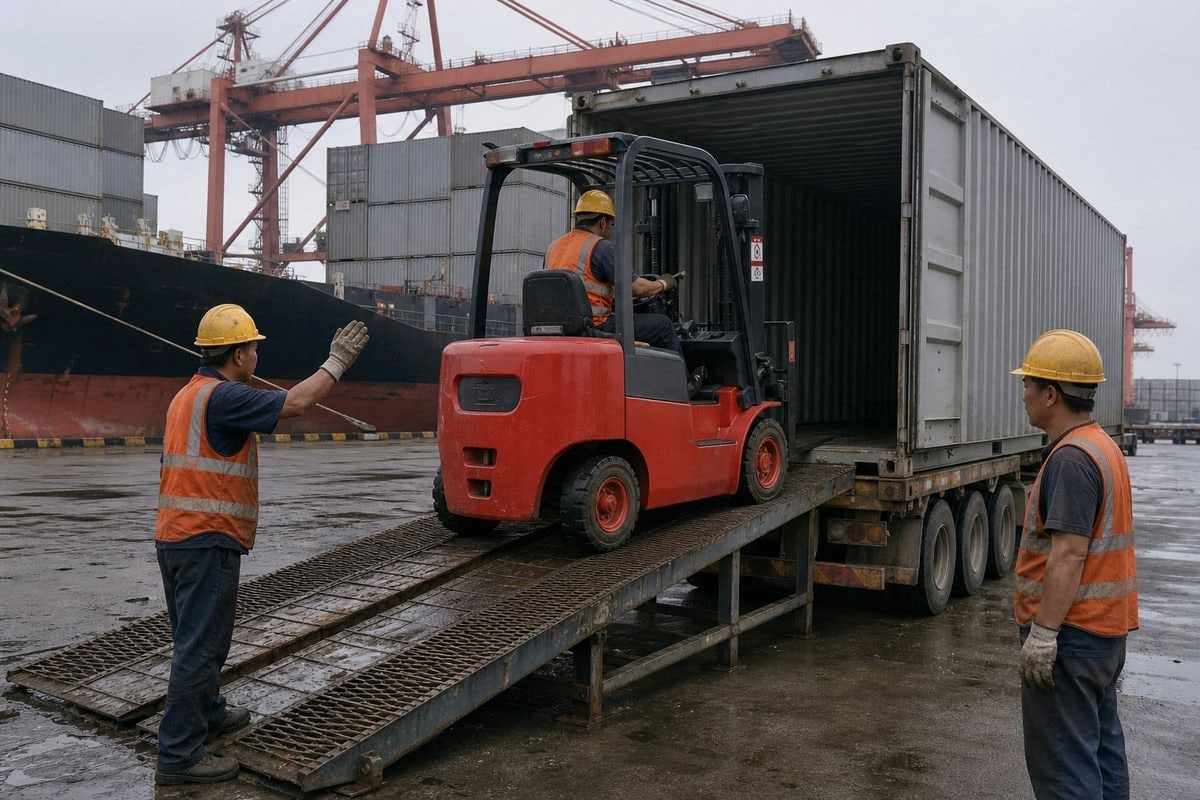
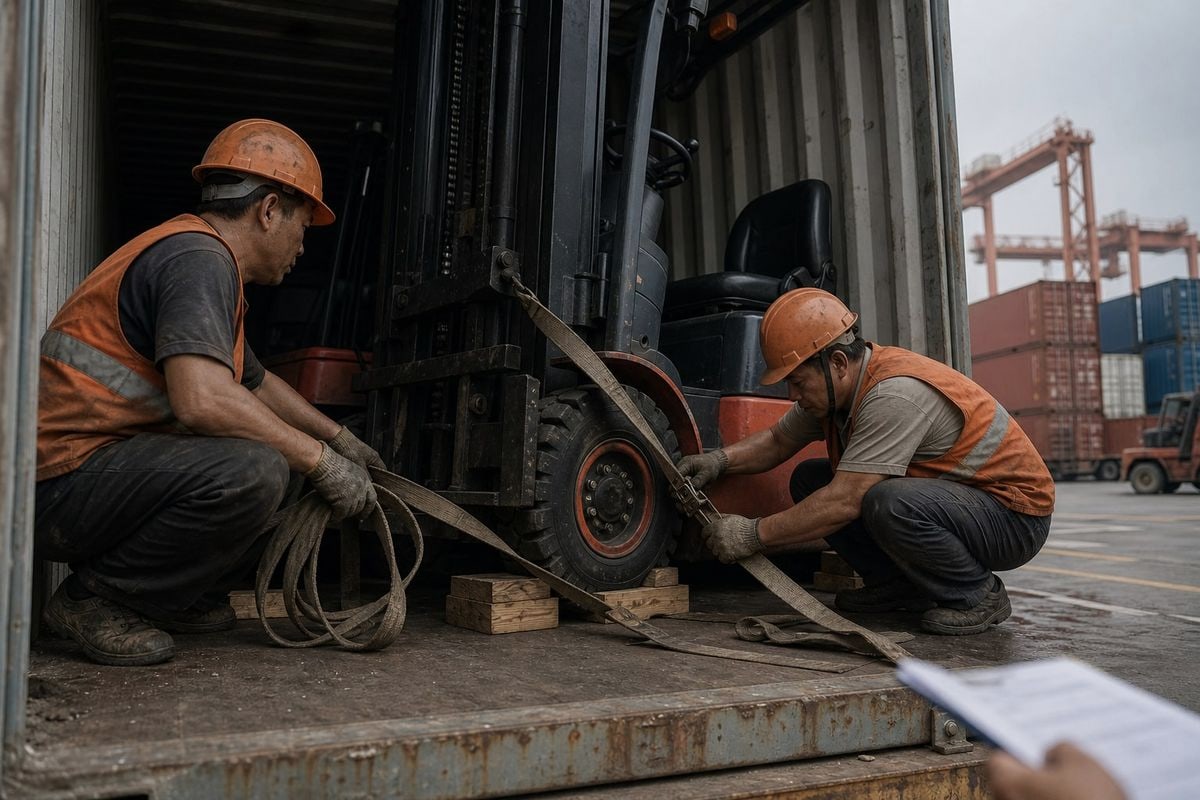
For a complete electric forklift, sea freight is the practical option. The unit is too heavy and bulky for economical air freight, which we reserve for spare parts and chargers. Ro-Ro shipping services exist for wheeled machinery, but most electric forklifts move safer and cheaper inside containers, properly secured and blocked. That leaves the real decision as LCL vs FCL shipping, which I cover later.
Standard ocean transit 2 from major Chinese hubs like Shanghai or Shenzhen to Australian ports runs 20 to 30 days. Faster premium services exist, but for heavy material handling equipment logistics, most of our clients accept the standard schedule and plan inventory around it.
A buyer once sent me a one-line email: "How much to ship a forklift to Sydney?" I had to send back seven questions before I could give him a real number.
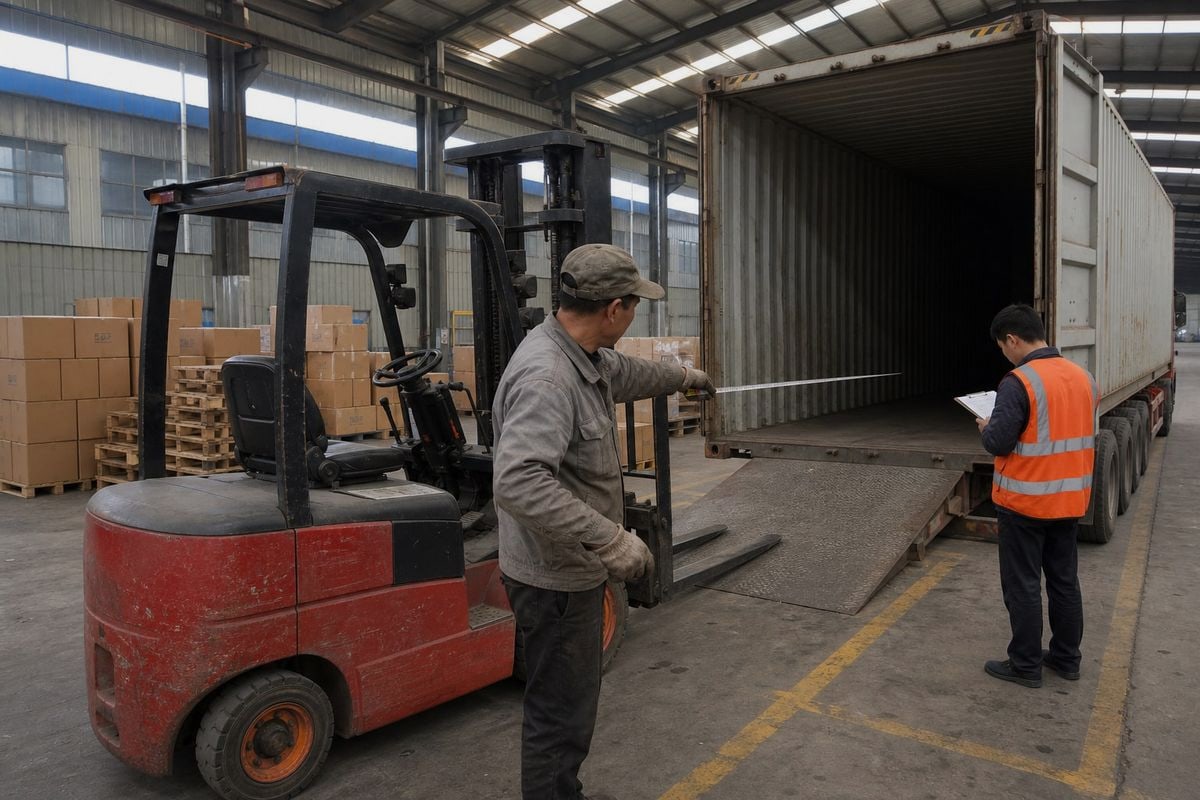
To get an accurate quote, provide your freight forwarder with the forklift's dimensions, weight, battery type and specifications, the factory address in China, your destination port or address, your Incoterms (EXW or FOB), and whether you need door-to-door delivery and marine insurance coverage.
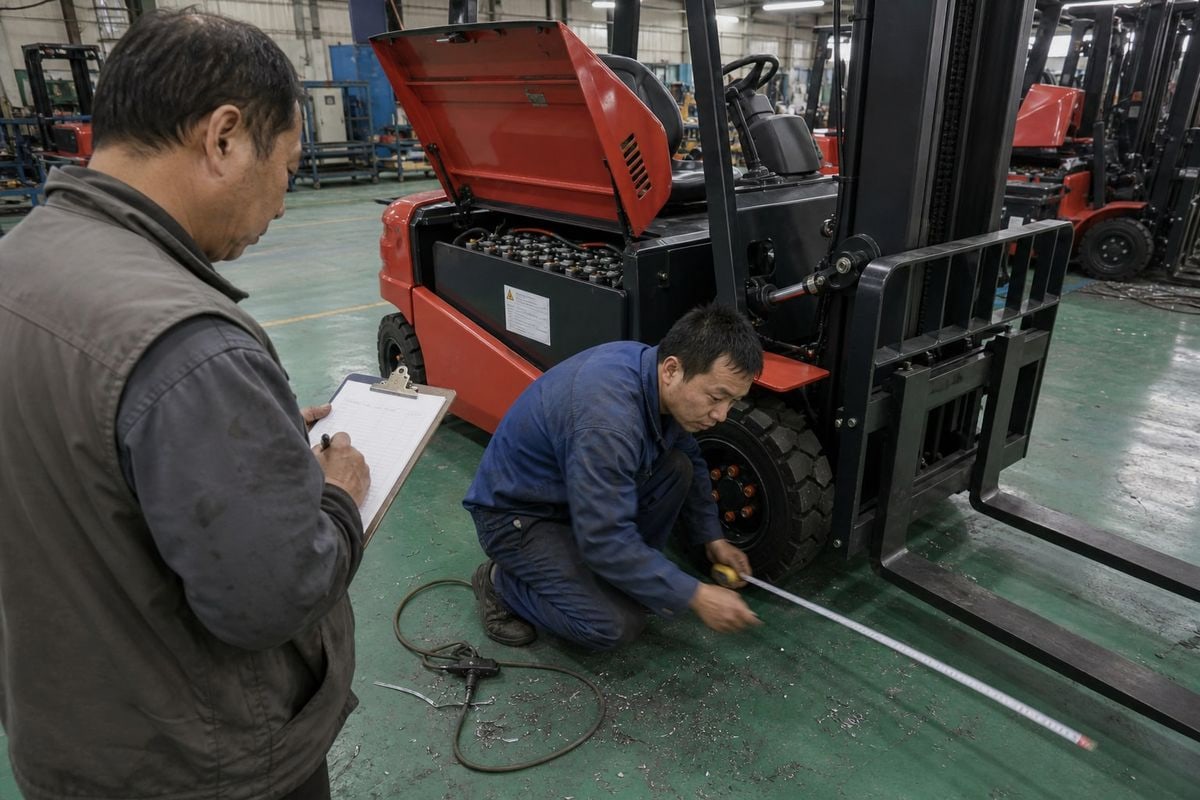
An accurate quote starts with accurate cargo data. When our team receives complete information upfront, we can lock in a price that holds. When information is missing, quotes get revised, and revised quotes are almost never revised downward.
Here is what any serious freight forwarder China to Australia will need from you:
I always tell buyers to separate two numbers. The shipping quote covers pickup, origin handling, ocean freight, any DG surcharge, and destination charges. The landed cost adds import duties and GST, brokerage, and compliance costs on the Australian side.
| Articolo | Shipping Quote | Costo sbarcato |
|---|---|---|
| Factory pickup and origin handling | ✔ | ✔ |
| Ocean freight and surcharges | ✔ | ✔ |
| Destination port handling | ✔ | ✔ |
| Customs duty (0% under ChAFTA with Certificate of Origin) | ✘ | ✔ |
| 10% GST on customs value + freight + insurance | ✘ | ✔ |
| Biosecurity inspection charges, cleaning if required | ✘ | ✔ |
| Local delivery and insurance | Optional | ✔ |
On the duty point: complete forklifts under HS codes 8427.10 and 8427.20 generally attract 5% standard duty, but a valid Certificate of Origin under the China-Australia Free Trade Agreement 3 (ChAFTA) brings that to 0%. Some forklift parts are classified differently, so verify the exact tariff treatment for your specific model. Australia also applies a 10% GST calculated on the forklift value plus freight plus insurance, not just the machine price.
Two more items catch importers off guard. First, DAFF biosecurity rules 4 require machinery to be 100% free of soil and organic matter, which may mean professional steam cleaning and fumigated wood packaging. Second, Australian Border Force enforces a zero-tolerance asbestos policy, so you may need lab testing or declarations proving gaskets and brake pads are asbestos-free. Some models also need Plant Design Registration with state regulators like SafeWork, typically $300–$800, before legal operation.
The trickiest shipment I coordinated last year was not the heaviest one. It was a lithium forklift whose factory could not produce a UN38.3 test report on time, and the container missed its vessel.
Yes. Lithium battery forklifts are classified as Class 9 Dangerous Goods and typically cost US$200–US$400 more in DG surcharges. They also require an MSDS, a UN38.3 test report, a 30% state-of-charge limit, and carrier acceptance, which can extend lead times.
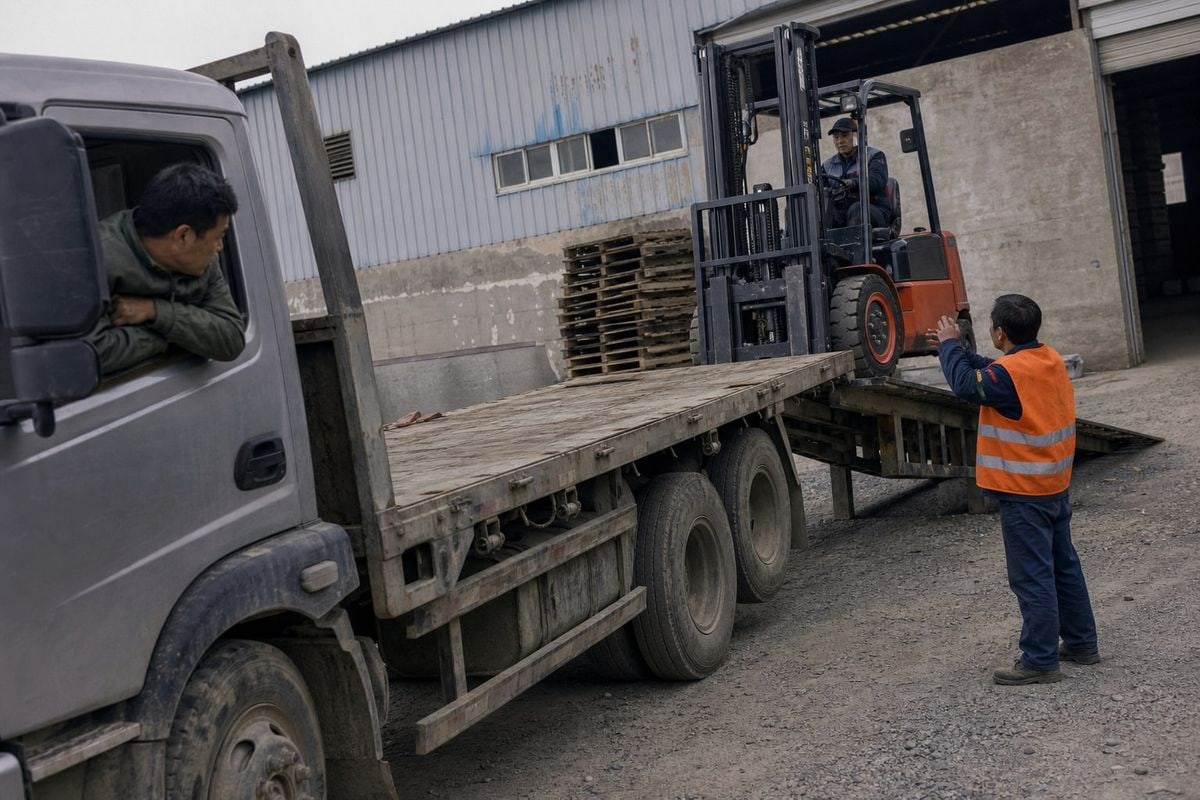
Shipping a powered forklift is not the same as shipping an empty steel shell. Battery chemistry changes both the price and the process, and lithium battery transport regulations are getting stricter, not looser.
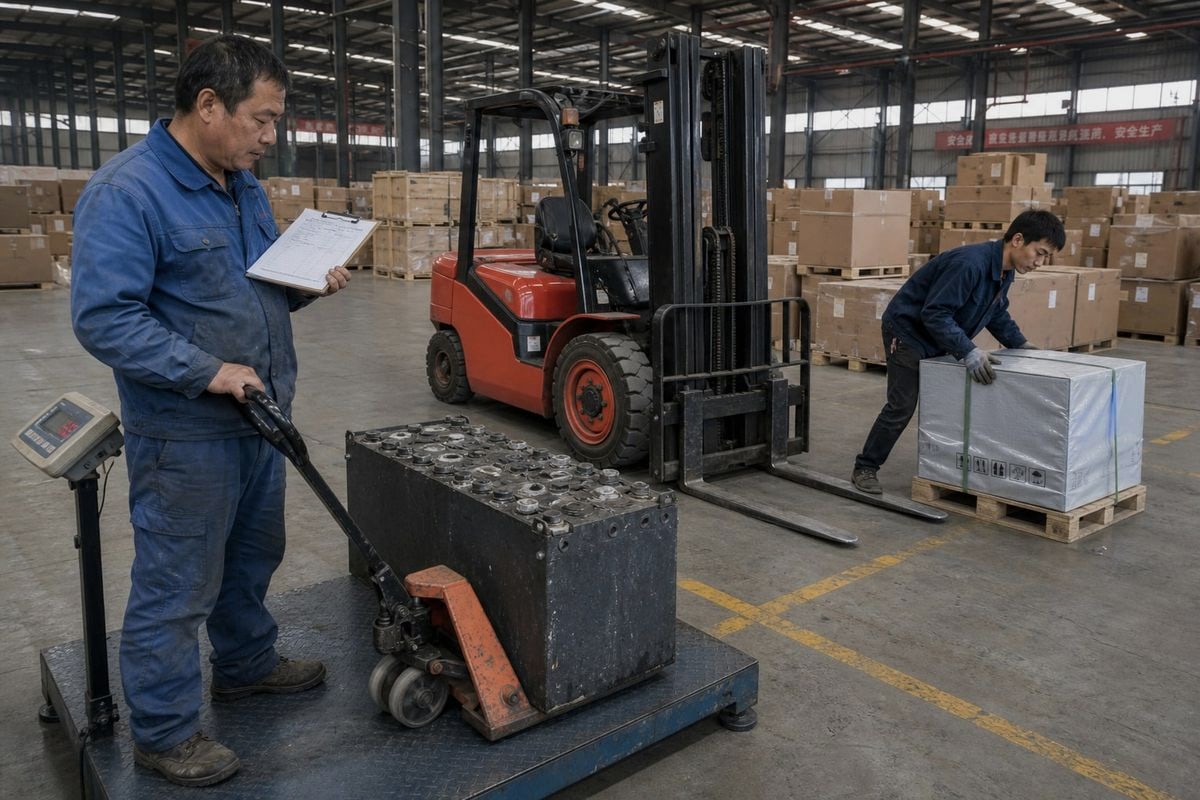
A lithium-ion forklift 5 moves as Class 9 Dangerous Goods. In practice, that means:
| Battery Type | DG Classification | Extra Cost | Documentation Burden |
|---|---|---|---|
| Lead-acid | Simpler handling | Minimal | Basso |
| Lithium-ion | Class 9 DG | ~$200–$400 surcharge | MSDS, UN38.3, 30% SoC |
| Sodium-ion (Na-ion) | UN3551 | Currently lower than lithium | Emerging, lighter compliance |
The sodium-ion row is worth watching. Na-ion batteries are appearing in Chinese forklifts, and their UN3551 classification currently carries lower compliance costs than traditional lithium-ion logistics. A few of our clients have started asking factories about Na-ion options for exactly this reason.
Here is the pattern I see repeatedly. A buyer confirms the order, the factory finishes production, and only then does anyone ask about battery paperwork. If the UN38.3 report is missing or the MSDS is inconsistent with the battery label, the carrier can reject the booking. Meanwhile, the forklift sits at the port accumulating storage charges. Our process is to collect and check battery documentation before the cargo leaves the factory. It costs nothing extra and prevents the most common delay in electric forklift shipping.
The single biggest saving I ever found for a client came not from negotiating the freight rate, but from redrawing his loading plan to fit a second forklift into the same container.
Reduce costs by consolidating multiple forklifts into one 40ft or 40HQ container, filling unused space with batteries, chargers, and spare parts, consolidating cargo from multiple suppliers, choosing FOB terms wisely, and timing shipments to avoid peak-season sea freight rates.
Per-unit freight cost is where importers win or lose margin. The ocean freight for a 40ft container is not double the 20ft price, so every extra forklift you fit into the same box drops your average logistics cost sharply.
Think of it as a simple decision tree:
Many of our clients buy forklifts from Factory A, batteries from Factory B, and chargers from Factory C. Shipping each separately triples handling and destination charges. Instead, we pick up from each supplier, consolidate at our warehouse, and load one container. One booking, one customs entry, one set of port handling costs.
Budget US$1,200–$5,800 for the container, add battery surcharges, GST, and port fees, then let one forwarder manage the rest. Plan the landed cost, not just the freight rate.
1. Authoritative guide on Incoterms and trade costs from the International Trade Administration. ↩︎
2. The International Maritime Organization is the global authority on safety and standards for ocean transit. ↩︎
3. Official government page for ChAFTA, which governs the 0% duty rate mentioned in the article. ↩︎
4. Official Australian biosecurity requirements for importing machinery to ensure it is free of organic matter. ↩︎
5. General reference for forklift types and their technical classifications in material handling. ↩︎