- +8618603825129
- [email protected]


Preparing a packing list for electric forklift shipping trips up many importers. At our Zhengzhou logistics office, we see one weak document delay entire containers at customs every month.
A packing list for electric forklift shipping must include shipper and consignee details, commercial invoice reference, package-by-package breakdown, forklift model and serial numbers, net and gross weights, measured dimensions, battery chemistry and UN classification, handling marks, ISPM-15 wood packaging notes, totals, and a signature.
That is the short answer. Below, I walk through each part step by step, using real problems we fix for forklift importers every week.
Last spring, our team held a container at a Qingdao warehouse because the packing list said only "machinery." Customs would never accept that. We rebuilt the document overnight with the factory.
An electric forklift packing list must show shipper, consignee, invoice number, origin, destination, shipment date, package count and type, forklift model, serial number, rated capacity, quantities per package, net and gross weight, measured dimensions, shipping marks, handling notes, totals, and an authorized signature.
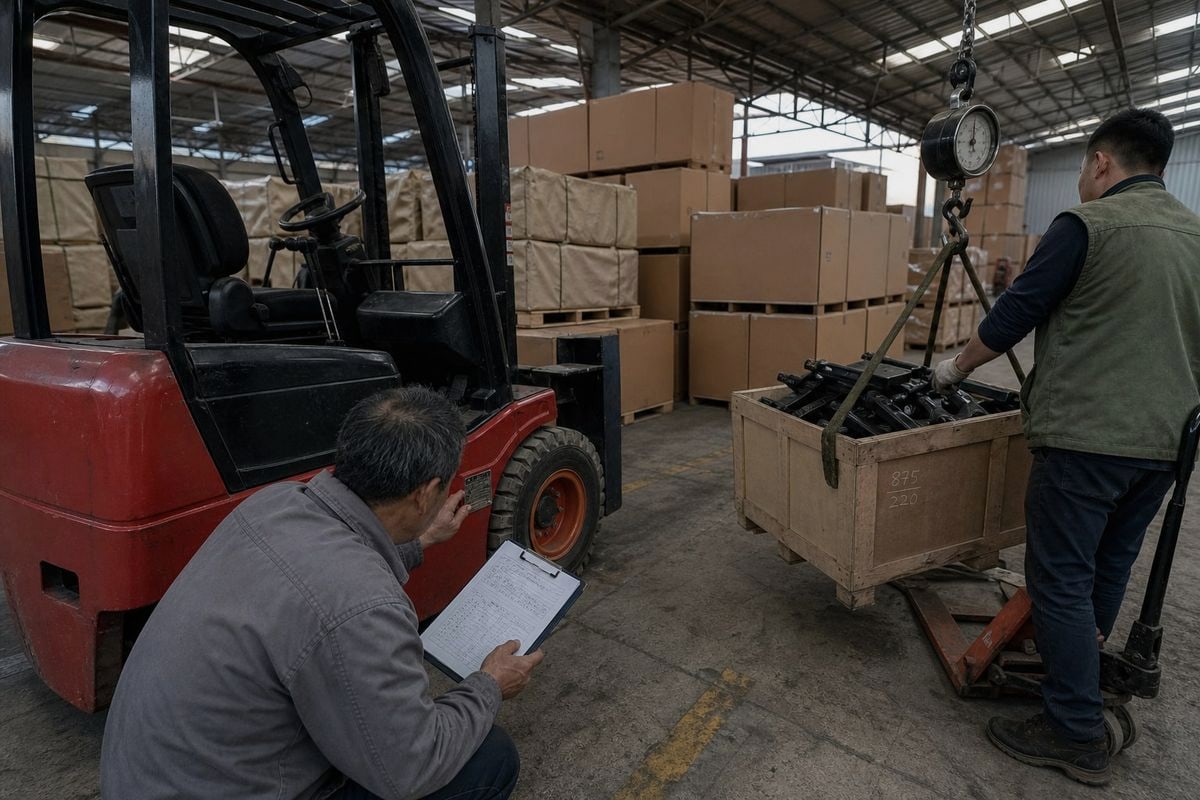
A forklift packing list is not a copy of the invoice. The invoice shows value. The packing list shows physical reality. Customs officers, carriers, and warehouse teams all read it differently, so it must serve all three. In our experience arranging heavy equipment transport from Chinese factories to the United States, the strongest packing lists are built package by package, not item by item.
Start from the fattura commerciale. Copy the invoice number, buyer and seller details 1, and item descriptions exactly. This makes the documents reconcile, which is what customs checks first. Then add the physical detail the invoice does not carry.
| Field | What to Write | Why It Matters |
|---|---|---|
| Shipper / Consignee | Full legal names and addresses | Must match invoice and Bill of Lading |
| Invoice reference | Commercial invoice number and date | Links the document set together |
| Package ID | "Case 1 of 3", "Pallet 2 of 3" | Enables piece-level inventory checks |
| Contenuto | Forklift model, serial number, rated capacity | Matches the manufacturer's nameplate |
| Weights | Net and gross weight per package, measured | Freight planning and trailer weight limits |
| Dimensions | L × W × H per package, measured | Container fit and CBM calculation |
| Marks | Shipping marks, keep-dry, lift points | Safe handling at every transfer |
| Totals | Total packages, weight, volume | Quick verification by the forwarder |
Include the manufacturer's nameplate data: model, serial number, and rated capacity. These must match the customs declaration. Record the Overall Lowered Height and gross vehicle weight so everyone can confirm the unit clears container doors. Note whether the machine ships assembled or with the mast, battery, or charger packed separately. Add the center of gravity and securement and tie-down points so loading crews pick safe lifting positions. Finally, sign and stamp the document. An unsigned packing list can be rejected by customs or banks.
The trade-off we weigh on every lithium forklift booking is simple: more battery detail upfront means slower document preparation, but far faster carrier acceptance. We always choose the detail.
List the battery chemistry, UN classification (UN 3480 for lithium-ion shipped separately, UN 2794 for lead-acid), watt-hour rating, whether the battery is installed or packed separately, state of charge at or below 30% where required, and reference the UN 38.3 test summary and Safety Data Sheet.
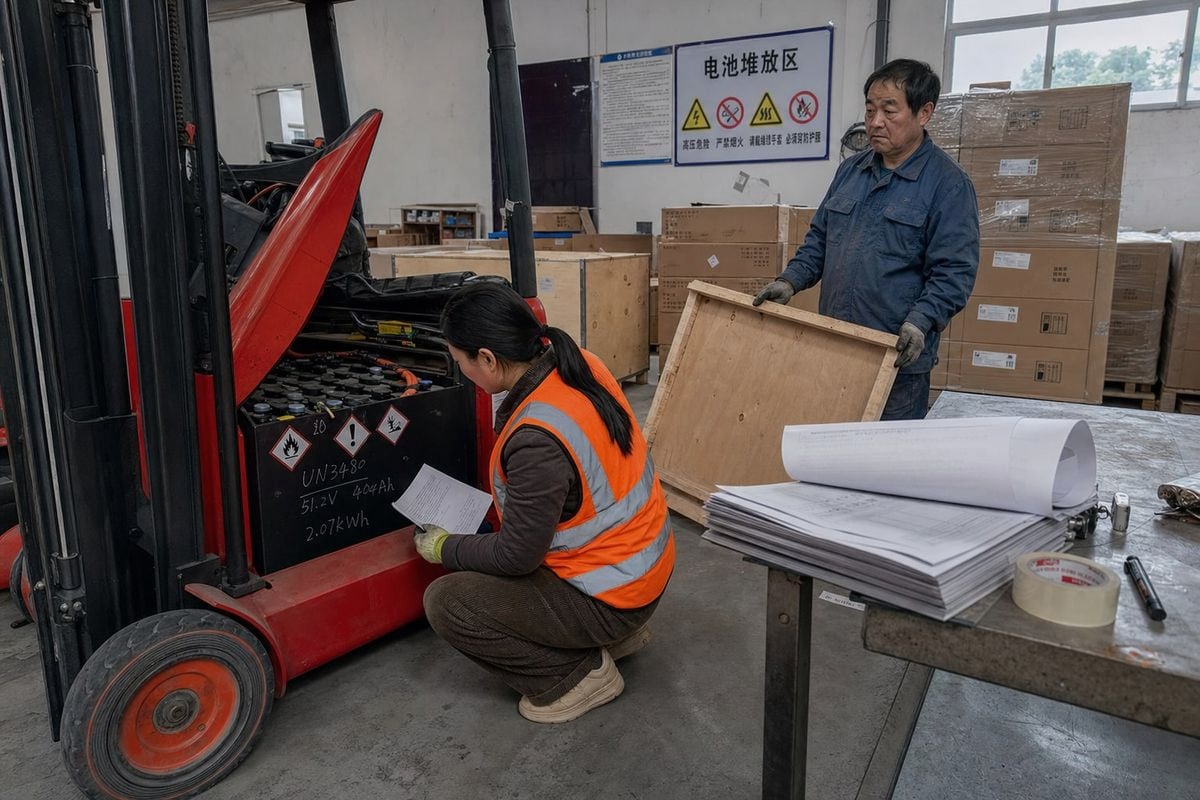
Lithium-ion battery regulations are the single biggest documentation risk in electric forklift shipping. Carriers can refuse cargo at the port if the paperwork does not describe the battery correctly. We have seen bookings cancelled for exactly this reason, and rebooking during peak season costs both money and weeks.
The packing list itself does not replace the dangerous goods declaration. But it must agree with it. Here is what we ask factories to confirm before we accept a lithium forklift for export:
| Battery Detail | Example Entry | Source Document |
|---|---|---|
| Chemistry | Lithium-ion (LiFePO4) | Battery specification sheet |
| UN number | UN 3480 (battery shipped separately) or vehicle classification if installed | IMDG / IATA classification |
| Watt-hour rating | e.g., 25.6kWh | Nameplate or Material Safety Data Sheet |
| State of Charge | ≤30% declared | Pre-shipment verification |
| Test evidence | UN 38.3 test summary available | Battery manufacturer |
| Configuration | Installed in truck / packed in separate crate | Physical packing check |
Whether the battery is installed, removed, or shipped in its own crate changes the package description, the classification, and the handling notes. An installed battery makes the forklift a battery-powered vehicle under hazardous materials shipping rules. A battery packed separately is its own dangerous goods package 2 with its own line on the packing list. Never blend the two into one vague entry.
Declare the state of charge on the list. Verifying it sits at or below 30% meets IATA and IMDG safety expectations for many battery-powered vehicle shipments 3, and it shows the carrier you take compliance seriously. Some of our customers now also attach a digital battery passport or QR code link giving the consignee the battery's manufacturing history, state of health, and recycling protocols. It is not mandatory everywhere yet, but it speeds up acceptance conversations. Add environmental tolerance thresholds too, since extreme heat during transshipment can degrade lithium cells.
A US forklift dealer once called us after his previous forwarder's shipment sat at Long Beach for eleven days. The cause? Estimated weights that disagreed with the scale reading at the terminal.
Avoid vague descriptions like "machinery," estimated weights or dimensions, mismatches with the commercial invoice, missing serial numbers, absent ISPM-15 wood treatment evidence, forgotten battery declarations, and unsigned documents. Each of these commonly triggers customs holds, inspections, storage charges, and demurrage.
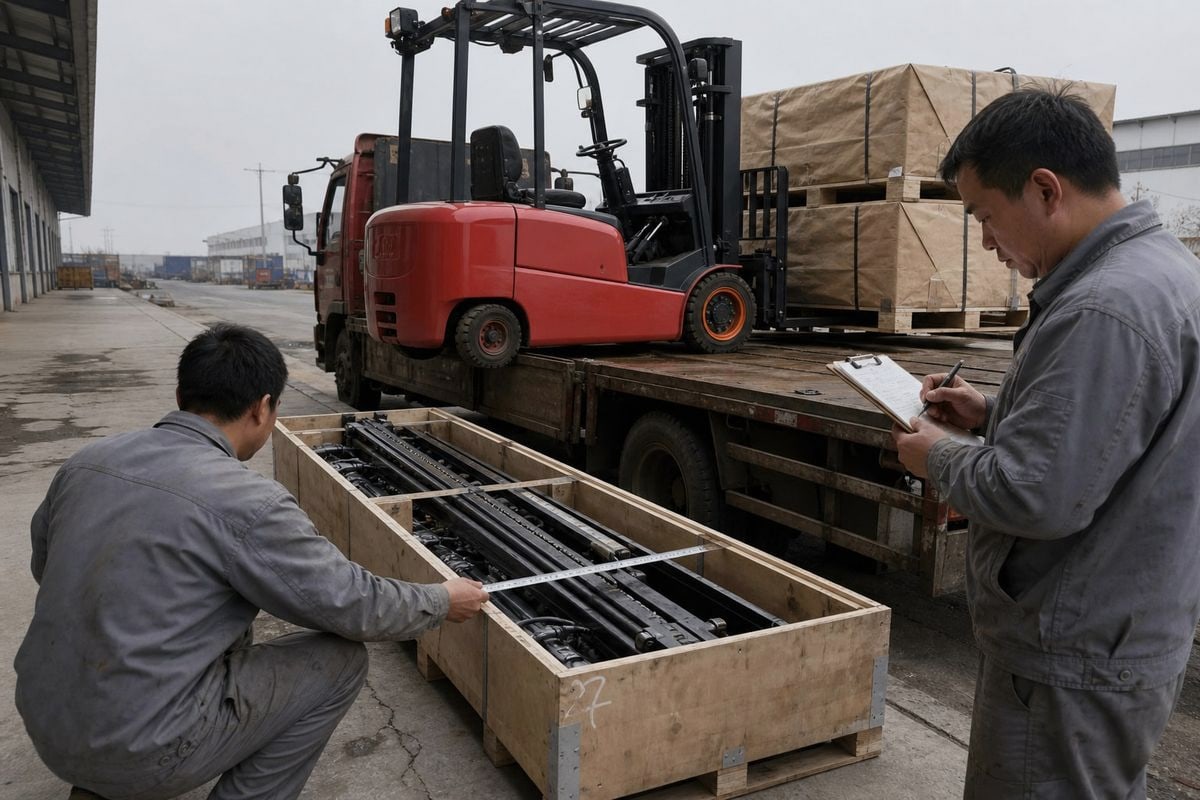
Customs clearance documentation works on one principle: everything must match. The packing list, the commercial invoice, the Bill of Lading, and the physical cargo must tell the same story. When any two disagree, officers stop the shipment for verification. That verification takes days, and every day at a US port can mean storage and demurrage bills.
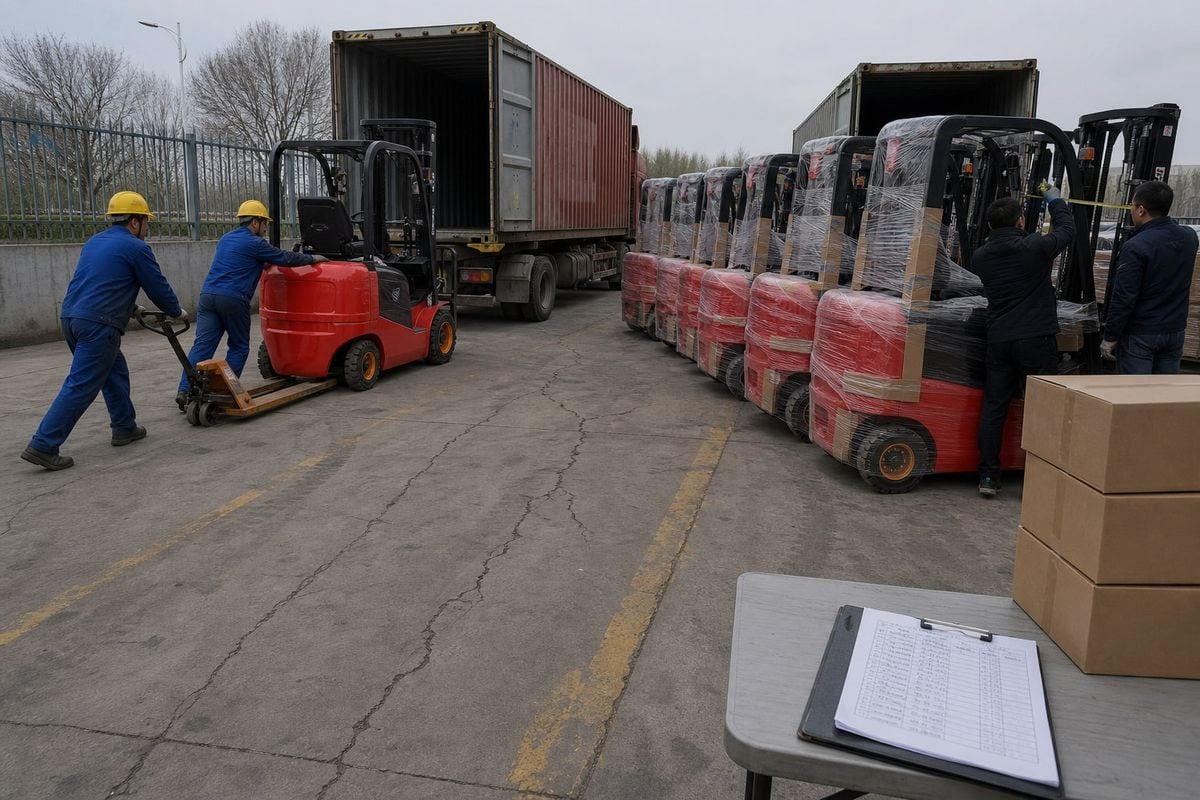
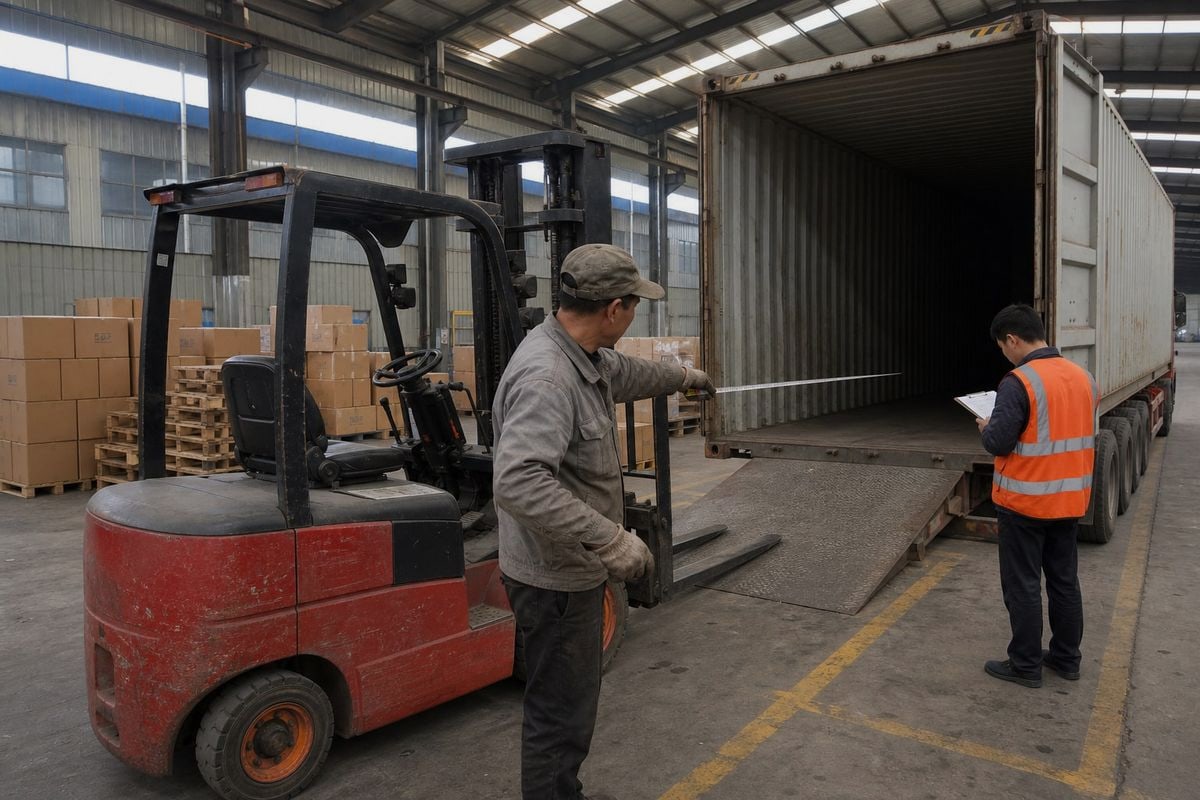
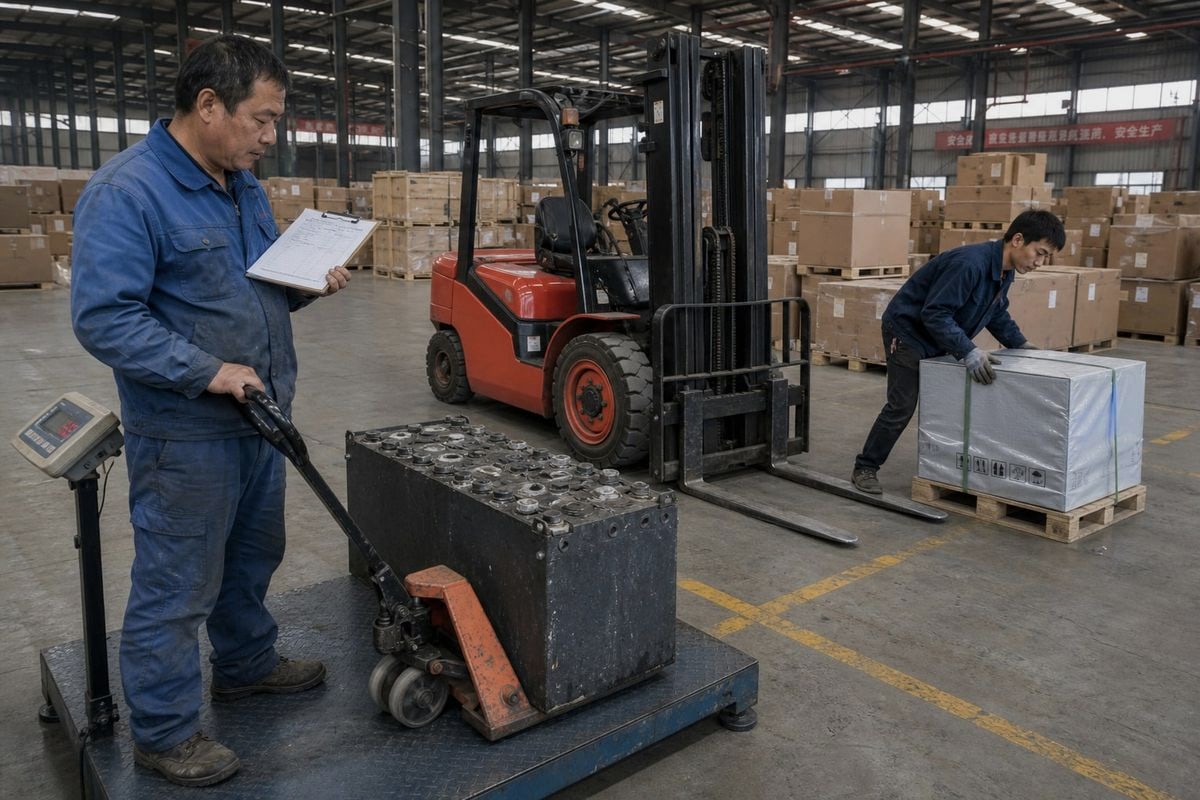
Before the truck leaves the factory, walk the cargo with the documents in hand. Count packages. Check serial numbers against nameplates. Weigh at least one package to confirm the factory's figures. Photograph everything and record the hour meter reading as a condition baseline. Those photos protect you in insurance claims later. Our team does this check on every forklift pickup we handle, because fixing paperwork in China costs hours while fixing it at a US port costs weeks.
Consolidation questions come up constantly with our US dealer clients. One buyer recently sourced forklifts from one factory, chargers from a second, and spare forks from a third, all bound for one container.
Yes, one consolidated packing list can cover multiple suppliers or mixed forklift shipments, provided each supplier's goods are grouped under their own invoice reference and every package carries a unique number, its own contents, weights, and dimensions. Never merge different suppliers' items into blended lines.
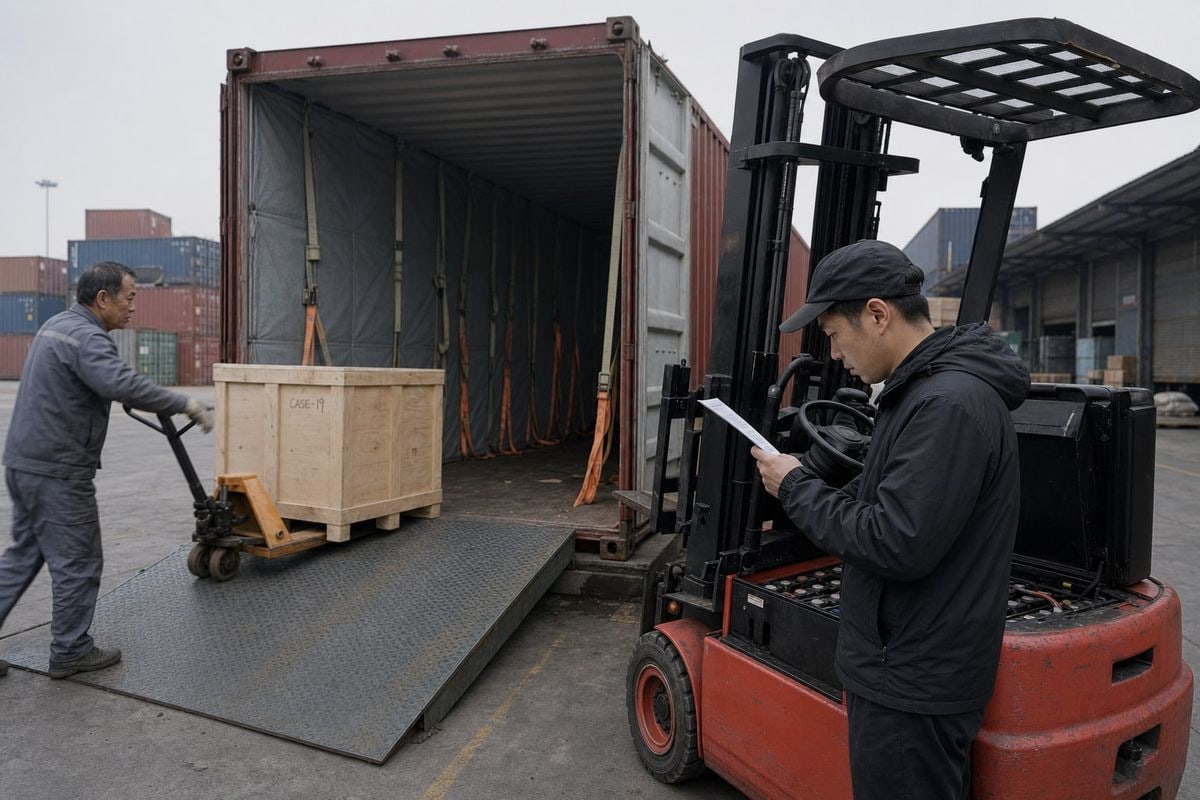
Multi-supplier consolidation is one of the biggest cost savers in forklift importing, and it is a core part of our freight forwarding services. But it multiplies the documentation risk if done casually. The rule we follow is simple: one container, one master packing list, but with clear internal structure so customs can trace every package back to its invoice.
Group the document by supplier first, then by package. Each section references its own commercial invoice number. Each package gets a container-wide unique ID so nothing is counted twice. Itemize every detached accessory, external chargers, battery watering systems, spare forks, so nothing is "lost" at destination inventory checks.
| Approach | Structure | Il migliore per | Risk Level |
|---|---|---|---|
| One list per supplier | Separate documents, one per invoice | Formal entries needing clean invoice-level traceability | Low, but more paperwork |
| One master consolidated list | Sections per supplier, unique package numbers throughout | FCL consolidation with 2–5 suppliers | Low if structured well |
| Blended single list | Items mixed with no supplier grouping | Nothing — avoid this | High: audit and clearance problems |
Keep battery packages on their own lines even in a mixed load, because their hazardous materials shipping status 4 differs from ordinary spare parts. Note which packages are crated versus palletized, since crating and palletizing methods affect stacking during container loading. Record IoT tracker IDs if any unit carries telematics, so the consignee can monitor location and shock alerts. Finally, reconcile the master list against the container loading plan before the doors close. We photograph the loading sequence at our warehouse so the packing list, photos, and Bill of Lading all agree when the container reaches the destination broker.
A precise, package-level, battery-aware packing list prevents customs holds, carrier rejections, and damage disputes. Build it from the invoice, measure everything, declare the battery, and sign it before dispatch.
1. Authoritative government source detailing required information for standard export and shipping documentation. ↩︎
2. General overview of dangerous goods classifications and safety protocols for international transport. ↩︎
3. Official guidelines for the safe transport of lithium batteries by air and integrated logistics. ↩︎
4. Regulatory standards for shipping hazardous materials and dangerous goods via maritime routes. ↩︎