
- +8618603825129
- [email protected]


Peak season forklift shipping costs and transit times catch many importers off guard. Every October, our Zhengzhou team fields urgent calls from buyers whose containers got rolled. Booking space vanishes, rates jump, and delivery promises collapse. The good news? These problems are predictable — and with the right planning, avoidable.
Peak season raises forklift shipping costs through higher base ocean rates, peak season surcharges of roughly $200–$1,200+ per FEU, and congestion-related fees, while transit times stretch by one to three extra weeks due to port congestion, rolled cargo, and tighter freight capacity.
Let me break this down piece by piece. I will cover how much costs rise, whether transit times can still be trusted, and exactly when and how to book.
Last Q4, one of our US forklift dealer clients watched his per-container rate climb nearly 40% in six weeks. Our booking desk sees this pattern repeat almost every year.
During peak season, total forklift shipping costs from China typically rise 20–50%. This comes from three layers: higher base ocean freight rates, peak season surcharges of $100–$600 per TEU or $200–$1,200+ per FEU, and extra congestion fees like demurrage, detention, and chassis charges.
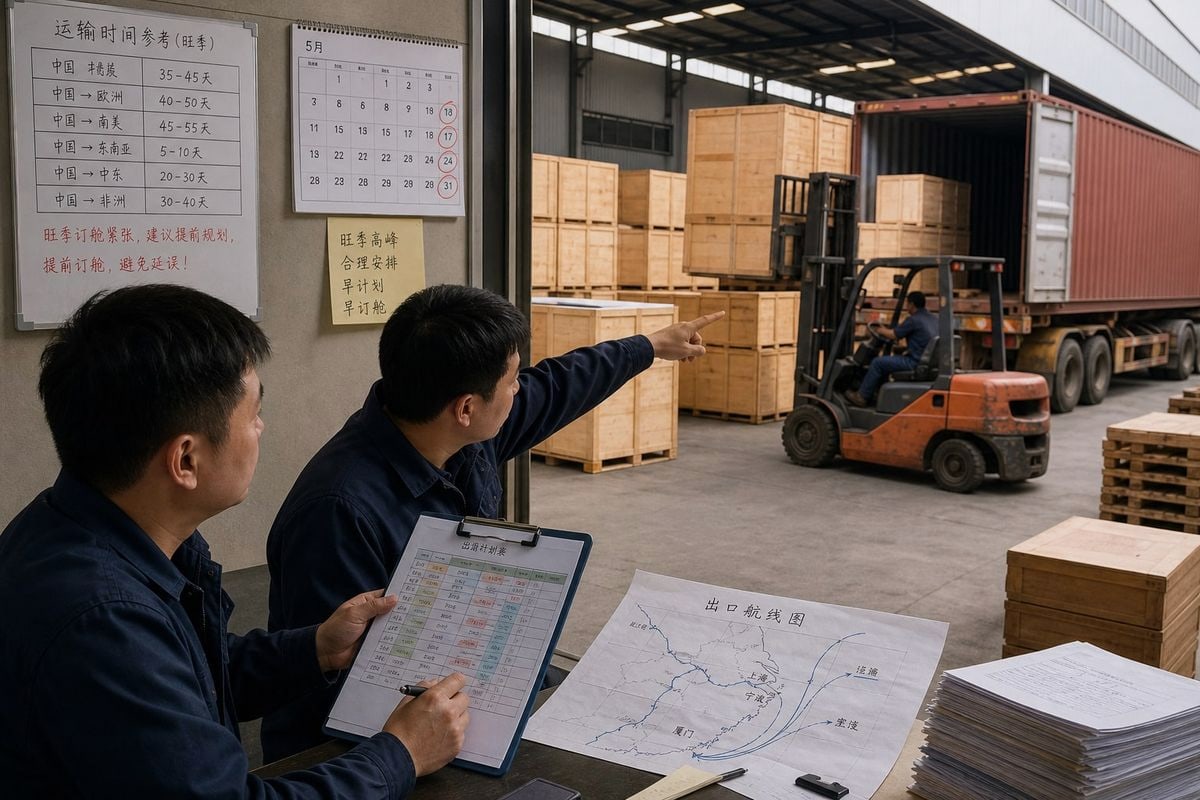
The cost increase is not one single fee. It stacks in layers, and each layer hits forklift cargo harder than ordinary palletized goods. Forklifts are heavy, dense, and often battery-powered, so carriers treat them as less flexible cargo when space gets tight.
First, base freight rates rise. When demand outpaces vessel space 1, carriers raise linehaul pricing because they can. Spot rates can climb sharply in a matter of weeks. Shippers without contracted space get pushed into the spot market, where rates can nearly double on hot lanes.
Second, peak season surcharges (PSS) appear. These are temporary add-ons that carriers announce during high-demand windows 2, especially in Q4. Air freight surcharges of $0.10–$0.50 per kilogram also apply if you fly urgent forklift spare parts or chargers.
Third, delay-related accessorial charges grow. Congested ports mean more demurrage. Busy receiving docks mean more detention and wait fees. Some freight market updates note surge fees ranging from a few hundred dollars up to $1,500 per load depending on market conditions and commitment level.
| Cost layer | Typical peak season range | 適用対象 |
|---|---|---|
| Base ocean rate increase | 20–50% above off-peak | FCL and LCL forklift shipments |
| Peak season surcharge (TEU) | $100–$600 | 20FT containers |
| Peak season surcharge (FEU) | $200–$1,200+ | 40FT / 40HQ containers |
| Air freight surcharge | $0.10–$0.50/kg | Parts, chargers, batteries |
| Congestion accessorials | $200–$1,500+ per load | Demurrage, detention, chassis split |
Some buyers argue that the base rate is the real problem and surcharges are noise. In our experience shipping electric forklifts to the US, the opposite is often true. A client can absorb a higher linehaul rate, but three days of demurrage plus destination detention can quietly erase the margin on an entire container of pallet trucks. That is why we always quote all-in, including accessorials, before a peak season booking.
A buyer in Texas once asked me why his forklift container took 52 days door-to-door in November when the same route took 35 days in May. The answer sits in every handoff point.
Yes, but only with realistic planning. Peak season transit times from China become longer and less predictable, often adding one to three weeks. Port congestion, rolled sailings, warehouse dwell time, and tender rejections all compound. Reliable delivery requires early booking, buffer time, and confirmed appointments.
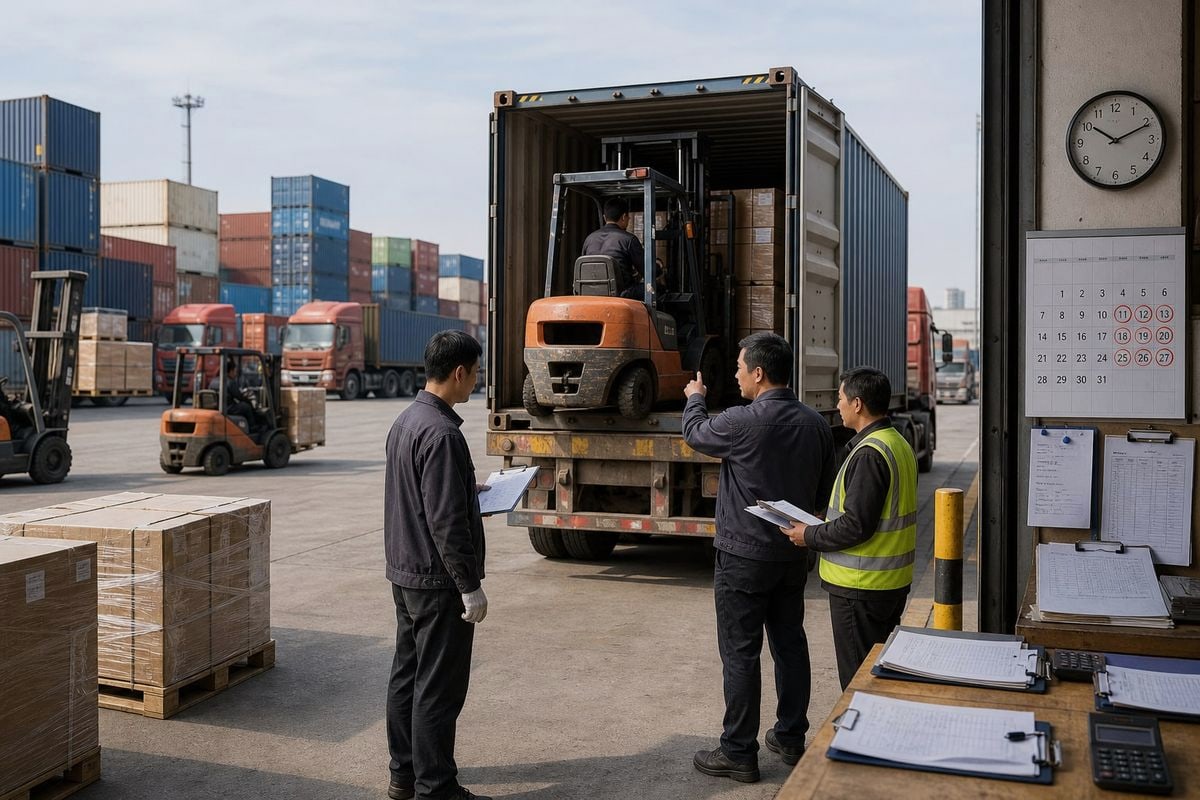
Transit reliability suffers because supply chain congestion compounds at every stage. A delay at origin becomes a missed vessel. A missed vessel becomes a week of waiting. Port congestion at destination adds dwell days. Then the receiving warehouse is backed up too. SERP data shows these ripple effects can extend forklift delivery windows by several weeks during peak retail seasons.
Forklift shipments face specific friction points that ordinary freight avoids:
| Stage | Off-peak timing | Peak season timing |
|---|---|---|
| Factory pickup and drayage | 2~4日 | 4–8 days |
| Ocean transit (China to US West Coast) | 14–18 days | 16–25 days |
| Port dwell and customs | 3~5日 | 5–12 days |
| 最終納品 | 3~5日 | 5~10日 |
We handle this by coordinating cargo readiness with the factory weeks earlier, pre-checking battery documentation before the container reaches the port, and confirming delivery appointments in advance. That is where most of the reliability comes from — not from the ocean leg itself.
The clients who sail through Q4 smoothly all share one habit: they treat peak season logistics as a project we plan together in July, not a booking we scramble for in October.
Book vessel space 60–90 days early, confirm forklift and battery documentation before cargo moves, request all-in quotes covering accessorials, consolidate multi-supplier cargo into fewer containers, build two to three weeks of buffer into project schedules, and use a China-based forwarder who coordinates directly with your factories.
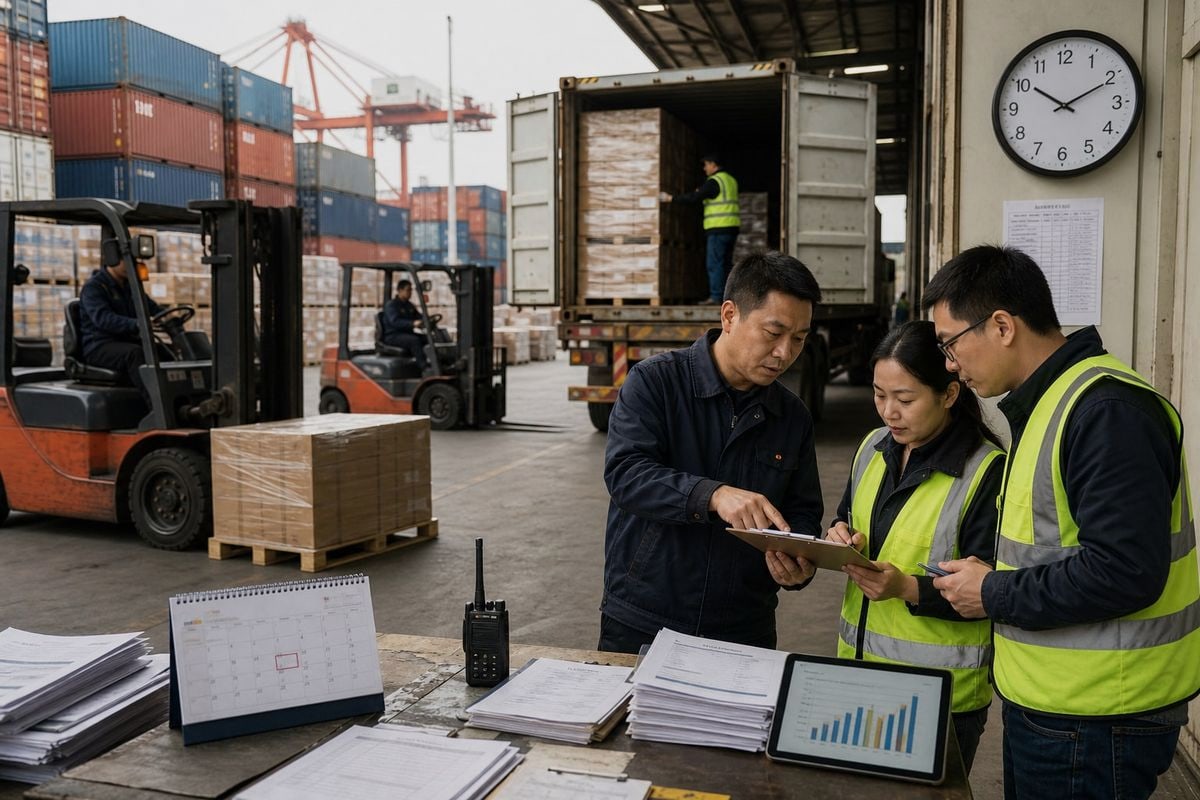
Avoiding delays is mostly about removing friction before it happens. Here is the process we walk our forklift importer clients through every year.
One more emerging factor: geopolitical front-loading. Many businesses now ship heavy equipment months earlier than usual to hedge against tariff changes. This shifts and stretches the traditional peak cycle, which makes early planning even more important.
Timing is the lever I push hardest with new clients. The same 40HQ container of electric stackers can cost dramatically different amounts depending on which month it sails from China.
Book forklift shipments to sail from China between late January and April, or in early summer before August. Confirm bookings 60–90 days ahead of Q4 and Chinese New Year. Avoid August through mid-December departures, when peak season surcharges and 20–40% volume spikes hit hardest.
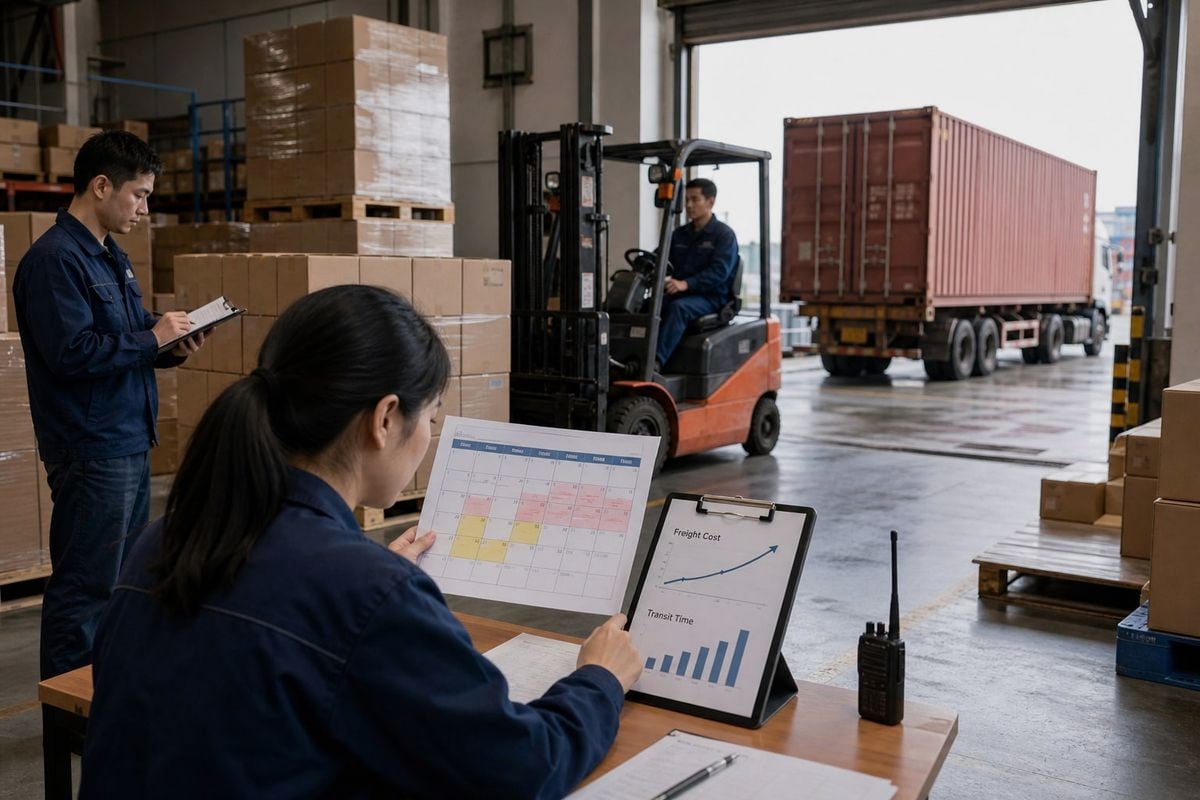
The China export calendar has clear pressure points. Outbound volumes in some regions historically rise 20–40% heading into the holidays. Knowing the calendar lets you position your material handling equipment transport around the surge instead of inside it.
| Period | Market condition | Booking advice |
|---|---|---|
| Late January – April | Post-CNY recovery, softer rates | Best value window; good space availability |
| May – July | Moderate demand, stable rates | Good window; book 3–4 weeks ahead |
| August – October | Retail peak builds, PSS applied | Book 60–90 days ahead or expect surcharges |
| Golden Week (early October) | Factories close, capacity crunch | Ship before late September or wait |
| November – mid-December | Holiday crunch, congestion peaks | Highest cost and delay risk of the year |
| Pre-Chinese New Year (Jan/Feb) | Factory rush, then shutdown | Book very early; factories close 2–4 weeks |
Buyers often ask whether it is cheaper to ship before or after peak season. Shipping before is usually better for forklift dealers. You pay slightly elevated pre-peak rates but avoid the worst peak season surcharges and, more importantly, you have inventory on the ground before your own customers' Q4 demand hits. Shipping after CNY gives the lowest rates, but your equipment arrives in March or April — too late if your customers needed forklifts for holiday warehouse volume.
There is also a hidden secondary bottleneck: the rental return surge. When seasonal rental contracts expire at the same time, returned units saturate the specialized transport market and squeeze LTL shipping rates and equipment-hauler capacity at destination. If your business rents out forklifts, plan destination trucking around that window too.
Our rule of thumb: if your forklifts must be operational before December, the booking conversation should start in July or August, not October.
Peak season inflates forklift shipping costs through stacked surcharges and stretches transit times at every handoff. Book early, pre-clear battery documents, demand all-in quotes, and time your shipments around the surge.
1. UNCTAD is the primary UN body providing data and analysis on global maritime trade and vessel capacity. ↩︎
2. The World Bank offers comprehensive research on global transport logistics and supply chain performance indicators. ↩︎
3. PHMSA provides the official regulatory framework for the safe transport of lithium batteries in the United States. ↩︎
4. Trade.gov is the official US government resource for commercial guidance and trade regulations for the China market. ↩︎



