
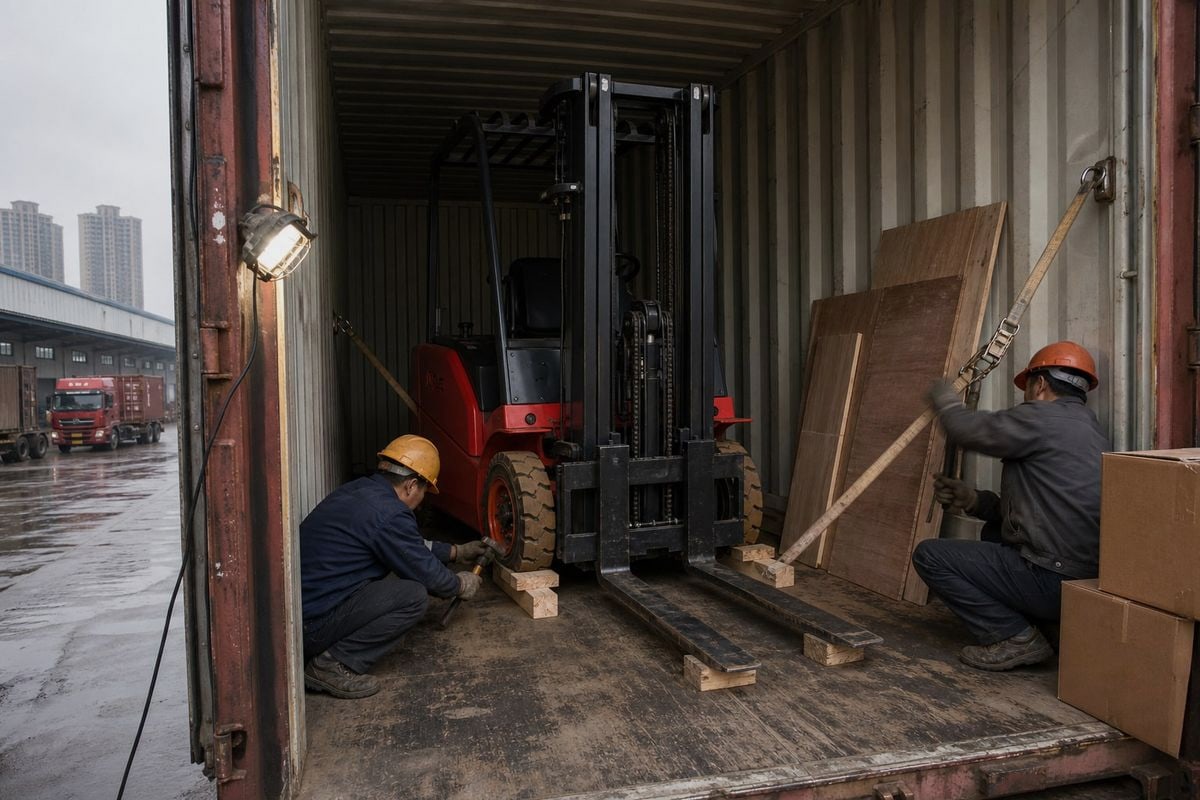
컨테이너 안에 포크리프트를 잘못 고정하는 방법을 배우는 것은 수입업자에게 실제 비용을 초래합니다. 저희 정저우 적재 창고에서, 저는 부주의한 고정으로 인해 새 기계가 파손되는 것을 보았습니다.
컨테이너 안에 포크리프트를 고정하려면, 마스트와 포크를 내리고, 기계를 중앙에 배치하여 균형 잡힌 무게 분산을 이루며, 모든 바퀴 주위에 바퀴 고정대와 나무 블록을 설치한 후, 최소한 네 개의 비율이 인증된 래칫 스트랩 또는 등급 70 체인을 45도 각도로 컨테이너 고정 지점에 부착해야 합니다.
이것이 간단한 답변입니다. 전체 과정에는 더 많은 단계가 있습니다. 저는 매주 중국에서 실제 포크리프트 배송을 수행하는 저희 팀의 과정을 통해 각 단계를 안내해 드리겠습니다.
포크리프트를 안전하게 배송하기 위해 필요한 도구와 재료는 무엇인가요?
텍사스의 한 구매자가 왜 우리의 로딩 견적서에 목재와 합판이 항목으로 나열되어 있는지 물어본 적이 있습니다. 그는 스트랩만으로 충분하다고 가정했습니다. 그 질문은 완전한 답변을 받을 자격이 있습니다.
최소 5,000 lb의 하중을 견딜 수 있는 중량 4개의 래칫 스트랩 또는 등급 70의 화물 체인, 고정 및 지지용 단단한 목재, 바퀴 차단기, 바닥 보호용 합판 판, 모서리 보호대, 못, 갭을 채우기 위한 던지 백, 부식 방지를 위한 VCI 방출기가 필요합니다.
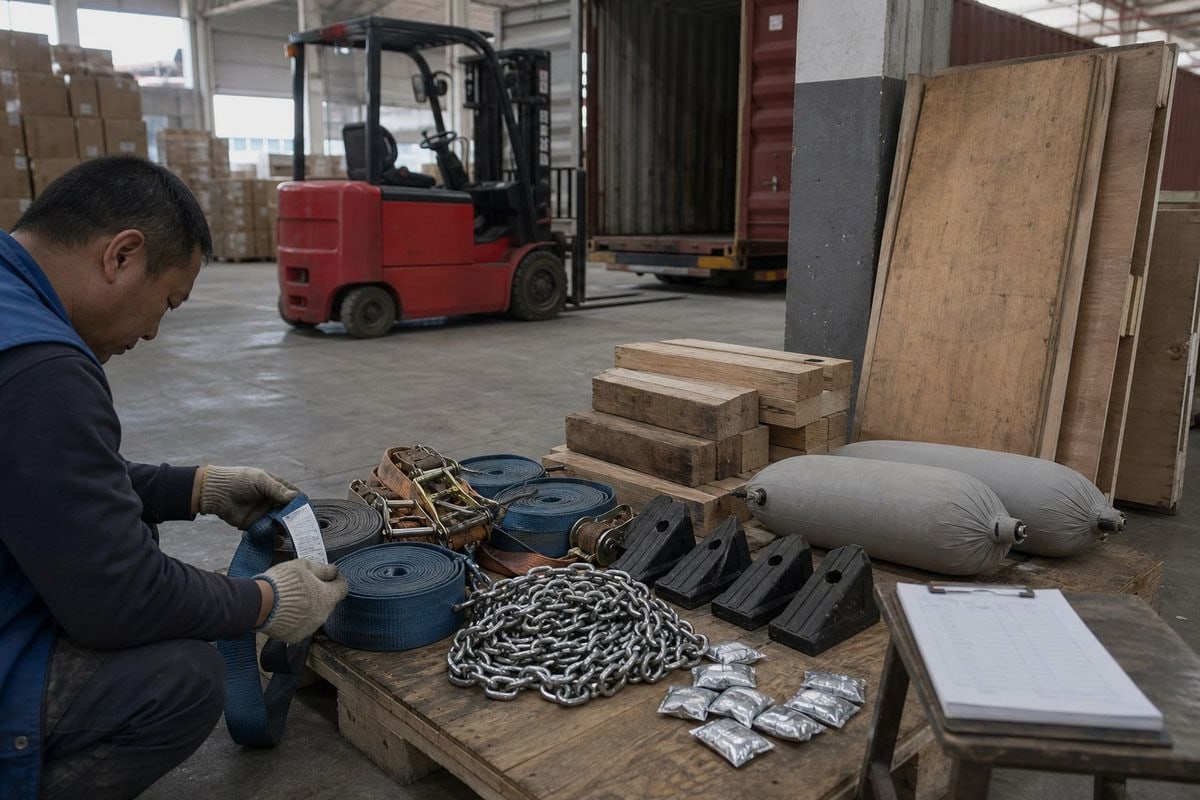
우리 팀은 중국의 집합 창고에 표준 보안 키트를 보관하고 있습니다. 우리는 컨테이너가 도착하기도 전에 이를 조립합니다. 트럭이 도착한 후 자재를 찾으러 황급히 다니는 것은 실수가 발생하는 원인입니다. 여기 우리가 실제로 사용하는 체크리스트가 있습니다.
핵심 보안 키트
| 항목 | 최소 사양 | 목적 |
|---|---|---|
| 라쳇 스트랩 | 5,000 lb 작업 용량, 4개 이상 | 미끄러짐에 대한 긍정적인 제지 |
| 70등급 운송 체인 1 | 지게차 총 중량에 맞춤 | 더 무거운 기계를 위한 제어 장치 |
| 경목 | 2" x 6" 적층 차단재 | 바퀴 주위의 차단 및 고정 |
| 바퀴 쵸크 | 타이어 크기에 대한 등급 | 스트랩을 장착하기 전에 굴러가는 것을 멈춤 |
| 합판 또는 강철 판 | 중량 등급 | 축 하중을 컨테이너 바닥에 분산시킴 |
| 더니지 백 | 정확한 충전 압력 | 빈 공간을 채우고 측면 이동을 멈춤 |
| VCI 방출기 | 컨테이너 볼륨에 맞게 크기가 조정됨 | 수압에 따른 염분 공기 부식 방지 |
왜 합판인가요? 지게차는 작은 타이어 접지면에 총 중량을 집중시킵니다. 컨테이너 바닥은 해양 등급의 합판으로 되어 있으며, 무거운 균형 유지 기계가 이를 관통할 수 있습니다. 우리는 먼저 시트나 강판을 놓고 그 위에 지게차를 주행합니다.
왜 단순히 제습제 가방 대신 VCI 방출기를 사용할까요? 일반 제습제는 긴 해상 수송에서 종종 실패합니다. 염분 공기가 유압 실린더와 제어 전자 장치를 공격합니다. 우리는 미국으로 출하하는 모든 전기 지게차의 해당 구성 요소 근처에 VCI 방출기를 배치합니다.
한 가지 더. CTU 코드, 포장에 관한 국제 실무 규범 화물 운송 단위 2,는 우리가 따르는 기준 표준입니다. 보험사와 분쟁이 발생할 경우 CTU 코드 준수를 보여주는 것은 귀하를 보호합니다.
컨테이너 내부에 지게차를 어떻게 배치하고 고정하여 이동을 방지하나요?
우리가 작성하는 모든 적재 계획은 동일한 절충점에서 시작됩니다: 포크리프트를 더 깊이 밀면 예비 부품을 위한 공간이 절약되지만, 기계는 컨테이너의 균형 지점에 머물러야 합니다.
포크리프트를 컨테이너의 정확한 종방향 중앙으로 천천히 이동시키고, 마스트와 포크를 덤내지에 내리며, 모든 바퀴에 대해 2" x 6" 적층 차단재를 못으로 고정하여 앞뒤 및 좌우 움직임을 멈춘 후에야 스트랩을 적용합니다.
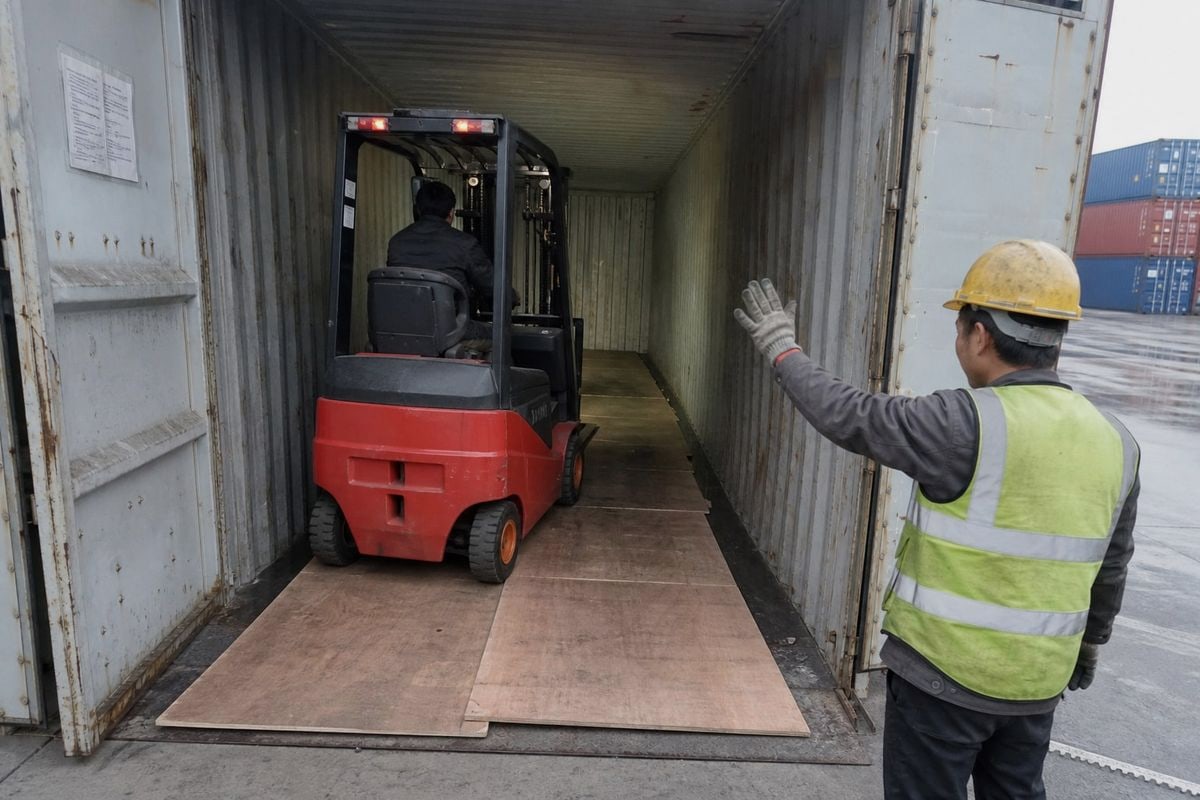
위치 설정이 제어 장치보다 먼저입니다. 위치를 잘못 설정하면 어떤 유형의 고정도 해결할 수 없습니다. 다음은 내 적재 팀이 출발지에서 따르는 순서입니다.
단계별 위치 설정 과정
- 컨테이너가 단단하고 평평한 바닥에 놓여있는지 확인하십시오. 경사면이나 부드러운 표면에서는 적재하지 마십시오.
- 주행 경로에 바닥 보호용 합판을 깔아주십시오.
- 천천히 직진하십시오. 기계가 움직이는 동안에는 사람들을 컨테이너 밖으로 대피시킵니다. 컨테이너 내부에서 작업자와 이동식 장비를 혼합하는 것은 사고의 원인으로 알려져 있습니다.
- 세로 중심에서 멈추십시오. 균형 잡힌 하중은 중심의 중력을 유지하며, 이는 항구에서의 크레인 취급과 선박의 안정성에 중요합니다.
- 마스트와 포크를 바닥까지 완전히 내리십시오. 그것들을 위에 놓으십시오. wooden pallet or dunnage. This protects the floor and drops the vertical center of gravity.
- Set wheel chocks against every wheel immediately.
Building the Timber Cradle
Blocking and bracing turns the container floor into part of the restraint system. We nail kiln-dried lumber directly into the floor to create a physical cradle around each wheel. Rail guidance on floor blocking calls for 2" x 6" laminated blocking with staggered nails and enough nail penetration, using multiple nails per block matched to the load weight. We follow the same principle for ocean containers.
Timber shoring can also run from the wheels or frame to the container's corner posts for very heavy machines. Any remaining voids get filled with dunnage bags inflated to the correct pressure. The goal is simple: even before straps go on, the forklift physically cannot slide in any direction.
운송 중 지게차 배터리 및 장비를 고정하기 위한 모범 사례는 무엇인가요?
Lithium battery forklifts make up most of what we ship now, and battery handling is where I see the most confusion from first-time importers.
Isolate or disconnect the forklift battery before loading, verify lithium battery documentation meets carrier and IMO requirements, remove or separately strap loose attachments, insert a mast block to support the lifting assembly, and cross-lash the rear counterweight to resist pendulum forces during vessel rolling.
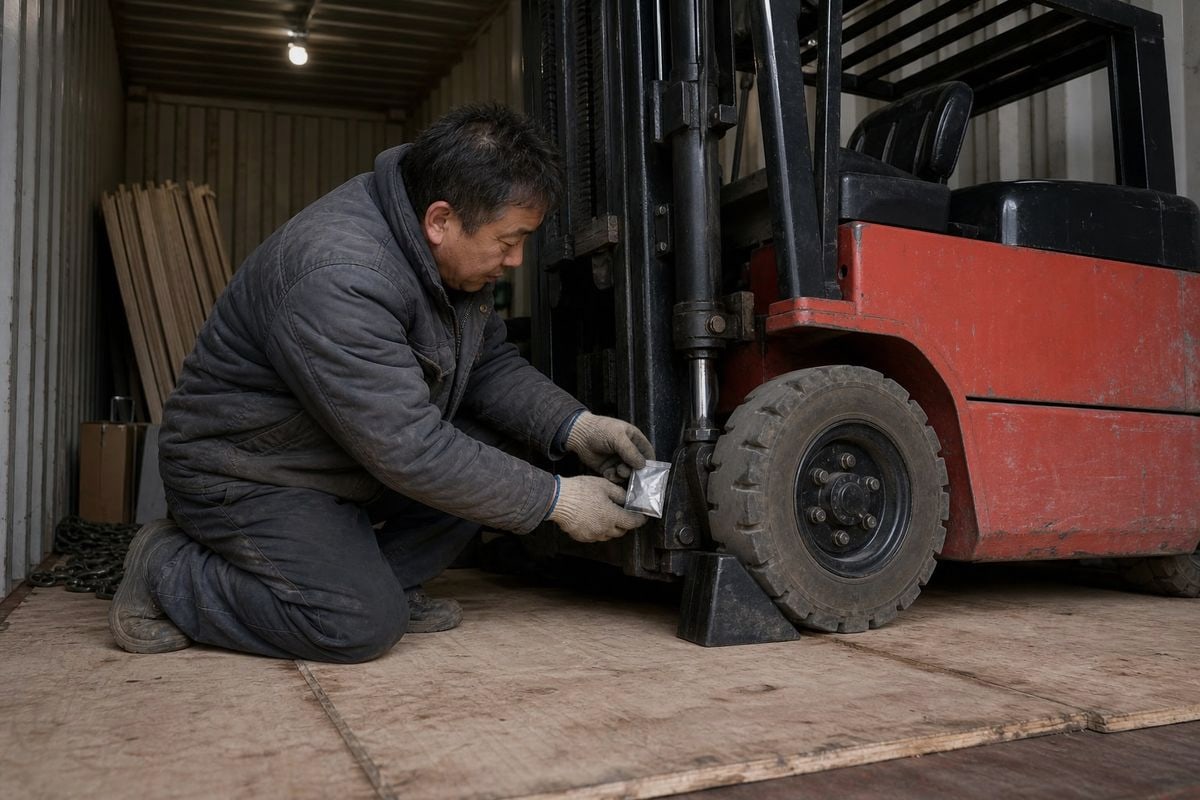
Shipping an electric forklift is not the same as shipping ordinary cargo. Batteries, hydraulics, and heavy attachments each need their own attention. I break it down into three areas.
Battery Preparation
전기 지게차의 경우, disconnect or isolate the battery before the machine enters the container. This prevents electrical fires and accidental activation. For any internal-combustion units in a mixed shipment, drain fuel to 25% of tank capacity to comply with International Maritime Organization 3 hazardous materials rules. Lithium battery forklifts also need correct cargo classification and documents before the cargo reaches the port. We check battery specifications with the factory early, because carrier rejection at the terminal is expensive and slow to fix.
Mast, Hydraulics, and Attachments
| 구성 요소 | Risk During Ocean Transit | 모범 사례 |
|---|---|---|
| Mast assembly | Hydraulic seal fatigue from vertical pounding of swells | Insert a mechanical mast block or secondary locking pin |
| Forks | Sliding, floor gouging | Lower fully, rest on pallet or dunnage, strap if removable |
| Rear counterweight | Pendulum effect can snap parallel lashings | Apply cross-lashing across the counterweight |
| Side shifters, clamps | Loosening from vibration | Remove where possible; crate and strap separately |
| Chargers and spares | Impact damage | Palletize, shrink-wrap, and lash to separate lashing points 4 |
The counterweight point deserves emphasis. Its high-density mass sits behind the rear axle. During extreme vessel rolling, it acts like a pendulum. Standard parallel lashings can snap. Cross-lashing spreads that force across opposing anchor points.
Monitoring Options
For high-value fleet shipments, some of our clients add IoT impact and tilt sensors to the forklift frame. These give real-time alerts and a digital record of any excessive G-forces during the voyage, which helps enormously with insurance claims.
컨테이너 로딩 및 고정 후에 내 지게차가 손상 없이 도착하도록 보장하려면 어떻게 해야 하나요?
A hard lesson shaped our final-inspection routine. Years ago, a client's machine arrived with tension marks because a strap was routed over a hydraulic hose. Now nothing ships without a photographed sign-off.
Attach every strap only to designated structural points and rated container lashing points, re-tension all restraints after settling, confirm the machine touches no walls or ceiling, then photograph the finished securement from multiple angles and keep the images with your shipping documents.

The last hour before the container doors close decides whether the first seven steps actually worked. This is our verification routine, and it is the part I refuse to shortcut.
Anchor Points Matter More Than Strap Count
Straps must connect to structural points on the forklift, never to fragile parts. Hoses, the steering column, plastic covers, and the overhead guard uprights are not anchor points. On the container side, use only the rated D-rings and lashing points built into the floor rails and corner posts. A 5,000 lb strap attached to a weak point protects nothing.
The Pre-Sealing Inspection Checklist
| Check | What We Verify |
|---|---|
| Strap tension | Each ratchet strap is tight, at roughly 45 degrees, with no twists |
| Chock and blocking contact | Wheel chocks and nailed timber sit firm against every tire |
| 클리어런스 | No part of the mast, guard, or counterweight touches walls or ceiling |
| Edge protection | Padding sits between straps and painted surfaces |
| Battery status | Isolated, with documentation matching the cargo declaration |
| Weight distribution | Load sits centered along length and across both sides |
| Photos | Wide shots plus close-ups of every lashing point and blocking cluster |
One nuance importers should understand: straps versus chains is not a universal choice. For lighter warehouse machines on shorter routes, four or more ratchet straps over solid blocking work well. For heavier counterbalance forklifts or long trans-Pacific voyages, we upgrade to Grade 70 transport chain and heavier timber shoring. The right system depends on the forklift's gross weight, the container type, and the voyage length. Also consider when not to drive the machine in at all: if the container is not on firm level ground, or clearance is too tight, use a rated ramp setup at a proper dock or switch to a flat rack.
Finally, document everything. Photos taken at loading are your evidence if damage appears at destination. We send them to every client before the vessel departs.
결론
Securing a forklift inside a shipping container is a system, not a single tool. Combine fit checks, preparation, blocking and bracing, and rated restraints, then verify and photograph everything.
각주
1. US government agency providing standards for transport chain and cargo securement. ↩︎
2. Official international code of practice for packing cargo transport units safely. ↩︎
3. The UN agency responsible for the safety and security of international shipping. ↩︎
4. International organization that sets standards for shipping container structural components. ↩︎




