
- +8618603825129
- [email protected]

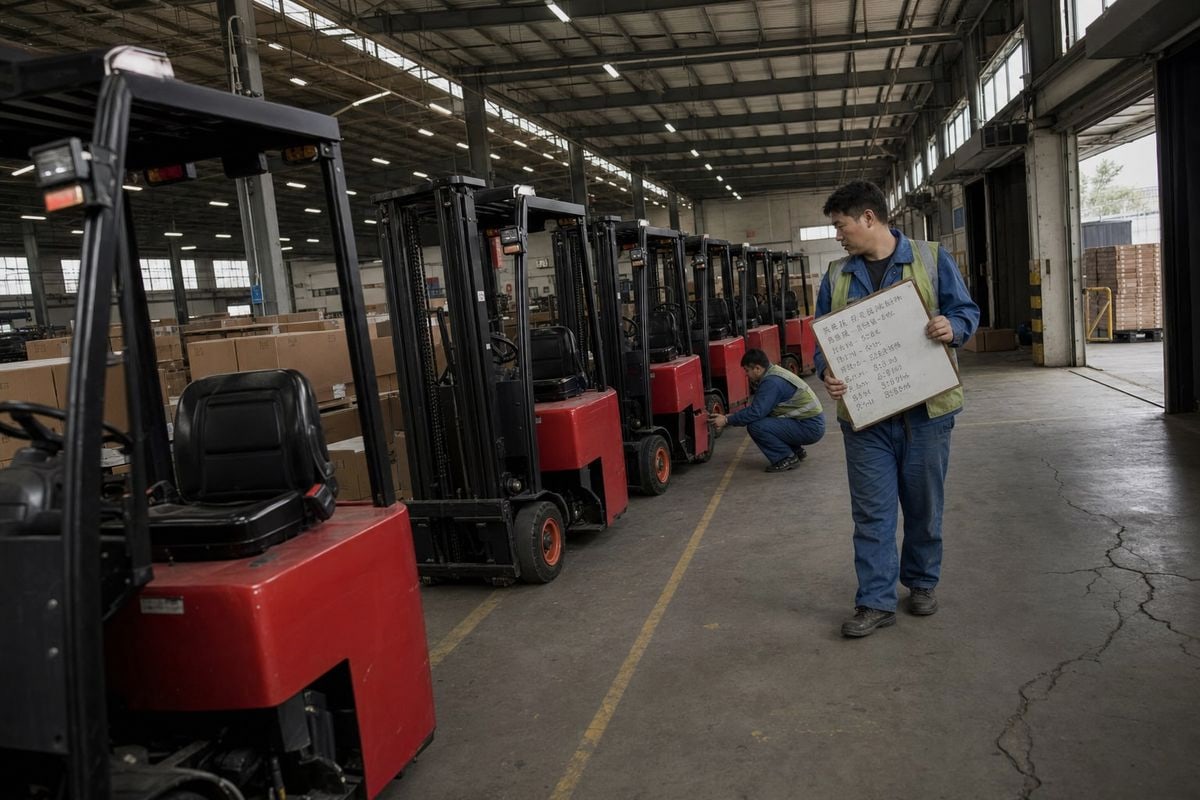
Choosing warehouse storage for forklift imports from China trips up many buyers. I have watched importers lose weeks and thousands of dollars because our team at MBMLOG got involved too late. A cracked warehouse floor, a rejected lithium battery, a surprise heavy-cargo surcharge — these problems compound fast. The fix is simple: pick the warehouse before you book freight, and match it to your forklift's real load profile.
Choose warehouse storage for forklift imports from China based on floor load capacity, heavy-cargo handling equipment, port proximity, battery compliance, and consolidation capability — not the lowest rate. Verify licenses, transparent fees, and inspection services before your purchase order, and test the facility with a trial shipment first.
That is the short answer. Now let me walk you through each decision step by step, using what we see every week moving electric forklifts out of China.
Last quarter, a US dealer sent us forklifts from three factories that arrived four days apart. Our Zhengzhou coordination team had to hold, stage, and re-plan the whole load.
Plan roughly 8–12 square meters per standard counterbalance forklift, including maneuvering and staging room, plus 20–30% buffer space for batteries, chargers, and spare parts. For multi-supplier consolidation, size the warehouse for your peak arrival window, not your average monthly volume.
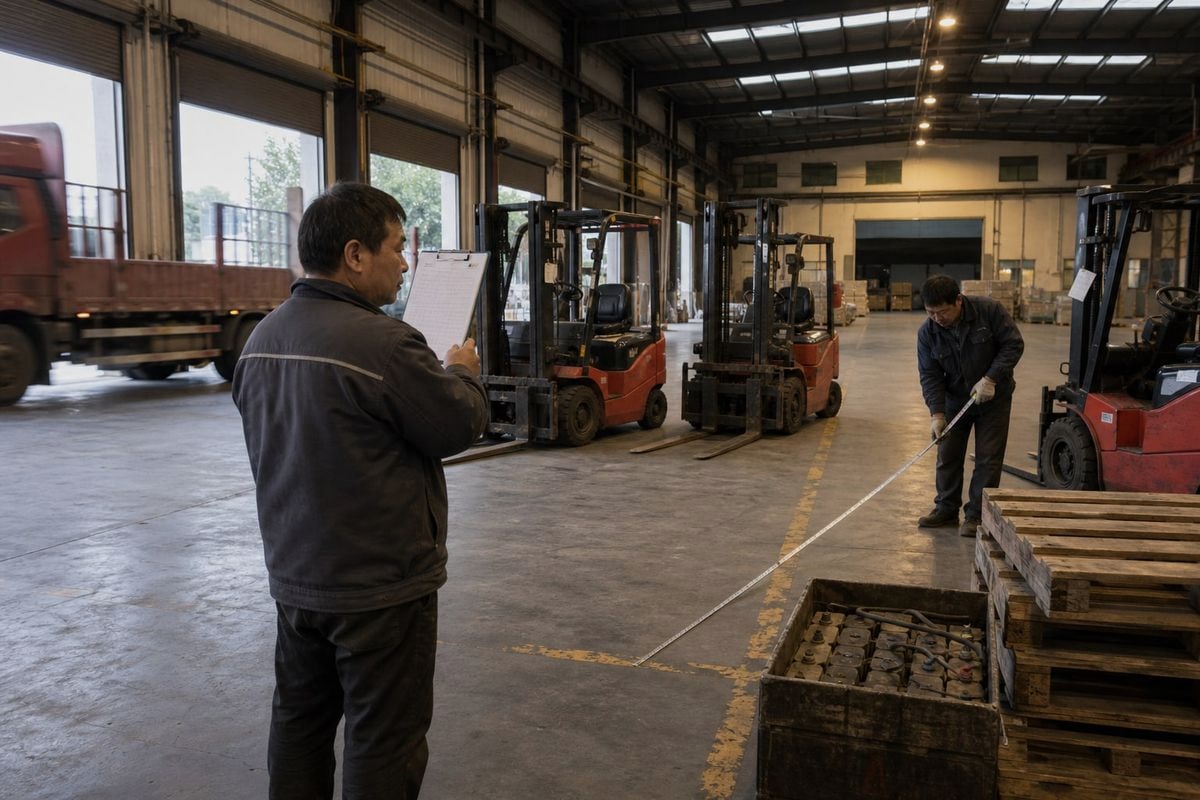
Space planning for forklifts is different from planning for boxed goods. You cannot rack a 3-ton counterbalance unit. Every machine sits on the floor, and every machine needs room around it. In our experience arranging multi-supplier consolidation, the biggest space mistake importers make is counting only the footprint of the equipment itself.
A forklift consolidation job uses three distinct zones. First, a receiving and unloading zone where trucks from different factories arrive. Second, a staging and inspection zone where units are checked, photographed, and matched to documents. Third, a loading zone near the dock where the container loading plan comes together. If a warehouse quotes you storage space only, ask where the other two zones are.
Here is the rough guide we use when we help clients estimate consolidation space:
| 화물 유형 | Approx. Footprint | Recommended Space with Handling Room |
|---|---|---|
| Electric pallet truck | 1.5–2 m² | 3–4 m² |
| Electric stacker | 2–3 m² | 4–6 m² |
| 1.5–2.5T counterbalance forklift | 4–6 m² | 8–12 m² |
| Reach truck | 3–5 m² | 7–10 m² |
| Spare battery pallet | 1.2 m² | 2 m² |
| Chargers and spare parts | varies | add 20–30% buffer |
Also think about timing. If Factory A ships two weeks before Factory C, the warehouse holds cargo longer than planned. Ask about free storage days and what the daily rate becomes after that window closes. For seasonal buyers, size for your peak import month. A warehouse that fits your January volume may choke in September. Flexible 3PL logistics space, billed by usage, usually beats a fixed lease when your volumes swing.
One trade-off we weigh constantly is port proximity versus facility capability. A cheap warehouse near the terminal is worthless if its floor cracks under a 4-ton counterbalance unit.
Before loading, verify floor load capacity, dock ramps rated for heavy machinery, lifting equipment with adequate capacity, vertical clearance above collapsed mast height, valid licenses and insurance, and staff experienced in container unloading services and securing heavy cargo inside containers.
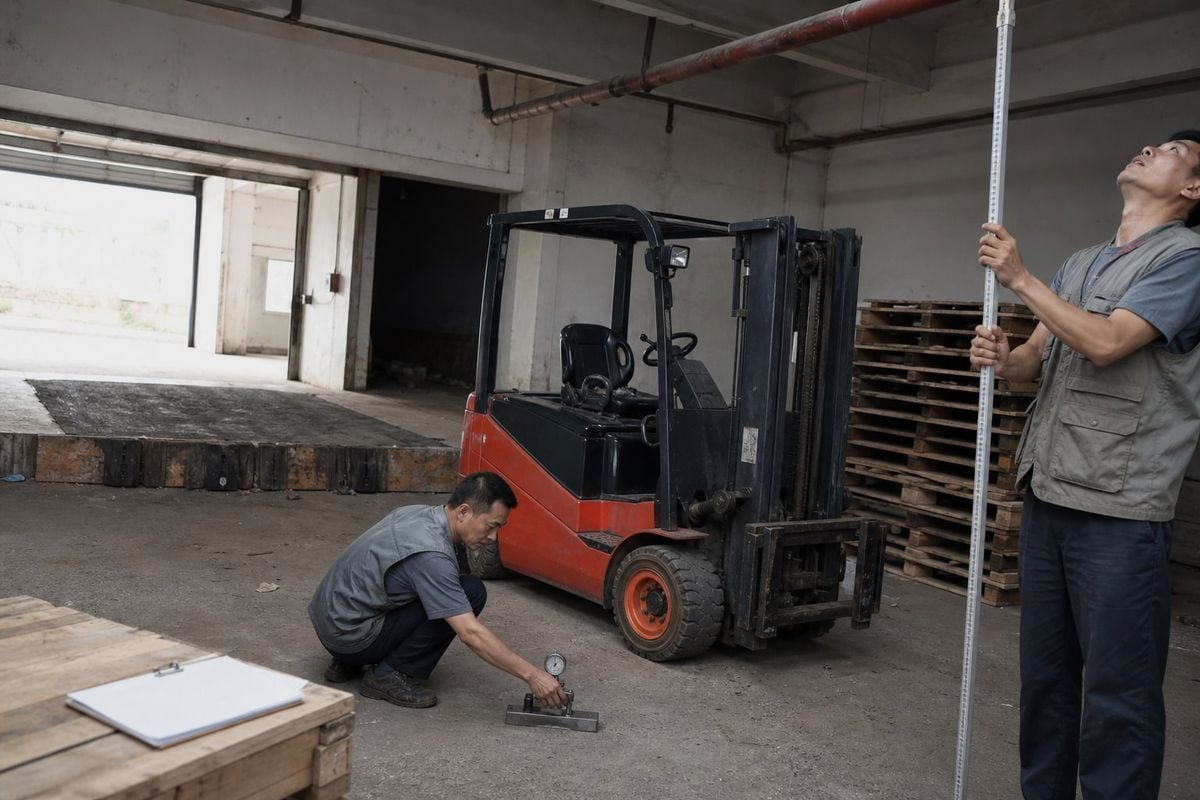
When our loading team evaluates a facility for heavy machinery storage, we run through a physical checklist before any forklift rolls off a truck. Concrete matters first. Forklifts create high point-load pressure through small wheel contact areas, and standard warehouse flooring 1 can crack over time under repeated heavy traffic. Ask for the floor load rating and check the reinforced concrete thickness, especially in the loading zone where units queue up.
Vertical clearance is the quiet killer. Even with the mast collapsed, some models stand tall, and sprinkler heads or low light fixtures become collision hazards. Aisle width must match the turning radius of the actual imported models — a narrow-aisle reach truck and a counterbalance unit need very different lanes. The dock area needs ramps or a lifting solution rated well above your heaviest unit, because most factory trucks in China are not dock-height matched.
| Check Item | What to Verify | Why It Matters |
|---|---|---|
| Floor load capacity | Rated kg/m² and concrete condition | Prevents floor damage and unit tipping |
| Lifting equipment | Capacity above heaviest unit + attachment | Safe unloading from factory trucks |
| Dock and ramp access | Grade, width, weight rating | Smooth container loading |
| Documentation workflow | Photos, labels, receiving reports | Proof of condition before export |
| Licenses and insurance | Business license, cargo liability cover | Legal recourse if damage occurs |
| Securing materials | Lashing points, dunnage, blocking timber | Cargo safety during ocean transit |
Beyond hardware, test the paperwork discipline. A good warehouse photographs every unit on arrival, records serial numbers, and flags damage the same day. That evidence protects you in supplier disputes and supports 통관 2 if inspectors ask questions. Finally, confirm the team has actually loaded forklifts into containers before. Driving a live unit up a ramp into a 40HQ, then blocking and lashing it against ocean movement, is a learned skill — not something a general-cargo crew improvises safely.
A client once asked us to hold forty lithium battery packs beside his forklift fleet before loading. Our answer changed how he planned every shipment afterward.
Yes, you can store forklifts, batteries, and spare parts in one warehouse before export, but lithium batteries need designated zones meeting fire codes, proper ventilation, charge-level monitoring, and compliant packaging. Segregated storage plus correct dangerous-goods documentation keeps consolidation safe and carrier-acceptable.
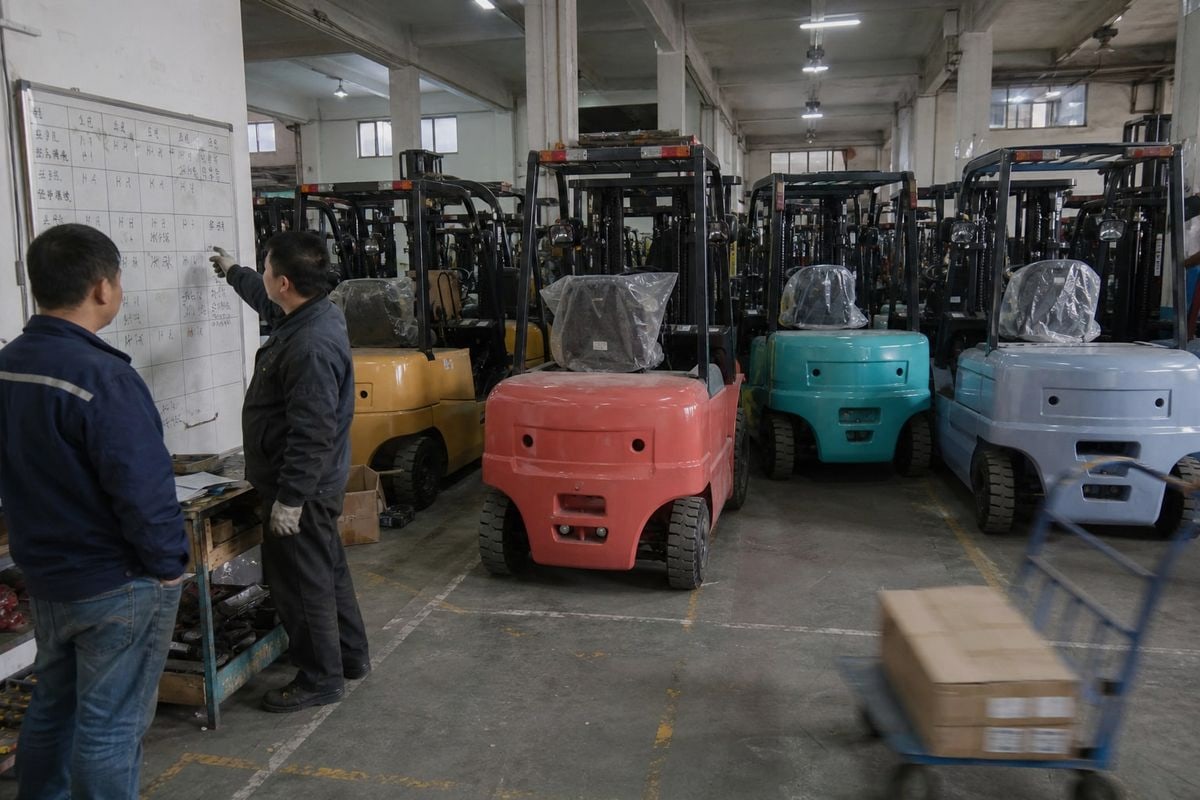
Combined storage is exactly what makes warehouse consolidation valuable. Filling unused container space with chargers, spare forks, and parts cartons can cut the average logistics cost per forklift significantly. But batteries change the rules, and this is where we spend the most time coordinating before cargo reaches the port.
High-density lithium battery storage often requires enhanced fire suppression systems, and local fire department codes in China apply to the warehouse just as destination rules apply on arrival. A compliant facility keeps batteries in a designated zone, away from general cargo, with ventilation and temperature control. If units will sit in storage for weeks, state-of-charge matters too. Deep discharge during long-term storage can degrade battery health and may void manufacturer warranties, so some modern facilities now use monitoring or scheduled charge checks. Ask whether the warehouse has battery charging stations with adequate power supply, and whether staff know lithium handling procedures.
One more practical point. Chinese-spec chargers may not match your local grid, so some importers set up a voltage adaptation step — either at the China warehouse before export or at their own facility after arrival. Flag this early. Discovering a plug mismatch after the container lands is an expensive lesson.
The hardest call in our quoting process is often this one. When a buyer sources forklifts from Factory A and batteries from Factory B, the answer stops being obvious.
Choose direct factory pickup and loading when one supplier fills a full container. Choose warehouse consolidation when buying from multiple suppliers, mixing forklifts with parts, needing pre-shipment inspection, or shipping LCL. Consolidation adds handling cost but cuts per-unit freight and reduces coordination risk.
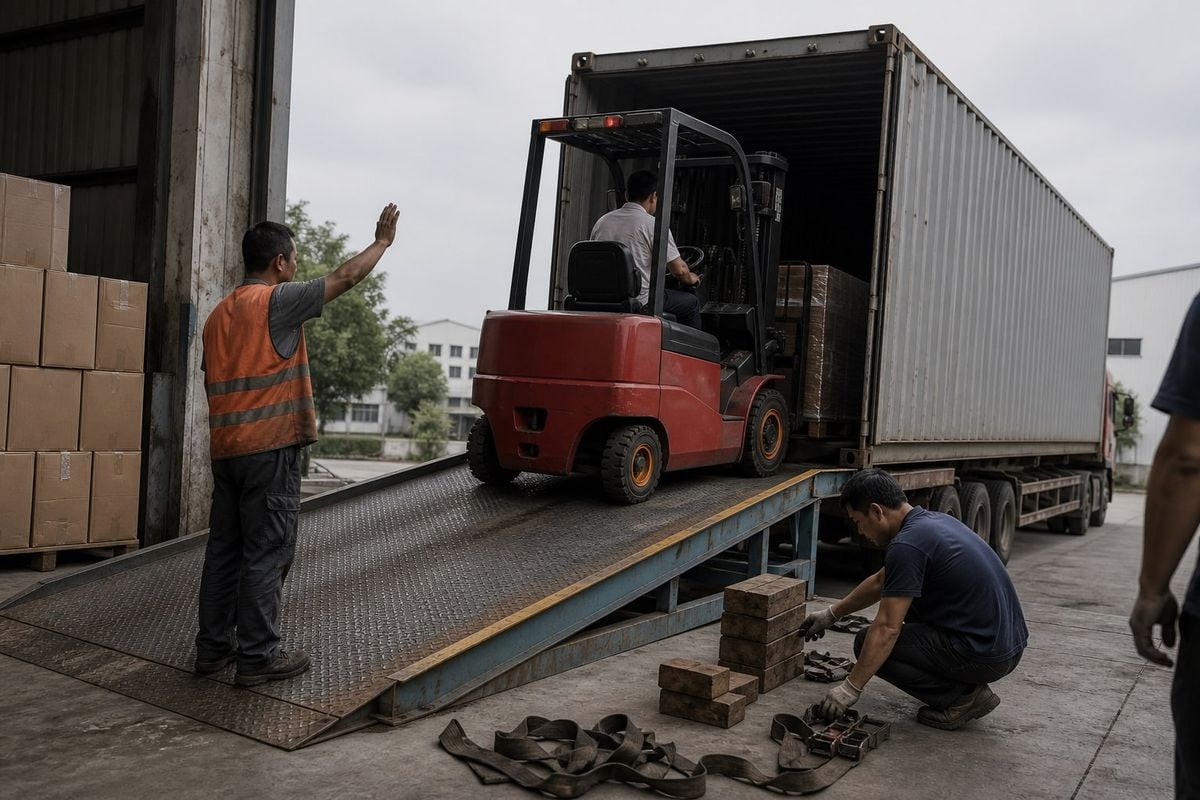
Here is the quick comparison we share with buyers before we plan freight forwarding for a new order:
| 요인 | Direct Factory Pickup & Loading | Warehouse Consolidation |
|---|---|---|
| 최상의 대상 | One supplier, full FCL | Multiple suppliers or LCL |
| Handling cost | Lower (no extra touch) | Higher (receiving, staging fees) |
| Inspection option | Limited, at factory | Full pre-loading inspection with photos |
| Container utilization | Depends on factory loading skill | Optimized across all cargo |
| Timing flexibility | Factory schedule controls loading | Warehouse buffers arrival gaps |
| Damage documentation | Weaker | Strong receiving records |
If one factory produces everything and the volume fills a 20FT, 40FT, or 40HQ, loading at the factory is faster and cheaper. There is no extra trucking leg and no warehouse receiving fee. We still coordinate the loading plan, weight distribution, and securing, because factories vary widely in container loading skill. Direct loading assumes the factory has a proper dock and knows how to block and lash heavy machinery — verify this before you commit.
Buy from two or more suppliers, and consolidation almost always pays. One container instead of two LCL shipments cuts the per-forklift cost sharply. The warehouse also becomes your quality gate: units are inspected and photographed before they ship, not after they land. Some importers dedicate floor space to a pre-delivery inspection station, since Chinese factories often ship units partially disassembled to maximize container cube utilization — masts detached, guards removed.
A bonded warehouse defers 수입 관세 4 and VAT until goods are released, which helps cash flow at the destination side. But bonded status matters mostly on arrival, not for China-side export consolidation. It adds complexity and only fits specific setups, such as re-export businesses or dealers who want duty deferral until forklifts are sold. Do not pay bonded premiums in China for a standard export flow. And whichever route you choose, run a trial shipment with a short contract first. One test container tells you more about a warehouse partner than any brochure.
Pick the warehouse before the purchase order, not after. Match floor strength, battery compliance, consolidation capability, and transparent fees to your cargo — and your forklift imports arrive safely and cost less.
1. ISO provides international standards for the design and safety requirements of industrial warehouse flooring. ↩︎
2. The World Customs Organization sets the global standards for efficient customs clearance and international trade facilitation. ↩︎
3. The IMO regulates the safe maritime transport of dangerous goods, including specific requirements for lithium batteries. ↩︎
4. U.S. Customs and Border Protection provides official guidelines on import duties and bonded warehouse regulations. ↩︎



