- +8618603825129
- [email protected]


How many electric forklifts fit in a 40ft container? Buyers ask our loading team this every week. Get it wrong, and you pay for air. Get it right, and your cost per unit drops sharply.
A 40ft container typically fits 6–10 standard electric counterbalance forklifts, depending on model length, mast collapsed height, and packing method. Compact electric pallet trucks can reach 15–25 units, while larger rough-terrain electric models may allow only 3–4 units per container.
That range is wide for a reason. The real answer depends on your exact machines and your loading plan. Let me walk you through how we calculate it before every shipment.
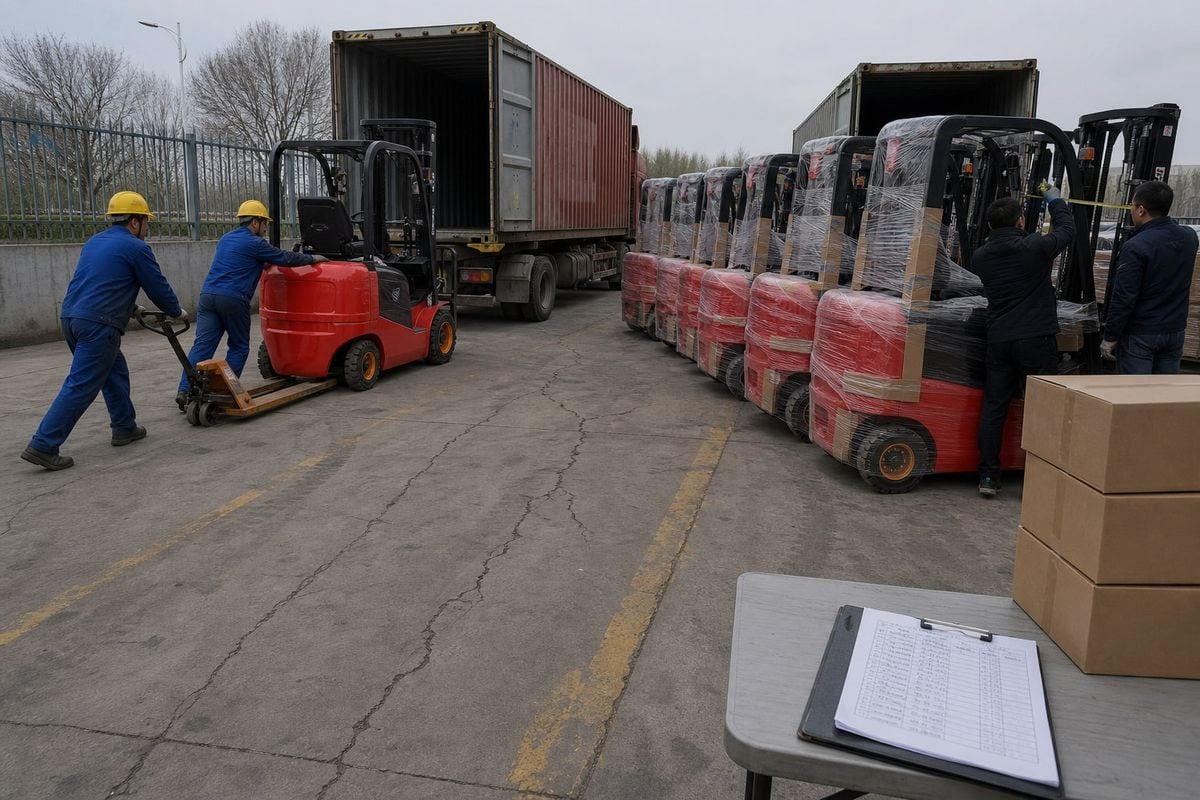
Last month, our team in Zhengzhou re-planned a dealer's shipment from two 20ft containers into one 40HQ. The freight saving per forklift was significant, and nothing about the cargo changed — only the container choice did.
A 20ft container typically holds 2–4 standard electric counterbalance forklifts, while a 40ft container holds 6–10. A 40ft High Cube adds roughly 30cm of internal height, which helps with taller masts and makes it the most common choice for forklift shipments.
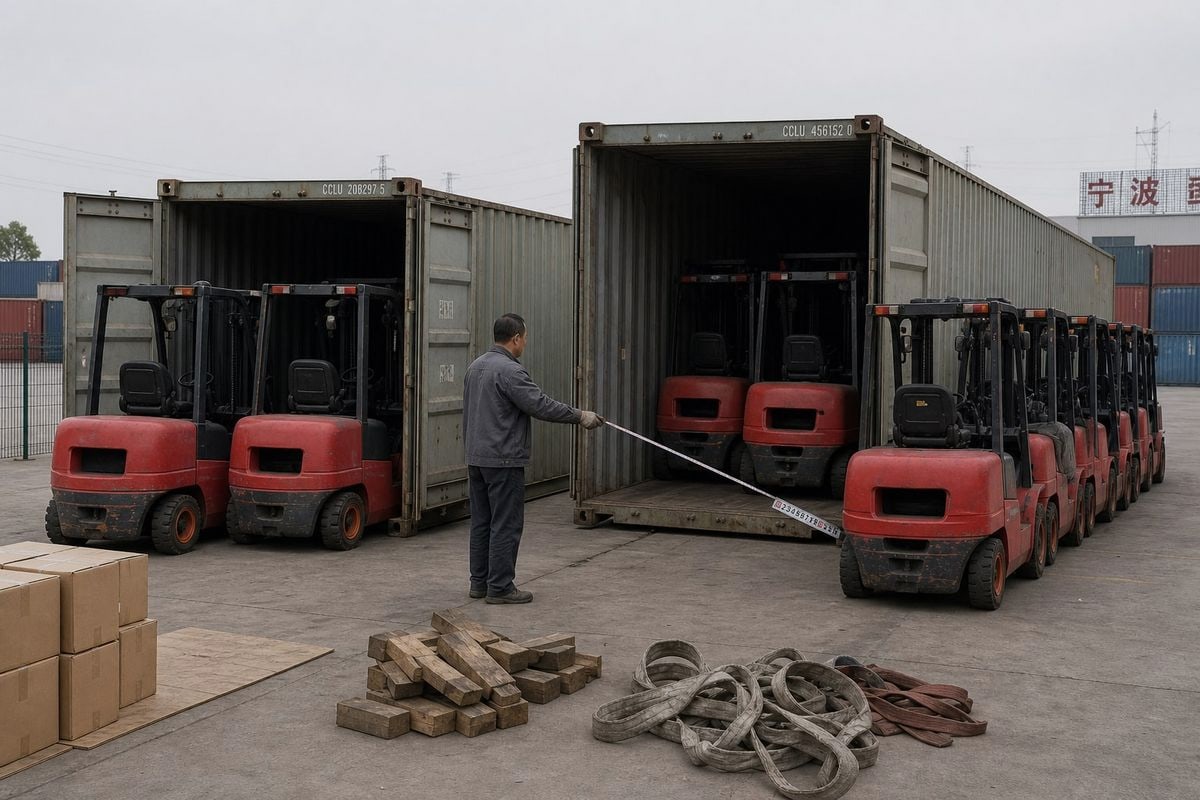
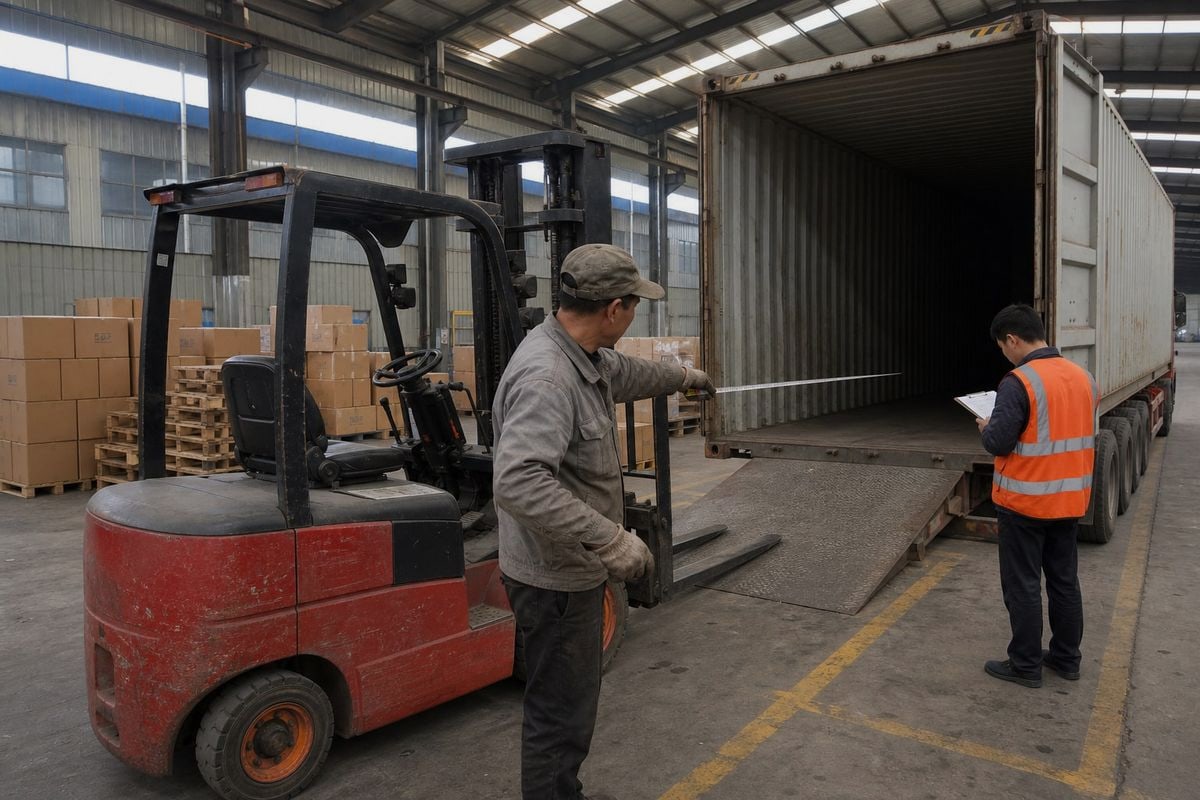
The math here is mostly about internal length 1 and door clearance. A standard 40ft container gives you about 12.03m of internal length, 2.35m of width, and 2.39m of height. The door opening is around 2.34m wide by 2.28m high. A 20ft container gives you roughly half the length with the same door size. So the 40ft box does not just double your space. It also gives you more flexible positioning options, like nose-to-tail rows or interlocked layouts.
| Forklift Type | 20피트 컨테이너 | 40ft / 40HQ Container |
|---|---|---|
| Compact electric pallet trucks | 8–12 units | 15–25 units |
| 3-wheel compact electric forklifts | 3–4 units | 7–10 units |
| Standard electric counterbalance (1.5–3 ton) | 2–4 units | 6–10 units |
| Larger electric/industrial models | 1–2 units | 3–4 units |
| Rough-terrain electric forklifts | 1–2 units | 2–4 units |
Note that some SERP-ranking pages quote 4–6 mid-sized electric forklifts per 40ft High Cube. That figure is also defensible for bulkier mid-sized models with longer wheelbases. In our experience arranging FCL container shipping from China to the US, the 6–10 range fits typical 1.5–3 ton counterbalance units, while 4–6 is realistic when the machines are longer or ship fully assembled with forks attached.
Cost per unit is where the 40ft box usually wins. Ocean freight for a 40ft container is not double the price of a 20ft. So if your order size justifies it, the larger box almost always lowers your landed cost per forklift.
One trade-off we weigh on nearly every booking is assembled versus partially knocked-down shipping. Assembled units roll off faster at destination. Disassembled units pack tighter. The right answer depends on your labor situation and your freight budget.
The main factors are forklift overall length, mast collapsed height, fork length, tire type, unit weight, and packing method. Door clearance of 2.28m limits mast height, while container payload capacity and floor load limits cap total weight, not just physical fit.
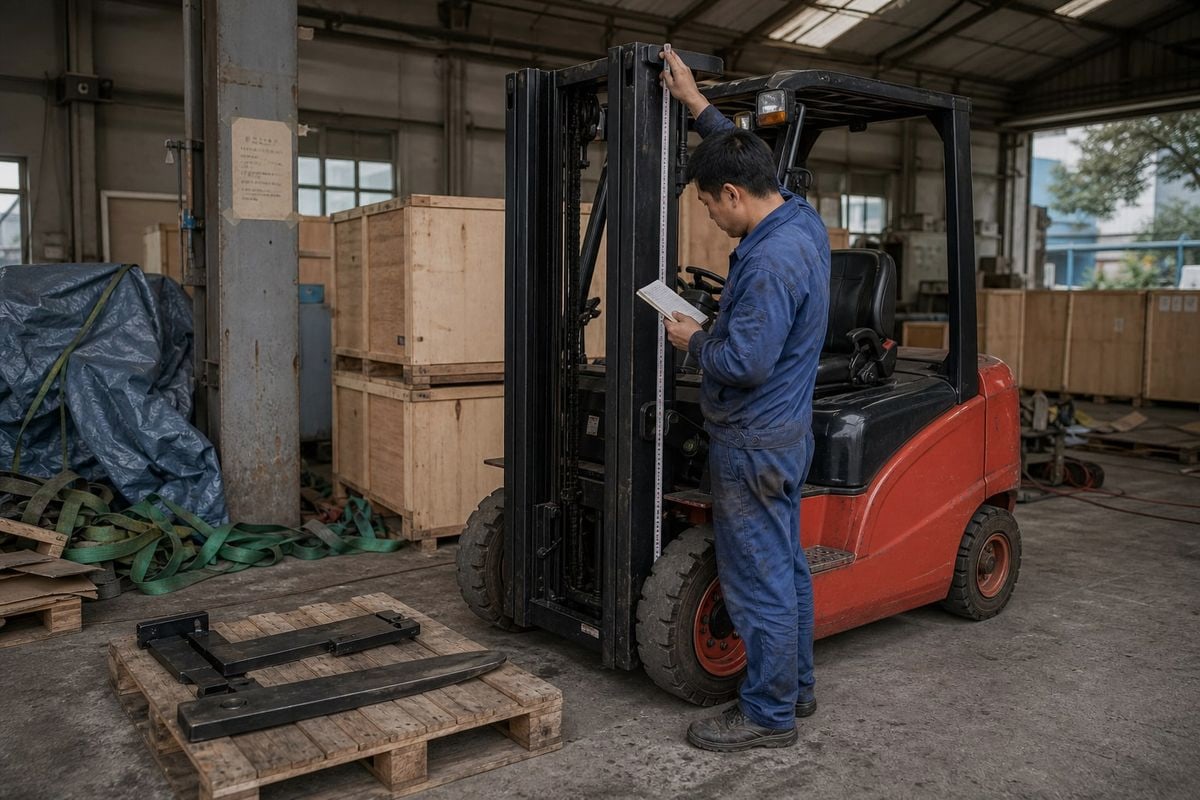
Overall length is the number one limiter. A 40ft container has about 12.03m of usable floor. If your forklift measures 3.5m with forks attached, you fit fewer rows than a 2.4m compact unit. That is why removing forks and side-shifters is standard practice. It shortens each unit and allows much tighter packing.
| 요인 | Why It Matters | Practical Threshold |
|---|---|---|
| Overall length | Determines rows along the 12.03m floor | Forks removed saves 1.0–1.2m per unit |
| Mast collapsed height | Must clear the door opening | Keep below 2.28m for a standard 40ft |
| Overall width | Determines side-by-side placement | Two compact units need under 2.35m combined |
| Unit weight | Affects container payload capacity | Stay within floor and axle-load limits |
| Tire type | Solid tires allow tighter maneuvering inside | Solid tires are standard for containerized loading |
| Packing method | Assembled vs SKD changes density | SKD can raise counts significantly |
Smart positioning matters as much as measurements. Strategic interlocking of 3-wheel electric models — alternating front and rear orientations — can reclaim up to 15% of floor space compared to standard linear loading. Our loading crews also position each unit centrally to spread the heavy counterweight across the container's floor cross-members. That is a safety issue, not just a space issue.
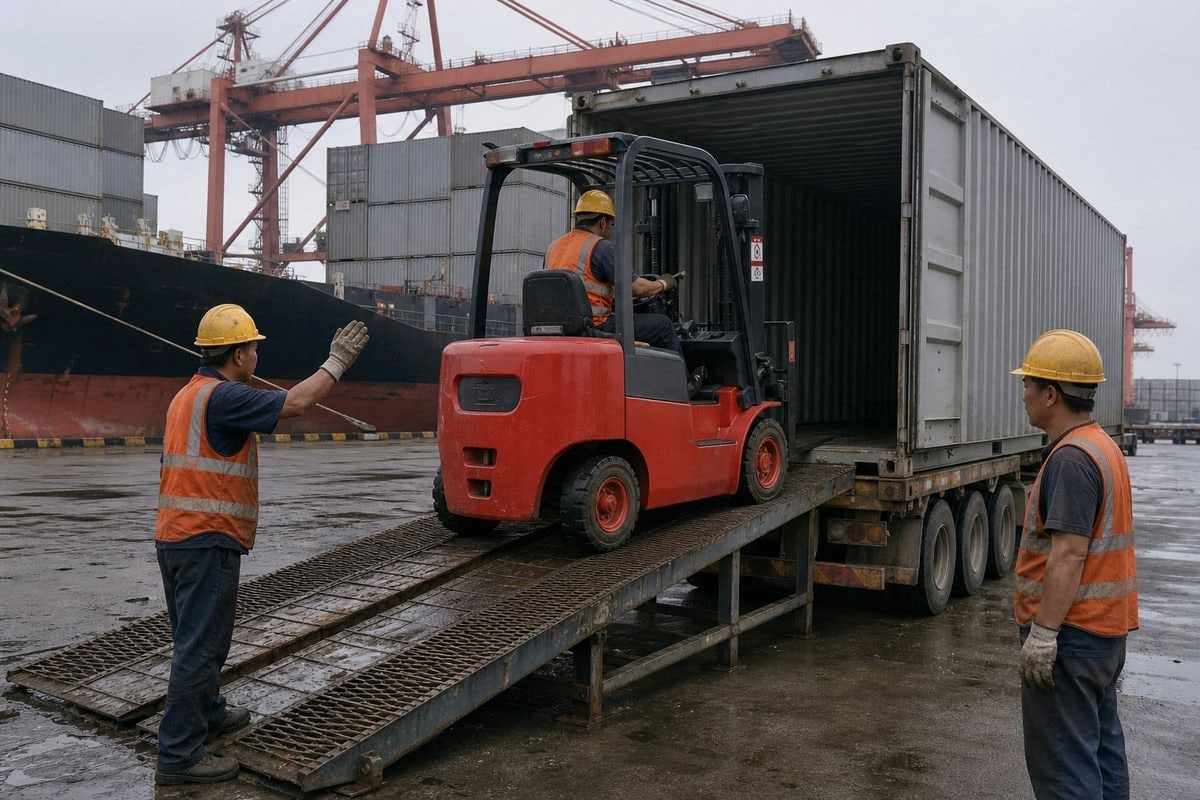
Blocking and bracing follows. Each unit gets secured with a minimum of four heavy-duty tie-down points using 5,000lb-rated ratchet straps. Ocean vessels pitch and roll, and an unsecured 3-ton machine can destroy a container from the inside. A proper container loading plan covers both the layout drawing and the lashing method before the truck ever arrives at the factory.
Forklift disassembly is the biggest lever of all. Some suppliers offer SKD or knock-down shipping. Removing the mast and overhead guard can even allow specialized internal racking to double-stack chassis inside a 40ft High Cube for high-volume fleet deployments. Those higher counts are supplier-specific, though. Confirm the option before you rely on it in your cost model.
A US distributor once asked us to consolidate forklifts from one factory, lithium batteries from a second, and chargers from a third into one 40HQ. It worked — but only because we checked the battery documentation weeks before loading, not at the port.
Yes, batteries and chargers can usually ship in the same container as the forklifts. Lithium-ion batteries must comply with IMDG Class 9 regulations, ship with valid UN38.3 documentation, and have terminals disconnected and protected against short circuits during the voyage.

This question comes up constantly because electric forklifts are rarely shipped alone. Buyers add spare batteries, chargers, attachments, and parts to fill the container. That is smart. Unused space is money wasted. But battery cargo changes the compliance picture, so plan it properly.
International shipping regulations treat lithium-ion batteries 2 as Class 9 dangerous goods under the IMDG Code. Practically, that means several things for your load. The batteries need test documentation, correct declaration, and compliant packaging. Aggregate watt-hour capacity per container can also limit how many battery units a carrier will accept in one box. We coordinate lithium battery cargo handling before booking, because carrier acceptance is not automatic.
Physical preparation matters just as much. Every battery must be fully disconnected, and the terminals must be protected with non-conductive material 3 to prevent short circuits at sea. For high-value electric units with telematics, we recommend Factory Shipping Mode where the manufacturer supports it. This prevents the 12V auxiliary battery from draining completely during a four-to-six week transit.
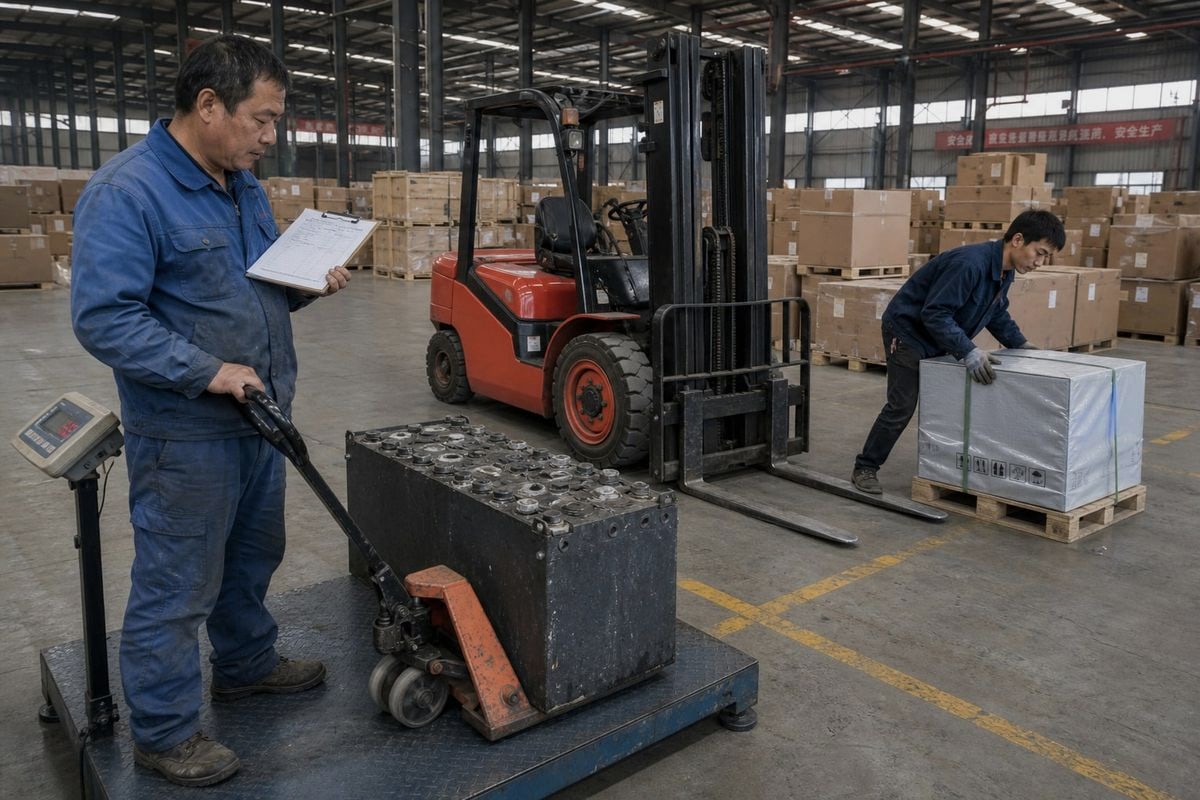
Chargers, spare parts, and attachments are simpler. They are general cargo. We crate them, load them into the gaps around the machines, and brace them so nothing shifts. Multi-supplier consolidation works the same way: we pick up from each factory, consolidate at our warehouse, and load everything in one planned sequence. One point of caution — heavy lead-acid or lithium battery packs push you toward battery weight limits and the container's total payload faster than the machines themselves do. A 3-ton forklift plus spare battery packs adds up quickly, so we always calculate total gross weight before confirming the container loading plan.
The lesson I learned early in this business is simple: freight cost per container 4 is fixed, but cost per forklift is not. Two importers can pay the same ocean rate and land their machines at very different unit costs.
Reduce cost per forklift by choosing the right container size, removing forks and masts where possible, interlocking compact models, filling gaps with batteries and spare parts, and consolidating multi-supplier cargo into one FCL shipment instead of several LCL shipments.
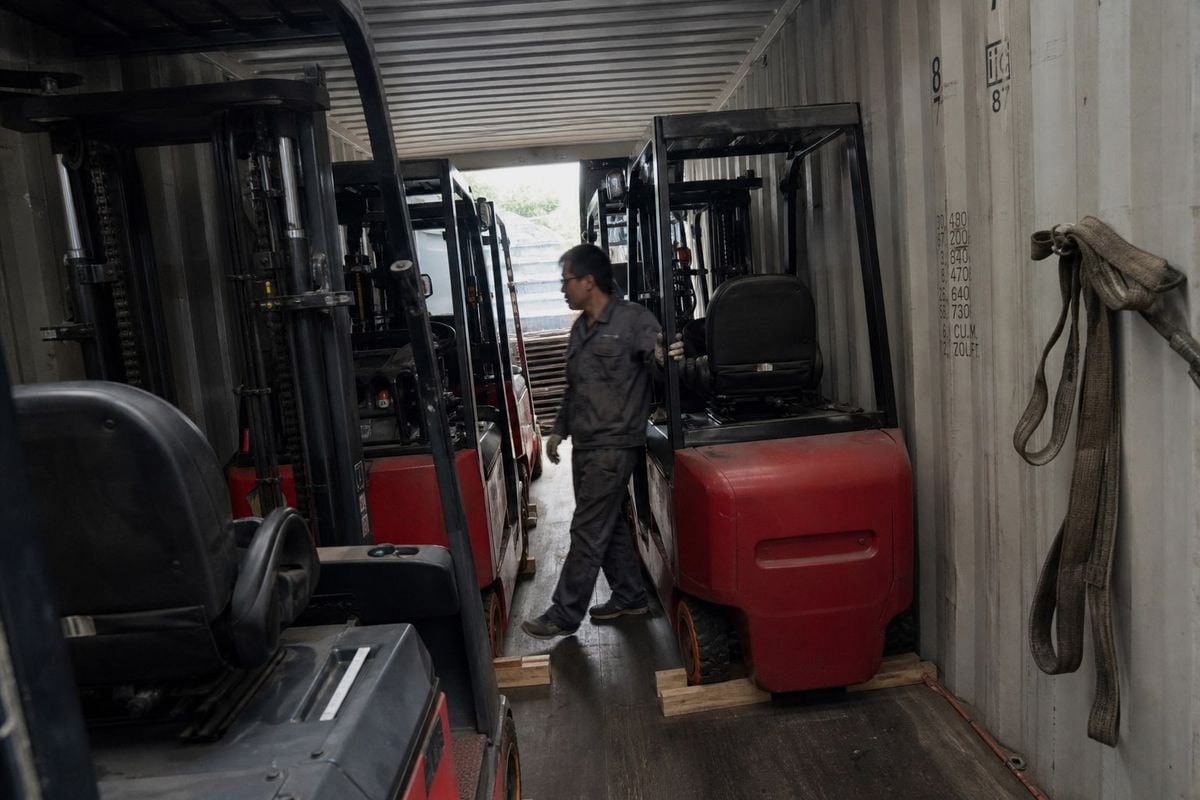
Think of the container as a fixed cost you divide across units. Every extra forklift you fit safely lowers the average. Here is the process we follow for equipment transport logistics on every China-to-US booking.
| Tactic | Typical Impact on Cost Per Unit |
|---|---|
| Switch two 20ft containers to one 40HQ | Meaningful freight saving per forklift |
| Remove forks and side-shifters | 1–2 extra units in many layouts |
| Interlock 3-wheel compact models | Up to 15% floor space reclaimed |
| Fill gaps with parts and chargers | Eliminates separate LCL shipments |
| Multi-supplier consolidation | One set of port and clearance charges |
One warning from our side of the trade: do not chase density at the expense of safety. Cutting corners on blocking and bracing to squeeze in one more unit risks damaging every machine in the box. A damaged forklift costs far more than the freight you saved. Good freight forwarding services balance utilization against secure stowage, and that balance is exactly what a professional container loading plan delivers. When we quote door-to-door DDP shipments, we also include destination charges and duties up front, so the cost-per-unit number you plan around is the number you actually pay.
A 40ft container fits roughly 6–10 electric counterbalance forklifts, more for compact units, fewer for large models. Exact dimensions, smart packing, and battery compliance decide your real cost per unit.
1. The World Shipping Council provides industry standards and technical specifications for international containerized shipping and maritime trade. ↩︎
2. UNECE oversees the UN Recommendations on the Transport of Dangerous Goods, including global standards for lithium battery transport. ↩︎
3. The IMO's IMDG Code provides the mandatory regulations for protecting battery terminals and preventing short circuits during sea voyages. ↩︎
4. The Federal Maritime Commission is the U.S. agency responsible for regulating oceanborne international transportation and freight costs. ↩︎