- +8618603825129
- [email protected]


Import duties on electric [forklifts from China](https://mbmlog.com/?p=11529) to the USA confuse many buyers I work with. A great factory price can hide a painful landed cost. After coordinating hundreds of forklift containers from our Zhengzhou base, I want to break down the real numbers.
Import duties on electric forklifts from China to the USA start with a 0% base rate under HTS 8427.10, but Chinese-origin units face an additional 25% Section 301 tariff, plus a 0.3464% Merchandise Processing Fee and a 0.125% Harbor Maintenance Fee on ocean shipments.
That short answer hides a lot of detail. The total cost depends on classification, tariff stacking, and fees. Let me walk you through each layer, step by step.
A buyer in Texas once sent me a supplier invoice that listed his forklifts under a generic "machinery" code. Our documentation team caught it before export declaration. That small check saved him a customs dispute.
Electric rider-type, counterbalanced forklifts are classified under HTS code 8427.10.4000, which carries a 0% Most-Favored Nation base duty. Chinese-origin units then add a 25% Section 301 List 1 tariff, so your effective tariff rate is driven by origin, not by the base rate.
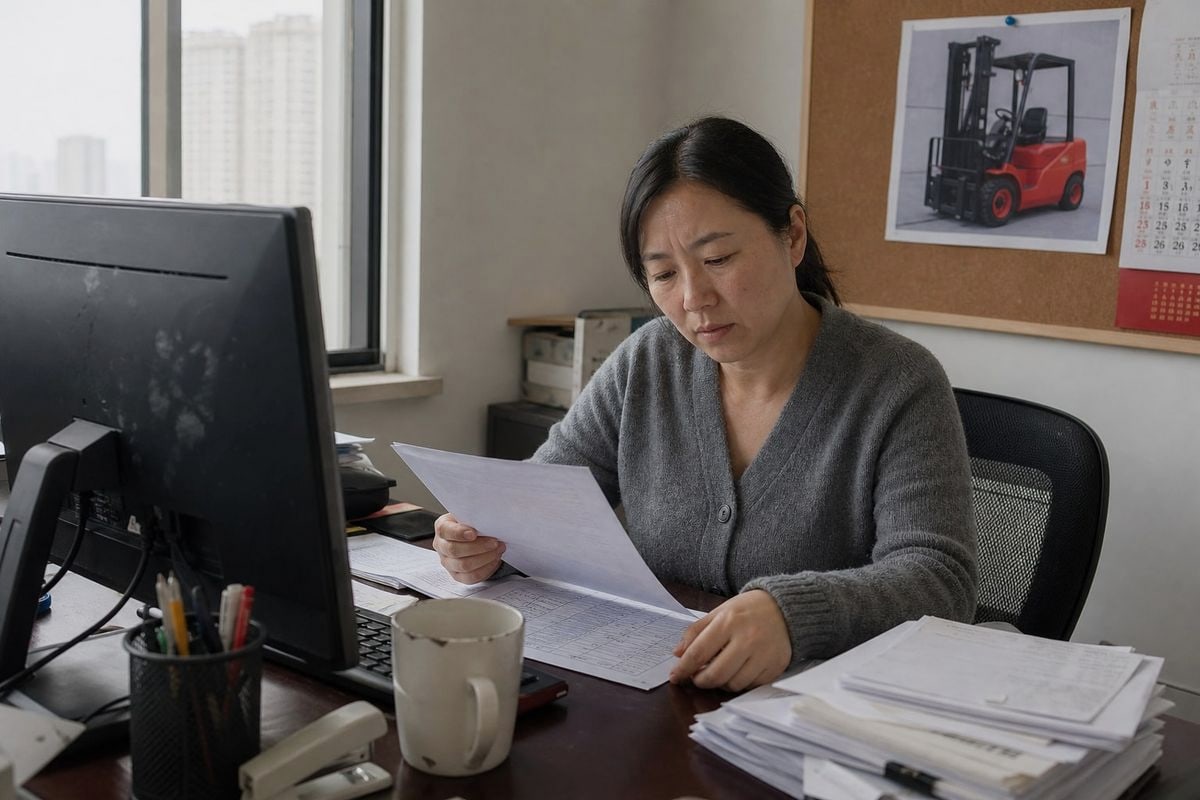
HTS code classification is the foundation of your entire duty calculation. Get it wrong, and every number after it is wrong too. Here is how I explain it to first-time importers.
Heading 8427 covers fork-lift trucks and other works trucks fitted with lifting equipment. Within that heading, subheading 8427.10 covers self-propelled trucks 1 powered by an electric motor. Most rider-type, counterbalanced electric forklifts land under 8427.10.4000. The MFN base duty on this line is Free, meaning 0%.
But the base rate is not the whole story. U.S. Customs and Border Protection assesses duty in layers. For Chinese-origin goods, Chapter 99 add-ons stack on top of the base rate.
| Layer | 평가 | Applies When |
|---|---|---|
| HTS 8427.10.4000 base duty | 0% (Free) | All origins |
| Section 301 tariffs (List 1) | 25% | Chinese origin |
| Section 301 "Forced Labor" surcharge (from July 24, 2026) | 12.5% | Most Chinese imports, replacing the prior 10% Section 122 emergency duty |
| Antidumping and countervailing duties | Case-specific | Only if a formal order covers your product |
One point I stress with every client: rates changed repeatedly through 2025 and 2026. Always verify the live Chapter 99 provisions before you wire a deposit to the factory. A quote based on last year's tariff stack can be badly out of date.
Forklift spare parts fall under different HTS lines. One commonly cited parts rate is 10.5% base duty, which is higher than the 0% on complete units. So never assume the parts in your consolidated container clear at the same rate as the forklifts themselves.
The most common complaint I hear from new importers is not about tariffs. It is about the surprise charges that appear after the vessel sails. Duties are only one line in your landed cost calculation.
Beyond duties, budget for the Merchandise Processing Fee at 0.3464% of value (capped near $614 per entry), the Harbor Maintenance Fee at 0.125% for ocean freight, a mandatory customs bond, customs brokerage fees, destination handling, inland trucking, and cargo insurance.
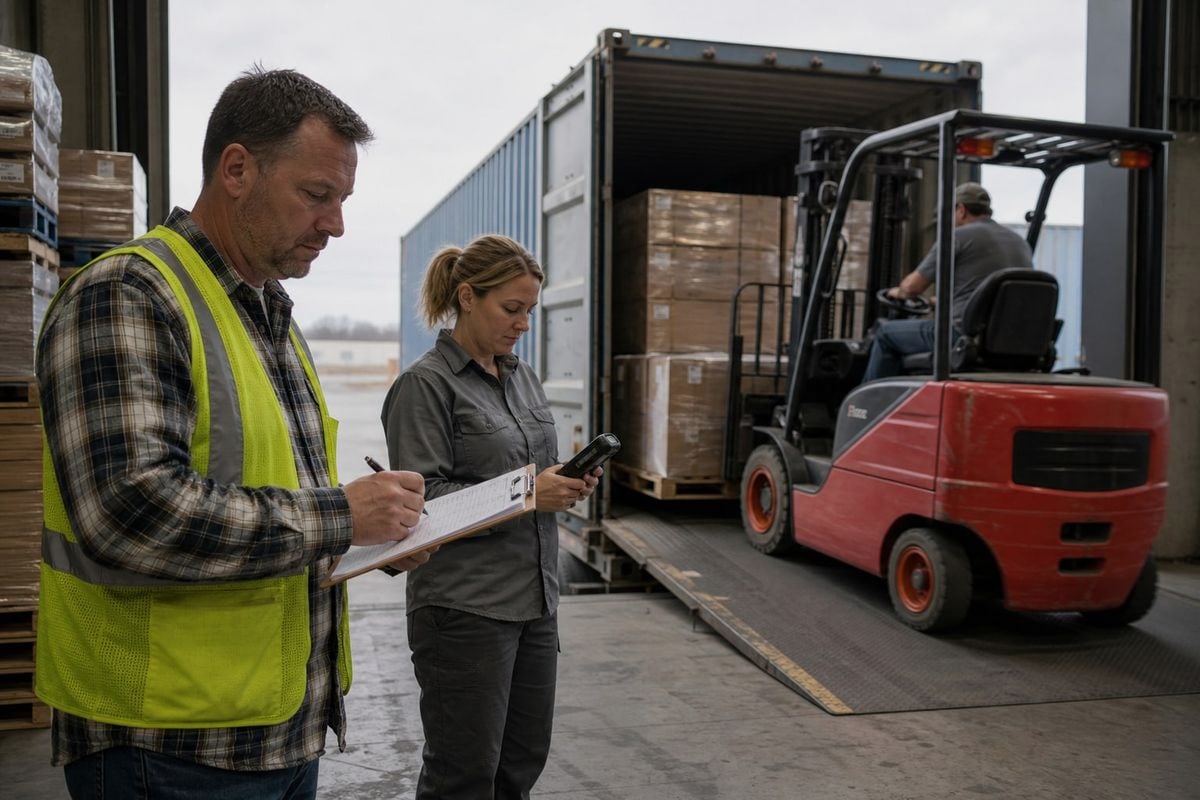
When our team prepares a DDP quotation for a forklift shipment, we map out every cost category from the factory gate in China to the client's warehouse door. Missing even one line item makes the whole landed cost calculation unreliable.
| Cost Item | Typical Basis | 참고 |
|---|---|---|
| 상품 처리 수수료(MPF) | 0.3464% of entered value | Minimum and maximum thresholds apply; cap around $614 per entry |
| 항만 유지 관리비(HMF) | 0.125% of entered value | Ocean freight only; air shipments skip it |
| 세관 채권 2 | Single-entry or continuous | Mandatory for all commercial forklift imports |
| 통관 중개 수수료 | Flat or per-entry fee | Covers entry filing with Customs and Border Protection |
| Destination terminal handling | 컨테이너당 | Often excluded from cheap ocean quotes |
| Inland trucking | Per delivery | Heavy forklifts may need special trailers or liftgates |
| 화물 보험 | Percentage of value | Forklifts are high-value; I always recommend coverage |
CBP requires a customs bond to guarantee payment of duties and taxes. Regular importers usually choose a continuous bond because it covers all entries for a year and works out cheaper than repeated single-entry bonds.
Your clearance documents must be consistent. That means the Commercial Invoice, Packing List, Bill of Lading, and a detailed 원산지 증명서 3 all showing matching values, weights, and descriptions. In my experience, most customs delays on material handling equipment trace back to inconsistent paperwork, not to the cargo itself. We review these documents before departure precisely because fixing them at a U.S. port costs far more in storage and demurrage than fixing them in China.
Take a $20,000 electric forklift shipped by sea. The base duty is $0. Section 301 at 25% adds $5,000. MPF adds about $69. HMF adds $25. Then add bond, brokerage, and trucking. The "0% duty" forklift now carries over $5,000 in tariffs and fees before it even leaves the port.
A forklift dealer in Ohio asked me last year whether DDP shipping could make the Section 301 tariff "disappear." I had to give him an honest answer, because the wrong answer gets importers into serious trouble.
DDP shipping does not eliminate import duties; it only shifts who pays and files them. Legitimate ways to reduce costs include correct HTS classification, accurate declared values, the USTR Machinery Exclusion Process for qualifying domestic manufacturing use, and comparing total landed costs across sourcing countries.
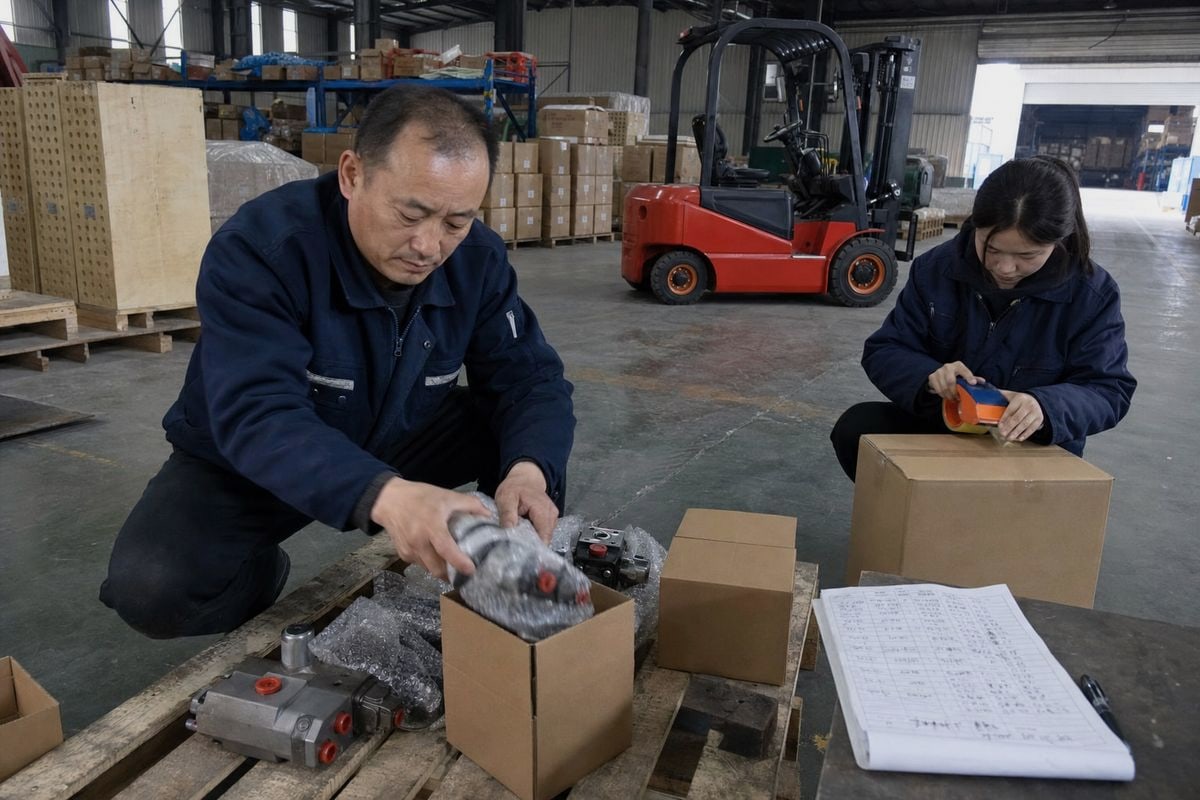
Let me be direct here, because this is where importers get burned. Some forwarders market DDP as a magic discount. It is not. Under DDP, the seller or forwarder handles clearance and pays duties on your behalf. The tariff stack stays exactly the same. What DDP genuinely gives you is predictability: one all-in price, one responsible party, no surprise destination charges.
Remember also that the 2025 suspension of the de minimis exemption for Chinese goods closed a small loophole. Even samples or battery modules valued under $800 now require formal entry and full duty payment.
Battery paperwork is the single item our Zhengzhou team checks most carefully before a forklift container leaves the factory. One missing test summary can strand a shipment at origin, and battery-related delays are the hardest to fix after departure.
Lithium batteries do not change the forklift's duty rate when installed in the machine, since the complete unit clears under HTS 8427.10. However, batteries trigger dangerous goods documentation, UN38.3 test requirements, and carrier acceptance rules, and separately shipped batteries clear under their own HTS line with different duties.
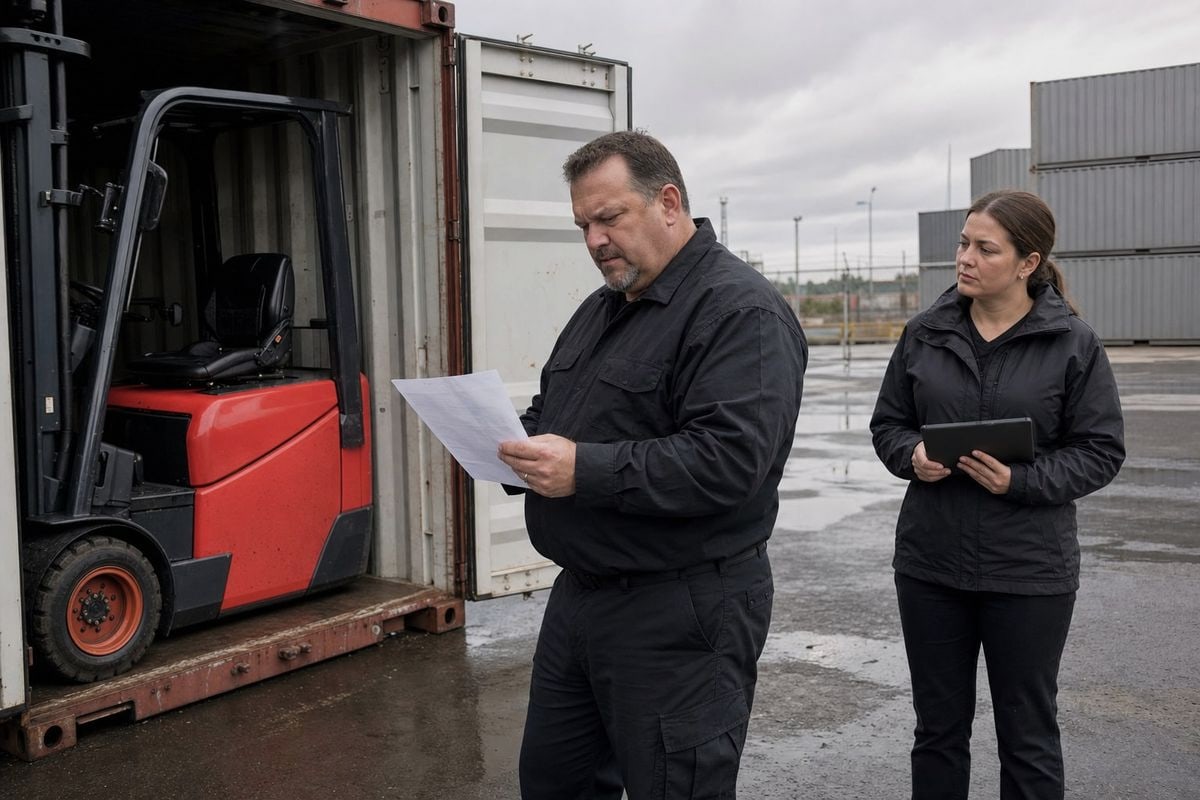
The duty question and the compliance question are two different problems. Let me separate them the way I do for clients.
| Shipment Setup | Classification | Duty Impact |
|---|---|---|
| Battery installed in the forklift | Complete forklift under HTS 8427.10 | Battery value is part of the forklift's entered value; forklift tariff stack applies |
| Batteries shipped separately | Their own battery HTS line | Different base rate plus applicable China surcharges; entered as separate line items |
| Chargers and spare batteries consolidated with units | Each item classified individually | Mixed rates on one entry; invoice must itemize clearly |
When a client buys forklifts from Factory A and spare lithium batteries from Factory B, we consolidate them in one container but declare them as separate lines. Blending them into one lump value invites a CBP query and slows clearance.
Lithium-ion battery regulations sit on top of the tariff picture. Lithium-powered forklifts ship as dangerous goods under Class 9 rules. Carriers demand UN38.3 test summaries, correct MSDS documentation, proper labeling, and a dangerous goods declaration. Not every vessel or carrier accepts them without pre-approval.
None of this changes your duty rate. But every gap in battery documentation creates clearance delays, and delays create storage, demurrage, and exam fees at the destination port. Those charges can quietly exceed the MPF and HMF combined. That is why we coordinate battery specifications with the factory before the cargo ever reaches the port, not after. Getting the battery file right in China is far cheaper than arguing about it in Long Beach.
Also remember the de minimis change here: even a small replacement lithium-ion battery module shipped alone now needs formal entry and full duty payment.
Import duties on electric forklifts from China to the USA stack a 0% base rate with a 25% Section 301 tariff plus MPF, HMF, and clearance costs. Verify current rates before ordering, and let one experienced China-side partner manage classification, batteries, and delivery.
1. Official USITC Harmonized Tariff Schedule search tool for classifying machinery and determining base duty rates. ↩︎
2. Official CBP guidance on mandatory security bonds required for commercial imports into the United States. ↩︎
3. Official U.S. government resource providing guidance on export and import documentation requirements. ↩︎
4. Official site of the U.S. Trade Representative, managing Section 301 trade actions and exclusion processes. ↩︎