

Shipping mixed warehouse equipment in one container sounds simple until quotes arrive. At our Zhengzhou logistics hub, I see buyers overpay weekly for separate shipments that could travel together.
To ship mixed warehouse equipment in one container, consolidate all cargo at a staging warehouse, build a load plan that places heavy machinery low and centered, secure everything with blocking and bracing, segregate batteries per regulations, and document every SKU with correct HS codes for customs clearance.
That is the short answer. The full process has more moving parts. Let me walk you through each stage, from supplier pickup to sealed container.
How Can I Consolidate Equipment From Multiple Chinese Suppliers Into One Container?
Last quarter, a US forklift dealer asked our team to collect cargo from five different factories across three provinces. He had forklifts, chargers, batteries, and racking parts. One container carried it all.
To consolidate equipment from multiple Chinese suppliers, appoint one freight forwarder to arrange factory pickups, route all cargo to a central staging warehouse, inspect and photograph each item on arrival, repackage weak cartons, then load everything into one Full Container Load (FCL) under a single shipping manifest.
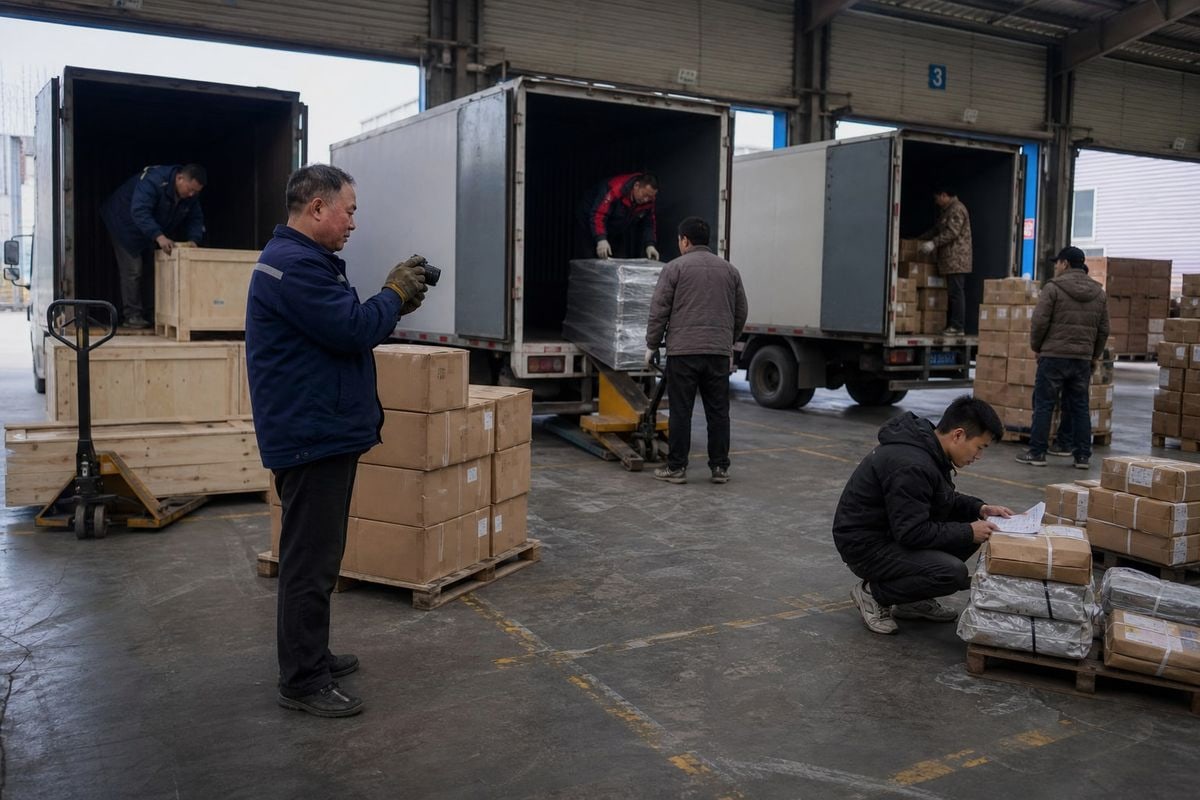
The biggest mistake I see is buyers trying to coordinate five suppliers themselves from another time zone. Factory A finishes early. Factory B delays two weeks. Nobody talks to anybody. The container booking expires, and storage fees pile up. A China-based consolidation partner solves this because we chase cargo readiness directly, in Mandarin, during Chinese business hours.
The Consolidation Workflow We Use
Here is the sequence we follow for every multi-supplier shipment:
- Confirm cargo readiness dates with each factory.
- Arrange trucking pickup from each supplier.
- Receive all cargo at our staging warehouse.
- Inspect, count, and photograph every piece.
- Audit packaging and repalletize weak items.
- Relabel cargo to match one master packing list.
- Build the container load plan.
- Stuff, secure, and seal the container.
Why a Staging Warehouse Matters
A central staging point is quality control, not just storage. We catch damaged crates, wrong quantities, and missing battery documents before the container door closes. Fixing a problem at the warehouse costs hours. Fixing it at the destination port costs weeks and demurrage charges.
| Approach | Handling Points | Cost Risk | Coordination Burden |
|---|---|---|---|
| Ship each supplier separately (LCL) | High, many transshipments | Higher per-CBM rates | Buyer manages each shipment |
| Self-coordinated consolidation | Medium | Delay and storage fees | Buyer chases every factory |
| Forwarder-managed FCL consolidation | Low, one loading event | Lowest cost per unit | One point of contact |
Consolidating multiple SKUs into a single manifest also maximizes container space optimization and cuts your total freight expenditure. Fewer transshipments mean less handling damage too. In our experience exporting to the US, everything arriving together also simplifies final delivery to one warehouse dock.
What Types of Warehouse Equipment Can I Safely Combine in a Single Shipment?
A question I weigh with every buyer is compatibility. Not everything belongs in the same box. Our team once refused to load open drums of hydraulic oil beside shrink-wrapped control panels, and the client later thanked us.
You can safely combine electric forklifts, pallet trucks, stackers, shelving and racking components, chargers, spare parts, tools, and non-hazardous consumables in one container. Avoid mixing fragile electronics with unprotected sharp or oily machinery, and segregate any hazardous items after a full SDS review.
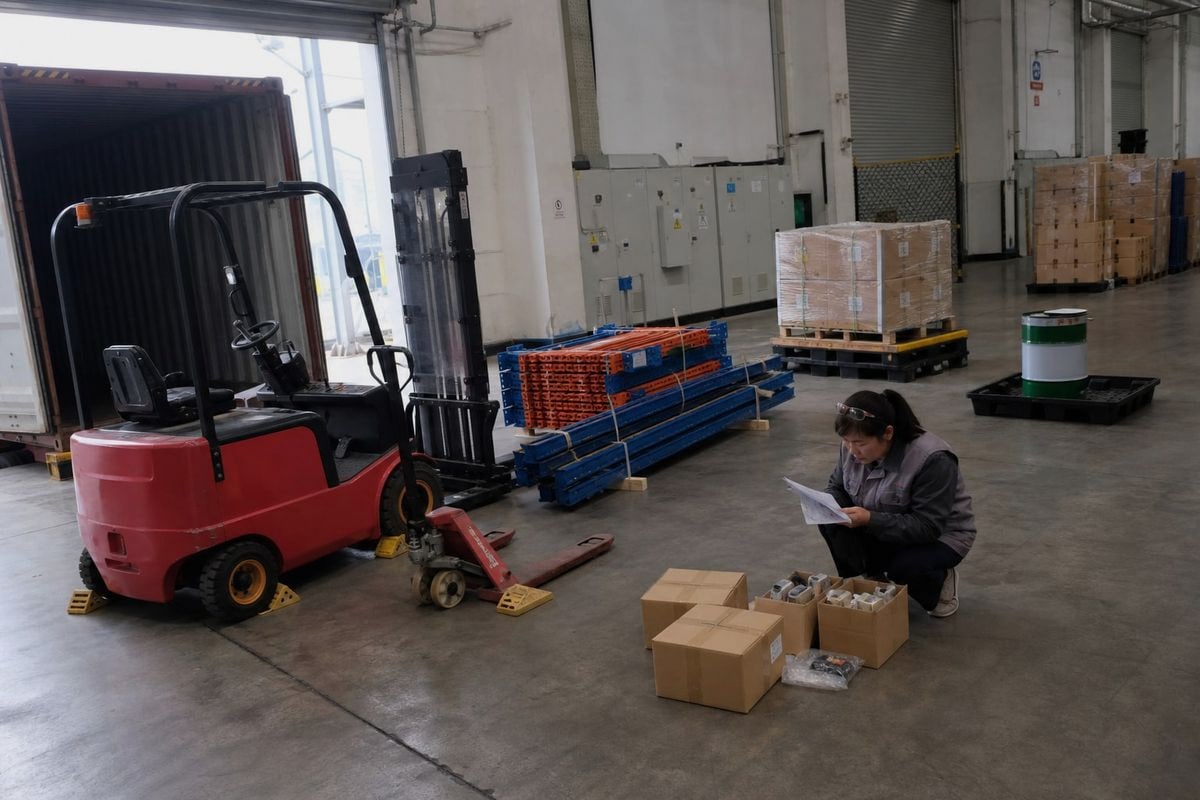
The rule of thumb is this: cargo can share a container if items cannot damage, contaminate, or destabilize each other. Let me break that down by category.
Compatibility Quick Reference
| 장비 유형 | Combine Freely? | Key Precaution |
|---|---|---|
| Electric forklifts | 예 | Drain or secure fluids, lock the mast, chock wheels |
| Pallet trucks and stackers | 예 | Palletize or brace against sliding |
| Racking uprights and beams | 예 | Bundle and strap; may need a High Cube 1 container for tall frames |
| Forklift chargers | 예 | Crate separately, keep dry and elevated |
| 리튬 배터리 | Conditional | Requires UN38.3 documents, correct labels, carrier acceptance |
| Spare parts and tools | 예 | Box small items; never leave loose |
| Oils, paints, aerosols | 제한됨 | Hazard class review; often better shipped separately |
| Sensitive automation (AGVs) | Conditional | Use vibration-damped or rubber-cushioned pallet bases |
Size and Height Considerations
Tall racking frames and forklift masts are the usual troublemakers. A standard 40FT container gives you roughly 2.39 meters of internal height. A 40HQ High Cube adds about 30 centimeters of vertical clearance, which often decides whether racking uprights ship whole or must be cut down. For oversized machinery, strategic disassembly helps: we routinely remove forklift masts or fold overhead guards so units clear the container door.
Contamination and Fragility Zones
Think in zones. Oily, dusty, or sharp-edged machinery goes in one zone with heavy dunnage and padding around it. Clean, fragile cargo like control electronics or charger displays goes in a protected zone, ideally elevated on pallets and wrapped. Sensitive automation equipment shipped beside heavy machinery deserves rubber-dampened pallet bases to absorb transit vibration. Some combinations should simply travel apart. If a hazard review flags incompatible materials, splitting the load costs less than one contaminated shipment.
How Do I Ensure Proper Loading and Weight Distribution for Mixed Cargo?
Watching our loading crew work taught me that stuffing a mixed container is engineering, not Tetris. One badly placed three-ton forklift can tilt a chassis, fail a roadside weigh check, or crush everything beneath it at sea.
Ensure proper load distribution by placing the heaviest, most durable items on the container floor along the centerline, spreading weight evenly front to back, stacking lighter cargo above, filling every void with dunnage or air bags, and locking the load with blocking and bracing plus lashing straps.
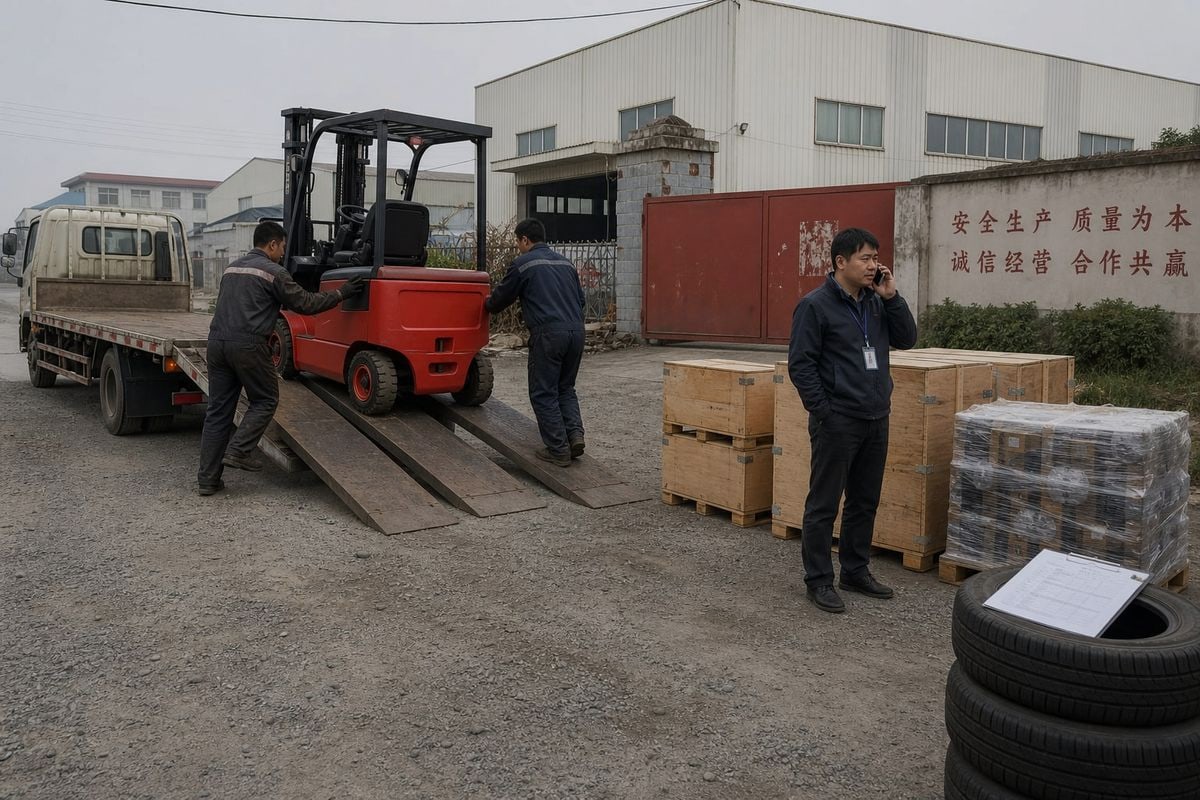
Weight placement is the foundation of a safe mixed load. Get it wrong, and no amount of strapping saves you. Get it right, and the cargo almost secures itself.
The Load Map Comes First
Before anything moves, we build a load map. It sequences cargo by three factors: weight, fragility, and unloading priority. Cargo needed first at the destination loads last. Heavy items claim floor positions. Fragile items claim protected upper zones. Increasingly, we model this in 3D container-loading software so the client sees the stowage plan before loading day, and some operations now use AR overlays so loading teams execute complex mixed configurations exactly as simulated.
Core Placement Rules
| Rule | 왜 중요한가 |
|---|---|
| Heavy items low and centered | Keeps the center of gravity low; prevents tipping and roll stress |
| Spread weight across the floor | Avoids point-loading the container floor and axle overweight fines |
| Structural foundation mapping | Heavy steel like rack beams forms a stable sub-floor for lighter crates |
| Fragile cargo up and padded | High-density items below, light accessories in upper cubic space |
| No trapped cargo | Load in reverse unloading order so nothing blocks priority items |
| Zero free space around cargo | Voids let cargo build momentum and smash into neighbors |
Securing the Load
Once placed, cargo must not move a centimeter. Our standard toolkit includes lashing straps anchored to container lashing points, timber blocking and bracing nailed against wheels and pallet edges, industrial dunnage bags inflated into irregular gaps between mixed-shape equipment, anti-slip mats under machinery, and load bars across the door end. One critical detail: all timber used for bracing must comply with ISPM 15 2 wood standards. Untreated wood can get your container rejected at customs, and that fine hurts far more than the cost of certified lumber.
Before sealing, we do a final balance check and photograph the finished stow. Those photos become your evidence if a cargo insurance claim ever arises.
Can I Ship Forklifts, Batteries, and Spare Parts Together in the Same Container?
The lesson that shaped how we handle this came early in our heavy equipment logistics work: a buyer's battery documents arrived after his cargo reached the port, and the carrier refused the booking. Now we verify battery paperwork before trucks even roll.
Yes, forklifts, batteries, and spare parts can ship together in one container. Lithium batteries need UN38.3 test summaries, correct classification, hazard labels, and advance carrier approval. Secure forklifts with chocks and lashing, crate batteries separately, and box spare parts to fill remaining space efficiently.
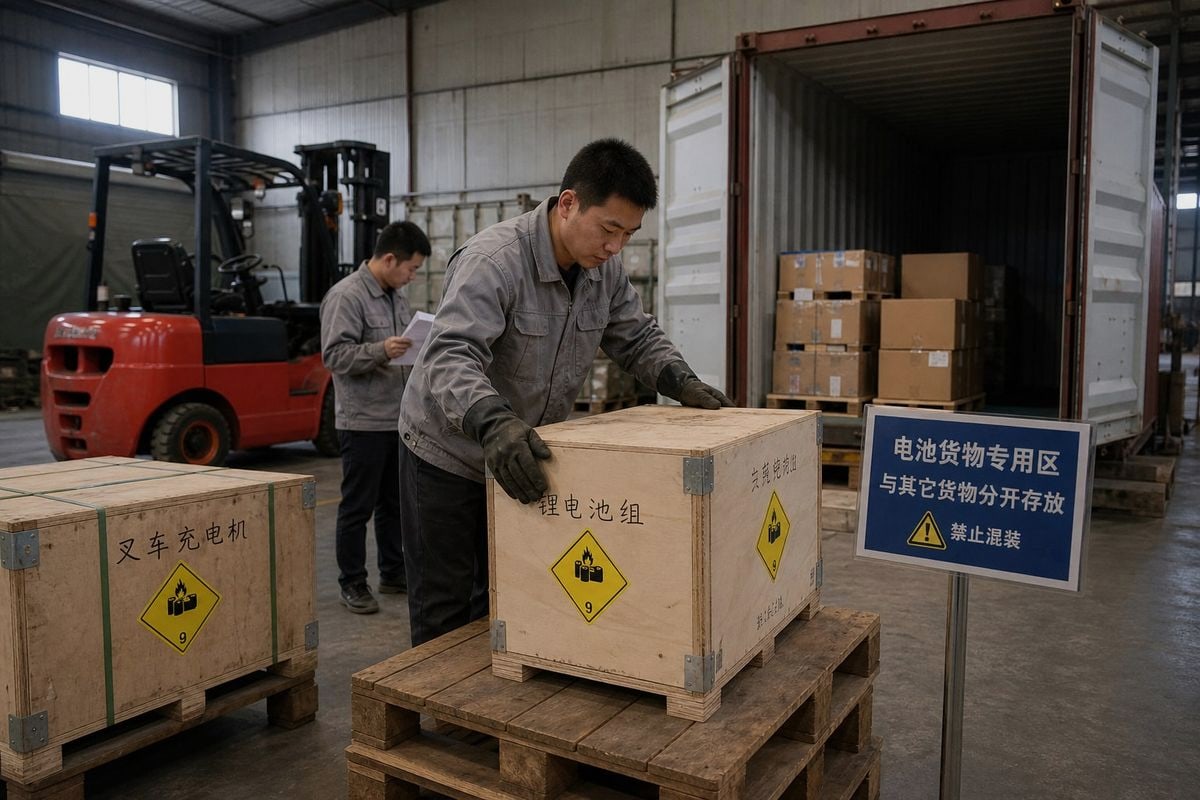
This combination is actually the most common mixed load we handle for US-bound clients. It makes commercial sense. A forklift rarely fills a container's full volume, so chargers, batteries, and spare parts turn wasted cubic space into revenue-generating cargo. Done right, it drives down the landed cost per forklift significantly.
Battery Handling Is the Critical Path
Lithium batteries are the item that can stop the whole shipment. Batteries installed in the forklift, batteries packed with the equipment, and batteries shipped standalone each face different classification and documentation requirements. We review the battery specification sheet 3, confirm the UN number and hazard class, check the SDS, and get carrier acceptance in writing before booking. Regulations may also restrict where battery cargo sits in the stow, so we plan segregation and clearance into the load map from day one.
Filling Space Intelligently
Spare parts are the perfect void filler, but never loose. Small parts go in labeled cartons, cartons go on pallets, and pallets slot into gaps the forklifts leave. Chargers ride crated and elevated, away from any moisture path. This is container space optimization working in your favor: every cubic meter you fill lowers your average freight cost per unit.
Documentation for a Mixed Load
Customs treats a mixed container as many products, not one. Your packing list must itemize every SKU with quantity, value, weight, HS code 4, and origin. Vague descriptions like "forklift accessories" invite inspection delays. In some cases, mixed equipment shipped as a functional set can be classified under a single heading using General Interpretative Rule 3(b), which can simplify entry and sometimes optimize duty rates, but that decision needs a broker's review, not guesswork. Our documentation support team cross-checks the invoice, packing list, and battery certificates before departure, because one inconsistency between documents is the most common cause of customs holds we see. Pair clean paperwork with proper cargo insurance, and a mixed shipment carries no more risk than a single-product one.
결론
Mixed warehouse equipment ships safely in one container when you consolidate smartly, engineer the load, secure everything, and document each SKU. Contact our team for a consolidation quote.
각주
1. High Cube containers provide extra vertical space for tall warehouse equipment like racking frames. ↩︎
2. ISPM 15 standards regulate wood packaging to prevent the international spread of forest pests. ↩︎
3. Battery specification sheets provide technical data required to comply with international lithium battery shipping regulations. ↩︎
4. The Harmonized System (HS) code is used globally to classify products for customs and tariff purposes. ↩︎




