- +8618603825129
- [email protected]


Knowing which documents are required to import electric forklifts into Europe can decide whether your container clears in days or sits at port IMDG dangerous goods declaration 1. Our Zhengzhou team sees this weekly. One missing certificate can trigger inspections, storage fees, and angry end customers waiting on equipment. After coordinating hundreds of forklift shipments from Chinese factories, we have learned exactly which papers European customs officers ask for — and which ones importers forget.
To import electric forklifts into Europe, you need a commercial invoice, packing list, Bill of Lading, Certificate of Origin, EORI number, EU Declaration of Conformity with CE Marking, a technical file, plus lithium battery documents: UN38.3 test report, SDS, and dangerous goods declaration where applicable.
That is the short answer. But the real picture splits into two buckets: customs papers and product-compliance papers. Let me walk you through both, step by step.
Last spring, our team helped a Dutch distributor whose forklifts arrived at Rotterdam before his paperwork did. The container waited eleven days. That experience shaped our pre-departure document checks.
For customs clearance, you need a commercial invoice with accurate technical details, a packing list, a Bill of Lading, a Certificate of Origin, an EORI number for the importer, and a Single Administrative Document (SAD) filed for duty and VAT assessment under HS Code 8427.10.
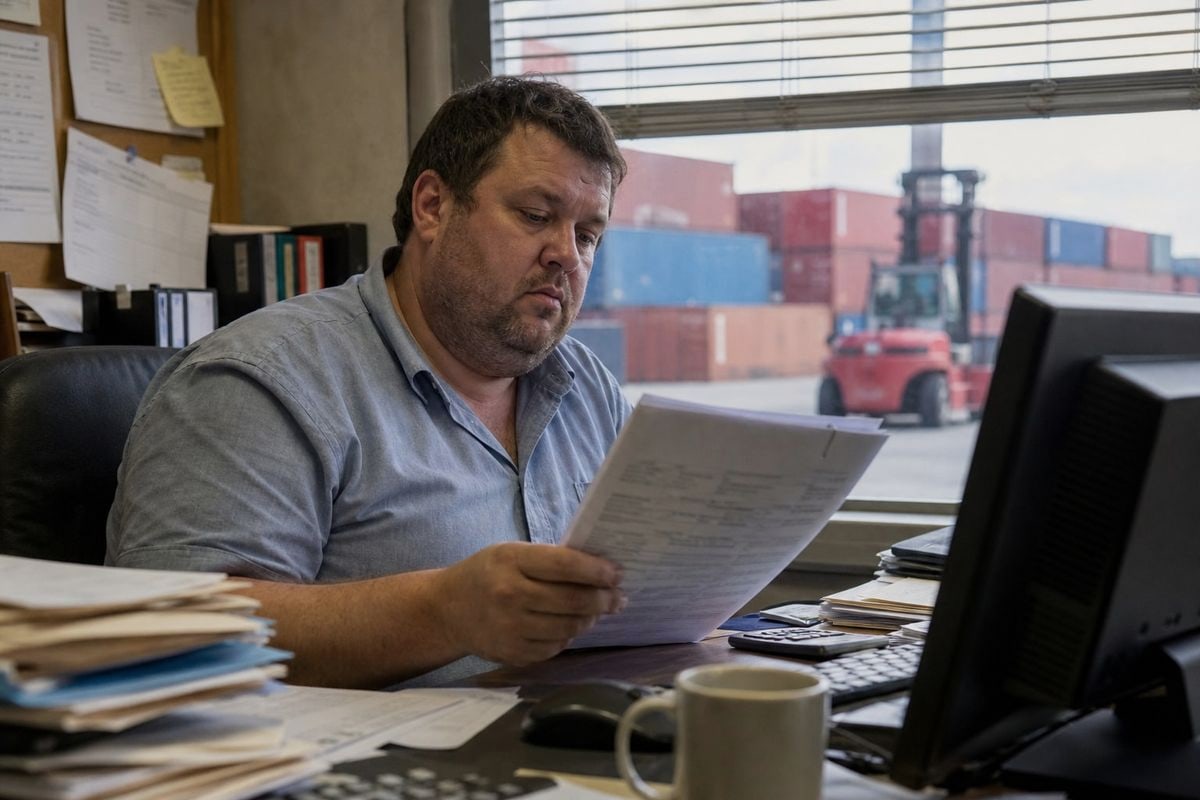
European customs officers work from paper first and cargo second. If the documents are complete and consistent, most forklift shipments clear without physical inspection. If they conflict with each other, your container gets flagged. So the goal is not just having the documents. It is making sure they all tell the same story.
Here is the standard set we verify before any forklift container leaves China:
| 문서 | 목적 | Common Problem |
|---|---|---|
| 상업 송장 | Declares value, model, quantity, lifting capacity, battery voltage | Vague descriptions like "forklift" with no specs |
| 포장 목록 | Shows package count, weights, dimensions | Weights that don't match the Bill of Lading |
| 선하증권 | Proves shipment and consignee details | Wrong consignee name or notify party |
| 원산지 증명서 | Supports tariff classification and preference claims | Missing when a duty preference was expected |
| SAD (Single Administrative Document) | Official EU customs declaration for Import Duty and VAT | Filed with the wrong HS code |
| EORI number 2 | Identifies the importer of record in the EU | Importer never registered before shipping |
Electric forklifts typically classify under HS Code 8427.10 3 — self-propelled trucks powered by an electric motor. Import Duty and VAT are calculated from this classification. When we prepare export declarations in China, we align our code with what the importer's broker will file in the EU. A mismatch between the two sides is one of the fastest ways to invite a customs query.
그리고 EORI number is the one document buyers most often forget, because it is not a shipping paper at all. It is a registration. First-time EU importers sometimes discover at destination that they cannot even file a declaration. We now ask every new European client for their EORI number before we book the vessel.
The trade-off we weigh on every lithium forklift booking is speed versus carrier acceptance. Booking fast feels good. But booking before the battery paperwork is verified is how shipments get rolled at origin.
Lithium-powered forklifts need a UN38.3 test report proving the battery passed transport safety testing, a Safety Data Sheet (SDS/MSDS), an IMDG dangerous goods declaration for sea freight where applicable, and a documented state of charge at or below 30% at loading.
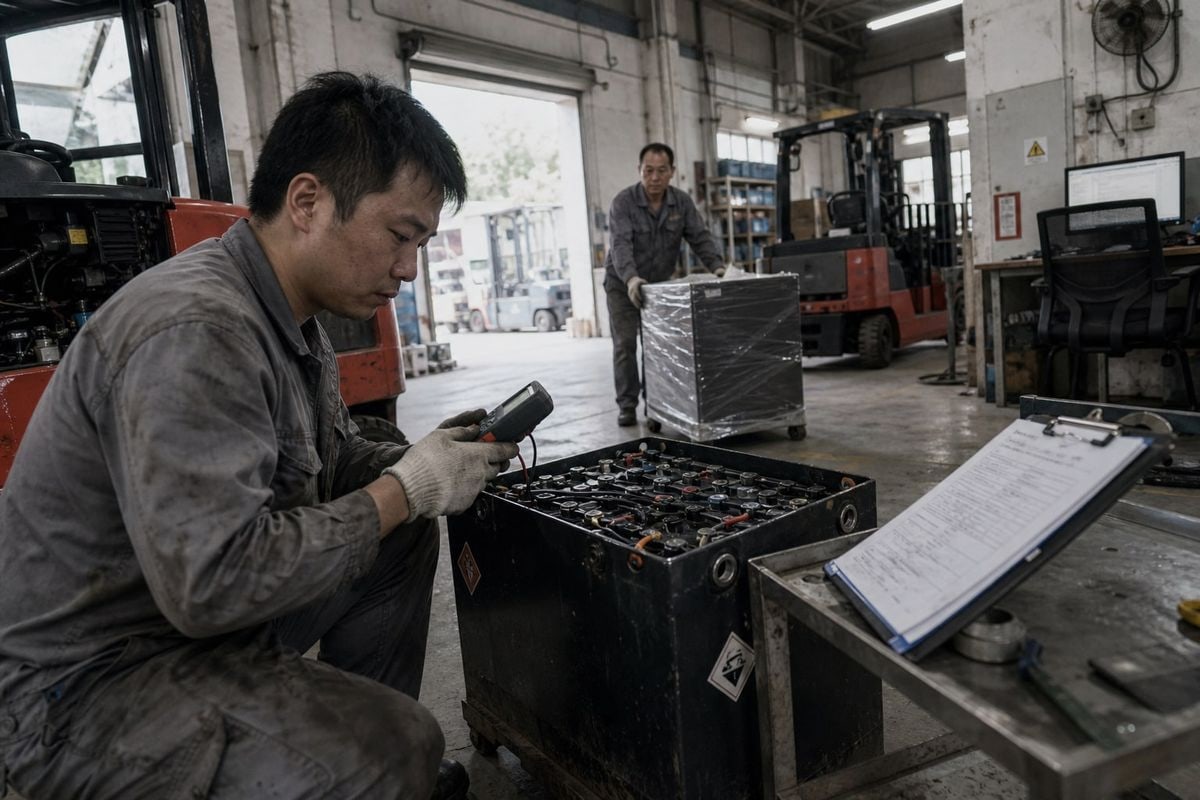
Battery documentation sits at the overlap of two rule systems. Transport rules govern how the battery moves. Product rules govern whether it can be sold. European customs and carriers care about both, so your file needs to satisfy both.
| 문서 | What It Proves | Who Asks for It |
|---|---|---|
| UN38.3 Test Report/Summary | The battery passed altitude, vibration, shock, and thermal testing for transport | Ocean carriers, customs, insurers |
| SDS / MSDS | Chemical composition and emergency handling information | Carriers, port authorities |
| IMDG DG Declaration | The cargo is properly declared as dangerous goods by sea | Ocean carriers, port operators |
| State of Charge record | The battery was at or below 30% charge at loading | Carriers, per current logistics guidance |
In our experience handling lithium battery cargo from Chinese factories, the biggest risk is timing. Some suppliers only produce the UN38.3 summary after you ask. Others send a report for a different battery model than the one installed. We request battery specifications — chemistry, voltage, watt-hours — from the factory at the quotation stage, then match the UN38.3 report against the actual battery nameplate before the forklift is loaded. That single check has saved clients from port rejections more than once.
There is an emerging development worth flagging. Industry sources report that the EU Battery Regulation will bring new obligations for rechargeable industrial batteries above 2kWh from August 18, 2026 — a threshold most lithium forklift packs exceed. Treat this as a development to verify against the official regulation text, but if you import regularly, start asking your battery suppliers now what compliance evidence they can provide.
A German buyer once asked us why customs questioned his shipment when the supplier had "already sent the CE certificate." We reviewed it together. It was a one-page reseller statement with no technical file behind it. That is not compliance.
Your electric forklift needs CE Marking backed by an EU Declaration of Conformity issued by the manufacturer, a complete technical file with risk assessments and test reports under the Machinery Directive 2006/42/EC framework, and an operator manual in the destination country's official language.
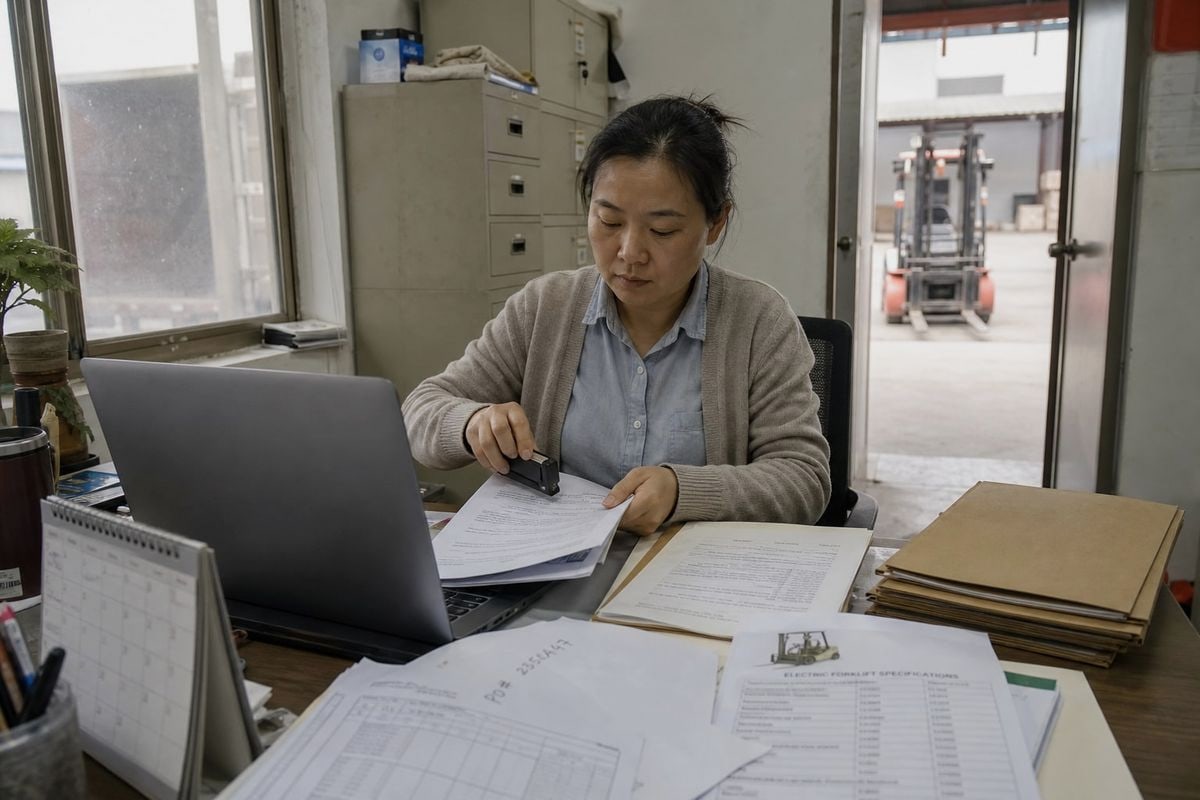
The EU treats forklifts as industrial machinery. That means market-access compliance is driven by the Machinery Directive 2006/42/EC 4 and its successor framework, plus related requirements like EMC. Customs officers and market surveillance authorities can both ask for proof. Here is what that proof actually looks like.
Here is the point we push hardest with clients sourcing from Chinese factories: the Declaration of Conformity must trace back to the actual manufacturer and a real technical file. A reseller's photocopied "CE certificate" carries little weight if surveillance authorities investigate. Before we accept a booking, we ask the factory who issued the declaration and whether the technical file exists. It takes one email. It can prevent a seized shipment.
Beyond the machinery core, newer EU frameworks are starting to touch advanced forklifts. Forklifts with autonomous navigation may fall under AI Act technical documentation requirements. Connected "smart" fleet units may face Cyber Resilience Act software transparency expectations. REACH obligations, including SCIP database notification for substances of very high concern, can also apply. These are not yet routine customs asks for standard electric forklifts, but importers building long-term programs should track them.
The hardest lesson from our early years forwarding machinery was this: documents are rarely missing entirely. They are inconsistent. And inconsistency is what customs systems are built to catch.
The costliest mistakes are mismatched values or weights across documents, wrong HS code classification, relying on a reseller's CE statement without a technical file, missing or mismatched UN38.3 battery reports, no EORI registration, and manuals not translated into the destination language.
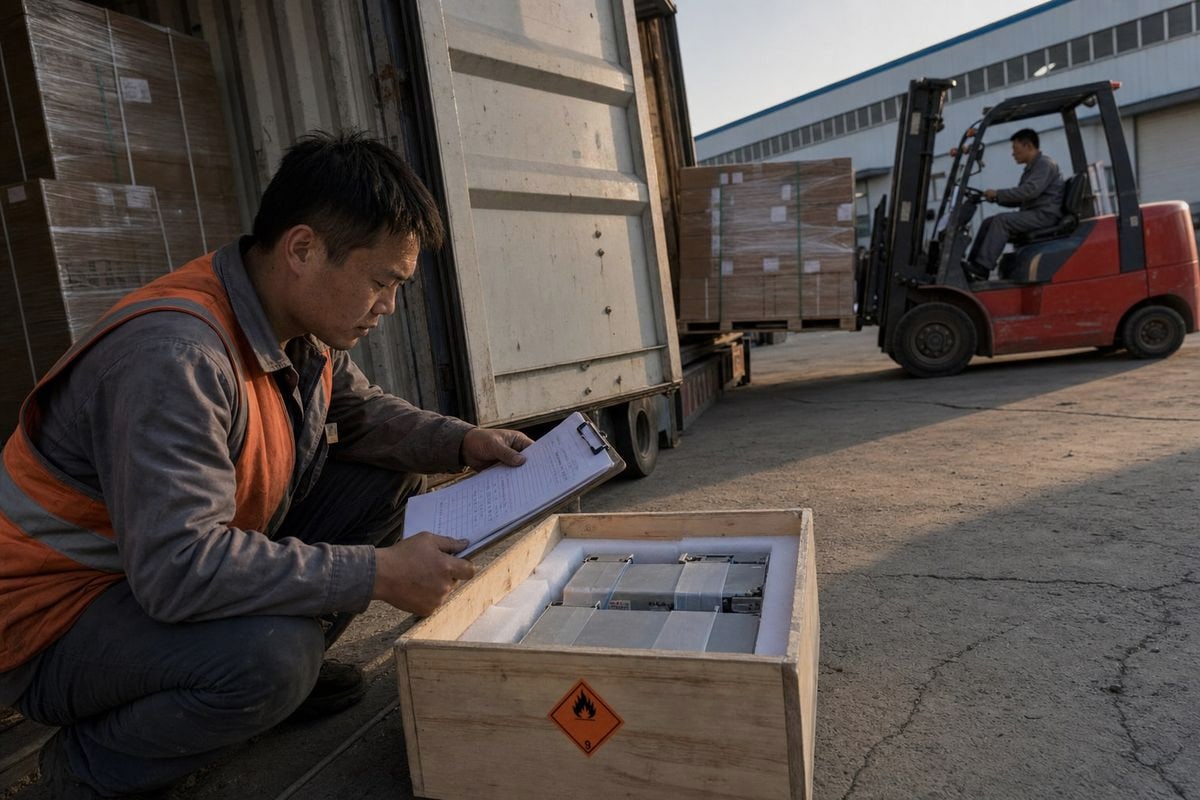
Every one of these mistakes is preventable before the vessel sails. Once the container reaches a European port, fixing paperwork means storage charges, demurrage, and missed delivery promises to your own customers. Here is how we rank the risks based on what we see in real shipments.
| Mistake | Typical Consequence | Prevention Step |
|---|---|---|
| Invoice, packing list, and Bill of Lading don't match | Customs query, possible inspection | Cross-check all three before departure |
| Wrong HS code (not 8427.10 for electric units) | Reassessed Import Duty and VAT, penalties | Confirm classification with the EU broker early |
| CE declaration from a reseller, no technical file | Detention or refusal at market surveillance | Demand the manufacturer's Declaration of Conformity |
| UN38.3 report for a different battery model | Carrier rejection or port hold | Match report to the battery nameplate |
| No EORI number registered | Clearance cannot start | Register weeks before arrival |
| Manual only in English | Non-compliance flagged after import | Request local-language manuals at purchase |
We run document checks at three stages: before purchase confirmation, before container loading, and before the export declaration is filed. At the purchase stage, we verify the factory can produce the EU Declaration of Conformity and battery reports. At loading, we photograph nameplates and record the battery state of charge. Before departure, we reconcile the invoice, 포장 목록, Certificate of Origin, and Bill of Lading line by line. It is unglamorous work. It is also why most of our European forklift shipments clear without a single customs question.
One more practical note. Fixing a missing Certificate of Origin or re-issuing a Declaration of Conformity from China can take one to two weeks with courier time and factory response delays. If your forklift is already sitting at Hamburg or Rotterdam during that period, storage costs stack up daily. Building a document buffer into your schedule is cheaper than any port storage invoice you will ever pay.
Importing electric forklifts into Europe demands customs documents, CE compliance papers, and lithium battery evidence. Verify everything before departure — our team checks each file so your forklifts clear without delays.
1. International Maritime Organization page detailing the framework for transporting dangerous goods like lithium batteries. ↩︎
2. Official EU guidance on the mandatory registration number required for all importers of record. ↩︎
3. The EU Access2Markets portal provides official tariff and classification data for specific product codes. ↩︎
4. European Commission site outlining the safety and compliance requirements for industrial machinery. ↩︎