

[Shipping material handling equipment from China](https://mbmlog.com/?p=11535) looks simple until a forklift gets stuck at port. In our Zhengzhou logistics office, I see that call every month — and it always starts the same way.
Om materiaal handling apparatuur vanuit China te verzenden, bevestig de afmetingen van de machine en het type batterij, kies zeevracht (FCL, flat rack of Ro-Ro), stem overeen over de Incoterms, bereid de commerciële factuur, paklijst en vervoersbewijs voor, en doe dan de douaneafhandeling en regel de uiteindelijke levering met de juiste ontlaapapparatuur.
Dat is de korte versie. De lange versie is waar importeurs duizenden dollars kunnen besparen of verliezen. Laat me je door de vier vragen leiden die kopers ons het vaakst stellen.
Hoeveel kost het om materiaal handling apparatuur vanuit China te verzenden?
In het afgelopen kwartaal stuurde een Amerikaanse heftruckdealer me een offerte van een andere expediteur die 30% goedkoper was dan de onze. Het sloot de handling op bestemming, douanerechten en vrachtvervoer uit. Hij stond op het punt om het te ondertekenen.
Het verzenden van materieel uit China kost doorgaans $2.000–$6.000+ per container via zee, afhankelijk van de grootte van de apparatuur, het type container, de bestemming en het seizoen. De totale aangekomen kosten omvatten ook binnenlands vrachtvervoer in China, exportafhandeling, maritieme verzekering, douane-afhandeling, invoerrechten en belastingen, en de uiteindelijke levering.
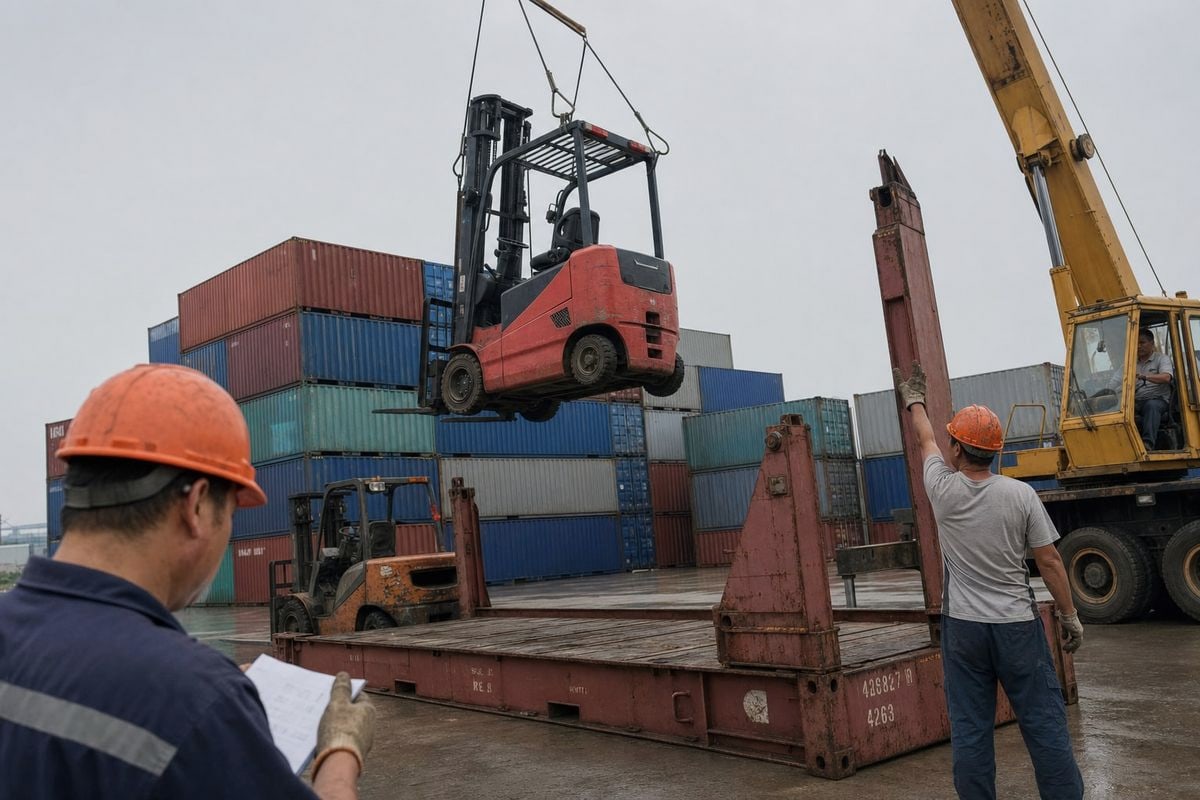
Er is geen enkele prijs voor het verzenden van een heftruck of een transportsysteem. In plaats daarvan is er een stapel kostenfactoren. Wanneer ik een zending quote, splits ik het bedrag op in onderdelen zodat de koper precies kan zien waar het geld naartoe gaat. Die transparantie is belangrijk, omdat het meest voorkomende pijnpunt dat ik hoor van importeurs niet de vrachtprijs zelf is. Het zijn de verrassingskosten die optreden nadat de vracht al is vertrokken.
De belangrijkste kostencomponenten
Hier is hoe een typische deur-tot-deur zending is samengesteld:
| Kostenonderdeel | Wat het dekt | Wie meestal betaalt (FOB) |
|---|---|---|
| Fabrieksophaling & truckvervoer in China | Het verplaatsen van vracht van fabriek naar haven | Verkoper |
| Exportafhandeling & -verklaring | Haventarieven, exportdouane | Verkoper |
| Zeevracht | Zeevervoer van haven naar haven | Koper |
| Maritieme verzekeringsdekking | Schade of verlies tijdens transport | Koper |
| Havengelden bij bestemming | Lossen, terminalhandling | Koper |
| Douaneafhandeling & invoerrechten | Invoerrechten en belastingen, makelaarskosten | Koper |
| Eindlevering | Vrachtvervoer naar uw magazijn | Koper |
Wat maakt machines duurder om te verzenden
Standaard vracht gaat in een standaard doos. Materiaalbehandelingsapparatuur gaat daar vaak niet in. Een vlakke stapelcontainer of open-top container kost aanzienlijk meer dan een reguliere 40ft doos omdat deze gespecialiseerde handling vereist en vaak buitenmaats toeslagen met zich meebrengt. Zeer zware eenheden hebben mogelijk Ro-Ro verzendopties of breakbulk vrachtarrangementen nodig in plaats van containers.
Een truc die we constant gebruiken: vraag om modulaire demontage van de fabrikant. Als een hoge mast verlaagd of verwijderd kan worden, kan een buitenmaats machine 1 vaak in een standaard 40ft High Cube container passen. Die enkele wijziging kan duizenden euro's aan vrachttoeslagen per zending besparen.
Voor ladingen naar de VS, controleer ook de HS-codeclassificatie 2 vroeg. Sommige apparatuur valt onder de tarieven van Sectie 301, wat uw berekening van de landingskosten verandert voordat u zelfs maar de fabrieksprijs onderhandel.
Welke documenten heb ik nodig om materiaal handling apparatuur vanuit China te verzenden?
Een container met elektrische stapelaars heeft eens elf dagen in een Amerikaanse haven gestaan omdat de gewichten op de paklijst niet overeenkwamen met de Cognossement 3. Ons team controleert nu elk document vóór vertrek — die les kostte iemand echt demurragekosten.
U heeft een commerciële factuur, paklijst, vrachtbrief en oorsprongsbewijs nodig als de kernset. Batterij-aangedreven apparatuur vereist ook UN38.3 testverslagen, MSDS en IMDG gevaarlijke goederenverklaringen. Voeg een vrachtverzekering en de correcte HS-codeclassificatie toe om douanevertragingen te vermijden.
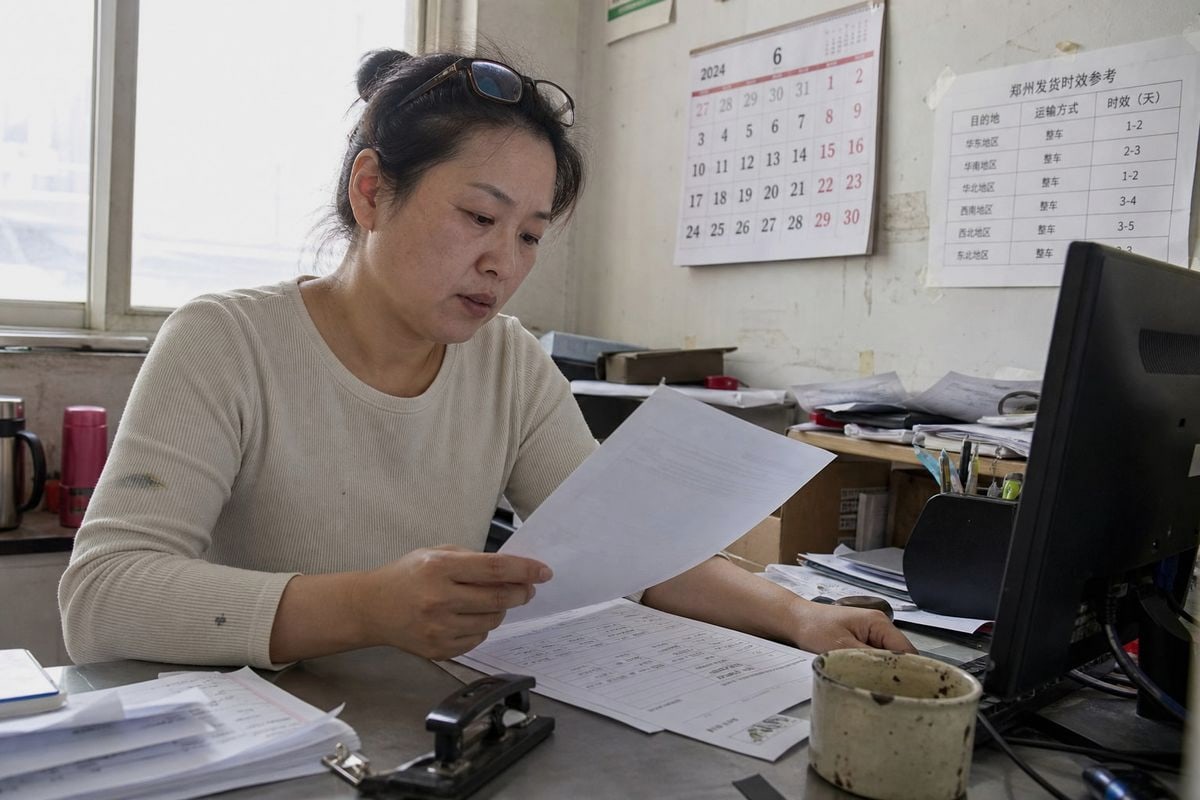
Documentatie is de grootste oorzaak van douanevertragingen die ik zie in de logistiek van magazijnapparatuur. De papieren zijn niet ingewikkeld zodra u begrijpt wat elk document daadwerkelijk doet. Laat me ze dus in eenvoudige taal uitleggen.
De kernset documenten
| Document | Wat het doet |
|---|---|
| Handelsfactuur | Verklaart de waarde van de vracht; de douane gebruikt dit om invoerrechten te berekenen |
| Paklijst | Geeft de gewichten, afmetingen en inhoud van elk pakket op |
| Cognossement | Bewijs van verzending en eigendom van de vracht; u heeft dit nodig om goederen vrij te geven |
| Certificaat van oorsprong | Bewijst waar de goederen zijn gemaakt; heeft invloed op de douanetarieven |
| Exportverklaring | Ingediend in China om de lading voor export te klaren |
| Vrachtverzekeringspolis | Documenteert uw maritieme verzekeringsdekking voor claims |
Documents for special equipment
Electric forklifts and lithium battery equipment need more. Expect UN38.3 battery test reports, an MSDS, and IMDG declarations for sea transport. Depending on the destination market, you may also need CE marking for Europe or UL-related documentation for the US.
Timing matters as much as accuracy
My standing advice: compile the complete document set at least two weeks before the vessel docks. Customs brokers need time to pre-file entries. If documents arrive with the ship, you are already late, and storage charges accumulate fast.
Consistency is the other rule. The invoice, packing list, and Bill of Lading must all tell the same story. Different weights, different model numbers, or different values across documents will trigger inspections. We review every set before departure precisely because fixing paperwork in China costs nothing, while fixing it at a US port costs storage, demurrage, and lost sales time.
Hoe kies ik tussen FCL en LCL voor mijn verzending van materieel?
The trade-off I weigh most often for buyers is this: an FCL container you do not completely fill, versus LCL consolidation where your forklift shares space with strangers' cargo. The right answer depends on volume, value, and risk tolerance.
Choose FCL if you are shipping one or more full-size forklifts, as a single machine often justifies a dedicated 20ft container. Choose LCL only for smaller items like pallet trucks, spare parts, or chargers. FCL reduces handling, damage risk, and often costs less per unit at volume.
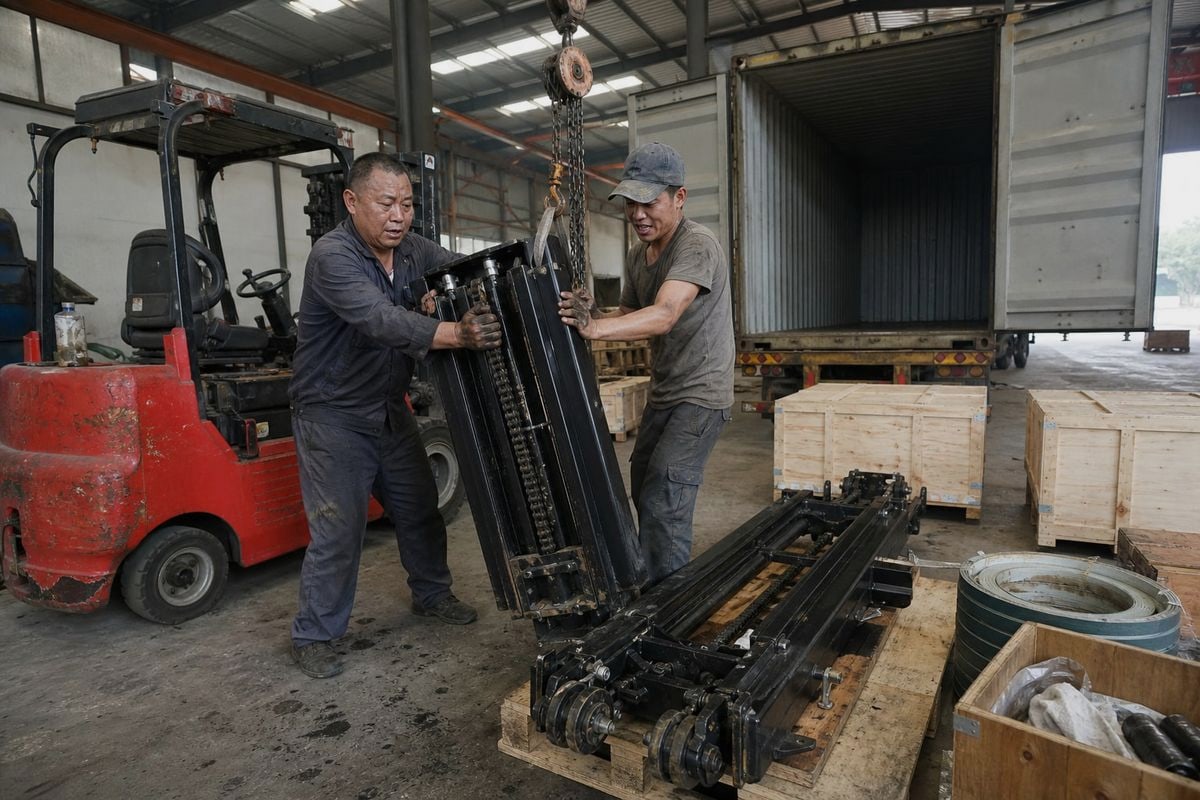
Here is a quick comparison before we go deeper:
| Factor | FCL (Volle containerlading) | LCL (Less than Container Load) |
|---|---|---|
| Het beste voor | Full forklifts, multiple machines | Pallet trucks, parts, chargers |
| Verwerking | Loaded once, sealed at factory | Handled at multiple consolidation points |
| Risico op schade | Lager | Hoger voor zware machines |
| Kostlogica | Flat rate per container | Charged by volume/weight |
| Transporttijd | Gewoonlijk sneller | Often slower due to consolidation |
| Battery cargo | Easier to arrange | Some consolidators refuse Class 9 cargo |
Why heavy equipment favors FCL
A counterbalance electric forklift can weigh 2–4 tons. In an LCL shipment, that machine gets moved by multiple warehouses and shares the container with cargo you cannot control. Every extra touch is a damage opportunity. With FCL, we supervise loading once at origin — container loading supervision 4 includes positioning, weight distribution, and lashing — and the container stays sealed until it reaches you.
Where LCL genuinely makes sense
I do recommend LCL for the right cargo. Spare parts, forklift chargers, small electric pallet trucks, and attachments consolidate well. Many of our US customers buy forklifts from Factory A, batteries from Factory B, and chargers from Factory C. We consolidate everything at our warehouse and fill unused FCL space with parts. That hybrid approach usually beats pure LCL on both cost and safety.
The container math
A 20ft container typically fits 2–3 compact forklifts. A 40HQ can hold more units or forklifts plus a full load of accessories. Before booking, we evaluate dimensions, mast height, weight, and battery specs — because good container utilization directly lowers your cost per machine.
Wat moet ik weten over het verzenden van apparatuur op lithiumbatterijen vanuit China?
A distributor once told me his previous forwarder only discovered the forklifts had lithium batteries when the carrier rejected the booking. The cargo waited at port for three weeks while documents were assembled. This is the scenario we work hardest to prevent.
Lithium battery forklifts are classified as Class 9 Dangerous Goods for sea transport. You need UN38.3 test reports, an MSDS, and an IMDG dangerous goods declaration before booking. Confirm carrier acceptance early, because not all shipping lines or consolidators accept lithium battery cargo.
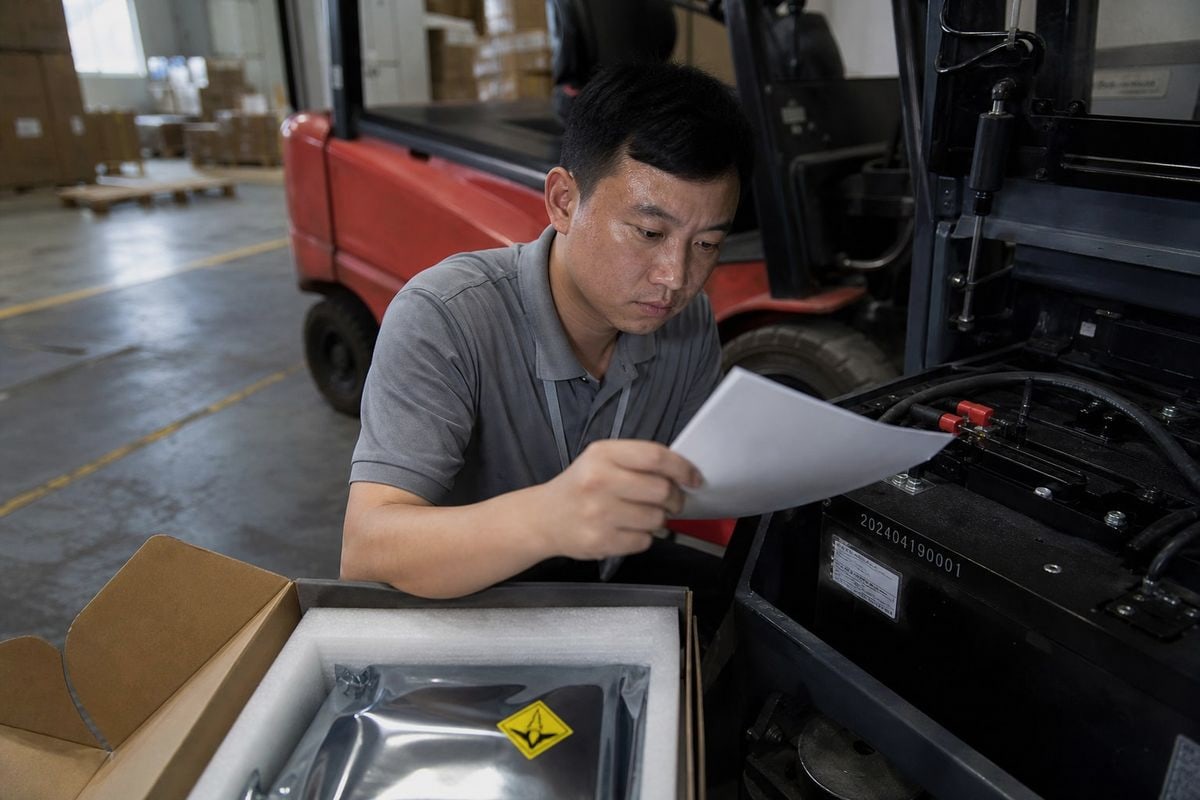
Electric equipment is where general-cargo forwarders most often fail machinery importers. The rules are not impossible, but they must be handled before the cargo reaches the port — not after.
The three documents that unlock the booking
First, the UN38.3 test report. This proves the battery passed the UN transportation safety tests for altitude, vibration, shock, and short circuit. Reputable Chinese forklift manufacturers have this report; ask for it before you pay a deposit. Second, the MSDS, which describes the battery chemistry and handling requirements. Third, the IMDG dangerous goods declaration, which the shipper files for ocean transport under the Class 9 classification.
A pre-shipment checklist for battery equipment
- Confirm the battery type with the factory: lithium-ion, lithium iron phosphate, or lead-acid. Lead-acid batteries follow different, simpler rules.
- Request the UN38.3 report and MSDS during the purchase negotiation, not after production.
- Verify carrier acceptance. Some shipping lines restrict Class 9 cargo, and many LCL consolidators refuse it entirely.
- Check state-of-charge and packaging requirements with the carrier.
- Confirm destination compliance — CE for Europe, relevant certifications for the US market.
Why timing beats everything
Handled early, battery compliance adds days of paperwork. Handled late, it adds weeks of port storage. In our coordination flow, we collect battery specifications from the factory at the same time we confirm cargo readiness and pickup schedules. By the time the container is booked, the dangerous goods file is already complete. My blunt advice: never buy an electric forklift before confirming its battery documentation exists.
Conclusie
Shipping material handling equipment from China rewards preparation: confirm specs and battery documents early, choose the right container, complete paperwork before sailing, and plan a realistic 3-to-5-month total timeline.
Get those decisions right, and your forklifts arrive on schedule and on budget. Get them wrong, and the port fees eat your margin. If you want a China-based freight forwarder that lives and breathes elektrische heftruck verzending, my team and I are here to help — reach me at [email protected] or visit www.mbmlog.com.
Voetnoten
1. Explains the standardized dimensions of intermodal containers used to transport machinery and oversized cargo globally. ↩︎
2. The official body responsible for the Harmonized System used to classify goods for global customs and duties. ↩︎
3. Provides a comprehensive overview of the legal and functional role of a Bill of Lading in international trade. ↩︎
4. International standards for freight containers ensure safety and consistency during the loading and transport process. ↩︎




