
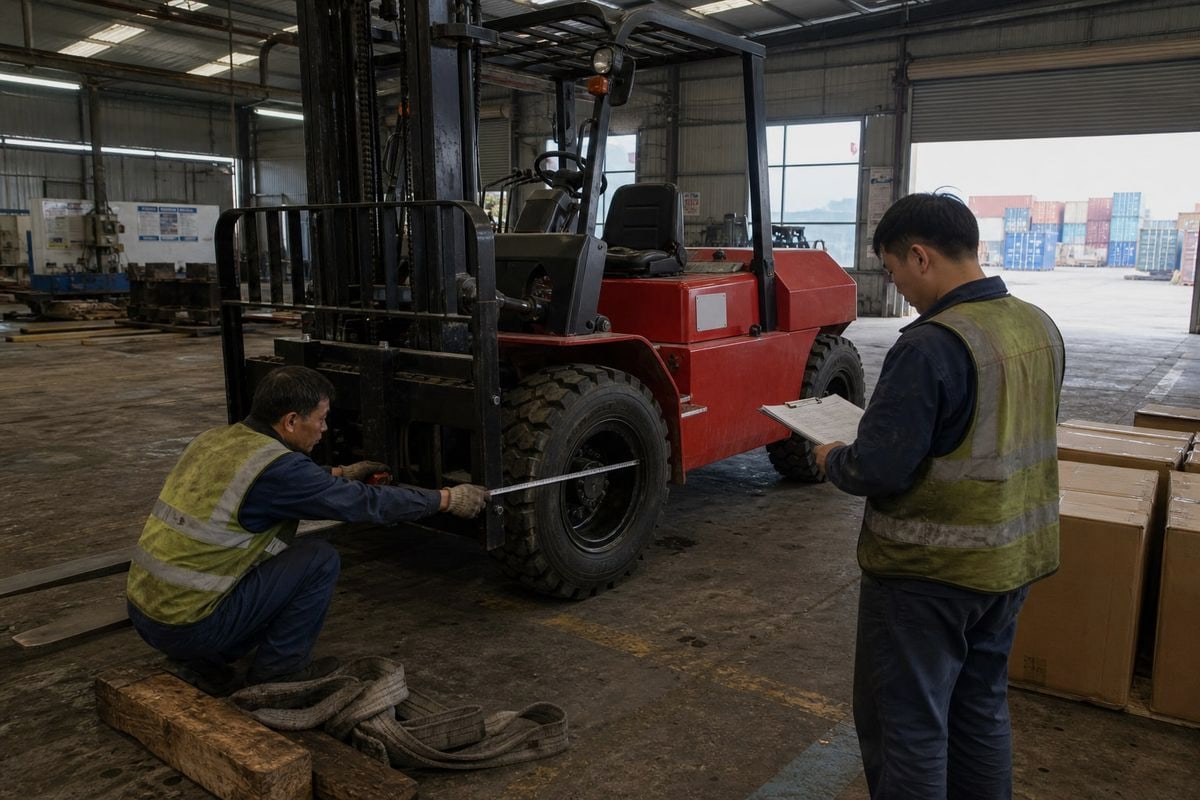
Learning how to ship rough terrain forklifts from China stops most buyers cold. At our Zhengzhou logistics base, we see great factory prices turn into landed-cost nightmares when freight goes wrong.
To ship rough terrain forklifts from China, confirm exact dimensions and weight, choose FCL container, flat rack, or Ro-Ro shipping, secure and brace the machine, prepare the commercial invoice, packing list, and Bill of Lading, then arrange customs clearance and final delivery at destination.
That is the short version. The details decide whether your forklift arrives safely or sits at a port racking up charges. Let me walk you through each step, starting with cost.
How much does it cost to ship a rough terrain forklift from China to the USA?
A dealer in Texas once called me after a supplier quoted him "free shipping." Our team reviewed the deal and found the destination charges alone exceeded his expected profit margin.
Shipping a rough terrain forklift from China to the USA typically costs $2,500–$4,000 for a 40-foot container to the West Coast, or roughly $100–$250 per ton by sea freight. Flat rack, out-of-gauge handling, duties, and inland trucking add to the total.

The honest answer is that no two quotes look the same. When our team prices a shipment, we start with the machine itself. A compact rough terrain forklift that fits inside a standard container costs far less to move than an oversized unit that needs a flat rack container and out-of-gauge surcharges. One marketplace listing we reviewed showed an estimated shipping fee of $641.45 for a single unit with a 38–48 business day delivery window, while full-container quotes to the US West Coast commonly land between $2,500 and $4,000. Both numbers are real. They simply describe very different shipments.
The main cost drivers
Here is what actually moves the price up or down:
| Fator de custo | Por Que Isso Importa |
|---|---|
| Dimensions and gross weight | Determines container fit vs. flat rack or breakbulk |
| Port of loading China | Shanghai, Qingdao, and Ningbo rates differ by season |
| Destination port | West Coast is usually cheaper than East Coast or inland |
| Shipping method | FCL, flat rack, and Ro-Ro shipping 1 carry different rates |
| Taxas e impostos de importação | Based on the HS code for forklifts 2 and declared value |
| Seguro de carga marinha | Small percentage of value, but essential for heavy machinery |
| Inland trucking | Factory pickup in China plus final-mile delivery in the USA |
Landed cost beats factory price
I always tell buyers the same thing: do not compare factory prices alone. A supplier offering CIF terms may bury weak freight visibility or destination cost surprises inside the deal. Understanding FOB vs CIF terms matters here. Under FOB, you control the ocean freight and pick your own forwarder. Under CIF, the supplier controls it, and you inherit whatever destination charges follow. In our experience shipping heavy equipment to the United States, requesting a full landed-cost breakdown before ordering prevents almost every pricing dispute we see.
What container size do I need for shipping a rough terrain forklift from China?
Choosing between a 20FT, 40FT, or flat rack is the decision we spend the most time on with clients, because getting it wrong wastes money or damages equipment.
Most rough terrain forklifts under 2.3 meters wide and 2.3 meters high fit a standard 20FT or 40FT container with the mast lowered or removed. Oversized units need a flat rack container or Ro-Ro shipping, which allow overhang but cost more.

Rough terrain forklifts create a specific problem that standard warehouse forklifts do not. Their oversized tires, high ground clearance, and taller masts push them close to, or past, container door limits. Before we book anything, our team asks the factory for exact loaded dimensions, including whether the mast ships assembled, lowered, or detached. That single question changes the entire freight plan.
Matching the machine to the method
| Método | Melhor para | Trade-Off |
|---|---|---|
| 20FT FCL container | One compact unit plus spare parts | Tight loading clearance |
| 40FT / 40HQ FCL | Two units or one unit plus batteries, chargers, attachments | Higher base rate but better cost per machine |
| Container de prateleira plana | Overwidth or overheight machines | Out-of-gauge surcharges apply |
| Ro-Ro shipping | Self-propelled oversized units | Eliminates disassembly but limited routes and no crating |
| Breakbulk | Extremely large project cargo | Slowest booking, highest handling |
Ro-Ro shipping deserves a special mention. Because the forklift drives on and off the vessel under its own power, you skip complex disassembly entirely. For oversized rough terrain models, that convenience often outweighs the higher per-unit rate, provided your route and carrier support it.
Filling the container pays for itself
Container loading and bracing is where we add the most value for dealers. A rough terrain forklift rarely fills a 40FT container alone. We regularly consolidate forklifts from one factory with batteries, chargers, and spare parts from other suppliers into the same box. One of our US clients cut his per-unit logistics cost significantly this way. Whatever fits, everything must be blocked and braced with iron or wood supports fixed to the container floor, and all wood packaging must carry ISPM 15 heat-treatment stamps 3 to avoid customs rejection.
How do I handle customs clearance for rough terrain forklift imports?
The most expensive shipment I ever untangled was held at Long Beach for eleven days over a mismatched invoice value. Our documentation team now checks every file twice before departure.
Handle customs clearance by preparing a commercial invoice, packing list, Bill of Lading, and Certificate of Origin, confirming the correct HS code for forklifts before shipment, filing the ISF for US imports, and paying import duties and taxes through a licensed customs broker.

Machinery imports are delayed by paperwork errors far more often than by physical inspection. That is why customs clearance documentation is the part of the process I refuse to rush. Every document must tell the same story: the same model number, the same value, the same weight, the same consignee.
The documents you cannot skip
- Fatura comercial — must clearly identify the manufacturer, consignee, country of origin, exact model, and machinery value.
- Lista de embalagem — with crate count, dimensions, and gross and net weights that match the invoice.
- Conhecimento de embarque — the ocean transport document proving ownership and shipment terms.
- Certificado de origem — needed where tariff preference applies.
- Cargo insurance policy — expected by customs and essential for heavy machinery logistics.
- declaração de exportação — filed on the China side before the vessel departs.
Get the HS code right before the cargo moves
Confirm the HS code for forklifts with a customs broker before shipment, not after. Classification disputes create duty surprises and holds. Under-declared specifications are another trap. Some suppliers understate value or weight to look competitive, and the importer pays the penalty when customs disagrees. Our freight forwarding services include a pre-departure document review specifically because inconsistent paperwork is the number one cause of destination delays we see.
Destination-specific compliance
US-bound diesel rough terrain forklifts must meet EPA emissions requirements, while Europe requires CE marking. Verify the model's compliance certificates before ordering, because no customs broker can fix a non-compliant engine at the port. Also plan the offloading: those oversized tires and high ground clearance often demand heavy-duty ramps or a mobile crane at your warehouse.
What should I know about lithium battery requirements when shipping rough terrain forklifts?
Battery-powered equipment is our daily bread at MBMLOG, and I can say plainly: lithium models are where inexperienced forwarders fail their clients most often.
Electric rough terrain forklifts with high-capacity lithium-ion batteries are regulated as Class 9 Dangerous Goods, requiring UN38.3 test documentation, proper DG declarations, and specific carrier approval before booking. Diesel units instead need drained fuel tanks and disconnected batteries to ship as non-hazardous cargo.
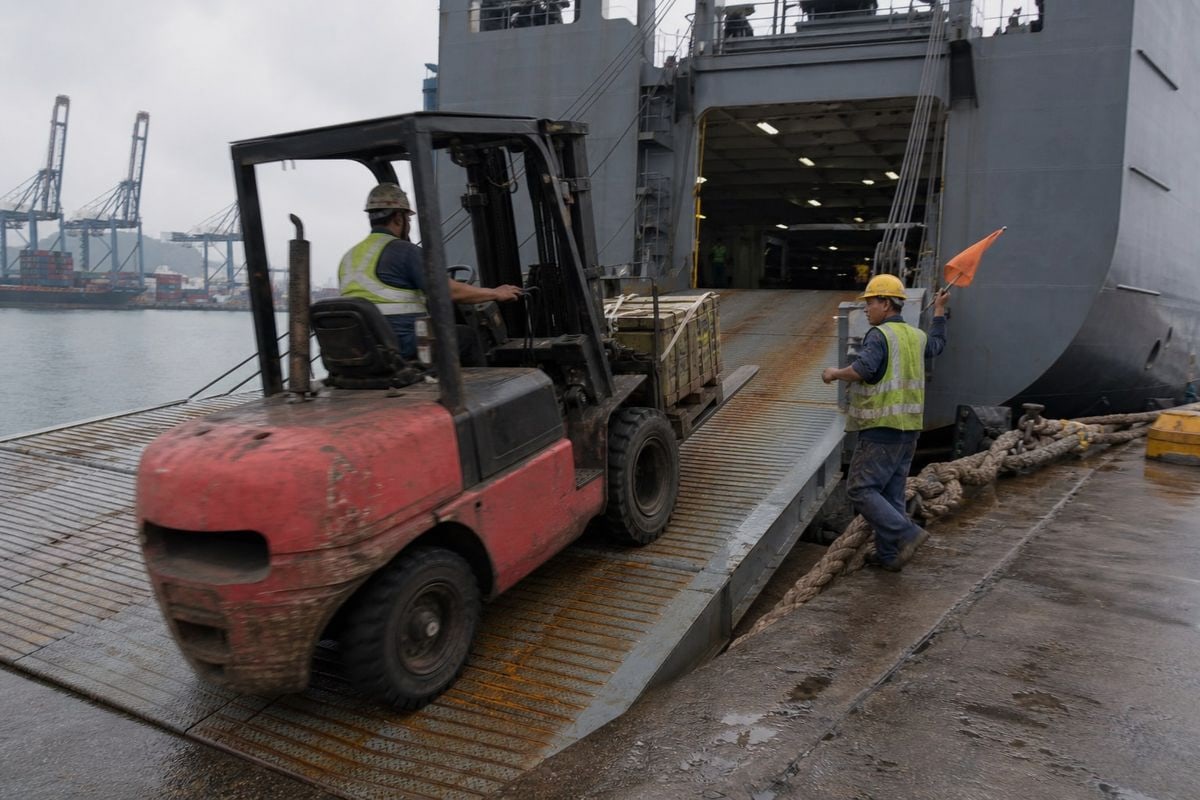
Here is the problem in plain terms. A lithium-ion battery large enough to power a rough terrain forklift is not ordinary cargo. Carriers treat it as Classe 9 Mercadorias Perigosas 4, and they can refuse the booking outright if the paperwork is not in place. We have seen shipments rejected at the port of loading in China because nobody secured carrier approval in advance. At that point, the buyer faces re-booking fees, storage costs, and weeks of delay.
What Class 9 handling actually requires
| Requisito | What It Means for You |
|---|---|
| UN38.3 test report | The battery must pass standardized transport safety testing; get this from the factory |
| Declaração de DG | A formal dangerous goods form filed with the carrier before booking |
| Carrier approval | Not all vessels accept large lithium installations; approval must come first |
| MSDS documentation | The battery's safety data sheet accompanies the shipment |
| Battery state | Installed batteries are usually shipped disconnected and secured |
Diesel units follow a different rule
If your rough terrain forklift is diesel-powered, the requirement flips. International maritime safety standards call for draining the fuel tank and disconnecting the starter battery so the machine can be classified as non-hazardous cargo where applicable. It is simpler, but it still must be documented correctly.
Protecting the machine either way
Battery rules aside, ocean air is brutal on hydraulics. We recommend VCI shrink-wrapping on the mast and exposed hydraulic cylinders to block saltwater corrosion, plus rust-preventive grease on machined surfaces and desiccants inside enclosures. A pre-shipment inspection by a third-party firm is also worth the modest fee. Inspectors verify hydraulic seal integrity and mast alignment before the machine is secured, giving you photographic proof of condition at origin. Some of our clients go further and place IoT impact sensors on the chassis to log G-force exposure through loading and transit, which settles any damage dispute quickly.
Conclusão
Shipping rough terrain forklifts from China is a chain of decisions, not one booking. Get dimensions, method, documents, and battery rules right, and your landed cost stays predictable.
Notas de Rodapé
1. Official IMO page explaining the safety and operational standards for Roll-on/Roll-off vessels used in machinery transport. ↩︎
2. The World Customs Organization's official overview of the Harmonized System used for international product classification. ↩︎
3. International standards for phytosanitary measures regarding wood packaging materials in global trade. ↩︎
4. United Nations regulatory framework defining Class 9 hazards for the international transport of lithium-ion batteries. ↩︎




