

Shipping electric forklifts from China to Canada looks simple until a carrier rejects your booking over battery paperwork. Our Zhengzhou logistics team sees this happen to first-time importers constantly.
To ship electric forklifts from China to Canada, confirm the forklift specs, prepare UN38.3 and MSDS battery documents, book FCL ocean freight through a forwarder experienced with dangerous goods, secure the unit inside the container, then clear CBSA customs and arrange final delivery.
Below, I walk through the documents, the real costs, the lithium battery rules, and the FCL versus LCL decision. Each section comes from shipments we actually handle.
What Documents Do I Need to Ship an Electric Forklift from China to Canada?
Last year, one of our clients had a container held at origin for nine days. The cause was a single missing battery test report. Documents decide your timeline more than the vessel schedule does.
You need a commercial invoice, packing list, bill of lading, certificate of origin, UN38.3 test report, MSDS for the lithium battery, and a dangerous goods declaration. On the Canada side, you need a Business Number, HS code classification, and an eManifest filed by the carrier.
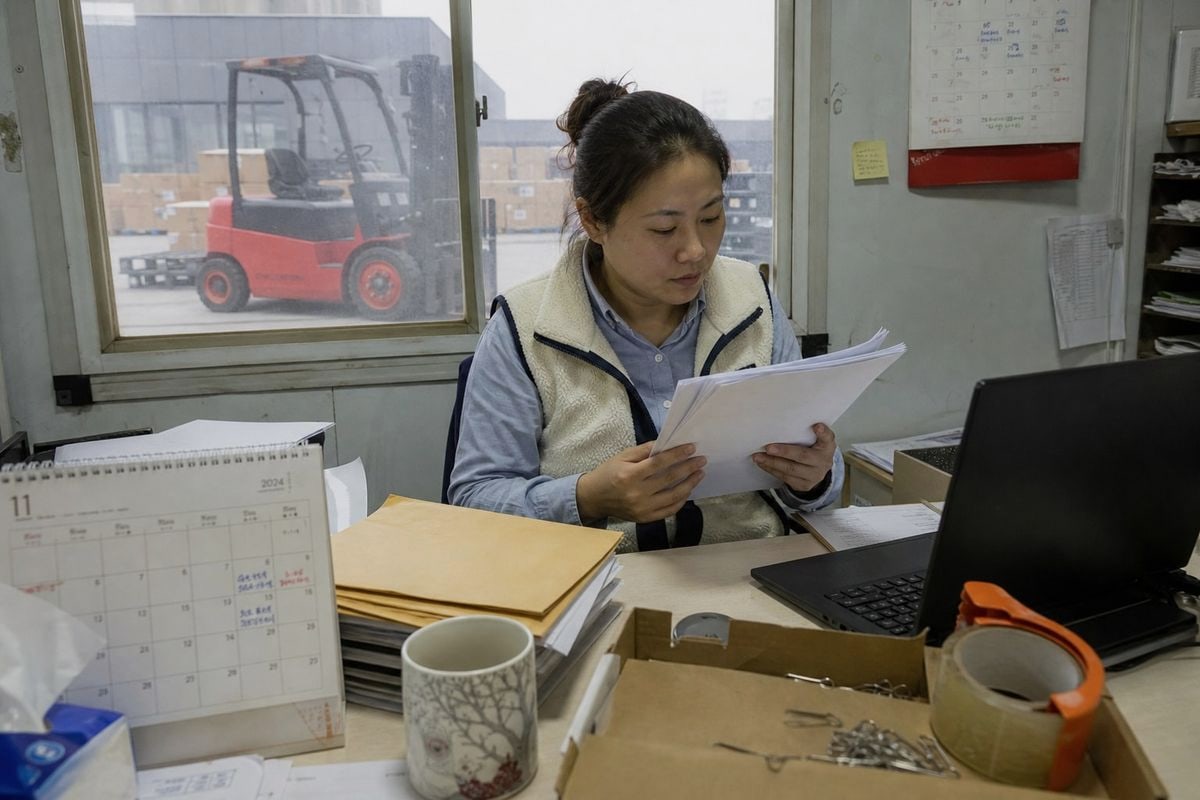
Paperwork for an electric forklift splits into two groups. One group covers the commercial shipment. The other covers the lithium battery. Both must be complete before the cargo reaches the port. In our experience coordinating forklift exports, the battery documents cause almost all of the delays, because carriers will not accept the booking without them.
Commercial and Export Documents
These are the standard trade documents. Your Chinese supplier and your forwarder prepare most of them together.
| Dokument | Kdo ga pripravi | Zakaj je pomembno |
|---|---|---|
| Komercialni račun | Dobavitelj | CBSA uses it to assess duties and taxes |
| Seznam za pakiranje | Dobavitelj | Confirms dimensions, weight, and contents |
| Nakladnica | Carrier / forwarder | Proof of shipment and title to the goods |
| Potrdilo o poreklu | Supplier / chamber | Supports tariff treatment claims |
| Izvozna deklaracija | Prevoznik | Required for China customs export |
Battery and Dangerous Goods Documentation
Lithium battery forklifts are classified as Class 9 dangerous goods 1, usually under UN3480 or UN3481. That classification triggers extra dangerous goods documentation. You need the UN38.3 test summary proving the battery passed transport safety testing, plus an MSDS sheet. We always collect these from the factory before we quote, because some smaller factories cannot produce a valid UN38.3 report at all. Finding that out after the forklift arrives at the port is expensive.
Canada-Side Requirements
Most electric forklifts fall under Koda HS 2 8427.10. You need a Canadian Business Number to import commercially, and your carrier must file an eManifest with CBSA at least 24 hours before the vessel departs China. One caution I always give buyers: verify the exact HS code for your specific configuration. Import requirements depend on the precise classification of the forklift, battery, and charger, not just the broad category. A steam-cleaned chassis also helps, since CFIA can flag even lightly used units for soil inspection.
Koliko stane pošiljanje električnega viličarja iz Kitajske v Kanado?
A buyer once told me his forklift quote looked great until the destination charges arrived. His landed cost jumped by thousands. We now build full landed-cost estimates before any client confirms an order.
Total landed cost includes ocean freight, dangerous goods surcharges, origin and destination handling, customs brokerage, 5% GST, any applicable duties, and inland trucking or rail in Canada. A single forklift in a 20FT container typically lands within a few thousand US dollars in total logistics cost, depending on route and season.

The freight rate is only one line on the bill. When we prepare quotations for forklift importers, we break the cost into stages so nothing surprises the buyer at destination. That transparency matters, because unexpected destination charges are the single most common complaint we hear from importers switching to us from another forwarder.
Glavne komponente stroškov
| Stroškovna postavka | Faza | Opombe |
|---|---|---|
| Factory pickup and trucking | China origin | Depends on factory location |
| Export declaration and handling | China origin | Fixed, relatively small |
| Ocean freight (FCL) | Transit | Varies by season and port pair |
| DG doplačilo | Transit | Velja za tovor litij-ionskih baterij |
| Destination terminal handling | Kanada | Charged by the port/terminal |
| Carinska posredovanja | Kanada | CBSA clearance and CARM processing |
| GST (5%) and duties | Kanada | Based on HS Code 8427.10 value |
| Inland delivery | Kanada | Rail or truck to final destination |
Transit Time and Routing Choices
Sea transit from China to Canada commonly runs 20 to 38 days, depending on route and inland delivery distance. Routing affects both time and cost. Shipments through the Port of Prince Rupert 3 can reach Western and Central Canada up to 3 days faster than Vancouver, because Prince Rupert sits closer to North Asia and connects directly to rail. Customs clearance itself usually takes 3 to 7 business days when paperwork is correct.
Incoterms Change What You Pay and Control
Your Incoterms decide who pays what. Experienced importers often prefer FOB, because it gives them control over ocean freight, routing, and marine insurance, and the cost structure stays transparent. DDP is simpler for the buyer, but it can hide the cost breakdown and remove your control over brokerage and routing. Some buyers ask us for door-to-door DDP quotes anyway, and we provide them, but I always show the itemized version too. One more saving worth checking: Canadian importers of zero-emission equipment may qualify for the federal Clean Technology Investment Tax Credit 4, recovering up to 30% of total capital cost including shipping and installation. Ask your accountant before you write off the freight bill as pure expense.
How Do I Handle Lithium Battery Shipping Requirements for My Electric Forklift?
Battery compliance is where we spend the most time before every forklift shipment. Our team requests battery specs from the factory on day one, because this is the single biggest source of delay in the whole process.
Confirm the battery's UN classification, obtain the UN38.3 test report and MSDS from the manufacturer, book the cargo as Class 9 dangerous goods with a carrier that accepts it, verify the state of charge before loading, and label the container according to lithium battery regulations.
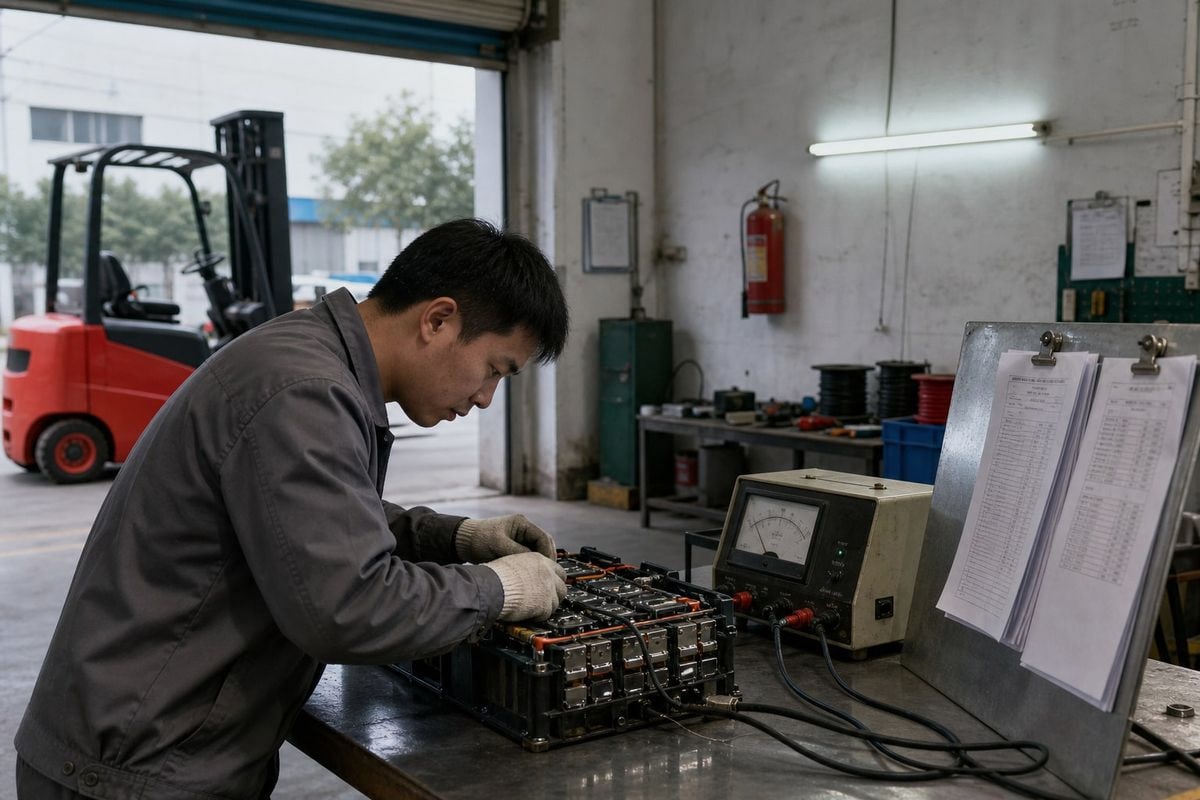
Lithium battery regulations exist because damaged or poorly documented batteries create fire risk at sea. Carriers take this seriously, and so should you. Here is the practical process we follow for every lithium-battery forklift we ship.
Step-by-Step Battery Compliance Process
- Identify the battery chemistry and configuration. A lithium battery installed in the forklift falls under UN3481. Batteries shipped separately fall under UN3480. The classification changes the handling requirements.
- Collect the UN38.3 test summary. This proves the battery passed altitude, thermal, vibration, shock, and short-circuit testing. No report means no carrier acceptance.
- Collect the MSDS. The safety data sheet describes the battery's composition and emergency handling.
- Book as Class 9 dangerous goods. Not every carrier or every vessel accepts DG cargo on every route. We check acceptance before promising a sailing date.
- Check the state of charge. We verify SOC before container loading and photograph the battery display as part of our pre-loading inspection.
- Apply correct labels and declarations. The container and paperwork must match, or the port will flag the shipment.
Two Canada-Specific Battery Considerations
First, verify the charger. Canadian industrial sites typically run 480V or 600V three-phase power, and plugs must match NEMA configurations. We have seen forklifts arrive with chargers that could not plug into anything at the buyer's warehouse. Second, think about winter. If your forklift will work in cold Canadian warehouses or on outdoor docks, specify a lithium battery with integrated thermal management, sometimes sold as an Arctic Kit. Standard lithium cells can refuse to charge in sub-zero temperatures, and no shipping document fixes that problem after arrival.
Should I Choose FCL or LCL When Shipping My Electric Forklift to Canada?
Weighing FCL against LCL is a conversation we have with almost every new forklift importer. The cheaper-looking option is not always the cheaper option once damage risk and handling enter the math.
Choose FCL for almost all electric forklift shipments to Canada. FCL avoids the extra handling and shifting damage risk of LCL consolidation, and it is usually the best value for one to four forklifts. Reserve LCL only for small pallet trucks or spare parts.
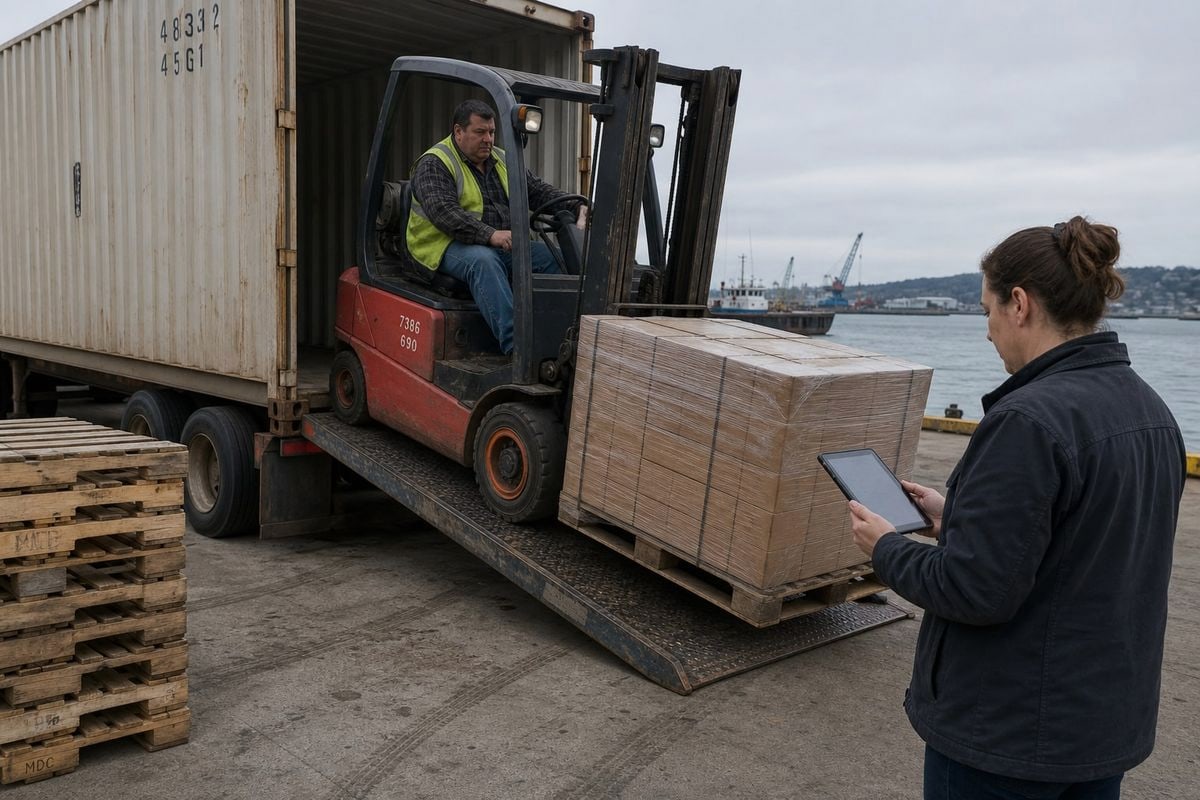
Here is the quick comparison we walk buyers through, then the reasoning behind it.
| Faktor | FCL | LCL |
|---|---|---|
| Damage risk | Low — cargo secured once, opened once | Higher — multiple handling points |
| Cost per forklift | Usually lower for 1–4 units | Can look cheaper, hidden fees add up |
| DG acceptance | Straightforward | Many consolidators refuse lithium cargo |
| Transit predictability | Visoka | Depends on consolidation schedule |
| Najboljše za | Full forklifts, multiple units | Small parts, chargers, accessories |
Why FCL Wins for Forklifts
A counterbalance forklift is heavy, high-value, and battery-powered. In an LCL container, your forklift shares space with unknown cargo, gets handled at consolidation warehouses on both ends, and risks shifting against other freight. On top of that, many LCL consolidators simply refuse Class 9 dangerous goods, which removes the option for most lithium forklifts anyway. FCL gives you one loading, one securing plan, and one opening at destination. For one to four forklifts, it is typically the best-value choice.
Loading and Preparation Inside the Container
Container preparation is where cargo safety is actually decided. For taller counterbalance models, the mast often needs to be tilted or disassembled and secured separately to clear container height limits and keep weight balanced. Overhead guards may fold or come off. We coordinate blocking and bracing with the factory, position the counterweight for even axle load, and photograph every stage before sealing. We also arrange marine insurance for the declared value, because even a well-secured machine crosses an ocean.
When Other Modes Make Sense
Flat rack containers suit oversized forklifts that will not fit a standard box. Ro-Ro shipping works for drivable machines on routes where it is available, though route options to Canada are limited. Air freight is technically possible but only makes sense for compact units or urgent replacements, because the cost for heavy equipment is steep. Filling leftover FCL space with chargers, batteries, and spare parts from multiple suppliers is often the smartest move, and consolidation like that is a core part of what our warehouse team does.
Zaključek
Shipping electric forklifts from China to Canada rewards preparation. Get battery documents early, choose FCL, verify HS codes and chargers, and your landed cost stays predictable. Need help? Reach our team anytime.
Opombe
1. Transport Canada's official site for regulations regarding the shipment of hazardous materials and lithium batteries. ↩︎
2. Official Canadian customs authority providing guidance on tariff classification and import requirements. ↩︎
3. Official website for a major Canadian gateway for international trade and logistics. ↩︎
4. Official Canadian government resource for financial incentives and tax credits for clean technology. ↩︎




