
- +8618603825129
- [email protected]

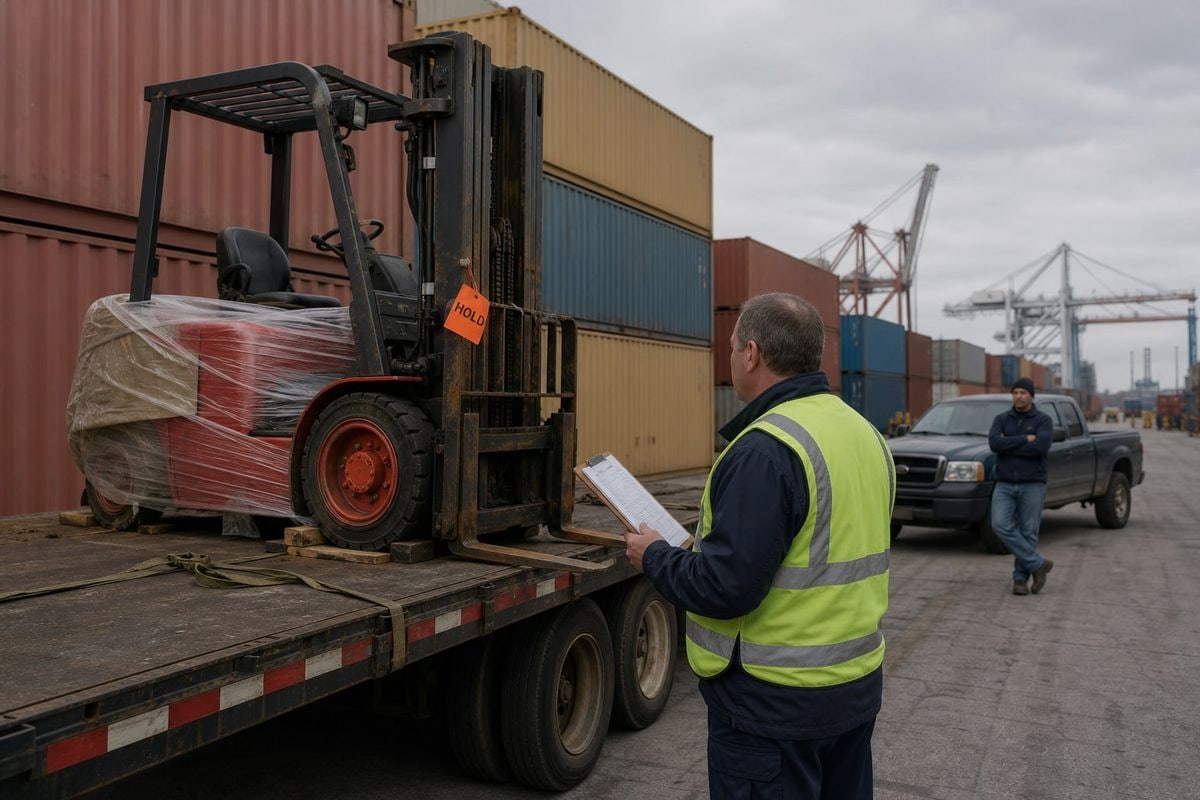
A forklift shipment held by customs stops everything. In our Zhengzhou logistics office, we handle these calls weekly. Every day of delay means storage fees, missed deliveries, and angry end customers waiting on equipment.
If your forklift shipment is held by customs, first confirm the exact hold reason in writing, then route the issue to your customs broker or freight forwarder, submit corrected documents the same day, pay any assessed duties or fees, and follow up daily until release.
That is the short answer. But forklifts are not small parcels. Customs looks harder at industrial equipment. Below, I will walk you through the reasons, the release steps, the documents, and the real costs.
Last year, one of our US customers had two electric forklifts sitting at the port of entry for nine days. The cause? A one-line description on the commercial invoice.
Customs holds forklift shipments most often for HS code classification disputes, declared value mismatches, missing or inconsistent commercial documents, unpaid duties, late ISF filings, missing EPA or battery compliance paperwork, non-treated wooden packaging, or origin-related reviews such as AD/CVD and UFLPA scrutiny.
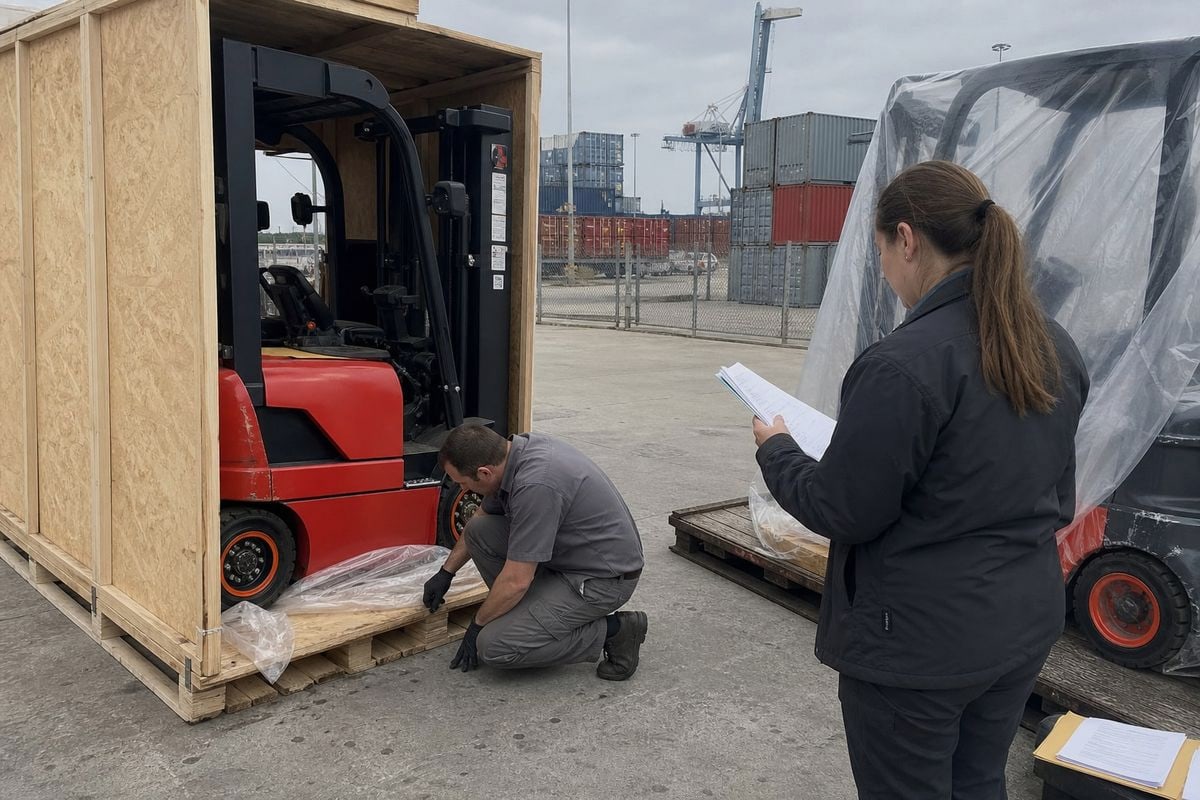
Not all holds are equal. Before you panic, confirm the shipment is truly held at customs and not just delayed in transit. Check the carrier tracking carefully. Ask your freight forwarder to verify the status. A vessel schedule slip looks a lot like a customs hold on a tracking page, but the fix is completely different.
Once you confirm a real hold, identify the type. Ask your customs broker 1 for the hold notice or hold code. A simple documentary review is very different from a physical CBP exam hold, and each has its own timeline and cost.
| Hold Reason | What Customs Is Checking | Typical Trigger |
|---|---|---|
| HS code classification | Whether the code (usually 8427 for forklifts) matches the machine | Electric, used, or modified units with attachments |
| Value mismatch | Declared price vs. market value of similar machinery | Invoice value looks too low for the equipment |
| Document errors | Commercial invoice, packing list, Bill of Lading consistency | Missing serial numbers, mismatched consignee details |
| ISF filing requirements | Late or missing "10+2" data before vessel departure | Filed late or with wrong container data |
| Duties and AD/CVD | Whether all import duties are calculated and paid | Certain manufacturing origins trigger extra duties |
| Regulatory compliance | EPA emissions or lithium battery documentation | Missing EPA Form 3520-21 2 or UN38.3 test reports |
| Wood packaging | ISPM 15 3 heat-treatment "bug stamp" on pallets and crates | Untreated or unmarked wooden crating |
| Origin scrutiny | UFLPA supply chain traceability | Components sourced from high-risk regions |
In my experience shipping forklifts from China to the United States, three of these dominate: classification questions, invoice inconsistencies, and battery or emissions paperwork. Used forklifts add another layer. Customs often wants proof of purchase and payment records to verify the declared value of second-hand machinery. New units with vague invoice descriptions like "industrial machine" get flagged just as fast.
One more thing I always tell buyers: do not arrange a duplicate or replacement shipment while the first one sits in a hold. Two identical forklifts arriving under confused paperwork creates more customs questions, not fewer.
A US forklift dealer once emailed me at midnight China time: "My container is stuck, what do I do first?" My answer was simple: get the hold reason in writing before touching anything.
To release a detained forklift faster, request the written hold notice, route document issues to your broker or shipper, submit corrected paperwork the same day, pay duties or fees through the proper channel, obtain the customs entry number for tracking, and escalate if there is no progress within days.

Speed comes from sequence, not panic. Here is the exact order I follow when a customer's forklift is detained.
Some importers ask me whether they should call customs themselves right away. My honest advice: start with your carrier or customs broker. They speak the system's language and have direct filing access. Contact customs directly only when the intermediary stalls for days with no progress. That two-stage approach resolves holds faster than jumping straight to the authority.
If a physical exam is ordered, prepare for it. Make sure the forklift's serial number and VIN on the physical unit are clearly visible and match the shipping manifest 5 exactly. We photograph nameplates at loading in China for exactly this reason.
Before any electric forklift container leaves our consolidation warehouse in China, we run a document check against a fixed list. That habit came from painful lessons, not theory.
To prevent customs delays on an electric forklift, prepare a detailed commercial invoice with model and serial numbers, packing list, Bill of Lading, correct HS code, certificate of origin, proof of payment, UN38.3 battery test reports with dangerous goods declarations, and ISPM 15 marked wood packaging.
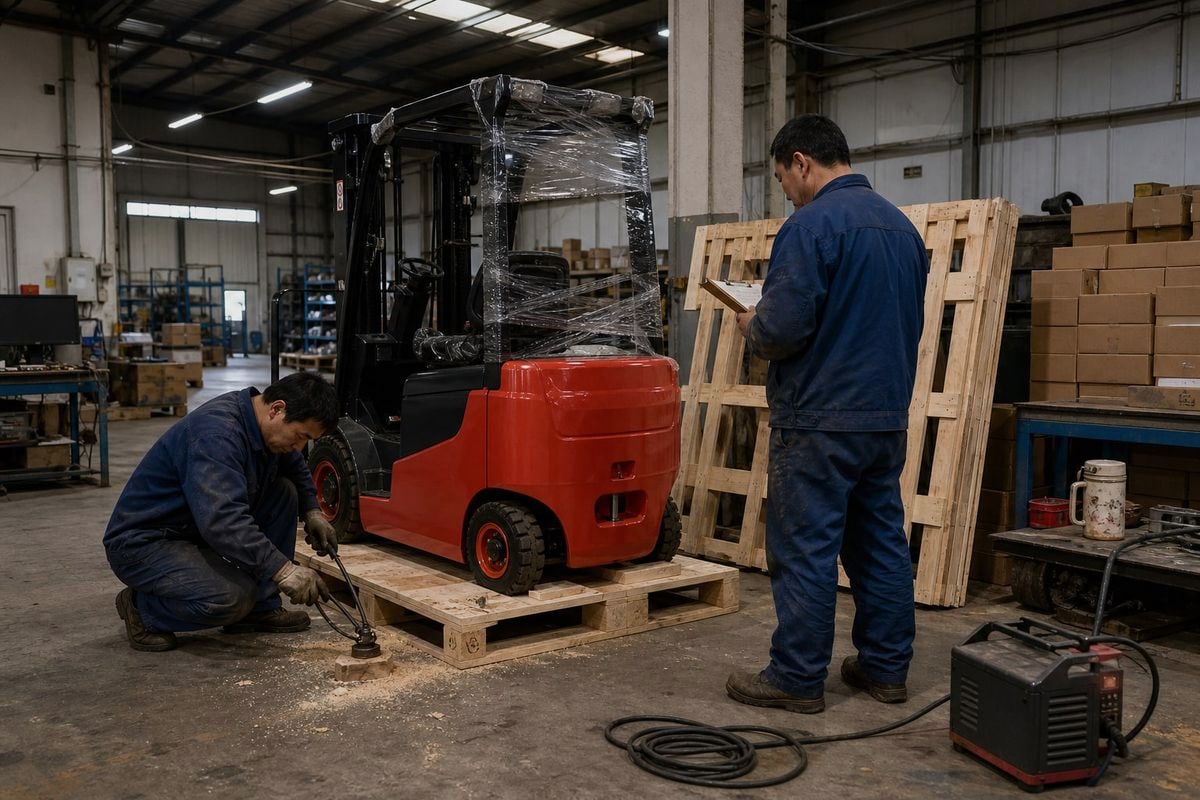
Import documentation for an electric forklift is more demanding than for ordinary cargo. The battery changes everything. Lithium-ion powered forklifts need UN38.3 test reports and dangerous goods declarations to satisfy safety regulations. Traditional lead-acid models skip that requirement entirely, which surprises many first-time importers who assume all electric forklifts ship the same way.
| Document | Why Customs Wants It | Vanligt misstag |
|---|---|---|
| Commercial invoice | Verifies value, model, and buyer details | Vague description, missing serial numbers |
| Packing list | Confirms quantities and weights | Numbers do not match the invoice |
| Fraktbrev | Matches cargo to consignee and vessel | Consignee name inconsistent with other papers |
| Certificate of origin | Confirms manufacturing country | Missing when origin affects duty rates |
| Proof of payment | Supports declared value, critical for used units | Not prepared until customs asks |
| HS code classification | Determines duty rate; forklifts fall under 8427 | Code does not match technical specs |
| UN38.3 report + DG declaration | Lithium battery safety compliance | Battery specs missing from supplier docs |
| ISF filing (US-bound) | Security data filed before vessel departure | Filed late, triggering an automatic hold |
| Customs bond (US) | Guarantees duty payment to CBP | Importer has no bond arranged in advance |
Internal combustion forklifts need EPA compliance evidence. For the US, that means EPA Form 3520-21 proving the engine meets current Tier 4 emission standards. Missing this form is not a minor delay risk. It is a common cause for outright seizure. Electric forklifts avoid the emissions issue, which is one reason many of our customers now prefer lithium models.
Also check your crating. Every wooden pallet or crate must carry the ISPM 15 "bug stamp" showing heat treatment. Without it, customs can order on-site treatment or re-export of the packaging. We inspect this at loading because fixing it at destination is far more expensive.
Finally, for US buyers, prepare a supply chain traceability map if any component could originate from high-risk regions under UFLPA scrutiny. Having it ready turns a potential weeks-long review into a paperwork exercise.
A buyer once told me the customs hold cost him more than the ocean freight itself. He was not exaggerating. The fees stack quietly and then arrive as one ugly invoice.
Customs delays typically add port storage, demurrage and detention fees, exam charges, brokerage amendment fees, and possible penalty charges. A hold of one to two weeks on a forklift container can add hundreds to several thousand dollars on top of the original freight cost.
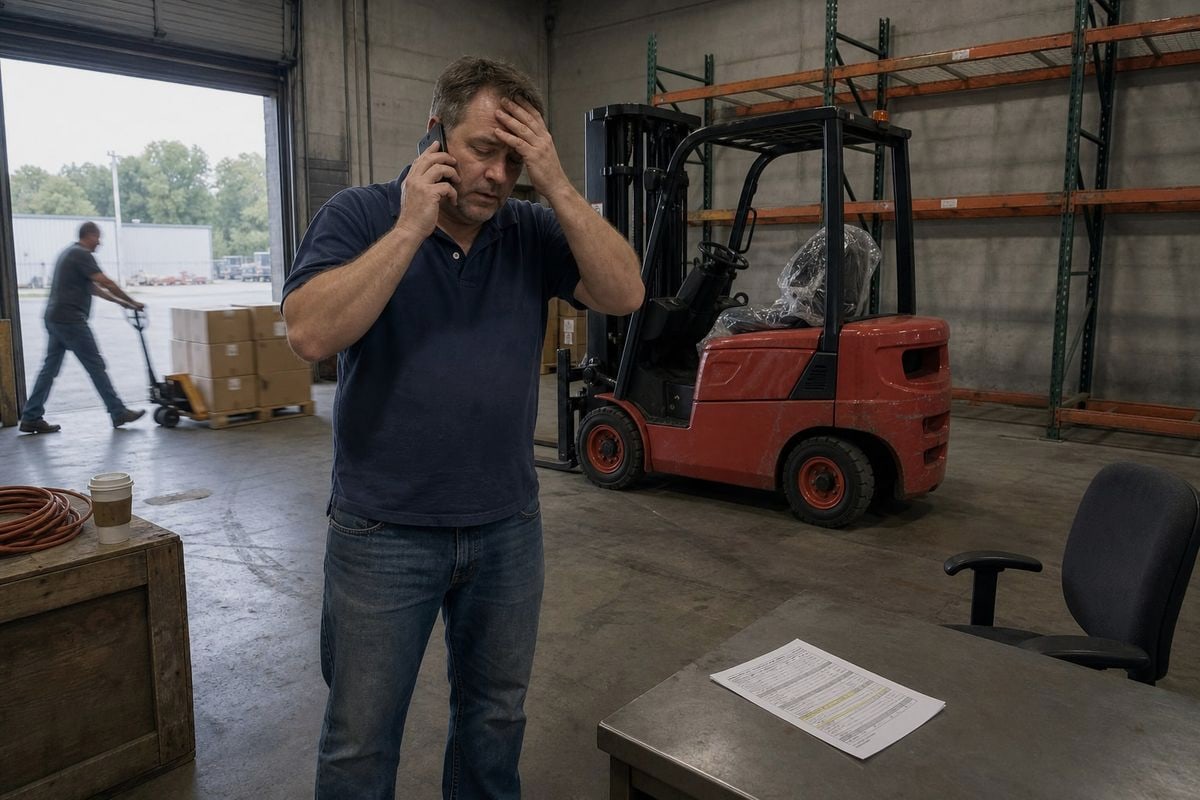
Understanding the cost mechanics helps you prioritize. Free time at the port is short. Once it expires, charges accrue daily whether or not the hold is your fault.
| Cost Type | Who Charges It | How It Grows |
|---|---|---|
| Demurrage | Ocean carrier / terminal | Daily, after free days expire at the port |
| Detention | Ocean carrier | Daily, for the container held outside the terminal |
| Port storage | Terminal or bonded warehouse | Daily, often with escalating tiers |
| Exam fees | Exam site / drayage provider | Flat plus handling if a CBP exam hold requires moving the container |
| Broker amendment fees | Customs broker | Per correction to the entry |
| Duties and penalties | Customs authority | Reassessed value or classification can raise the duty bill |
Demurrage and detention fees are the fastest-growing items. They often start moderate and then jump into higher daily tiers the longer the container sits. A forklift container is heavy, so exam handling also costs more than a container of light goods. If customs orders an intensive exam, the container must move to an exam site, and you pay the drayage both ways.
Should you ever contest a hold instead of paying? Sometimes. If customs reclassifies your HS code and the new duty rate seems wrong, your broker can present technical specifications to support the original classification. But weigh the math honestly. Contesting can take longer than the dispute is worth while storage fees keep running. My practical rule: pay clearly owed duties immediately, and contest only when the disputed amount is large and your documentation is strong.
The cheapest customs delay is the one that never happens. Pre-departure document checks in China cost almost nothing compared to a week of port storage in Los Angeles or Rotterdam.
A forklift shipment held by customs drains money daily. Confirm the hold reason, fix documents fast, pay what is due, and escalate when needed. Better yet, prevent it with pre-departure checks. If you want help shipping forklifts from China without customs surprises, our team at MBMLOG is ready.
1. Official U.S. Customs and Border Protection page explaining the role and licensing of customs brokers. ↩︎
2. EPA's official resource for the necessary forms and documentation required to import nonroad engines. ↩︎
3. USDA's official explanation of international standards for wood packaging material to prevent pest spread. ↩︎
4. CBP's official guide on the requirements and procedures for filing an entry when importing goods. ↩︎
5. U.S. Customs and Border Protection information regarding the confidentiality and requirements of shipping manifests. ↩︎



