
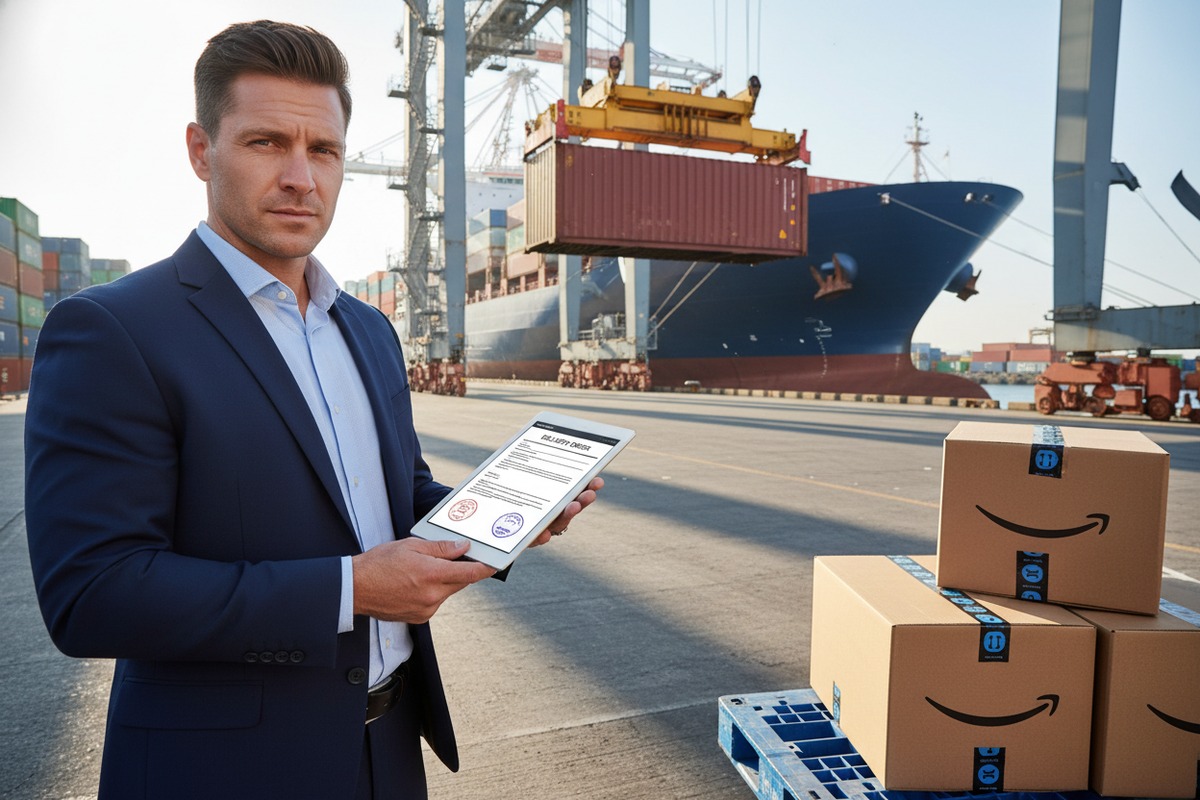
ทุกสัปดาห์ ทีมโลจิสติกส์ของเราช่วยให้ผู้นำเข้ากู้คืนสินค้าที่ติดอยู่ที่ท่าเรือในสหรัฐอเมริกา — บ่อยครั้งเนื่องจากกระบวนการคำสั่งจัดส่งถูกเข้าใจผิดหรือถูกมองข้ามไปอย่างสิ้นเชิง.
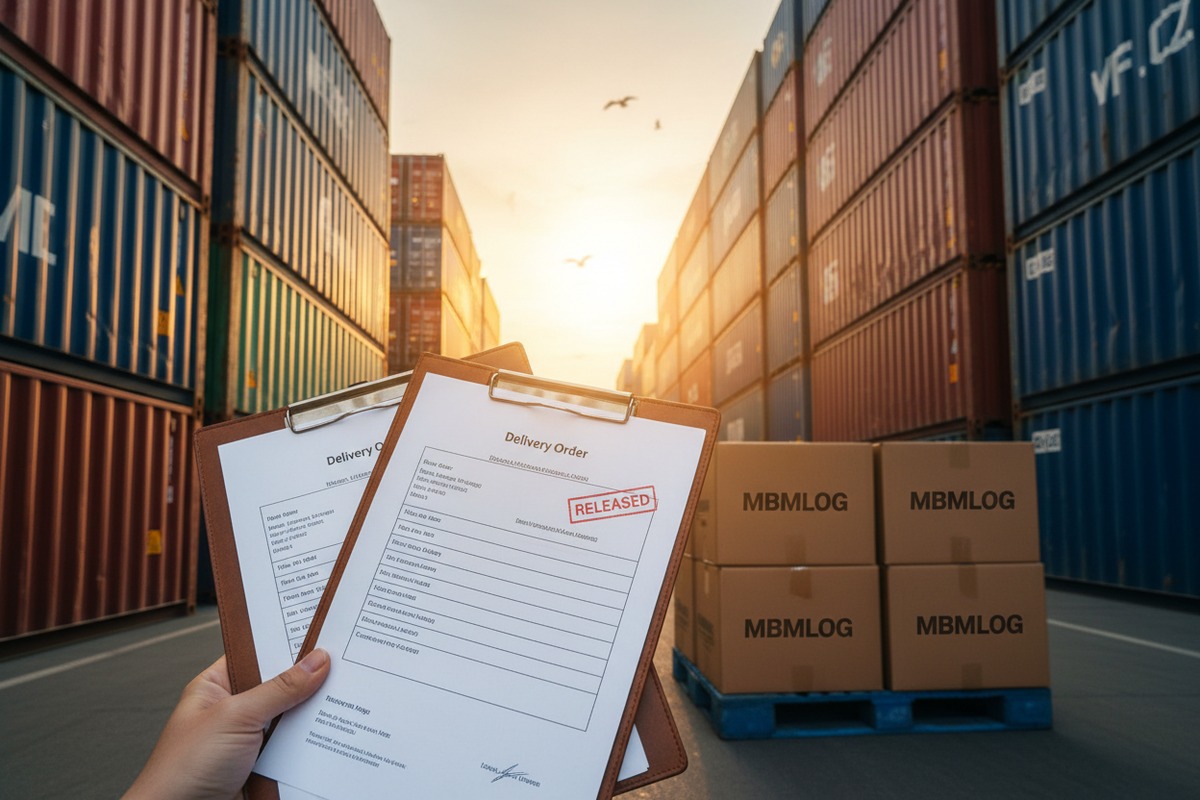
คำสั่งจัดส่ง (D/O) เป็นเอกสารการอนุญาตที่ออกโดยผู้ขนส่ง ฟอร์เวิร์ดเดอร์ หรือเอเย่นต์ของพวกเขาที่อนุญาตให้ผู้รับสินค้าเก็บสินค้านำเข้าจากท่าเรือ เทอร์มินัล หรือคลังสินค้า ค่าธรรมเนียม D/O เป็นค่าธรรมเนียมของผู้ขนส่งหรือฟอร์เวิร์ดเดอร์ — แยกจากอากรศุลกากรและภาษี — และโดยปกติจะชำระโดยผู้รับสินค้าหรือเอเย่นต์ของพวกเขาที่ท่าเรือปลายทาง.
ด้านล่างนี้เราจะอธิบายว่ากระบวนการ D/O ทำงานอย่างไร ใครเป็นผู้ชำระค่าธรรมเนียมจริงๆ และวิธีหลีกเลี่ยงความล่าช้าที่มีค่าใช้จ่าย — โดยเฉพาะถ้าคุณส่งไปยังคลังสินค้าของ Amazon FBA ในสหรัฐอเมริกา.
คำสั่งจัดส่งคืออะไรและทำไมจึงจำเป็นสำหรับการจัดส่งของฉัน?
เมื่อเราประสานงานการจัดส่งจากคลังสินค้าของเราในเมืองเจิ้งโจวไปยังท่าเรือในสหรัฐอเมริกา มีคำถามหนึ่งที่เกิดขึ้นบ่อยกว่าคำถามอื่น: ทำไมผู้รับจึงไม่สามารถแสดงเอกสารและรับสินค้าได้? ใบเบิก 1 และรับสินค้านั้น ใบสั่งส่งสินค้า (D/O) 2?
ใบสั่งส่งสินค้าคือเอกสารที่อนุญาตเฉพาะเจาะจงที่ให้ผู้รับสินค้าหรือผู้แทนของเขาสามารถเก็บสินค้าจากอาคารหรือโกดังได้ โดยจำเป็นต้องใช้เพราะใบตราส่งสินค้าหมายถึงเอกสารสิทธิ ไม่ใช่ใบอนุญาตในการรับสินค้า — ท่าเรือหรือโกดังจะปล่อยสินค้าก็ต่อเมื่อมีการนำเสนอ D/O ที่ถูกต้องเท่านั้น.
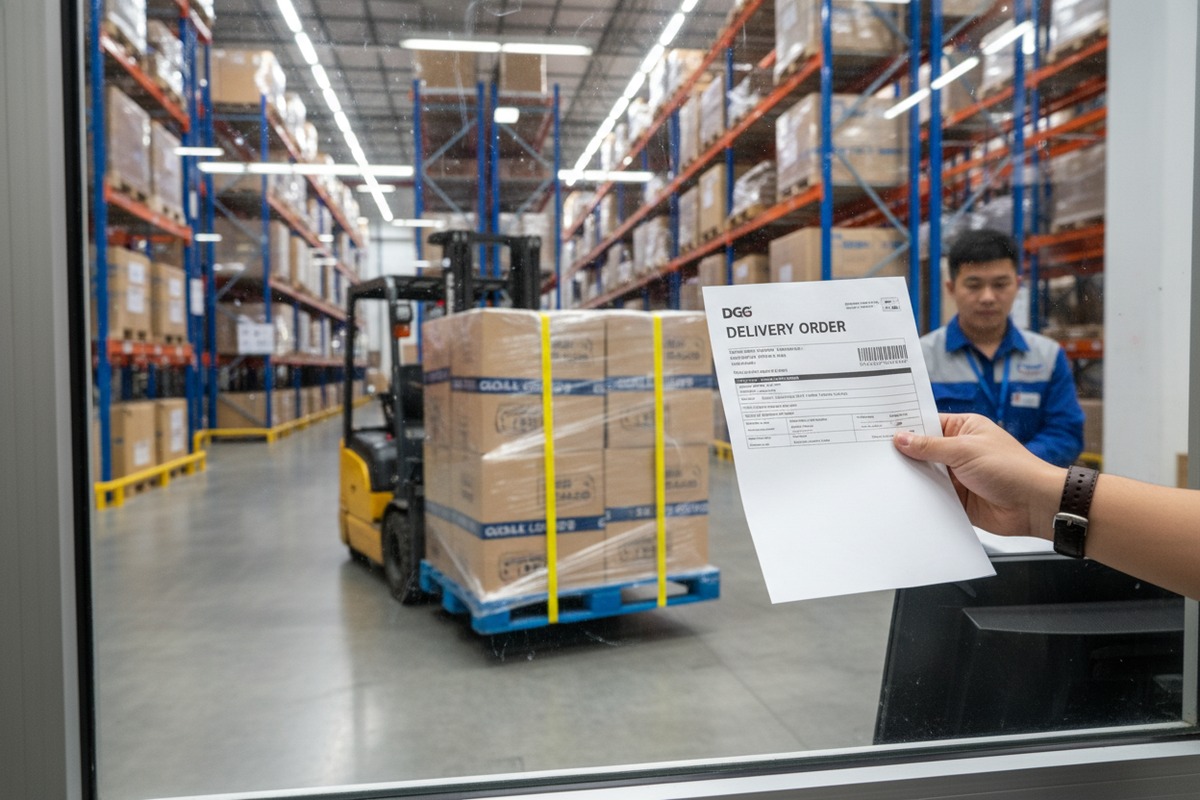
ใบตราส่งสินค้ากับใบสั่งส่งสินค้า
ผู้ประกอบการนำเข้าส่วนใหญ่เข้าใจผิดระหว่างใบตราส่งสินค้า (B/L) กับใบสั่งส่งสินค้า ภาษีศุลกากรและภาษี 3. พวกเขาทำหน้าที่ที่แตกต่างกัน B/L คือ สัญญาการขนส่ง 4 และเอกสารแสดงกรรมสิทธิ์ คิดไว้ว่าเป็นหลักฐานว่าคุณเป็นเจ้าของสินค้า D/O เป็นกุญแจที่สามารถเปิดประตูคลังสินค้าได้จริง ๆ โดยไม่มี D/O ผู้ดำเนินการเทอร์มินัลจะไม่ส่งมอบตู้คอนเทนเนอร์หรือสินค้าของคุณ — ไม่ว่าคุณจะโบก B/L กี่ใบก็ตาม.
ในกิจกรรมประจำวันของเรา เราเห็นความสับสนนี้ทำให้เกิดความล่าช้าจริง ๆ ลูกค้ารายหนึ่งเคยรอกระบวนการเพิ่มอีกห้าวันที่ท่าเรือลอสแอนเจลิสเพราะพวกเขาคิดว่า B/L เพียงพอแล้ว แต่ไม่ใช่ พวกเขาจำเป็นต้องแลกเปลี่ยน B/L เป็น D/O ที่สำนักงานตัวแทนประจำท้องถิ่นของผู้ขนส่งก่อน.
ใครคือผู้ที่ออกใบสั่งส่งสินค้า?
D/O สามารถออกได้โดยหลายฝ่ายขึ้นอยู่กับการจัดส่ง:
- ผู้ให้บริการขนส่งทางทะเลหรือตัวแทนเรือ — สำหรับการจัดส่ง FCL (Full Container Load) ที่จองโดยตรงกับสายการบิน.
- ตัวแทนขนส่งหรือ NVOCC — สำหรับการจัดส่ง LCL (Less than Container Load) หรือเมื่อผู้ส่งควบคุมการขนส่ง.
- ตัวแทนประจำท้องถิ่นของผู้ให้บริการ — ในหลายท่าเรือ ตัวแทนทำหน้าที่แทนสายการเดินเรือ.
กระบวนการ D/O ทำงานอย่างไร ขั้นตอนทีละขั้นตอน
นี่คือภาพรวมที่เรียบง่ายของกระบวนการ D/O ที่เป็นมาตรฐาน:
| ขั้นตอน | การดำเนินการ | ใครทำสิ่งนี้ |
|---|---|---|
| 1 | Cargo มาถึงที่ท่าเรือปลายทาง | ผู้ให้บริการ |
| 2 | การแจ้งการมาถึงถูกส่งไปยังผู้รับสินค้าหรือเอเย่นต์ | ผู้ขนส่งหรือผู้ส่งต่อ |
| 3 | ผู้รับสินค้าส่งมอบ B/L ตัวจริงหรือให้หลักฐานการปล่อยด้วย telex | ผู้รับสินค้าหรือโบรกเกอร์ศุลกากร |
| 4 | ค่าขนส่งและค่าธรรมเนียมท้องถิ่นที่ outstanding ได้รับการตรวจสอบและชำระเงินแล้ว | ผู้รับหรือเอเย่นต์ |
| 5 | ค่าธรรมเนียม D/O ได้รับการชำระแล้ว | ผู้รับหรือเอเย่นต์ |
| 6 | D/O ถูกออกแล้ว | ผู้ขนส่ง ผู้ส่งหรือเอเย่นต์ |
| 7 | การดำเนินการศุลกากรเสร็จสิ้นและสินค้าได้รับการปล่อย | ตัวแทนศุลกากร |
บทสรุปที่สำคัญ: เอกสาร D/O นั้นอยู่ระหว่างการตรวจสอบเอกสารและการปล่อยสินค้าทางกายภาพ มันเป็นสะพานที่เชื่อมเอกสารของคุณกับผลิตภัณฑ์ของคุณ.
ทำไมจึงมีค่าธรรมเนียมสำหรับสิ่งที่ดูเหมือนจะเป็นการบริหาร?
ค่าธรรมเนียม D/O ครอบคลุมค่าใช้จ่ายของผู้ขนส่งหรือผู้ส่งต่อในการดำเนินการปล่อย, ตรวจสอบเอกสาร, ประสานงานกับท่าเรือ และออกใบอนุญาต มันไม่ใช่ค่าธรรมเนียมของรัฐบาล แต่เป็นค่าบริการ ในหลายท่าเรือในสหรัฐอเมริกา ค่าธรรมเนียม D/O โดยทั่วไปจะอยู่ระหว่าง $50 ถึง $150 ต่อการจัดส่ง แม้ว่าสิ่งนี้จะแตกต่างกันไปตามผู้ขนส่งและท่าเรือ.
FCL vs. LCL: ขั้นตอน D/O แตกต่างกันหรือไม่?
ใช่ สำหรับการขนส่งแบบ FCL ใบ D/O มักจะออกโดยผู้ให้บริการทางทะเลหรือเอเย่นต์ของพวกเขา สำหรับการขนส่งแบบ LCL ผู้รวบรวมสินค้าหรือ NVOCC มักจะออกใบ D/O เนื่องจากพวกเขาควบคุมสินค้าที่สถานีขนส่งตู้คอนเทนเนอร์ (CFS) การขนส่งแบบ LCL อาจมีค่าธรรมเนียมการแยกสินค้ารวมอยู่ด้วยนอกเหนือจากค่าธรรมเนียมใบ D/O.
ฉันต้องรับผิดชอบในการชำระค่าธรรมเนียมการสั่งซื้อจัดส่งถ้าฉันใช้บริการ DDP หรือไม่?
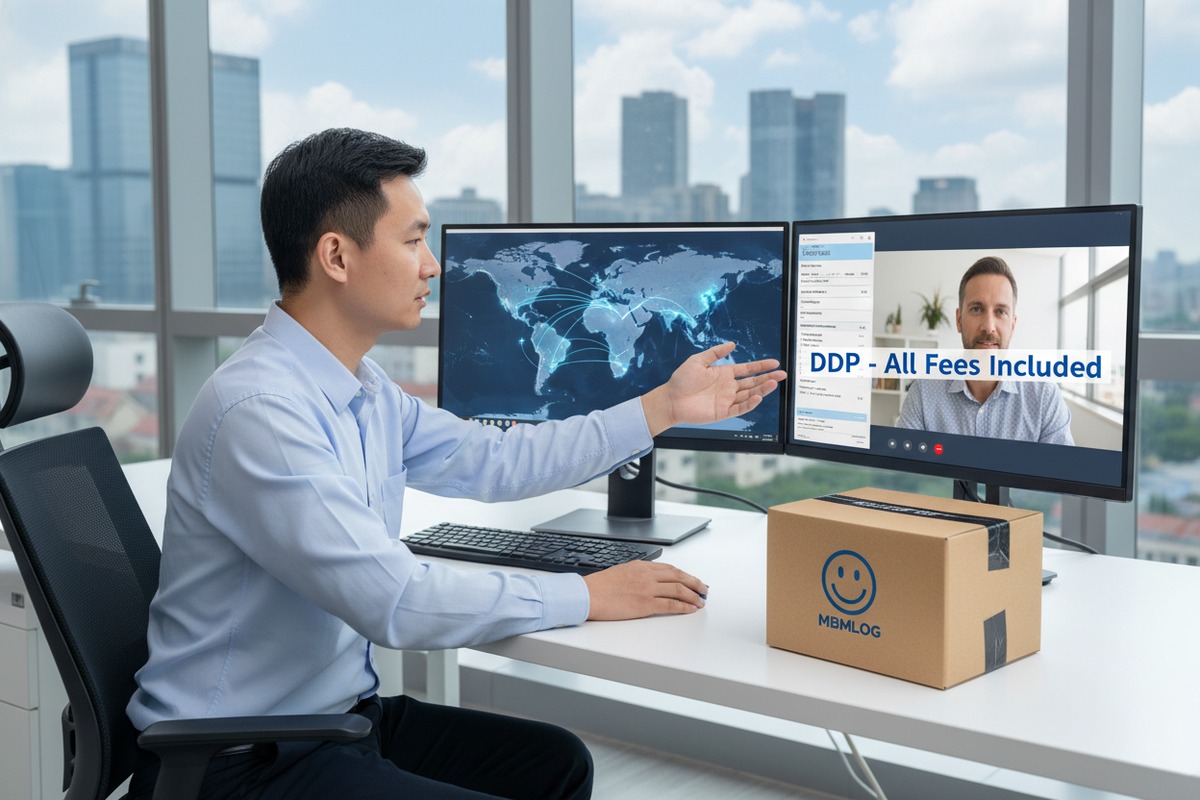
Our DDP (Delivered Duty Paid) 5 service from China to the US is designed to remove exactly this kind of confusion — but the answer still depends on what your contract covers.
Under DDP Incoterms, the seller is responsible for all costs including import duties, taxes, and destination charges until goods reach the agreed delivery point. This typically means the D/O fee is covered by the seller or their logistics provider. However, importers should always confirm that the D/O fee is explicitly included in the DDP quote.
Understanding Who Pays Under Different Incoterms
The question of "who pays" is almost always answered by the อินโคเทอร์มส์ 6 agreed in the sales contract. Here is how common Incoterms affect D/O fee responsibility:
| Incoterm | D/O Fee Paid By | Import Duty Paid By | Customs Clearance Handled By |
|---|---|---|---|
| EXW (Ex Works) | Buyer / Consignee | ผู้ซื้อ | ผู้ซื้อ |
| FOB (Free on Board) | Buyer / Consignee | ผู้ซื้อ | ผู้ซื้อ |
| CIF (ต้นทุน, ประกันภัย, ค่าขนส่ง) | Buyer / Consignee | ผู้ซื้อ | ผู้ซื้อ |
| DAP (Delivered at Place) | Buyer / Consignee | ผู้ซื้อ | ผู้ซื้อ |
| DDP (Delivered Duty Paid) | Seller / Seller's Agent | ผู้ขาย | ผู้ขาย |
Notice that under most Incoterms, the D/O fee falls on the buyer. DDP is the exception where the seller takes on virtually all destination costs.
The DDP Promise — and Its Limits
When we quote DDP pricing to our clients, we include the D/O fee, customs brokerage, import duties, and last-mile delivery. That is the whole point of DDP: one price, no surprises. But not every logistics provider defines DDP the same way. Some providers quote "DDP" but exclude certain destination charges like the D/O fee, terminal handling, or chassis fees. Always ask for a detailed breakdown.
D/O Fee vs. Customs Duty vs. Import Tax
This is where many importers get tripped up. They see a charge labeled "D/O fee" and assume it is a government tax. It is not. Here is a clear comparison:
| Charge Type | Charged By | วัตถุประสงค์ | Typical Amount (US) |
|---|---|---|---|
| D/O Fee | Carrier / Forwarder / Agent | Document release processing | $50 – $150 |
| ภาษีนำเข้า | US Customs (CBP) | Tax on imported goods based on HTS code | แตกต่างกันไปตามผลิตภัณฑ์ |
| ค่าธรรมเนียมการดำเนินการสินค้า (MPF) 7 | US Customs (CBP) | Processing fee for formal entries | 0.3464% of value |
| ค่าธรรมเนียมบำรุงรักษาท่าเรือ (HMF) 8 | US Customs (CBP) | Port infrastructure funding | 0.125% of value |
| Import Tax / Sales Tax | State or federal authority | Consumption tax (if applicable) | แตกต่างกันไปตามแต่ละรัฐ |
| Customs Broker Fee | Licensed customs broker | Professional service for filing entries | $150 – $400+ |
These are all separate line items. The D/O fee is a private-sector charge for document handling. Duties and taxes are government-imposed charges. Knowing the difference prevents confusion and helps you budget accurately.
What If My DDP Provider Does Not Cover the D/O Fee?
If you discover your DDP provider excluded the D/O fee, you have two options. First, negotiate to have it added to the DDP quote. Second, pay it directly at the destination through your customs broker. Either way, the fee must be paid before cargo is released. At MBMLOG, we include it in every DDP quote because we believe transparency is non-negotiable.
กระบวนการสั่งซื้อจัดส่งมีผลกระทบต่อกำหนดเวลาในสต็อก Amazon FBA ของฉันอย่างไร?
When we ship goods to Amazon FBA warehouses across the US, timing is everything. A single day of delay at the port can cascade into missed delivery appointments and lost sales.
The delivery order process directly impacts your Amazon FBA timeline because cargo cannot clear customs or be transported to an FBA warehouse until the D/O is issued. Delays in obtaining the D/O — due to missing documents, unpaid charges, or slow carrier processing — can add 2 to 5 business days to your overall transit time, risking stockouts and demurrage fees.
The FBA Clock Is Always Ticking
Amazon FBA sellers operate on tight inventory cycles. If your product runs out of stock, your listing drops in search rankings. Recovering those rankings can take weeks. So every day your cargo sits at the port waiting for a D/O is a day closer to a potential stockout.
Here is a typical timeline breakdown for a China-to-US FBA shipment:
| Phase | Duration | หมายเหตุ |
|---|---|---|
| Factory to port (China) | 1-3 วัน | Trucking or rail |
| Ocean transit | 14–22 days | Depends on route and port |
| Arrival and D/O issuance | 1-3 วัน | Assumes documents are ready |
| การผ่านพิธีการศุลกากร | 1-3 วัน | Can be longer with inspections |
| Drayage to FBA warehouse | 1–5 days | Depends on warehouse location |
| Amazon receiving and check-in | 2–7 days | Amazon's own processing time |
| ทั้งหมด | 20–43 days | D/O delays extend this significantly |
Common D/O Delays That Hurt FBA Sellers
From our experience managing hundreds of FBA shipments per month, here are the most common reasons a D/O gets delayed:
- Original B/L not surrendered in time. If the shipper uses original bills of lading instead of telex release or sea waybill, the physical documents must arrive at the destination before the D/O can be issued. This alone can add 3–5 days.
- Unpaid freight charges. If the freight is collect (not prepaid), the carrier will not issue the D/O until payment clears.
- Mismatched consignee information. If the name on the B/L does not match the entity requesting the D/O, the carrier may require additional documentation or authorization letters.
- Carrier processing backlogs. During peak season (August through November), US port carriers and agents may take longer to process D/O requests.
How to Speed Up the D/O for FBA Shipments
We recommend several best practices to our Amazon seller clients:
Use telex release or sea waybill instead of original B/L whenever possible. This eliminates the need to physically transport documents across the ocean. Ensure all freight charges are prepaid so there are no payment holds at destination. Verify that the consignee name on all documents matches exactly. Work with a customs broker who is already familiar with your carrier's D/O process.
The Rise of Electronic Delivery Orders
More carriers are adopting electronic delivery orders (e-D/O or EDO). This is a significant improvement for FBA sellers. Instead of physically visiting the carrier's office or waiting for paper documents, the D/O is issued digitally and shared with the terminal and customs broker electronically. This can shave 1–2 days off the release process. However, not all carriers offer EDO at every port, so check availability with your logistics provider.
ฉันควรทำอย่างไรถ้าการสั่งซื้อจัดส่งของฉันล่าช้าในระหว่างการตรวจคนเข้าเมืองของสหรัฐฯ?
In our years of managing US-bound shipments, we have seen delivery order delays trigger a chain reaction of costs — demurrage, detention, storage, and even missed Amazon delivery windows.
If your delivery order is delayed during US customs clearance, you should immediately contact your customs broker and freight forwarder to identify the cause, confirm that all required documents are submitted, verify that outstanding carrier charges are paid, and request expedited processing or an electronic D/O if available. Proactive communication is the fastest way to resolve D/O holds.
Step 1: Identify the Root Cause
The first thing to do is find out exactly why the D/O has not been issued. Common causes include:
- The original B/L has not arrived or been surrendered.
- The carrier has outstanding charges that need to be settled.
- There is a discrepancy in the consignee name or other document details.
- The carrier's local office is experiencing processing delays.
- A customs hold has been placed on the shipment, preventing the D/O from being activated.
Your customs broker is usually the best person to diagnose this. They interact with both the carrier's agent and US Customs and Border Protection (CBP) 9 daily.
Step 2: Resolve Document Issues Quickly
If the delay is caused by missing or incorrect documents, act fast. Request a telex release confirmation from the shipper if original B/Ls are lost or delayed. Provide a letter of indemnity if the carrier requires one. Correct any consignee name mismatches by submitting an amendment request to the carrier — though this can take time, so accuracy upfront is critical.
Step 3: Pay Outstanding Charges
Carriers will not release the D/O if there are unpaid freight or local charges. Ask your forwarder or broker for a full list of charges due. Pay them immediately. Even a small unpaid balance can hold up the entire release.
Step 4: Request an Electronic D/O
If the carrier offers electronic delivery orders at your port, ask your broker to request one. EDOs bypass the need for physical document exchange and can be processed in hours rather than days. More US ports are accepting EDOs, and this trend is accelerating.
Step 5: Monitor Demurrage and Detention Free Time
While you are resolving the D/O delay, keep a close eye on your demurrage and detention free time. Most carriers offer 3–5 free days at the terminal after vessel discharge. After that, daily charges apply — and they add up quickly.
What About Customs Holds?
Sometimes the D/O delay is not the carrier's fault at all. CBP may place a hold on your shipment for inspection, document review, or compliance checks. In this case, the D/O may already be issued, but the cargo cannot move until customs releases it. Your broker should be filing any required documentation with CBP and requesting release as soon as the hold condition is satisfied.
Practical Tips to Prevent D/O Delays
Based on our operational experience, here are the top preventive measures:
- Always use telex release or sea waybill for faster document processing.
- Prepay all freight charges to avoid payment-related holds.
- Double-check consignee details on every document before shipment.
- Choose a logistics partner with strong carrier relationships at your destination port.
- Build 3–5 buffer days into your supply chain timeline to account for potential D/O processing time.
- Keep digital copies of all shipping documents readily accessible.
At MBMLOG, we assign a dedicated coordinator to every shipment specifically to monitor the D/O status and intervene the moment any delay appears. Prevention is always cheaper than recovery.
บทสรุป
The delivery order is a small document with outsized impact on your import timeline and costs. Understanding what it is, who pays for it, and how to avoid delays puts you in control of your supply chain.
เชิงอรรถ
1. Defines the bill of lading as a legal contract and receipt. ↩︎
2. Defines delivery order and its importance in shipping. ↩︎
3. Explains the definition and types of import duties and taxes. ↩︎
4. Explains the legal agreement between carrier and shipper. ↩︎
5. Details the responsibilities under DDP Incoterms. ↩︎
6. Provides official information on international commercial terms. ↩︎
7. Explains a specific fee charged by US Customs. ↩︎
8. Provides details on the Harbor Maintenance Fee. ↩︎
9. Official source for US Customs and Border Protection. ↩︎
10. Describes the role of a freight forwarder in logistics. ↩︎




