

Shipping electric forklifts from China to Poland trips up many first-time importers. At our Zhengzhou logistics base, we see battery paperwork gaps and loading mistakes turn good deals into costly delays.
To ship electric forklifts from China to Poland, book FCL sea freight to Gdańsk or Gdynia, prepare UN38.3 and MSDS battery documents, secure the forklift with lashing inside the container, then clear Polish customs under HS Code 8427.10 with an EORI number and CE documentation.
That is the short version. The details decide whether your forklift arrives on schedule or sits in a bonded warehouse racking up storage fees. Let me walk you through each step, with real numbers.
How much does it cost to ship an electric forklift from China to Poland?
A Polish dealer once asked me why his freight quote doubled after booking. His forklift had a lithium battery, and his first forwarder had quoted it as ordinary machinery. That gap is common.
Shipping one electric forklift from China to Poland by sea typically costs $2,970–$3,630 for a 20GP container and $4,860–$5,940 for a 40GP, based on recent rates. Rail freight runs $3,960–$4,840 for a 20GP, while air freight costs roughly $5.30 per kilogram.
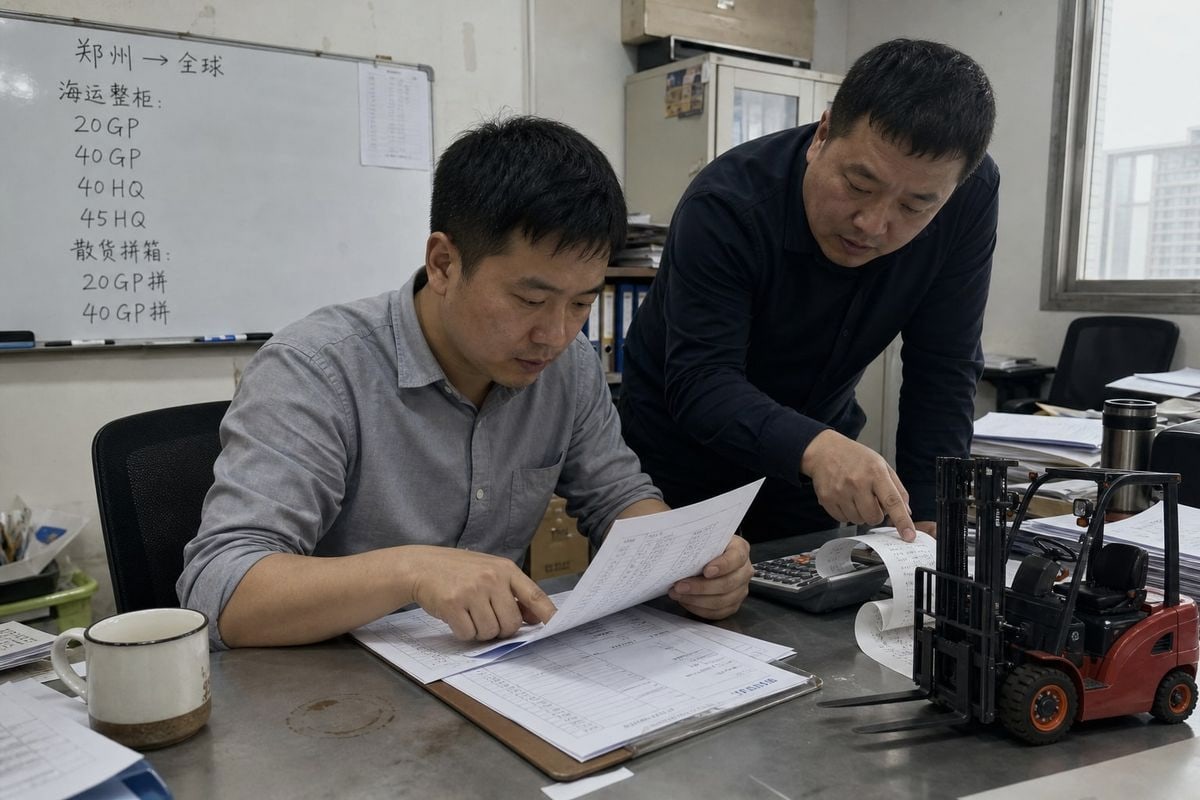
Those figures are a starting point, not a final invoice. Rates on the China–Poland lane move month to month, and one logistics source noted a recent month-over-month decline. So I always tell buyers: get a live quote based on your actual forklift dimensions and battery type. Never budget from an old number.
What drives the total cost?
Freight is only one layer of your landed cost. Here is how the full picture usually breaks down.
| องค์ประกอบต้นทุน | Typical Range / Basis | หมายเหตุ |
|---|---|---|
| Ocean freight (20GP) | $2,970–$3,630 | Port of Gdańsk or Port of Gdynia |
| Ocean freight (40GP) | $4,860–$5,940 | Fits 2–4 forklifts depending on size |
| Rail freight (20GP) | $3,960–$4,840 | Via Małaszewicze terminal |
| การขนส่งทางอากาศ | ~$5.30/kg | Parts and urgent compact units only |
| Import VAT in Poland | 23% of customs value | Deferrable under Article 33a |
| Customs duty | Based on TARIC classification 1 | HS Code 8427.10 for most electric forklifts |
| Inland delivery in Poland | Varies by distance | Port to your warehouse |
Sea, rail, or air: which mode fits your shipment?
- การขนส่งทางทะเล is the default for heavy machinery transport. Transit runs 30–40 days, but the cost per forklift is the lowest, especially for FCL sea freight.
- Rail freight from China takes about 15–22 days via the Małaszewicze terminal. It costs more than sea but far less than air. Some buyers now route via the Middle Corridor (TITR) through the Caspian Sea to bypass geopolitical risk on the traditional Northern Route through Russia and Belarus.
- การขนส่งทางอากาศ at $5.30/kg only makes sense for spare parts, chargers, or a genuinely urgent compact unit.
One more cost lever matters for Polish importers specifically. Poland's Article 33a VAT Act 2 lets registered importers defer the 23% import VAT to their periodic tax return instead of paying it at the border. For a container of forklifts worth $60,000, that keeps nearly $14,000 in cash flow working for your business. We flag this option to every Poland-bound client because many forwarders never mention it.
What documents do I need for customs clearance in Poland?
In my experience coordinating customs clearance for European clients, documentation errors cause more delays than storms, port congestion, and vessel schedules combined. Paper stops forklifts more often than weather does.
Customs clearance in Poland requires a commercial invoice, packing list, bill of lading, EORI registration, CE Declaration of Conformity, UN38.3 test summary, and MSDS for lithium models. The forklift is declared under HS Code 8427.10 through Poland's AIS/PUESC electronic customs system.

I separate the paperwork into two piles for every client: machine compliance and battery transport compliance. Buyers mix these up constantly, and the mix-up causes real problems. A forklift can have perfect battery certificates and still get stopped for a missing CE declaration, or the reverse.
Machine compliance documents
Your electric forklift enters the EU as machinery, so it must meet the EU Machinery Directive. The CE marking on the body panel is not enough by itself. Polish customs can request the full Declaration of Conformity, and a sticker without the backing document is a red flag. We verify with the factory that the declaration exists before the container is loaded, not after the vessel arrives at the Port of Gdynia.
Under the new EU 2023/1542 Battery Regulation 3, importers should also secure carbon footprint declarations from Chinese manufacturers now, in preparation for the 2027 Digital Battery Passport. Factories that cannot produce this data today will become a compliance liability soon.
Battery and transport documents
| เอกสาร | วัตถุประสงค์ | ใครเป็นผู้จัดหาให้ |
|---|---|---|
| สรุปการทดสอบ UN38.3 | พิสูจน์ว่าแบตเตอรี่ลิเธียมผ่านการทดสอบความปลอดภัยในการขนส่ง | ผู้ผลิตแบตเตอรี่ |
| เอกสาร MSDS | รายละเอียดเคมีของแบตเตอรี่และการจัดการอันตราย | Battery or forklift manufacturer |
| ใบแจ้งหนี้การค้า | Customs valuation for import duties and VAT | ผู้ขาย |
| รายการบรรจุภัณฑ์ | Verifies cargo contents and weight | Seller / forwarder |
| ใบเบิก | สัญญาการขนส่งและการปล่อยสินค้า | ผู้ให้บริการผ่านบริษัทขนส่ง |
| การประกาศความสอดคล้องของ CE | EU Machinery Directive compliance | Forklift manufacturer |
The Poland-side process
The clearance workflow in Poland follows a clear sequence: confirm the TARIC classification, register for EORI, agree Incoterms with your supplier, submit the การประกาศศุลกากร 4 through AIS/PUESC, then obtain release for free circulation. That last step is the real milestone. Clearance is not complete when the vessel docks in Gdańsk. Your forklift is legally yours to use only after release into free circulation. This is why I push clients to engage a Polish customs broker before loading in China, not after arrival.
How do I safely ship lithium battery forklifts to Poland?
The hardest lesson we learned handling lithium battery cargo came early: a carrier rejected a fully booked container because the battery's UN38.3 summary listed a different cell model than the physical unit. Everything must match.
Lithium battery forklifts ship as Class 9 Dangerous Goods, requiring UN38.3 certification, MSDS documentation, carrier pre-approval, and a documented battery state-of-charge before container sealing. The forklift must be immobilized with lashing and blocking, with the battery secured against movement and short circuits.
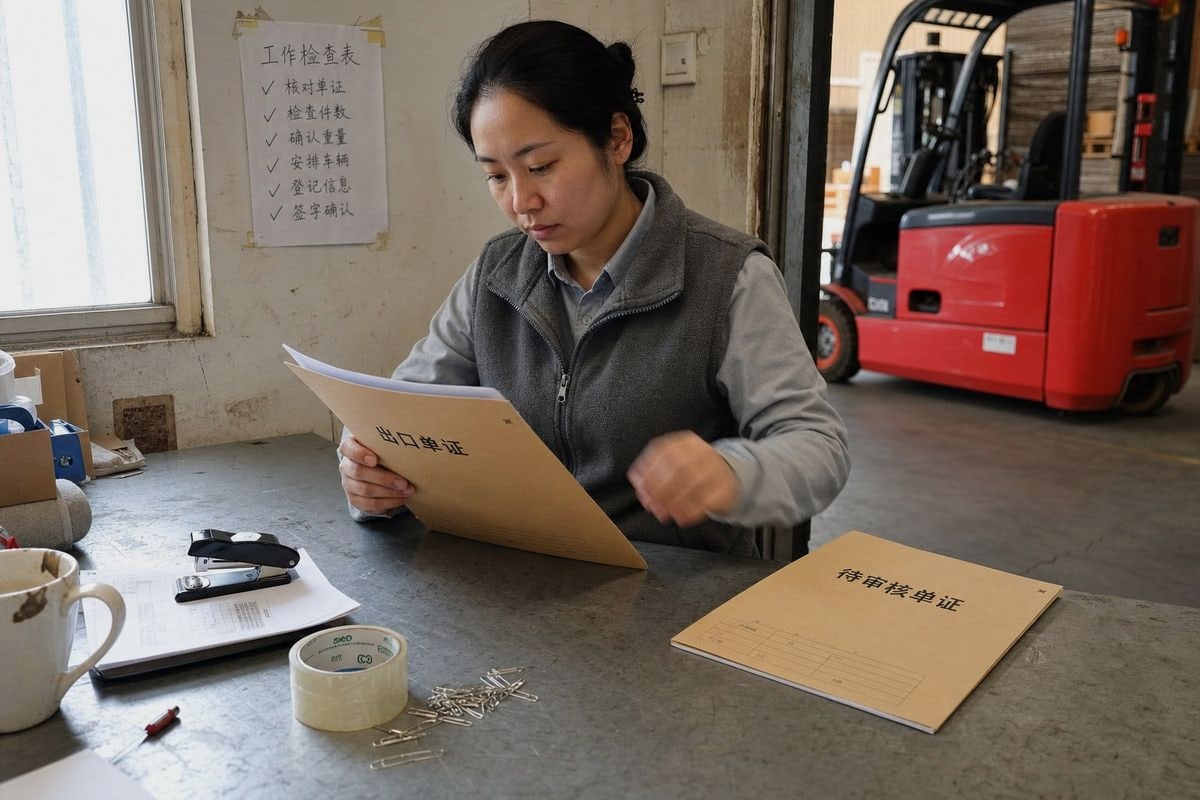
Lithium battery shipping regulations treat your forklift very differently from a lead-acid model. สินค้าต้องห้ามประเภท 9 classification means the carrier must formally accept the cargo before booking is confirmed. Some carriers decline battery-powered equipment entirely, and others require the booking to declare the exact battery specifications. This is why we confirm carrier acceptance before the forklift ever leaves the factory. Booking first and asking later is how containers get rolled at origin.
Preparing the forklift for loading
The physical preparation matters as much as the paperwork. Here is the loading sequence we coordinate with factories:
- Verify battery documents against the physical unit. UN38.3 test summary, MSDS documentation, and the battery nameplate must all agree.
- Reduce and record the state of charge. We document the SoC before the container is sealed. This protects you with the carrier and the insurer.
- Partially disassemble where needed. Masts are often removed or tilted, and overhead guards folded or detached, to meet container height limits.
- Immobilize the machine. We use blocking, bracing, chains, and dunnage. A three-ton forklift shifting inside a container during a 30-day sea voyage will destroy itself and the container walls.
- Photograph everything. Loading photos support any insurance claim and prove the securing method.
การติดตามระหว่างการขนส่ง
Newer fleets increasingly use IoT-enabled telematics during the sea voyage. Real-time monitoring of battery temperature and state of charge helps mitigate thermal runaway risk 5 and preserves warranty validity with the manufacturer. For high-value shipments, we recommend clients ask the factory whether the battery management system supports remote logging, because a temperature log is powerful evidence if a warranty dispute arises after arrival in Poland.
Cargo insurance rounds out the safety plan. Forklifts are high-value material handling equipment, and standard carrier liability rarely covers the full replacement cost.
Should I choose FCL or LCL for shipping my forklifts to Poland?
When we plan container loading for forklift dealers, one question decides almost everything: how many units, and what are the exact mast heights? The answer usually settles the FCL versus LCL debate on its own.
Choose FCL for one or more full-size electric forklifts, because it allows proper lashing, avoids co-loaded cargo risk, and simplifies Class 9 handling. LCL suits only small equipment like pallet trucks or spare parts, and many consolidators refuse lithium battery cargo entirely.

Here is my honest take: for a real counterbalance forklift, FCL sea freight wins almost every time. LCL looks cheaper on paper, but the math and the risk profile usually favor a full container.
FCL vs. LCL at a glance
| ปัจจัย | เอฟซีแอล | แอลซีแอล |
|---|---|---|
| เหมาะที่สุดสำหรับ | 1+ full-size forklifts | Pallet trucks, stackers, parts |
| การรับแบตเตอรี่ลิเทียม | Manageable with carrier approval | Often refused by consolidators |
| Cargo securing | Full control of lashing and blocking | Shared space, more handling |
| ความเสี่ยงในการเสียหาย | Lower — cargo untouched after sealing | Higher — deconsolidation handling |
| Cost per forklift | Lower when container is well utilized | Charged by volume; adds up fast |
| Customs clearance in Poland | Cleaner, single-consignee container | Delays possible from co-loaders' cargo |
Making the container work harder
A 40HQ container often fits three to four compact electric forklifts when masts are detached and secured with specialized lashing and blocking. That is where container optimization pays off. We routinely help buyers fill leftover space with batteries, chargers, attachments, and spare parts, sometimes consolidated from multiple Chinese suppliers into one container. Filling that dead space can cut the average logistics cost per forklift significantly.
What about Incoterms?
FOB is the standard choice for experienced importers because you control the freight and the forwarder. EXW gives even more control but adds China-side coordination work. CIF hands freight choice to the seller, which I generally advise against for heavy equipment. DDP shipping terms are the simplest option for buyers without a Polish customs broker, since one party manages everything door-to-door, including import duties and VAT. The trade-off is real: DDP usually costs more and gives you less visibility into freight details. For a first shipment, DDP or DAP removes risk. Once you know the lane, FOB typically saves money.
บทสรุป
Shipping electric forklifts from China to Poland is manageable when compliance, battery documentation, and clearance are planned before loading. Get those right early, and the freight itself is easy.
Skip a step, and the cost is real: a missing UN38.3 summary or an unregistered EORI number can strand a $20,000 machine at Gdańsk while demurrage charges climb daily. Our team at MBMLOG coordinates the entire chain from Chinese factory pickup through container loading, sea or rail freight, customs clearance, and delivery to your Polish warehouse. If you are planning a forklift shipment, send us the model, dimensions, and battery specifications, and we will build you a live quote and a compliance checklist before you commit to the order.
เชิงอรรถ
1. Updated official European Commission landing page for the TARIC system. ↩︎
2. Official Polish government resource regarding VAT regulations and the Article 33a deferment scheme. ↩︎
3. Official legal text of the regulation on the EUR-Lex portal. ↩︎
4. Official EU explanation of the customs declaration process for goods entering the European Union. ↩︎
5. UNECE safety standards addressing risks like thermal runaway during the transport of lithium batteries. ↩︎




