- +8618603825129
- [email protected]

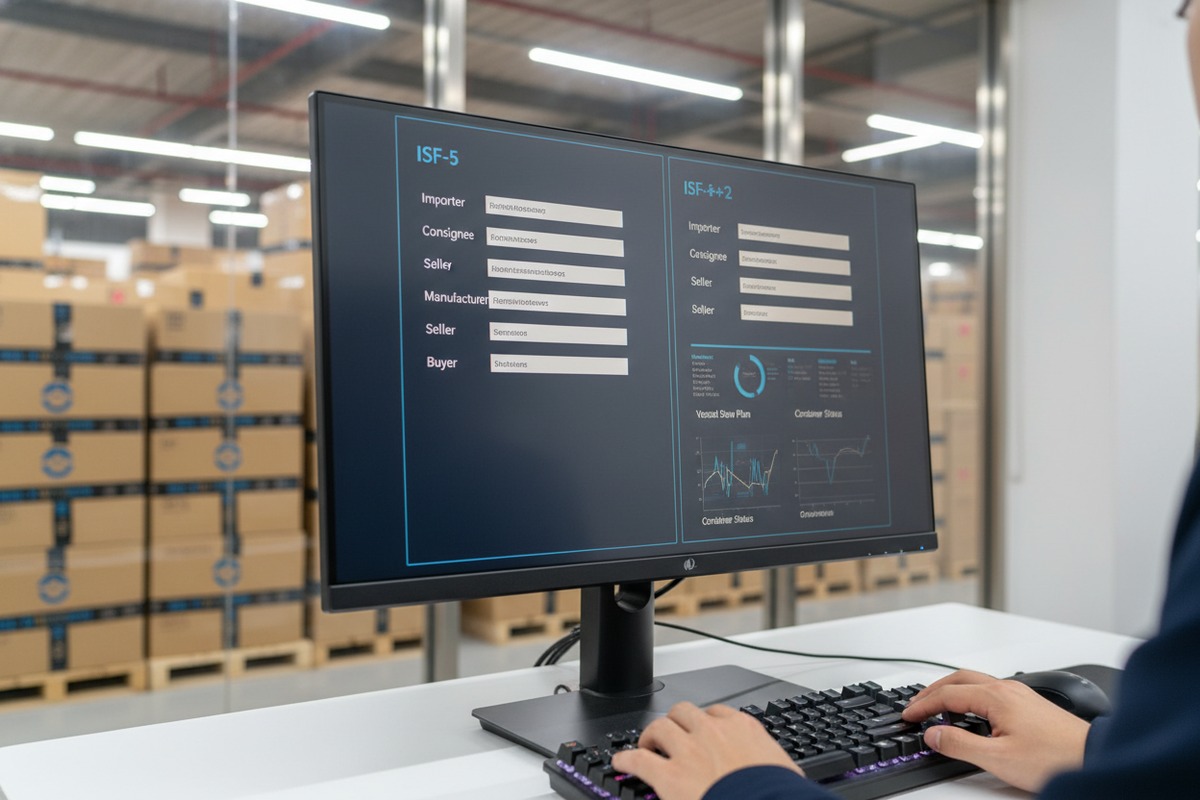
Every week, our logistics team handles dozens of ISF filings 1 for clients shipping ocean freight from China to the United States. One question keeps coming up: what exactly is the difference between ISF-5 and ISF-5+2?
ISF-5 covers only the importer's five data elements for cargo transiting through the U.S. without entering commerce. ISF-5+2 adds two carrier-supplied data elements—vessel stow plan and container status messages—to complete the full transit-cargo security filing required by U.S. Customs and Border Protection.
This distinction matters more than most shippers realize U.S. Customs and Border Protection 2. Filing the wrong type can trigger fines, delays, and cargo holds. Below, we break down exactly how to tell which filing you need, what data each one requires, who should handle the process, and what happens when things go wrong.
When we coordinate shipments from our Zhengzhou warehouse to U.S. ports, the very first thing we confirm is whether the cargo will actually enter U.S. commerce 3. Many clients assume all ocean freight 4 headed toward a U.S. port requires the same filing. That assumption can cost you thousands of dollars FROB, IE, or T&E movements 5.
Your shipment needs an ISF-5 if the cargo only transits through a U.S. port without entering U.S. commerce—such as FROB, IE, or T&E movements. If the cargo is imported into the U.S. market for consumption or sale, you need the standard ISF-10 (10+2) filing instead.

The entire distinction comes down to one question: will your goods be consumed, sold, or used inside the United States CBP penalties 6? If yes, you file ISF-10. If no—if the goods are just passing through a U.S. port on their way to Canada, Mexico, or another country—you file ISF-5.
Here is a simple way to think about it. A U.S. port is like a highway rest stop. Some trucks pull off to deliver goods locally. Others just pass through on their way somewhere else. The "local delivery" trucks need the full ISF-10 filing. The "passing through" trucks need only ISF-5.
| Senaryo | Filing Type | Neden |
|---|---|---|
| Consumer goods shipped from China to an Amazon FBA warehouse in California | ISF-10 (10+2) | Cargo enters U.S. commerce |
| Electronics shipped from China, arriving at a U.S. port but destined for a Canadian buyer | ISF-5 | Cargo transits the U.S. without entering commerce |
| Raw materials arriving at a U.S. port under an Immediate Exportation (IE) bond | ISF-5 | Cargo does not enter U.S. commerce |
| Goods entering a Foreign Trade Zone (FTZ) 7 at a U.S. port | ISF-5 | Cargo remains outside U.S. customs territory |
| Freight Remaining On Board (FROB) that never leaves the vessel at a U.S. port | ISF-5 | Cargo never enters the U.S. at all |
These acronyms confuse many first-time importers. Let me explain them quickly.
FROB stands for Freight Remaining On Board. The cargo stays on the ship while it docks at a U.S. port and then continues to another country. IE stands for Immediate Exportation. The cargo arrives at a U.S. port and is immediately exported without entering U.S. commerce. T&E stands for Transportation and Exportation. The cargo arrives at one U.S. port, moves in-bond across U.S. territory, and then exits through another U.S. port for export.
All three situations use ISF-5 because the goods never become part of the U.S. market.
In our experience handling hundreds of shipments monthly, the most common mistake happens when a shipper books cargo on a vessel that stops at a U.S. port before continuing to Canada. The shipper assumes no U.S. filing is needed because the goods are "going to Canada." Wrong. If the vessel touches a U.S. port, CBP still requires an ISF filing. The correct filing is ISF-5 because the cargo is not entering U.S. commerce—but a filing is still mandatory. Missing it triggers the same penalties as missing an ISF-10.
Our team processes both ISF-5 and ISF-10 filings daily, and we can tell you from direct experience: the data gap between them is significant. Understanding exactly what information you need to gather—and who provides it—saves time and prevents costly errors.
An ISF-5 requires five importer-supplied data elements: booking party, foreign port of unlading, place of delivery, ship-to party, and 6-digit HS code. An ISF-10 requires ten importer-supplied data elements plus two carrier-supplied elements, covering far more detail about the seller, buyer, manufacturer, and consolidator.

The five data elements for ISF-5 are straightforward. Here is what each one means in plain terms:
| Data Element | What It Means | Example |
|---|---|---|
| Booking Party | The company or person who booked the ocean freight | MBMLOG Logistics Co., Ltd. |
| Foreign Port of Unlading | The port outside the U.S. where the cargo will ultimately be unloaded | Port of Vancouver, Canada |
| Teslimat Yeri | The final destination where goods will be delivered | Toronto, Ontario, Canada |
| Ship-to Party | The entity receiving the goods at the final destination | ABC Distribution Inc., Toronto |
| 6-Digit HS Code 8 | The Harmonized System commodity classification code | 940360 (wooden furniture) |
These five elements tell CBP who booked the shipment, where the cargo is really going, who will receive it, and what type of goods are inside. That is all CBP needs for transit cargo because the goods are not entering U.S. commerce.
The ISF-10 filing is much more involved. The importer must supply ten data elements, and the ocean carrier must supply two additional elements. Here is the full breakdown:
Importer's 10 Elements:
Carrier's 2 Elements:
This is where the terminology gets confusing. The "+2" in ISF-5+2 and ISF-10+2 refers to the same two carrier-supplied data elements: the vessel stow plan and container status messages. These are not the importer's responsibility. The ocean carrier—such as COSCO, Evergreen, or Maersk—submits them directly to CBP.
The vessel stow plan shows where each container is physically located on the ship. Container status messages track key events like when a container is loaded, discharged, or gated into a terminal. CBP uses these two elements for security screening.
Simply put, ISF-5 is the importer's half of the transit filing. ISF-5+2 is the complete transit filing once the carrier adds its two elements. For standard imports, ISF-10 is the importer's portion, and ISF-10+2 is the complete package.
Whether you file ISF-5 or ISF-10, you must provide an accurate 6-digit HS code. In our logistics operations, we have seen shipments flagged by CBP simply because the HS code did not match the product description. An incorrect code does not just affect your ISF filing—it can trigger additional inspections, delay your cargo, and create compliance records that follow your company for years.
When we onboard new clients at our Zhengzhou facility, one of the first things they ask is whether we can handle all customs filings on their behalf. The answer is yes—but there are important details you need to understand about how this works.
Yes, a qualified freight forwarder with a licensed U.S. customs broker partner can manage both ISF-5 and ISF-10 filings for your China to USA shipments. The forwarder collects your shipment data, coordinates with the ocean carrier for the two carrier elements, and ensures timely electronic submission to CBP.
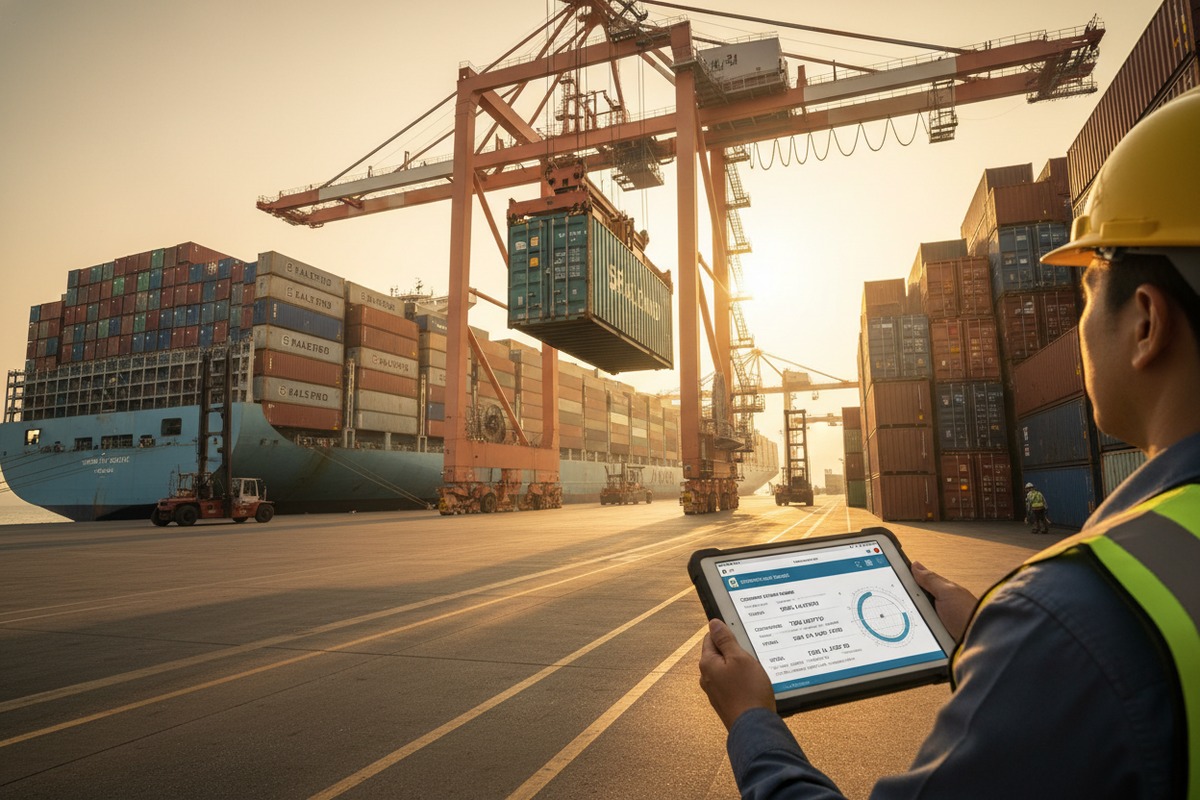
The ISF filing process involves multiple parties working together. Here is the typical workflow when a freight forwarder manages your filing:
Step 1: You provide your shipment details to the freight forwarder—product descriptions, HS codes, seller information, buyer information, and container details.
Step 2: The freight forwarder verifies the data and determines whether the shipment requires ISF-5 or ISF-10 based on the cargo's customs destination.
Step 3: The forwarder transmits the importer's data elements electronically to CBP through the Automated Commercial Environment (ACE) system 9, typically via a licensed customs broker in the United States.
Step 4: The ocean carrier separately submits the two carrier elements (vessel stow plan and container status messages) to CBP.
Step 5: CBP processes the combined filing and either accepts it or flags it for review.
Not all freight forwarders have the same capabilities. Here is what you should verify before trusting a forwarder with your ISF filings:
| Capability | Why It Matters |
|---|---|
| Licensed U.S. customs broker 10 partnership | Only licensed brokers can submit ISF filings to CBP through ACE |
| Experience with both ISF-5 and ISF-10 | Some forwarders only handle standard imports and lack transit filing experience |
| Electronic filing capability | ISF must be filed electronically; paper submissions are not accepted |
| 24/7 communication | Filing deadlines are strict; you need a team that can respond across time zones |
| Track record with CBP compliance | A forwarder with compliance issues can cause your shipments to receive extra scrutiny |
Both ISF-5 and ISF-10 must be filed at least 24 hours before the cargo is loaded onto the vessel at the foreign port. This is not 24 hours before arrival in the U.S.—it is 24 hours before the container is loaded onto the ship in China, Vietnam, or wherever the cargo originates.
In practice, our team aims to file 48 to 72 hours before vessel loading. This buffer gives us time to correct errors, resolve data mismatches, and avoid last-minute scrambles. If CBP rejects a filing, you need time to fix it before the loading deadline passes.
Technically, an importer of record can file ISF directly through ACE. But this requires a CBP-assigned filer code, technical integration with the ACE system, and deep knowledge of customs data requirements. For most Amazon sellers and e-commerce businesses, this is not practical. Working with a freight forwarder who has a customs broker relationship is far more efficient and reduces the risk of costly errors.
If you use a DDP (Delivered Duty Paid) service—which is the most common model for our China-to-USA clients—your freight forwarder should handle the ISF filing as part of the package. DDP means the logistics provider manages everything from pickup at the Chinese factory to delivery at your U.S. door, including customs clearance and ISF filings. Always confirm this with your provider before booking.
We have seen firsthand what happens when clients switch freight forwarders and the new provider files the wrong ISF type. The consequences are not theoretical. They are real, expensive, and disruptive to your supply chain.
Filing the wrong ISF type can result in CBP penalties starting at $5,000 per violation, cargo holds and inspection delays at U.S. ports, increased scrutiny on future shipments, and potential supply chain disruptions that damage your Amazon seller ratings and customer relationships.

CBP takes ISF compliance seriously. The penalty structure is designed to hurt:
| Violation Type | Penalty Amount | Notlar |
|---|---|---|
| Late ISF filing | $5,000 per violation | Applies to both ISF-5 and ISF-10 |
| Inaccurate ISF data | $5,000 per violation | Includes wrong filing type, incorrect HS codes, or missing elements |
| Multiple violations in one shipment | Up to $10,000 aggregate | CBP can stack penalties for multiple errors |
| Failure to file ISF at all | $5,000+ per violation | Plus potential cargo seizure or forced return |
These are not maximum penalties—they are starting points. CBP has the authority to escalate enforcement actions for repeat offenders, including placing your shipments on a heightened examination list.
When CBP detects an ISF discrepancy—such as filing ISF-5 for cargo that is actually entering U.S. commerce—the most immediate consequence is a cargo hold. Your container gets flagged for examination. It sits at the port. You pay demurrage and detention fees while waiting for CBP to release it.
For Amazon sellers, a cargo hold during peak season can be catastrophic. Your inventory does not arrive on time. Your Amazon listings go out of stock. Your search rankings drop. Your competitors gain ground. All because someone checked the wrong box on a customs filing.
CBP maintains records of all violations. A history of ISF errors can put your company on CBP's radar for increased scrutiny. This means more frequent inspections, slower clearance times, and a higher likelihood of random audits.
In contrast, a clean compliance record can qualify you for programs like the Customs-Trade Partnership Against Terrorism (C-TPAT), which provides expedited clearance and fewer inspections. Every ISF mistake moves you further from that goal.
The single most common mistake we see is shippers filing ISF-10 for cargo that is actually transiting through the U.S. to Canada. They assume that because the vessel docks at a U.S. port, the cargo is "entering" the U.S. It is not. If the cargo continues to Canada under an in-bond movement, the correct filing is ISF-5.
The reverse mistake also happens: filing ISF-5 for goods that are actually being imported into the U.S. for sale. This is a more serious error because it looks like you are trying to avoid the full disclosure requirements of ISF-10.
The best protection is working with a freight forwarder who understands both filing types and asks the right questions before every shipment. At minimum, your provider should confirm the cargo's final customs status, verify the correct filing type, double-check all data elements before submission, and file well ahead of the 24-hour deadline.
Do not leave ISF compliance to chance. The cost of getting it right is minimal compared to the cost of getting it wrong.
ISF-5 and ISF-5+2 are not interchangeable terms—ISF-5 is the importer's portion, and ISF-5+2 is the complete transit filing. Know your cargo's customs status, file correctly, and work with a trusted logistics partner to keep your shipments moving smoothly.
1. Official CBP page explaining Importer Security Filing requirements and purpose. ↩︎
2. Links to the official website of the U.S. government agency responsible for border security and trade. ↩︎
3. Provides a legal definition of 'foreign commerce' which is relevant to U.S. commerce in a customs context. ↩︎
4. Replaced with an authoritative Wikipedia page explaining sea freight. ↩︎
5. Official document from Regulations.gov defining ISF Importer for FROB, IE, T&E, and FTZ cargo. ↩︎
6. Official CBP information regarding enforcement actions and penalties for ISF violations. ↩︎
7. Official CBP page explaining what Foreign-Trade Zones are and their purpose. ↩︎
8. Official World Customs Organization page explaining the Harmonized System and its 6-digit codes. ↩︎
9. Official CBP page detailing the Automated Commercial Environment (ACE) system for trade processing. ↩︎
10. Official CBP page outlining the requirements and process to become a licensed customs broker. ↩︎