Cargo insurance for an imported forklift is a question I answer weekly at our Zhengzhou office. Skip it, and one dropped machine at the port can erase your entire margin. Buy the wrong policy, and your claim gets denied anyway. There is a smarter path.
The importer or buyer should usually buy cargo insurance for an imported forklift, because the buyer holds the insurable interest once risk transfers under Incoterms like EXW, FOB, or CFR. Under CIF, the seller arranges cover, but the buyer must still verify the policy's scope and value.
The answer depends on your trade terms 1, not on habit. Let me walk you through the cost, the coverage, who can arrange it, and what happens if you gamble without it.
How Much Does Cargo Insurance Cost for an Imported Forklift?
Last quarter, a Texas dealer asked our team to quote insurance on a container of four electric forklifts. When I showed him the premium, he laughed. He had expected a number ten times higher.
Marine cargo insurance for an imported forklift typically costs 0.08% to 0.5% of the insured value, depending on route, coverage type, and whether the machine is new or used. Best practice is to insure 110% of the CIF value to cover freight, duty, and a safety buffer.

The premium range sounds wide, so let me break it down. The low end, around 0.08% to 0.3%, applies to new machinery in enclosed containers on major routes like China to the US West Coast. The higher end, up to 0.5%, applies to used equipment, flat-rack stowage, transshipment routes, or broader all-risk coverage with low deductibles.
How to Calculate the Insured Value
Do not insure only the invoice price. If your forklift is lost, you also lose the freight you paid and the duty you may owe. That is why insurers and importers use the landed cost formula. The industry standard is Commercial Invoice + Freight + Duty + a 10% buffer, which is where the common "110% of CIF değeri" rule comes from.
Here is a worked example based on a typical shipment we handle:
| Maliyet Kalemi | Miktar (USD) |
|---|---|
| Forklift invoice value (2 units) | $28,000 |
| Ocean freight (40FT container) | $3,200 |
| Estimated import duty | $2,800 |
| Subtotal (landed cost) | $34,000 |
| 10% buffer | $3,400 |
| Recommended insured value | $37,400 |
| Premium at 0.3% | ~$112 |
For roughly the cost of a nice dinner, you protect a $37,000 asset across the Pacific. In my experience arranging cover for forklift importers, the premium is almost never the real issue. The real issue is buying the right wording, which brings us to coverage.
What Does Cargo Insurance Cover When Shipping My Electric Forklift?
A hard lesson from our early years: a client's used forklift arrived with a bent mast, and his budget policy excluded partial damage entirely. Coverage type matters more than price.
All-risk coverage is the standard for new electric forklifts, protecting against theft, rough handling, water damage, natural disasters, and general average contributions. Used forklifts are often limited to Free from Particular Average terms, and electric models may need a mechanical derangement rider for internal failures.

Not all policies are equal, and forklifts are not generic cargo. A heavy, top-lifted machine with a lityum pil 2 pack and sensitive electronics faces risks that a box of consumer goods never will. Here is how the main coverage tiers compare:
| Coverage Type | Neleri Kapsar | En İyisi İçin |
|---|---|---|
| All Risks (ICC-A style) | Theft, handling damage, water ingress, shifting, natural disasters, general average | New electric forklifts |
| With Average (WA) | Partial losses above a threshold from named perils | Mid-value routine cargo |
| Free from Particular Average (FPA) | Total loss, or partial loss only if the vessel sinks or strands | Used forklifts (often the only option offered) |
Special Considerations for Electric Forklifts
Two gaps catch electric forklift importers off guard. First, standard policies often exclude mechanical derangement, meaning internal electronic or hydraulic failures with no visible external impact. A high-tech electric forklift with a lithium battery and onboard controllers needs this rider. Second, forklifts shipped on flat racks are frequently stowed on-deck, and you need a specific on-deck endorsement to cover sea-spray, salt-water corrosion, or wash-over damage.
Also confirm the policy covers general average. Under maritime law 3, if cargo is jettisoned or the vessel is damaged, every cargo owner shares the loss, even if your forklift arrives untouched. Without insurance, you must post a cash bond before the carrier releases your machine.
One modern advantage worth using: many electric forklifts carry telematics and impact sensors. That onboard data can act as black-box evidence in transit damage claims, proving exactly when and where the damage occurred. We advise clients to activate logging before the forklift leaves the factory.
Can My Freight Forwarder Arrange Cargo Insurance for My Forklift Shipment?
When our team quotes a door-to-door forklift shipment from a Chinese factory to a US warehouse, insurance is one line we always raise, because many buyers assume they already have it. Usually, they do not.
Yes, a freight forwarder can arrange cargo insurance on the importer's behalf, and it is often the simplest option for forklift shipments. However, importers must confirm the policy names them as beneficiary, covers full landed value, and is warehouse-to-warehouse, because forwarder liability alone is not cargo insurance.

There is a critical distinction here that trips up even experienced importers. Freight forwarder liability and carrier liability protect the forwarder and the carrier, not your forklift. Under the US Carriage of Goods by Sea Act, carrier liability is typically capped at $500 per package. A forklift on a skid can be argued as one package. That means a $15,000 machine crushed during discharge might recover only $500 through the carrier, no matter how clear the fault.
What Your Forwarder Should Confirm Before Sailing
When we arrange cover for clients shipping through us, we work through a fixed checklist before the bill of lading is issued:
- The policy names the importer as insured or is properly assignable.
- The insured value equals 110% of CIF, not just the invoice.
- Coverage is warehouse-to-warehouse, from the Chinese factory to the destination warehouse, not port-to-port.
- The wording is all-risk, with a mechanical derangement rider for electric models.
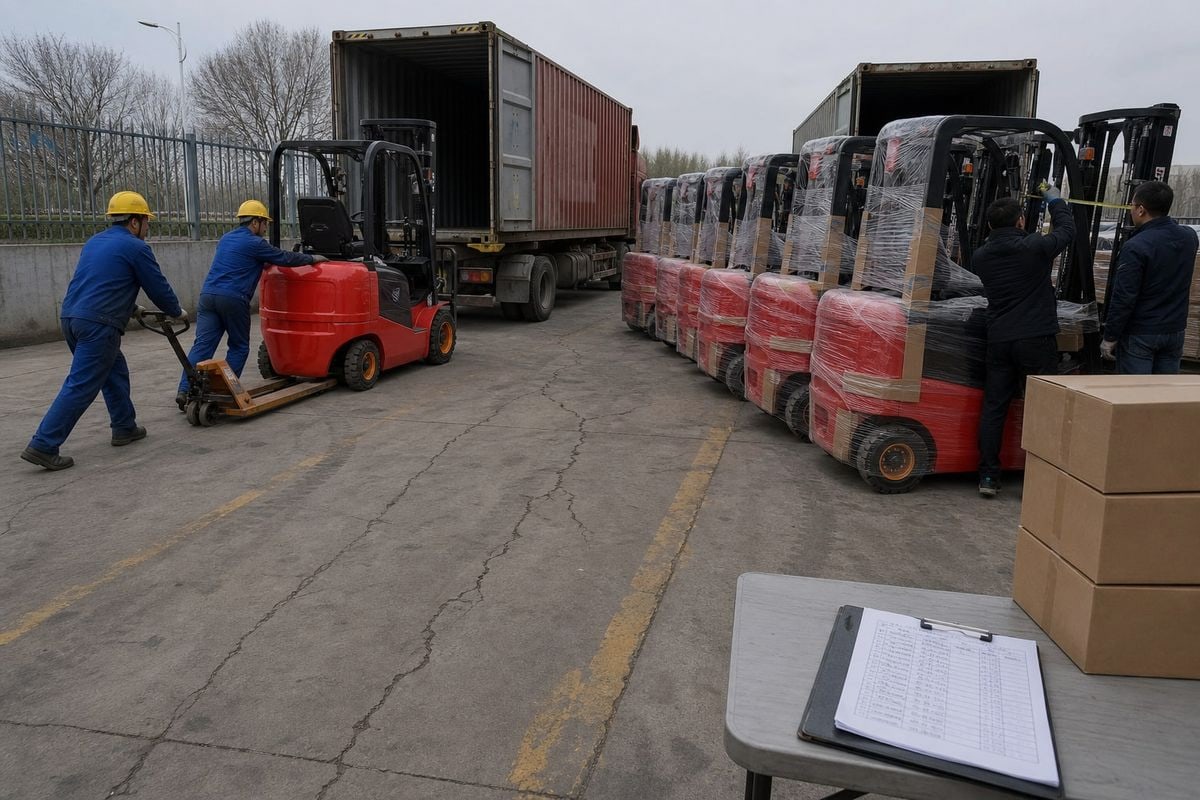
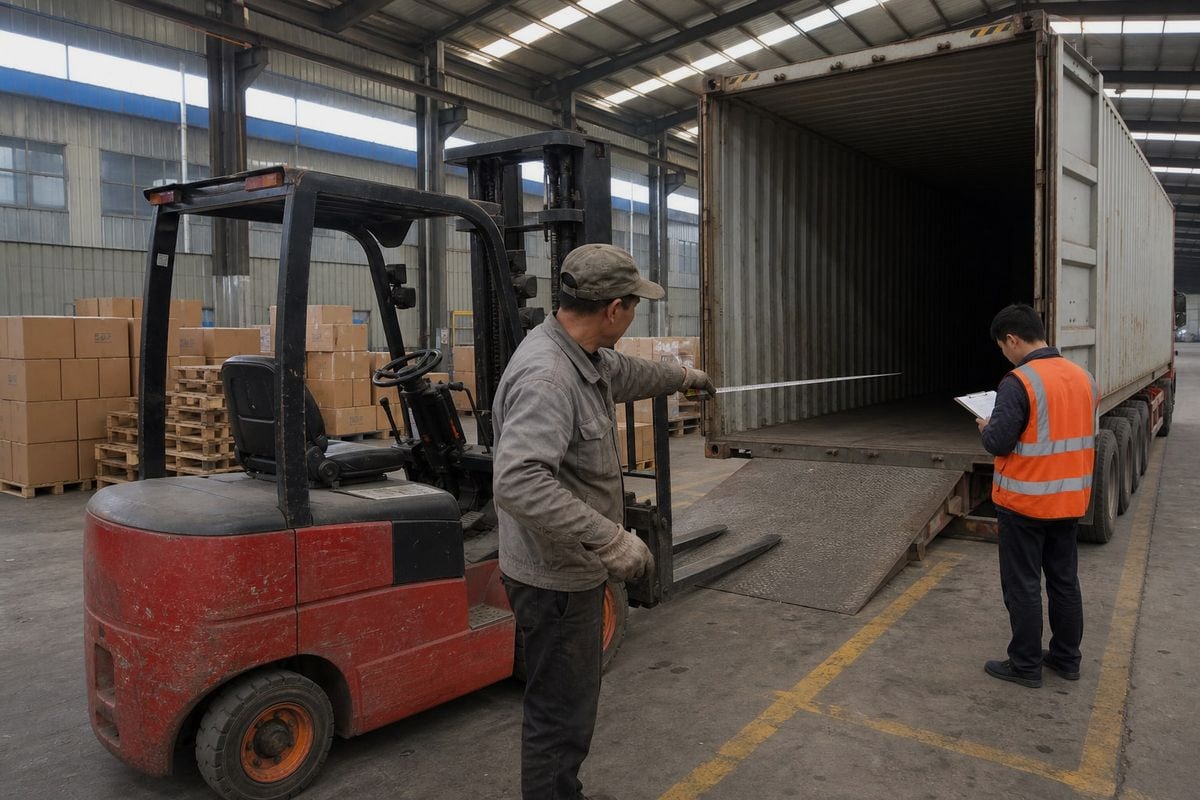
- Loading is photographed and documented, including lashing and securing inside the container.
- Battery details are declared, since lithium battery cargo can affect acceptance and terms.
That last point matters for heavy equipment shipping in general. Insurers can deny transit damage claims if securing was inadequate, so loading documentation protects your claim as much as the policy does. Because we coordinate container loading directly with forklift factories in China, we capture that evidence as a routine step. For buyers importing repeatedly, we also suggest discussing an open or floating policy with their insurer, which covers all shipments automatically instead of buying one-off cover each time.
What Happens If I Skip Cargo Insurance on My Forklift Import?
A buyer once told me he had shipped six containers uninsured without a scratch, so why start paying now? Six months later, a general average declaration answered that question for him.
Skipping cargo insurance leaves the importer bearing the full risk of loss, with carrier recovery capped around $500 per package under COGSA. One damaged mast, a stolen unit, or a general average declaration can cost more than decades of premiums. Insurance is not legally mandatory, but the tradeoff rarely favors skipping it.

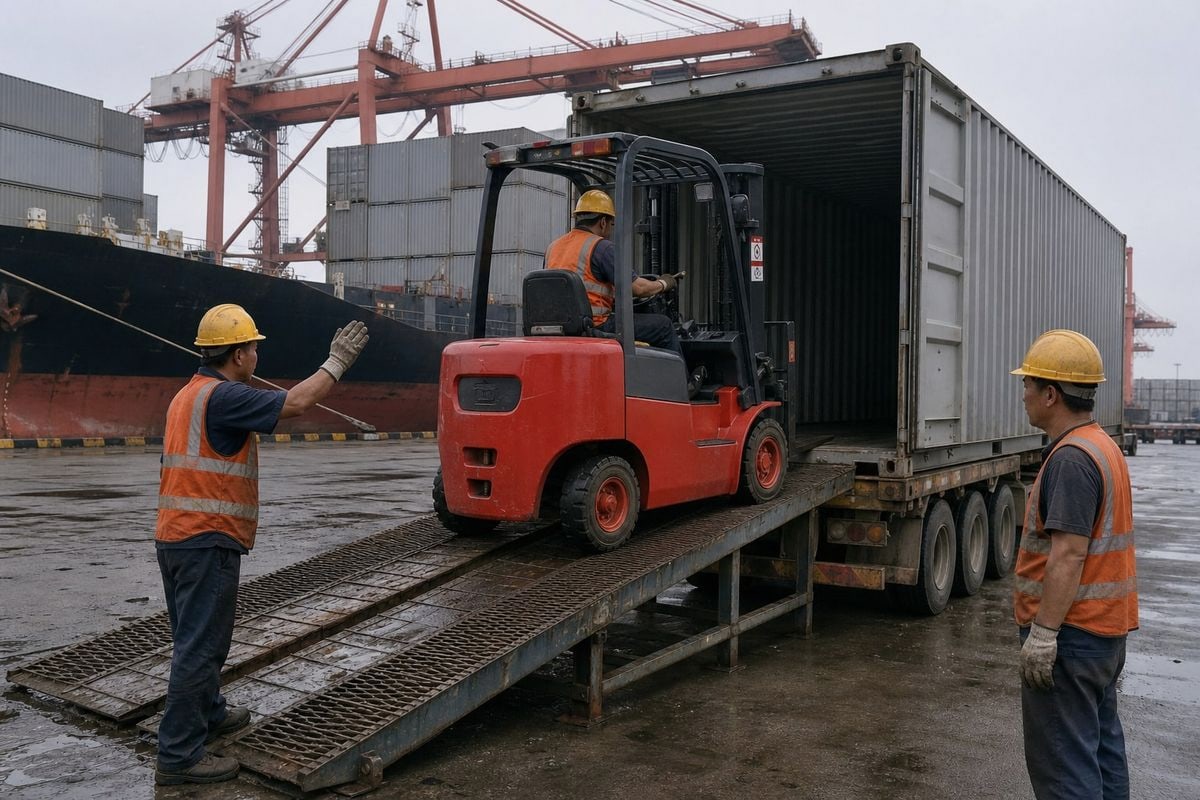
Let me be honest about the counterargument first. There is no universal legal rule requiring cargo insurance, and some buyers of low-value, routine cargo do reasonably self-insure. But a forklift is a high-value industrial asset that gets lifted, dropped, lashed, unlashed, and trucked multiple times between the factory floor and your door. The exposure profile is different.
Here is the realistic math on the gamble:
| Senaryo | Uninsured Outcome | Insured Outcome |
|---|---|---|
| Forklift dropped during port discharge | Recover ~$500 via COGSA cap; absorb the rest | Full insured value paid |
| Salt-water corrosion on flat-rack unit | Total loss absorbed by importer | Covered with on-deck endorsement |
| General average declared mid-voyage | Cash bond required before cargo release | Insurer posts the guarantee |
| Theft from destination terminal | Loss absorbed; dispute with terminal | Covered under all-risk terms |
The Incoterms Trap
The most dangerous scenario is the one where you think someone else is covered. Under CFR, the seller pays freight but the risk of loss 4 transfers to you once the goods are on board at the origin port, and nobody has insured the ocean leg unless you did. In the CIF vs FOB comparison, only CIF obligates the seller to insure, and even then the default obligation is minimum cover, which may be far too thin for machinery. Incoterms 2020 defines who bears risk at each stage, so match your policy to your term, not to your assumptions. Whoever holds the insurable interest at the moment of loss is the only party who can collect. If that is you, and you hold no policy, the loss is simply yours.
Sonuç
The importer usually holds the risk, so the importer should hold the policy. Check your Incoterms, insure 110% of CIF value, demand all-risk warehouse-to-warehouse terms, and document loading. If you want help arranging insured forklift shipping from China, our team at MBMLOG handles it door to door.
Dipnotlar
1. Official ICC resource defining standardized trade terms used in international sale contracts and shipping. ↩︎
2. Official U.S. Department of Transportation guidance on the safety regulations and risks of shipping lithium batteries. ↩︎
3. Authoritative legal definition and overview of the laws governing maritime activities and private disputes at sea. ↩︎
4. Official government guide explaining how different Incoterms determine when the risk of loss transfers to the buyer. ↩︎