- +8618603825129
- [email protected]


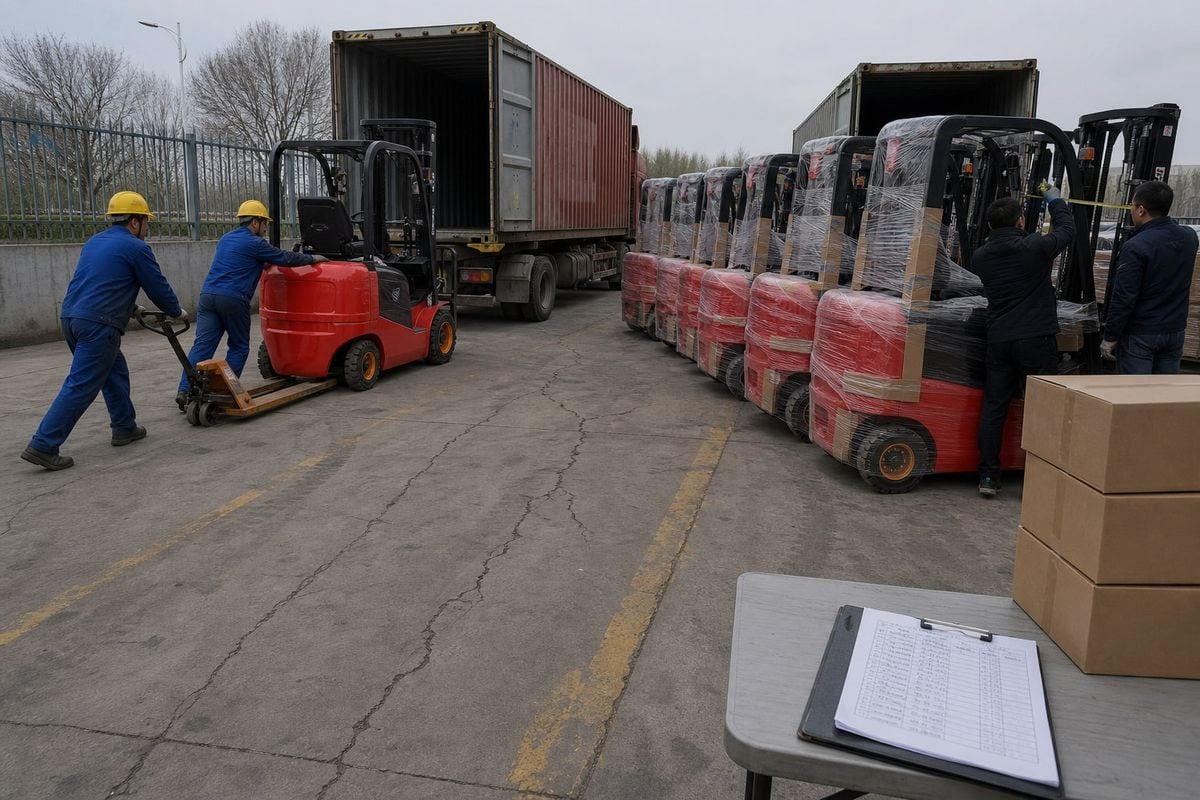
Dangerous goods declaration mistakes when shipping forklifts cost importers real money. At our Zhengzhou consolidation warehouse, I have watched a single wrong UN number strand a full container of red electric forklifts.
Common dangerous goods declaration mistakes when shipping forklifts include using the wrong UN number (UN3171 vs UN3166 vs UN2794), missing UN38.3 test summaries, outdated hazard labels, incorrect Proper Shipping Names, ignoring the IATA 30% state-of-charge rule, and battery specifications that mismatch supplier documents.
Each of these errors is preventable. Below, I break down the four biggest problem areas and show you exactly how to avoid them before your cargo reaches the port.
Last spring, our team caught a missing UN38.3 Test Summary 1 two days before a lithium forklift booking closed. That one check saved our US client three weeks of port delay.
Key documentation errors to avoid include omitting the UN38.3 Test Summary, submitting an unsigned Shipper's Declaration for Dangerous Goods, missing the 24-hour emergency contact, using outdated terms like "subsidiary risk" instead of "subsidiary hazard," and failing to attach a current Material Safety Data Sheet.

The paperwork for a lithium battery forklift is not just a formality. Carriers, port authorities, and customs officers all check these documents line by line. In our experience shipping electric forklifts from Chinese factories to the United States, most rejections trace back to five or six repeat offenders.
The UN38.3 Test Summary is the big one. It proves the forklift's battery passed international safety testing for vibration, altitude, thermal cycling, and short circuit. Without it, ocean carriers will refuse the booking outright. Many Chinese factories have this document but do not send it unless asked. We request it from every supplier before we even quote the freight.
The Shipper's Declaration for Dangerous Goods must be complete, correctly sequenced, signed, and dated. An unsigned certification triggers immediate rejection. It sounds trivial, but I see it constantly when importers try to prepare documents themselves.
Terminology matters too. Current regulations use "subsidiary hazard," not the older term "subsidiary risk." Some port checkers flag the outdated wording as an incomplete declaration.
| Document | Purpose | Common Error |
|---|---|---|
| UN38.3 Test Summary | Proves battery safety testing | Not requested from factory |
| Shipper's Declaration | Legal DG certification | Missing signature or date |
| MSDS / Safety Data Sheet | Chemical and hazard details | Outdated version or wrong battery model |
| Emergency contact info | 24/7 response guidance | Office number nobody answers |
| Battery specification sheet | Wh rating, cell type, capacity | Mismatch with declared values |
One more tip: some high-compliance "smart ports" now expect digital verification, such as QR-coded links to the Safety Data Sheet, for faster automated clearance. Material Safety Data Sheet 2 We prepare these proactively for shipments routed through such terminals.
A distributor in Texas once asked me why his previous forwarder's shipment sat at the port for eleven days. The answer: the forklift was declared under UN3166 instead of UN3171.
Incorrect UN numbers cause customs holds, re-declaration fees, storage charges, and possible fines. Misclassifying a battery-powered forklift as UN3166 (engine-powered machinery), UN3171 (battery-powered vehicle), UN3481 (lithium batteries in equipment), or UN2794 (wet lead-acid) triggers different packing instructions and inspection delays.
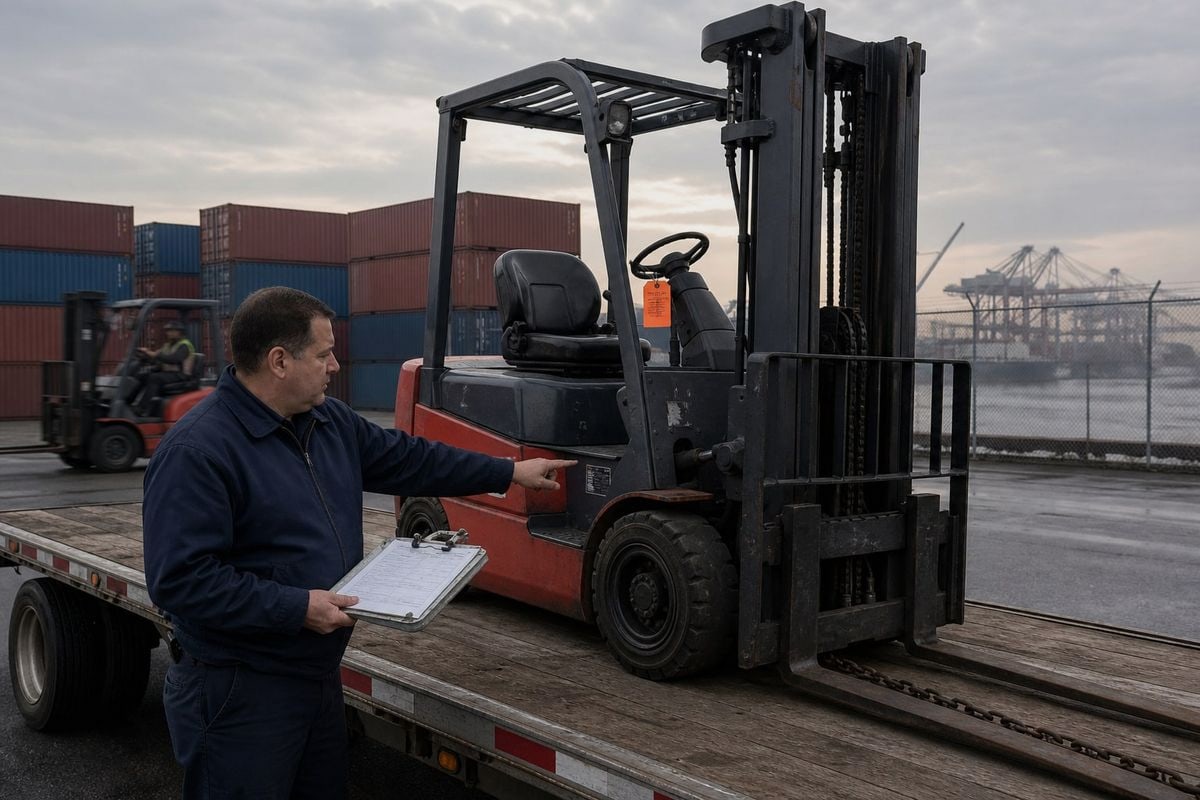
The UN number is the single most scrutinized entry on any dangerous goods declaration. Get it wrong, and customs treats your entire declaration as unreliable. In our experience exporting forklifts to the US, this is the mistake that creates the longest and most expensive delays.
A forklift is not one fixed classification. The correct entry depends entirely on the power source. Here is the breakdown we use when screening every shipment:
| UN Number | Applies To | Common Mistake |
|---|---|---|
| UN3171 | Battery-powered vehicle or equipment (electric forklift) | Misdeclared as UN3166 |
| UN3166 | Vehicle with internal combustion engine (diesel/LPG forklift) | Used for electric units by habit |
| UN3481 | Lithium-ion batteries contained in or packed with equipment | Confused with UN2794 |
| UN2794 | Wet, filled lead-acid batteries | Used for lithium packs by mistake |
Each entry carries different packing instructions under the IMDG Code 3 for sea and the IATA Dangerous Goods Regulations for air. So an electric forklift wrongly declared under UN3166 will fail the document-versus-cargo check even if everything else is perfect.
The Proper Shipping Name must also match the UN number exactly, with no abbreviations or misspellings. "Forklift" alone is never acceptable. The regulated item is the battery or fuel source, not the machine frame.
Some importers argue that customs rarely opens machinery containers, so classification accuracy matters less. I push back on that hard. Battery-powered equipment is now a targeted inspection category at US ports, and the fine for a misdeclared dangerous good far exceeds any time saved. Correct IMDG Code compliance from day one is always cheaper.
Before every container loading at our warehouse, our team photographs the hazard labels on each battery pack. That habit started after a carrier rejected a shipment over one faded Class 9 mark.
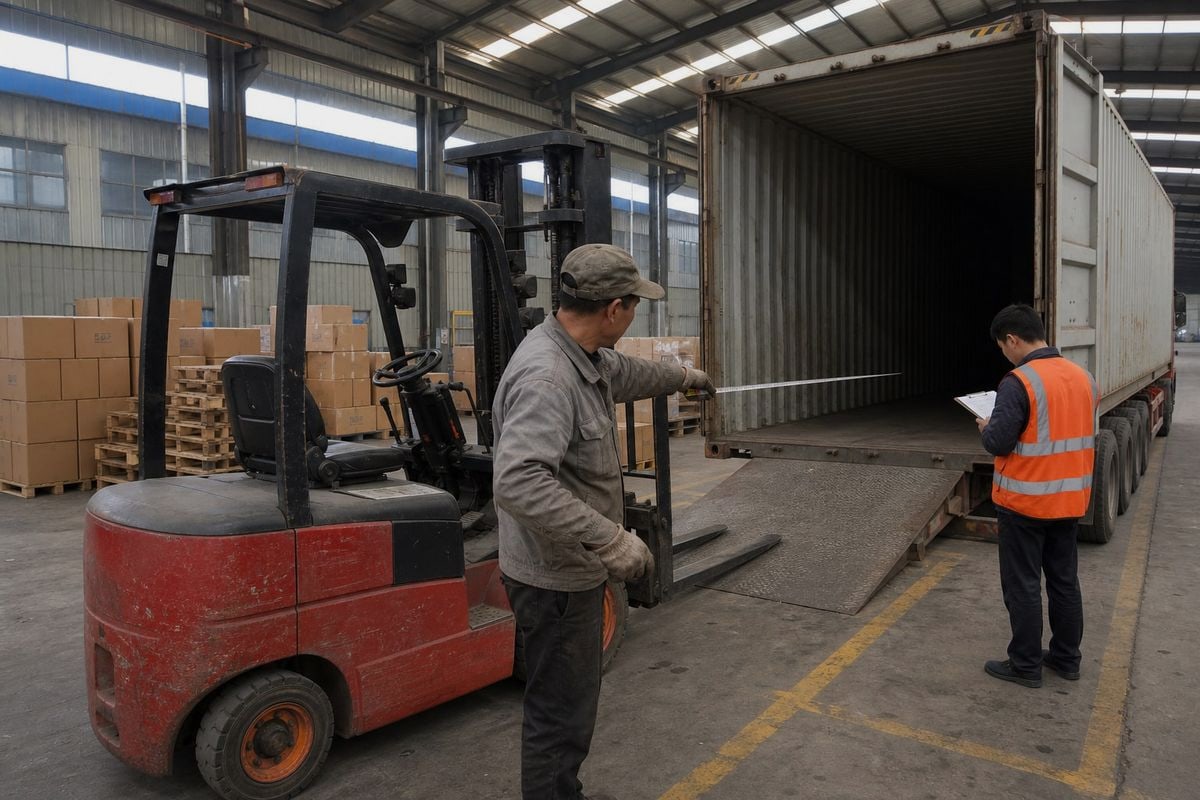
Carriers commonly reject forklift cargo for missing or obsolete Class 9 lithium battery labels, absent Class 8 corrosive labels on lead-acid models, unprotected battery terminals, packaging that fails UN packaging standards, and package counts on the declaration that do not match the physical shipment.
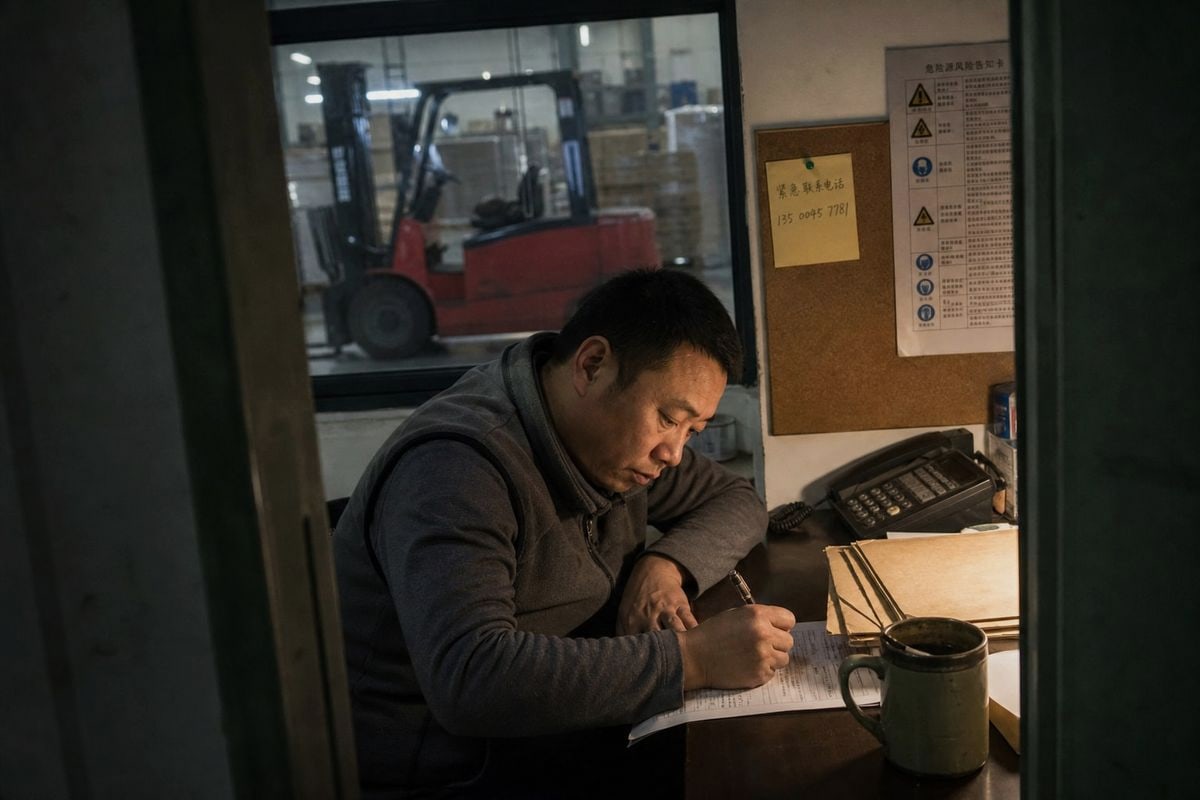
Labels are the first thing a carrier's acceptance staff sees. If the labels do not match the declaration line by line, the cargo does not move. Here is how I break the problem down for our clients.
Hazmat labeling requirements change periodically, and old stock labels linger in factory warehouses. The obsolete Class 9 lithium battery label design is a frequent rejection trigger. Lead-acid battery shipping brings its own trap: shippers often apply the Class 9 label out of habit when the correct mark for a wet lead-acid unit is the Class 8 corrosive label. Labels must also be clean, unobstructed, and never overlapping other marks.
Unsecured battery terminals are a leading cause of short circuits and thermal events in transit. Terminals need non-conductive insulation, and any spare batteries need packaging that meets UN packaging standards. We also check for hidden dangerous goods inside the chassis, such as pressurized gas cylinders in built-in fire suppression systems or charged hydraulic accumulators. These are easy to miss and just as regulated.
A surprisingly common data-entry error is keying the piece count into the packaging-type field, so the declared package count never matches the physical shipment. When a forklift ships on a skid with a separately boxed spare battery, that is two packages, not one.
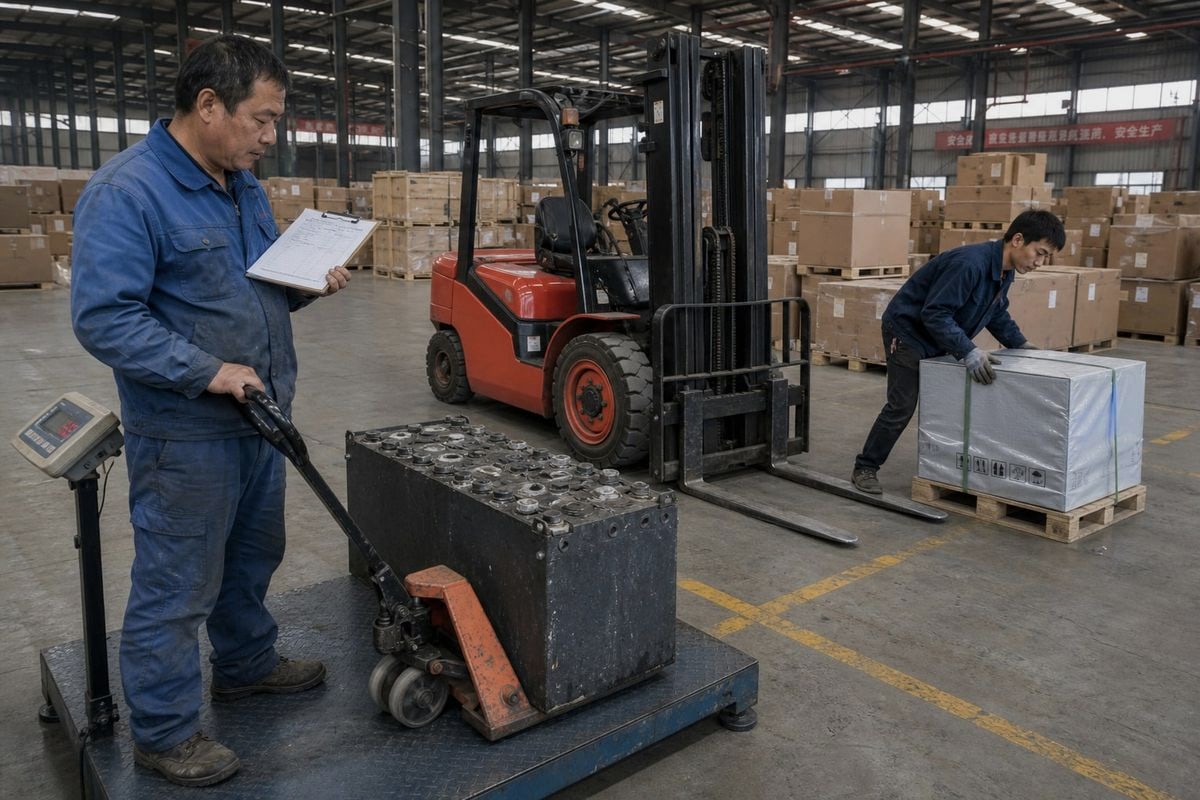
The hardest lesson I learned in this business came from a spec sheet. A factory quoted an 80V lithium pack, but the unit that arrived at our warehouse carried a different battery model with a different watt-hour rating.
Inconsistent battery specifications create compliance failures because the declared watt-hour rating, chemistry, and model must match the physical battery exactly. Mismatches invalidate the UN38.3 Test Summary, breach the IATA 30% state-of-charge rule for air freight, and trigger inspection holds at destination customs.
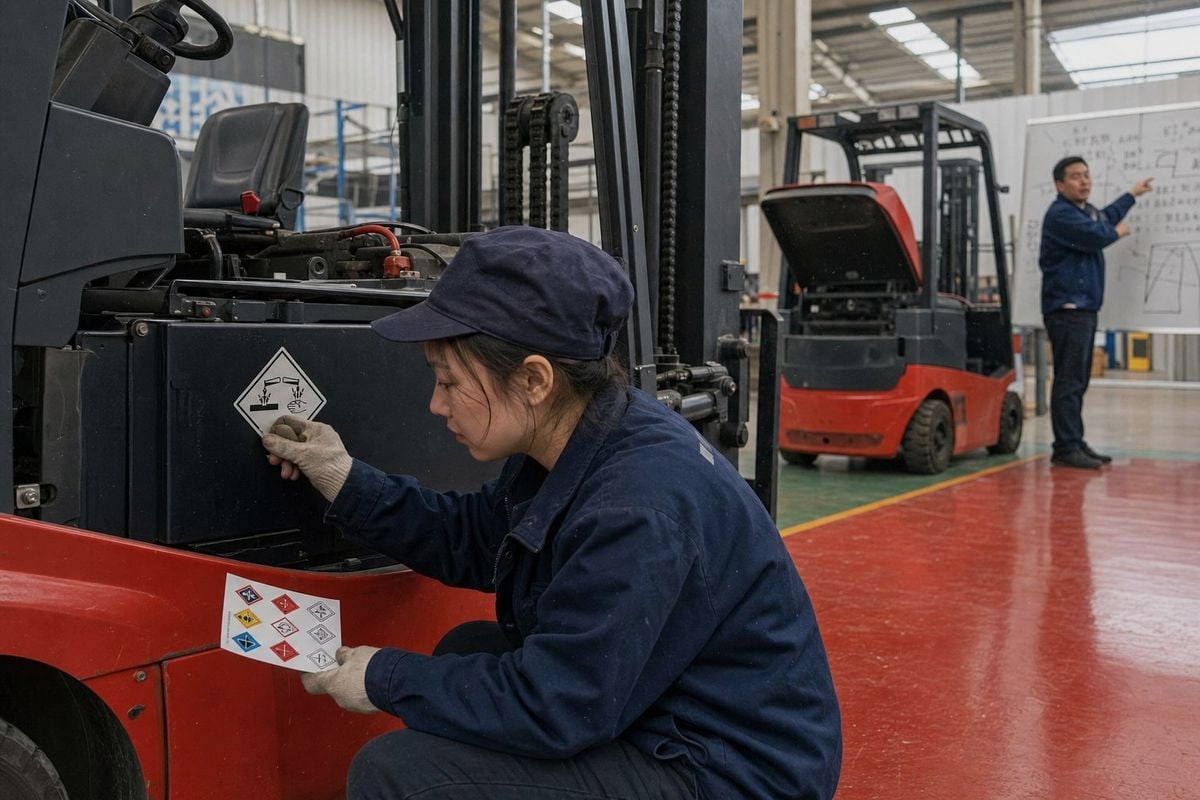
A dangerous goods declaration is only as accurate as the data behind it. When the supplier's spec sheet, the MSDS, the UN38.3 summary, and the physical battery tell different stories, the whole compliance chain breaks. This is why our team verifies battery data directly with the factory before we prepare any documents.
Chinese forklift factories frequently source batteries from third-party suppliers, and battery models change between production batches. The forklift model number stays the same, but the pack inside does not. If your declaration references last batch's battery, your UN38.3 Test Summary no longer covers the cargo in the container.
Air freight raises the stakes further. Under the IATA Dangerous Goods Regulations 4, lithium-ion batteries shipped by air must not exceed a 30% state of charge. If the factory charges the pack fully for pre-delivery testing and nobody discharges it, the declared SoC is false, and that is a serious violation. This matters for spare battery or parts shipments we move by air alongside ocean-freighted forklifts.
Refurbished and second-life units carry a special trap. Special Provision 376 requires a "Damaged/Defective" declaration when the battery's internal health cannot be verified. Some sellers of used forklifts skip this entirely.
| Data Point | Must Match Across | Risk If Mismatched |
|---|---|---|
| Watt-hour rating | Spec sheet, MSDS, declaration | Invalid classification |
| Battery chemistry | UN38.3 summary, MSDS | Wrong UN number applied |
| Battery model number | Physical pack, test summary | UN38.3 coverage voided |
| State of charge | Air waybill declaration, actual pack | IATA violation, fines |
| Battery condition | Used-unit paperwork, SP376 status | Illegal undeclared shipment |
Our fix is procedural: we collect the battery nameplate photo, the exact model number, and the matching UN38.3 document from the supplier during cargo-readiness checks, then cross-check them against the declaration before export.
Dangerous goods declaration mistakes when shipping forklifts are predictable and preventable. Verify UN numbers, documents, labels, and battery specs before departure — or work with a forwarder who does.
1. UNECE provides the regulatory framework for the UN38.3 battery safety testing standards. ↩︎
2. Authoritative OSHA Hazard Communication page providing official guidance on Safety Data Sheet requirements and standards. ↩︎
3. The official IMO resource for the International Maritime Dangerous Goods Code governing sea transport. ↩︎
4. Official IATA source for air transport regulations, including specific rules for lithium battery shipments. ↩︎