- +8618603825129
- [email protected]


The cost to ship an electric forklift from China to the USA confuses many buyers I work with. A low freight quote often hides surcharges that surface later — and by then, your budget is already broken.
Shipping an electric forklift from China to the USA typically costs $2,000–$8,000 per container in ocean freight, plus $200–$400 in lithium battery surcharges, $500–$1,500 in destination charges, insurance, and U.S. duties — often including a 25% Section 301 tariff on Chinese-origin forklifts.
That range is wide for a reason. The final number depends on container size, battery type, Incoterms, and how many units you ship. Let me break each piece down for you.
Last month, a forklift dealer in Texas asked me why two quotes for the same machine differed by $3,000. The answer sat in five cost drivers most first-time importers never see itemized.
Five factors drive the total cost: ocean freight rates on your chosen lane, lithium battery dangerous goods surcharges, port of entry charges and customs clearance fees, U.S. import duties including Section 301 tariffs, and inland trucking on both the China and U.S. sides.
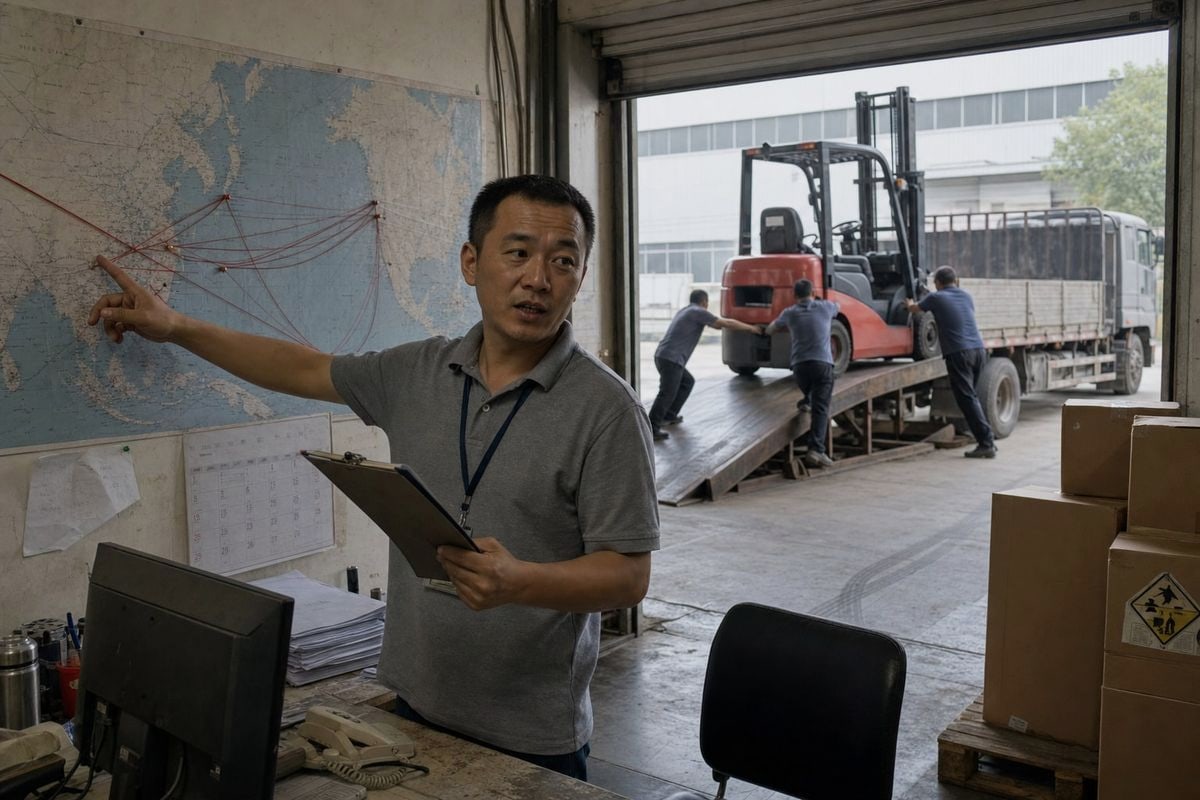
An electric forklift is not a standard palletized commodity. It is a heavy, high-value machine, and its battery changes how carriers treat it. When our team in Zhengzhou books space for battery-powered forklifts, we plan for cost lines that ordinary cargo never triggers.
Here is the landed-cost structure I walk every new client through:
| Cost component | Typical range | Notes |
|---|---|---|
| Inland pickup in China | $200–$800 | Depends on factory-to-port distance |
| Ocean freight | $2,000–$8,000 per container | Volatile month to month |
| Lithium battery DG surcharge | $200–$400 | Applies to lithium-ion units |
| Port handling and local charges | $150–$500+ | Origin side |
| Destination charges | $500–$1,500 | Terminal handling, brokerage, ISF filing |
| Marine cargo insurance 1 | 0.2%–0.5% of cargo value | Some brokers quote 0.3%–0.6% of invoice plus freight |
| U.S. duty and tariffs | 0% base + 25% Section 301 | Under HTS 8427.10.4000 |
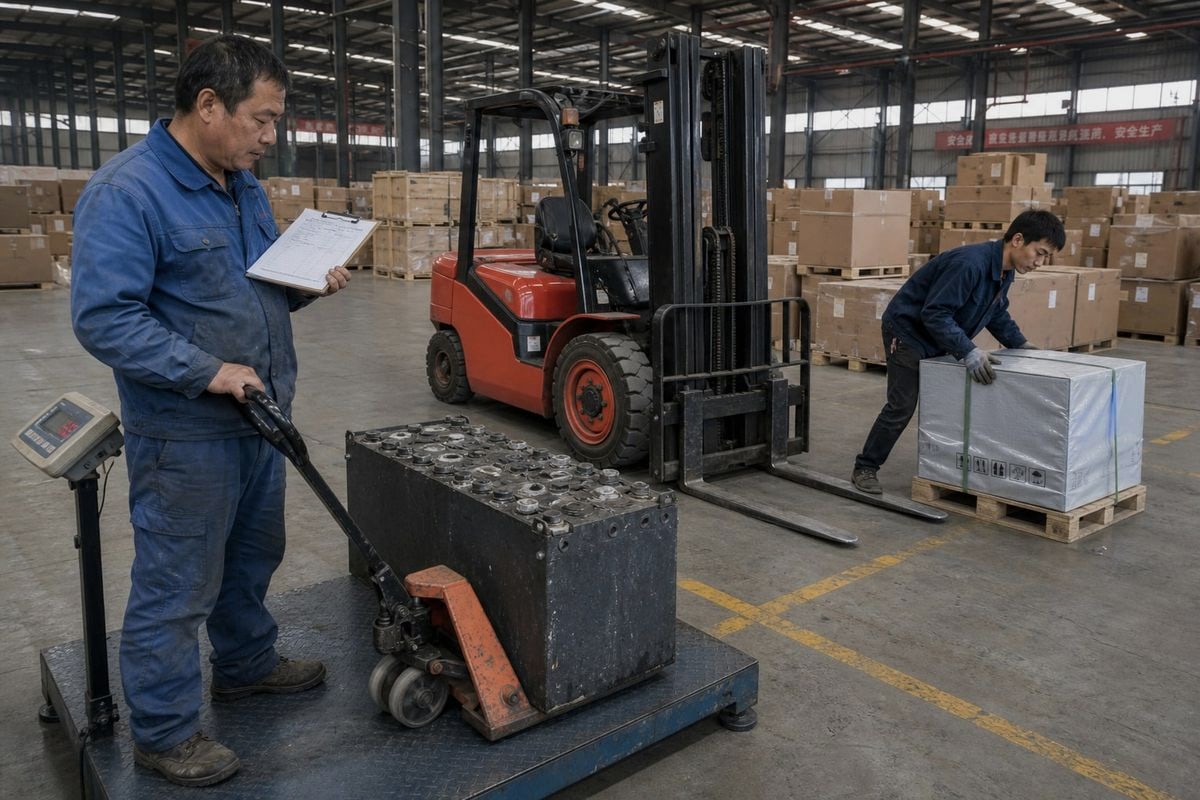
Lithium-ion batteries are classified as Class 9 Dangerous Goods. That classification triggers hazmat labeling 2, extra documentation, and mandatory surcharges that standard freight quotes often exclude. Lithium battery shipping regulations also require batteries to travel at a reduced State of Charge — typically below 30%. I always warn buyers to arrange charging soon after arrival, because a deeply discharged battery can suffer permanent damage sitting at a port.
Your Incoterms — FOB, CIF, or DDP — dictate whether you or the factory covers port charges, marine cargo insurance, and final delivery. A "cheap" FOB price can hide thousands in destination costs. When we run DDP shipments for U.S. clients, every one of these lines appears in a single quote, so nothing surprises them at the port.
Ocean freight rates are volatile. One August 2026 market snapshot showed 20GP rates at $4,612–$5,637 and 40HQ at $4,637–$5,668 on major China–US lanes, while sea freight on some lanes dropped about 23.7% in a single month. Never budget from a quote that is more than a few weeks old.
Choosing between container sizes is a trade-off I weigh with clients every week. A 20FT box costs less to book, but a 40FT often wins on cost per forklift once you do the math.
A 20FT container typically costs $1,200–$3,800 in ocean freight and fits one to two compact electric forklifts. A 40FT or 40HQ runs $1,800–$5,800 and fits three to four units, making the per-forklift cost significantly lower when the container is full.
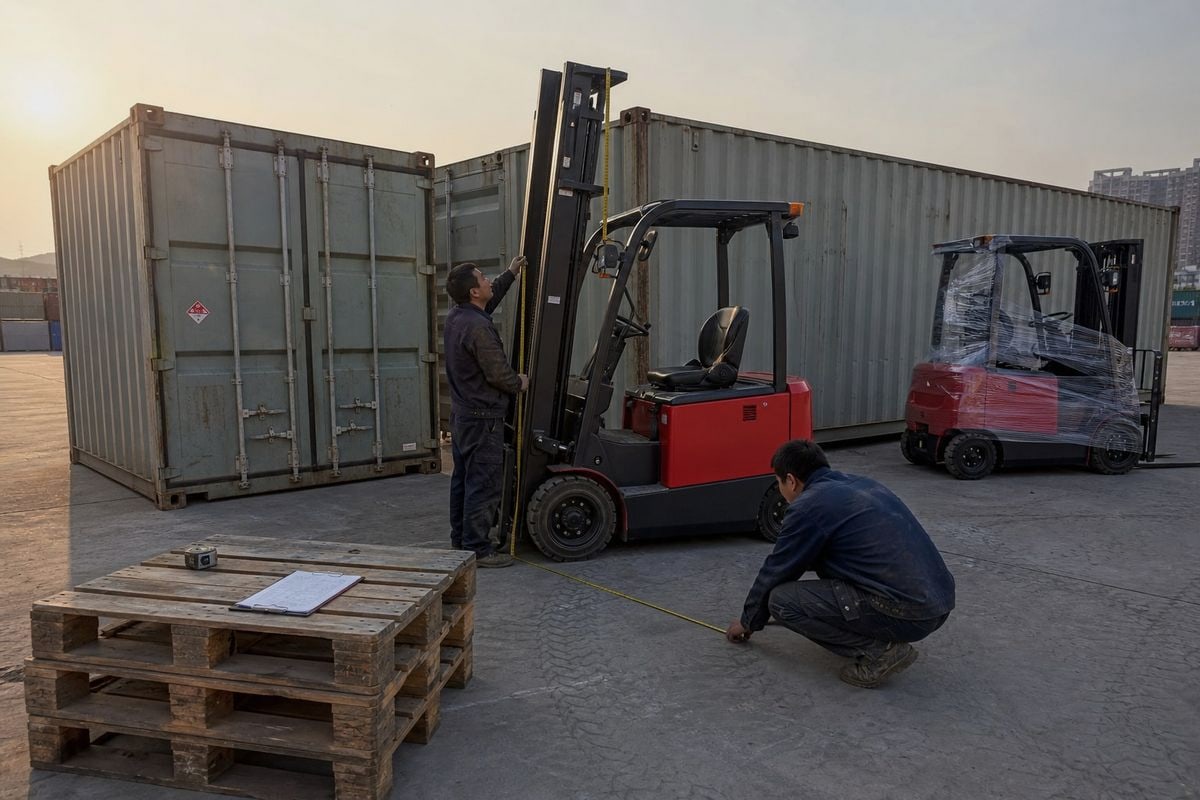
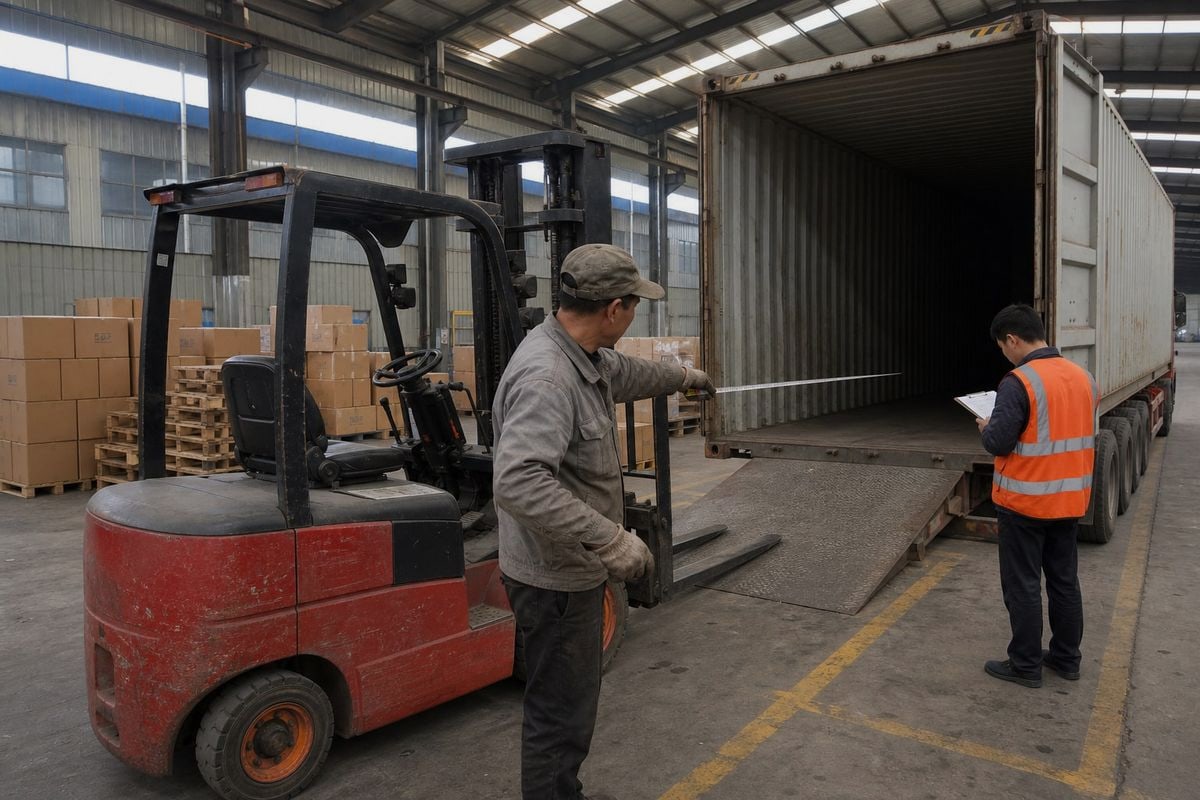
The container decision is really a question of density. Forklifts are heavy for their footprint, so you often hit weight limits or floor-space limits before you fill the cube. When we plan container loading in our Zhengzhou consolidation warehouse, we measure mast height, counterweight length, and total weight before recommending a box size.
| Shipping method | Typical cost signal | Best use case |
|---|---|---|
| FCL sea freight (20FT) | $1,200–$3,800 | 1–2 compact forklifts |
| FCL sea freight (40FT/40HQ) | $1,800–$5,800, market quotes recently $4,600–$5,700 | 3–4 forklifts, best per-unit economics |
| LCL / per CBM | $100–$180 per CBM | Small shipments, parts, single pallet trucks |
| Ro-Ro shipping method / breakbulk | Quoted per CBM or project basis | Oversized units that cannot be containerized |
| Air freight | $2–$8/kg, often $4.50–$7.00/kg for heavy machinery | Urgent parts only — rarely sensible for full forklifts |
FCL vs LCL shipping 3 is not a close call for most forklift buyers. FCL wins on damage risk and handling fees, because your machine loads once and stays sealed until arrival. LCL means your forklift shares space with other cargo and gets handled at consolidation warehouses on both ends. For a heavy machine with a tall mast, every extra touch is a damage opportunity. I generally recommend LCL only for chargers, spare parts, or a single compact pallet truck.
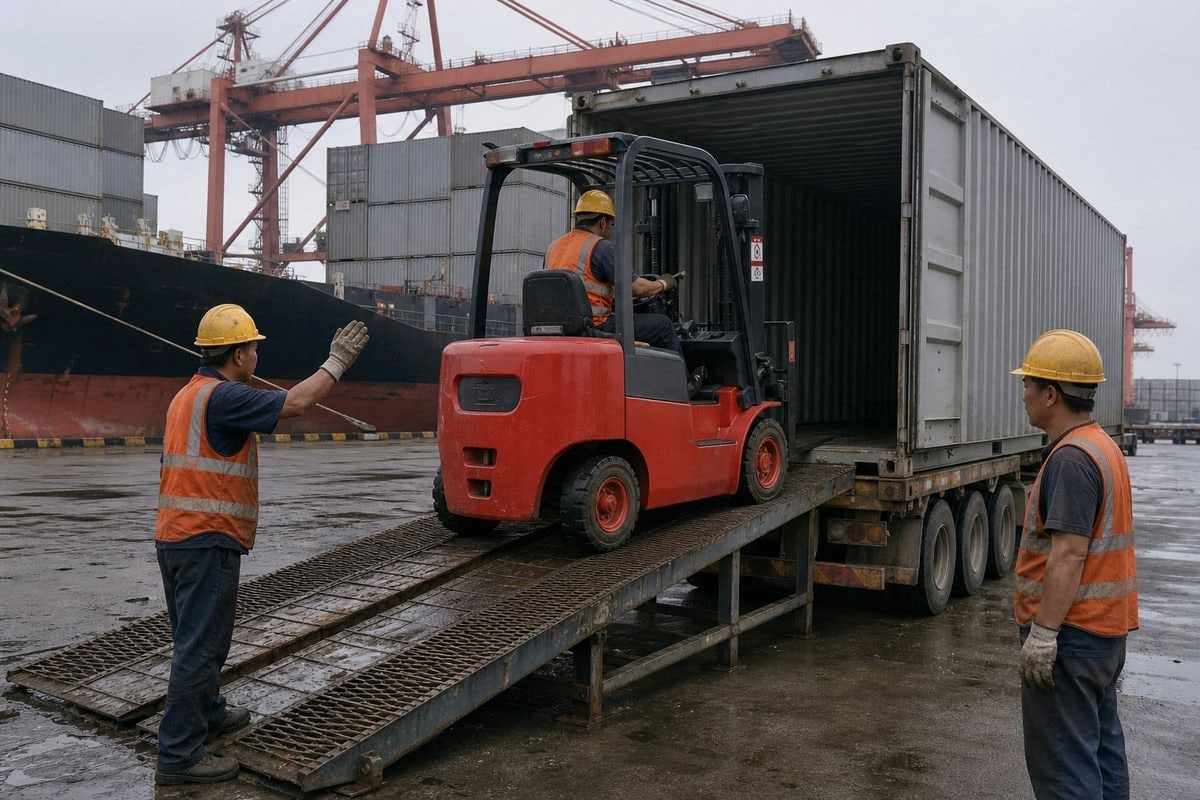
The Ro-Ro shipping method suits forklifts too tall or heavy for containers. The machine drives on and off the vessel. But Ro-Ro sailings are less frequent, and pricing spreads widely by route. For standard electric warehouse forklifts, containers remain the baseline — cheaper and easier to control.
One tactic we use constantly: fill leftover container space with batteries, chargers, attachments, and spare parts. That cargo ships nearly free once the container is booked, which quietly lowers your effective freight cost per dollar of goods.
A buyer once forwarded me a competitor's quote that looked $1,800 cheaper than ours. When I listed what it excluded — brokerage, ISF filing, chassis fees, the DG surcharge — his "savings" evaporated. This happens more often than you would think.
Yes. Expect destination charges of $500–$1,500 covering terminal handling, customs brokerage, and ISF filing, plus a $200–$400 lithium battery surcharge, marine cargo insurance at 0.2%–0.5% of cargo value, a 25% Section 301 tariff, and final-mile rigging or specialized delivery costs.
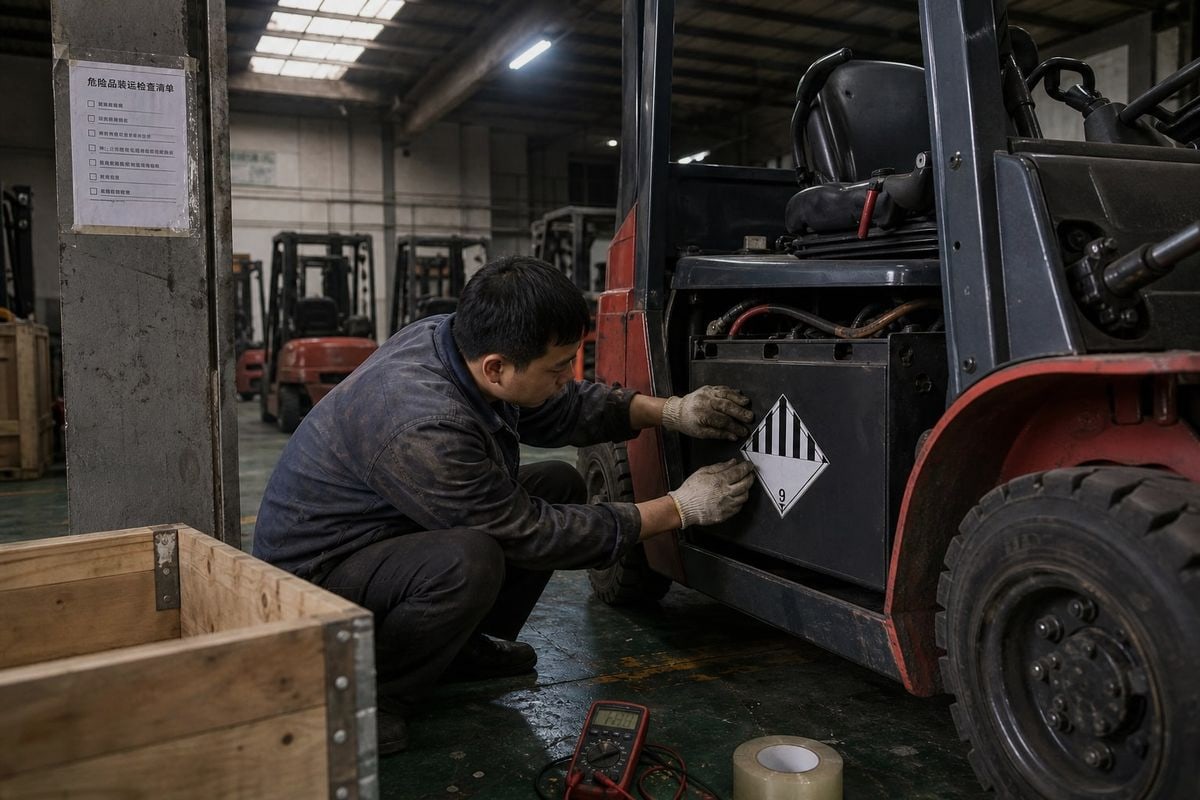
The gap between a base freight quote and the total landed cost is where import budgets die. Let me itemize the charges that most often surprise first-time forklift importers.
The HTS code 4 for forklifts matters enormously. A CBP ruling classifies electric forklifts under HTS 8427.10.4000. The statutory base duty is 0.0% — which sounds great — but Chinese-origin electric rider forklifts carry a 25.0% Section 301 surcharge on top. On a $15,000 machine, that is $3,750 in import duties and taxes, often more than the entire freight bill. Some importers can lower exposure by documenting the forklift and its separate charging unit as distinct line items, since components may classify under different codes. We always review HS classification with clients before departure, because an incorrect code causes both overpayment and customs delays.
Beyond the DG surcharge, remember the State of Charge rule. Batteries shipped below 30% charge may need immediate specialized charging on arrival to prevent deep-discharge damage. Buyers should also confirm the machine meets applicable U.S. requirements — for combustion models, EPA compliance standards are a common trap, and for electric units, battery certification paperwork serves a similar gatekeeping role.
Marine cargo insurance runs roughly 0.2%–0.5% of cargo value (some brokers quote 0.3%–0.6% of invoice plus freight). On a $15,000 forklift, that is under $100. Skipping it on a transpacific voyage is a false economy I advise every client against.
The most satisfying part of my job is showing a dealer how the same freight spend can move twice the equipment. Fleet buyers almost always pay dramatically less per unit than single-machine importers — and the math explains why.
Ship full containers instead of partial loads, fill unused space with batteries, chargers, and spare parts, consolidate cargo from multiple suppliers into one shipment, and time bookings around freight rate dips. Fixed shipment-level costs spread across more units — three forklifts sharing $12,000 in logistics costs means $4,000 each.

Most logistics costs are shipment-level, not unit-level. Customs clearance fees, ISF filing, documentation, drayage, and much of the ocean freight cost the same whether the container holds one forklift or four. So the fastest way to cut per-unit cost is simple: spread fixed costs over more machines.
One real-world logistics example: three forklifts in a shipment carried $12,000 in total fixed shipment expenses — $4,000 per forklift. Ship one machine alone, and that single unit absorbs nearly the full fixed cost. Here is how the economics typically scale:
| Units per shipment | Container | Illustrative logistics total | Cost per forklift |
|---|---|---|---|
| 1 forklift | 20FT (mostly empty) | ~$6,000–$8,000 | $6,000–$8,000 |
| 2 forklifts | 20FT (full) | ~$7,000–$9,000 | $3,500–$4,500 |
| 3 forklifts | 40FT | ~$10,000–$12,000 | $3,300–$4,000 |
| 4 forklifts + parts | 40HQ (optimized) | ~$11,000–$13,000 | $2,750–$3,250 |
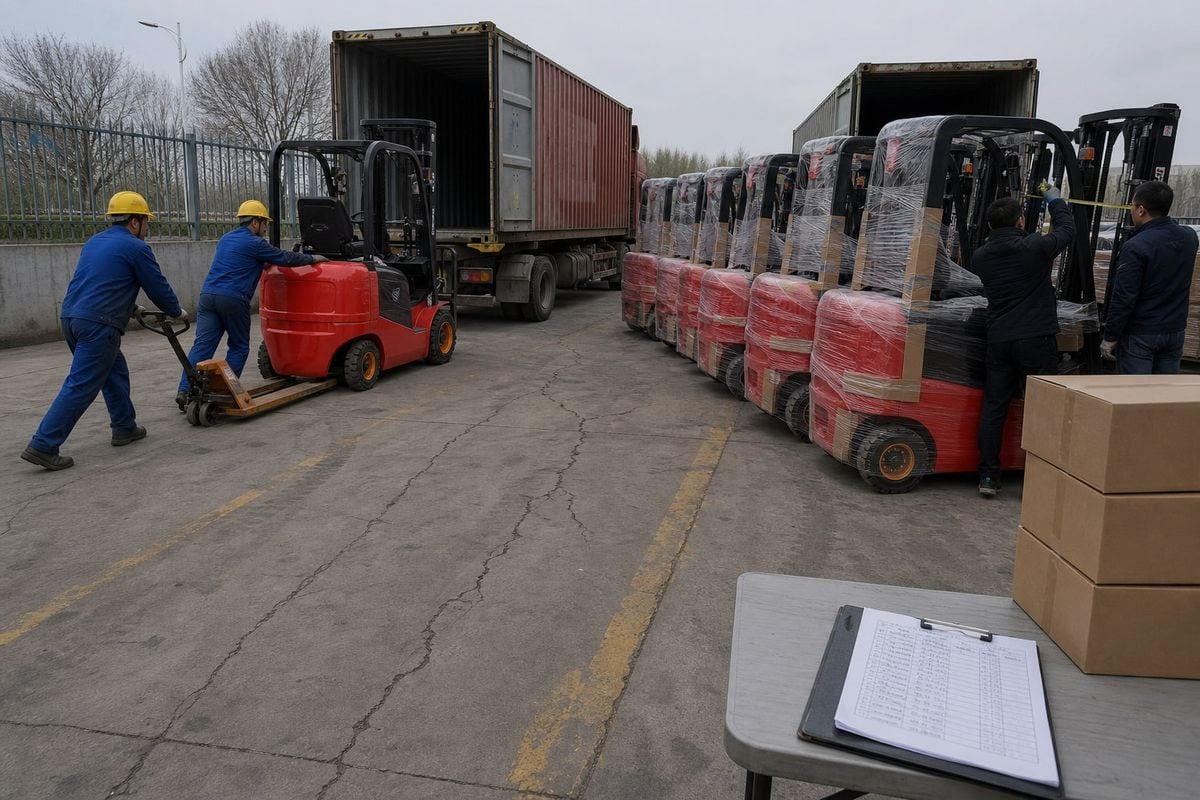
Many of our clients buy forklifts from Factory A, batteries from Factory B, chargers from Factory C, and attachments from Factory D. Shipping each purchase separately multiplies pickup fees, documentation, and minimum charges. We pick up from each factory, consolidate everything in one warehouse, and load a single container. One shipment, one set of fixed costs, one customs entry.
The cost to ship an electric forklift from China to the USA is a range, not a number — budget for freight, battery surcharges, destination fees, and tariffs together. Need an accurate all-in quote? Our team is ready to help.
1. ICC provides the standard definitions for Incoterms which determine insurance responsibilities. ↩︎
2. IMO standards for the classification and labeling of hazardous materials in maritime transport. ↩︎
3. Wikipedia entry explaining the logistics and mechanics of less-than-container load shipping. ↩︎
4. Official USITC portal for identifying the correct Harmonized Tariff Schedule classification for imported goods. ↩︎