- +8618603825129
- [email protected]


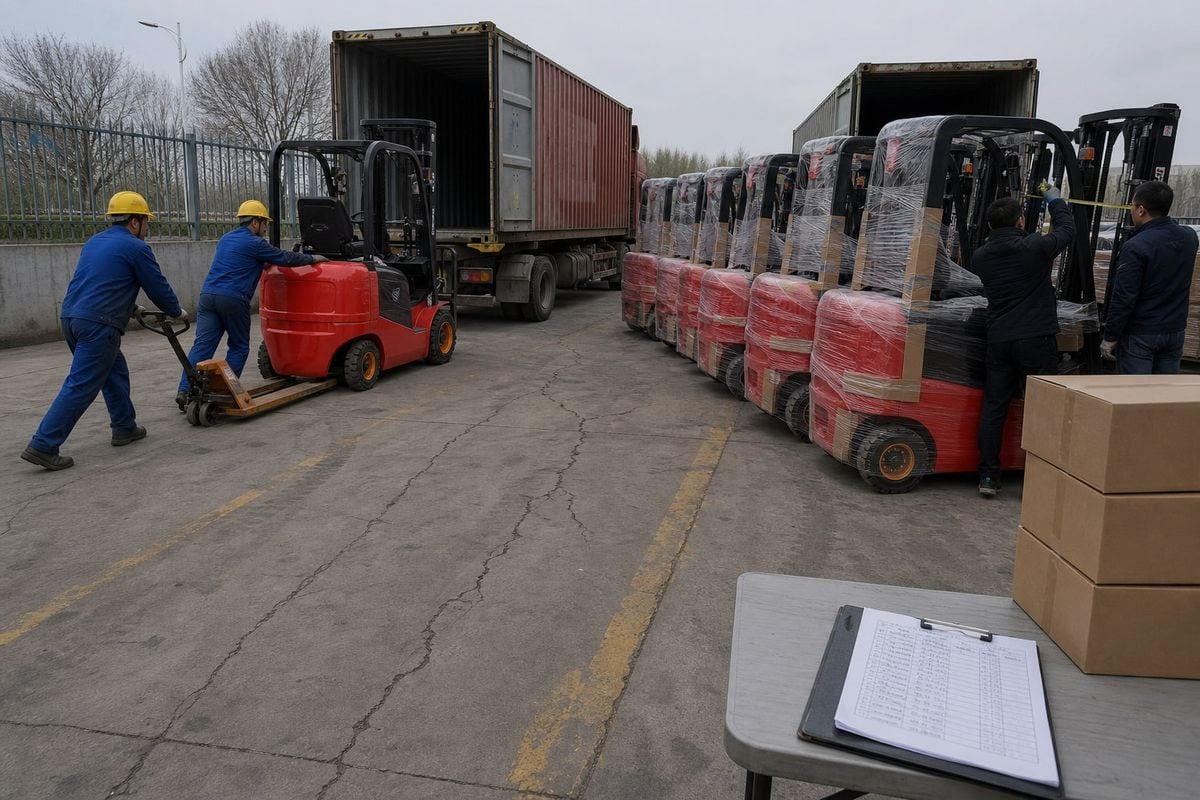
Last spring, our Zhengzhou team watched a carrier reject a beautiful red electric forklift at Qingdao port. The IMDG Code requirements for shipping lithium battery forklifts 1 had been ignored. One missing document cost the importer three weeks and heavy storage fees. It did not have to happen.
The IMDG Code requires lithium battery forklifts to be shipped as Class 9 Dangerous Goods, typically under UN 3556 since Amendment 42-24, with a UN 38.3 test summary, a Dangerous Goods Declaration, secured batteries, correct labels, and prior carrier approval before booking.
That short answer hides real complexity. The correct UN number, the paperwork, the packaging, and the labels all depend on how your forklift is configured. Let me walk you through each part, step by step.
Every week, importers send our team battery specs and ask the same question: which UN number applies? In our experience shipping electric forklifts from China, classification is where most mistakes begin.
Under IMDG Amendment 42-24, a forklift with an installed lithium-ion battery is classified as Class 9 Dangerous Goods under UN 3556 (Vehicle, lithium ion battery powered), replacing the older generic entry UN 3171. Batteries shipped separately fall under UN 3480 or UN 3481 instead.
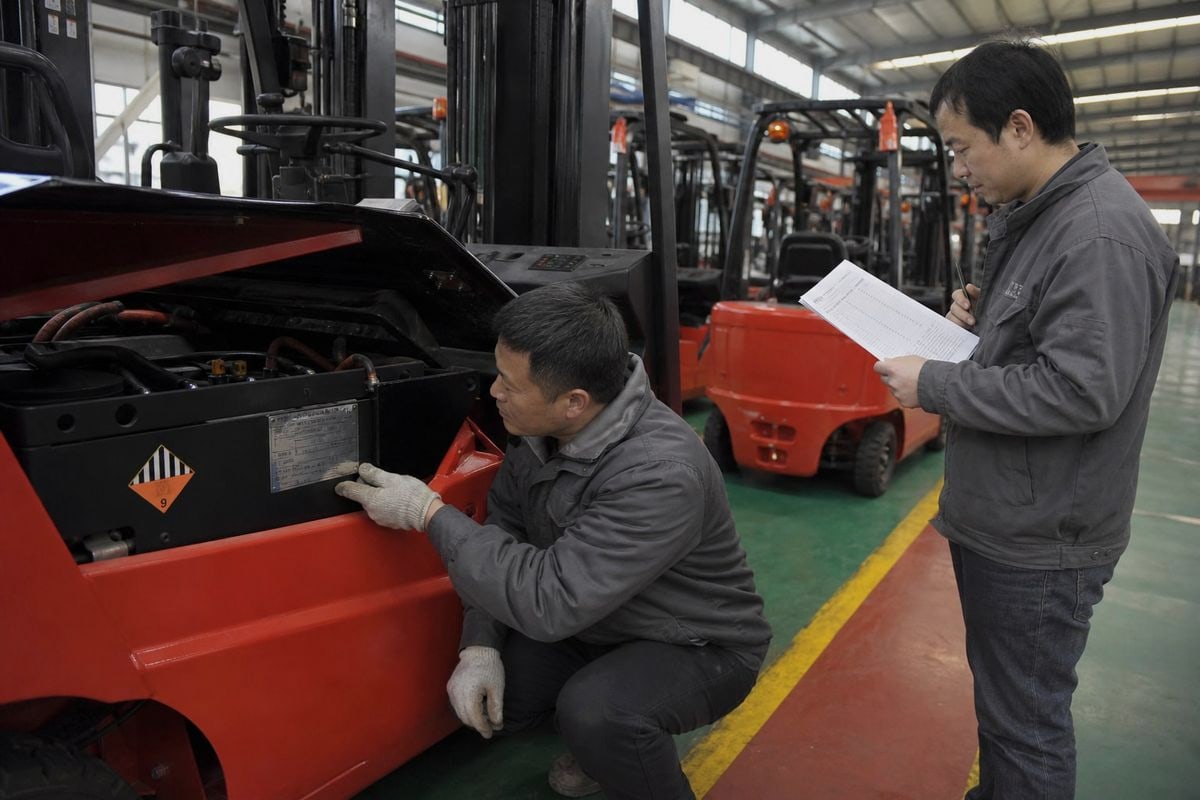
Classification is not one rule for all forklifts. It depends on three things: the battery chemistry, whether the battery is installed, and the current edition of the IMDG Code. I have seen shippers copy an old declaration that used UN 3171 Battery-powered vehicle, only to have the carrier reject it because Amendment 42-24 made UN 3556 the mandatory entry for lithium-ion powered vehicles. Both entries describe similar cargo, but the Proper Shipping Name 2 must match the entry currently in force. This is the ambiguity you see all over the internet, and it is why online guides disagree.
Your configuration determines your entry. Here is how we break it down for our customers before every booking:
| Shipping Scenario | Likely UN Number | Proper Shipping Name | Class |
|---|---|---|---|
| Forklift with lithium-ion battery installed | UN 3556 | Vehicle, lithium ion battery powered | Class 9 |
| Lithium-ion battery packed with the forklift (not installed) | UN 3481 | Lithium ion batteries packed with equipment | Class 9 |
| Spare lithium-ion battery shipped alone | UN 3480 | Lithium ion batteries | Class 9 |
| Forklift with battery removed entirely | Often not regulated as DG | Standard machinery cargo | N/A |
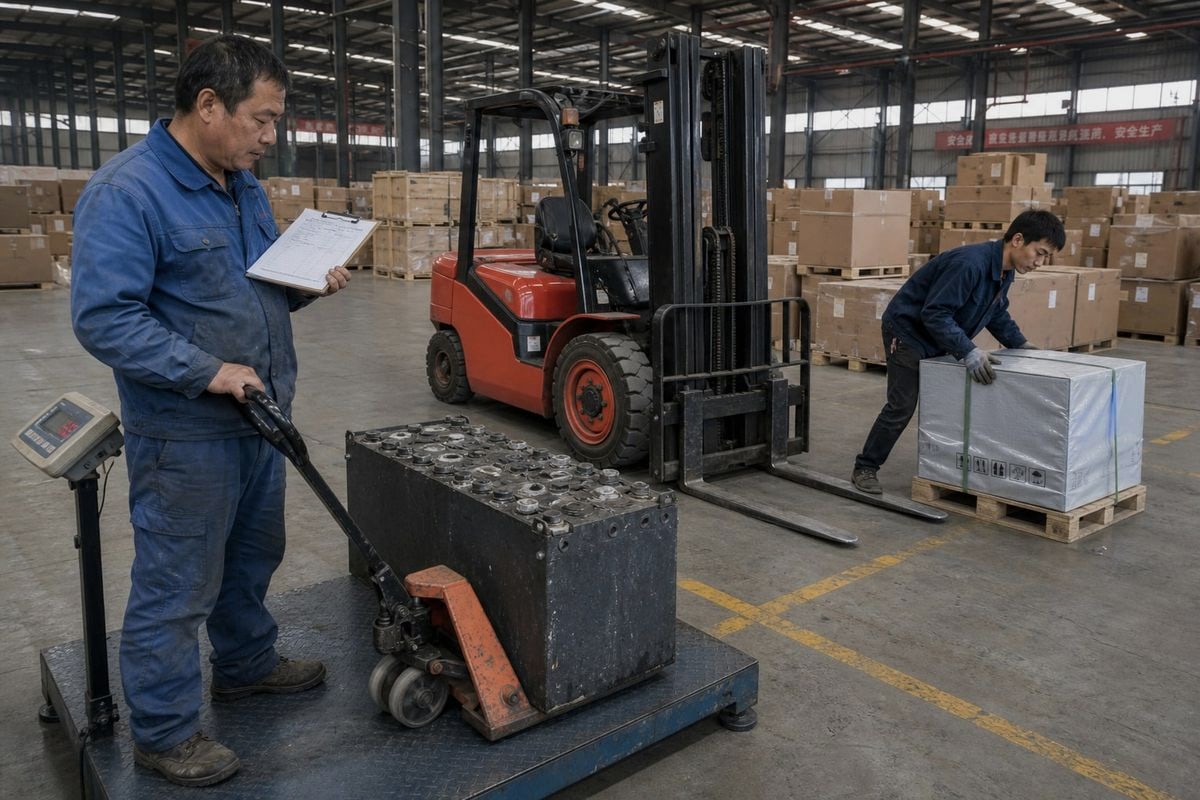
Most forklift traction batteries far exceed 100 Wh, so they are fully regulated. Special Provision 188 offers relief only for small cells and batteries, which is relevant for small accessories, not a traction battery that may exceed 20 kWh. Do not let a supplier tell you the forklift qualifies for a small-battery exemption. In our checks before pickup, we always confirm the Wh rating in writing from the factory, because that number drives everything downstream.
A buyer in Texas once asked me why his forklift needed more paperwork than a container of furniture. My honest answer: because one incomplete document can strand Class 9 cargo at either port.
You need a Dangerous Goods Declaration with the Proper Shipping Name, UN number, and emergency contact; a UN 38.3 test summary for the exact battery model; a Safety Data Sheet; a container packing certificate; plus the commercial invoice, packing list, and bill of lading.
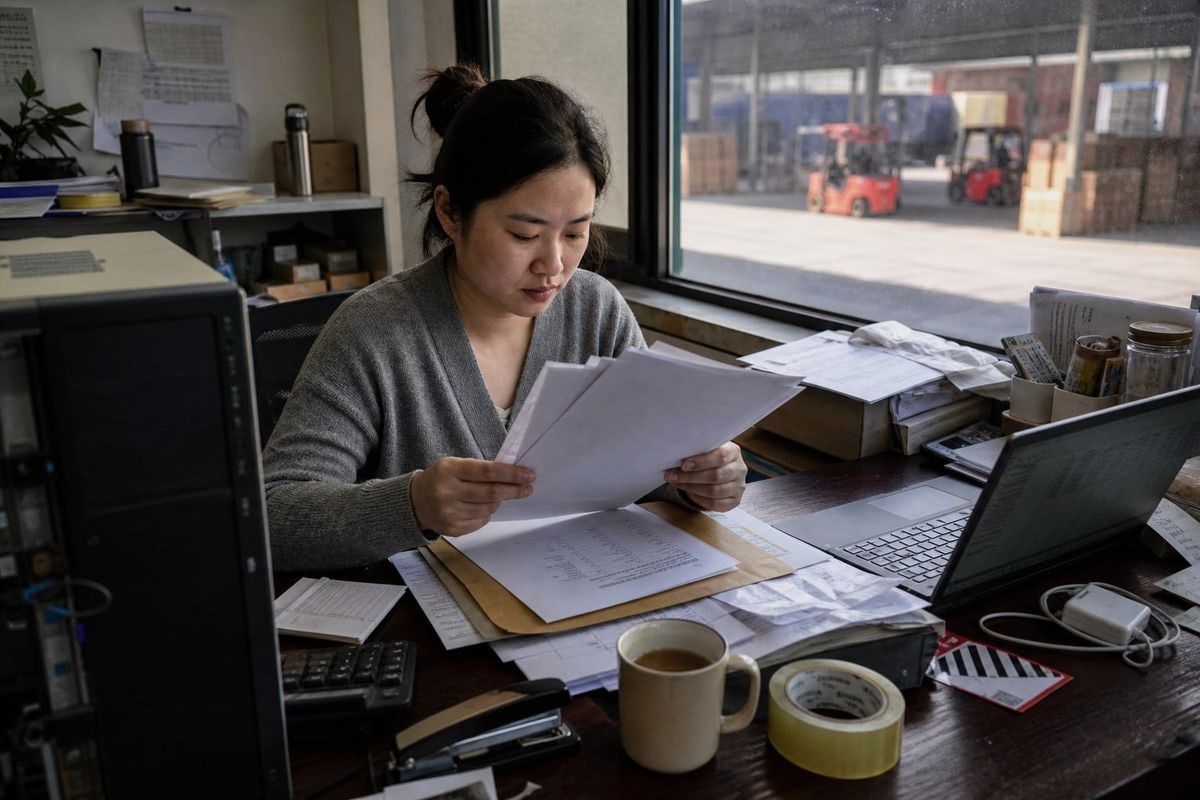
Documentation is where carriers screen out risky shipments before they ever load. In our door-to-door work between Chinese factories and US importers, we collect and cross-check every document before the container leaves the factory yard. The reason is simple. Carriers now demand advance submission of DG paperwork, and a mismatch between the battery model on the UN 38.3 test summary and the model actually inside the forklift is grounds for rejection.
Here is something many buyers miss. Forklifts fitted with second-life or refurbished batteries need a completely new UN 38.3 certification. The original manufacturer's test data becomes legally void once cells are modified or re-potted. We now ask every supplier directly whether the battery pack is new-build or refurbished before we accept the booking.
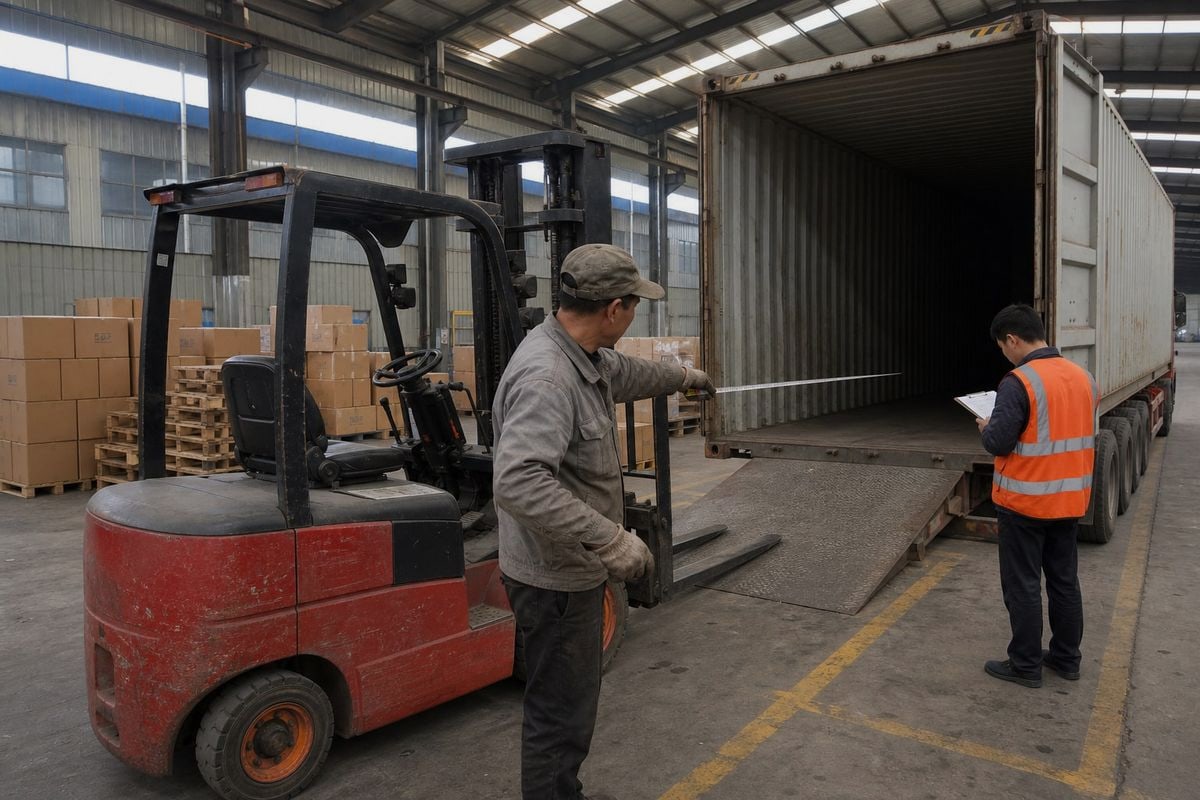
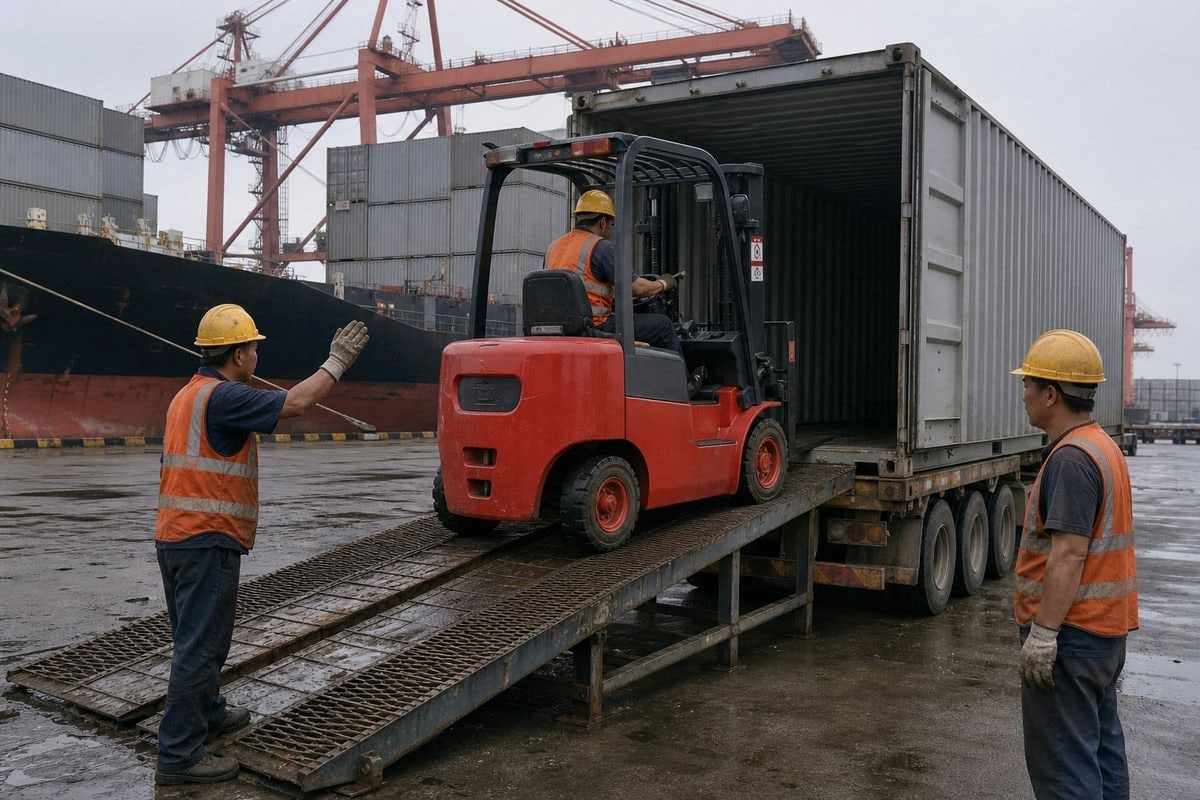
There is always a trade-off we weigh at loading: maximize container utilization, or leave room for the lashing and blocking that keeps a three-ton machine from shifting in heavy sea states. Safety wins every time.
The IMDG Code requires the forklift to be secured against movement, its battery fastened and protected from short circuits and accidental activation, Class 9 IMO hazard labels applied with UN number markings, and the container placarded, unless Special Provisions 961 or 962 grant relief.

For a whole forklift, packaging is less about boxes and more about securing. Loose spare batteries follow packing instructions built around combination packaging with non-metallic inner packagings and UN-specification outers, and older bookings often referenced Packing Instruction 952 for battery-powered equipment. But a forklift shipped as a vehicle follows vehicle-specific provisions. The battery must be securely fastened within the forklift's chassis so it cannot move or suffer impact damage during rough seas. Terminals must be protected against short circuits. The machine itself must be blocked, braced, and lashed inside the container.
These two provisions change everything about marks and labels, so check them before you print anything:
| Provision | When It Applies | What Relief It Gives |
|---|---|---|
| SP 961 | Forklift carried on a RoRo vessel, battery secured and undamaged | Full exemption from IMDG regulations |
| SP 962 | Forklift does not meet SP 961 but is protected against short circuits and accidental activation | Relief from certain marking and labeling requirements |
| Neither applies | Standard containerized DG shipment | Full Class 9 labels, UN number marks, and container placarding required |
Beyond labels, we prepare the machine itself. Advanced Battery Management Systems should be set to a dedicated Shipping Mode or Deep Sleep to electronically isolate the cells and prevent parasitic drain during a long Pacific crossing. Many major carriers now also enforce a maximum State of Charge of 30% for industrial vehicles to reduce thermal runaway risk, mirroring strict air freight standards. State of charge limits vary by carrier and IMDG edition 4, so we confirm the rule on every booking rather than assume. Finally, stowage and segregation requirements determine where the container sits on the vessel, which is one more reason accurate declaration matters.
The hardest call I ever made to a customer was explaining that his forklift was stuck at port over a mislabeled battery. Since then, our team runs a pre-booking compliance check on every single lithium battery forklift shipment.
Yes. You can avoid rejections by verifying the correct UN number under the current IMDG amendment, securing carrier DG approval before booking, submitting the UN 38.3 test summary and DGD in advance, reducing the state of charge, and never shipping damaged or defective batteries.

Rejections almost always trace back to a handful of preventable mistakes. Carriers have tightened acceptance because a lithium fire at sea is catastrophic, so they now scrutinize every Class 9 booking. The good news is that a disciplined process removes nearly all the risk. Here is the checklist we run in Zhengzhou before any forklift container gets a booking confirmation.
| Step | What We Verify | Why It Matters |
|---|---|---|
| 1. Battery data | Chemistry, Wh rating, installed or separate | Determines the UN number and Proper Shipping Name |
| 2. UN entry | UN 3556, 3481, or 3480 under the current amendment | Wrong entry means automatic carrier rejection |
| 3. UN 38.3 evidence | Test summary matches the exact battery model | Non-negotiable prerequisite for transport |
| 4. Battery condition | No damage, defects, or recalls | DDR batteries are prohibited from standard maritime transport |
| 5. State of charge | Reduced SoC, often 30% maximum | Carrier thermal runaway policies |
| 6. DG paperwork | DGD, SDS, packing certificate submitted early | Carriers require advance approval |
| 7. Loading plan | Lashing, blocking, terminal protection, BMS shipping mode | Prevents movement and accidental activation |
| 8. Labels and placards | Class 9 labels, UN marks, container placarding | Port inspections check these visually |
Damaged, Defective, or Recalled batteries are a separate world. They are strictly prohibited from standard maritime transport and require specialized pressure-relief packaging plus individual Competent Authority approval. If a supplier offers you a discounted forklift with a questionable battery, walk away or arrange replacement before export. No freight savings justify that risk. When we consolidate forklifts, batteries, and chargers from multiple factories into one container, we inspect battery condition at our warehouse first, because one bad pack can compromise the entire consolidated shipment.
IMDG compliance for lithium battery forklifts comes down to correct classification, complete documentation, proper securing, and early carrier approval. Get those four right, and your forklift arrives on schedule, not stuck at port.
1. General overview of lithium-ion battery technology and its applications in industrial vehicles. ↩︎
2. PHMSA provides safety regulations and guidance for shipping lithium batteries as Class 9 hazardous materials. ↩︎
3. The UNECE maintains the UN Manual of Tests and Criteria used for classifying hazardous materials like batteries. ↩︎
4. Official IMO page for the IMDG Code, which regulates the maritime transport of dangerous goods. ↩︎