- +8618603825129
- [email protected]

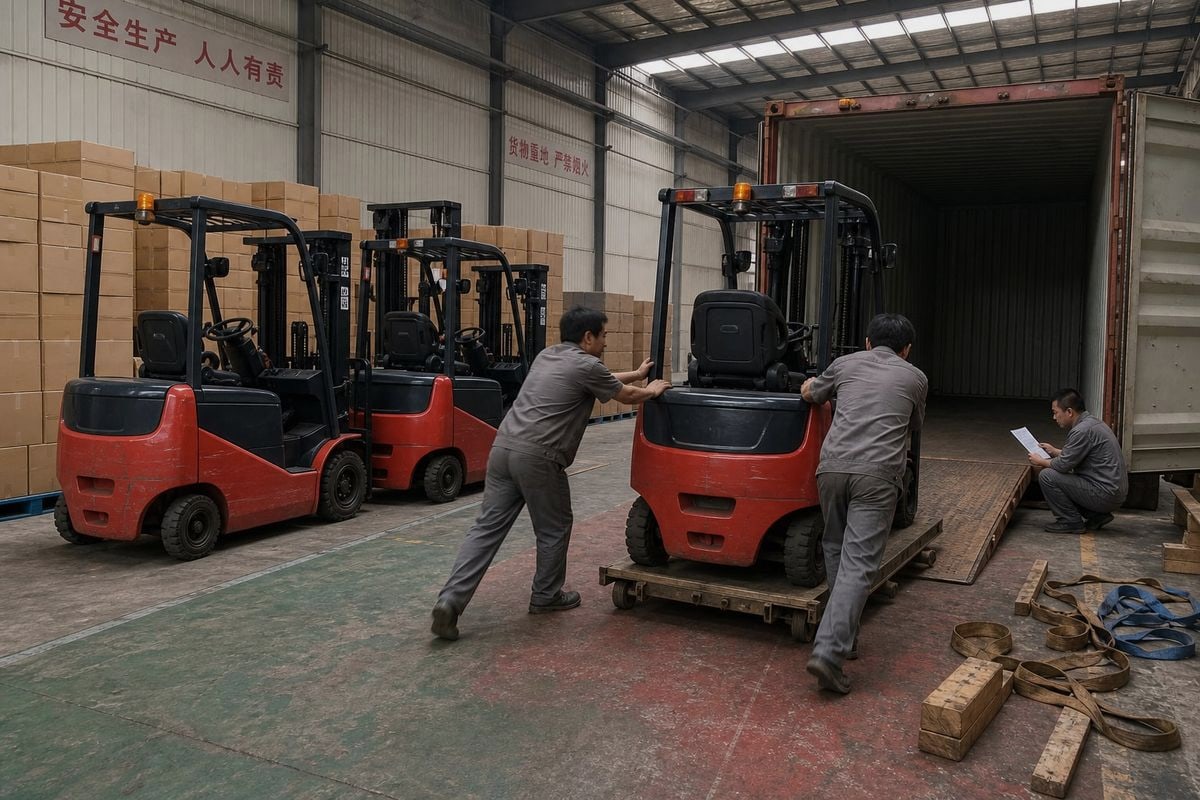
The logistics process for importing commercial forklifts from China trips up more buyers than the purchase itself. At our consolidation warehouse in Zhengzhou, we see the same costly mistakes repeat: missing battery paperwork, wrong Incoterms 1, and containers loaded so badly that masts arrive bent. One overlooked document can strand a $15,000 forklift at the port of discharge for weeks, burning demurrage fees while your customer waits. The good news is that the process follows a predictable sequence, and once you understand each stage, most of those risks disappear.
The logistics process for importing commercial forklifts from China involves factory pickup, export documentation, container loading and securing, ocean freight booking, import customs clearance with duty payment under HS code 8427, and final inland delivery. The full cycle typically takes 6 to 10 weeks after production ends.
Let me walk you through each stage in the order it actually happens. I will cover factory-to-port handling, US customs clearance, the documents you must prepare, and how to choose between [FCL and LCL shipping](https://mbmlog.com/?p=11591).
A shipment last quarter reminded me why this stage matters. The factory said the forklifts were "ready," but our pickup team found the masts still attached and no export packing done.
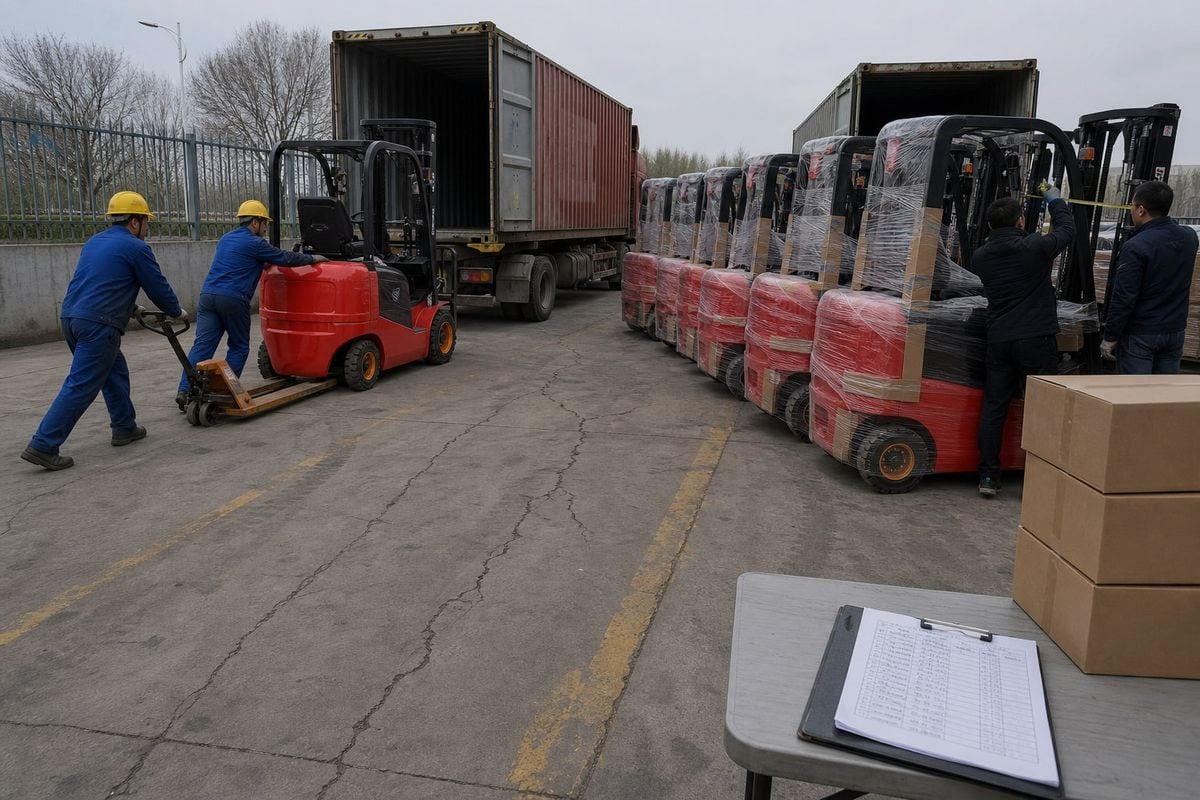
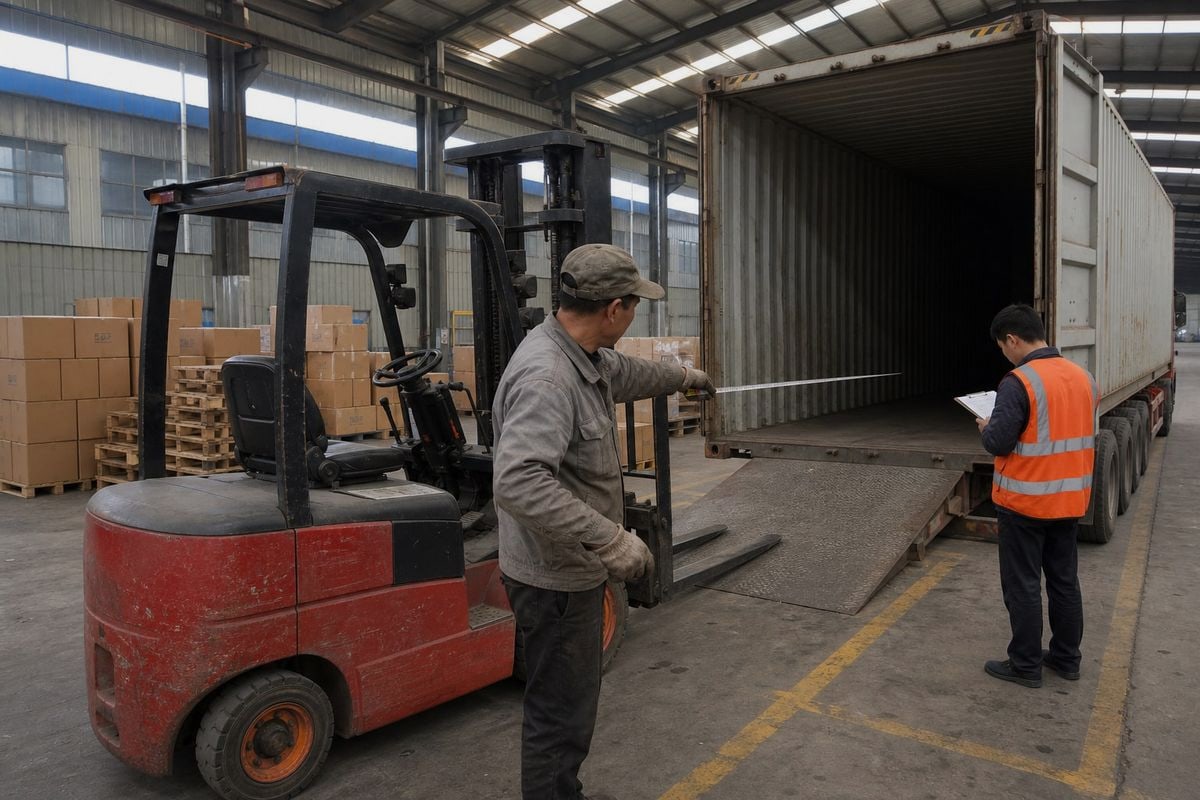
Shipping forklifts from a Chinese factory to the port involves confirming cargo readiness, partial disassembly of masts or overhead guards if needed, factory pickup by flatbed truck, container loading with blocking and bracing, export customs declaration, and delivery to the terminal before the cut-off date.
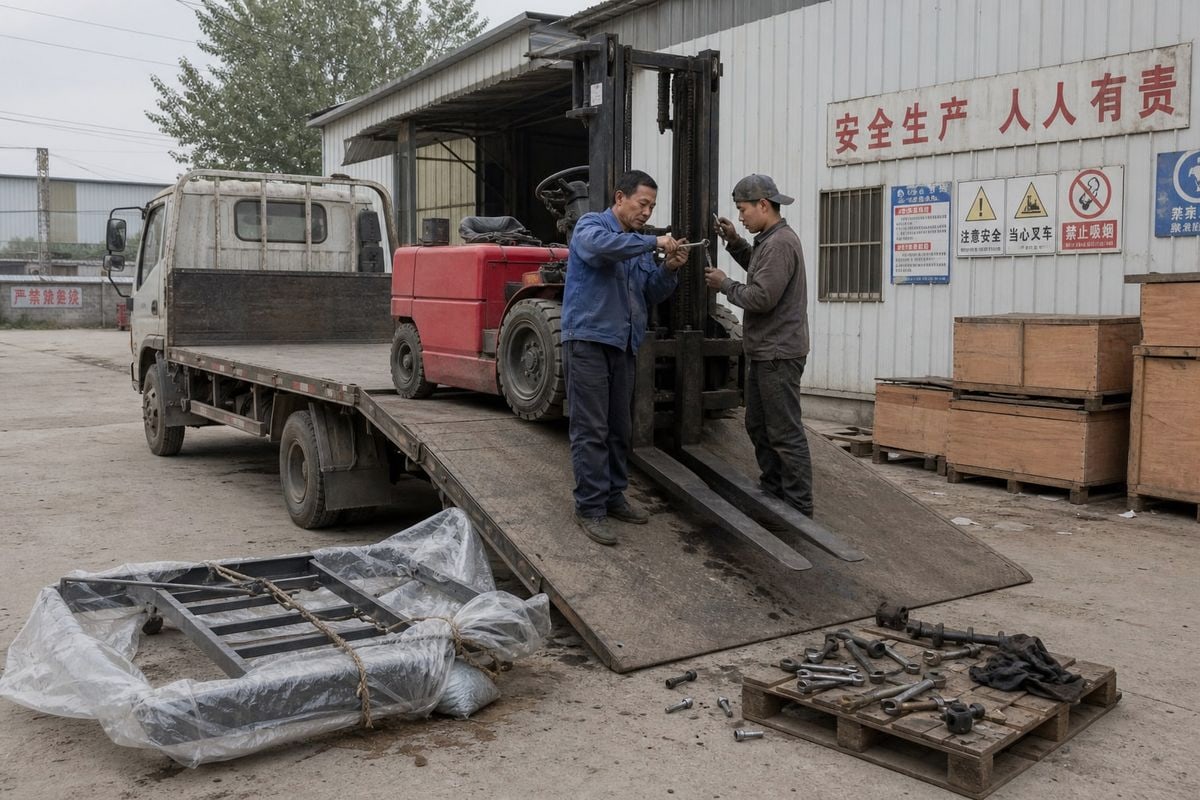
Most buyers assume the factory handles this stage well. In our experience, factories build good forklifts but often treat export logistics as an afterthought. Someone needs to own this stage, and that is usually your freight forwarder.
Here is the sequence we run for every forklift shipment out of China:
| Step | Typical Duration |
|---|---|
| Pre-shipment inspection | 1–2 days |
| Disassembly and export packing | 2–4 days |
| Factory pickup and trucking | 1–3 days |
| Container loading and securing | 1 day |
| Export declaration and terminal delivery | 2–3 days |
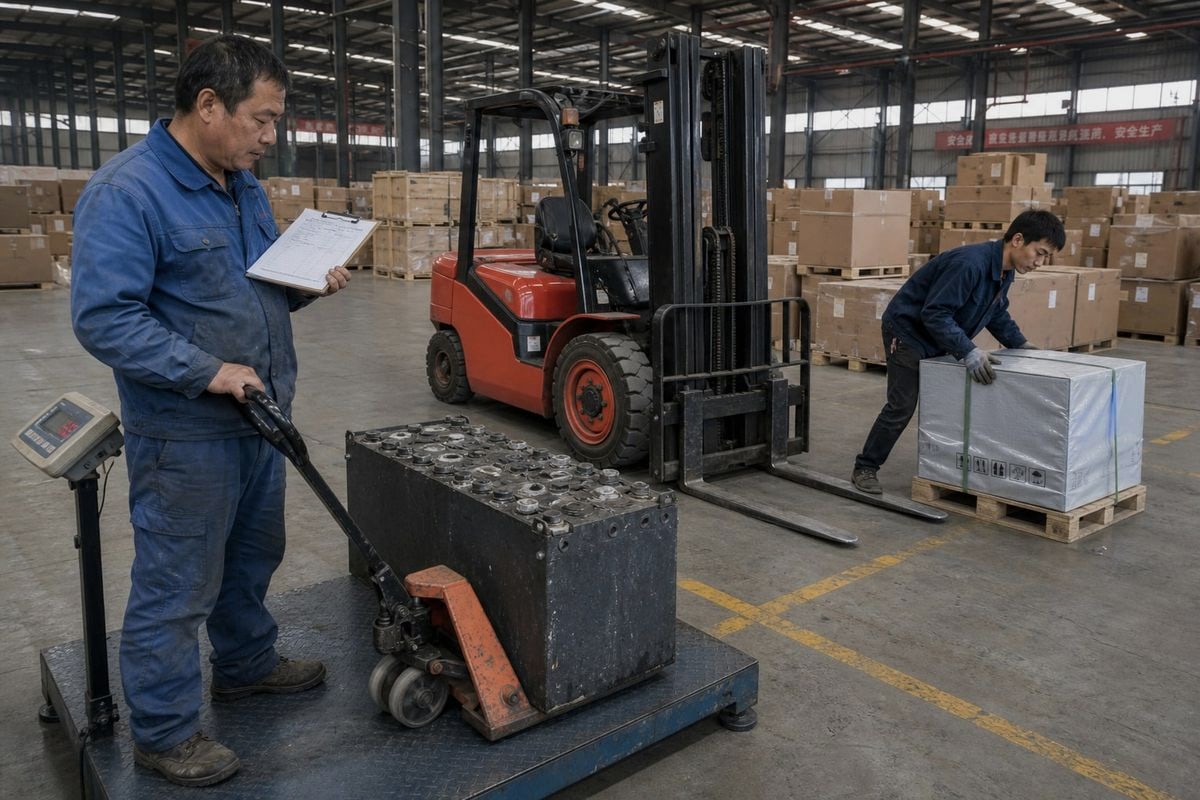
For electric forklifts, one extra step happens here: the factory must set the lithium battery State of Charge to 30% or less before loading. Ocean carriers enforce this fire-prevention rule strictly, and we verify it before the container is sealed.
The US is our primary shipping lane, and customs clearance is where an importer's real landed cost gets decided. I have watched a two-percent classification error turn into a five-figure duty bill.
To clear forklifts through US customs, file an import entry through a licensed customs broker under HS code 8427.10 for electric units or 8427.20 for diesel, pay the base duty plus applicable Section 301 tariffs, hold a customs bond, and submit the commercial invoice, packing list, and Bill of Lading.
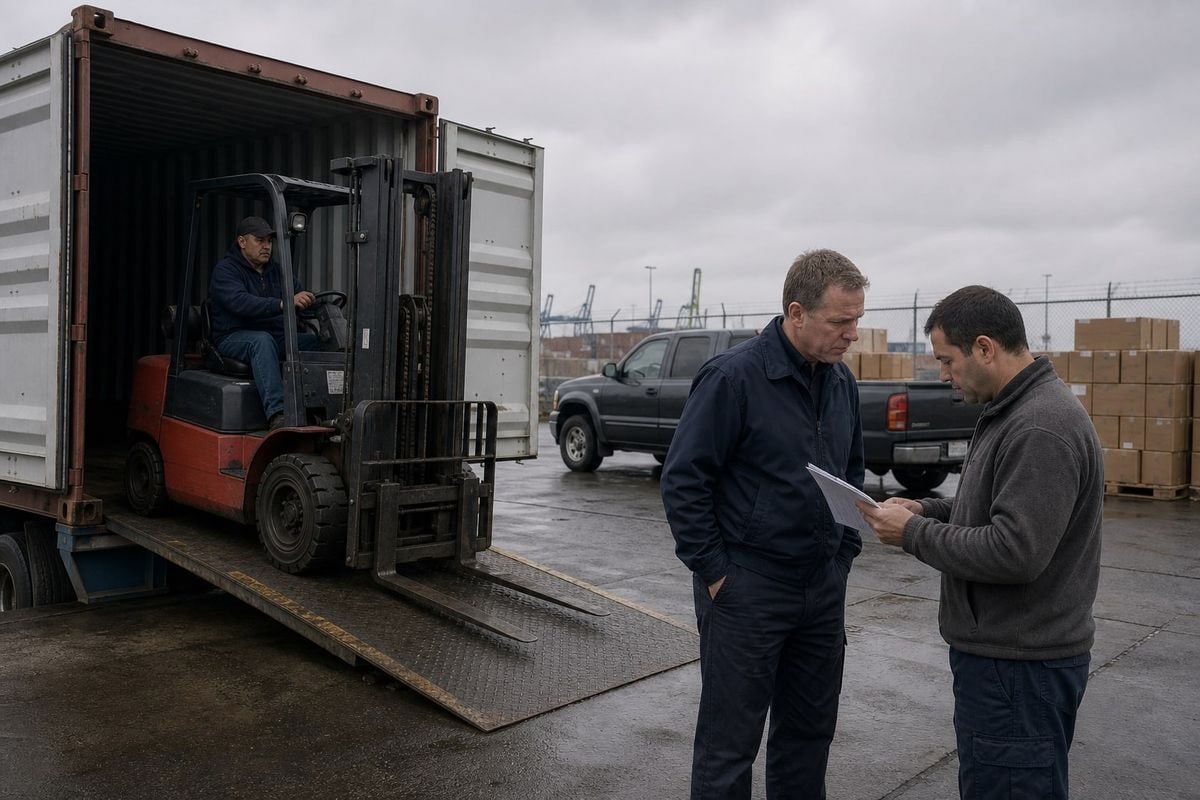
Customs clearance is not a single event. It is a sequence: pre-arrival preparation, document submission, duty payment, possible examination, and release. Importers who treat it as a formality at the end are the ones who pay demurrage.
Classification drives everything. Self-propelled electric forklifts fall under HS code 8427.10 3, while diesel and internal-combustion units fall under 8427.20. Because these goods originate in China, Section 301 tariffs apply on top of the base duty rate. You should confirm the exact classification and check whether any active duty exclusions apply before you place the order, not after the vessel sails. A wrong code can trigger reclassification, penalties, and an examination hold.
Your customs broker can file the entry up to five days before the vessel arrives at the port of discharge. Pre-filing is the cheapest insurance against delay. If US Customs selects the container for examination, heavy machinery exams take longer than average, and the container sits at the terminal accumulating charges. This is why we advise every buyer to build a landed cost buffer that covers currency swings and potential port demurrage caused by customs examination.
| Cost Item | Who Typically Pays | Notes |
|---|---|---|
| Base import duty | Importer | Rate depends on HS code 8427 subheading |
| Section 301 tariff | Importer | Applies to China-origin machinery |
| Merchandise Processing Fee | Importer | Percentage of entry value |
| Harbor Maintenance Fee | Importer | Ocean shipments only |
| Customs brokerage | Importer | Entry filing and bond handling |
| Exam fees / demurrage | Importer | Only if inspection is triggered |
One more point for diesel units: EPA compliance matters. Internal-combustion forklift engines must meet US emissions requirements, and non-compliant engines can be refused entry entirely. Electric forklifts sidestep this issue, which is one reason many of our US dealer clients have shifted their orders toward lithium models.
Before we book any electric forklift shipment, our team runs a document check against the carrier's battery requirements. That habit came from an early lesson: a carrier rejected a booking at the port because one battery test report was missing.
To import forklifts from China without delays, you need a commercial invoice, packing list, Bill of Lading, and certificate of origin. Electric forklifts additionally require a UN38.3 battery test report, MSDS/SDS, and an IMDG dangerous goods declaration for carrier acceptance.
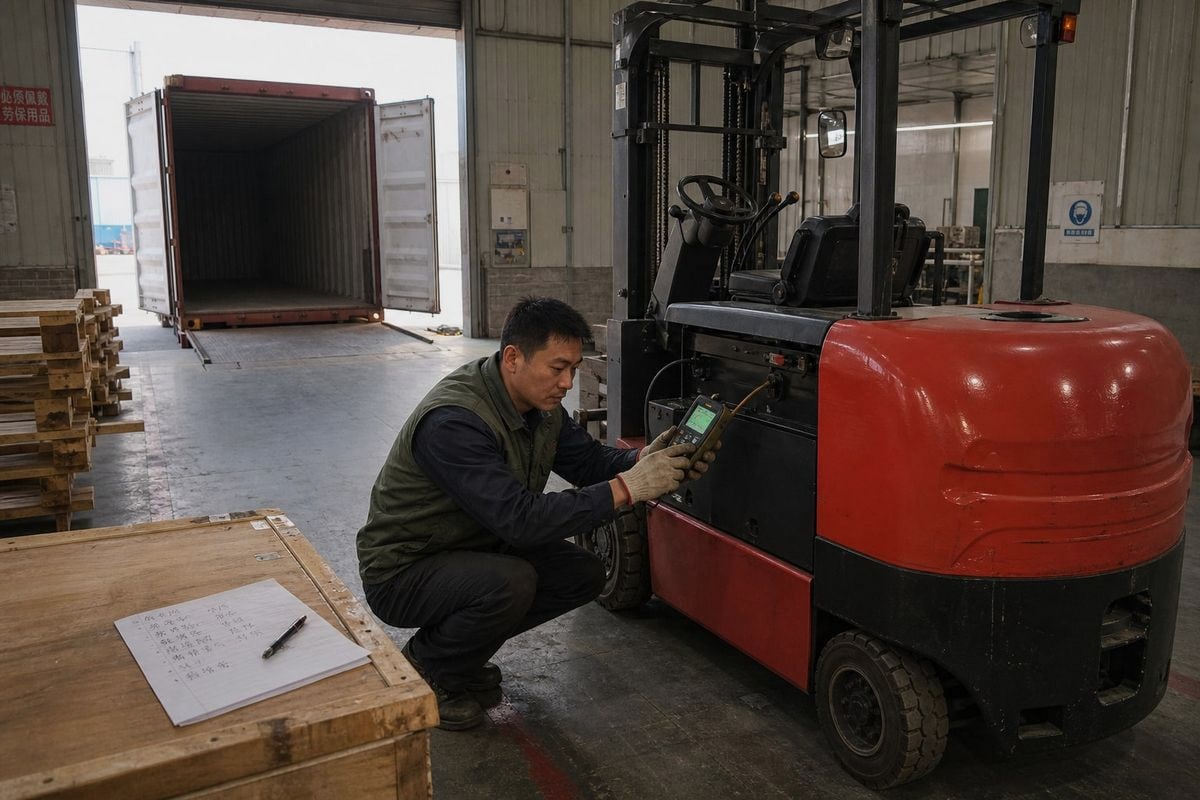
The biggest documentation mistake is timing. Most delays happen because paperwork gets prepared after the goods are ready, instead of during production. We start collecting documents from the factory the week the order is confirmed.
Every forklift shipment needs four base documents. The commercial invoice states the transaction value that customs uses to calculate import duties. The packing list details each unit's weight and dimensions, which carriers and truckers rely on. The Bill of Lading is the contract of carriage and the key to releasing cargo at destination. The certificate of origin supports the duty treatment claimed at entry. All four must match each other exactly. A weight discrepancy between the packing list and the Bill of Lading is enough to flag a customs hold.
Lithium battery forklifts are classified as Class 9 Dangerous Goods 4 under maritime rules. That classification triggers a second document layer:
| Document | Purpose | When to Prepare |
|---|---|---|
| UN38.3 test report | Proves the battery passed transport safety testing | Request from factory at order confirmation |
| MSDS / SDS | Chemical safety data for the battery | During production |
| IMDG dangerous goods declaration | Required for ocean carrier acceptance | Before booking confirmation |
| Battery SoC confirmation | Verifies charge is at or below 30% | Before container loading |
Carriers run their own battery approval process on top of these documents, and approval can take extra days. We submit the DG paperwork at booking, not at loading, so acceptance is confirmed before the forklifts ever leave the factory. If your forwarder cannot explain the IMDG requirements for your specific battery type, that is a warning sign. We also recommend marine insurance documentation be arranged in this same window, since insurers want accurate cargo values and battery details up front.
A US dealer once asked me to quote LCL for a single 3-ton forklift to save money. After we ran the numbers on its weight and footprint, FCL in a 20FT container was actually cheaper and far safer.
Choose FCL shipping for most commercial forklift orders, because forklifts are heavy, dense cargo that fills container weight limits quickly and risks damage in shared containers. LCL only makes sense for spare parts, chargers, or a single small pallet truck.
This decision looks like a simple cost question, but it is really a risk and utilization question. Here is how the two options compare for material handling equipment:
| Factor | FCL (Full Container Load) | LCL (Consolidation) |
|---|---|---|
| Best for | 1+ full-size forklifts | Spare parts, chargers, small stackers |
| Damage risk | Low — cargo secured once, untouched in transit | Higher — shared handling at both ends |
| Cost logic | Flat container rate | Charged per cubic meter, heavy cargo penalized |
| Lithium battery units | Accepted with DG approval | Often restricted by consolidators |
| Transit predictability | Direct, fewer touchpoints | Extra deconsolidation time at destination |
A standard counterbalance forklift weighs 2 to 4 tons. LCL pricing punishes dense cargo, and consolidators frequently refuse Class 9 battery equipment anyway. With FCL, you control container loading, securing, and weight distribution. A 20FT container typically takes 2 to 3 compact forklifts; a 40FT or 40HQ can take 4 to 6 with masts removed. We often fill the remaining space with chargers, batteries, and spare parts from other suppliers, which drops the per-unit freight cost noticeably. Multi-supplier consolidation into one FCL container is one of the most effective landed-cost levers a distributor has.
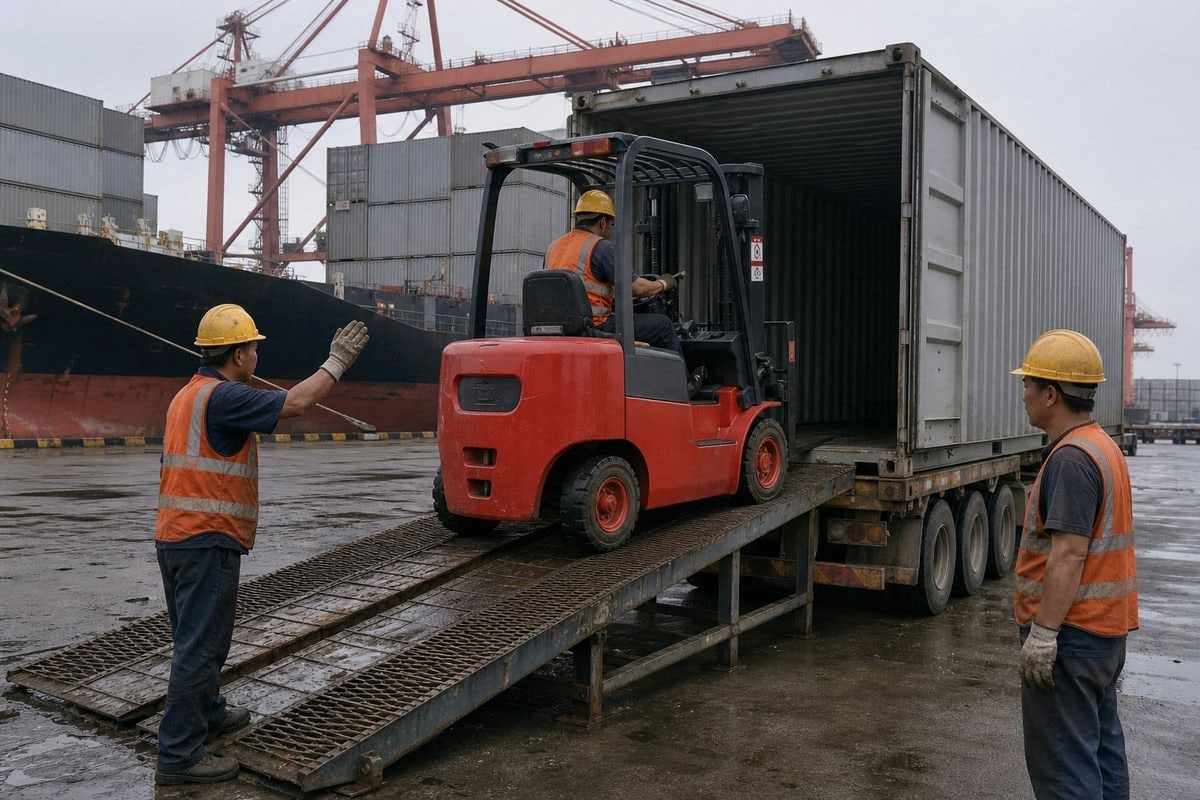
If a forklift is too tall or heavy for a standard box even after disassembly, a flat rack container is the next option. Ro-Ro shipping, where the machine is driven onto the vessel, suits very large equipment on major routes, but it offers less weather protection and fewer port pairs than container service. Some buyers also ask about the China-Europe Railway Express; for European destinations it is a real mid-tier option, faster than sea freight and cheaper than air, though it does not apply to US-bound cargo. Whatever mode you choose, your freight forwarder should run the dimensions and weights before quoting, not after.
Importing commercial forklifts from China is manageable when you control each stage: factory pickup, documentation, customs clearance, and container choice. Plan documents early, verify battery compliance, and prefer FCL.
1. ICC is the official organization that defines Incoterms for international trade and logistics. ↩︎
2. UNECE provides official guidance on trade documents like the commercial invoice for international shipping. ↩︎
3. The USITC provides the official Harmonized Tariff Schedule for classifying imported goods. ↩︎
4. The IMO provides official standards for the maritime transport of dangerous goods. ↩︎