- +8618603825129
- [email protected]


Shipping requirements for lithium forklift batteries confuse many first-time importers lithium ion batteries 1. At our Zhengzhou logistics center, we see battery shipments delayed at port simply because one document was missing.
Lithium forklift batteries must ship as Class 9 dangerous goods with UN 38.3 test certification, UN-rated packaging, correct UN numbers (UN3480 or UN3481), lithium battery handling labels, a Dangerous Goods Declaration, and a Safety Data Sheet. Air shipments also require a 30% State of Charge limit.
That is the short answer. But the details decide whether your cargo sails on schedule or sits at the port. Let me walk you through each requirement, step by step.
Last spring, a US forklift dealer sent us a booking with a perfect commercial invoice but no UN 38.3 test summary. Our team caught it three days before the cutoff.
To ship lithium forklift batteries from China, you need a UN 38.3 Test Summary, a Safety Data Sheet (SDS), a Dangerous Goods Declaration (DGD), a commercial invoice, a packing list, and battery specification documents showing the Watt-hour (Wh) capacity and UN classification.
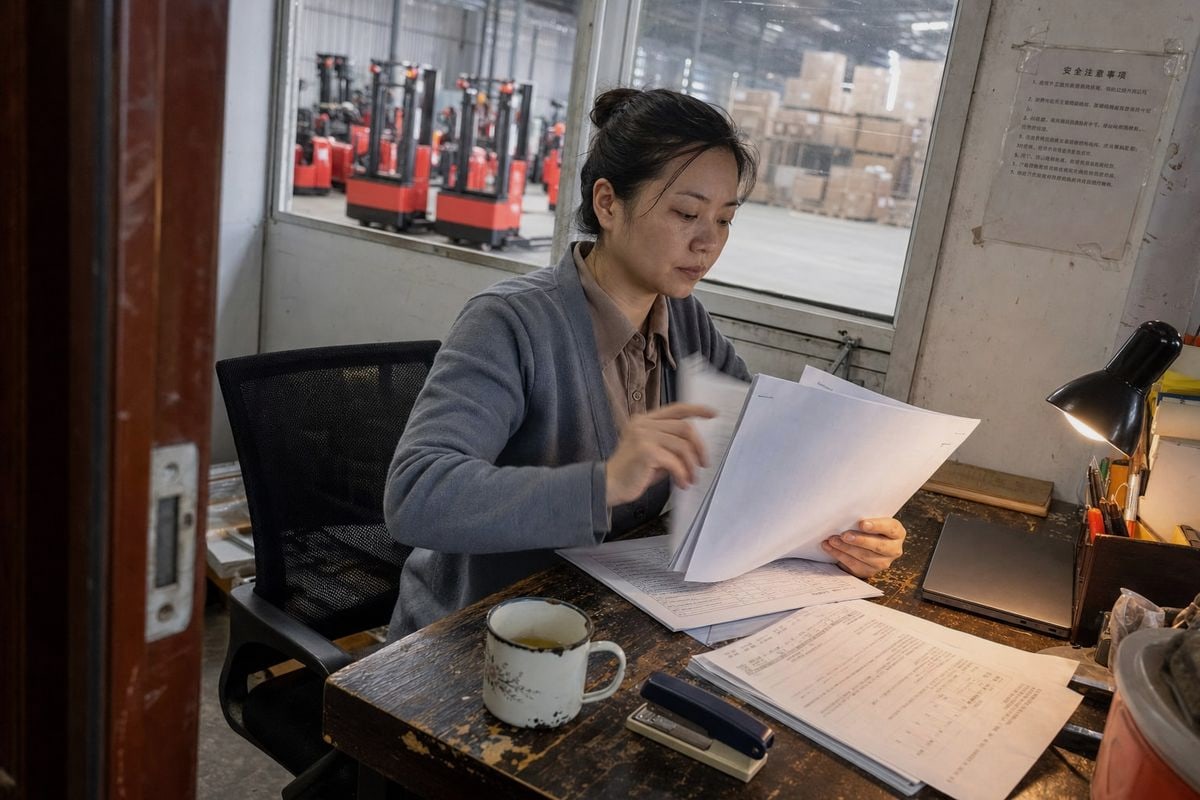
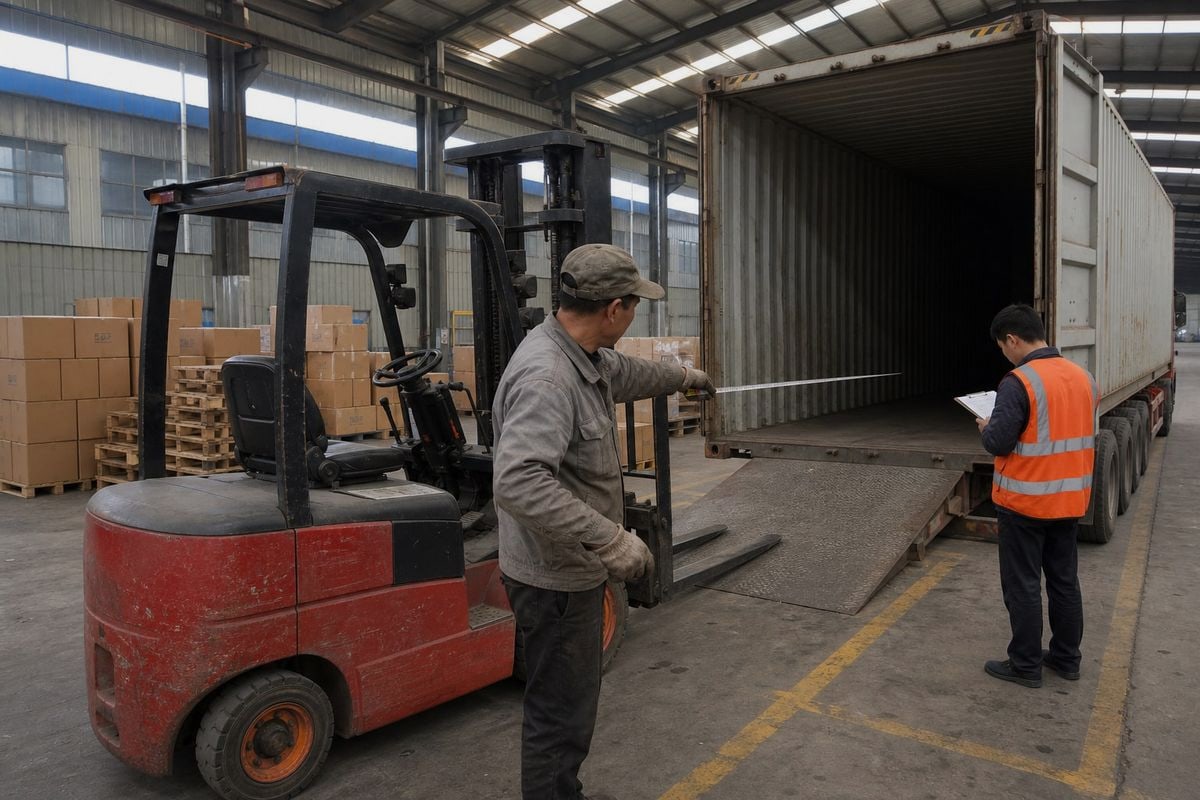
Documentation is where most battery shipments fail. In our experience coordinating forklift exports from Chinese factories, the paperwork must be complete and consistent before the cargo ever leaves the factory floor. Carriers will reject a booking if one document contradicts another.
The UN 38.3 Test Summary is the foundation. Every lithium forklift battery must pass eight rigorous safety tests, including altitude simulation, thermal cycling, and vibration, before it can be legally offered for transport. The battery factory should provide this summary. If they cannot, the battery cannot ship legally by any mode.
The Safety Data Sheet (SDS) describes the battery chemistry, hazards, and emergency measures. The Dangerous Goods Declaration 2 (DGD) is the formal statement to the carrier that the shipment complies with the applicable rules. For ocean freight, the DGD follows IMDG maritime regulations 3. For air, it must match the IATA dangerous goods regulations and the correct packing instruction.
| Document | Who provides it | Why carriers require it |
|---|---|---|
| UN 38.3 Test Summary | Battery manufacturer | Proves the battery passed all eight transport safety tests |
| Safety Data Sheet (SDS) | Battery manufacturer | Details chemistry, hazards, and emergency response |
| Dangerous Goods Declaration | Shipper / forwarder | Formal hazmat declaration required for booking acceptance |
| Commercial invoice & packing list | Supplier / exporter | Customs clearance and cargo verification |
| Battery spec sheet with Wh rating | Battery manufacturer | Confirms Watt-hour (Wh) capacity and classification |
One more point that surprises many buyers: everyone who prepares, packs, or documents these hazardous materials shipping papers must have certified dangerous goods training. We handle this on the China side so our customers do not need their own hazmat-trained staff here. Before every departure, we cross-check the invoice, the SDS, and the DGD against the actual battery labels. A mismatch in the Wh rating between documents is enough to trigger a customs hold.
A common question from our US forklift distributor clients is why their battery shipment costs more than the forklift itself to book. The answer starts with classification.
Lithium forklift batteries are classified as Class 9 Miscellaneous Dangerous Goods. Standalone batteries ship under UN3480 lithium ion batteries, while batteries installed in or packed with the forklift ship under UN3481. The classification determines packaging, labeling, documentation, and carrier acceptance rules.
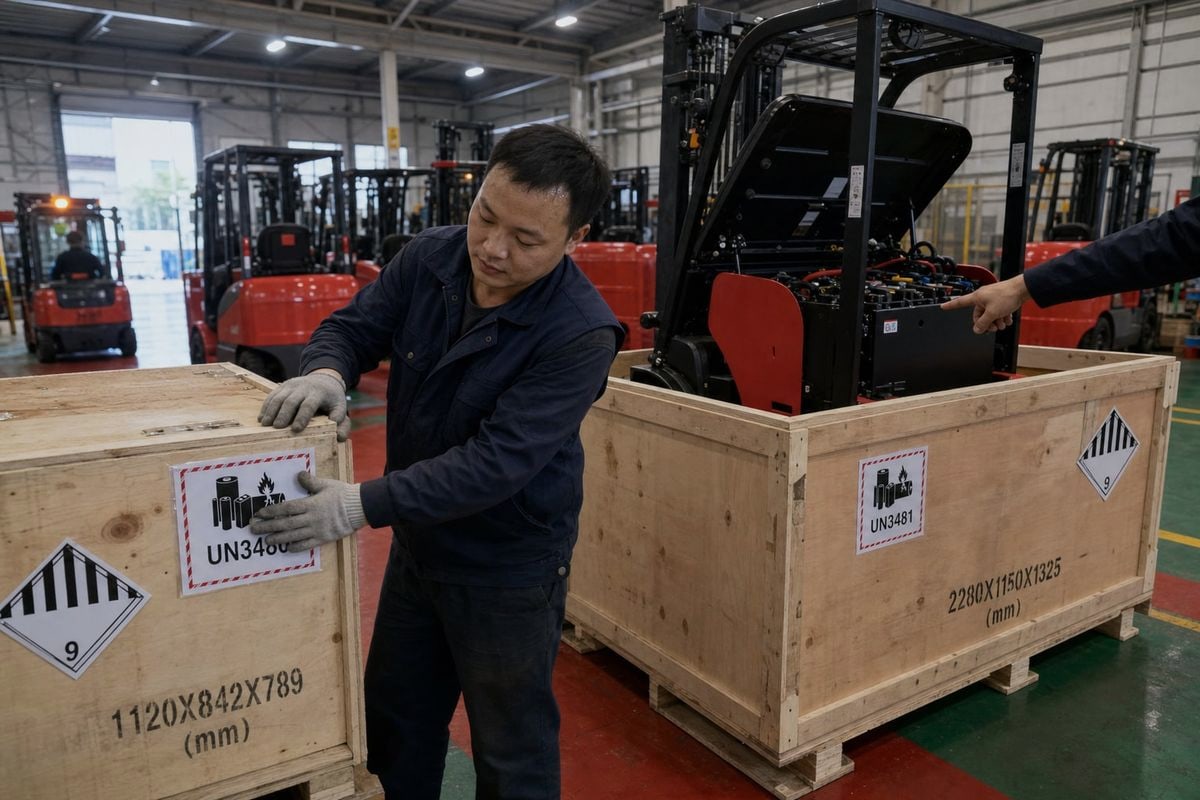
Classification is not just a label. It drives every downstream decision. When we quote a battery shipment, the first question we ask the factory is whether the battery ships inside the forklift, packed with it, or on its own.
| UN Number | What it covers | Typical scenario |
|---|---|---|
| UN3480 | Standalone lithium-ion batteries | Spare or replacement forklift batteries shipped alone |
| UN3481 (contained in) | Batteries installed in equipment | Lithium forklift shipped with battery inside |
| UN3481 (packed with) | Batteries shipped alongside equipment | Forklift plus a spare battery in the same crate |
The distinction matters. UN3480 standalone batteries face the strictest rules, including the 30% State of Charge (SoC) limit for air transport. UN3481 batteries contained in equipment often face slightly lighter handling requirements, though they remain Class 9 dangerous goods.
Some buyers read carrier guides and assume the simplified rules for consumer batteries apply. They do not. Those exemptions cover small batteries under low Watt-hour thresholds. A lithium forklift battery is a large-format industrial pack, often several hundred amp-hours. It requires full dangerous goods handling under DOT 49 CFR compliance for US domestic legs, IMDG maritime regulations for ocean, and IATA rules for air.
One more classification note worth raising: some industry commentary suggests future solid-state forklift batteries may be de-classified as non-hazardous because they lack flammable liquid electrolytes. That shift has not happened yet. Today, every lithium-ion forklift battery we handle ships as Class 9, full stop.
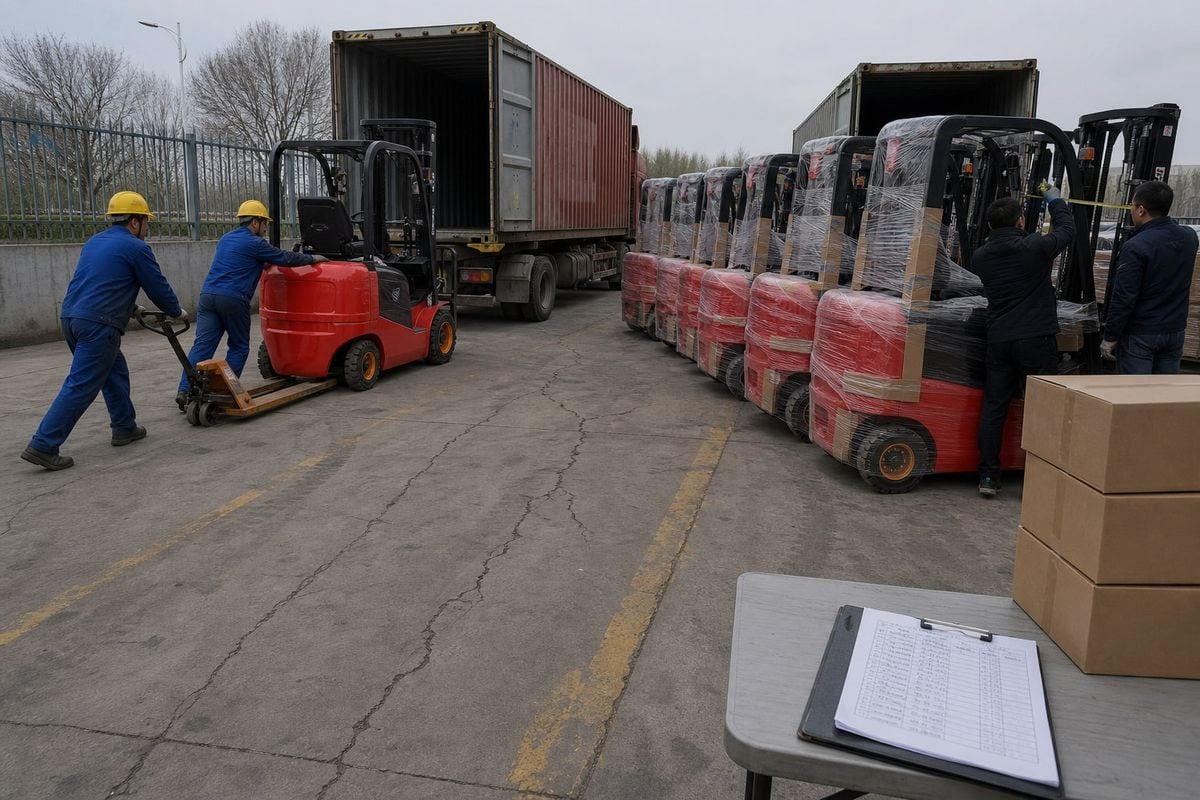
We recently loaded a 40HQ container for a Texas dealer with four lithium forklifts and two spare battery packs consolidated from a second factory. Yes, it can be done — with conditions.
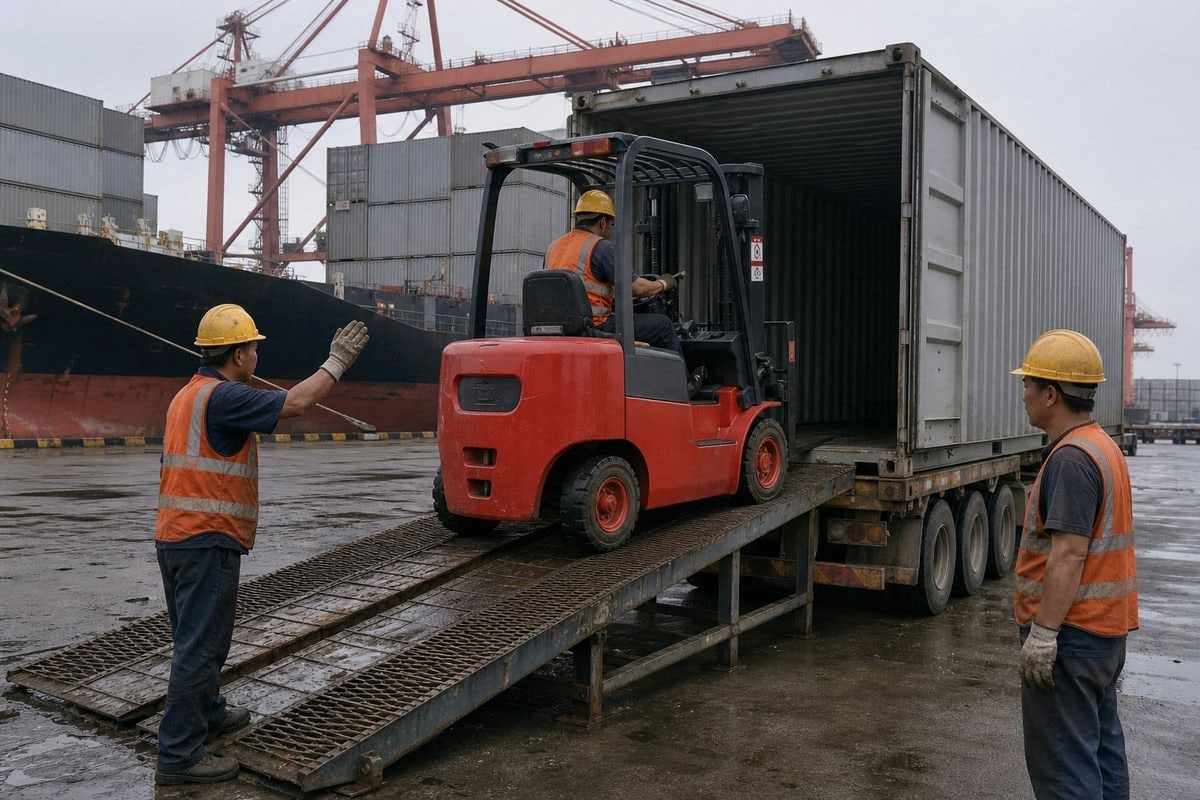
Yes, forklifts and lithium batteries can ship together in one container by ocean freight, provided the batteries are properly declared under UN3481 or UN3480, secured against movement, kept away from flammable cargo, and covered by a single compliant Dangerous Goods Declaration for the container.
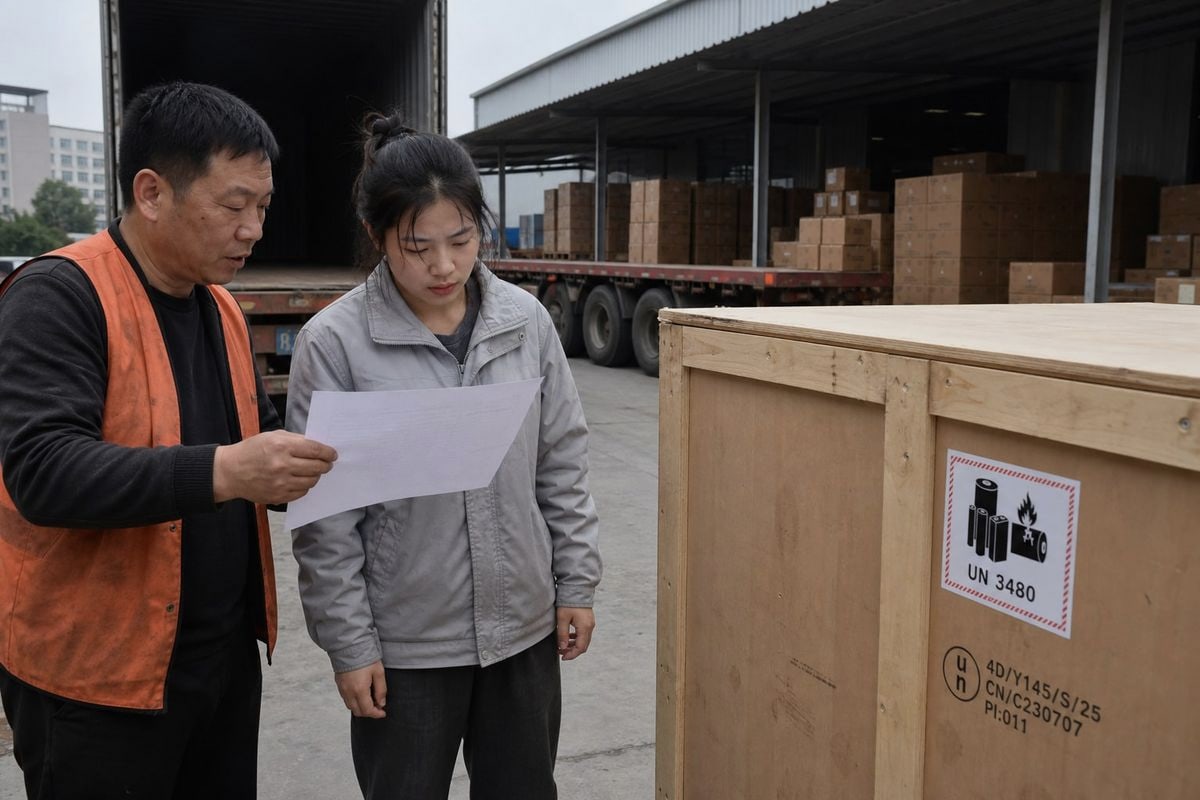
This is one of the most practical questions our customers ask, because combining cargo directly cuts the logistics cost per forklift. But it must be planned before loading, not improvised at the warehouse.
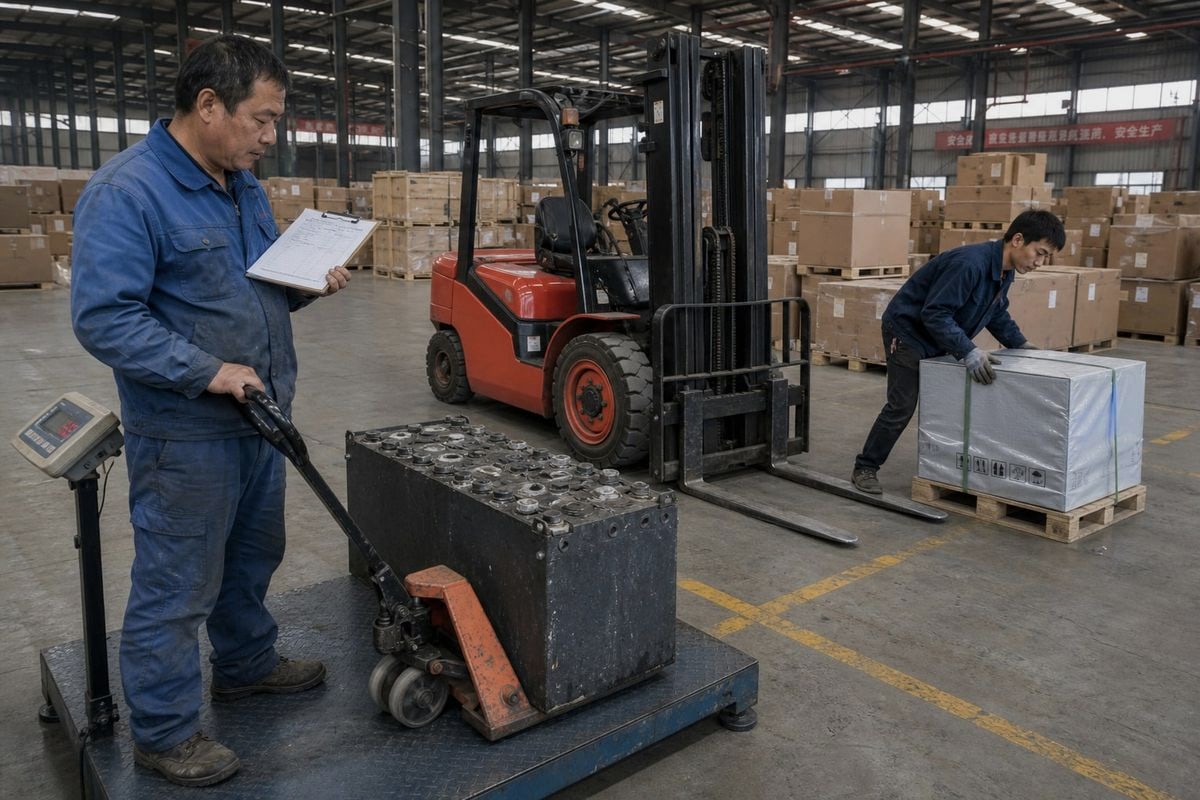
Weight distribution deserves special attention. A lithium forklift battery can weigh several hundred kilograms on its own. If spare packs shift during ocean transit, they can crush crates or damage the forklift masts. We use lashing, dunnage, and floor blocking on every battery consolidation we handle.
There is also an emerging commercial consideration. Some cargo insurers now apply what amounts to shadow regulations that go beyond federal law, such as requiring segregation distances from flammable materials or GPS-enabled thermal sensors on high-value industrial battery cargo. Meeting the transport code is the legal floor. Meeting your insurer's terms protects your claim if something goes wrong. We flag these insurance conditions during quoting so our customers are not surprised after loading.
The costliest rejection I have seen involved a battery crate with no Class 9 label and a hand-written UN number. The terminal refused it on the spot.
Lithium forklift batteries require UN-rated packaging that prevents short circuits, crushing, and movement, plus Class 9 lithium battery handling labels, the correct UN number marking, and the Watt-hour rating on the casing. Air shipments also need a Cargo Aircraft Only label where applicable.
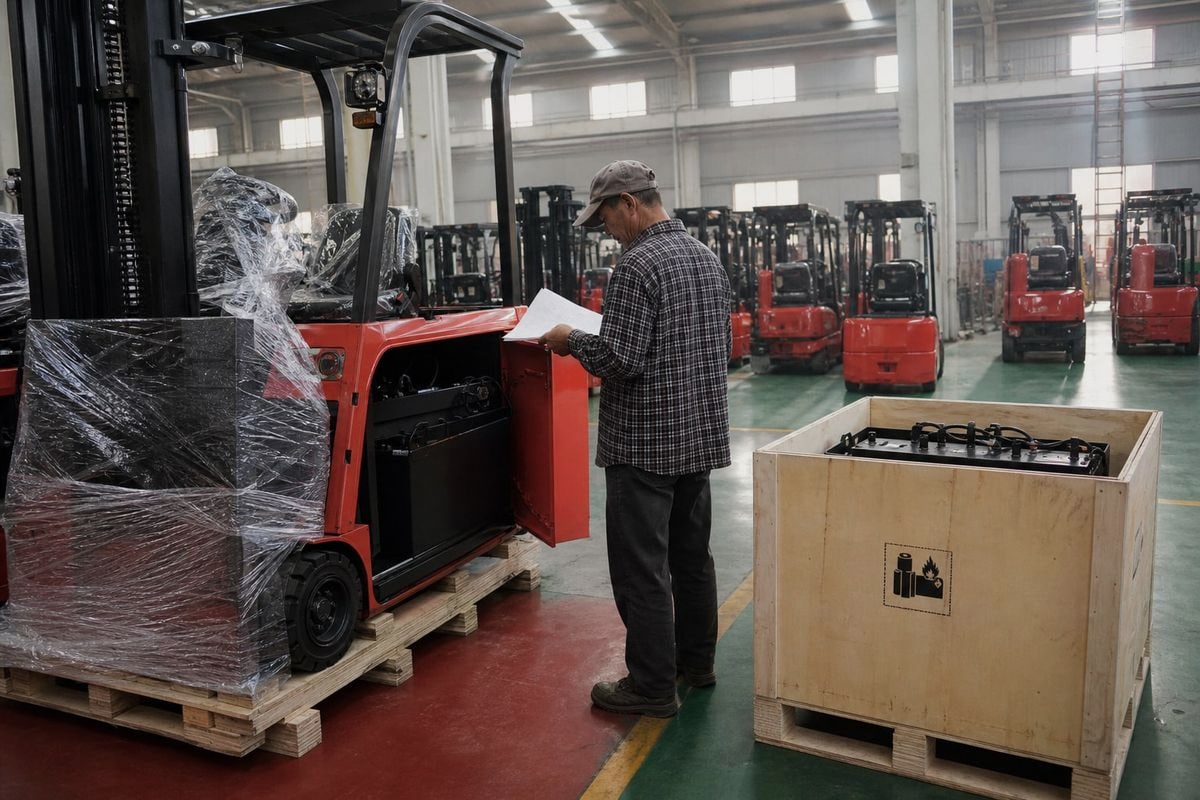
Packaging and labeling are the physical proof of compliance. Terminal staff and carrier inspectors judge your shipment by what they can see on the outside of the crate.
Batteries must be packed to prevent short circuits, movement, crushing, and contact with conductive materials. In practice, that means insulated terminals, inner cushioning, and a rigid outer package. For full dangerous goods shipments, the outer package must be UN-rated packaging 4 that passes drop-test performance standards. Some battery factories supply dual-layer packaging with specific crate materials; we treat that as a helpful baseline, but we always cross-check it against the IMDG code and the carrier's acceptance policy, because manufacturer guidance alone is not a legal standard.
| Mark or label | When required | Placement |
|---|---|---|
| Class 9 lithium battery hazard label | All fully regulated shipments | Visible side of outer package |
| UN number (UN3480 or UN3481) | All shipments | Adjacent to hazard label |
| Watt-hour (Wh) rating | Batteries made after 31 December 2011 | Marked on the battery casing |
| Cargo Aircraft Only label | Standalone UN3480 batteries by air | Outer package, visible side |
| DDR marking | Damaged, defective, or recalled units | External surface, per jurisdiction |
Damaged, Defective, or Recalled (DDR) batteries trigger far stricter rules. They require fire-suppression packaging, such as thermal-insulated containers, and they are strictly prohibited from all air transport. If you are returning a faulty pack for warranty, plan for ocean freight and specialized crating.
For air shipments of standalone packs, remember the 30% State of Charge (SoC) limit. This affects your warehouse prep, because the battery must be discharged and verified before packing. A useful tip we share with dealers: the battery's Battery Management System (BMS) logs temperature and voltage throughout transit, and those records can serve as evidence that the pack stayed within safe parameters if a dispute ever arises.
Shipping lithium forklift batteries demands Class 9 compliance, UN 38.3 documentation, UN-rated packaging, and correct labels. Get these right before booking, and your batteries arrive without costly port delays.
1. General technical overview of the battery chemistry and characteristics mentioned in the shipping classification. ↩︎
2. Official IATA landing page for the Shipper's Declaration for Dangerous Goods, replacing the broken download link. ↩︎
3. The International Maritime Organization's standard for the safe transport of dangerous goods by sea. ↩︎
4. US government guidance on the performance standards required for hazardous materials packaging. ↩︎