- +8618603825129
- [email protected]


Customs clearance and import taxes on international express shipments 1 confuse even experienced importers. At our Zhengzhou consolidation warehouse, we see refused parcels and angry buyers every week — usually because nobody agreed on who pays.
By default, the recipient pays customs clearance and import taxes on international express shipments under DAP (formerly DDU) terms. However, the shipper can select DDP at booking, prepaying all duties and taxes so the receiver pays nothing. The payer depends on Incoterms and carrier billing settings, not the shipping method itself.
That single sentence hides a lot of detail. Let me break it down piece by piece, because getting this wrong costs real money and real customers.
Last spring, a new client came to us after his previous forwarder quoted "all-inclusive" rates, then billed him an extra invoice at the US border. He was furious — and rightly so.
To avoid unexpected customs fees, confirm three things before shipping: the agreed Incoterm (DDP or DAP), the carrier's billing setting on the air waybill, and the destination country's duty rules. If you want zero surprise charges, lock in a genuine DDP tax-included quote in writing before the goods leave China.

Surprise fees almost never come from customs alone. They come from gaps between what you assumed and what was actually set up on the shipment. In our daily work handling DDP tax-included clearance from China to the USA, we trace nearly every "hidden fee" complaint back to one of four sources.
First, there is the customs duty assessment itself. US Customs calculates duty based on the Harmonized System HS code 2 and the declared value on your commercial invoice documentation. If the HS code is wrong, the duty rate changes — sometimes dramatically.
Second, there are customs brokerage fees. Express carriers act as brokers and charge entry preparation fees for filing your entry.
Third, there are disbursement fees. When DHL, FedEx, or UPS advances duty money to customs from their own credit line, they add a service charge on top before invoicing you.
Fourth, there are threshold changes. The de minimis threshold that once let low-value parcels enter tax-free is being lowered or eliminated in many markets, so shipments that cleared free last year may now be taxed.
| Fee Type | Who Charges It | How to Avoid Surprises |
|---|---|---|
| Import duty and taxes | Customs authority | Verify HS code and declared value upfront |
| Brokerage / entry fees | Carrier or broker | Ask for the fee schedule before booking |
| Disbursement fees | Express carrier | Use DDP so the shipper's account absorbs it |
| Post-clearance adjustments | Customs audit | Declare goods value truthfully |
My honest advice: do a full landed cost calculation before you ship, not after. When we quote DDP for a client, we build duty, clearance, and delivery into one number. That is the only reliable way to make "no surprises" a promise instead of a hope.
One trade-off we discuss with every Amazon seller is control versus simplicity. FBA warehouses will not act as your customs contact, so DDP is often less a choice and more a necessity.
DDP (Delivered Duty Paid) covers export clearance in China, international freight, US import clearance, all duties and taxes, and final delivery to the Amazon FBA warehouse. The seller or forwarder acts as the responsible party, so Amazon never receives a customs bill and your inventory is not held at the border.
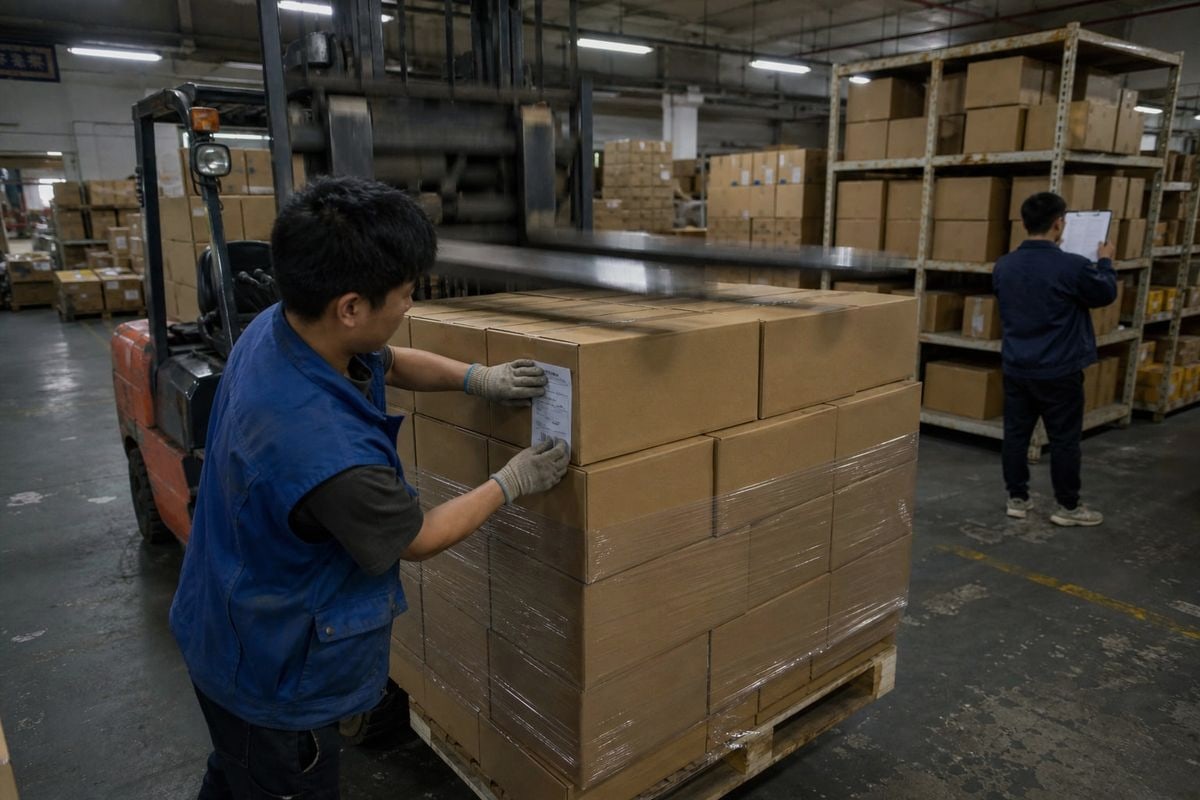
Delivery Duty Paid is the only Incoterm where the seller handles both export and import customs clearances, plus all duties, taxes, and related fees. For FBA sellers, this matters enormously. Amazon fulfillment centers refuse to serve as the Importer of Record 3 and will not pay any charge on your behalf. A shipment sent DAP to an FBA address is a shipment waiting to be rejected.
When our team quotes DDP tax-included shipping from China to a US FBA warehouse, the price includes these layers:
Be careful here. Standard DDP covers duties and taxes as they exist today. Emerging non-tariff levies, such as the EU's Carbon Border Adjustment Mechanism 4 for European routes, may fall outside older DDP agreements. Storage fees from Amazon-side delays, or penalties from mislabeled cartons, are also separate. We flag these exclusions in writing because vague quotes are how sellers get burned.
DDP works best when the declared value is honest. Under-declaring to shave duty invites post-clearance audits, and customs authorities can revisit entries for years afterward.
A buyer once asked me why the same product cost him different tax amounts through UPS versus a freight forwarder. His invoice, his product, his address — yet three different bills.
Import taxes vary because each carrier applies its own brokerage fees, disbursement charges, and clearance procedures on top of government duties. Different shipping methods also trigger different entry types, de minimis treatments, and HS code classifications, so the government tax may be identical while the total clearance bill differs significantly.

The government duty rate for a given HS code does not change based on which truck delivers your box. What changes is everything wrapped around that duty. Understanding this distinction saves you from blaming the wrong party.
Duties, Value-Added Tax VAT 5 in Europe, and Goods and Services Tax GST in countries like Canada and Australia are set by law. Carriers cannot change them. But carriers absolutely differ on brokerage fees, entry preparation fees, and how they bill the advance.
| Factor | Set By | Varies Between Carriers? |
|---|---|---|
| Duty rate per HS code | Government tariff schedule | No |
| VAT / GST rate | Destination country law | No |
| Brokerage / entry fee | Carrier's fee schedule | Yes |
| Disbursement fee on advanced duties | Carrier policy | Yes |
| Default payer (DAP vs DDP setup) | Air waybill settings | Yes |
Two carriers can classify the same product under slightly different HS codes, producing different customs duty assessments. Carriers are now deploying AI-driven HS classification, which reduces misdeclaration disputes but shifts accuracy from human entry clerks to algorithms. In our experience clearing goods on both the China and US sides, providing a precise product description and material breakdown on the commercial invoice is the single best defense against inconsistent classification.
Shipping method matters too. A small express parcel may qualify for an informal entry 6 with minimal fees. The same goods moved as LCL ocean freight require a formal entry, a customs bond, and full brokerage — different process, different cost, same product.
Years of routing shipments through DHL, FedEx, UPS, and TNT taught our team a hard lesson: these carriers default to DAP (formerly DDU), but that default is not your only option — and often not your best one.
Choose DDP when shipping B2C, sending samples, or delivering to private addresses and FBA warehouses, so recipients never see a tax bill and refuse delivery. Choose DAP/DDU for B2B buyers with VAT registration, since paying import VAT themselves lets them reclaim it as input tax.
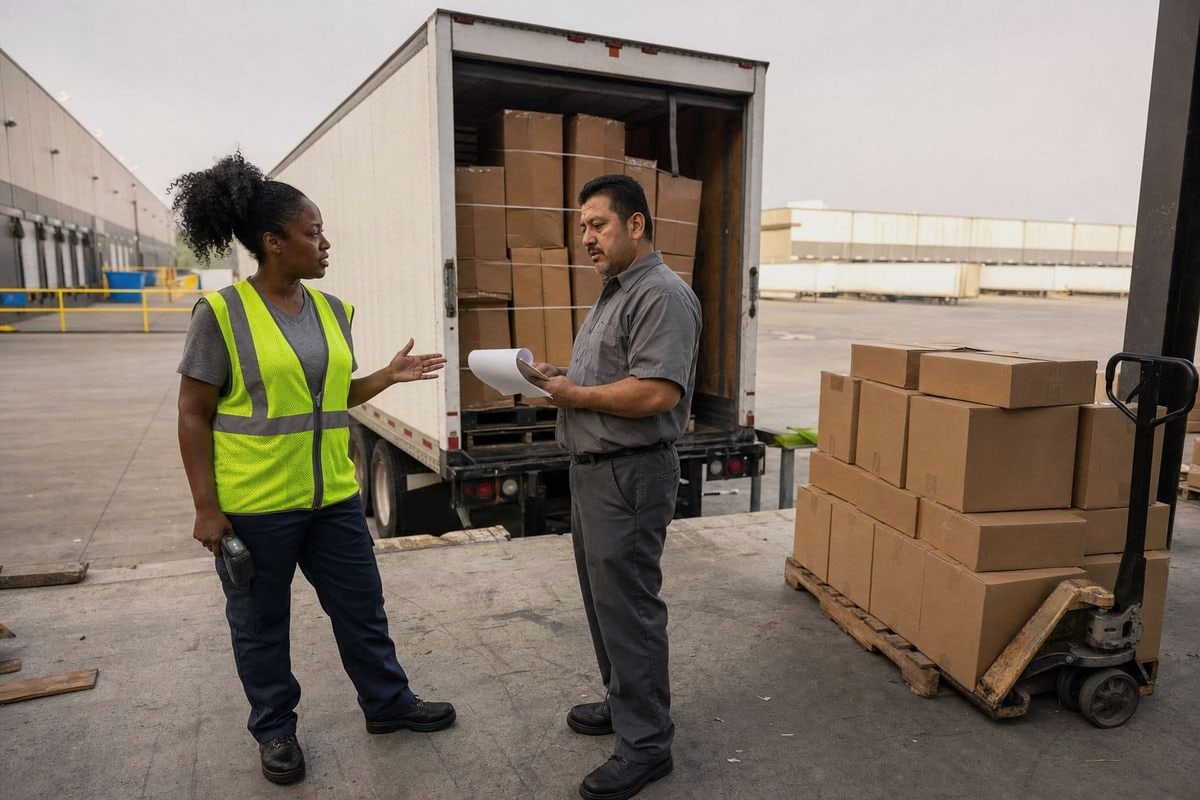
Here is the quick comparison we walk clients through before every first shipment:
| Scenario | Recommended Term | Why |
|---|---|---|
| Amazon FBA replenishment | DDP | FBA warehouses will not pay duties or act as IOR |
| B2C orders to consumers | DDP | Tax bills at the door cause refusals and chargebacks |
| Samples to prospects | DDP | Never ask a potential buyer to pay to receive your sample |
| B2B buyer with VAT number | DAP / DDU | Buyer pays import VAT directly and deducts it as input tax |
| Established importer with own broker | DAP / DDU | Buyer controls classification and clearance strategy |
Many shippers believe commercial express automatically means the consignee must clear customs and pay local import taxes. That is a misunderstanding. The big four express carriers simply default to DAP when nothing is specified. The shipper can request official DDP at booking — you keep a single tracking number, keep express transit speed, and just need to declare the goods value truthfully. The catch is timing: DDP must be set up before the shipment leaves, not negotiated after the parcel is stuck at customs.
Remember that Incoterms DDP vs DAP govern the buyer-seller contract 7, while carrier billing governs operations. Even if you select "bill recipient," the shipper remains ultimately liable under the contract of carriage if the recipient refuses to pay. We have seen sellers eat return freight plus abandoned duties because a consumer rejected a surprise bill. For B2C, that risk alone justifies DDP. For B2B, respect your buyer's preference — a VAT-registered company often genuinely wants DAP for clean input-tax recovery.
Who pays customs clearance and import taxes is a choice, not a fixed rule. Check your Incoterm, your carrier billing setting, and destination rules — then ship with confidence.
1. Overview of express mail services and their role in international logistics and delivery. ↩︎
2. Official explanation of the global standard for classifying traded products for customs purposes. ↩︎
3. Definition of the entity legally responsible for import compliance and duty payments. ↩︎
4. Official EU documentation on the environmental levy affecting international trade routes. ↩︎
5. Official European Commission guide explaining the principles and application of Value-Added Tax. ↩︎
6. Official CBP guide defining informal entry procedures and the $2,500 value threshold for imports. ↩︎
7. Official source for international commercial terms defining the legal contract between buyers and sellers. ↩︎