- +8618603825129
- [email protected]

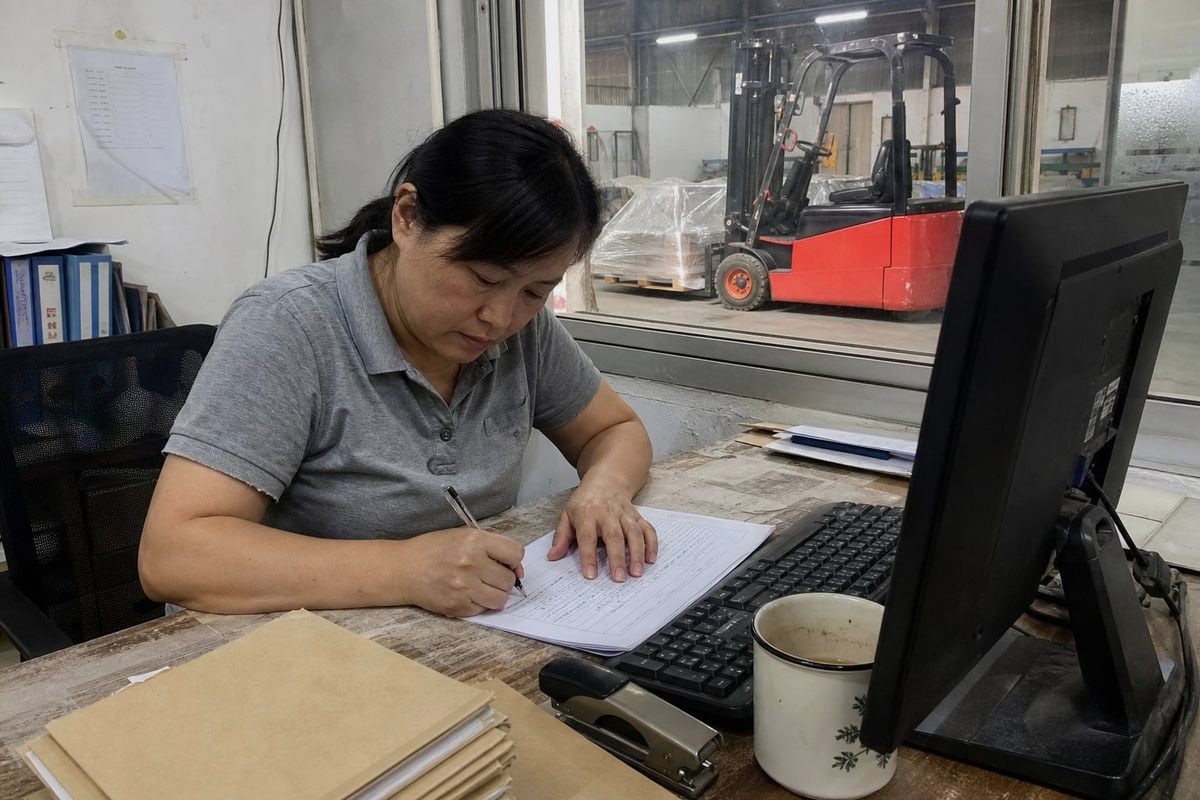
The dangerous goods declaration for a forklift shipment trips up more importers than any other document. Get it wrong, and your container sits at port while charges pile up. Our team sees it constantly.
The shipper (consignor) is legally responsible for preparing and signing the dangerous goods declaration for a forklift shipment. A trained freight forwarder or agent may complete the form on the shipper's behalf, but legal liability for accuracy always remains with the shipper.
That short answer hides a lot of detail. Who signs, who is liable, and when the form is even required all depend on your forklift's battery and the transport mode. Let me walk you through it.
Last year, a US dealer asked us to book two lithium forklifts as general cargo. The carrier rejected the booking within hours. That moment taught him what many buyers miss: the battery decides everything.
An electric forklift requires a dangerous goods declaration when it is classified as UN 3171 Battery-powered vehicle under Class 9 hazardous materials. Lithium-ion forklifts almost always trigger this requirement, while some lead-acid configurations may qualify for exemptions depending on the mode and carrier.
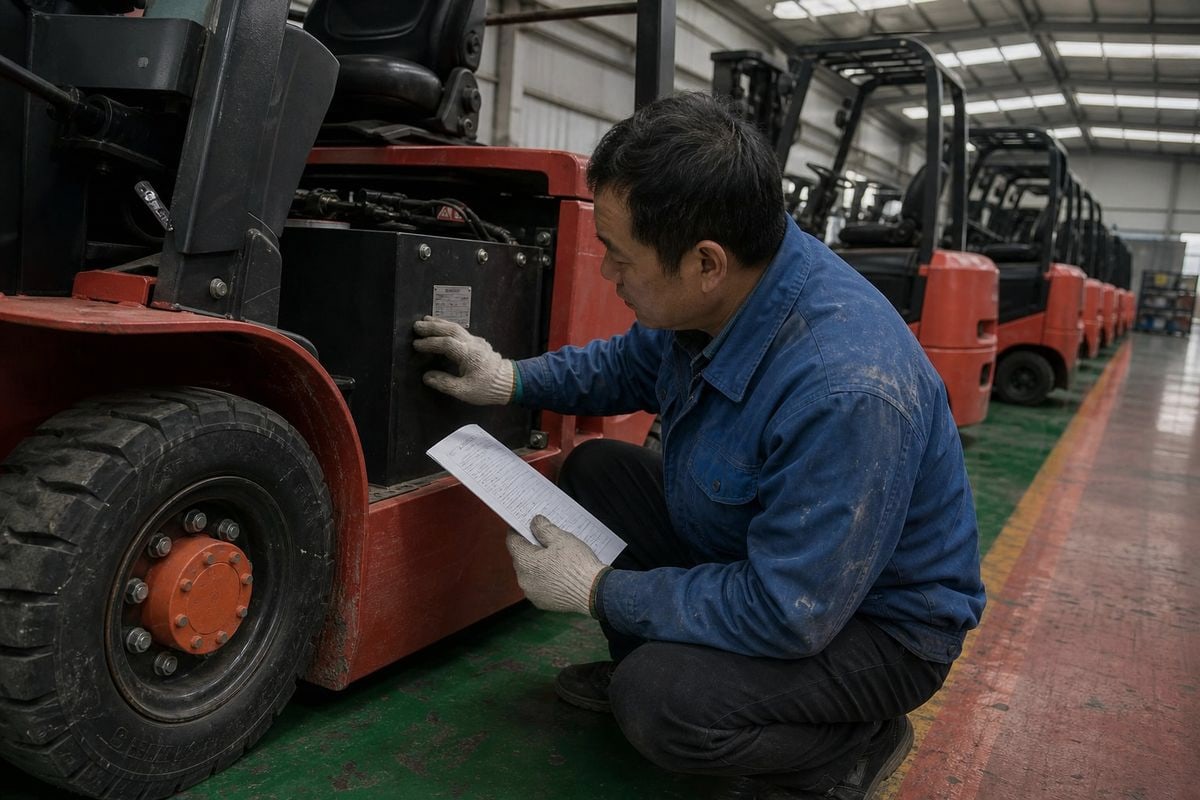
A forklift is not automatically dangerous goods. The declaration follows the cargo's classification, not the machine's name. When we prepare bookings for electric forklifts leaving Chinese factories, the first thing we request is the battery's Safety Data Sheet. That document tells us the chemistry, the watt-hour rating, and whether the shipment falls under regulated status.
Here is how we work through it before any container is booked:
One point worth knowing: Class 9 entries like UN 3171 do not carry a Packing Group 2, unlike many other hazard classes. So if a supplier's draft declaration shows a Packing Group for your forklift, that is a red flag the preparer lacks proper training.
| Forklift Configuration | Typical Classification | DG Declaration Needed? |
|---|---|---|
| Lithium-ion electric forklift | UN 3171, Class 9 | Yes, almost always |
| Lead-acid electric forklift | UN 3171 or exempt | Depends on mode and carrier |
| Diesel/LPG forklift with fuel residue | UN 3166 | Yes, in most cases |
| Forklift shipped with battery removed | Battery declared separately | Yes, for the battery itself |
| Spare lithium batteries in the same crate | UN 3480 | Yes, as a separate line item |
Notice the last row. Spare batteries are never covered by the forklift's UN 3171 entry. They need their own line item and different packaging certifications. We flag this every time a buyer consolidates forklifts and spare batteries from different Chinese factories into one container.
There is a trade-off we discuss with almost every new client: convenience versus accountability. Yes, our documentation team in Zhengzhou prepares declarations daily. But we always explain what that does and does not change legally.
Yes, a freight forwarder with valid dangerous goods training can prepare and sign the declaration as the shipper's authorized agent. However, the shipper retains consignor legal responsibility for the accuracy of the classification and information provided, unless a formal agency agreement transfers specific duties.
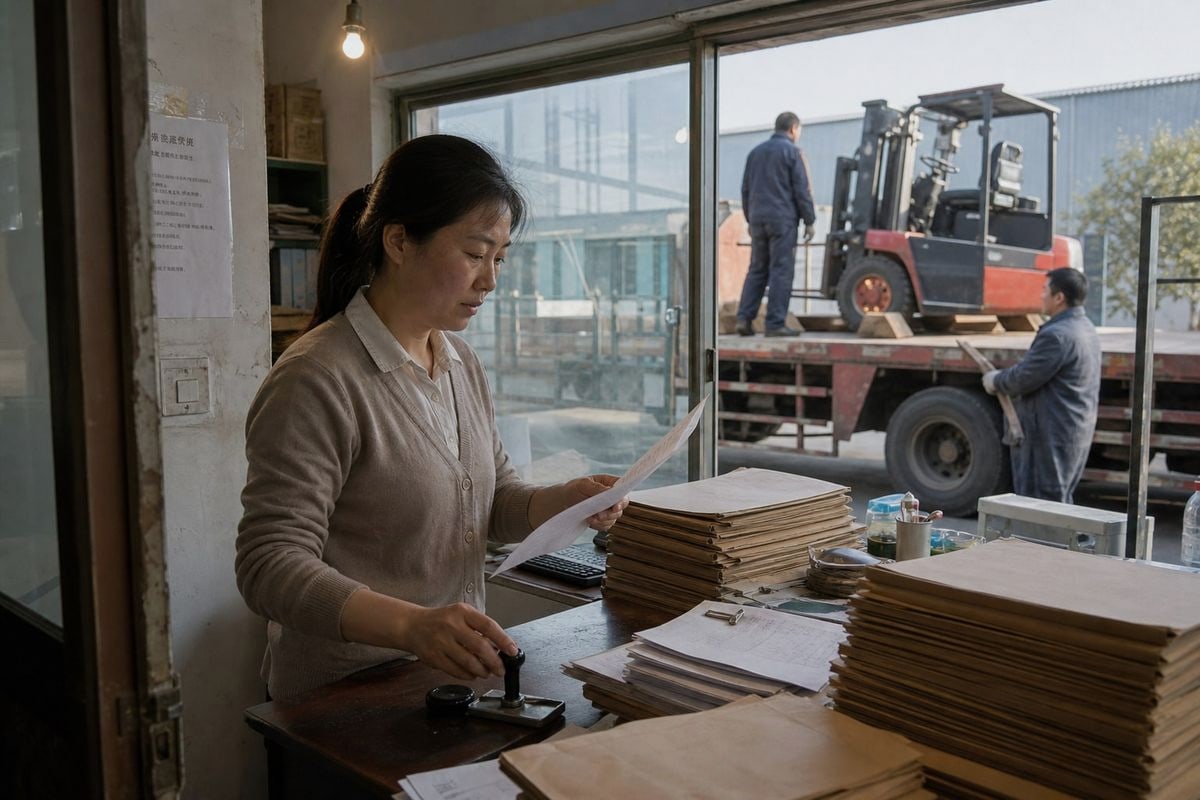
This is where the industry's biggest misconception lives. Many buyers assume that hiring a forwarder means outsourcing liability. It does not. The regulations distinguish three separate things: who prepares the form, who signs it, and who is legally accountable. A forwarder can handle the first two. The third stays with the consignor.
| Role | Who Can Do It | Key Requirement |
|---|---|---|
| Preparation | Shipper or trained agent (forwarder) | Function-specific hazmat training |
| Signature | Shipper or formally authorized agent | Valid, mode-specific training within 24 months |
| Legal liability | Always the shipper/consignor | Cannot be delegated by default |
The training point deserves emphasis. The person signing a declaration must hold formal, mode-specific dangerous goods training — IATA DGR for air 3, IMDG Code for sea — completed within the last 24 months. When we sign as agent for a client's forklift shipment, our team's training certificates back that signature. Some carriers now use e-DGD platforms that link the digital signature directly to a specific training certificate ID, creating an audit trail that makes untrained signatures impossible to hide.
Some industry articles frame the manufacturer as the natural preparer because the factory knows the product best. That sounds logical, but it is imprecise. The formal duty sits with the consignor on the transport documents — often the trading company or the buyer's designated exporter, not the factory that built the machine. In our door-to-door shipments from China, we clarify in writing who the consignor of record is before the container leaves the factory. That single step prevents the finger-pointing that happens when something goes wrong.
If any leg of your journey involves air freight — say, spare parts flying while forklifts sail — the documentation for that leg must meet IATA standards, which are typically the most stringent in a multimodal chain.
A distributor once sent us a forklift spec sheet with no battery data at all. We spent four days chasing the factory for the Safety Data Sheet before we could even draft the declaration. Good input data is the whole game.
You must provide the battery's Safety Data Sheet, battery chemistry and watt-hour rating, the forklift's UN number and Proper Shipping Name, gross weight, quantity, packaging details, state of charge, and emergency contact information. For sea freight, this feeds the Multimodal Dangerous Goods Form.
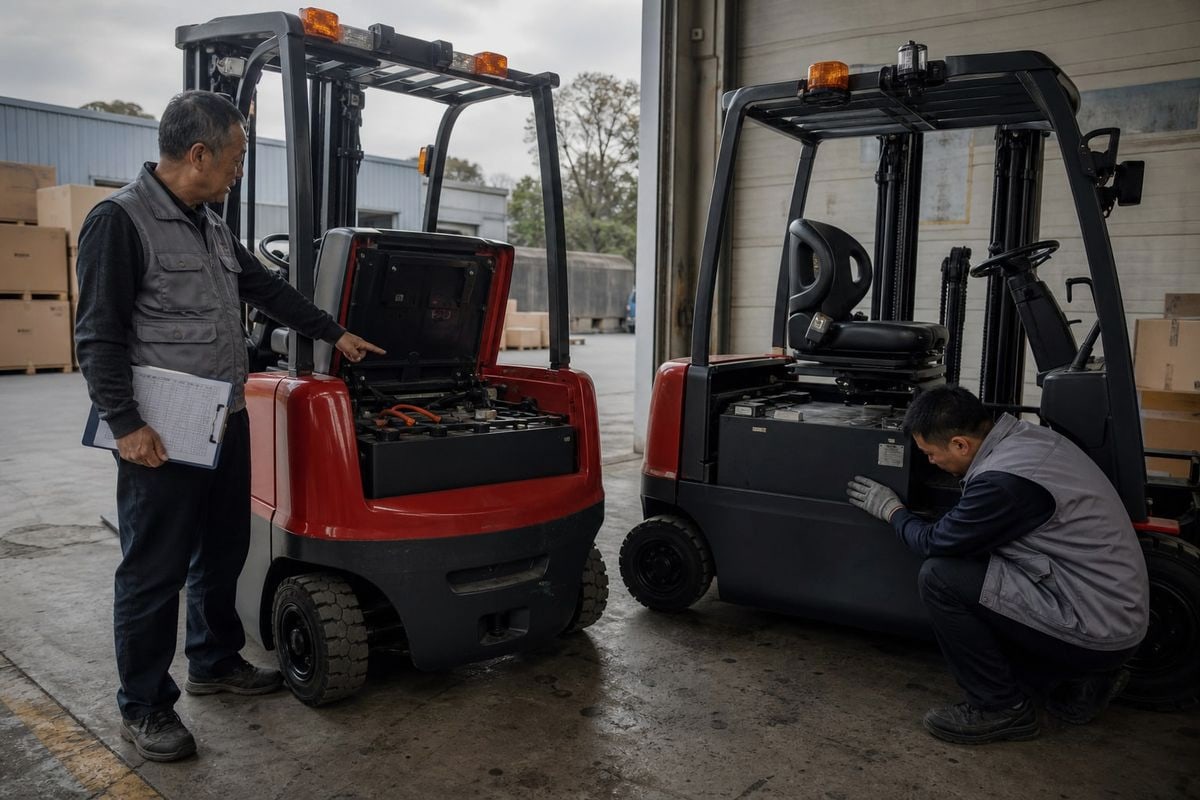
The declaration is only as accurate as the information behind it. When we coordinate a lithium forklift shipment from a Chinese factory, we run a fixed checklist before drafting the Multimodal Dangerous Goods Form 4 for the ocean leg. Missing any single item can stall the booking.
| Information Item | Source | Why It Matters |
|---|---|---|
| Safety Data Sheet (SDS) | Battery manufacturer | Confirms chemistry and classification basis |
| Battery chemistry (Li-ion vs lead-acid) | Factory spec sheet | Dictates packing instructions and hazard labels |
| Watt-hour rating and voltage | Battery label or SDS | Determines regulatory thresholds |
| UN number and Proper Shipping Name | Classification review | Core fields on the declaration |
| Gross weight and dimensions | Factory packing list | Stowage planning and weight declaration |
| State of Charge (SoC) | Factory confirmation | Air transport requires SoC not exceeding 30% for lithium-ion |
| UN38.3 test summary | Battery manufacturer | Proves the lithium battery passed transport testing |
| Battery condition (new, used, damaged) | Buyer and factory | Damaged batteries need UN 3480/3481 Special Provisions |
| 24-hour emergency contact | Shipper or forwarder | Mandatory on most declarations |
Two items on that list deserve extra attention. First, the state of charge rule: if your forklift battery moves by air — even as a spare part — lithium-ion cells must be at a State of Charge not exceeding 30%. The declaration preparer must verify and often certify this. Second, the condition question. If you are shipping a forklift back to China for repair, the preparer must legally determine whether the battery is "damaged or defective." That triggers special provisions under UN 3480/3481 that standard declaration templates simply do not accommodate. We handle this case by involving the carrier's DG desk before booking, not after.
The declaration must also state the battery chemistry explicitly. Lithium-ion and lead-acid carry different packing instructions, hazard labels, and emergency response codes. A vague entry like "battery forklift" will be rejected at the carrier's document check.
Early in our forklift shipping work, we watched a competitor's client lose three weeks and thousands of dollars because a declaration listed the wrong battery chemistry. The container was pulled at the port, and the buyer's warehouse project stalled. That lesson shaped how we check documents today.
A missing or incorrect dangerous goods declaration leads to cargo rejection, port holds, storage and demurrage charges, fines from regulators, and possible blacklisting by carriers. In serious cases, misdeclared lithium battery cargo creates safety hazards and exposes the shipper to legal prosecution.
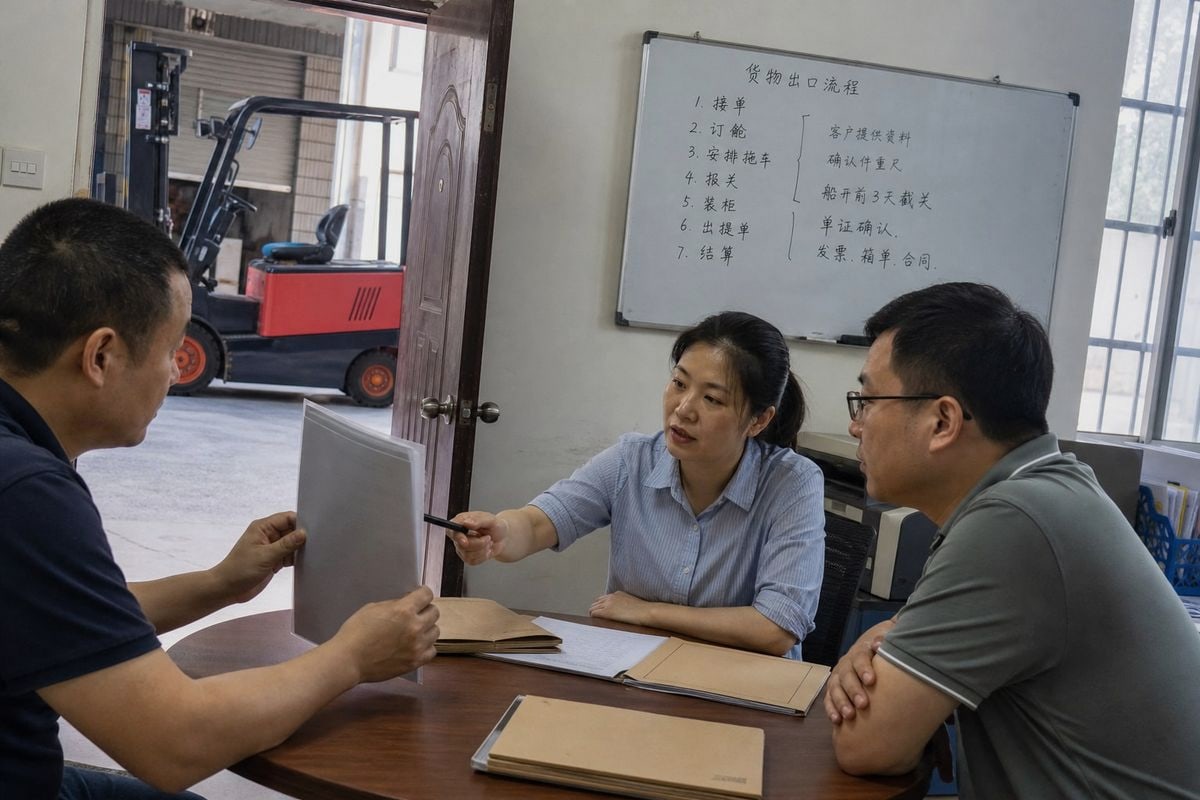
The consequences escalate in stages, and understanding that sequence helps you see why prevention is cheap by comparison.
Here is the part that surprises many buyers: the carrier relies on your certification. When the declaration is signed, the shipper certifies the cargo has been correctly classified, packed, marked, and labeled. Stowage planning — where your container sits on the vessel — depends on that certification being true. Class 9 hazardous materials get specific stowage positions. A wrong declaration means the vessel operator made safety decisions based on false information. That is exactly why regulators place hazmat training requirements on anyone who signs, and why the responsibility cannot be waved away.
Our practice is simple. We check the declaration against the SDS, the packing list, the container details, and the carrier's acceptance rules before the container gates in. Catching a mismatch in Zhengzhou costs an email. Catching it in Long Beach costs weeks.
The shipper owns the dangerous goods declaration, even when a trained forwarder prepares it. Classify your forklift correctly, share complete battery data, and verify every document before the container moves.
1. Official IMO page for the IMDG Code governing maritime transport of dangerous goods. ↩︎
2. Official PHMSA portal for hazardous materials regulations and safety standards. ↩︎
3. Official IATA resource for air transport regulations of hazardous materials. ↩︎
4. UN resource for international regulations and documentation for transporting dangerous goods. ↩︎