- +8618603825129
- [email protected]

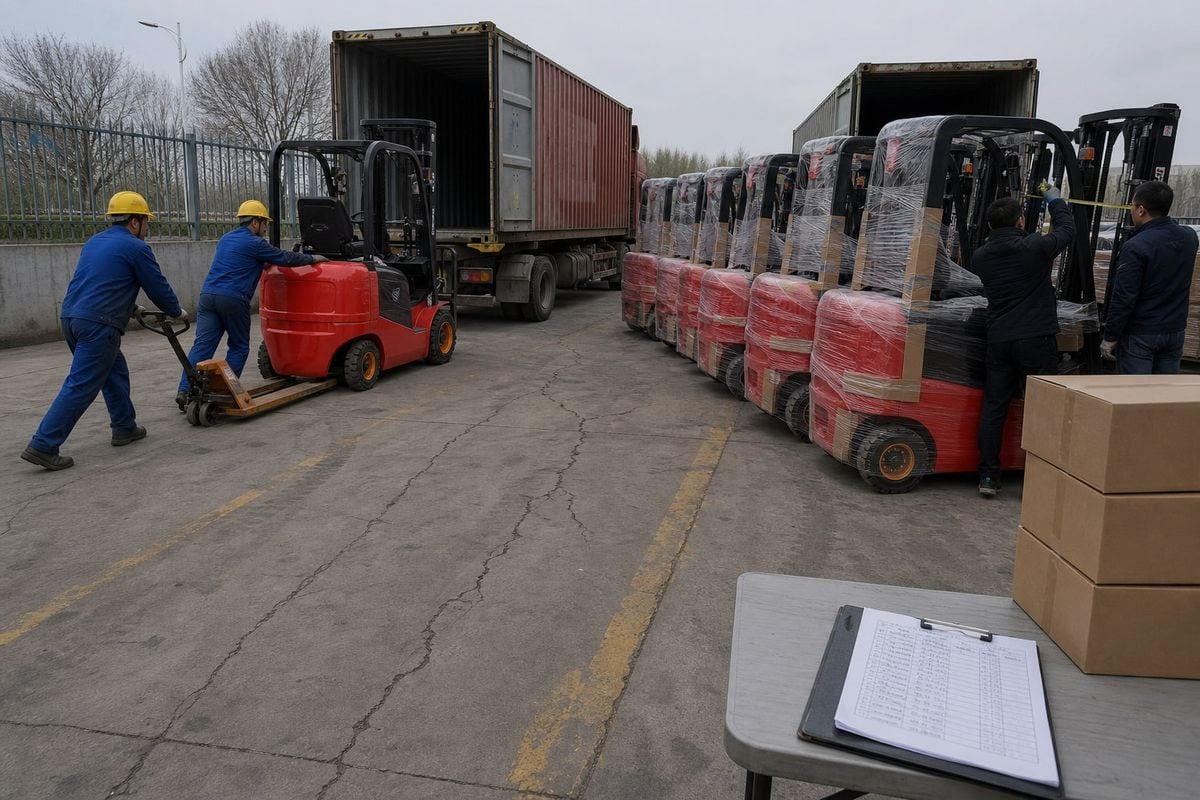
Shipping costs for one forklift vs [bulk orders](https://mbmlog.com/?p=11615) confuse many importers I talk to lithium battery compliance 1. At our Zhengzhou logistics base, quotes for a single unit often shock buyers. The math feels unfair. Here is why it happens, and how to fix it.
Shipping one forklift typically costs more per unit than a bulk order because fixed charges like pickup, documentation, and container fees spread across only one machine. Bulk orders lower average cost per forklift, but only when all units fit one container or trailer without new surcharges.
Let me break this down step by step. I will compare single-unit and bulk shipping economics, explain FCL vs LCL, and expose the hidden fees that catch buyers off guard.
A distributor in Texas once asked me why his single forklift quote was nearly half the price of a four-unit container. Our loading team sees this pattern every week.
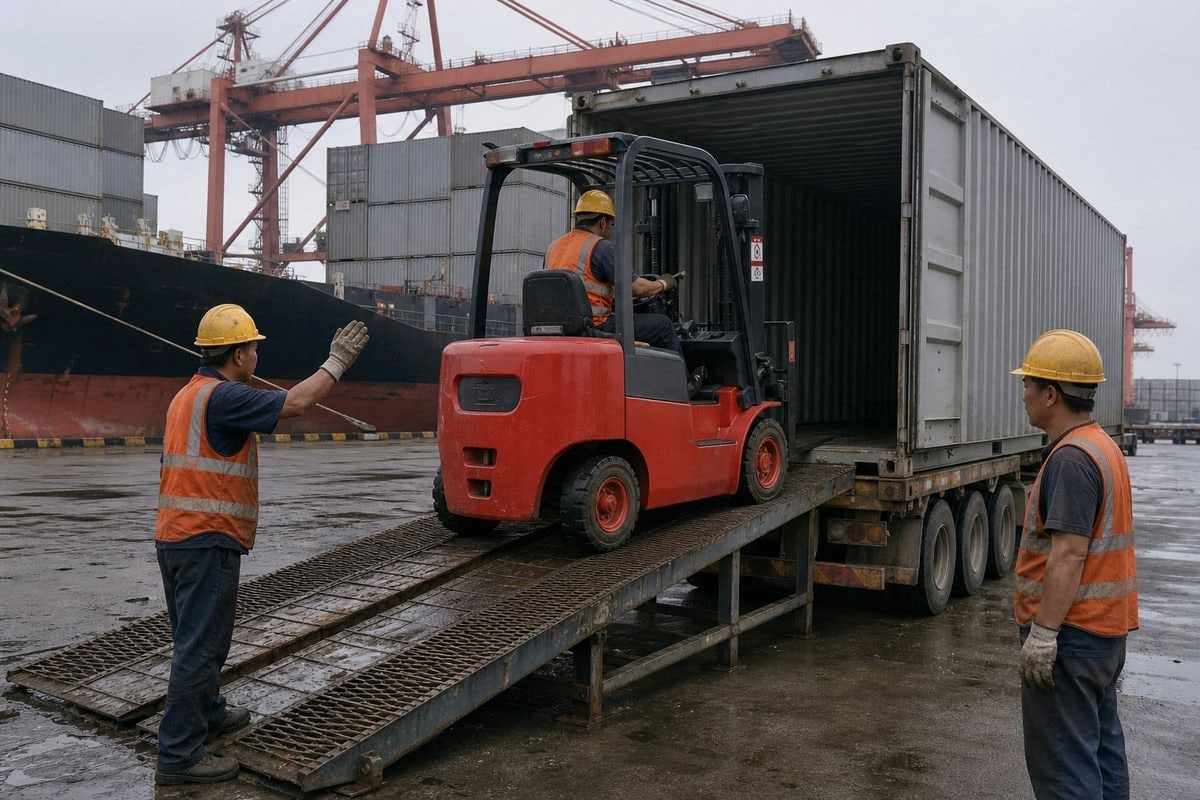
A single electric forklift shipped from China often costs $1,500–$3,500 in ocean freight and handling, while a bulk order of four to six units in one 40FT container can drop the per-unit shipping cost to $600–$1,200, thanks to shared fixed charges.
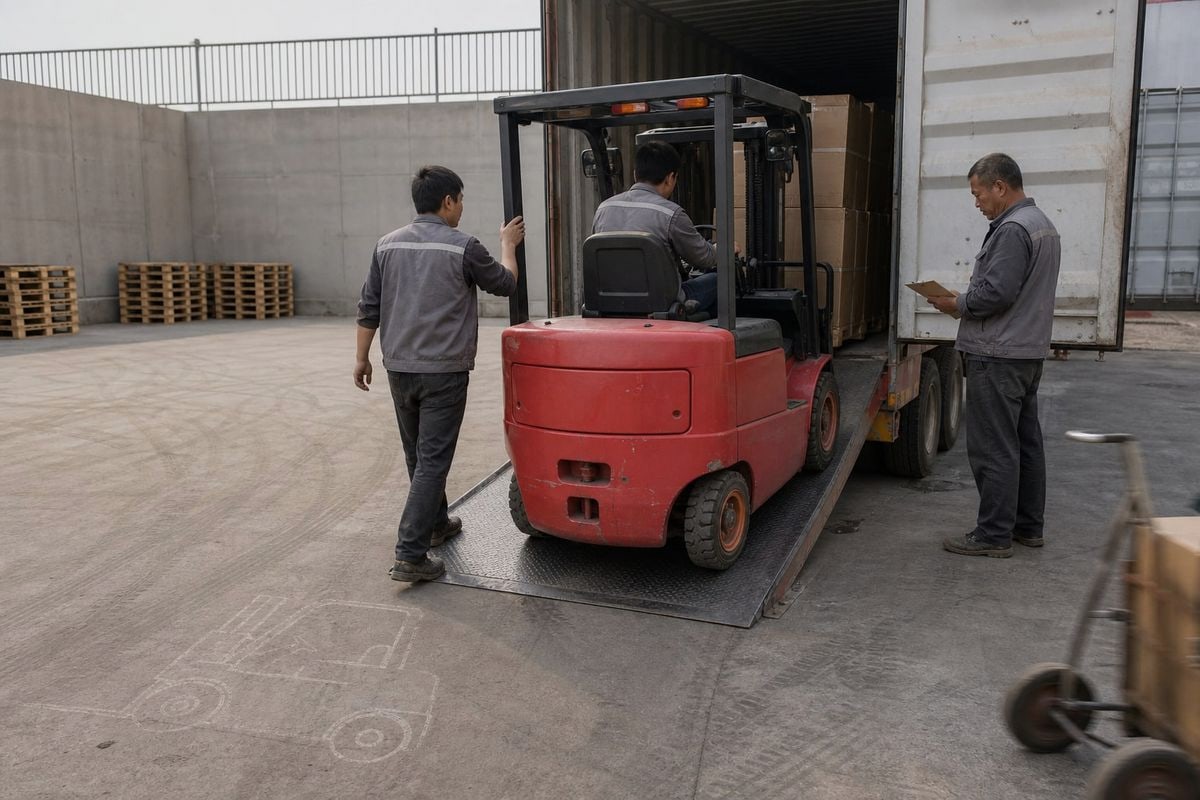
The key idea is simple. Total shipping cost rises when you add forklifts. But the average cost per forklift usually falls. That is because many charges are fixed per shipment, not per machine.
When we quote a shipment from a Chinese factory, some costs stay the same whether we move one forklift or five. Factory pickup, export declaration 2, documentation, and customs brokerage are largely flat. Ocean freight for a full container is also one price, no matter how full it is.
| 成本构成 | One Forklift | Bulk Order (5 Units) | Behavior |
|---|---|---|---|
| Factory pickup | $200–$400 | $250–$500 | Nearly fixed |
| Export documentation | $100–$150 | $100–$150 | Fixed per shipment |
| Ocean freight (container) | Full container rate or LCL share | One container rate | Fixed per container |
| 海关清关 | $150–$300 | $150–$300 | Fixed per shipment |
| Destination trucking | $500–$1,500 | $800–$1,800 | Semi-fixed |
This is classic 规模经济. Spread $1,000 of fixed fees across one machine, and it adds $1,000 to that unit. Spread it across five machines, and it adds only $200 each.
Domestic comparisons show the same logic. Guides quote domestic forklift shipping from under $1,000 to over $3,000 depending on distance and size. Regional flatbed trailer rates run around $2.80–$3.40 per mile, with local flat-fee moves near $350–$650. Those per-mile rates barely change whether the trailer carries one forklift or three. The truck runs the same route either way.
Some buyers object that a single urgent shipment justifies the higher unit cost. I agree. If your customer needs one machine next month, waiting to consolidate can cost you the sale. The point is to know the trade-off before you decide.
Last year we helped a US dealer combine forklifts from one factory with chargers and spare parts from two other suppliers. His per-unit landed cost dropped sharply. Consolidation was the reason.
Yes, consolidating multiple forklifts into one container is one of the most effective ways to cut freight costs. Filling a 40FT or 40HQ container spreads the fixed ocean rate across every unit, often cutting per-forklift shipping cost by 40–60% versus separate shipments.
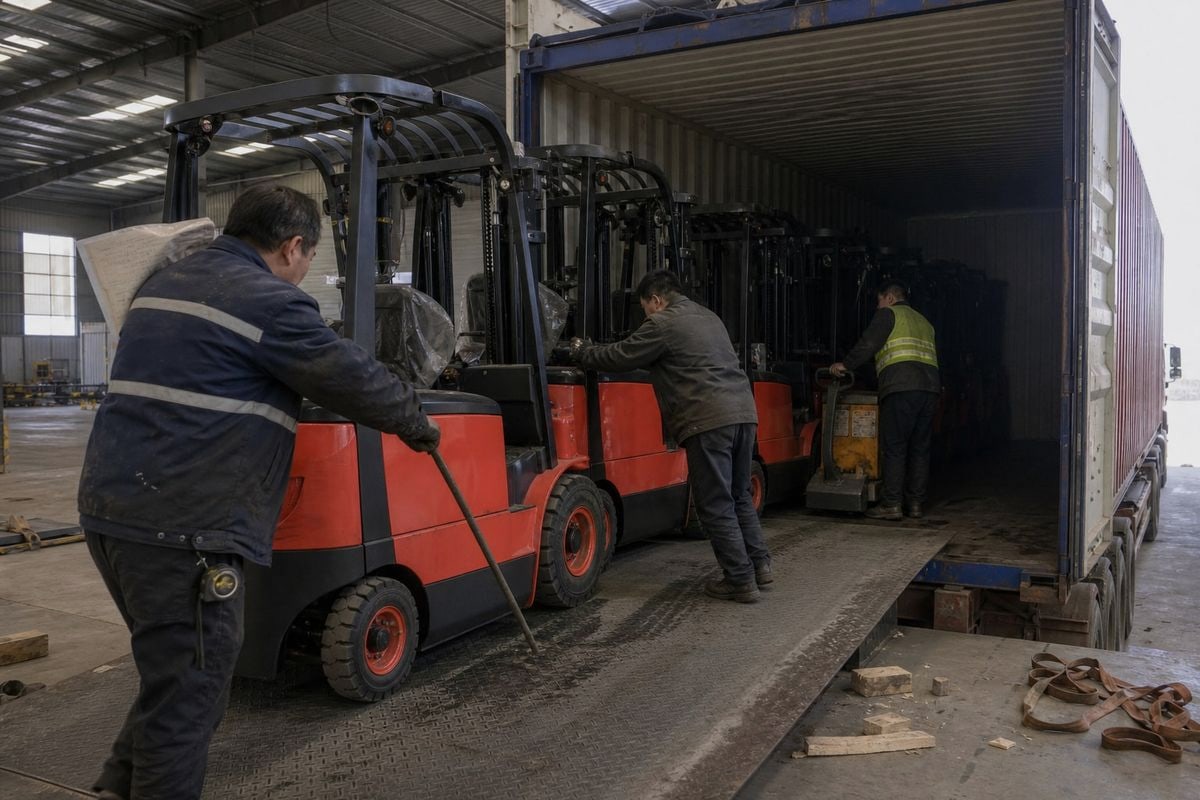
Consolidation works because a container has one price. A half-empty 40FT container costs the same to sail across the Pacific as a full one. So every extra forklift you fit inside is nearly free ocean freight.
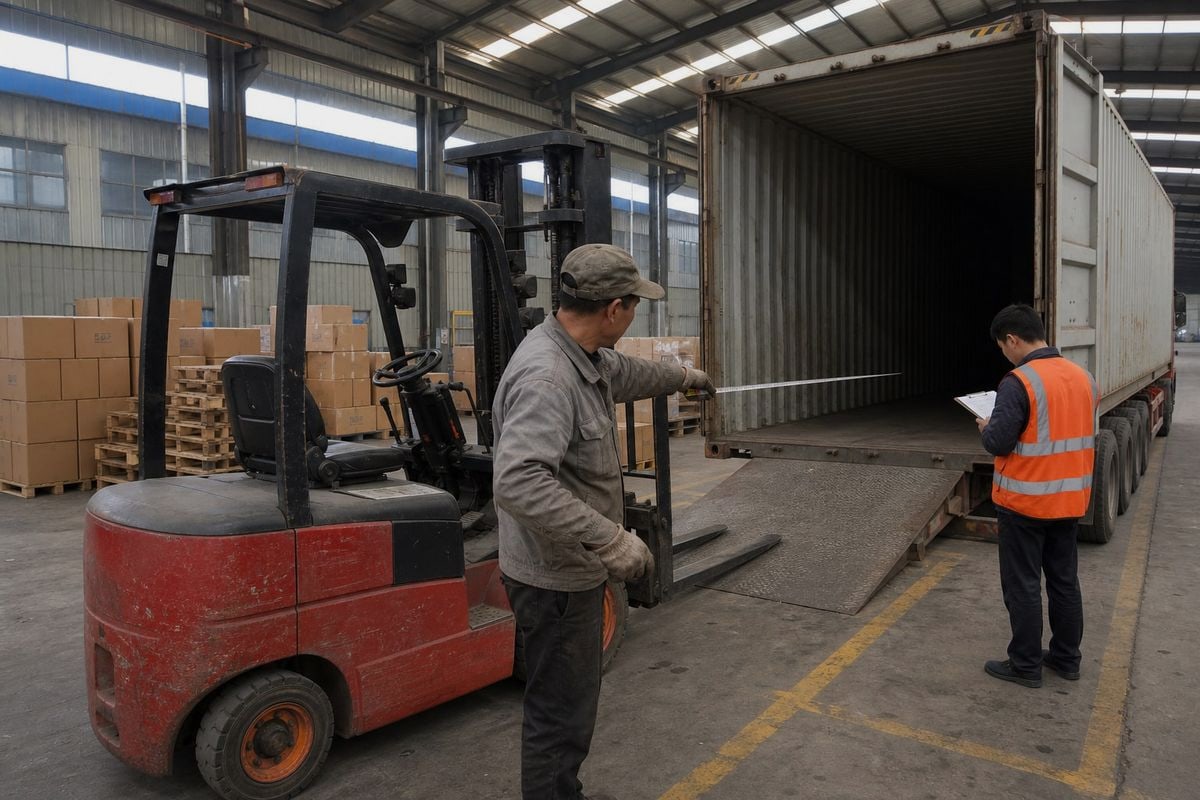
Before we book, our team collects exact dimensions, weight, mast height, and battery specs from the factory. Then we plan the load.
| 容器类型 | Typical Capacity (Compact Electric Forklifts 3) | 说明 |
|---|---|---|
| 20FT | 2–3 units | Watch payload weight limits |
| 40FT | 4–5 units | Good balance of space and weight |
| 40HQ | 4–6 units | Extra height helps taller masts |
These numbers shift with model size. Counterweighted electric forklifts are dense. A container can hit its weight limit before it runs out of floor space. That is why we check both cubic space and payload before quoting.
There are several ways we squeeze more value from each container:
One caution. Consolidation saves freight, but it ties up capital. Buying six forklifts at once means more inventory, duty, and storage cost upfront. If your sales cycle is slow, a smaller order may still be the smarter business move even at a higher per-unit freight rate.
The trade-off I weigh most often for clients is this: pay for a whole container you cannot fill, or share space and accept extra handling. There is no single right answer.
Choose LCL for one or two compact forklifts, since you pay only for the space used. Choose FCL once you have three or more units, because the flat container rate becomes cheaper per forklift and avoids CFS handling fees and shared-cargo damage risk.

LCL means Less than Container Load. Your forklift shares a container with other importers' cargo. FCL means Full Container Load. The whole container is yours. Each has a clear use case.
LCL is priced per cubic meter or per ton. FCL is one flat rate. As your order grows, LCL charges climb steadily while the FCL rate stays flat. At some point, usually around two to three forklifts depending on size, FCL becomes cheaper. We calculate this breakpoint for every quote.
| 系数 | LCL | FCL |
|---|---|---|
| Pricing basis | Per CBM / per ton | Flat per container |
| 最适合 | 1–2 compact units | 3+ units or heavy models |
| CFS warehouse handling | Yes, at both ends | 不 |
| Handling touches | Multiple (higher damage risk) | Loaded once, sealed |
| Transit time | Often longer | Usually faster |
| Lithium battery cargo | Some consolidators restrict it | Easier to manage |
Bulk FCL shipments travel directly from origin loading to destination unloading. LCL cargo passes through container freight stations 4, gets handled multiple times, and shares space with unknown freight. That is like LTL vs FTL shipping on land: LTL runs $300–$1,500 per shipment with multiple transit stops, while FTL can exceed $5,000 but moves direct with lower damage rates. For a heavy, high-value machine like an electric forklift, fewer handling touches means fewer claims.
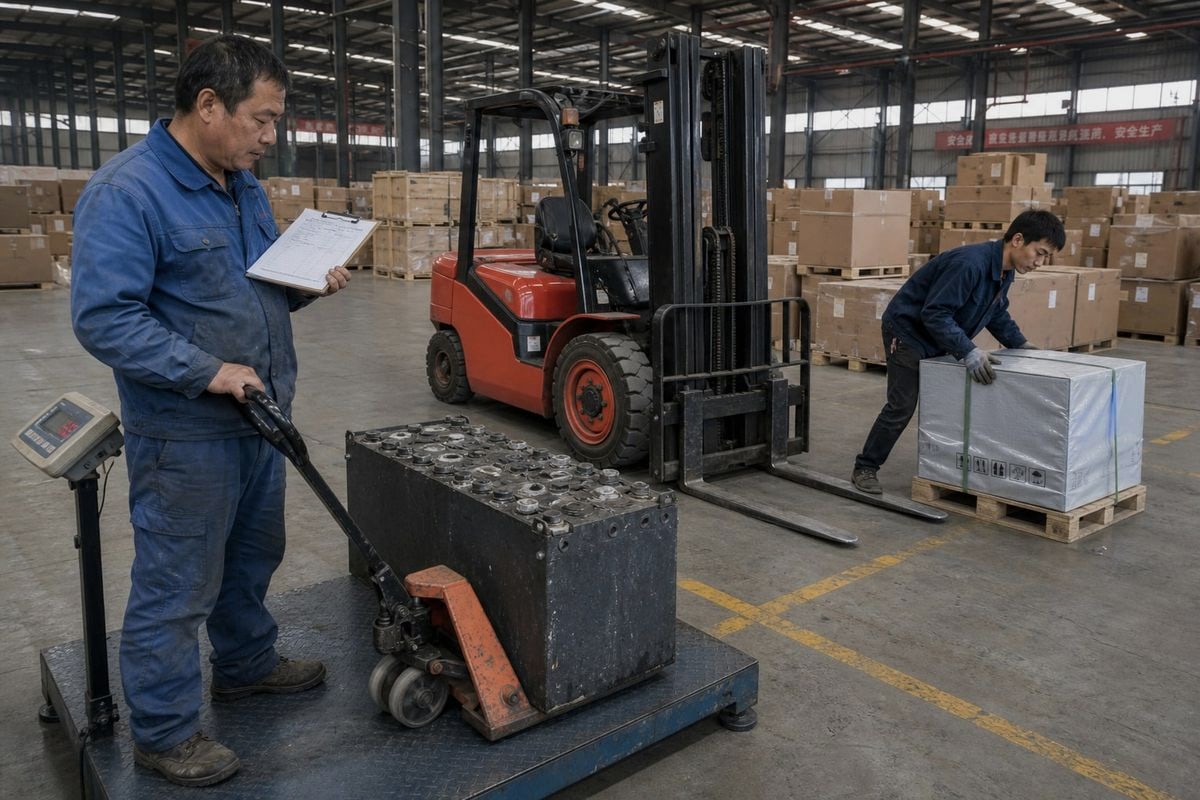
There is one more wrinkle. Some LCL consolidators are cautious about lithium battery cargo. In our experience shipping battery-powered equipment to the US, FCL gives us full control over classification, packaging, and securing. That control matters when a delayed hazmat document can strand your machine at the port.
A lesson we learned early: the cheapest headline quote is rarely the cheapest shipment. One client came to us after a "low" quote ballooned with destination charges he never saw coming.
Watch for destination handling fees, chassis and terminal charges, oversized load permits, liftgate and residential delivery surcharges, lithium battery compliance fees, unloading equipment costs, and storage or demurrage. These hidden costs hit single-unit shipments hardest because nothing spreads them across other units.
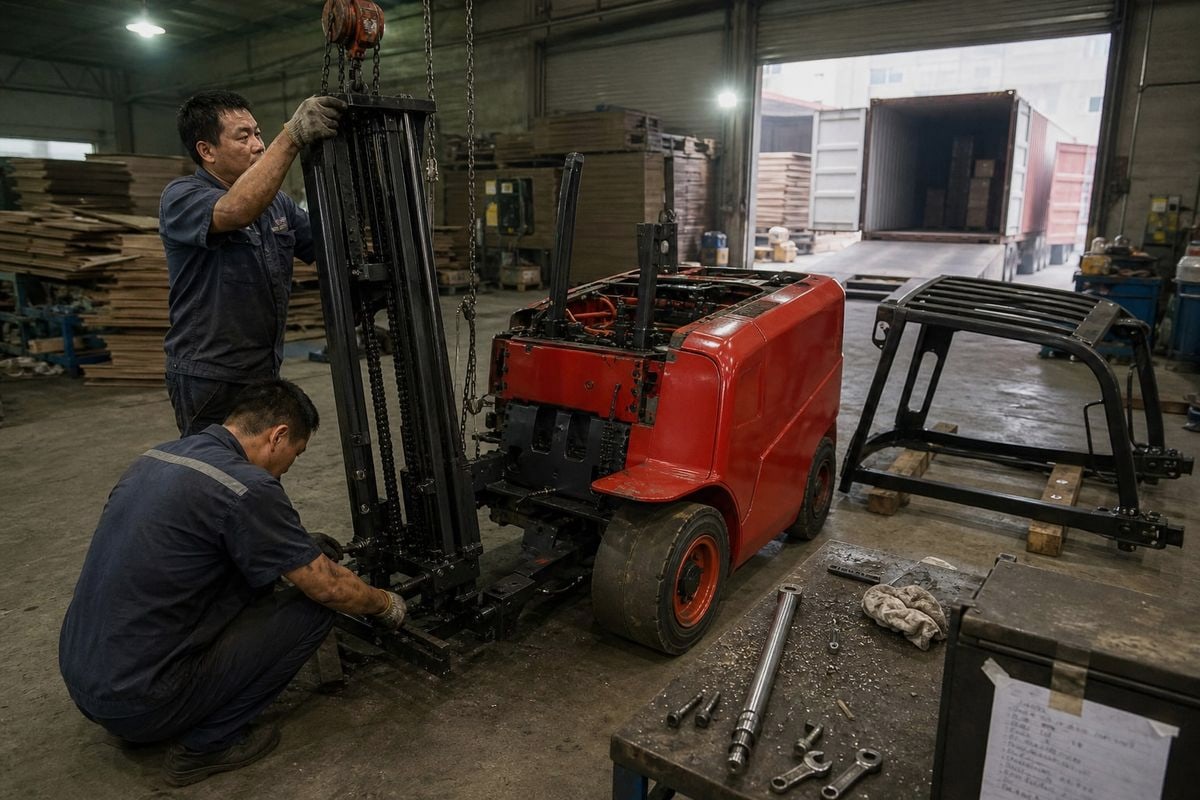
Hidden costs are where single-unit and bulk economics diverge the most. Administrative, brokerage, and insurance fees are often flat per shipment. The paperwork cost for one forklift is nearly identical to that of a five-unit order. So on a single unit, those flat fees can add 20–30% to your freight bill.
Here are the charges I check on every quote before a client signs off:
One nuance works in the single-unit buyer's favor. Emerging AI-driven logistics platforms can match a single forklift with backhaul or deadhead legs of other heavy-haul routes, securing filler rates that rigid bulk schedules cannot access. It is worth asking about, though availability is never guaranteed.
Also remember that bulk has its own breakpoints. Add one forklift too many, and you trigger a second container, overweight handling, or extra loading labor. Multi-unit transport discounts only apply while everything fits the same configuration. We always model the "n+1" scenario before recommending an order size.
Single forklift shipments carry higher per-unit costs because fixed fees spread across one machine. Bulk saves money until a breakpoint. Plan your container fill, and quote both scenarios first.
1. Official US Department of Transportation resource for hazardous materials regulations regarding lithium batteries. ↩︎
2. Authoritative US government source for export declaration regulations and the Automated Export System. ↩︎
3. Provides a comprehensive technical overview of forklift types and their industrial applications. ↩︎
4. Official US Customs and Border Protection page defining the role of container freight stations. ↩︎