- +8618603825129
- [email protected]


I learned the hard way that a perfectly manufactured product means nothing if the outer packaging fails before it reaches the buyer's doorstep.
DDP e-commerce outer packaging requirements for last-mile courier delivery focus on product protection, high volume utilization, lightweight and compact design, clear labeling with shipping labels and customs documentation, and easy recyclability — all optimized to survive multiple handling points while minimizing dimensional weight charges and ensuring smooth customs clearance.
This guide breaks down every packaging detail you need to get right Amazon FBA shipments 1. We will cover carrier standards 2, labeling rules, damage prevention, and weight limits so your DDP shipments arrive intact and on budget.
A few months ago, one of our clients had 200 cartons held at a US sorting facility because the boxes were too soft to survive automated conveyor processing 3. That single mistake cost weeks of delay and thousands in re-packing fees. It was a painful reminder that DDP outer packaging must satisfy two masters: international transit durability and domestic courier automation.
To meet both DDP and US last-mile courier standards, use double-wall corrugated boxes sized closely to the product, apply waterproof shipping labels with complete sender and receiver details, include all customs documentation inside a packing list pouch, and ensure your carton's burst strength exceeds 200 PSI for safe automated sorting.
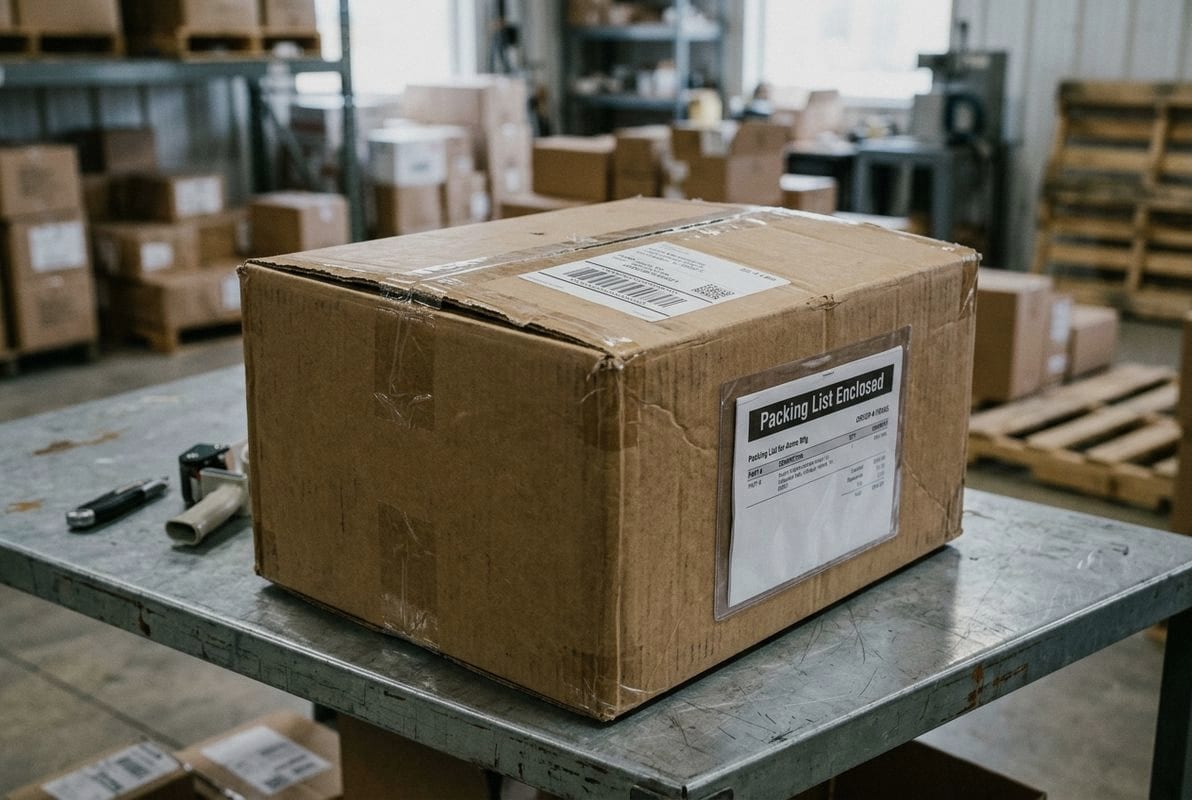
DDP — Delivered Duty Paid 4 — means we handle everything. From our warehouse in Zhengzhou to the buyer's front door in Texas, the package passes through at least five or six touchpoints. Export consolidation. International air or sea transport. US customs clearance. Deconsolidation at a domestic hub. And then the final last-mile courier picks it up.
Each touchpoint applies different stresses. A box that survives ocean freight may still collapse on a high-speed USPS sorting belt. That is why we always tell clients to design packaging for the weakest link — and in DDP shipping, the weakest link is often the automated sorting stage at the last-mile carrier facility.
Think of your packaging as needing to pass two tests:
| Requirement Area | International Transit (DDP) | US Last-Mile Courier |
|---|---|---|
| Box Strength | Double or triple-wall corrugated; burst strength ≥ 200 PSI | Must withstand conveyor drops of 3–4 feet |
| Labeling | Commercial invoice, HS codes 5, origin marking | Scannable barcode on largest flat surface |
| Sealing | H-tape method 6; tamper-evident seals for high-value goods | No loose flaps; tape must hold through automated processing |
| Shape | Rectangular preferred for container stacking | Consistent rectangular shape for belt sorting |
| Internal Cushioning | Foam, bubble wrap, or air pillows to prevent shift | Void space ratio 7 under 30% to avoid crushing during stacking |
One of the biggest mistakes I see is sellers using oversized boxes. They think bigger means safer. It does not. A box with too much empty space — a high void space ratio — actually increases the risk of collapse. And it inflates your dimensional weight 8, which drives up shipping costs.
Our rule of thumb: leave no more than two inches of clearance on each side of the product. Fill remaining gaps with kraft paper or air pillows. This keeps the protective packaging tight and the DIM weight low.
Not every corrugated box is equal. For DDP shipments from China to the USA, I recommend:
Sustainable packaging is also gaining traction. Many US consumers now expect recyclable materials. Using recycled corrugated cardboard with fresh kraft liner maintains strength while reducing environmental impact. This aligns with the growing push toward green logistics 9 in the last-mile delivery space.
No single carrier handles all parcel types equally. When we arrange last-mile delivery for our DDP clients, we match the carrier to the parcel profile:
| Carrier | Best For | Packaging Notes |
|---|---|---|
| USPS | Lightweight parcels under 5 lbs | Must fit standard tray dimensions; clear address label |
| DHL eCommerce | Lightweight residential deliveries | Barcode must be on top face; no irregular shapes |
| UPS / FedEx | Heavy or high-value items | Requires double-wall minimum; tamper-evident seal recommended |
| Amazon (SWA) | Speed-sensitive FBA replenishment | Strict Amazon labeling and box dimension rules |
| OnTrac | West Coast residential, 7-day delivery | Standard rectangular boxes; no oversize |
The key takeaway: your packaging must be versatile. If you design it only for one carrier, you limit your options and may face surcharges when parcels are rerouted.
David, one of our regular Amazon sellers, once had an entire pallet rejected at an FBA warehouse because his FNSKU labels were printed on glossy stock that the scanner could not read under warehouse lighting. A small detail — but it caused a two-week delay and nearly cost him his Prime badge during Q4.
For Amazon FBA shipments, every unit needs a scannable FNSKU barcode, each carton requires an Amazon shipment ID label (FBA box label), and the outer packaging must display "Made in [country]" markings, suffocation warnings where required, and have no conflicting retail barcodes visible — all printed on matte, non-reflective label stock.
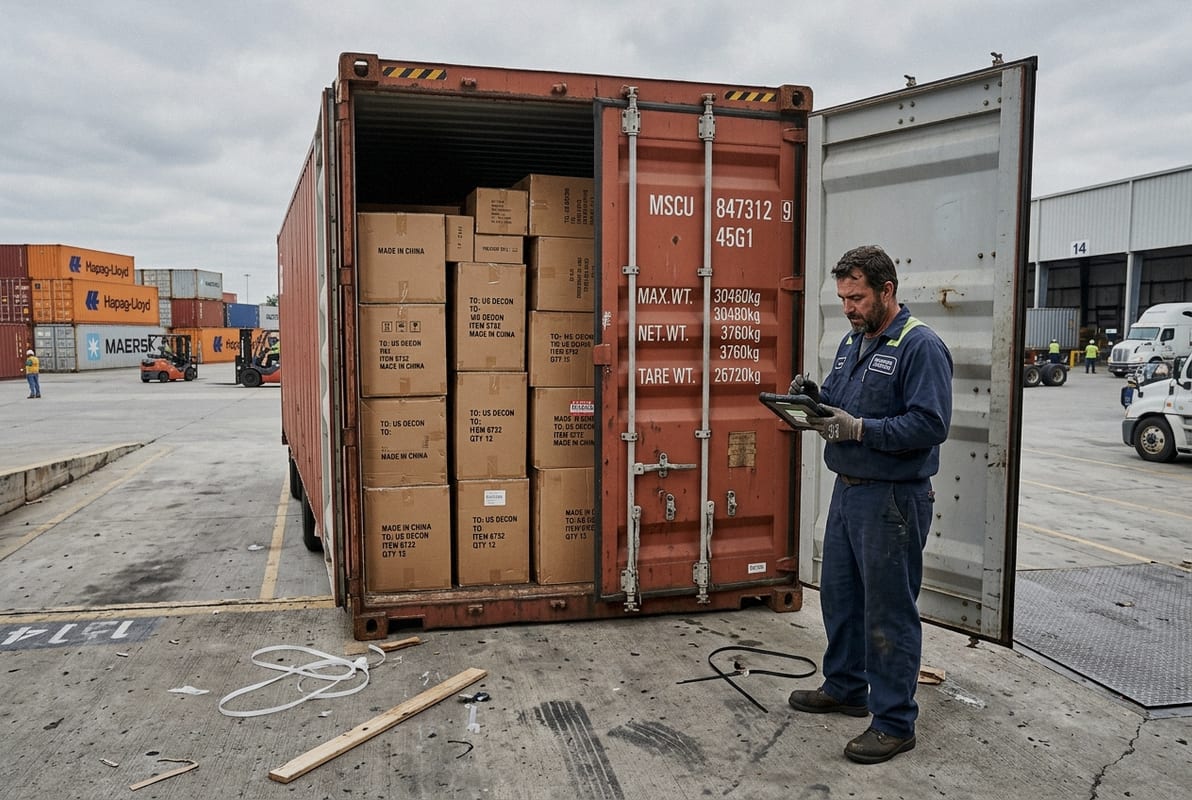
Amazon FBA labeling works in layers. Miss one layer and the entire shipment gets flagged. Here is how we break it down for our clients:
Layer 1 — Unit-Level Labels (FNSKU): Every individual product needs an FNSKU barcode. This is Amazon's internal tracking code. It must cover or replace any existing manufacturer UPC barcode to prevent mislabeling at the fulfillment center.
Layer 2 — Box-Level Labels (FBA Shipment Labels): Each outer carton gets an FBA shipment ID label generated from Seller Central. This tells the warehouse which shipment the box belongs to and where to route it.
Layer 3 — Pallet-Level Labels: If you ship palletized freight, each pallet needs four labels — one on each side. These are also generated from the shipping plan in Seller Central.
Label placement is not random. Amazon's systems use high-speed optical scanners. If the label is on a seam, a corner, or a curved surface, the scanner fails. Our team always places carton labels on the largest flat surface, at least two inches from any edge or seam.
Print quality matters too. We use thermal transfer printing 10 on matte label stock. Inkjet labels smear. Laser labels on glossy paper reflect scanner light. Both cause rejections.
Because our shipments go through US customs clearance before reaching FBA, the outer packaging also needs:
| Mistake | Consequence | Our Fix |
|---|---|---|
| Glossy label stock | Scanner rejection at FBA | Switch to matte thermal transfer labels |
| FNSKU placed over a fold | Barcode distortion | Place on flat panel, 2" from edges |
| Missing country of origin | Customs hold, potential fines | Pre-print "Made in China" on every carton |
| Wrong HS code on invoice | Incorrect duty calculation, delays | Cross-reference codes with US HTS database before shipping |
| Conflicting UPC visible | Amazon assigns wrong listing | Cover or remove all non-FNSKU barcodes |
One thing I want to emphasize: delivery transparency starts with labeling. When every label is correct, the package flows through customs, through the carrier network, and into the FBA warehouse without anyone needing to open it or ask questions. That is the goal.
The lesson that stuck with me most came from a batch of ceramic home décor items we shipped DDP for a mid-size Amazon seller. Every piece survived the ocean crossing from Zhengzhou to Los Angeles perfectly. Then the last-mile carrier's automated sorter dropped a carton four feet onto a steel chute. The box buckled. Six items shattered. The seller filed a claim, but the carrier denied it — the box did not meet their minimum burst-strength standard.
To prevent carton rejection or damage during last-mile delivery, use corrugated boxes with burst strength above 200 PSI, reduce the void space ratio below 30% with snug internal cushioning, seal all seams with the H-tape method, and ensure the box shape is consistently rectangular to survive automated conveyor sorting and 3–4 foot drops.
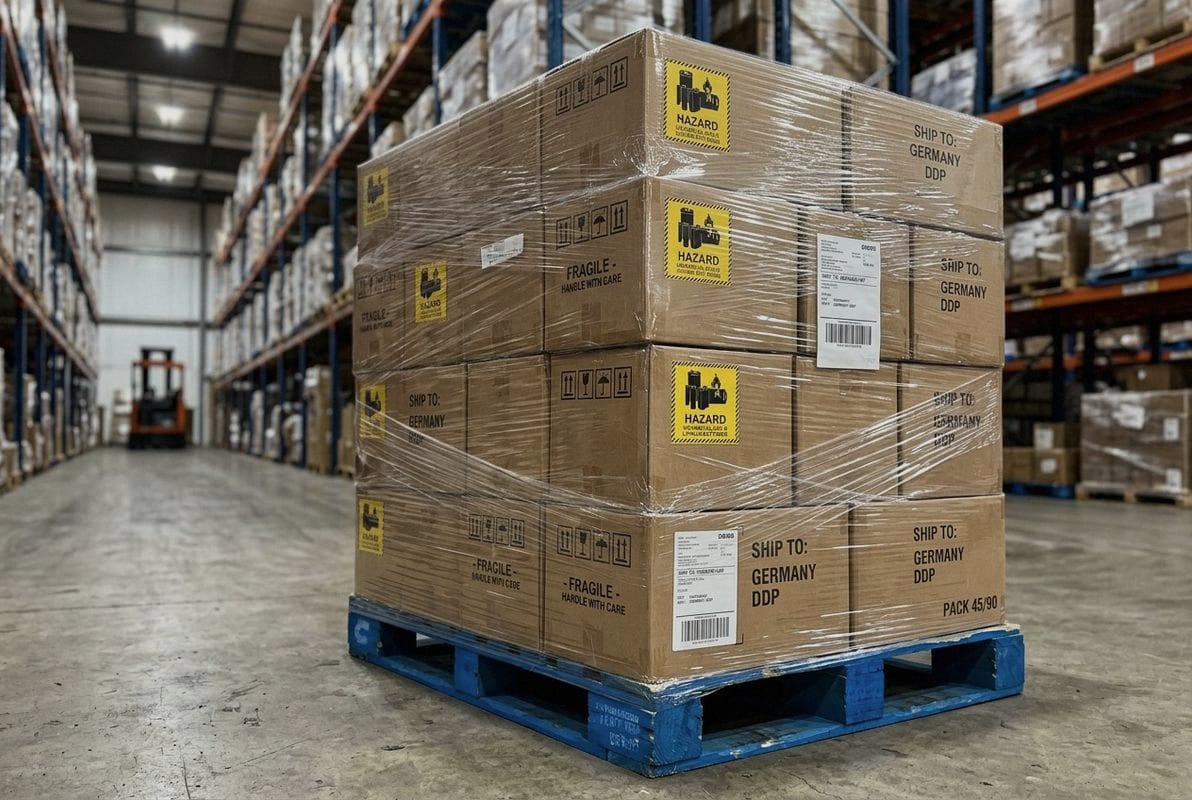
Most sellers picture a friendly driver gently placing their box on a porch. The reality is different. Before that happens, the carton goes through a sorting hub. Packages ride conveyor belts at high speed. They get diverted by mechanical arms. They slide down chutes. They fall into bins. A carton that is not built for this environment will fail.
Here are the primary damage risks at the last-mile stage:
We insist on the H-tape method for all our DDP cartons. This means applying tape along the center seam and then along both edge seams on top and bottom. This creates an "H" pattern that prevents flaps from popping open during drops or conveyor jams.
Standard center-seam-only taping is the number one reason we see cartons arrive open. A single strip of tape cannot withstand the lateral forces of automated sorting.
Protective packaging inside the box is just as critical as the box itself. Here is how I approach it for different product types:
The key metric is the void space ratio. If more than 30% of your box interior is empty air, the box will crush under stacking pressure. If there is zero void, the product absorbs impact directly. Aim for 10–20% void filled with compressible cushioning material.
For shipments containing electronics, branded goods, or anything over $200 per unit, I recommend tamper-evident tape or seals. This does two things: it deters pilferage during the extended DDP supply chain, and it gives you evidence for claims if a package arrives opened.
Simple tamper-evident tape that leaves a "VOID" pattern when removed costs pennies per carton. It is worth every cent for high-value goods moving through multiple carrier handoffs.
A client once shipped 80 cartons of fitness equipment — each box weighed 52 pounds. Every single carton triggered an overweight surcharge from the last-mile carrier. The surcharges totaled more than $1,200. Had we split those items into two smaller cartons each, the total shipping cost would have been lower, even with double the box count.
To avoid extra surcharges on DDP shipments, keep each carton under 50 lbs actual weight, stay within 108 inches combined length-plus-girth for standard rates, and optimize box dimensions to minimize the gap between actual weight and dimensional weight — calculated as (L × W × H) ÷ 139 for most US carriers.
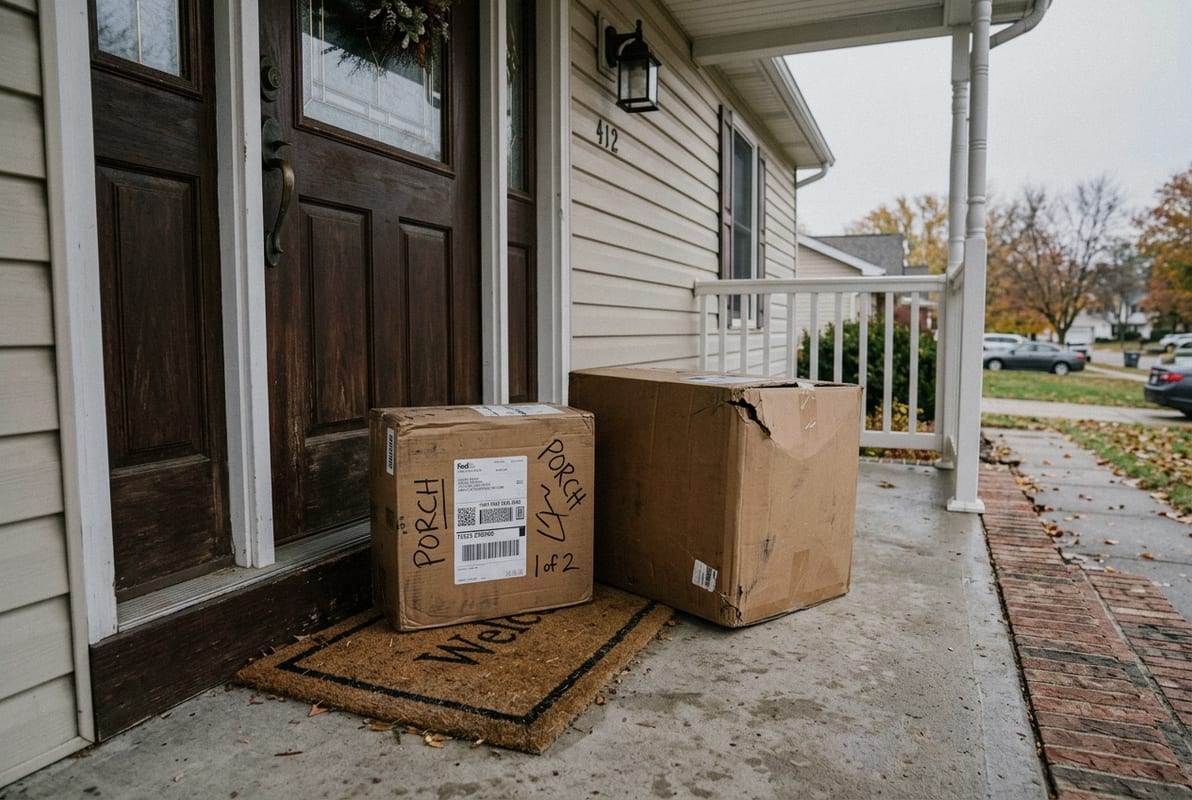
Most US last-mile carriers charge based on whichever is greater: actual weight or dimensional (DIM) weight. The DIM weight formula for domestic US carriers is:
DIM Weight (lbs) = (Length × Width × Height in inches) ÷ 139
So a box measuring 24" × 18" × 18" has a DIM weight of approximately 56 lbs. Even if the actual product weighs only 20 lbs, you pay for 56 lbs. This is why box sizing is the single most impactful cost lever in DDP last-mile shipping.
Every carrier has thresholds. Exceed them and you pay more — sometimes significantly more. Here are the key numbers I work with daily:
| Carrier | Max Weight (Standard) | Max Size (L + Girth) | Oversize Threshold | DIM Divisor |
|---|---|---|---|---|
| USPS | 70 lbs | 108 inches | 1 cubic foot at 0.785 | 166 |
| UPS Ground | 150 lbs | 165 inches | 96" length or 130" L+G | 139 |
| FedEx Ground | 150 lbs | 165 inches | 96" length or 130" L+G | 139 |
| DHL eCommerce | 44 lbs | 108 inches | 27" × 17" × 17" | 139 |
| Amazon (SPD) | 50 lbs per box | 25" on any side (standard) | 18" × 14" × 8" (standard) | N/A (Amazon rates) |
Amazon has its own size tiers. These tiers determine not just shipping cost but also storage fees. Many sellers do not realize that going even one inch over a threshold bumps the product into a higher tier with dramatically higher fees.
For standard-size FBA items, the maximum is 18" × 14" × 8" and 20 lbs. Anything beyond that falls into "oversize," and fees jump sharply. Our recommendation: design your packaging to fit within standard-size limits whenever physically possible. Sometimes that means rethinking how products are folded, disassembled, or oriented inside the box.
Here is what we tell every DDP client during their first onboarding call:
The goal is simple: keep your actual weight and DIM weight as close together as possible, and stay under every carrier threshold that applies to your shipment. This is where DDP cost predictability lives or dies.
Getting DDP outer packaging right protects your product, your budget, and your customer relationship across every mile from China to the US doorstep. Prioritize box strength, precise labeling, snug cushioning, and smart sizing — and your shipments will clear customs, survive sorting, and arrive intact every time.
1. Amazon Seller Central provides official guidelines for FBA shipment dimensions and weight limits. ↩︎
2. UPS provides comprehensive guidelines for packaging to ensure safe transportation. ↩︎
3. Explains how automated conveyor systems handle packages in warehouse and distribution centers. ↩︎
4. DHL's guide defines DDP Incoterms and outlines seller responsibilities in international shipping. ↩︎
5. The International Trade Administration explains the purpose and structure of Harmonized System codes. ↩︎
6. Details the H-tape sealing method for secure package closure and reinforcement. ↩︎
7. Explains the EU's Packaging and Packaging Waste Regulation (PPWR) regarding void space limits. ↩︎
8. Shopify explains dimensional weight calculation and its impact on shipping costs. ↩︎
9. ASCM defines green logistics and its role in sustainable supply chain management. ↩︎
10. Authoritative explanation of thermal transfer printing technology. ↩︎