- +8618603825129
- [email protected]


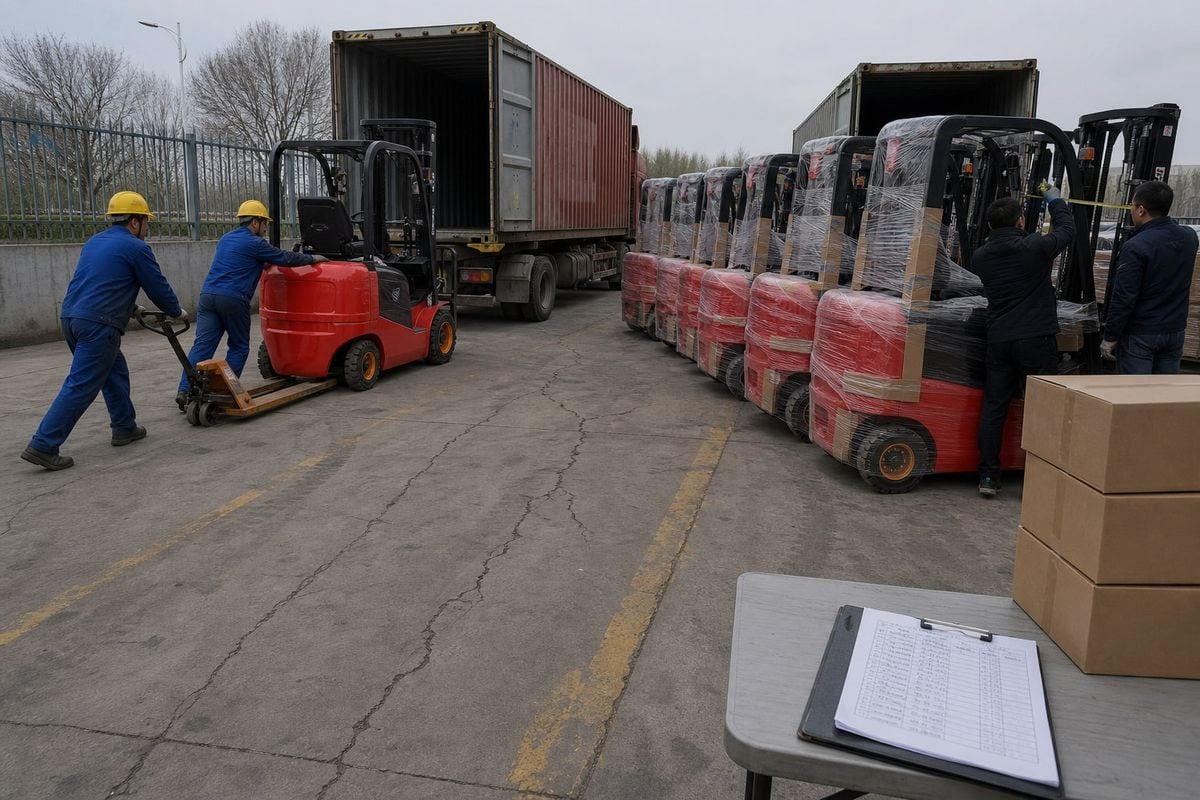
Forklift damage during ocean shipping still shocks importers. After loading hundreds of containers at our Zhengzhou warehouse, I have seen how one loose strap destroys a five-figure machine.
To prevent forklift damage during ocean shipping, clean and inspect the machine, lower the mast, disconnect the battery, center the forklift in the container, block the wheels with wooden dunnage, secure the frame with at least four heavy-duty ratchet straps, and add desiccants against moisture.
That is the short answer. Below, I break down each step in the order damage actually happens, from the factory floor to the sealed container door.
Last year, a US dealer sent me photos of a scratched mast and a cracked counterweight cover. Our team traced the cause back before the vessel even sailed. Damage rarely has one cause.
Forklift damage during ocean freight comes from four sources: rough handling during loading and unloading, cargo shifting inside the container due to vessel rolling and pitching, moisture and salt-air corrosion, and battery or fluid leaks caused by continuous vibration during the voyage.
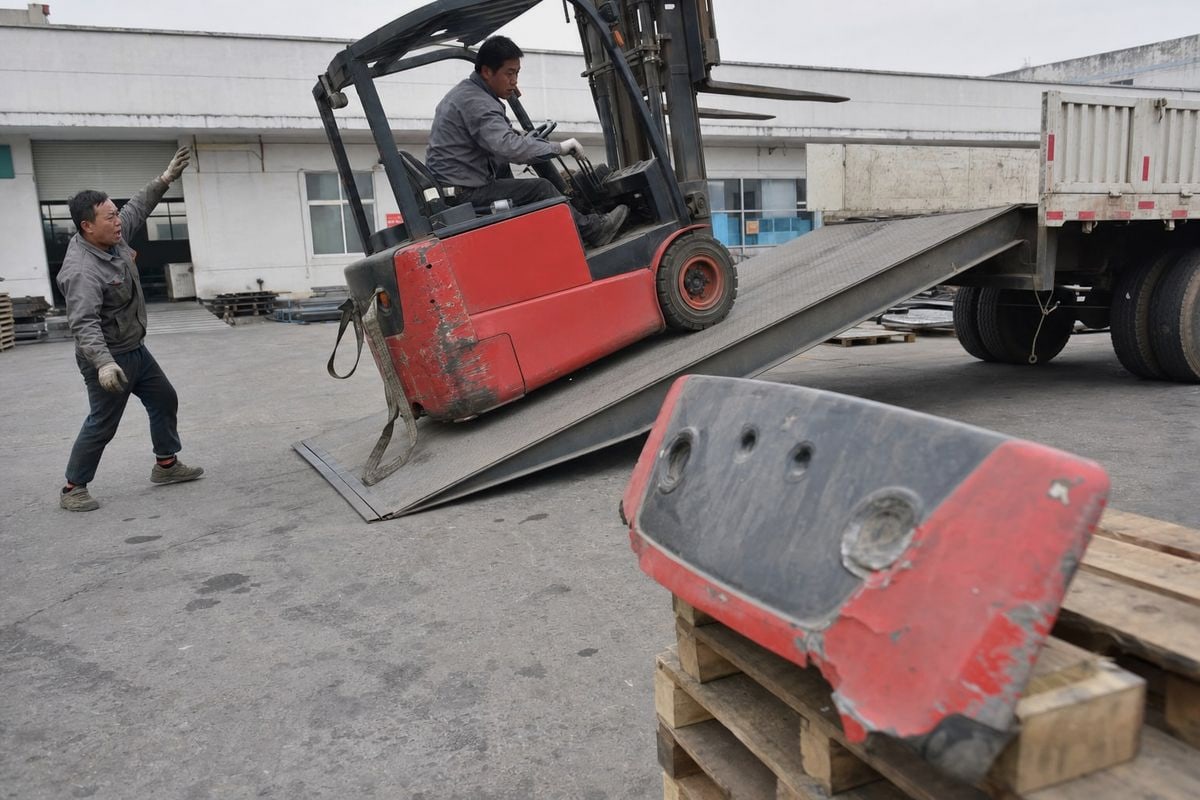
Most importers assume the sea voyage itself is the danger. In my experience arranging electric forklift shipping from China to the United States, the damage chain usually starts on land. A forklift is treated roughly at pickup, gets loaded at a bad angle, and arrives at the port already stressed. Then the ocean finishes the job.
A vessel does not move smoothly. It rolls side to side, pitches front to back, and heaves up and down. A three-ton electric forklift that is not blocked will creep across the container floor with every wave. Each micro-shift loosens the straps a little more. After twenty days at sea, a "secured" machine can be resting against the container wall.
| Damage Type | Typical Cause | Common Result |
|---|---|---|
| Impact damage | Poor rigging, sudden stops, sharp turns during loading | Bent forks, cracked panels, dented counterweight |
| Shift damage | No wheel chocks, weak lashing, off-center loading | Mast contact with walls, broken lights, paint damage |
| Corrosion | Container rain, salt-air humidity 1, wet container floor | Rusted chains, damaged connectors, seized controls |
| Electrical damage | Battery left connected, terminal contact under vibration | Short circuits, drained batteries, controller faults |
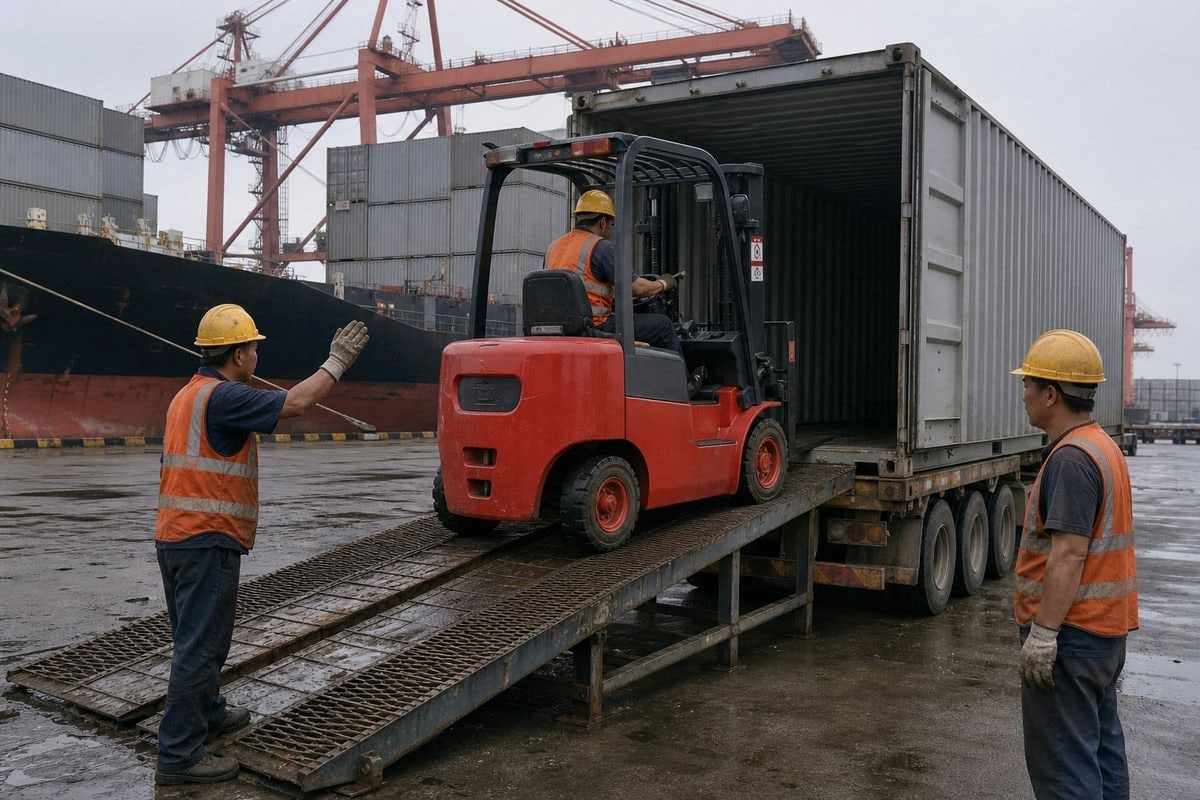
Operational causes matter too. Freight damage guidance consistently points to sudden stops, sharp turns, over-capacity lifts, and poor loading practices 2 as the root of many claims. That is why I insist on experienced operators and slow, square approaches whenever we coordinate container loading with factories in China. Warehouse handling discipline directly shapes marine freight outcomes.
The trade-off I weigh on every shipment is loading speed versus restraint quality. Factories want the container out fast. Our loading team slows things down, because thirty extra minutes of lashing saves weeks of damage disputes.
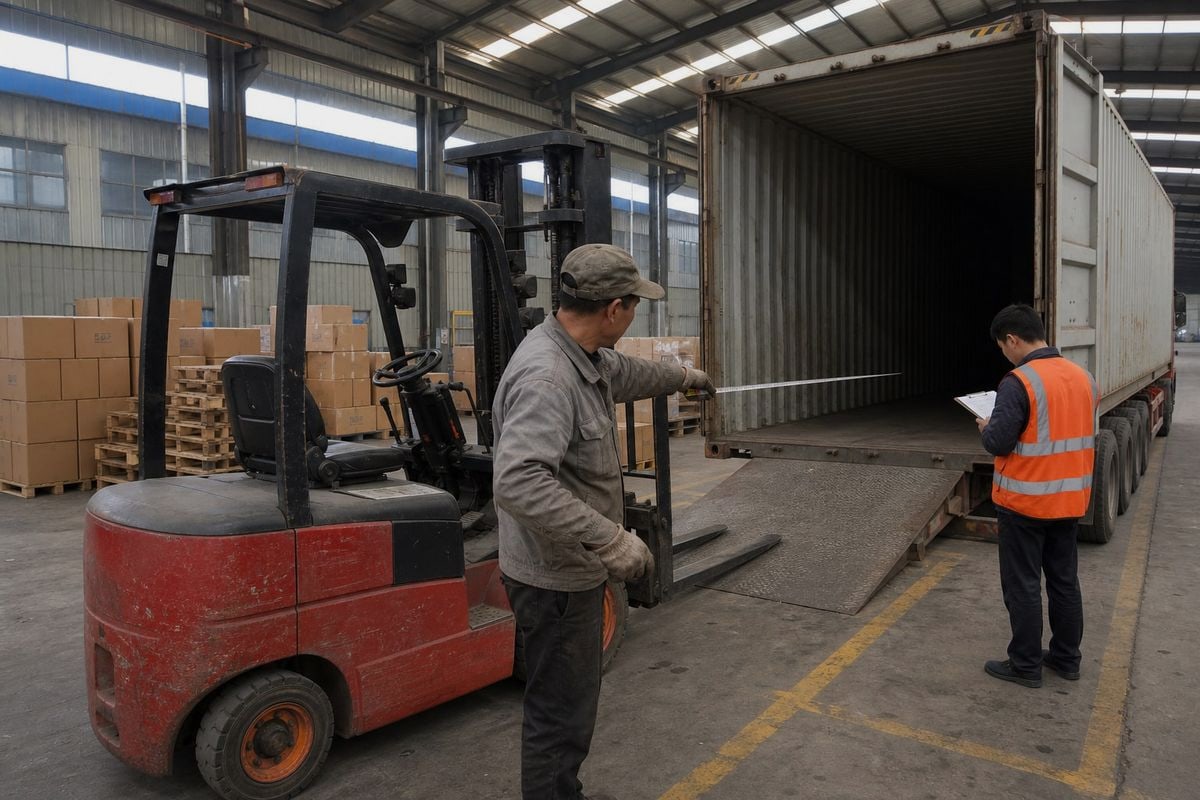
Center the forklift over the container floor, lower the mast and forks completely, install wheel chocks and wooden blocking around all tires, then attach at least four heavy-duty ratchet straps rated 5,000 lb or more from the frame to the container lashing points at roughly 45-degree angles.
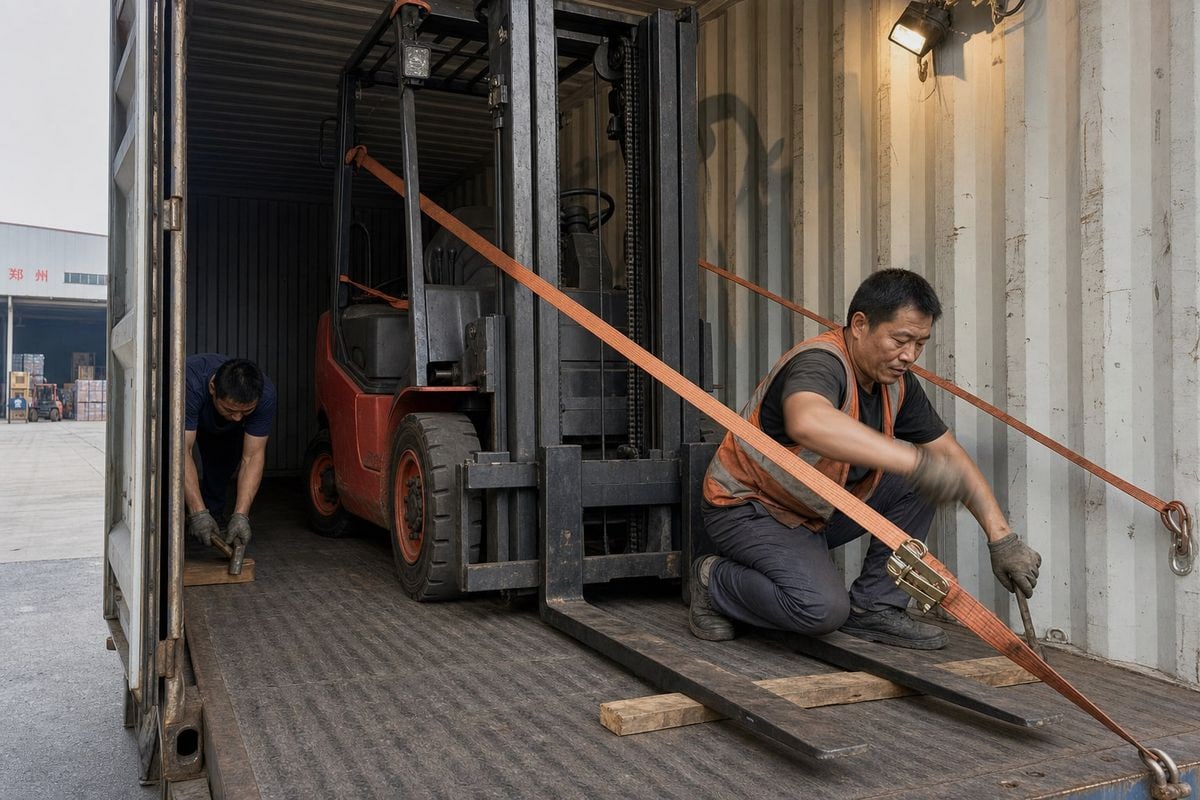
Securing a forklift is a sequence, not a single action. When our team supervises loading, we follow the CTU packing guidelines logic: control the center of gravity first, then block movement, then lash. Here is the process we use.
Why not straps alone? Because ocean shipping creates vibration and repeated lurching that gradually loosens tension. Blocking takes the load off the straps; the straps only need to hold what the dunnage has already stopped. Stretch wrap and padding help protect paint, but mechanical restraint is what actually prevents movement. Packaging is supplementary, never the primary defense.
Some buyers ask about tire pressure on pneumatic-tire units. Reducing to a moderate transit PSI increases the contact patch and adds natural shock absorption against high-frequency engine vibration, though most electric warehouse forklifts we ship ride on solid tires where this does not apply.
A lesson I learned the hard way: a container can be sealed watertight and still rain on your cargo. One winter shipment arrived in the US with condensation streaks on every forklift hood. Since then, moisture control is non-negotiable at our warehouse.
Protect the forklift with VCI anti-corrosion film on exposed metal, high-capacity desiccants inside the container, insulated battery terminals after disconnection, drained or reduced fluids per IMO requirements, and padding on the mast, forks, and control panel to prevent contact abrasion.
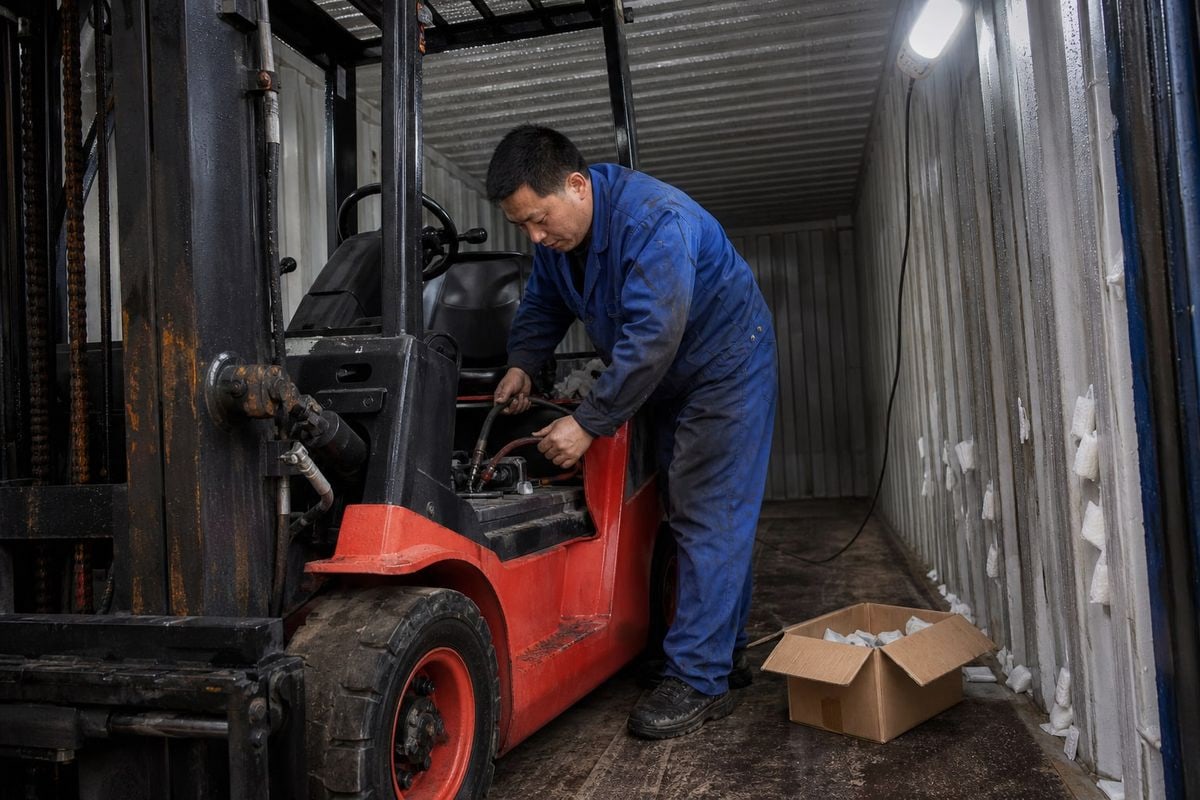
Packaging for ocean freight is really three separate jobs: corrosion control, leak prevention, and surface protection. Each one fails differently, so I plan them separately.
Crossing the Pacific, a container passes through multiple climate zones. Warm humid air trapped at loading condenses on the cold steel ceiling and drips down. Shippers call it container rain. Combined with salt-air humidity, it attacks lift chains, connectors, and hydraulic fittings.
Our standard countermeasures:
| Preparation Task | Why It Matters |
|---|---|
| Drain or reduce fuel and hydraulic fluid to IMO-mandated levels | Prevents hazardous leaks and fire risk during transit |
| Follow battery disconnection procedures and insulate terminals | Stops short circuits caused by continuous vessel vibration |
| Verify lithium battery documentation before port arrival | Ensures carrier acceptance and avoids port rejection |
| Seal openings where appropriate | Blocks salt spray and moisture ingress to internals |
Electric forklifts with lithium batteries 3 need extra care. Battery specifications and documentation affect carrier acceptance, so we confirm classification and paperwork before the cargo ever reaches the port. Fixing a battery documentation problem at the terminal is expensive; fixing it at the factory is free.
One tradeoff to address honestly: some owners prefer shipping with fluids full to protect seals. The safer rule is to follow the manufacturer's instructions and the carrier's requirements for your specific machine and route, rather than applying one universal rule.
A US distributor once told me his previous forwarder quoted a great rate, then loaded his forklifts with two thin straps and no blocking. He paid for repairs on arrival. Our team took over his next shipment, and the first thing we sent him was loading photos.
Choose a forwarder with proven heavy machinery experience, in-house container loading supervision, lithium battery handling knowledge, photo documentation of every secured load, maritime cargo insurance options, and the ability to recommend the right method — container, flat rack, or Ro-Ro — for your forklift's size.
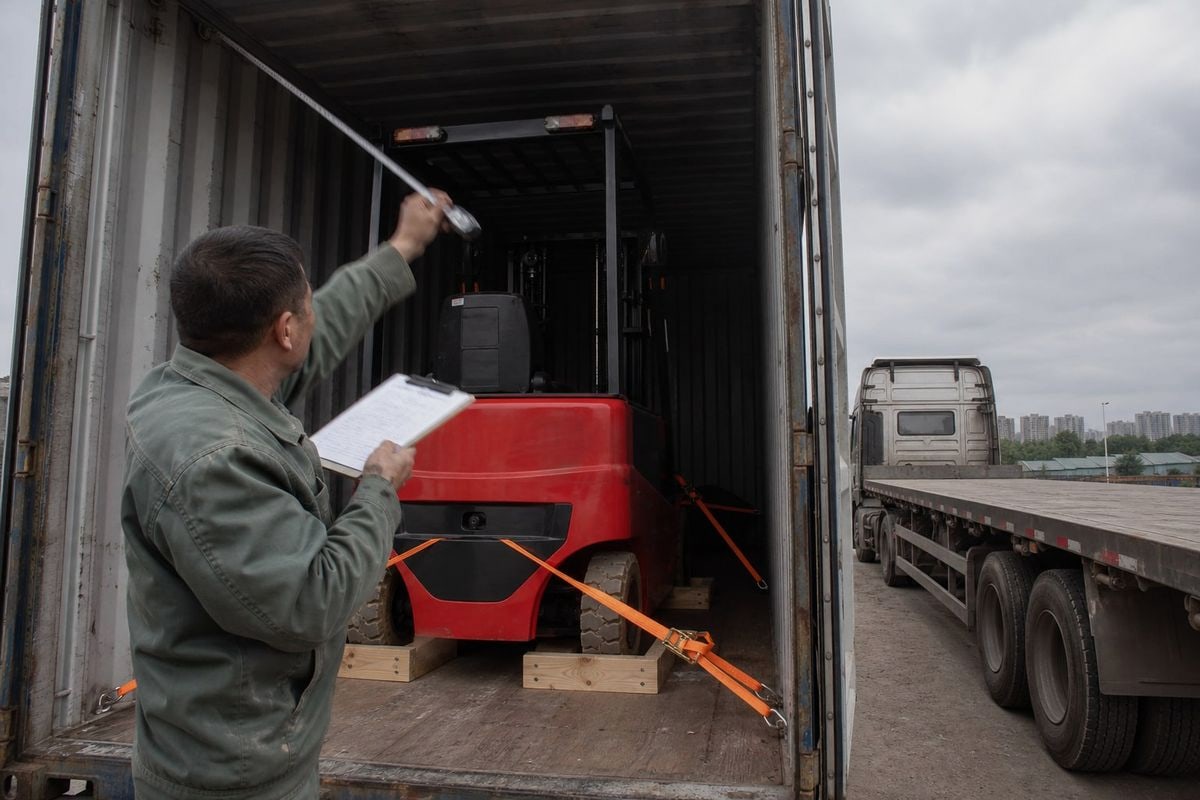
The forwarder you choose determines whether every step above actually happens. Rates are easy to compare; loading discipline is not. Here is how I would evaluate a forwarder if I were the buyer.
A good forwarder starts by matching the shipping method to the machine, not by quoting the cheapest box. Most electric warehouse forklifts fit standard containers. Oversized or heavy units may need alternatives.
| Method | Best For | Damage Consideration |
|---|---|---|
| Standard container (20FT/40FT/40HQ) | Compact and medium electric forklifts | Best weather enclosure; requires internal blocking and lashing |
| Flat rack container | Tall or wide units exceeding door dimensions | Needs heavy machinery rigging, weatherproof covering, and chain lashing |
| Ro-Ro shipping | Large drivable equipment | Simple loading, but more exposure and different handling risks |
Containers offer better enclosure against weather and theft, while Ro-Ro suits oversized units. The right answer depends on dimensions, weight, and the handling equipment available at both ports. We evaluate all of this before quoting, because the wrong method choice creates damage risk that no strap can fix.
Ask any candidate forwarder these questions:
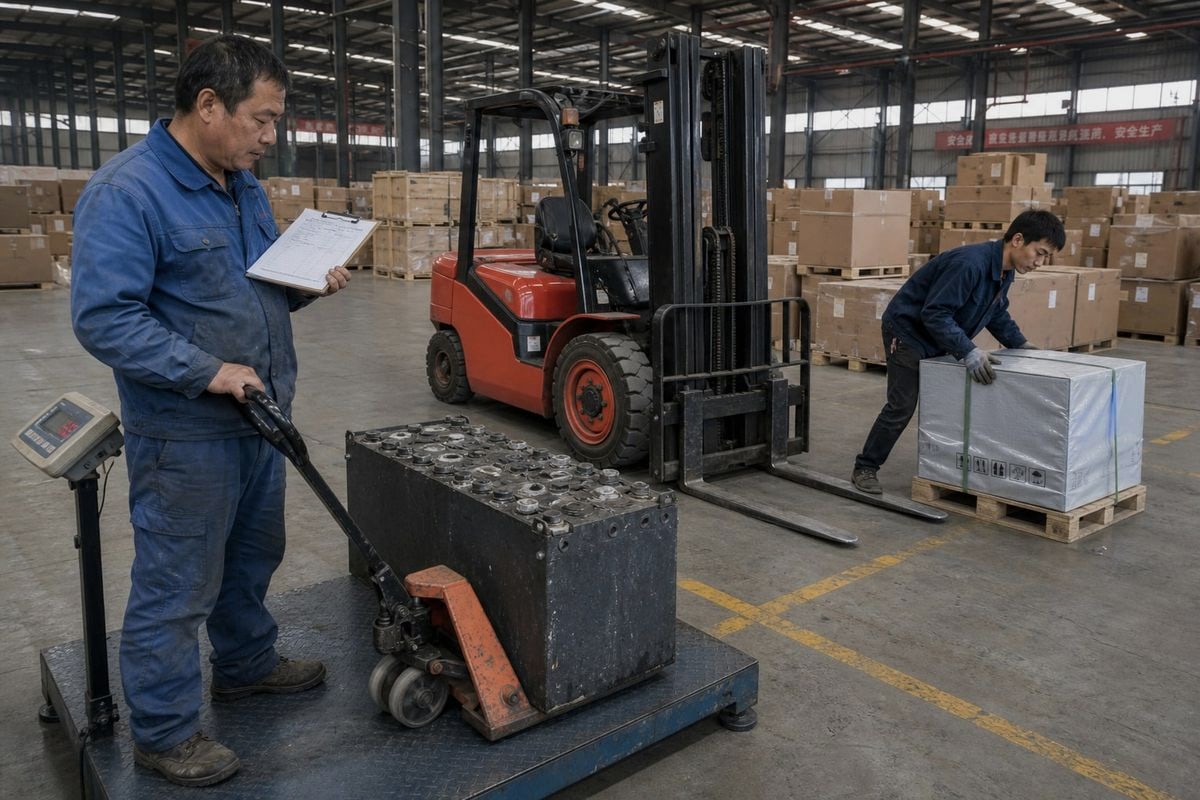
Photo documentation deserves special emphasis. Pictures of the secured load, plus recorded weights and dimensions, prove the loading condition and method. If damage occurs anyway, that evidence supports your insurance claim 4 and establishes responsibility. Our team sends loading photos to every customer before the container leaves the warehouse. It protects both sides, and it forces the loading crew to do the job right, because they know the work will be reviewed.
Preventing forklift damage during ocean shipping means breaking the damage chain early: prepare the machine, block and lash it properly, control moisture, document everything, and choose an experienced forwarder.
1. The IMO is the United Nations agency responsible for the safety and security of international shipping. ↩︎
2. UNECE provides the official international code of practice for the safe packing of cargo transport units. ↩︎
3. IATA provides the industry standards for the documentation and handling of lithium batteries in transport. ↩︎
4. Wikipedia entry explaining the principles and coverage of insurance for ships and their cargo. ↩︎