- +8618603825129
- [email protected]


Every week, clients ask our Zhengzhou team the same thing about goods imported from China under DDP terms Section 301 tariffs 1. Many were burned before—hidden fees, seized cargo, forwarders who vanished. The stakes are real: one bad DDP quote can wipe out a season's profit. That is exactly why I want to give you a straight, experience-based answer.
No, not all goods imported from China can be shipped under DDP terms. DDP works only when the destination country allows a compliant Importer of Record, the product is not restricted or regulated, and duties, taxes, and customs clearance can be handled legally by the seller's side.
DDP is a commercial arrangement under Incoterms 2020 2, not a magic pass through import law. Let me break down what actually clears, what gets blocked, and where the risk hides.
A shipment we handled last quarter—consumer electronics 3 bound for an Amazon FBA warehouse—cleared US customs in one day. The reason was simple: the product category fit DDP perfectly.
Most general consumer goods qualify for DDP shipping from China to the USA, including apparel, home goods, electronics accessories, toys, tools, and Amazon FBA inventory. Eligible products share three traits: clear HTS code classification, no special import license requirement, and accurate declared values.

In our daily operations moving cargo from China to the United States, we see a clear pattern. The products that flow smoothly under DDP are the ones customs officers see thousands of times a day. They carry standard HTS code classification, they need no agency sign-off, and their commercial invoice values match market reality.
| Category | DDP Suitability | Notes |
|---|---|---|
| Apparel & textiles | Excellent | High duty rates, but clearance is routine |
| Home & kitchen goods | Excellent | Low regulatory friction |
| Consumer electronics accessories | Good | FCC marking may be checked |
| Toys & games | Good | CPSIA testing documents help |
| Furniture & decor | Good | Watch for AD/CVD on some wood items |
| Tools & hardware | Good | Standard clearance path |
| Amazon FBA private-label goods | Excellent | Our core specialty |
One point matters more than the category itself: the Importer of Record. US customs requires a local entity with an EIN 4 to act as IOR. A Chinese exporter cannot directly fill that role. If a client has no import qualification, our company provides the importer—we operate our own importer company in the United States with complete import credentials. That structure is what turns a DDP quote from a promise into a legal, documented customs entry.
For B2B bulk cargo, we are honest with clients: with US inspections tightening recently, the industry often recommends DAP, where the buyer clears customs, pays import duties and taxes, and deducts input VAT where applicable. We optimize our DDP double-clearance plans based on real-time port conditions to help clients avoid risk and save cost.
Years ago, a client shipped lithium battery products 5 without telling us the full spec. That lesson shaped how we screen every booking today—before pricing, we check restrictions first.
Yes. Restricted items include lithium batteries, chemicals, food, medical devices, cosmetics, weapons, and branded goods without authorization. These regulated goods need special licenses or agency approvals that standard DDP channels cannot cover, so they face rejection, seizure, or destruction at customs.
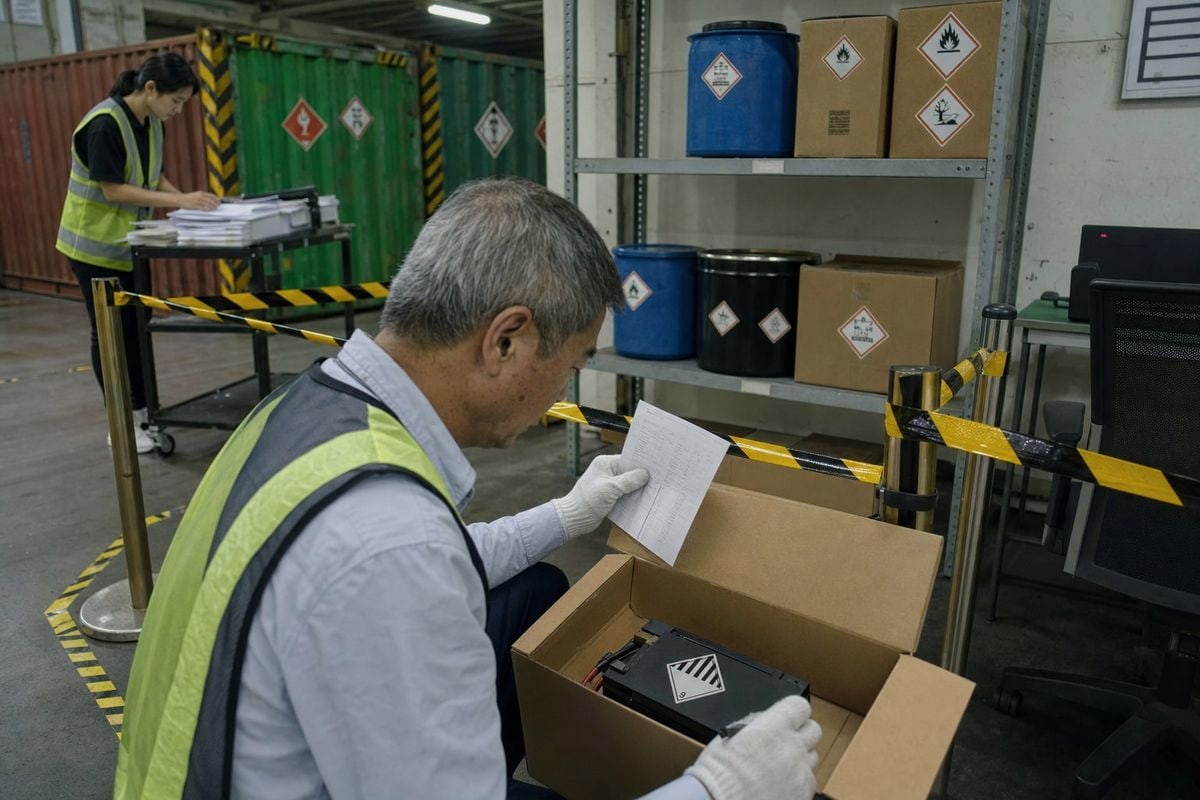
The destination country matters as much as the product. Based on our first-hand routing experience, DDP feasibility falls into clear tiers—and this is where most importers get blindsided.
The USA, EU countries (Germany, France, Netherlands, Belgium, Italy, Spain, Poland, Czechia), and the UK all support compliant DDP, though the EU requires a Fiscal Representative plus EORI and VAT registration, with IOSS available for B2C. Japan, South Korea, Singapore, Malaysia, Thailand, Vietnam, Hong Kong, and Macau have transparent rules and ample fully-taxed DDP channels. Australia and New Zealand work too, but need a local GST agent and truthful declaration—low declaration gets re-assessed. In the Middle East, the UAE, Qatar, Kuwait, and Saudi Arabia are workable, though Saudi Arabia demands SABER/SASO certification. Missing certificates mean detained cargo, so confirm documents before shipping.
India (IEC code and GSTIN required, strict HS checks), the Philippines (slow clearance, high inspection rates), and Turkey (shifting policy, wide customs discretion) can do DDP but demand advance evaluation. Then there are markets I strongly advise against: Brazil is the global DDP disaster zone—extreme combined taxes, zero document tolerance, minimum customs valuations. We tell Brazilian buyers to use DAP. Argentina has currency controls and DJAI permits; overdue cargo gets auctioned. Russia enforces EAC certification with AI-driven valuation checks. Indonesia detains anything on the SNI mandatory list without certification and retroactively audits low declarations. Several African countries (Nigeria, Angola) suffer unstable policy and endless hidden fees. In these markets, most "DDP" offers are grey-channel under-declaration, and if customs inspects, the shipper absorbs seizure, fines, destruction, and demurrage.
A real case: a client from Bosnia and Herzegovina asked us for DDP. We explained the country is outside the EU and the DDP risk was high. We proposed delivering to a local warehouse, with the client handling customs clearance, taxes, and pickup. He accepted, and the shipment went smoothly.
Pricing a DDP shipment is a trade-off we weigh daily: quote too low and compliance breaks; quote honestly and clients ask why competitors are cheaper. The gap is almost always the duty math.
Under DDP, the seller pays all import duties and taxes, which vary by HTS code, product category, and origin. China-origin goods to the USA face base duty rates plus Section 301 tariffs, and some categories carry anti-dumping duties exceeding 100% of product value.

Every legitimate DDP price is built from a landed cost calculation: product value, freight, base duty, additional tariffs, and clearance fees. When a quote ignores any layer, someone is cutting a corner—usually through HS code misclassification or under-declared values. Those tactics shift retroactive penalty risk onto your business record, not the forwarder's.
| Cost Layer | Applies To | Typical Range |
|---|---|---|
| Base import duty | Varies by HTS code | 0%–25%+ |
| Section 301 tariff | Most China-origin goods | Additional 7.5%–25%+ |
| AD/CVD | Specific categories (some furniture, steel, aluminum) | Can exceed 100% |
| MPF & HMF fees | Formal entries | Small fixed percentages |
| Brokerage & clearance | All shipments | Fixed fees |
For Europe, Value Added Tax 6 dominates the tax burden, and B2B buyers with their own VAT numbers often prefer DAP so they can self-clear and deduct input VAT. That is a legitimate financial reason to skip DDP, not a compliance failure. In Australia and New Zealand, GST must be declared truthfully through a local agent. Also watch for a critical trap: some cheap "DDP" quotes silently exclude VAT or GST, then demand payment before final delivery. Real DDP includes everything.
The de minimis landscape has shifted too. With low-value duty exemptions 7 suspended for many shipments since 2025, more parcels face duties, which makes honest, tax-included DDP pricing more relevant—and grey-channel parcel splitting far more dangerous. Customs authorities are actively seizing cargo and blacklisting delivery addresses tied to Section 321 abuse.
A US client once assumed DDP only worked for courier parcels. Then we moved his first full container tax-included, door to door, and his cost per unit dropped sharply.
Yes, DDP works for small parcels, LCL consolidations, and full FCL containers from China. Small parcels use courier channels with simplified clearance, while LCL and FCL shipments require formal customs entries, a proper Importer of Record, and full duty payment.

The mechanics differ by shipment size, and understanding the differences protects you from bad providers. Here is how we structure each mode at our Zhengzhou operation.
| Mode | Best For | Clearance Type | Our Transit Time (China–USA) |
|---|---|---|---|
| Small parcel (air express) | Samples, restocks under ~200kg | Courier clearance via DHL/FedEx/UPS partners | Fast, days not weeks |
| Air freight DDP | Urgent FBA replenishment | Formal or consolidated entry | Short lead time |
| LCL sea DDP | Partial-container volumes | Formal entry, shared container | 18–25 days |
| FCL sea DDP | Full container loads | Formal entry, single consignee ideal | 18–25 days |
Small parcels enjoy simple clearance, but bulk cargo attracts real scrutiny. High-value and high-volume DDP shipments are more likely to be flagged for manual inspection, because customs increasingly audits all-inclusive declarations for revenue loss. One structural issue to know: some forwarders clear LCL cargo in bulk under a single manifest, which can prevent you from getting your individual customs entry document—the paperwork you need for tax audits. Always ask your freight forwarder for the actual entry, not just an invoice.
For Amazon sellers, there is another layer. FBA networks are tightening compliance checks, and shipments can be rejected if the Importer of Record does not match expectations on the selling account. Our team handles FBA labeling, packaging, and delivery appointment rules daily, and our US customs broker partnerships keep formal entries clean. Whether you ship one pallet by LCL or ten containers by FCL, sea or air, clients wanting DDP terms can consult us anytime—we assess current inspection conditions and design the best routing for each shipment. My inbox ([email protected]) is open for exactly these questions.
Not all goods imported from China suit DDP terms. Check your product, destination, and IOR structure first—or ask us, and we will design the compliant route for you.
1. Official USTR page explains Section 301 tariff mechanism referenced for China-origin duties. ↩︎
2. Official ICC page defining the global standards for international trade terms. ↩︎
3. Authoritative overview of the consumer electronics industry and product categories. ↩︎
4. Official IRS guidance on Employer Identification Numbers required for US business entities. ↩︎
5. Comprehensive technical overview of lithium battery types and safety standards. ↩︎
6. Official European Commission portal for VAT rules and cross-border trade regulations. ↩︎
7. Official CBP resource explaining Section 321 and low-value shipment entry programs. ↩︎