
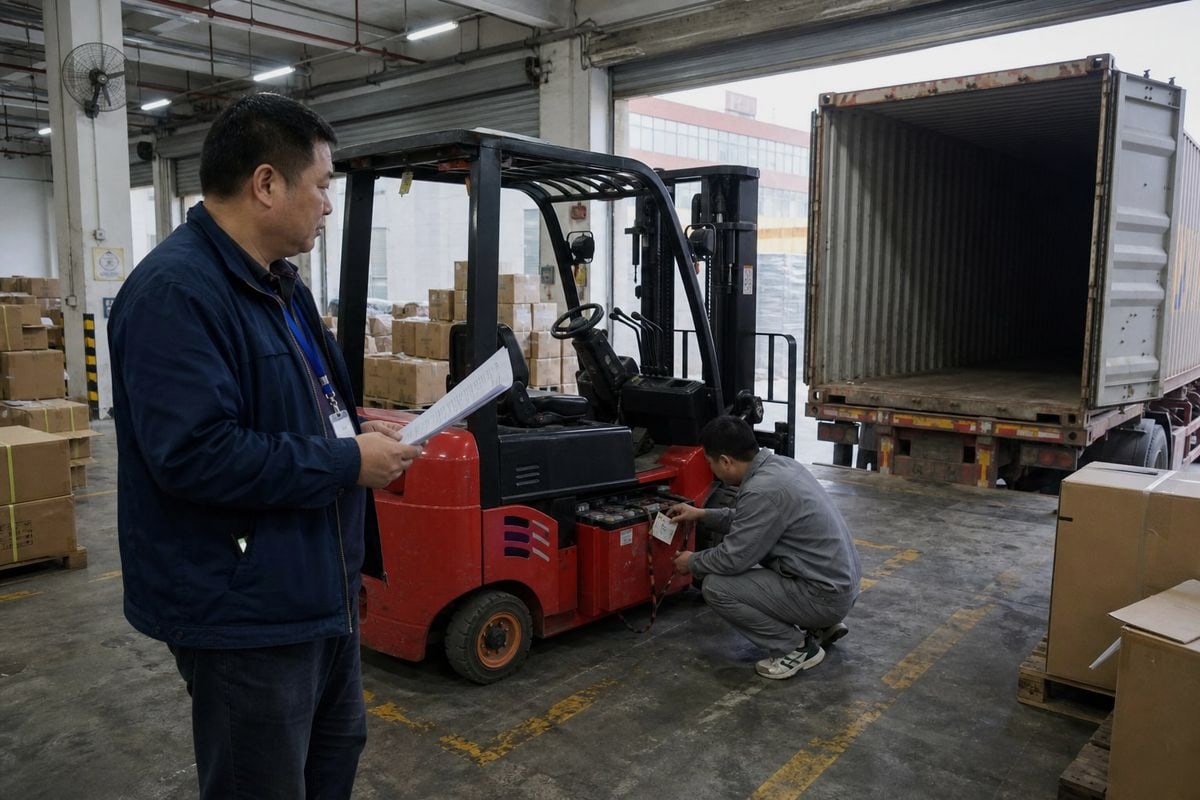
When buyers ask me how to [import electric forklifts from China](https://mbmlog.com/?p=11529), I always warn them first: one missing battery document can hold a whole container at port. I have seen it happen.
Um Elektrostapler aus China zu importieren, benötigen Sie eine Handelsrechnung, eine Packliste, den Frachtbrief, das Ursprungszeugnis, den UN38.3-Testbericht, das MSDS für die Batterie, eine Gefährliche-Güter-Erklärung, wenn Lithiumbatterien betroffen sind, sowie zielgebietspezifische Zollunterlagen wie eine Zollanleihe oder das EPA-Formular 3520-21.
Das ist die kurze Antwort. Das vollständige Bild hängt von Ihrem Batterietyp, Ihrem Bestimmungsland und Ihren Incoterms ab. Lassen Sie mich Sie Schritt für Schritt durch jede Phase führen.
Welche Dokumente benötige ich, um Elektrostapler aus China zu importieren?
Letzten Monat hielt unser Team in Zhengzhou eine Buchung für zwei Tage, da eine Fabrik einen UN38.3-Bericht vom Gabelstaplerhersteller und nicht vom Batteriefabrikanten sent. Spediteure lehnen dies ab.
Sie benötigen zwei Dokumentensätze: Handelsdokumente (Handelsrechnung, Packliste, Frachtbrief, Ursprungszeugnis) und Konformitätsdokumente (UN38.3-Testbericht, MSDS für Lithiumbatterien, Gefahrgutdeklaration und Zielzertifikate wie CE für Europa oder Ladegerätedokumentation für die Vereinigten Staaten).

Betrachten Sie die Papierarbeit als zwei Projekte, die zur gleichen Zeit ablaufen. Eines ist ein normaler Maschinenkauf. Das andere ist eine batteriekonforme Lieferung. Die meisten Verzögerungen, die ich sehe, kommen von Käufern, die nur die erste Reihe vorbereiten.
Wesentliche Handelsdokumente
Diese vier Dokumente bilden das Rückgrat jedes Zollabfertigungsprozesses. Zollbeamte verwenden sie, um den Transaktionswert zu überprüfen und die Waren zu klassifizieren.
| Dokumentieren | Zweck | Wer stellt es bereit? | Wann benötigt |
|---|---|---|---|
| Handelsrechnung | Zollbewertung und -klassifizierung | Anbieter | Vor dem Versand |
| Packliste | Stimmt die physische Ladung mit der Rechnung überein | Anbieter | Vor dem Versand |
| Konnossement | Transportvertrag und Versandnachweis | Frachtführer / Spediteur | Bei der Ausfuhr |
| Ursprungszeugnis | Nachweis des Herstellungslandes; kann die Zollbehandlung unterstützen | Lieferant / Handelskammer | Bei der Zollfreigabe |
Die Handelsrechnung muss das Maschinenmodell, die Menge, den Stückpreis, den Gesamtwert sowie die Angaben zum Absender und Empfänger anzeigen. Die Packliste sollte die Abmessungen, das Brutto- und Nettogewicht, die Anzahl der Kisten und die Seriennummern enthalten. Wenn Ersatzteile im selben Container versendet werden, sollten diese separat aufgelistet werden. Der Zoll vergleicht diese Dokumente zeilenweise. Jede Abweichung zieht eine Inspektion nach sich.
Batterie- und Compliance-Dokumente
Elektrische Gabelstapler mit Lithiumbatterien 1 werden als Gefahrgut der Klasse 9 klassifiziert. Das erfordert zusätzliche Dokumentation:
- UN38.3 Testbericht — muss vom Batteriehersteller kommen, nicht nur vom Gabelstapler-Assembler.
- Sicherheitsdatenblatt (SDB) — beschreibt die Gefahren von Batterien und die sichere Handhabung für den Beförderer.
- DG-Erklärung — IMDG-konforme Gefahrgutunterlagen für die Annahme der Buchung durch den Beförderer.
- Ladezustandsaufzeichnung — Batterien sollten bei 30% SoC oder darunter beim Laden sein, und dies sollte dokumentiert werden.
Für nach Europa transportierte Einheiten fügen Sie die CE-Zertifizierung und die Konformitätserklärung hinzu. Beachten Sie, dass viele Rechtsordnungen von Importeuren jetzt erwarten, dass sie eine technische Bauakte für 10 Jahre nach dem Import aufbewahren. Für in die USA transportierte Einheiten bestätigen Sie die UL-bezogene Ladegerätedokumentation und die Spannungsverträglichkeit, bevor die Fabrik versendet.
Wie gehe ich mit der Zollabfertigung für Gabelstapler mit Lithiumbatterien um?
Ein US-Distributor erzählte mir einmal, dass sein vorheriger Spediteur seine Lithiumgabelstapler wie gewöhnliche Maschinen behandelte. Der Container lag elf Tage im Hafen. Dieser Anruf ist der Grund, warum er jetzt mit uns zusammenarbeitet.
Behandeln Sie die Zollabfertigung für Gabelstapler mit Lithiumbatterien, indem Sie die Ladung als Klasse 9 Gefahrgut deklarieren, die Annahme des Transportunternehmens vor der Buchung sichern, den UN38.3-Bericht und das MSDS mit Ihren Einfuhrdokumenten einreichen und die Anforderungen am Zielort wie eine Zollbürgschaft, ISF-Anmeldung und EPA-Formular 3520-21 für die USA bestätigen.
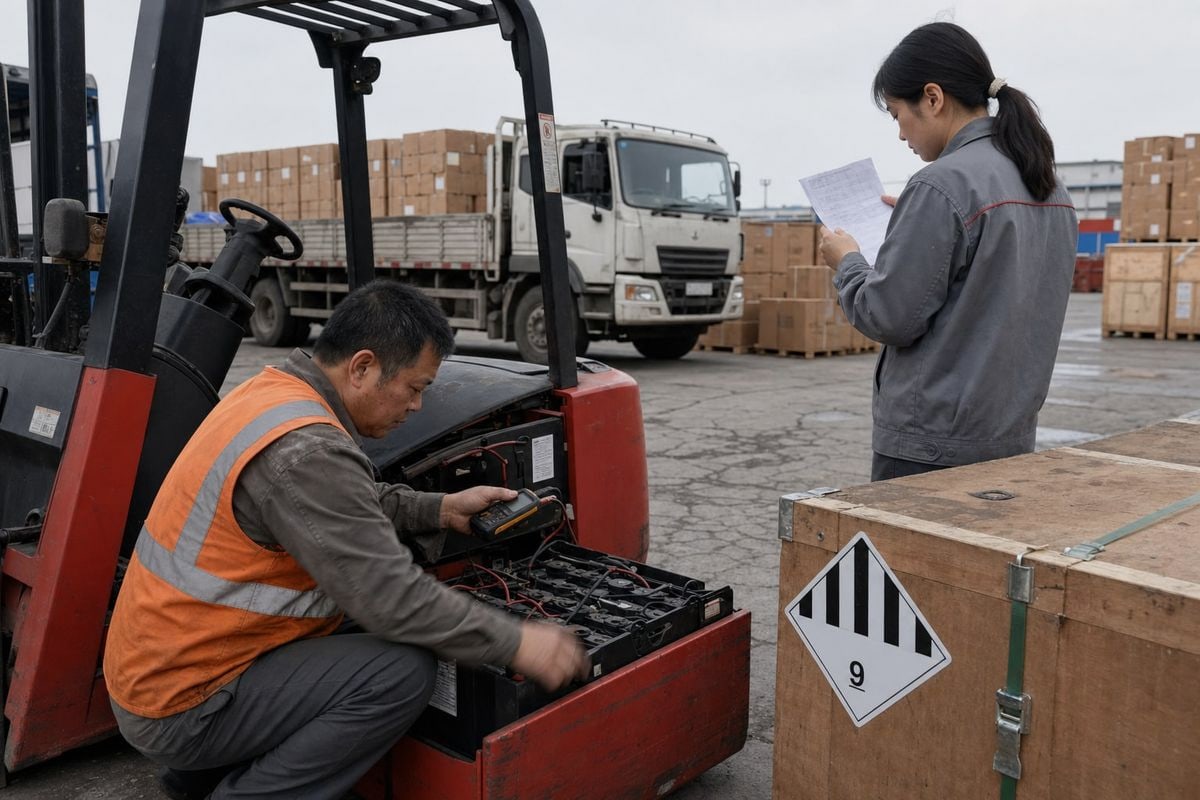
Die Batterie verändert alles über das Versandprofil. Ein Gabelstapler mit Blei-Säure-Batterie ist schwerer Versand. Ein Gabelstapler mit Lithiumbatterie ist schwerer Versand plus reguliertes Gefahrgut. Ihr Spediteur muss die Annahme von Gefahrgut mit dem Transportunternehmen bestätigen, bevor die Ladung überhaupt in Richtung Hafen bewegt wird.
Die Zollabfertigungsreihenfolge, die tatsächlich funktioniert
Hier ist die Reihenfolge, die wir bei jedem Versand von Lithiumbatterien befolgen:
- Frühzeitig Batteriedokumente sammeln. Fordern Sie den UN38.3-Testbericht und das Sicherheitsdatenblatt für Lithiumbatterien vom Batteriemaker an, während der Gabelstapler noch in Produktion ist.
- Beantragen Sie die Genehmigung zur Buchung von Gefahrgut. Der Frachtführer prüft die Dokumente und akzeptiert oder lehnt die Buchung ab. Dies kann mehrere Tage in Anspruch nehmen.
- Verify the state of charge. Confirm the battery is at or below 30% SoC at loading and record it.
- File export declaration in China. Documents must match the physical cargo exactly.
- Prepare the import entry. For the US, this means a customs bond, Importer Security Filing before vessel departure, and EPA Form 3520-21 2 where the entry runs through ABI.
- Clear and pay. Duties and taxes are assessed based on the HS code and declared value.
US-Specific Filings to Watch
Electric forklifts are exempt from EPA engine emissions rules that apply to diesel units. But some electric forklifts still require EPA Form 3520-21 at entry. Importers also face UFLPA supply chain scrutiny now. US Customs may ask for traceability documentation on battery raw materials like lithium, cobalt, and nickel to prove compliance with the Uyghur Forced Labor Prevention Act. We advise buyers to request supply chain mapping documents from the battery supplier before ordering, not after the container is on the water.
Welche Einfuhrzölle und -steuern kann ich beim Import von Gabelstaplern erwarten?
Cost surprises kill deals. Our team quotes landed cost estimates before booking because too many buyers budget only for the factory price and the ocean freight.
Expect duty based on HS Code 8427.10 for self-propelled electric forklifts, plus possible Section 301 tariffs on Chinese-origin goods for US imports, merchandise processing and harbor fees, and VAT or import taxes in the EU. Your Incoterms decide who pays each charge.
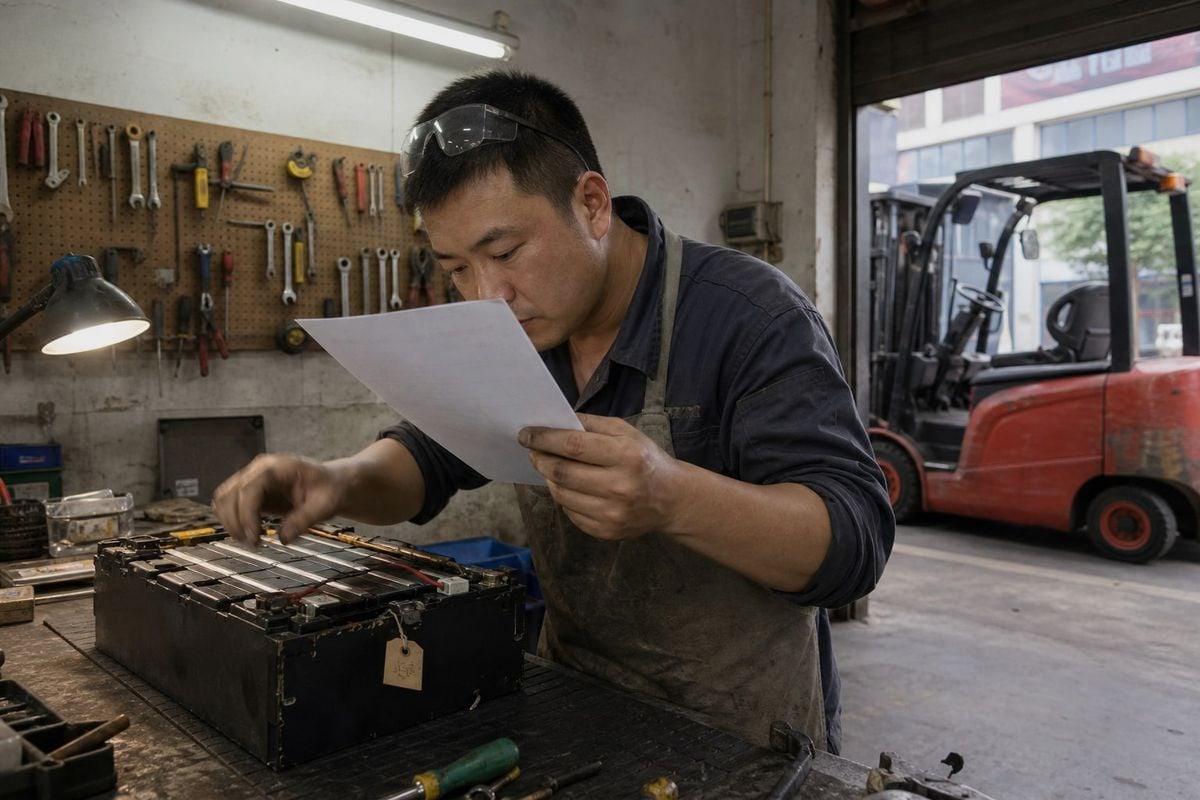
Accurate classification comes first. Electric forklifts fall under HS Code for forklifts 8427.10 3, which covers self-propelled works trucks powered by an electric motor. The HS code determines your base duty rate and flags whether trade remedies like Section 301 tariffs apply. Get the code wrong and you either overpay or invite a customs penalty later.
The Cost Stack Beyond Duty
Import duties and tariffs are only part of the landed cost. Here is the typical stack we walk buyers through:
| Kostenkomponente | Gilt Für | Wer typischerweise zahlt |
|---|---|---|
| Base import duty (HS 8427.10) | All destinations | Importer |
| Zölle gemäß Abschnitt 301 | US imports of Chinese-origin goods | Importer |
| Merchandise processing / harbor fees | US ocean imports | Importer |
| VAT / import tax | EU and many other markets | Importer |
| Destination port and handling charges | All destinations | Depends on Incoterms |
| Customs bond and broker fees | US imports | Importer |
How Incoterms Change Your Exposure
Die Incoterms on your purchase contract 4 decide who arranges export clearance, freight, insurance, and parts of the document chain. Under EXW, you handle everything from the factory gate. Under FOB, the supplier clears export and you take over at the Chinese port. Under CIF, freight and insurance are included but destination charges and clearance are still yours. Under DDP, the seller or forwarder delivers with duties paid.
One objection I hear often: "My supplier said they can handle everything." Be careful. Even under DDP, the importer of record remains legally responsible for compliance, correct HS classification, and entry accuracy in most markets. We offer DDP shipping to the US precisely because buyers want one accountable party, but we still verify classification with the buyer before filing. Never assume the paperwork problem disappears because someone else booked the freight.
Wie kann ich Verzögerungen und Papierfehler beim Import von Gabelstaplern aus China vermeiden?
The most expensive lesson I have watched buyers learn: a container earning demurrage charges at port costs far more than the document check that would have prevented it.
Avoid delays by verifying supplier credentials before paying, cross-checking the invoice, packing list, and Bill of Lading for consistency, confirming battery documents and DG acceptance before booking, using the correct HS code, and having your freight forwarder audit the full document set before departure.

Most forklift import delays trace back to five repeat offenders. I see the same mistakes every quarter, so let me name them plainly.
The Five Most Common Errors
| Error | Folge | Verhütung |
|---|---|---|
| Wrong HS code | Wrong duty, penalties, customs holds | Classify under 8427.10 and verify with your broker |
| Missing battery paperwork | Carrier rejection, port storage fees | Collect UN38.3 and MSDS during production, not after |
| Invoice and packing list mismatch | Customs inspection and delay | Cross-check all documents line by line before departure |
| Assuming the assembler supplies battery certificates | Rejected DG booking | Request documents directly from the battery manufacturer |
| Wrong Incoterm choice | Unexpected destination charges | Map every cost to a responsible party before ordering |
Verify Before You Pay
Supplier due diligence prevents the errors that documents cannot fix. Ask for the factory's business license, export records, and real certificate numbers. Do not trust logos on a website. Check CE certificate numbers against the issuing body. Where the order value justifies it, book a third-party inspection before shipment. In our experience coordinating pickups from forklift factories across China, the suppliers who respond quickly with complete documents are almost always the ones whose cargo clears smoothly.
Loading and Timing Discipline
Full Container Load is the industry standard for forklifts. It lowers per-unit cost and lets the loading team apply proper lashing and blocking. Forklifts often need partial disassembly of the mast or overhead guard to fit efficiently. Plan container selection early: quantity, dimensions, and weight decide whether a 20FT, 40FT, or 40HQ works best. Also plan ahead for newer requirements. EU-bound shipments will need a digital battery passport tracking the battery's carbon footprint, recycled content, and technical specifications. If your forklift carries onboard telematics, confirm the data transmission complies with GDPR or CCPA. Building these checks into your pre-shipment routine now saves painful retrofits later.
Schlussfolgerung
Importing electric forklifts from China means running two projects at once: a machinery purchase and a battery-compliant shipment. Verify the supplier, gather documents early, and clear customs confidently.
Fußnoten
1. Authoritative source for international maritime regulations regarding the transport of dangerous goods, including lithium batteries. ↩︎
2. Official EPA resource for the required documentation when importing vehicles and engines into the United States. ↩︎
3. Official U.S. government portal for trade information and tariff classification guidance. ↩︎
4. Official International Chamber of Commerce (ICC) page for the Incoterms rules governing international trade. ↩︎




